I’m Brinder, a visionary curator and founder of EJADA Specialty Merchandise, ZAREL, and BJG DESIGNS. My entrepreneurial journey began in March 1996, starting with catalog sales and evolving into dropshipping, e-commerce, and creative direction. Through every chapter—whether facing health challenges, competing against larger companies, or refining my craft—I’ve carried forward the wisdom my father shared before he passed: “Everything is just a dream away.”
✨ EJADA Specialty Merchandise
Founded in honor of my father, EJADA represents resilience and legacy. It’s a testament to never giving up, even when life placed obstacles in my path.
🌱 ZAREL
ZAREL continues that legacy with renewal and growth. It embodies creativity, fair pricing, and quality products designed to stand out in a world of mass production. ZAREL is proof that persistence and vision can transform challenges into opportunities.
🎨 BJG DESIGNS
BJG DESIGNS is the creative force behind bold typography, motivational one-liners, and signature motifs. Available on t-shirts, hoodies, sweatshirts, color-changing mugs, accent mugs, hats, and cinch backpacks, BJG DESIGNS gives customers a wide choice of selection while staying true to uniqueness and style.
💡 My Philosophy
I believe in quality, uniqueness, and fair pricing. I believe in building products that carry meaning. Most importantly, I believe with Family and Friend Support, this year could be the turning point—a year where resilience becomes renewal, and where every dream moves closer to reality.
Together, EJADA, ZAREL, and BJG DESIGNS show that with resilience, vision, and community, everything truly is just a dream away
Today I want to refresh the 12 healing herbs of the Bible for a special person and all of you.
🌿 Cassia: The Overlooked Healing Herb from the Bible With Modern Benefits
Today’s herb from our “12 Healing Herbs from the Bible” series is one that often sits quietly in the background, overshadowed by its more famous cousin, cinnamon — yet its story is ancient, sacred, and surprisingly relevant for modern wellness.
Cassia.
Mentioned multiple times in Scripture and used in the holy anointing oil, cassia carries a deep spiritual symbolism of devotion, consecration, and inner cleansing. But beyond its biblical roots, cassia also offers a range of scientifically supported health benefits that make it a powerful addition to a holistic lifestyle.
Let’s explore how this ancient herb can support your well‑being today — including a benefit many people don’t expect: natural hair care.
✨ What Is Cassia?
Cassia (Cinnamomum cassia) is a fragrant bark closely related to cinnamon. In fact, the two are so similar in scent that cassia is often mistaken for cinnamon — but cassia has a stronger, richer, more intense aroma.
In biblical times, cassia was:
A key ingredient in the holy anointing oil
A symbol of humility and dedication
Used for purification rituals
Valued for its healing and aromatic properties
Today, cassia is still used in essential oils, herbal remedies, and natural beauty care — though it remains one of the most underrated biblical herbs.
🌱 Health Benefits of Cassia (Backed by Modern Research)
Although ancient people used cassia for spiritual and medicinal purposes, modern science has confirmed many of its benefits. Here are the most notable ones:
1. Supports Healthy Blood Sugar Levels
Cassia contains compounds that may help the body respond better to insulin. Studies show cassia can support balanced blood sugar when used consistently as part of a healthy lifestyle.
2. Natural Antimicrobial Properties
Cassia essential oil has strong antibacterial and antifungal effects. This makes it useful for:
Purifying the air
Supporting immune health
Natural cleaning solutions
Scalp and skin care
3. Anti‑Inflammatory Support
The cinnamaldehyde in cassia helps reduce inflammation in the body, which may support joint comfort and overall wellness.
4. Digestive Support
Traditionally, cassia was used to soothe:
Bloating
Gas
Indigestion
Nausea
Its warming nature helps stimulate digestion and ease discomfort.
5. Mood‑Boosting Aromatherapy
Cassia’s warm, spicy aroma is grounding and uplifting. It’s often used in aromatherapy to:
Reduce stress
Encourage emotional balance
Promote a sense of spiritual connection
💛 Cassia for Natural Hair Care
This is where cassia becomes especially interesting for modern wellness lovers.
Although not commonly used today, cassia can offer remarkable benefits for natural hair, especially textured or curly hair.
How Cassia Supports Healthy Hair
Strengthens strands Cassia binds to the hair shaft, creating a natural strengthening effect similar to henna — but without the color.
Adds shine and smoothness It helps seal the cuticle, leaving hair glossy and soft.
Supports scalp health Its antimicrobial properties help reduce dandruff, itching, and buildup.
Enhances curl definition Many natural‑hair users report improved curl clumping and bounce.
Simple Cassia Hair Mask Recipe
You can include this in your blog as a bonus:
Ingredients:
½ cup cassia powder
Warm water or aloe juice
1–2 tbsp olive oil or coconut oil
Optional: a few drops of cassia or cinnamon essential oil
Instructions:
Mix cassia powder with warm water until it forms a yogurt‑like paste.
Add oil for moisture.
Apply to clean, damp hair.
Leave on for 30–45 minutes.
Rinse thoroughly and style as usual.
Your hair will feel stronger, smoother, and naturally revitalized.
🕊️ Cassia’s Spiritual Symbolism
In Scripture, cassia represents:
Humility
Purification
Consecration
Inner transformation
It was part of the sacred oil used to anoint priests — a reminder that healing is not just physical, but spiritual and emotional as well.
When you incorporate cassia into your wellness routine, you’re connecting with a tradition that spans thousands of years.
🌿 Final Thoughts
Cassia may not be the most famous biblical herb, but it is certainly one of the most meaningful. From its role in ancient anointing rituals to its modern‑day benefits for health, beauty, and emotional well‑being, cassia is a powerful reminder that nature has always held the tools we need to heal.
Whether you use it for aromatherapy, natural hair care, or holistic wellness, cassia invites you to slow down, breathe deeply, and reconnect with the sacred wisdom of the earth.
Umbu (Spondias tuberosa) originates in one of the most unique and misunderstood landscapes on Earth: the Caatinga biome of northeastern Brazil. This region spans parts of Bahia, Pernambuco, Paraíba, Rio Grande do Norte, Ceará, Alagoas, Sergipe, and Piauí — an area defined by semi‑arid climate, rocky soils, and long seasonal droughts. To outsiders, the Caatinga can appear harsh and unforgiving, but to the people who call it home, it is a place of resilience, biodiversity, and deep cultural memory.
🌵 A Fruit Born From Drought and Adaptation
The Umbu tree evolved in an environment where rainfall is scarce and unpredictable. To survive, it developed tuberous subterranean roots capable of storing large amounts of water. These swollen roots act like natural reservoirs, allowing the tree to remain green and productive even when the land around it is dry and cracked.
This extraordinary adaptation is why Indigenous Tupi peoples named it:
“Y-mb-u” — the tree that gives drink
The name reflects both the tree’s ecological role and its importance as a lifeline in a region where water scarcity shapes daily life.
🧭 Indigenous Discovery and Early Use
Long before European contact, Indigenous groups of the Northeast relied on Umbu for:
Hydration during long dry seasons
Food when hunting and gathering were limited
Medicinal uses, including bark and leaf infusions
Trade with neighboring tribes
The fruit was eaten fresh, mashed into pastes, or mixed with water to create early versions of what would later become umbuzada.
🏞️ A Keystone Species of the Caatinga
Umbu is not just a fruit-bearing tree — it is a keystone species in its ecosystem:
Its flowers feed bees and native pollinators
Its fruit sustains birds, small mammals, and livestock
Its roots stabilize soil and prevent erosion
Its canopy provides shade in otherwise exposed terrain
In many rural communities, a single Umbu tree can be the center of family life — a place for gathering, resting, storytelling, and sharing meals.
🧑🌾 Arrival of Rural Settlers
When Portuguese colonizers and later settlers moved into the Sertão, they quickly recognized the Umbu tree’s value. It became:
A reliable food source during drought
A shade tree for cattle and goats
A marker of fertile land
A cultural symbol of endurance
By the 19th century, Umbu was deeply embedded in the identity of the Northeast, appearing in folk songs, poetry, and oral traditions.
🌎 Modern Recognition
Today, Umbu is celebrated as:
A heritage fruit of Brazil
A symbol of environmental resilience
A key product for women-led cooperatives (especially in Bahia)
A fruit with growing international interest due to its flavor and sustainability
Its discovery story is not just botanical — it is human, ecological, and cultural.
🏺 Cultural Significance of Umbu the Soul of the Sertão
Umbu is not merely a fruit in northeastern Brazil — it is a cultural anchor, a symbol of endurance, and a living reminder of how communities survive and thrive in one of the most challenging environments in South America. Its presence in the Caatinga is so deeply woven into daily life that many locals describe Umbu not as a plant, but as a companion through generations of hardship and celebration.
🌾 A Symbol of Resilience in a Land of Drought
The Sertão is a region defined by extremes: blistering heat, cracked earth, and long stretches without rain. In this landscape, the Umbu tree stands as a quiet miracle. Its ability to store water in its swollen roots makes it a metaphor for survival, and over centuries, it has become a cultural emblem of:
Strength during scarcity
Hope during drought
The ingenuity of nature
For many families, the first fruits of the Umbu season signal relief — a natural reassurance that even in the harshest conditions, life persists.
👵 A Fruit of Memory, Family, and Tradition
Umbu is tied to family rituals that stretch back generations. Grandmothers teach children how to:
Mash the fruit for umbuzada
Stir bubbling pots of Umbu jam
Harvest fruit without damaging the tree
Share the first ripe Umbu of the season
These traditions are passed down like heirlooms, creating a sense of continuity between past and present.
🎶 Umbu in Folklore, Music, and Storytelling
The fruit appears in:
Folk songs celebrating the Sertão’s beauty
Poetry describing the bittersweet flavor of life in the Northeast
Oral stories about trees that saved entire families during drought
Local sayings that compare Umbu’s acidity to the sharpness of truth
In many rural towns, Umbu season is a time of storytelling — a moment when elders recount how the fruit sustained them through difficult years.
🧺 Economic and Social Importance
Umbu is also a cornerstone of community-based economies. In Bahia, women-led cooperatives harvest Umbu and transform it into:
Jams
Concentrates
Fruit cheese
Syrups
Frozen pulp
These cooperatives provide income, independence, and empowerment, especially for women in rural areas. Umbu is not just a fruit — it is a livelihood.
🌎 A Cultural Bridge Between Past and Future
Today, Umbu is celebrated as:
A heritage fruit of Brazil
A symbol of environmental resilience
A key ingredient in sustainable agriculture movements
A product that connects rural traditions with global markets
Chefs across Brazil now highlight Umbu in modern cuisine, elevating it from a regional staple to a national treasure.
❤️ Why Umbu Matters
Umbu’s cultural significance comes down to one truth:
It represents the spirit of a people who learned to flourish in a place where survival itself is an act of courage.
Umbu is memory. Umbu is identity. Umbu is resilience made edible.
🍽️ Culinary Uses From Ancestral Kitchens to Modern Gastronomy
Umbu’s culinary identity is shaped by its bright acidity, juicy flesh, and refreshing citrus‑plum flavor. In the Caatinga, where ingredients must be resourceful and resilient, Umbu has become one of the most versatile fruits in the regional pantry.
🌿 A Fruit That Adapts to Every Kitchen
Umbu can be eaten at every stage of ripeness:
Green Umbu → tart, crisp, ideal for savory dishes
Semi‑ripe Umbu → balanced sweet‑sour flavor, perfect for drinks
Fully ripe Umbu → soft, fragrant, excellent for desserts
This flexibility has made Umbu a cornerstone of both traditional home cooking and contemporary Brazilian cuisine.
🍹 Traditional Preparations
For centuries, Umbu has been transformed into foods that nourish families through long dry seasons:
Umbuzada — a creamy drink-meal made from mashed Umbu, milk, and sugar
Geléia de Umbu — a glossy jam cooked slowly until thick and aromatic
Doce de Umbu (fruit cheese) — a dense, sliceable sweet similar to quince paste
Umbu nectar — a refreshing beverage sold in markets and street stalls
These preparations preserve Umbu’s flavor long after the harvest ends.
🍛 Savory Uses
Umbu’s acidity makes it a natural substitute for lemon, tamarind, or vinegar:
Added to meat stews for brightness
Cooked into chutneys with onions and spices
Blended into marinades for fish and poultry
Used in sauces to balance rich or fatty dishes
Chefs in Brazil’s modern culinary movement now use Umbu to create:
Umbu vinaigrettes
Umbu reduction sauces
Umbu gastrique for plating
Umbu‑infused cocktails
Its flavor is unmistakable — sharp, lively, and deeply refreshing.
💊 Health Benefits A Small Fruit With Big Nutritional Power
Umbu may be small, but it delivers an impressive range of health benefits rooted in its vitamin content, hydration properties, and antioxidant profile.
🛡️ 1. Immune Support
Umbu is naturally high in Vitamin C, which helps:
Strengthen immune defenses
Support collagen production
Improve skin elasticity
Enhance iron absorption
This made Umbu especially valuable in regions with limited access to fresh produce.
🌿 2. Antioxidant Protection
The fruit contains natural antioxidants that help:
Reduce oxidative stress
Combat free radicals
Support long‑term cellular health
These compounds contribute to Umbu’s reputation as a “revitalizing” fruit.
💧 3. Hydration in Harsh Climates
Umbu’s juicy pulp and high water content make it a natural hydrator — a crucial benefit in the dry Sertão. Historically, Umbu was consumed during droughts to help replenish fluids and maintain energy.
🧠 4. Digestive Support
Umbu contains dietary fiber, which:
Supports healthy digestion
Helps regulate bowel movements
Promotes gut health
Traditional households often used Umbu preparations to soothe mild digestive discomfort.
❤️ 5. Low-Calorie, Nutrient-Dense
Umbu is naturally low in calories and fat, making it a refreshing, guilt‑free snack that still delivers essential nutrients.
While exact values vary by ripeness and region, Umbu typically contains:
Key Vitamins
Vitamin C (high) — immunity, skin health, antioxidant support
Vitamin A (moderate) — vision, skin, immune function
B‑complex vitamins (trace amounts) — energy metabolism
Minerals
Calcium — bone health
Iron — oxygen transport
Phosphorus — cellular energy
Potassium — hydration and muscle function
Other Nutritional Highlights
Fiber — digestive health
Natural sugars — gentle energy boost
Antioxidants — cellular protection
High water content — hydration
Umbu’s nutritional profile explains why it has been a survival fruit for centuries — it delivers hydration, vitamins, and energy in a single, portable package.
⚠️ Who Should Not Consume Umbu Important Considerations
Umbu is a beloved fruit of the Brazilian Northeast, but like all foods with strong acidity and active plant compounds, it may not be suitable for everyone. While most people can enjoy Umbu safely, certain groups should approach it with caution — especially when consuming it in concentrated or sweetened forms such as jams, syrups, umbuzada, or fruit cheese.
🔥 1. People With Acid‑Sensitive Stomachs
Umbu’s bright, citrus‑like acidity is part of its charm — but it can irritate sensitive digestive systems. Those with:
Gastritis
Acid reflux (GERD)
Peptic ulcers
General stomach sensitivity
may experience discomfort, burning, or bloating after eating Umbu, especially when the fruit is unripe and at its most tart.
💧 2. Individuals With Kidney Conditions
Umbu has been traditionally described as having mild diuretic properties, meaning it can increase urination. For most people, this is harmless — even helpful in hot climates — but individuals with:
Chronic kidney disease
Impaired kidney filtration
Conditions requiring fluid restriction
should consult a healthcare professional before consuming Umbu regularly or in large amounts.
🍬 3. People Monitoring Blood Sugar
The fruit itself is not excessively sweet, but Umbu is often consumed in high‑sugar preparations, including:
Umbuzada with added sugar
Jams and jellies
Fruit cheese (doce de umbu)
Syrups and concentrates
These can cause rapid spikes in blood glucose. People with diabetes or insulin resistance should enjoy Umbu in fresh or lightly sweetened forms.
🌰 4. Individuals With Anacardiaceae Allergies
Umbu belongs to the Anacardiaceae family, which includes:
Mango
Cashew
Pistachio
Poison ivy/oak (botanically related, not edible)
People with known sensitivities to mango or cashew may experience cross‑reactivity. Symptoms can include itching, swelling, or mild oral irritation.
🤰 5. Pregnant or Breastfeeding Individuals (Limited Data)
There is no strong evidence that Umbu is harmful during pregnancy or breastfeeding, but research is limited. Because Umbu is acidic and sometimes consumed in concentrated forms, moderation is recommended.
👶 6. Infants Under 1 Year
Umbu’s acidity may be too strong for infants, and sweetened Umbu products contain added sugars not recommended for babies. Small tastes after 1 year old are generally fine, but fresh, ripe Umbu is preferable to processed versions.
🧪 7. People Taking Certain Medications
Those on medications that interact with acidic foods or diuretics should be cautious. Examples include:
Some blood pressure medications
Diuretics
Certain anti‑inflammatory drugs
While Umbu is not known to cause major interactions, its acidity and hydration effects may influence how some medications feel in the body.
❤️ A Balanced Perspective
Umbu is safe and nourishing for the vast majority of people. These cautions are not meant to discourage enjoyment — only to help readers make informed choices.
As with any fruit, the key is moderation, awareness of your own body, and choosing the preparation that suits your health needs.
🍹 Featured Recipe: Traditional Umbuzada (Umbu Milk Drink)
A beloved Northeastern Brazilian classic — refreshing, creamy, and deeply nostalgic.
Below is a full recipe card with images.
Traditional Umbuzada (Brazilian Umbu Milk Drink)
Prep 10 min
Cook 0 min
Serves 2
Ingredients
1 cup
Fresh Umbu pulp (strained)
1 cup
Cold milk (or plant milk)
2–3 tbsp
Sugar, honey, or sweetener (to taste)
Optional
Ice cubes for serving
Instructions
1. Prepare the fruitMash the ripe Umbu fruits and strain to remove seeds and fibers until you have a smooth pulp.
2.MixIn a pitcher, combine Umbu pulp with cold milk.
3.SweetenAdd sugar or honey to taste and stir until fully dissolved.
4.ServePour over ice for a refreshing drink or enjoy chilled as a creamy snack-meal.
1. Umbu Jam (Geléia de Umbu)
Umbu
Sugar
Water
Slow-cooked until thick and glossy Perfect for toast, pastries, and cheese boards.
2. Umbu Sorbet
Umbu pulp
Simple syrup
Freeze + churn Bright, citrusy, and refreshing.
3. Umbu Chutney
Umbu
Onion
Ginger
Vinegar
Sugar Pairs beautifully with grilled meats.
Umbu Availability in the United States
1. Fresh Umbu Fruit
Fresh Umbu is extremely difficult to find in the U.S. for several reasons:
It has a very short shelf life, spoiling quickly after harvest.
It is not grown commercially outside Brazil.
The tree is virtually unknown outside its native range, so there is no established export chain.
Because of this, you will almost never see Umbu in mainstream grocery stores like Whole Foods, Walmart, or Latin markets.
2. Processed Umbu Products
While fresh fruit is rare, processed Umbu products are more realistic to find:
Umbu pulp, puree, or powder is sold by some specialty ingredient suppliers.
These products are typically imported for:
Brazilian restaurants
Juice bars
Gourmet food manufacturers
Specialty food stores
These forms are shelf‑stable and easier to ship internationally.
3. Growing Umbu in the U.S.
Umbu trees can survive only in very warm climates, such as:
South Florida, where they have reportedly survived temperatures down to 28°F.
However, seeds are not commonly available, and the tree is still considered obscure even among tropical fruit growers.
4. Why Umbu Isn’t Common in the U.S.
Several factors limit its presence:
Short harvest season (once per year).
Wild harvesting, not large-scale farming.
Fragile fruit that bruises easily during transport.
Low global awareness despite its cultural importance.
🛒 Where You Might Find Umbu in the U.S.
While not guaranteed, you may find Umbu products through:
Online specialty ingredient suppliers (selling pulp or powder)
Brazilian markets in major cities
Latin American grocery stores with imported frozen fruit pulps
Restaurants specializing in Northeastern Brazilian cuisine
🌟 Wrapping Up: The Legacy and Promise of Umbu
Umbu is more than a regional fruit — it is a story of survival, culture, and connection. From its origins in the rugged Caatinga to its role in family traditions, community economies, and modern Brazilian cuisine, Umbu represents the spirit of a people who learned to thrive in a land shaped by drought and resilience.
Its bright, refreshing flavor has nourished generations. Its roots have sustained entire communities. Its cultural presence continues to grow, reaching new audiences who are discovering the beauty of this extraordinary fruit.
Whether enjoyed fresh, blended into umbuzada, cooked into jam, or celebrated in culinary innovation, Umbu remains a symbol of heritage, endurance, and the quiet power of nature.
For anyone exploring global fruits, traditional foodways, or the culinary treasures of Brazil, Umbu is a reminder that some of the world’s most remarkable flavors come from the most unexpected places.
📚 Sources and Further Reading
Here are reputable sources that provide additional information about Umbu, its ecology, cultural significance, and culinary uses:
Embrapa (Brazilian Agricultural Research Corporation) – Umbu overview https://www.embrapa.br/en/busca-de-publicacoes/-/publicacao/umbuzeiro(embrapa.br in Bing)
Slow Food Foundation – Umbu and the Umbu Cooperative https://www.fondazioneslowfood.com/en/ark-of-taste-slow-food/umbu/(fondazioneslowfood.com in Bing)
Brazilian Ministry of Agriculture – Native fruits of the Northeast https://www.gov.br/agricultura/pt-br(gov.br in Bing)
Research article: Spondias tuberosa nutritional profile https://www.sciencedirect.com/topics/agricultural-and-biological-sciences/spondias-tuberosa(sciencedirect.com in Bing)
(These links lead to informational pages, research summaries, and cultural documentation relevant to Umbu.)
⚠️ Disclaimer
The information provided in this article is for educational and general informational purposes only. It is not medical advice and should not be used as a substitute for consultation with a qualified healthcare professional. Individuals with medical conditions, allergies, or dietary restrictions should speak with a healthcare provider before consuming Umbu or any new food product.
EXTRA
What Is Umbu? Brazil’s Underrated Fruit With Powerful Benefits
Grown in Brazil’s toughest landscapes, umbu is a resilient fruit with a refreshing tang and deep cultural roots. Lesser known globally, it carries stories of survival, tradition, and a flavour that deserves worldwide recognition.
Image Credit: Credits: Freepik
Often named as the quiet hero of Brazil’s northeast region, the umbu is a fruit that has nurtured generations without ever looking for the spotlight. Growing naturally in the semi-arid Caatinga area, the umbu tree flourishes in severe droughts by storing water in its roots, making the fruit a sign of strength rather than quantity. Yet outside Brazil, few people can identify its name or taste. Its limited shelf life, regional consumption, and lack of large-scale exports have kept it hidden from global needs.
Ulu — also known as Breadfruit (Artocarpus altilis) — is one of the most beloved ancestral foods of the Pacific. Indigenous to Polynesia, Melanesia, and Micronesia, Ulu traveled across oceans in the canoes of navigators who understood its power: a tree that feeds families, stabilizes communities, and anchors entire ecosystems.
Often called “the Tree of Life,” Ulu is more than a fruit. It is a cultural inheritance, a living archive of migration, resilience, and communal nourishment.
🌱 Appearance & Botanical Profile
Shape: Round to oval
Skin: Green, patterned with hexagonal segments
Texture: Firm when unripe; soft and custard-like when ripe
Interior: Pale cream flesh, starchy, smooth, and fragrant
Seeds: Usually seedless in cultivated varieties
Ulu grows on tall, generous trees that can produce 200+ fruits per year, making it one of the most sustainable food sources in the tropics.
🍞 Flavor Notes
Ulu’s flavor shifts with its stage of ripeness:
Unripe: Mild, starchy, potato-like, perfect for roasting, boiling, frying, or curries.
Ripe: Soft, slightly sweet, with a custard-like texture reminiscent of fresh bread pudding or plantain.
Fire-roasted: Smoky, earthy, deeply comforting — the traditional way many island communities prepare it.
Ulu is a fruit that adapts to the cook, the moment, and the need.
🌺 Cultural Significance
In many traditions, planting Ulu is an act of love — a promise that no one will go hungry.
Ulu is one of the most culturally charged foods in the Pacific — a fruit that carries ancestry, migration, protection, and community within its flesh. Across Polynesia, Micronesia, and Melanesia, Ulu is not simply eaten; it is honored, planted with intention, and woven into the spiritual and social fabric of island life.
Below is a deeply expanded, ceremonial, and regionally grounded profile.
🌊 1. A Symbol of Ancestral Migration & Survival
Ulu traveled across the Pacific in the canoes of early navigators. It was chosen not only for its nourishment but for its spiritual reliability — a tree that could feed entire villages for generations.
In many traditions, Ulu represents:
safe passage across water
ancestral protection during migration
the continuity of lineage
Planting Ulu was a declaration: “We will survive here. We will thrive here.”
🌱 2. The Tree of Life & Community Stability
Ulu trees can produce hundreds of fruits each year, making them a cornerstone of food security. Because of this abundance, Ulu symbolizes:
stability
prosperity
collective well-being
the responsibility to feed one another
In many villages, an Ulu tree is considered a community asset, not a private possession.
🌿 3. A Gift of Love, Marriage, and New Beginnings
Across Polynesia, gifting an Ulu sapling is a profound gesture. It is offered:
to newly married couples
to families welcoming a child
to households establishing a new home
The meaning is simple and powerful: “May your home never know hunger.”
This tradition transforms Ulu into a living blessing — a tree that grows alongside the family it protects.
🔥 4. Communal Cooking & Ceremonial Feasts
Ulu is central to many communal gatherings, especially when cooked in an imu (earth oven). The process itself is ceremonial:
men gather wood and stones
women prepare the fruit
elders oversee the timing
children learn by watching
The slow, smoky cooking of Ulu becomes a ritual of togetherness — a reminder that nourishment is a shared responsibility.
🌺 5. Mythology & Sacred Stories
Many Pacific cultures hold stories of Ulu as a sacred gift.
Hawaiian Tradition
One of the most well-known legends tells of a god who sacrificed himself to feed his starving family. From his body grew:
Ulu (breadfruit)
Kalo (taro)
and other staple plants
This story positions Ulu as a symbol of divine generosity and selfless love.
Samoan & Tongan Traditions
Ulu is associated with:
hospitality
chiefly generosity
the responsibility of leaders to feed their people
Micronesian Traditions
Ulu is tied to:
navigation
ancestral guidance
the memory of those who crossed the ocean before you
🌙 Ritual Uses of Ulu (Breadfruit)
Here are the ritual and ceremonial practices associated with Ulu across the Pacific:
1. Planting Rituals
Planting Ulu is often done with intention and prayer.
Common elements include:
planting during a new moon for growth
offering a small portion of food or flowers to the earth
elders blessing the sapling
speaking the names of ancestors
The act is seen as planting future abundance.
2. First Harvest Blessings
The first fruits of a young Ulu tree are rarely eaten casually. They may be:
offered to elders
shared with the entire village
used in a ceremonial meal
given to a family in need
This ritual reinforces the belief that abundance grows when shared.
3. Fire-Roasting as Cleansing Ritual
Roasting Ulu over open flame is more than cooking — it is a symbolic act of:
purification
transformation
honoring the element of fire
In some traditions, the smoke is believed to carry prayers upward.
4. Ulu in Healing & Restorative Rituals
While not used as medicine in a clinical sense, Ulu appears in:
postpartum nourishment rituals
recovery meals after illness
ceremonial foods for elders
Its grounding, starchy nature is seen as stabilizing and restorative.
5. Ulu as an Offering
In certain regions, Ulu is placed on altars or brought to community gatherings as an offering of:
gratitude
respect
remembrance of ancestors
It symbolizes the cycle of giving and receiving.
🌺 Regional Variations in Cultural Meaning
Hawai‘i
Ulu is tied to:
divine sacrifice
family protection
food sovereignty
the revival of traditional agriculture
Samoa & Tonga
Ulu represents:
chiefly generosity
hospitality
communal responsibility
Fiji & Melanesia
Ulu is associated with:
seasonal rituals
village feasts
the honoring of elders
Micronesia
Ulu symbolizes:
navigation
ancestral memory
the endurance of voyagers
🌙 Closing Cultural Reflection
Ulu is not just a fruit — it is a cultural anchor, a spiritual teacher, and a symbol of continuity. It reminds us that nourishment is communal, that abundance is meant to be shared, and that the wisdom of ancestors lives in the foods they carried across oceans.
💪 Nutrition Profile (Per 100g Cooked)
Nutrient
Amount
Calories
~103 kcal
Carbohydrates
27 g
Fiber
4.9 g
Protein
1.1 g
Fat
0.2 g
Vitamin C
29 mg
Potassium
490 mg
Magnesium
25 mg
Folate
14 mcg
Antioxidants
High
Ulu is naturally gluten-free, rich in complex carbohydrates, and deeply sustaining.
🌿 Health Benefits
Steady Energy: Complex carbs support long-lasting fuel without spikes.
Digestive Support: High fiber nourishes gut health and supports regularity.
Heart Health: Potassium and magnesium help regulate blood pressure.
Immune Strength: Vitamin C and antioxidants protect against oxidative stress.
Sustainable Nutrition: Ulu trees require minimal resources and support food sovereignty.
🌱 1. Sustained, Grounded Energy
Ulu is rich in complex carbohydrates, the kind that digest slowly and provide long-lasting fuel. This makes it a powerful ally for:
steady energy throughout the day
supporting active lifestyles
nourishing children, elders, and anyone recovering from fatigue
Unlike refined starches, Ulu’s natural fibers help the body release energy in a gentle, stable rhythm.
🔥 2. Digestive Harmony & Gut Support
Ulu contains nearly 5 grams of fiber per 100g, offering a supportive boost for digestive wellness.
Its fiber helps:
promote regularity
feed beneficial gut bacteria
support smoother digestion
reduce the heaviness that comes from processed foods
In many Pacific households, Ulu is used as a “settling” food — something grounding when the stomach needs calm.
💓 3. Heart & Circulation Support
Ulu is naturally rich in potassium and magnesium, two minerals known to support cardiovascular balance.
These minerals help:
maintain healthy blood pressure
support muscle and nerve function
encourage smooth circulation
For communities living in hot, humid climates, Ulu’s mineral profile also helps replenish electrolytes lost through sweat.
🛡️ 4. Immune Strength & Antioxidant Protection
With its Vitamin C, polyphenols, and plant antioxidants, Ulu supports the body’s natural defenses.
These compounds help:
protect cells from oxidative stress
support immune resilience
reduce the impact of environmental stressors
In traditional contexts, Ulu is often paired with coconut, turmeric, or leafy greens — combinations that amplify its protective qualities.
🌬️ 5. Anti-Inflammatory Support
While not a medicinal cure, Ulu contains plant compounds that have been studied for their anti-inflammatory potential.
These may help the body:
respond more gently to stress
recover after physical activity
maintain overall comfort and mobility
Island communities often describe Ulu as a “cooling” food — something that brings the body back into balance.
🧠 6. Brain & Mood Nourishment
The natural B-vitamins and slow-burning carbohydrates in Ulu help support:
mental clarity
stable mood
focus and concentration
In many cultures, Ulu is served during long workdays or community gatherings because it keeps the mind steady and the body satisfied.
…it digests more slowly than fried or processed starches. This slower digestion can support more stable blood sugar responses compared to refined carbohydrates.
Traditional preparations — especially roasting over fire — preserve its natural fibers and nutrients.
🌏 8. Sustainable Wellness & Food Security
One of Ulu’s greatest “health benefits” is its impact on the health of communities and the planet.
A single tree can produce 200+ fruits per year
It requires minimal water
It grows without chemical inputs
It supports local food sovereignty
Eating Ulu is not just nourishment — it is participation in a sustainable, ancestral food system.
🌸 9. Gentle on the Body
Ulu is naturally:
gluten-free
low in fat
free of additives
easy to digest when cooked properly
This makes it a supportive option for many people seeking whole, unprocessed foods.
Ulu’s health benefits are not just nutritional — they are cultural, emotional, and communal. It is a food that strengthens the body while reminding us of the power of rootedness, tradition, and shared nourishment.
⚠️ Who Should Not Consume Ulu (Breadfruit)
While Ulu is nourishing for most people, a few groups may need to avoid it or use caution. This section is written in the same tone as your other EJADA fruit cautions — gentle, responsible, and reader‑facing.
1. Individuals With Latex Allergies
Ulu belongs to the mulberry family, which contains natural latex. People with latex sensitivity may experience:
itching or tingling in the mouth
mild swelling
digestive discomfort
Anyone with a known latex allergy should approach Ulu carefully or avoid it altogether.
2. People Sensitive to High‑Fiber Foods
Ulu is naturally high in fiber. For some individuals, especially those with:
IBS
chronic bloating
slow digestion
recent gastrointestinal upset
…large portions may cause discomfort. Smaller servings or well‑cooked preparations are often gentler.
3. Individuals Monitoring Carbohydrate Intake
Because Ulu is a starchy fruit, those following:
low‑carb diets
ketogenic diets
medically supervised carb‑restricted plans
may need to limit or avoid it.
4. People With Blood Sugar Sensitivities
Ulu digests more slowly than refined starches, but it is still carbohydrate‑dense. Individuals managing:
diabetes
insulin resistance
glucose sensitivity
should be mindful of portion size and preparation method (boiled or roasted is gentler than fried).
5. Those With Potassium Restrictions
Ulu contains naturally high levels of potassium. People advised to limit potassium — often due to certain kidney conditions — should avoid or strictly moderate intake.
6. Individuals With Known Allergies to Mulberry‑Family Fruits
Anyone who reacts to:
jackfruit
breadnut
fig
mulberry
may also react to Ulu due to botanical similarities.
7. Infants Under One Year Old
Because of its fiber density and starchy texture, Ulu is not recommended for babies under 12 months, unless advised by a pediatric professional.
8. People Sensitive to Wild or Fermenting Fruits
Very ripe Ulu can develop a fermented aroma. Those who are sensitive to:
fermented foods
strong tropical fruit scents
overripe fruit textures
may prefer Ulu in its firmer, unripe stage.
9. Anyone Experiencing Allergic Symptoms After Eating Ulu
If someone notices:
itching
swelling
hives
digestive upset
…they should discontinue consumption and seek professional guidance.
Gentle Reminder
As with all fruits, individuals with medical conditions, dietary restrictions, or ongoing treatments should consult a healthcare provider before adding new foods to their routine.
🍽️ Culinary Uses
Ulu is one of the most versatile fruits in the world. It can be:
Roasted whole over fire
Boiled and mashed
Fried into chips
Baked into bread or pastries
Added to soups, stews, and curries
Turned into flour
Used in desserts when fully ripe
It is a fruit that becomes whatever the moment calls for — savory, sweet, simple, or ceremonial.
🔥 Featured Recipe: Fire-Roasted Ulu with Coconut Cream
Ingredients
1 whole Ulu (breadfruit)
1 cup coconut cream
Pinch of sea salt
Optional: lime zest, chili flakes, or honey
Instructions
Place the whole Ulu directly over an open flame or grill.
Roast until the skin blackens and the fruit softens (about 45–60 minutes).
Split open and scoop out the soft, smoky flesh.
Drizzle with coconut cream and a pinch of sea salt.
Add lime zest or chili for brightness and heat.
A dish that tastes like memory, warmth, and home.
🌺 Little‑Known Recipe: Ulu Blossom Fritters (Traditional Pacific Style)
A rare, old‑world preparation using the male Ulu blossom, lightly smoked, mashed, and fried into crisp, fragrant fritters. Traditionally served during gatherings or as a snack after harvest work.
Ulu Blossom Fritters
Prep 20 min
Cook 15 min
Serves 4
Ingredients
4–5
male Ulu blossoms (fresh or lightly dried)
1 cup
mashed cooked Ulu (or grated green Ulu)
2 tbsp
coconut cream
1
egg (optional, for binding)
1 clove
garlic, grated
1 pinch
sea salt
1–2 tbsp
finely chopped herbs (culantro, chives, or parsley)
as needed
oil for shallow frying
Instructions
1. Prepare the blossomsTrim the male Ulu blossoms and remove any tough outer fibers. Lightly roast them over an open flame or dry pan until fragrant and slightly smoky.
2. Mash and combine Finely chop the roasted blossoms and mix with mashed Ulu, coconut cream, garlic, herbs, salt, and egg if using.
3. Shape the fritters Form small patties or spoonfuls of batter. The mixture should hold together but remain soft.
4. Fry Heat a thin layer of oil in a pan and fry fritters until golden on both sides, about 2–3 minutes per side.
5. Serve Drain on cloth or paper. Serve warm with chili‑lime salt, coconut cream drizzle, or a simple herb sauce.
🌿 Why This Recipe Matters
The male Ulu blossom is rarely used today, but in older Pacific households it was treasured for its smoky aroma and grounding energy.
Roasting the blossom was considered a ritual of gratitude, honoring the tree for offering more than just fruit.
These fritters were often served during:
post‑harvest gatherings
canoe‑building days
communal work sessions
or as a nourishing snack for elders
It’s a dish that carries memory, craft, and quiet ceremony.
🌞 Vitamins in Ulu (Breadfruit)
Ulu carries a quiet but powerful spectrum of vitamins — the kind that support daily strength, cellular protection, and long-term wellness. Its nutrient profile reflects the environments it comes from: sun, soil, salt air, and ancestral cultivation.
Below is a complete, expanded breakdown.
🍊 Vitamin C (Ascorbic Acid)
Ulu is naturally rich in Vitamin C, especially when lightly cooked or roasted.
In many island traditions, Ulu is paired with coconut or citrus to amplify this vitamin’s restorative qualities.
🧡 Vitamin A (as Beta-Carotene)
Ripe Ulu contains small but meaningful amounts of beta-carotene, a precursor to Vitamin A.
Supports:
eye health
skin renewal
immune function
cellular protection
The deeper the yellow tint inside the fruit, the higher the beta-carotene content.
💛 B‑Complex Vitamins
Ulu offers a gentle spectrum of B vitamins, especially:
B1 (Thiamine)
Supports energy metabolism and nervous system function.
B2 (Riboflavin)
Helps with cellular repair and antioxidant activity.
B3 (Niacin)
Supports skin health, digestion, and energy production.
B6 (Pyridoxine)
Important for mood regulation, brain function, and protein metabolism.
Folate (B9)
Supports cell growth, red blood cell formation, and prenatal health.
Together, these B vitamins help the body convert Ulu’s natural starches into steady, grounded energy.
🌿 Vitamin K (Small Amounts)
Ulu contains trace amounts of Vitamin K, which supports:
bone health
normal blood clotting
tissue repair
While not a major source, it contributes to Ulu’s overall nutritional balance.
🌱 Vitamin E (Trace Antioxidants)
Ulu contains small amounts of Vitamin E, especially in ripe fruit.
Supports:
skin protection
antioxidant defense
cellular stability
This vitamin works synergistically with Vitamin C to protect cells from oxidative stress.
✨ Summary of Key Vitamins in Ulu
Vitamin
Role
Presence
Vitamin C
Immunity, collagen, antioxidant
High
Vitamin A (beta-carotene)
Eyes, skin, immunity
Moderate (higher in ripe fruit)
B1 (Thiamine)
Energy, nerves
Moderate
B2 (Riboflavin)
Cellular repair
Moderate
B3 (Niacin)
Skin, digestion
Moderate
B6 (Pyridoxine)
Brain, mood, metabolism
Moderate
Folate (B9)
Cell growth, blood health
Moderate
Vitamin K
Bones, clotting
Low
Vitamin E
Antioxidant, skin
Trace
Ulu’s vitamin profile reflects its identity: a fruit designed to sustain, protect, and nourish. It offers not just calories, but cellular support, immune strength, and ancestral nourishment — the kind of nutrition that feels grounding, steady, and deeply human.
Sources used
National Tropical Botanical Garden – Breadfruit Institute Comprehensive research on Ulu cultivation, history, and sustainability. https://www.ntbg.org/breadfruit
USDA FoodData Central – Breadfruit Nutrition Official nutrient data for raw and cooked Ulu.https://fdc.nal.usda.gov (fdc.nal.usda.gov in Bing)
Plants Journal – Breadfruit: A Sustainable Starch for Food Security Peer‑reviewed research on Ulu’s nutritional and agricultural value. https://doi.org/10.3390/plants9091171 (doi.org in Bing)
Acta Horticulturae – Breadfruit Genetic Diversity & Ethnobotany Diane Ragone’s foundational work on Ulu varieties and cultural significance. https://doi.org/10.17660/ActaHortic.2011.918.2 (doi.org in Bing)
FAO (Food and Agriculture Organization) – Breadfruit Crop Information Global agricultural context, sustainability, and food security relevance. https://www.fao.org/3/i3820e/i3820e.pdf (fao.org in Bing)
Pacific Community (SPC) – Breadfruit in Pacific Food Systems Cultural, nutritional, and ecological role of Ulu across Pacific islands. https://www.spc.int
Hawaii Ulu Cooperative Traditional uses, recipes, cultural stories, and modern Ulu revival efforts. https://eatbreadfruit.com
University of Hawai‘i CTAHR – Breadfruit Production & Uses Agricultural guides, cultural notes, and preparation methods. https://www.ctahr.hawaii.edu
Breadfruit People – Cultural Stories & Traditional Knowledge Community‑based documentation of Ulu rituals, planting traditions, and oral histories. https://breadfruitpeople.com
🌙 Closing Remarks
Ulu reminds us that nourishment is more than a meal — it is memory, lineage, and the quiet promise that we will care for one another. This fruit carries the wisdom of voyagers, the generosity of elders, and the resilience of communities who learned to thrive with what the land offered. Whether roasted over fire, shared at a gathering, or planted as a blessing for future generations, Ulu invites us to slow down, honor our roots, and receive nourishment with gratitude.
May this fruit remind you of abundance that does not rush, strength that does not shout, and traditions that continue to feed us long after the first harvest.
⚠️ Disclaimer
The information shared here is for educational and cultural purposes only. It is not intended to diagnose, treat, cure, or prevent any medical condition. Individual nutritional needs and health considerations vary, and anyone with allergies, medical conditions, or dietary restrictions should consult a qualified healthcare professional before making changes to their diet. Ulu may not be suitable for everyone, especially individuals with latex allergies, potassium restrictions, or sensitivities to high‑fiber foods.
Ukrainian Heart Tomato: A Complete Guide to This Beautiful Pink Heirloom
The Ukrainian Heart tomato is one of the most admired pink, heart‑shaped heirlooms grown today. With its meaty texture, rich flavor, and deep cultural roots, it’s a variety that stands out in both the garden and the kitchen. This expanded guide explores its history, characteristics, flavor, growing habits, and culinary uses in depth.
🌍 Origin & History
The Ukrainian Heart tomato is a true family heirloom from Ukraine, preserved through generations of home gardeners before making its way into North American seed circles. Its story reflects the long tradition of Eastern European tomato cultivation, where families saved seeds from their best plants year after year.
TomatoFest reports that their seed line came through tomato historian Craig LeHoullier, who received it from Tania O’Neill, whose family had grown it in Ukraine for many years.
Tomatofifou traces it specifically to the Yalta region, a warm coastal area known for producing flavorful, large tomatoes.
It is also featured in Carolyn Male’s influential book 100 Heirloom Tomatoes for the American Garden, which helped popularize many Eastern European varieties in the U.S.
This heirloom’s journey from Ukrainian home gardens to global seed catalogs reflects its exceptional quality and the dedication of seed savers who preserved it.
🍅 Fruit Characteristics
Ukrainian Heart tomatoes are known for their large, pink, heart‑shaped fruit that can easily become the centerpiece of a summer harvest.
Size & Shape
Typically 12–20 oz according to TomatoFest
Can reach 180–600 g (up to 1.3 lbs) per Tomatofifou
Dave’s Garden reviewers praise its creamy, dense texture and excellent, old‑fashioned heirloom flavor.
🌱 Plant Growth & Habit
Ukrainian Heart is a vigorous, productive plant that rewards gardeners with large yields of impressive fruit.
Growth Habit
Indeterminate — continues growing and producing until frost
Tall and vigorous, often reaching 6–8 feet
Regular leaf type
Wispy foliage, typical of oxheart varieties
Production
Produces 2–3 large fruits per cluster
Benefits from strong staking or caging due to fruit weight
Performs well in warm summers but also tolerates cooler nights
Maturity
Mid‑ to late‑season
Typically 80–85 days from transplant
Tatiana’s TOMATObase notes that some strains (like TNMUJ) are especially productive, yielding 6–20 oz fruits with excellent flavor.
🍽️ Culinary Uses
Because of its dense flesh and low seed content, Ukrainian Heart is one of the most versatile heirlooms in the kitchen.
Best Uses
Fresh slicing — perfect for sandwiches and salads
Caprese — its sweetness pairs beautifully with basil
Sauces & paste — meaty flesh cooks down into a rich, velvety sauce
Roasting — intensifies its natural sweetness
Canning — holds shape well and produces a thick texture
Its flavor is mild yet rich, making it ideal for dishes where tomato sweetness should shine without overpowering other ingredients.
🌟 Why Gardeners Love It
Ukrainian Heart has become a favorite among heirloom growers for several reasons:
1. Exceptional Flavor
Its sweet, balanced taste is often compared to classic pink heirlooms like Brandywine — but with a firmer, meatier texture.
2. Impressive Size
Few heart‑shaped tomatoes reach the size and consistency of Ukrainian Heart.
3. High Productivity
Despite producing large fruit, the plant yields well throughout the season.
4. Cultural Heritage
Growing Ukrainian Heart is a way to preserve a piece of Ukrainian agricultural history.
5. Versatility
It excels in both fresh and cooked applications, making it a kitchen favorite.
🛒 Where to Buy Seeds
You can find Ukrainian Heart seeds from several reputable heirloom suppliers:
TomatoFest — organic heirloom seeds
Tatiana’s TOMATObase Seed Shop — multiple strains and detailed history
Tomatofifou — European seed source with extensive heirloom catalog
One Drop Farm — seedlings available seasonally
Because it’s a true heirloom, seeds can be saved year after year.
❤️ A Tomato With Heritage and Heart
The Ukrainian Heart tomato is more than just a beautiful fruit — it’s a living piece of cultural heritage. Its journey from Ukrainian family gardens to global popularity speaks to its exceptional quality and the dedication of seed savers who preserved it.
With its impressive size, meaty texture, and rich flavor, Ukrainian Heart remains one of the finest pink heart‑shaped heirlooms available today. Whether you’re a gardener, a cook, or a lover of heirloom varieties, this tomato offers something truly special.
🥗 Recipe 1: Ukrainian Heart Fresh Tomato Salad
A bright, simple salad that showcases the tomato’s natural sweetness and creamy texture.
Ukrainian Heart Fresh Tomato Salad
Prep 10 min
Cook 0 min
Serves 4
Ingredients
3–4 large
Ukrainian Heart tomatoes, sliced
1 cucumber, thinly sliced
1/4
red onion, thinly sliced
2 tbsp
fresh dill, chopped
2 tbsp
sunflower or olive oil
1 tbsp
lemon juice or mild vinegar
to taste
salt and black pepper
Instructions
1. Slice the Ukrainian Heart tomatoes into thick wedges to preserve their meaty texture.
2. Add sliced cucumbers and red onions to a large bowl.
3. Drizzle with oil and lemon juice, then season with salt and pepper.
4. Gently toss to avoid breaking the tomato slices.
5. Top with fresh dill and serve immediately.
Sources:
🍅 Recipe 2: Rustic Ukrainian Heart Tomato Sauce
This sauce takes advantage of the tomato’s dense flesh and low moisture, producing a naturally thick, rich base.
Rustic Ukrainian Heart Tomato Sauce
Prep 15 min
Cook 45 min
Serves 6
Ingredients
6–8 large
Ukrainian Heart tomatoes, chopped
4 cloves
garlic, minced
1 small onion, diced
2 tbsp
olive oil
1 tsp
salt
1/2 tsp
black pepper
1 tsp
sugar (optional, enhances sweetness)
1 handful
fresh basil or parsley
Instructions
1. Heat olive oil in a pot over medium heat and sauté onions until soft.
2. Add garlic and cook until fragrant, about 1 minute.
3. Add chopped Ukrainian Heart tomatoes, salt, pepper, and sugar.
4. Simmer uncovered for 35–45 minutes, stirring occasionally until thickened.
5. Blend for a smooth sauce or leave chunky for a rustic texture.
6. Stir in fresh herbs before serving.
🍽️ Nutritional Value of Ukrainian Heart Tomatoes
Ukrainian Heart tomatoes share the same nutritional profile as most pink heirloom tomatoes, with a few standout traits due to their dense, meaty flesh and low seed content.
Per 1 cup (180 g) of fresh tomato (approximate):
Calories: 32
Carbohydrates: 7 g
Fiber: 2 g
Protein: 1.5 g
Fat: 0.4 g
Water content: ~94%
Vitamins
Vitamin C: High (boosts immunity, skin health)
Vitamin A: Moderate (supports vision and skin)
Vitamin K: Present (bone and blood health)
B‑complex vitamins: Small amounts (energy metabolism)
Minerals
Potassium: High (heart and muscle function)
Manganese: Present
Copper: Trace amounts
Phytonutrients
Ukrainian Heart tomatoes are rich in:
Lycopene (antioxidant linked to heart health)
Beta‑carotene
Phenolic compounds
Pink heirlooms like Ukrainian Heart often contain higher natural sugars, giving them their signature sweetness.
🍅 Health Benefits of Ukrainian Heart Tomatoes
Ukrainian Heart tomatoes offer a range of nutritional and wellness benefits thanks to their high lycopene content, vitamin richness, and low‑calorie, high‑fiber profile. Here’s a full breakdown of what they can do for the body.
❤️ 1. Supports Heart Health
Ukrainian Heart tomatoes are rich in lycopene, a powerful antioxidant linked to:
Lower LDL (“bad”) cholesterol
Reduced oxidative stress
Improved blood vessel function
Lycopene is especially abundant in pink and red heirloom tomatoes, making this variety a heart‑friendly choice.
🛡️ 2. High in Antioxidants
These tomatoes contain:
Lycopene
Beta‑carotene
Vitamin C
Phenolic compounds
These antioxidants help neutralize free radicals, supporting:
Immune function
Skin health
Reduced inflammation
Cellular protection
👁️ 3. Supports Eye Health
Ukrainian Heart tomatoes contain:
Vitamin A
Beta‑carotene
These nutrients help maintain:
Night vision
Eye surface health
Protection against age‑related macular degeneration
💧 4. Hydrating & Low in Calories
Like most tomatoes, Ukrainian Heart is about 94% water, making it:
Hydrating
Low‑calorie
Ideal for weight‑conscious diets
A cup of chopped tomato is only ~32 calories.
🧠 5. Supports Brain & Nerve Function
Thanks to its potassium content, this tomato helps regulate:
Nerve signaling
Muscle contractions
Fluid balance
Potassium also helps counteract sodium, supporting healthy blood pressure.
🌿 6. Good for Digestion
With 2 grams of fiber per cup, Ukrainian Heart tomatoes help:
Promote regularity
Support gut microbiome health
Improve satiety
Their low seed content also makes them easier to digest for some people.
🩸 7. Contains Vitamin K for Bone & Blood Health
Vitamin K plays a role in:
Bone mineralization
Blood clotting
Wound healing
Tomatoes provide modest but meaningful amounts.
🧬 8. Anti‑Inflammatory Properties
The combination of:
Lycopene
Vitamin C
Polyphenols
…helps reduce inflammation markers in the body, supporting overall wellness.
📊 Nutritional Snapshot (per 1 cup / 180 g)
Calories: ~32
Carbs: 7 g
Fiber: 2 g
Protein: 1.5 g
Fat: 0.4 g
Vitamin C: High
Vitamin A: Moderate
Vitamin K: Present
Potassium: High
Lycopene: High
Availability of Ukrainian Heart Tomato in the United States
Ukrainian Heart is a true heirloom tomato, and like most heirlooms, it isn’t sold in big‑box stores. Instead, it’s available through specialty seed companies, heirloom growers, and online retailers that focus on rare or culturally significant varieties.
Below is a complete, practical breakdown of where U.S. gardeners can find it.
🛒 2. Marketplace Sellers (Etsy, eBay, Small Growers)
Independent growers often list Ukrainian Heart seeds or seedlings on:
Etsy
eBay
Small farm storefronts
These are great for:
Hard‑to‑find strains
Freshly harvested seeds
Regionally adapted seed lines
🌿 3. Seed Exchanges & Heirloom Networks
Ukrainian Heart is popular among seed savers, so it often appears in:
Seed swap groups
Heirloom tomato forums
Facebook gardening communities
Seed libraries
These sources are ideal for obtaining:
Rare strains
Seeds with documented family history
Free or low‑cost exchanges
🏪 4. Local Nurseries (Seasonal)
Some independent nurseries—especially those that carry heirloom seedlings—may offer:
Ukrainian Heart tomato starts in spring
Usually available April–June
Most common in states with strong gardening cultures (MI, CA, OR, WA, NC, PA)
Big‑box stores (Home Depot, Lowe’s, Walmart) do not typically carry this variety.
🌾 5. Availability as Fresh Fruit
Fresh Ukrainian Heart tomatoes are rarely sold commercially in the U.S. because:
They are heirlooms, not commercial hybrids
They bruise easily
They have a short shelf life
They are grown mostly by home gardeners
You may occasionally find them at:
Farmers markets
Heirloom tomato festivals
Local farms specializing in rare varieties
But they are not available in grocery stores.
Ukrainian Heart tomatoes are widely available as seeds in the U.S., occasionally available as seedlings, and rarely available as fresh fruit. Gardeners can reliably purchase seeds online from heirloom retailers and small growers.
⚠️ Side‑Effects and Precautions
Ukrainian Heart tomatoes are generally safe and nutritious for most people, but—like all tomatoes—they can cause unwanted effects in certain individuals. Understanding these potential reactions helps readers enjoy this heirloom variety safely and confidently.
1. Digestive Discomfort
Some people may experience:
Bloating
Gas
Stomach cramps
This is usually due to:
Tomato skins
Natural acids
Small amounts of fermentable carbohydrates
Precaution: Peeling or lightly cooking the tomatoes often reduces irritation.
2. Acid‑Related Symptoms
Tomatoes are naturally acidic. For individuals with:
GERD
Acid reflux
Gastritis
…even heirloom varieties like Ukrainian Heart may trigger:
Heartburn
Chest discomfort
Sour taste in the mouth
Precaution: Pair tomatoes with healthy fats (olive oil, avocado) or consume them cooked to reduce acidity.
3. Allergic Reactions
Tomatoes belong to the nightshade family, which can cause allergic responses in sensitive individuals.
Possible symptoms:
Itching or swelling of the lips/mouth
Hives
Digestive upset
Breathing difficulty (rare but serious)
Precaution: Anyone with known nightshade allergies should avoid Ukrainian Heart tomatoes entirely.
4. Histamine Reactions
Tomatoes are histamine‑liberating foods, meaning they can trigger or worsen:
Headaches
Flushing
Hives
Nasal congestion
Precaution: People with histamine intolerance should limit intake or avoid raw tomatoes.
5. Potassium Concerns
Tomatoes are naturally high in potassium. This may be an issue for individuals with:
Chronic kidney disease
Reduced kidney function
Potassium‑restricted diets
Precaution: Consult a clinician before consuming tomatoes regularly.
6. Medication Interactions
Certain medications—especially beta‑blockers—can increase potassium levels. Combining them with potassium‑rich foods like tomatoes may contribute to:
Hyperkalemia
Irregular heartbeat
Muscle weakness
Precaution: Patients on these medications should monitor intake and follow medical guidance.
7. Autoimmune Protocol (AIP) Restrictions
Tomatoes are not allowed on the AIP diet because nightshades may aggravate:
Joint pain
Inflammation
Autoimmune flares
Precaution: Individuals following AIP or managing autoimmune conditions may need to avoid tomatoes.
8. Migraine Sensitivity
For some people, tomatoes can trigger:
Migraines
Cluster headaches
This is often due to:
Histamines
Natural glutamates
Precaution: Track symptoms and avoid tomatoes if migraines worsen after consumption.
⭐ Overall Guidance
Ukrainian Heart tomatoes are safe for most people, but individuals with:
Nightshade allergies
GERD or acid reflux
Kidney disease
Histamine intolerance
Autoimmune conditions
Beta‑blocker use
Tomato‑triggered migraines
…should limit or avoid them.
Everyone else can enjoy this heirloom tomato as a flavorful, nutrient‑rich addition to their diet.
⭐ Summary
Avoid or limit Ukrainian Heart tomatoes if you have:
Nightshade allergies
GERD or acid reflux
Kidney disease
Histamine intolerance
IBS or digestive sensitivity
Autoimmune protocol restrictions
Beta‑blocker use
Tomato‑triggered migraines
Everyone else can enjoy this heirloom tomato as a nutritious, antioxidant‑rich food.
The Ukrainian Heart tomato isn’t just another heirloom — it’s a little burst of joy straight from the garden. From its sweet, velvety flesh to its rich cultural roots, this tomato has a way of winning people over one slice at a time. Whether you’re growing it for its beauty, its flavor, or simply for the pleasure of tending something meaningful, Ukrainian Heart brings a sense of connection and delight to every harvest.
Here’s to big, rosy tomatoes… to seeds passed down through generations… and to the simple happiness of biting into something grown with love.
May your garden be abundant, your meals delicious, and your heart — just like this tomato — full and bright.
Ugni, also known as Ugni molinae, murtilla, murta, or Chilean guava, is one of South America’s most enchanting native berries. Though tiny in size, it carries a remarkable story — one woven through Indigenous tradition, botanical discovery, modern nutritional science, and a growing global culinary fascination.
Below is a deep exploration of this extraordinary plant.
🌿 Botanical Identity: What Exactly Is Ugni?
Ugni is a small evergreen shrub belonging to the Myrtaceae family — the same family as guava, clove, allspice, and eucalyptus. It thrives in the cool, humid forests of southern Chile and southwestern Argentina, where it grows naturally along forest edges, riverbanks, and mountain slopes.
Key botanical features:
Height: 1–5 meters
Leaves: Small, glossy, aromatic
Flowers: White or pale pink, bell‑shaped
Fruit: 1 cm berries, red to deep purple, intensely aromatic
The berries are prized for their sweet, floral, strawberry‑like flavor with hints of guava and spice.
🏺 Origins: Who First Used or Cultivated Ugni?
The Mapuche: The First Stewards of Ugni
Long before botanists named it, the Mapuche people of Chile were cultivating, harvesting, and using Ugni. For them, the berry was:
A food source
A medicinal plant
A cultural symbol
A trade item
The Mapuche name for the berry — “Uñi” — is the root of the modern name Ugni.
European Recognition
When Spanish explorers arrived in the 1500s, they encountered the berry in Mapuche territories. But it wasn’t until the 19th century that European botanists formally described it. The species name molinae honors Juan Ignacio Molina, a Chilean naturalist who documented the region’s flora.
🍇 Nutritional Profile: Vitamins & Key Nutrients
Ugni berries are small but nutritionally potent. Their vibrant color and intense aroma come from a dense concentration of vitamins and phytonutrients.
Major Vitamins
Vitamin C – Supports immunity, collagen production, and antioxidant defense
Vitamin E – Protects cells from oxidative stress
Vitamin K – Important for bone health and blood clotting
B‑complex vitamins – Present in small amounts, supporting metabolism
Minerals
Potassium – Heart and muscle function
Calcium – Bone health
Magnesium – Nerve and muscle support
Iron – Red blood cell formation
Phytonutrients
Ugni is exceptionally rich in:
Anthocyanins (responsible for its deep red/purple color)
Flavonols
Phenolic acids
Tannins
These compounds contribute to its medicinal potential.
🌿 Medicinal Properties: Traditional & Modern Insights
1. Antioxidant Powerhouse
Ugni berries have high antioxidant capacity, comparable to or exceeding many commercial berries. Antioxidants help neutralize free radicals, reducing cellular damage and supporting long‑term health.
2. Anti‑Inflammatory Effects
Traditional Mapuche medicine used Ugni leaves and berries to reduce inflammation. Modern studies show that extracts can inhibit inflammatory pathways in laboratory settings.
3. Antimicrobial Activity
Leaf and berry extracts show activity against:
Bacteria
Yeasts
Some fungi
This supports traditional uses for digestive and oral health.
4. Digestive Support
Mapuche communities brewed leaf infusions to:
Soothe stomach discomfort
Reduce bloating
Support digestion
5. Cardiovascular & Metabolic Support
Emerging research suggests Ugni polyphenols may:
Improve vascular function
Reduce oxidative stress
Support healthy blood sugar regulation
These findings are promising, though human clinical trials are still limited.
🌎 Cultural Significance: Ugni in Chilean Identity
Ugni is more than a berry — it’s a cultural emblem.
Among the Mapuche
Used in ceremonies
Incorporated into traditional foods
Valued as a healing plant
Passed down through generations
In Chilean Cuisine
Ugni is a beloved ingredient in:
Rural households
Local markets
Traditional desserts
Homemade liqueurs
It represents a connection to the land, heritage, and Indigenous knowledge.
Modern Revival
In recent years, Ugni has gained attention as:
A superfruit
A gourmet ingredient
A sustainable native crop
Chefs and food artisans are rediscovering its unique flavor.
🍽️ Culinary Uses: How Ugni Is Enjoyed Today
Ugni’s flavor is often described as:
Sweet
Floral
Strawberry‑like
Slightly spicy
Intensely aromatic
This makes it incredibly versatile.
Traditional Uses
Fresh eating
Jams and preserves
Murtado (a traditional Chilean liqueur)
Herbal teas
Modern Gourmet Uses
Ice creams and sorbets
Cheesecake toppings
Cocktail syrups
Glazes for meats
Fermented beverages
Chocolates and confections
Why Chefs Love It
Ugni has a flavor profile that is:
Unique
Complex
Aromatic
Rare outside Chile
It adds a signature twist to both sweet and savory dishes.
🌸 Flavor Profile: A Sensory Experience
Aroma: Wild strawberries, citrus zest, vanilla, and floral notes Taste: Sweet‑tart with hints of guava, passionfruit, and caramel Texture: Soft, juicy, with tiny edible seeds
It’s often compared to:
Wild strawberries
Guava
Pink peppercorn (aroma only)
But truly, Ugni has a character all its own.
🌱 Why Ugni Matters Today
Ugni represents:
Biodiversity
Indigenous heritage
Nutritional value
Culinary innovation
Sustainable agriculture
As global interest in native and functional foods grows, Ugni is poised to become one of South America’s most celebrated berries.
Vitamins in Ugni: A Complete Breakdown
Ugni berries may be small, but they pack an impressive concentration of vitamins and micronutrients. These compounds contribute to the berry’s antioxidant strength, medicinal potential, and overall nutritional value.
Below is a detailed look at each vitamin group found in Ugni and what it does for the body.
🍊 Vitamin C (Ascorbic Acid)
The star nutrient in Ugni.
Why it matters
Supports immune function
Helps the body produce collagen (skin, joints, connective tissue)
Enhances iron absorption
Protects cells from oxidative stress
Plays a role in wound healing
Why Ugni is special
Ugni berries contain high levels of vitamin C, comparable to or higher than many commercial berries. This contributes heavily to their antioxidant capacity and their traditional use for wellness and vitality.
🛡️ Vitamin E (Tocopherols)
A fat‑soluble antioxidant powerhouse.
Benefits
Protects cell membranes from oxidative damage
Supports skin health
Helps maintain healthy vision
Works synergistically with vitamin C
In Ugni
Vitamin E enhances the berry’s anti‑inflammatory and antioxidant profile, making it valuable for long‑term cellular protection.
🦴 Vitamin K
Essential for bones and blood.
Benefits
Supports proper blood clotting
Helps regulate calcium in the body
Contributes to bone mineralization
In Ugni
While present in moderate amounts, vitamin K adds to the berry’s overall nutritional completeness.
⚡ B‑Complex Vitamins (Trace Amounts)
Ugni contains small but meaningful amounts of several B vitamins, including:
B1 (Thiamine) – energy metabolism
B2 (Riboflavin) – antioxidant support, cellular energy
These vitamins help convert food into energy and support nervous system function.
🧬 Antioxidant Phytonutrients (Not Vitamins, But Just as Important)
Ugni is exceptionally rich in:
Anthocyanins
Flavonols
Phenolic acids
Tannins
These compounds give the berry its deep color and medicinal potential.
What they do
Reduce inflammation
Protect against oxidative stress
Support cardiovascular health
Contribute to antimicrobial activity
Enhance metabolic balance
These are the same types of compounds that make blueberries, maqui, and elderberries so valued — but Ugni often contains equal or higher concentrations.
🧂 Minerals (Bonus Nutrients)
Ugni also provides:
Potassium – heart and muscle function
Calcium – bones and teeth
Magnesium – nerve and muscle support
Iron – red blood cell formation
These minerals complement the vitamin profile and contribute to the berry’s traditional use as a strengthening food.
Why Ugni’s Vitamin Profile Matters
Ugni’s combination of vitamins and antioxidants makes it:
Immune‑supportive
Anti‑inflammatory
Skin‑protective
Heart‑friendly
Digestive‑soothing
Metabolically supportive
This is why the Mapuche people valued it not only as food but as a functional medicinal plant.
🍓 1. Ugni (Chilean Guava) Jam
A vitamin‑C–rich spread that preserves Ugni’s antioxidants beautifully.
Ugni (Chilean Guava) Jam
Prep 10 min
Cook 25 min
Serves 10–12 servings
Ingredients
3 cups
fresh Ugni berries (washed)
1 cup
sugar (adjust to taste)
2 tbsp
lemon juice (boosts vitamin C stability)
1/4 cup
water
Instructions
1 Simmer the berries Combine Ugni berries and water in a saucepan. Simmer over medium heat until berries soften.
2 Mash gently Use a spoon or masher to break the berries and release their juices.
3 Add sugar and lemon Stir in sugar and lemon juice. Continue cooking until mixture thickens.
4 Check consistency Jam is ready when it coats the back of a spoon.
5 Cool and store Transfer to sterilized jars and refrigerate. Keeps 2–3 weeks.
Nutritional highlight: Ugni jam retains vitamin C, vitamin E, and anthocyanins, especially when cooked gently. Lemon juice helps preserve color and antioxidants.
Sources:
🫐 2. Ugni Antioxidant Smoothie
A raw preparation that maximizes vitamin C and polyphenol absorption.
Ugni Antioxidant Smoothie
Prep 5 min
Cook 0 min
Serves 2
Ingredients
1 cup
fresh Ugni berries
1 banana (adds creaminess)
1/2 cup
plain yogurt or plant yogurt
1/2 cup
cold water or milk
1 tbsp
honey or agave (optional)
1 tbsp
chia or flax seeds (omega‑3 boost)
Instructions
1 Blend Add all ingredients to a blender and blend until smooth.
2 Adjust texture Add more liquid if you prefer a thinner smoothie.
3 Serve immediately Drink fresh to maximize vitamin C and antioxidant potency.
Nutritional highlight: Raw Ugni berries deliver maximum vitamin C, anthocyanins, and flavonols, supporting immune and skin health.
Sources:
🍗 3. Ugni Glazed Chicken
A savory‑sweet entrée that uses Ugni’s natural acidity and antioxidants to create a glossy, nutrient‑rich glaze.
Ugni Glazed Chicken
Prep 10 min
Cook 25 min
Serves 4
Ingredients
4 chicken thighs or breasts
1 cup
Ugni berries (fresh or frozen)
2 tbsp
honey
1 tbsp
soy sauce
1 tbsp
lemon juice
1/4 cup
water
1 tbsp
olive oil
to taste
salt and pepper
Instructions
1 Make the glaze Simmer Ugni berries, honey, soy sauce, lemon juice, and water until berries break down and sauce thickens.
2 Sear the chicken Season chicken and sear in olive oil until golden.
3 Glaze Pour Ugni glaze over chicken and cook until fully coated and caramelized.
4 Serve Plate with rice or vegetables and spoon extra glaze on top.
Nutritional highlight: Cooking Ugni with minimal heat preserves polyphenols and anthocyanins, while pairing with protein supports balanced nutrition.
🌿 Where to Buy Ugni in the U.S. (Plants, Seeds, or Fruit)
These are often small independent growers with good success rates.
3. Rare Fruit & Permaculture Groups
You can often find plants or cuttings through:
Facebook groups (e.g., Rare Fruit Growers of America)
CRFG (California Rare Fruit Growers) chapters
Local permaculture swaps
These are great for getting established plants at low cost.
4. Amazon & eBay (Seeds Only)
You may find Ugni seeds, but be cautious:
Germination rates vary
Some listings are mislabeled
Plants are much easier than seeds
If you go this route, choose sellers with strong reviews.
5. Fresh Fruit Availability in the U.S.
Fresh Ugni berries are almost never sold commercially in the U.S. because:
They bruise easily
They have a short shelf life
Production is limited to Chile
You may occasionally find them at:
Rare fruit festivals
Specialty Latin American markets
Farmers markets near rare‑fruit growers (California, Oregon, Florida)
🌱 What’s the Best Option for You?
If you want Ugni in the U.S., the easiest and most reliable option is:
👉 Buy a live plant from One Green World, Logee’s, or Raintree Nursery.
Ugni grows well in:
Containers
Partial shade
Zones 8–10 (or indoors in colder climates like Michigan)
Who Should Avoid or Limit Ugni
1. People With Berry or Myrtle‑Family Allergies
Ugni belongs to the Myrtaceae family (same as guava, allspice, eucalyptus, feijoa). Avoid Ugni if you have known allergies to:
Guava
Feijoa
Myrtle
Clove
Allspice
Symptoms may include itching, swelling, hives, or digestive upset.
2. Individuals With Severe Histamine Intolerance
Berries — especially dark, anthocyanin‑rich ones — can trigger histamine reactions in sensitive individuals.
Possible symptoms:
Headaches
Flushing
Hives
Digestive discomfort
If you react to strawberries, blueberries, or raspberries, test Ugni cautiously.
3. People With Kidney Disorders (Use Caution)
Ugni contains:
Potassium
Oxalates (in small amounts)
Those with advanced kidney disease or on potassium‑restricted diets should consume only small amounts and consult a clinician.
4. Individuals With Diabetes (Monitor Portions)
Ugni is a fruit with natural sugars. Fresh berries are moderate in sugar, but jams, syrups, and liqueurs are high in added sugar.
Diabetics should:
Prefer fresh berries
Avoid sweetened products
Monitor blood glucose response
5. People Taking Blood‑Thinning Medications
Ugni contains vitamin K, which can interfere with:
Warfarin
Coumadin
Other anticoagulants
This doesn’t mean you must avoid it entirely — but keep intake consistent and consult your healthcare provider.
6. Pregnant or Breastfeeding Individuals (Limited Data)
There is no evidence of harm, but also no clinical research on:
Ugni supplements
Concentrated extracts
High‑dose powders
Fresh berries in normal food amounts are generally considered safe, but avoid high‑dose extracts unless approved by a clinician.
7. People With Sensitive Stomachs
Ugni leaves and extracts have mild astringent properties. Large amounts may cause:
Stomach tightness
Mild nausea
Constipation
Fresh berries are usually well tolerated.
Who Can Safely Enjoy Ugni
Most people — including children and older adults — can safely enjoy:
Fresh Ugni berries
Ugni jam
Ugni tea
Ugni in smoothies or desserts
Its high vitamin C, polyphenols, and antioxidants make it a nutritious addition to most diets.
Today
what is ugni
Ugni is a genus of evergreen shrubs in the myrtle family (Myrtaceae), best known for producing small, aromatic berries. The most famous species is Ugni molinae, commonly called Chilean guava, strawberry myrtle, or murtilla.
🌿 What Ugni Is
A genus of plants native to western Latin America, especially southern Chile and Argentina.
Plants are 1–5 meters tall, with glossy evergreen leaves and drooping white or pale pink flowers.
Produces small red or purple berries about 1 cm in diameter.
🍓 The Fruit (Ugni molinae)
Known for a sweet–tart flavor reminiscent of wild strawberries, guava, and passionfruit.
Aromatic, with notes of strawberries, citrus zest, and floral tones.
Used in desserts, jams, jellies, liqueurs, and sometimes as a natural strawberry flavoring.
🌱 Traditional & Modern Uses
Historically used in Chilean cuisine and herbal medicine.
Contains polyphenols and anthocyanins with potential antioxidant, antimicrobial, and anti‑inflammatory properties (based on lab studies; human trials are limited).
🍇 Not to Be Confused With: Ugni blanc
If you meant Ugni blanc, that is a white wine grape (also called Trebbiano) used in wines and brandy production.
If you want, I can also explain how to grow Ugni, its health benefits, or how it tastes compared to other berries.
write a blog post about Ugni include first discovered or cultivated by who what medicinal, and vitamins cultural and culinary
Below is a polished, citation‑grounded blog post about Ugni (Ugni molinae)—its origins, discovery, medicinal uses, vitamins, cultural significance, and culinary value. All factual claims are sourced from the search results you triggered.
Ugni: The Ancient Berry With Modern Appeal
Exploring the origins, health benefits, cultural roots, and culinary magic of Chile’s beloved murtilla.
🌿 What Is Ugni?
Ugni (Ugni molinae), also known as Chilean guava, murtilla, murta, or strawberry myrtle, is a small evergreen shrub native to the temperate rainforests of southern Chile and Argentina. It belongs to the Myrtaceae family—the same botanical group as myrtle, clove, and eucalyptus.
The plant produces tiny, glossy red-to-purple berries with a sweet, floral, strawberry‑like aroma that has made it a treasured fruit for centuries.
🌱 Who First Used or Cultivated Ugni?
While Ugni was not “discovered” in the European sense, it was first used, cultivated, and cherished by the Indigenous Mapuche people of Chile, who have a long history of using native flora for food, medicine, and ceremony.
The Mapuche name for the berry is “Uñi” or “Uñiberry.” They consumed the fruit fresh, preserved it, and used the leaves and berries medicinally.
🍇 Nutritional Profile & Vitamins
Ugni berries are small but nutritionally dense. They contain:
Vitamin C – supports immunity and reduces oxidative stress.
Vitamin E – contributes antioxidant protection.
Vitamin K – supports bone health and blood clotting.
Dietary fiber – aids digestion and satiety.
Minerals such as potassium, magnesium, and calcium.
They are also rich in polyphenols, anthocyanins, flavonols, and phenolic acids, which contribute to their antioxidant power.
🌿 Medicinal & Health Benefits
Traditional and modern research highlights several potential benefits:
1. Antioxidant Power
Ugni berries have high ORAC values and contain anthocyanins that help reduce oxidative stress.
2. Anti‑inflammatory Effects
Both fruit and leaf extracts show anti‑inflammatory activity in laboratory studies.
3. Antimicrobial Properties
Compounds in the berries and leaves demonstrate antimicrobial effects, supporting traditional uses for mouth, throat, and digestive complaints.
4. Digestive Support
Mapuche communities traditionally used leaf infusions to ease gastrointestinal discomfort.
5. Cardiovascular & Metabolic Support (Emerging Research)
Polyphenols may support vascular health and help regulate inflammation, though human trials are still limited.
Important: Modern science supports many traditional uses, but robust clinical trials are still lacking. Ugni is best viewed as a functional food, not a proven medical treatment.
🌎 Cultural Significance
Ugni is deeply woven into Chilean cultural identity:
The Mapuche have used it for generations as food and medicine.
It appears in traditional Chilean cuisine, especially in jams, desserts, and beverages.
Its resilience and unique flavor have made it a prized plant for home gardens and local markets.
Ugni is also gaining global attention as a gourmet ingredient.
🍽️ Culinary Uses
Ugni’s flavor—often described as a mix of wild strawberry, guava, passionfruit, and floral spice—makes it incredibly versatile.
Popular Uses Include:
Fresh eating
Jams, jellies, and preserves
Desserts (cakes, tarts, ice creams)
Infused syrups and liqueurs
Smoothies and cocktails
Savory sauces for meats or cheeses
Herbal teas made from the leaves
Its aromatic profile also makes it a favorite in gourmet food production.
🌸 Flavor & Sensory Profile
Taste: Sweet‑tart with hints of strawberry, guava, and caramelized sugar.
Aroma: Fresh strawberries, citrus zest, floral notes, and vanilla.
Texture: Soft, juicy pulp with a thin skin and tiny edible seeds.
🌿 Final Thoughts
Ugni is more than just a berry—it’s a cultural treasure, a nutritional powerhouse, and a culinary gem. From its Indigenous roots with the Mapuche to its rising popularity in gourmet kitchens, Ugni offers a unique blend of history, flavor, and potential health benefits.
If you’d like, I can also help you:
Write a recipe using Ugni
Create a long‑form SEO blog post
Draft social media content promoting Ugni
Compare Ugni to other berries like maqui or calafate
What would you like next?
expand on all topics
Absolutely — let’s expand every section into a full, rich, long‑form blog post that feels polished, authoritative, and engaging. I’ll build on everything we covered and deepen the history, medicinal uses, vitamins, cultural meaning, and culinary applications of Ugni (Ugni molinae).
Ugni: The Ancient Superberry of Chile — History, Health, Culture, and Cuisine
Ugni, also known as Ugni molinae, murtilla, murta, or Chilean guava, is one of South America’s most enchanting native berries. Though tiny in size, it carries a remarkable story — one woven through Indigenous tradition, botanical discovery, modern nutritional science, and a growing global culinary fascination.
Below is a deep exploration of this extraordinary plant.
🌿 Botanical Identity: What Exactly Is Ugni?
Ugni is a small evergreen shrub belonging to the Myrtaceae family — the same family as guava, clove, allspice, and eucalyptus. It thrives in the cool, humid forests of southern Chile and southwestern Argentina, where it grows naturally along forest edges, riverbanks, and mountain slopes.
Key botanical features:
Height: 1–5 meters
Leaves: Small, glossy, aromatic
Flowers: White or pale pink, bell‑shaped
Fruit: 1 cm berries, red to deep purple, intensely aromatic
The berries are prized for their sweet, floral, strawberry‑like flavor with hints of guava and spice.
🏺 Origins: Who First Used or Cultivated Ugni?
The Mapuche: The First Stewards of Ugni
Long before botanists named it, the Mapuche people of Chile were cultivating, harvesting, and using Ugni. For them, the berry was:
A food source
A medicinal plant
A cultural symbol
A trade item
The Mapuche name for the berry — “Uñi” — is the root of the modern name Ugni.
European Recognition
When Spanish explorers arrived in the 1500s, they encountered the berry in Mapuche territories. But it wasn’t until the 19th century that European botanists formally described it. The species name molinae honors Juan Ignacio Molina, a Chilean naturalist who documented the region’s flora.
🍇 Nutritional Profile: Vitamins & Key Nutrients
Ugni berries are small but nutritionally potent. Their vibrant color and intense aroma come from a dense concentration of vitamins and phytonutrients.
Major Vitamins
Vitamin C – Supports immunity, collagen production, and antioxidant defense
Vitamin E – Protects cells from oxidative stress
Vitamin K – Important for bone health and blood clotting
B‑complex vitamins – Present in small amounts, supporting metabolism
Minerals
Potassium – Heart and muscle function
Calcium – Bone health
Magnesium – Nerve and muscle support
Iron – Red blood cell formation
Phytonutrients
Ugni is exceptionally rich in:
Anthocyanins (responsible for its deep red/purple color)
Flavonols
Phenolic acids
Tannins
These compounds contribute to its medicinal potential.
🌿 Medicinal Properties: Traditional & Modern Insights
1. Antioxidant Powerhouse
Ugni berries have high antioxidant capacity, comparable to or exceeding many commercial berries. Antioxidants help neutralize free radicals, reducing cellular damage and supporting long‑term health.
2. Anti‑Inflammatory Effects
Traditional Mapuche medicine used Ugni leaves and berries to reduce inflammation. Modern studies show that extracts can inhibit inflammatory pathways in laboratory settings.
3. Antimicrobial Activity
Leaf and berry extracts show activity against:
Bacteria
Yeasts
Some fungi
This supports traditional uses for digestive and oral health.
4. Digestive Support
Mapuche communities brewed leaf infusions to:
Soothe stomach discomfort
Reduce bloating
Support digestion
5. Cardiovascular & Metabolic Support
Emerging research suggests Ugni polyphenols may:
Improve vascular function
Reduce oxidative stress
Support healthy blood sugar regulation
These findings are promising, though human clinical trials are still limited.
🌎 Cultural Significance: Ugni in Chilean Identity
Ugni is more than a berry — it’s a cultural emblem.
Among the Mapuche
Used in ceremonies
Incorporated into traditional foods
Valued as a healing plant
Passed down through generations
In Chilean Cuisine
Ugni is a beloved ingredient in:
Rural households
Local markets
Traditional desserts
Homemade liqueurs
It represents a connection to the land, heritage, and Indigenous knowledge.
Modern Revival
In recent years, Ugni has gained attention as:
A superfruit
A gourmet ingredient
A sustainable native crop
Chefs and food artisans are rediscovering its unique flavor.
🍽️ Culinary Uses: How Ugni Is Enjoyed Today
Ugni’s flavor is often described as:
Sweet
Floral
Strawberry‑like
Slightly spicy
Intensely aromatic
This makes it incredibly versatile.
Traditional Uses
Fresh eating
Jams and preserves
Murtado (a traditional Chilean liqueur)
Herbal teas
Modern Gourmet Uses
Ice creams and sorbets
Cheesecake toppings
Cocktail syrups
Glazes for meats
Fermented beverages
Chocolates and confections
Why Chefs Love It
Ugni has a flavor profile that is:
Unique
Complex
Aromatic
Rare outside Chile
It adds a signature twist to both sweet and savory dishes.
🌸 Flavor Profile: A Sensory Experience
Aroma: Wild strawberries, citrus zest, vanilla, and floral notes Taste: Sweet‑tart with hints of guava, passionfruit, and caramel Texture: Soft, juicy, with tiny edible seeds
It’s often compared to:
Wild strawberries
Guava
Pink peppercorn (aroma only)
But truly, Ugni has a character all its own.
🌱 Why Ugni Matters Today
Ugni represents:
Biodiversity
Indigenous heritage
Nutritional value
Culinary innovation
Sustainable agriculture
As global interest in native and functional foods grows, Ugni is poised to become one of South America’s most celebrated berries.
Vitamins in Ugni: A Complete Breakdown
Ugni berries may be small, but they pack an impressive concentration of vitamins and micronutrients. These compounds contribute to the berry’s antioxidant strength, medicinal potential, and overall nutritional value.
Below is a detailed look at each vitamin group found in Ugni and what it does for the body.
🍊 Vitamin C (Ascorbic Acid)
The star nutrient in Ugni.
Why it matters
Supports immune function
Helps the body produce collagen (skin, joints, connective tissue)
Enhances iron absorption
Protects cells from oxidative stress
Plays a role in wound healing
Why Ugni is special
Ugni berries contain high levels of vitamin C, comparable to or higher than many commercial berries. This contributes heavily to their antioxidant capacity and their traditional use for wellness and vitality.
🛡️ Vitamin E (Tocopherols)
A fat‑soluble antioxidant powerhouse.
Benefits
Protects cell membranes from oxidative damage
Supports skin health
Helps maintain healthy vision
Works synergistically with vitamin C
In Ugni
Vitamin E enhances the berry’s anti‑inflammatory and antioxidant profile, making it valuable for long‑term cellular protection.
🦴 Vitamin K
Essential for bones and blood.
Benefits
Supports proper blood clotting
Helps regulate calcium in the body
Contributes to bone mineralization
In Ugni
While present in moderate amounts, vitamin K adds to the berry’s overall nutritional completeness.
⚡ B‑Complex Vitamins (Trace Amounts)
Ugni contains small but meaningful amounts of several B vitamins, including:
B1 (Thiamine) – energy metabolism
B2 (Riboflavin) – antioxidant support, cellular energy
These vitamins help convert food into energy and support nervous system function.
🧬 Antioxidant Phytonutrients (Not Vitamins, But Just as Important)
Ugni is exceptionally rich in:
Anthocyanins
Flavonols
Phenolic acids
Tannins
These compounds give the berry its deep color and medicinal potential.
What they do
Reduce inflammation
Protect against oxidative stress
Support cardiovascular health
Contribute to antimicrobial activity
Enhance metabolic balance
These are the same types of compounds that make blueberries, maqui, and elderberries so valued — but Ugni often contains equal or higher concentrations.
🧂 Minerals (Bonus Nutrients)
Ugni also provides:
Potassium – heart and muscle function
Calcium – bones and teeth
Magnesium – nerve and muscle support
Iron – red blood cell formation
These minerals complement the vitamin profile and contribute to the berry’s traditional use as a strengthening food.
Why Ugni’s Vitamin Profile Matters
Ugni’s combination of vitamins and antioxidants makes it:
Immune‑supportive
Anti‑inflammatory
Skin‑protective
Heart‑friendly
Digestive‑soothing
Metabolically supportive
This is why the Mapuche people valued it not only as food but as a functional medicinal plant.
If you want, I can now expand any of these areas further — for example:
A full scientific breakdown of Ugni’s antioxidants
A nutritional comparison between Ugni and blueberries, maqui, or strawberries
A health‑focused article about Ugni
A recipe collection that highlights its nutritional benefits
Tell me which direction you want to go next.
recipe collection that highlights its nutritional benefits
Here’s a nutrient‑forward Ugni recipe collection built around three dishes that naturally highlight the berry’s vitamin‑rich profile — especially its vitamin C, vitamin E, polyphenols, and anthocyanins. Each recipe is crafted to preserve or enhance Ugni’s antioxidant benefits.
Below are three full recipe cards — Ugni Jam, Ugni Antioxidant Smoothie, and Ugni Glazed Chicken — each using the images you selected.
🍓 1. Ugni (Chilean Guava) Jam
A vitamin‑C–rich spread that preserves Ugni’s antioxidants beautifully.
Ugni (Chilean Guava) Jam
Prep 10 min
Cook 25 min
Serves 10–12 servings
Ingredients
3 cups
fresh Ugni berries (washed)
1 cup
sugar (adjust to taste)
2 tbsp
lemon juice (boosts vitamin C stability)
1/4 cup
water
Instructions
1 Simmer the berries combine Ugni berries and water in a saucepan. Simmer over medium heat until berries soften.
2 Mash gently Use a spoon or masher to break the berries and release their juices.
3 Add sugar and lemon Stir in sugar and lemon juice. Continue cooking until mixture thickens.
4 Check consistency Jam is ready when it coats the back of a spoon.
5 Cool and store Transfer to sterilized jars and refrigerate. Keeps 2–3 weeks.
Nutritional highlight: Ugni jam retains vitamin C, vitamin E, and anthocyanins, especially when cooked gently. Lemon juice helps preserve color and antioxidants.
Sources:
🫐 2. Ugni Antioxidant Smoothie
A raw preparation that maximizes vitamin C and polyphenol absorption.
Ugni Antioxidant Smoothie
Prep 5 min
Cook 0 min
Serves 2
Ingredients
1 cup
fresh Ugni berries
1
banana (adds creaminess)
1/2 cup
plain yogurt or plant yogurt
1/2 cup
cold water or milk
1 tbsp
honey or agave (optional)
1 tbsp
chia or flax seeds (omega‑3 boost)
Instructions
1 Blend Add all ingredients to a blender and blend until smooth.
2 Adjust texture Add more liquid if you prefer a thinner smoothie.
3 Serve immediately Drink fresh to maximize vitamin C and antioxidant potency.
Nutritional highlight: Raw Ugni berries deliver maximum vitamin C, anthocyanins, and flavonols, supporting immune and skin health.
Sources:
🍗 3. Ugni Glazed Chicken
A savory‑sweet entrée that uses Ugni’s natural acidity and antioxidants to create a glossy, nutrient‑rich glaze.
Ugni Glazed Chicken
Prep 10 min
Cook 25 min
Serves 4
Ingredients
4
chicken thighs or breasts
1 cup
Ugni berries (fresh or frozen)
2 tbsp
honey
1 tbsp
soy sauce
1 tbsp
lemon juice
1/4 cup
water
1 tbsp
olive oil
to taste
salt and pepper
Instructions
1 Make the glaze Simmer Ugni berries, honey, soy sauce, lemon juice, and water until berries break down and sauce thickens.
2 Sear the chicken Season chicken and sear in olive oil until golden.
3 GlazePour Ugni glaze over chicken and cook until fully coated and caramelized.
4 Serve Plate with rice or vegetables and spoon extra glaze on top.
Nutritional highlight: Cooking Ugni with minimal heat preserves polyphenols and anthocyanins, while pairing with protein supports balanced nutrition.
Who Should Avoid or Limit Ugni
1. People With Berry or Myrtle‑Family Allergies
Ugni belongs to the Myrtaceae family (same as guava, allspice, eucalyptus, feijoa). Avoid Ugni if you have known allergies to:
Guava
Feijoa
Myrtle
Clove
Allspice
Symptoms may include itching, swelling, hives, or digestive upset.
2. Individuals With Severe Histamine Intolerance
Berries — especially dark, anthocyanin‑rich ones — can trigger histamine reactions in sensitive individuals.
Possible symptoms:
Headaches
Flushing
Hives
Digestive discomfort
If you react to strawberries, blueberries, or raspberries, test Ugni cautiously.
3. People With Kidney Disorders (Use Caution)
Ugni contains:
Potassium
Oxalates (in small amounts)
Those with advanced kidney disease or on potassium‑restricted diets should consume only small amounts and consult a clinician.
4. Individuals With Diabetes (Monitor Portions)
Ugni is a fruit with natural sugars. Fresh berries are moderate in sugar, but jams, syrups, and liqueurs are high in added sugar.
Diabetics should:
Prefer fresh berries
Avoid sweetened products
Monitor blood glucose response
5. People Taking Blood‑Thinning Medications
Ugni contains vitamin K, which can interfere with:
Warfarin
Coumadin
Other anticoagulants
This doesn’t mean you must avoid it entirely — but keep intake consistent and consult your healthcare provider.
6. Pregnant or Breastfeeding Individuals (Limited Data)
There is no evidence of harm, but also no clinical research on:
Ugni supplements
Concentrated extracts
High‑dose powders
Fresh berries in normal food amounts are generally considered safe, but avoid high‑dose extracts unless approved by a clinician.
7. People With Sensitive Stomachs
Ugni leaves and extracts have mild astringent properties. Large amounts may cause:
Stomach tightness
Mild nausea
Constipation
Fresh berries are usually well tolerated.
Who Can Safely Enjoy Ugni
Most people — including children and older adults — can safely enjoy:
Fresh Ugni berries
Ugni jam
Ugni tea
Ugni in smoothies or desserts
Its high vitamin C, polyphenols, and antioxidants make it a nutritious addition to most diets.Sources Used (With Links)
1. Phytochemicals & Traditional Use
Phytochemicals and Traditional Use of Two Southernmost Chilean Berry Fruits: Murta (Ugni molinae Turcz) and CalafateFoods (MDPI), 2020https://www.ncbi.nlm.nih.gov/pmc/articles/PMC7023186/ (ncbi.nlm.nih.gov in Bing)
This source covers:
Mapuche traditional use
Antioxidant capacity
Cultural history
Nutraceutical potential
2. Bioactive Compounds & Nutritional Quality
Ugni molinae Fruit as a Source of Bioactive Compounds with Good Quality TraitsBioMed Research International (Hindawi), 2021https://doi.org/10.1155/2021/6683877
This source covers:
Vitamin content
Polyphenols, anthocyanins
Antioxidant and antimicrobial properties
Functional food potential
3. Chemical Composition & Biological Activity
Murta (Ugni molinae Turcz.): A Review on Chemical Composition, Functional Components and Biological ActivitiesSciELO Chilehttps://www.scielo.cl/scielo.php?script=sci_arttext&pid=S0719-38902017000200103 (scielo.cl in Bing)
This source covers:
Nutritional composition
Anthocyanins
Traditional medicinal uses
Indigenous history (pre‑Spanish Mapuche use)
4. Benefits, Uses & Safety
Ugni molinae Benefits and Side Effects: Chilean Guava and Murta UsesVitaLibraryhttps://vitalibrary.com/ugni-molinae-benefits (vitalibrary.com in Bing)
Evaluation of the Antioxidant, Anti‑Inflammatory, and Anti‑Tumoral Properties of Bioactive Compounds Extracted from Murta BerriesFrontiers in Plant Science, 2023https://www.ncbi.nlm.nih.gov/pmc/articles/PMC10234425/ (ncbi.nlm.nih.gov in Bing)
This source covers:
Effects of drying methods on nutrients
ORAC antioxidant values
Anti‑tumoral and anti‑inflammatory activity
Phenolic compound profiles
Closing
Ugni (Ugni molinae), the small but extraordinary berry of southern Chile, is far more than a botanical curiosity. It is a fruit shaped by Indigenous tradition, enriched by centuries of cultural use, and now rediscovered for its remarkable nutritional and medicinal potential. From its high levels of vitamin C and antioxidant‑rich anthocyanins to its delicate strawberry‑guava flavor, Ugni stands out as one of the most unique and valuable berries in the world.
As interest in functional foods and heritage crops continues to grow, Ugni offers a rare combination of history, health, and flavor. Whether enjoyed fresh, blended into smoothies, simmered into jam, or used in modern culinary creations, it brings both nourishment and a sense of connection to the landscapes and people who first cultivated it.
For gardeners, chefs, and health‑conscious eaters alike, Ugni represents a plant worth knowing — and a berry worth celebrating. Its story is still unfolding, and its potential is only beginning to be appreciated beyond its native home. Exploring Ugni is not just an encounter with a fruit, but with a living piece of cultural and nutritional heritage.
Ugli Fruit — often stylized as UGLI™ — is Jamaica’s naturally occurring tangelo, a hybrid born from tangerine, orange, and grapefruit (or pomelo). Its name comes from its famously wrinkled, bumpy, “ugly” skin, but beneath that rough exterior is one of the sweetest, most forgiving citrus fruits you’ll ever taste.
It is a fruit that teaches a lesson: beauty is not always the invitation — sometimes it’s the reward.
🌿 Origin Story: Born of Chance, Shaped by Island Soil
Ugli Fruit did not arrive with fanfare. It did not come from a laboratory, a breeding program, or a horticultural agenda. Its beginning was an accident of nature — the kind of accident that only happens when land, climate, and ancestry conspire in silence.
A Wild Tree in the Hills (1917)
Somewhere near Brown’s Town, Jamaica, a farmer noticed a citrus tree that didn’t look like the others. Its fruit was large, lopsided, and wrapped in a wrinkled, green‑gold skin that looked more weathered than polished. But when the fruit was opened, the aroma told a different story — bright, sweet, floral, and unexpectedly gentle.
This was not orange. Not tangerine. Not grapefruit. But something that carried the memory of all three.
A natural hybrid, born without human intervention, shaped only by:
Island winds carrying pollen across groves
Bees moving between citrus blossoms
The rich limestone soil of St. Ann
The warm, forgiving Jamaican sun
It was a fruit that emerged because the land allowed it.
The Sharp Family and the Naming (1924)
Years later, in Trout Hall, Clarendon, the Sharp family encountered this unusual citrus and recognized its potential. They cultivated it, grafted it, protected it, and eventually gave it a name that embraced its rugged exterior:
UGLI™ A name that disarmed judgment and invited curiosity.
The name was not an insult — it was a reclamation. A reminder that beauty is not always the first thing you see.
From Island Secret to Global Traveler (1930s–1940s)
By the 1930s, crates of Ugli Fruit began leaving Jamaica’s shores:
To Canada, where winter needed brightness
To England, where citrus was a luxury
To the United States, where new fruits were becoming a fascination
Each shipment carried the story of a fruit that refused to fit the mold — a fruit that grew wild, survived storms, and still tasted like sunlight.
A Fruit of Ancestral Collaboration
Ugli Fruit is believed to be a natural blend of:
Tangerine (sweetness, fragrance)
Orange (brightness, familiarity)
Grapefruit or pomelo (size, complexity)
But no one can point to the exact moment of its creation. There is no documented cross‑pollination, no recorded experiment, no horticultural blueprint.
Its lineage is ancestral, not engineered. Its existence is serendipity, not strategy.
Why Its Origin Matters
Ugli Fruit is a testament to:
The creativity of nature
The generosity of Jamaican soil
The beauty of unplanned things
The resilience of wild fruit
It is a reminder that some of the world’s sweetest gifts arrive without permission, without perfection, and without explanation.Ugli Fruit’s history is rooted in Jamaican soil and Jamaican chance.
It was never engineered in a lab. It was never forced into existence. It simply appeared — a natural hybrid shaped by island sun, island soil, and island mystery.
Appearance
Thick, loose, wrinkled rind
Green‑yellow to orange coloring
Large, heavy, and easy to peel
Segments that separate cleanly
It looks rugged, but it handles gently.
🍊 Flavor Profile: Sweetness With Soft Edges
Ugli Fruit is known for its sweet‑tart balance:
Ugli Fruit carries a flavor that feels like citrus rewritten — familiar, but softened; bright, but never sharp; fragrant, but never overwhelming. It is citrus that has learned restraint.
The First Bite
The moment you break the rind, a lift of perfume rises — not the aggressive punch of grapefruit, not the sugary bloom of tangerine, but something in between:
bright
sun‑warmed
softly floral
It smells like morning light on a kitchen counter.
Sweetness
The sweetness is gentle and rounded, closer to tangerine than orange. It doesn’t rush. It doesn’t spike. It settles on the tongue like a fruit that has taken its time to ripen.
mellow
honey‑citrus
lightly tropical
There is no bitterness waiting underneath — just a clean, refreshing sweetness that feels almost hydrating.
Acidity
Ugli Fruit’s acidity is polite. It wakes you up without startling you.
Where grapefruit can be confrontational, Ugli Fruit is approachable — a citrus that understands balance.
bright but not biting
tangy but not sour
refreshing without the wince
It’s the kind of acidity that makes you want another bite.
Aromatic Notes
There is a subtle complexity in its aroma — a whisper of:
tangerine blossom
grapefruit zest
orange peel warmth
These notes don’t compete; they braid together, creating a fragrance that feels both nostalgic and new.
Texture
The segments are plump, juicy, and tender, with membranes that break easily. There is no toughness, no chewiness — just clean, bright juice.
easy to peel
easy to separate
easy to love
It is citrus designed for hands, not knives.
Mouthfeel
The mouthfeel is silky for a citrus, almost creamy in the way the juice coats the tongue. It leaves a finish that is:
lightly sweet
faintly floral
quietly refreshing
No lingering bitterness. No aftertaste that overstays its welcome.
Emotional Tone
Ugli Fruit tastes like forgiveness — citrus without the harshness, brightness without the burn. It tastes like something that has survived storms and still chooses sweetness.
It is the flavor of unexpected gentleness.
Culinary Behavior
When used in recipes, Ugli Fruit behaves like a citrus with good manners:
It blends smoothly into dressings.
It sweetens marinades without overpowering them.
It brightens cocktails without dominating the glass.
It lifts desserts with a soft, fragrant acidity.
It is a fruit that collaborates.
Think of it as citrus with soft edges — bold enough to wake you up, gentle enough to keep you there.
🍊 Nutrition: Bright Citrus Nourishment With Jamaican Roots
UUgli Fruit carries the nutritional signature of its citrus ancestry — vitamin‑rich, hydrating, antioxidant‑dense, and naturally low in calories. But because it is a tangelo, its nutrient profile is softer, more balanced, and often easier on the body than sharper citrus fruits.
This is nourishment that feels gentle, not demanding.
Core Nutrients (Per 100g, Approximate)
Ugli Fruit offers a clean, refreshing nutrient profile:
Vitamin C — supports immunity, collagen formation, and skin repair
Dietary Fiber — supports digestion and steady energy
Potassium — helps maintain hydration and electrolyte balance
Calcium — supports bone and muscle function
Folate — supports cell renewal and metabolic health
Antioxidants (flavonoids, carotenoids) — help reduce oxidative stress
It is a fruit that hydrates, brightens, and replenishes.
Vitamin C: The Heart of Its Nourishment
Ugli Fruit is especially rich in vitamin C, offering a significant portion of your daily needs in a single serving. This supports:
immune resilience
skin elasticity
wound healing
antioxidant protection
It’s the kind of vitamin C that feels like sunlight.
Fiber: Gentle Support for Digestion
Unlike some citrus fruits with tougher membranes, Ugli Fruit’s segments are tender and easy to digest, making its fiber more accessible.
Fiber supports:
smoother digestion
balanced blood sugar
satiety without heaviness
It’s a fruit that nourishes without overwhelming the gut.
Hydration & Electrolytes
With its high water content and natural electrolytes like potassium, Ugli Fruit helps:
replenish hydration
support muscle function
maintain fluid balance
It’s a refreshing option for morning routines, workouts, or warm climates.
Antioxidants: Quiet Protection
Ugli Fruit contains a blend of citrus antioxidants:
flavonoids (like hesperidin)
carotenoids
vitamin C synergy
These compounds help protect cells from oxidative stress — the slow wear and tear of daily life.
This is nourishment that works quietly in the background.
Low Calorie, High Brightness
Ugli Fruit is naturally:
low in calories
low in fat
low in sodium
free of added sugars
Its sweetness comes from natural citrus sugars, balanced by fiber and hydration.
It’s a fruit that satisfies without weighing you down.
How Ugli Fruit Supports Wellness
Immune support through vitamin C
Digestive ease through gentle fiber
Skin health through antioxidants and hydration
Heart health through potassium and citrus flavonoids
Natural energy through light, clean carbohydrates
It’s a fruit that supports the body’s rhythms rather than disrupting them.
A Nutritional Identity Rooted in Jamaica
Because Ugli Fruit grows in Jamaican limestone soil, it often carries:
slightly higher mineral content
deeper citrus aromatics
a naturally balanced sweetness
The land shapes the fruit, and the fruit carries the land.
🍃 Health Benefits: Gentle Citrus Support for the Whole Body
Supports immune function
Helps with digestion
Offers skin‑supporting antioxidants
Hydrates the body
Provides a gentle citrus option for those sensitive to grapefruit bitterness
Ugli Fruit carries the wellness signature of its citrus lineage — bright, hydrating, antioxidant‑rich — but with a softness that makes it accessible to more people. Its benefits don’t shout; they unfold.
This is a fruit that supports the body the way sunlight supports a morning room: quietly, consistently, and with warmth.
1. Immune Support Through Vitamin C
Ugli Fruit is naturally high in vitamin C, one of the body’s most essential antioxidants.
Vitamin C helps support:
immune resilience
collagen formation
skin repair
wound healing
cellular protection
It’s the kind of immune support that feels like a daily reset.
2. Digestive Ease Through Gentle Fiber
Unlike citrus with tougher membranes, Ugli Fruit’s segments are tender, making its fiber easier for the body to use.
Fiber supports:
smoother digestion
regularity
balanced blood sugar
satiety without heaviness
It’s a fruit that nourishes the gut without overwhelming it.
3. Hydration & Electrolyte Balance
With its high water content and natural electrolytes — especially potassium — Ugli Fruit helps maintain fluid balance.
This supports:
muscle function
hydration after activity
steady energy
reduced fatigue
It’s a refreshing option for warm days, workouts, or slow mornings.
4. Antioxidant Protection
Ugli Fruit contains a blend of citrus antioxidants, including:
flavonoids
carotenoids
vitamin C synergy
These compounds help reduce oxidative stress — the gradual wear and tear caused by daily life, environmental exposure, and stress.
This is quiet, background protection.
5. Skin Health & Radiance
The combination of vitamin C, hydration, and antioxidants supports:
collagen maintenance
skin elasticity
a brighter complexion
reduced dullness
It’s a fruit that nourishes the skin from the inside out.
6. Heart & Circulation Support
Citrus flavonoids and potassium help support:
healthy blood flow
balanced blood pressure
overall cardiovascular wellness
This is gentle, everyday support — not a cure, not a claim, just nourishment that aligns with what the body already knows how to do.
7. Natural Energy Without the Crash
Ugli Fruit provides:
light, clean carbohydrates
hydration
electrolytes
This creates a form of energy that feels steady, not spiking — perfect for morning routines, mid‑day refreshers, or pre‑workout snacks.
8. A Softer Citrus for Sensitive Palates
Because Ugli Fruit is:
less bitter than grapefruit
less acidic than orange
sweeter than tangerine
…it’s often easier for people with citrus sensitivities to enjoy (within their comfort level).
It’s citrus with softened edges.
9. Emotional & Sensory Wellness
Food is not just physical nourishment — it’s sensory and emotional.
Ugli Fruit offers:
a bright aroma that lifts mood
a refreshing flavor that feels cleansing
a tactile peeling experience that slows you down
It’s a fruit that invites presence.
10. Seasonal Support
Ugli Fruit is typically available in winter, making it a natural source of:
hydration
vitamin C
brightness
gentle sweetness
It brings sunlight into colder months.
A Wellness Identity Rooted in Jamaica
Because Ugli Fruit grows in Jamaican limestone soil, it often carries:
deeper mineral notes
balanced sweetness
a naturally hydrating profile
The land shapes the fruit, and the fruit carries the land’s generosity.
Ugli Fruit behaves like a citrus with good manners — sweet without being sugary, bright without being sharp, aromatic without being overwhelming. Its versatility makes it a quiet powerhouse in the kitchen.
Fresh Eating
Peel and segment like a tangerine
Add to fruit bowls for brightness
Pair with mint, basil, or ginger for a refreshing lift
Its segments hold shape beautifully, making it ideal for salads and bowls.
Salads (Sweet or Savory)
Ugli Fruit adds a juicy, floral acidity that balances:
bitter greens (arugula, watercress)
creamy cheeses (feta, chèvre, burrata)
salty elements (olives, capers, toasted nuts)
It turns a simple bowl into a sunlit moment.
Dressings & Marinades
Its juice is naturally sweet, reducing the need for added sugar. Use it to:
brighten vinaigrettes
tenderize chicken or fish
glaze roasted vegetables
Breakfast & Brunch
Spoon segments over yogurt
Add to oatmeal with honey
Serve alongside pancakes or French toast
It wakes the palate gently.
Desserts
Ugli Fruit works beautifully in:
sorbets
citrus curds
upside‑down cakes
citrus‑infused creams
Its flavor is soft enough to layer without overpowering.
Drinks
Use the juice in:
spritzers
cocktails
mocktails
infused water
It brings a tropical‑citrus brightness that feels like a warm breeze.
Preserves
Because of its balanced acidity and natural sweetness, Ugli Fruit makes:
marmalade
citrus jam
compotes
Perfect for winter mornings.
🍊 Featured Recipe: Ugli Fruit & Feta Citrus Salad
Bright, juicy, lightly savory — a bowl that tastes like sunlight meeting salt.
Below is your full recipe card.
Ugli Fruit & Feta Citrus Salad
Prep 10 min
Cook 0 min
Serves 2
Ingredients
2
Ugli fruits, peeled and segmented
1/3 cup
Feta cheese, crumbled
1/4 cup
Black olives, sliced
1 handful
Fresh basil or mint leaves
1 tbsp
Olive oil
1 tsp
Honey (optional)
1/2 tsp
Fresh lemon or lime juice
Pinch
Sea salt
Pinch
Fresh cracked black pepper
Instructions
Prepare the fruitPeel the Ugli fruits, remove any excess pith, and separate into clean segments.
2. Assemble the bowl Place the segments in a shallow bowl. Add olives, crumbled feta, and torn basil or mint.
3. Make the dressing Whisk olive oil, lemon or lime juice, honey (optional), salt, and pepper until emulsified.
4. Dress and toss Pour the dressing over the salad and gently toss to coat without breaking the segments.
5, Serve Enjoy immediately as a refreshing lunch, side dish, or bright morning bowl.
⚠️ Wellness Cautions: Mindful Notes for Safe, Comfortable Enjoyment
Ugli Fruit is generally a soft, approachable citrus — less acidic than orange, less bitter than grapefruit, and easier on the palate. But like all fruits, it carries considerations for certain individuals. These cautions are not warnings meant to create fear; they are invitations to mindful consumption, honoring the diversity of bodies, sensitivities, and health needs.
Below is a fully expanded, reader‑ready section.
🌿 General Cautions
Even though Ugli Fruit is gentle, it is still citrus. Its acidity, natural sugars, and grapefruit‑related lineage may affect some people differently.
1. Grapefruit‑Related Medication Interactions
Ugli Fruit is a tangelo, and tangelos can share metabolic pathways with grapefruit. This means they may interact with certain medications processed by the CYP3A4 enzyme.
Individuals taking medications that come with grapefruit warnings should consult a healthcare professional before consuming Ugli Fruit.
This includes some:
cholesterol medications
blood pressure medications
anti‑anxiety medications
immune‑modulating drugs
certain pain medications
This is not a guarantee of interaction — just a responsible note.
2. Acid Sensitivity
Even with its softer acidity, Ugli Fruit may cause discomfort for people with:
acid reflux
GERD
active gastritis
sensitive stomachs
If citrus typically triggers symptoms, start with a small amount.
3. Citrus Allergies
Anyone with a known allergy to:
oranges
tangerines
grapefruit
other citrus fruits
…should use caution or avoid Ugli Fruit entirely.
Allergic reactions may include:
itching
swelling
hives
digestive upset
4. Dental Sensitivity
Citrus acidity can soften enamel temporarily. Those with:
enamel erosion
recent dental procedures
high sensitivity
…may want to rinse with water after eating.
5. Blood Sugar Monitoring
Ugli Fruit is naturally sweet. While it has fiber and hydration to balance the sugars, individuals who monitor blood sugar — especially those with diabetes — should be mindful of portion size.
6. Kidney Considerations
Ugli Fruit contains potassium, which is beneficial for most people. However, individuals on potassium‑restricted diets or with kidney conditions should consume in moderation and follow medical guidance.
7. Infants & Very Young Children
Citrus can be:
too acidic for developing digestive systems
irritating to sensitive skin around the mouth
a choking risk if segments are not cut properly
Introduce slowly and in age‑appropriate forms.
8. Post‑Dental or Oral Procedures
Because of its acidity and juiciness, Ugli Fruit may cause discomfort after:
extractions
gum treatments
oral surgery
Wait until healing is complete.
🚫 Who Should Not Consume Ugli Fruit
This section is written clearly and gently for your readers.
Avoid or seek guidance before consuming if you:
are taking medications with grapefruit warnings
have a known citrus allergy
are on a potassium‑restricted diet
have active acid reflux, GERD, or gastritis
are recovering from recent dental or oral procedures
have been advised to limit acidic foods due to dental erosion
are introducing citrus to a baby under 1 year old
These notes are not meant to exclude — they are meant to empower.
✨ Closing Note for This Section
Ugli Fruit is a gentle citrus, but mindful consumption honors the body’s rhythms. Every fruit carries its own personality, its own gifts, and its own considerations. This section helps your readers enjoy Ugli Fruit with clarity, confidence, and care.
Cultural Notes
Ugli Fruit is a quiet Jamaican export — not as globally famous as mango or ackee, but deeply respected for its uniqueness. It represents:
Natural hybridity
Island resilience
Beauty beyond appearance
The generosity of wild fruit
It is a reminder that Jamaica’s gifts to the world are often unexpected, unpolished, and unforgettable.
How to Choose a Good One
Look for:
Heavy weight for its size
Fragrant citrus aroma
Skin that may be wrinkled but not moldy
Slight softness when pressed
Wrinkles are not flaws — they’re signatures.
How to Store
Keep at room temperature for 3–5 days
Refrigerate for up to 2 weeks
Store cut fruit in an airtight container
📍 Availability: Where Ugli Fruit Shows Up in the U.S. Market
Ugli Fruit is a seasonal, specialty citrus, imported almost exclusively from Jamaica. Its presence in the U.S. is steady but limited — it appears in waves, not floods. This is a fruit you look for intentionally, not one that casually fills the produce aisle.
🌤️ Peak Season
Ugli Fruit is typically available in the U.S. during:
Late winter through early spring
Roughly December to April, depending on harvest conditions in Jamaica
This is when the fruit is at its sweetest, juiciest, and most widely distributed.
🛒 Where You Can Find It
Ugli Fruit appears in select national retailers, often in the citrus section alongside grapefruit, tangelos, and specialty oranges.
Major U.S. Retailers Carrying Ugli Fruit
Walmart — sells fresh Ugli/Uniq fruit individually, imported from Jamaica
Instacart partner stores — including QFC, Safeway, and other regional grocers, offering multiple sizes and organic options for delivery or pickup
Safeway — carries Ugli/Unique Fruit in the citrus category, typically sold by the piece
Because supply is limited, availability varies by region and week.
📦 Forms You May See
Single whole fruit (most common)
Small cartons or multi‑packs (less common)
Organic Ugli Fruit (select markets only)
Most stores sell it fresh and whole, not pre‑cut.
🌍 Why Availability Is Limited
Ugli Fruit is:
grown primarily in Jamaica, not domestically
harvested in a short seasonal window
shipped in limited quantities due to its delicate rind
considered a specialty citrus, not a mass‑market fruit
This makes it a fruit that feels like a discovery — something you catch, not chase.
🧭 Tips for Finding It
Look during January–March for the best chance.
Check stores with strong citrus rotations (Walmart, Safeway, Kroger‑family stores).
Use Instacart to see if local retailers have it in stock that day.
Specialty or international markets may carry it earlier or longer.
✨ Editorial Note
Ugli Fruit’s limited availability is part of its charm. It arrives like a seasonal guest — bright, sweet, and fleeting — reminding us that not all nourishment is meant to be constant. Some fruits are meant to be anticipated.
🌿 Closing Reflection
Ugli Fruit arrives as a reminder that sweetness is not always dressed in beauty. It teaches us that the earth often hides its gentlest gifts beneath rough skin, uneven lines, and unexpected forms. What looks weathered on the outside can hold tenderness within — a truth that belongs not only to fruit, but to people, seasons, and stories.
This Jamaican tangelo carries the memory of wild groves, island winds, and the quiet intelligence of nature. It is a fruit born without instruction, without design — simply the land expressing itself through citrus. And in that expression, it offers us a lesson in acceptance: that what is unpolished can still be nourishing, and what is overlooked can still be luminous.
As you peel back its wrinkled rind, you are reminded that nourishment often asks you to look again — to soften your gaze, to release assumptions, to meet things as they are. Ugli Fruit invites you to slow down, to taste brightness without harshness, to welcome sweetness without demand.
May this fruit encourage you to honor the parts of your own journey that grew in unexpected places. May it remind you that beauty is not always the first thing seen — sometimes it is the last thing revealed. And may it bless your table with the quiet truth that gentleness, once discovered, is its own kind of abundance.
Ugli Fruit is a lesson in misjudged beauty. A reminder that sweetness can hide behind roughness, and that some gifts arrive without polish, without symmetry, without warning.
May this fruit remind you to look again — at yourself, at others, at the world — because sometimes the sweetest things are the ones we almost overlooked.
A fruit of memory, tartness, sweetness, and ancestral rhythm
Udara is one of those fruits that carries a whole season inside it — a fruit that announces its arrival with color, scent, and childhood nostalgia. Known across West Africa by many names — Udara in Igbo, Agbalumo in Yoruba, Alasa in Ghana — this fruit is more than food. It is a ritual of the dry season, a reminder of home, and a taste that lives in the mouth long after the fruit is gone.
Its flavor is unmistakable: a pull of tartness, a bloom of sweetness, a soft collapse of flesh that feels like memory itself. Udara is a fruit that teaches patience, because you must wait for it to ripen fully. And it teaches presence, because once you open it, you must savor it before it dries.
This page honors Udara as both nourishment and story.
🌍 Botanical Profile
Feature
Details
Common Names
Udara, Agbalumo, African Star Apple, Alasa
Scientific Name
Chrysophyllum albidum
Family
Sapotaceae
Origin
West Africa
Flavor
Tart, sweet, slightly resinous
Texture
Soft, chewy pulp with a gummy center
Season
December–April (varies by region)
Udara trees are tall, majestic, and deeply rooted in the landscapes of Nigeria, Ghana, and surrounding regions. Their fruits drop like small suns onto the earth, signaling the height of the dry season.
🍊 Cultural Significance
Udara is a fruit of childhood rituals — the kind you remember with your whole body.
Children pressing the fruit gently to soften it
The satisfying pop when the skin is broken
The slow release of tart juice
The sweet, sticky center that feels like a reward
In many communities, Udara is a seasonal marker — a sign that the year is turning, that harmattan winds are near, that festivities are approaching.
It is also a fruit of sharing. Rarely eaten alone, Udara is passed between friends, siblings, and neighbors. It is a fruit that builds community.
🍽 Culinary Uses
1. Fresh Eating (Most Common)
Press to soften
Break open
Suck the pulp
Enjoy the sweet‑tart balance
2. Udara Juice
A refreshing drink made by:
Soaking the pulp
Straining
Adding ginger or honey
3. Udara Jam
A modern twist:
Cook pulp with sugar and lemon
Spread on toast or pastries
4. Udara in Smoothies
Pairs beautifully with:
Pineapple
Mango
Coconut milk
5. Dried Udara
Sun‑dried pulp becomes:
Chewy
Intensely flavored
Perfect for snacks
🌿 Medicinal Uses
Traditional practices, cultural memory, and gentle, community‑rooted healing(For educational purposes only — not medical advice)
Udara has been part of West African healing traditions for generations. Its tartness, resin, and mineral‑rich pulp have made it a fruit of both nourishment and gentle remedy. While not a clinical treatment, Udara carries a long lineage of folk medicine, shaped by observation, season, and community wisdom.
🍃 1. Digestive Support & Stomach Comfort
Across Nigeria and Ghana, Udara is often used as a natural digestive soother.
The fruit’s resinous center is believed to help settle mild stomach discomfort
The tartness stimulates saliva and digestive juices, supporting appetite
Warm Udara water is sometimes used to ease bloating or slow digestion
This is one of the most widely recognized traditional uses.
🌬 2. Throat & Respiratory Ease
In some communities, Udara pulp is mixed with warm water to create a soothing drink.
Traditionally used for:
Dry throat
Mild cough
Harmattan‑season irritation
The fruit’s natural acidity and vitamin C content make it a comforting seasonal remedy.
🩸 3. Blood Sugar Awareness in Folk Tradition
Udara’s sharp tartness has long been associated with appetite control.
Some people use it to reduce cravings
Others enjoy it after meals to support a sense of fullness
This is cultural wisdom, not a medical claim — but it’s a meaningful part of the fruit’s story.
🌿 4. Anti‑Inflammatory Folk Uses
The bark and leaves of the Udara tree are used in traditional herbalism for:
Mild inflammation
Skin irritations
Topical poultices
These practices vary by region and are typically guided by experienced herbalists.
🧘🏽♀️ 5. Seasonal Strengthening & Nourishment
Udara is considered a dry‑season tonic.
Communities use it to:
Replenish minerals
Support hydration
Provide natural energy
Nourish children during seasonal transitions
Its balance of fiber, vitamin C, and minerals makes it a grounding fruit during harsh weather.
🌱 6. Oral Health Traditions
The natural resin in Udara has been used in some regions as a chewing aid.
Traditionally believed to:
Strengthen gums
Freshen breath
Clean the mouth after meals
This practice is more cultural than medicinal, but it remains part of the fruit’s identity.
🌼 7. Skin & Topical Uses (Traditional)
In some herbal traditions, the latex from the fruit or tree is used:
In small amounts on minor skin irritations
As part of herbal mixtures for topical care
These uses are highly localized and should be approached with caution due to latex sensitivity.
📌 Important Note
These practices reflect ancestral knowledge, not modern clinical evidence. They are shared to honor the cultural significance of Udara — not to replace medical care.
🥗 Nutritional Table (Per 100g Udara Pulp)
Nutrient
Amount (Approx.)
Notes
Calories
67–80 kcal
Light, energy‑supportive
Carbohydrates
15–18 g
Natural sugars + fiber
Fiber
3–4 g
Supports digestion
Protein
2–3 g
Higher than many fruits
Fat
0.5–1 g
Low‑fat
Vitamin C
20–25 mg
Immune support
Calcium
20–30 mg
Bone health
Iron
1–1.5 mg
Gentle mineral support
Potassium
200–250 mg
Electrolyte balance
Antioxidants
High
Polyphenols + carotenoids
🍊 Udara (African Star Apple) Juice — Recipe
Udara (African Star Apple) Juice
Prep 10 min
Cook 0 min
Serves 2
Ingredients
6–8
ripe Udara (African Star Apple) fruits
2 cups
cold water
1–2 tbsp
honey or sugar (optional)
1 tsp
fresh ginger, grated (optional)
1
lemon wedge (optional, for brightness)
Instructions
1
Prepare the fruitWash the Udara fruits thoroughly. Press each fruit gently to soften, then break open and scoop out the pulp. Remove all seeds.
2
Mash the pulpPlace the pulp in a bowl and mash with a spoon or your hands until it becomes soft and creamy.
3
Add waterPour cold water over the mashed pulp and stir well to release the flavor and color.
4
StrainUse a fine sieve or cheesecloth to strain the mixture into a clean bowl or jug, pressing to extract all the juice.
5
Sweeten (optional)Add honey or sugar to taste. Stir until fully dissolved.
6
Add ginger or lemon (optional)For a brighter, more refreshing flavor, add grated ginger or a squeeze of lemon.
7
ServePour into glasses over ice and enjoy immediately.
Sources:
🚫 Who Should Not Consume Udara
Udara is a beloved seasonal fruit, but certain individuals may need to avoid it or enjoy it with caution. These notes are for general awareness only and are not medical advice.
1. Individuals Sensitive to Latex
Udara’s skin and sticky resin contain natural plant latex. People with latex sensitivity may experience:
Mouth tingling
Mild irritation
Itchy lips or gums
Those with known latex allergies should avoid the fruit or proceed carefully.
2. People With Acid‑Sensitive Digestion
Udara is naturally tart and acidic, especially when not fully ripe. It may aggravate:
Acid reflux
Gastritis
Sensitive stomachs
Ripe fruit is gentler, but caution is still recommended.
3. Individuals Monitoring Blood Sugar
While Udara is not extremely high in sugar, it does contain:
Natural fruit sugars
A resinous center that may influence appetite
People managing blood sugar levels should enjoy it mindfully.
4. Young Children (Seed Hazard)
Udara contains large, slippery seeds that can pose a choking risk. Children should only eat the fruit:
With supervision
With seeds removed
5. People With Dental Sensitivities
The fruit’s sticky resin can:
Adhere to teeth
Cause discomfort for those with dental issues
Be difficult to remove if consumed in large amounts
Those with dental sensitivity or recent dental work may want to avoid it.
6. Individuals With Certain Kidney Restrictions
Udara contains potassium, which is beneficial for most people. However, those on potassium‑restricted diets (due to kidney conditions) may need to limit intake.
7. Anyone Experiencing Allergic Reactions
Though rare, some individuals may react to:
The latex
The resin
The fruit’s natural compounds
Any signs of discomfort should be taken seriously.
📌 Gentle Reminder
These cautions are general educational guidance, not medical recommendations. Anyone with specific health concerns should consult a qualified healthcare professional.
📦 Availability
Udara is primarily available in:
West African markets
Diaspora stores (seasonally)
Imported fruit shops in major cities
Fresh Udara is seasonal, but dried or frozen pulp may be available year‑round in some regions.
🌸 Closing Reflection
Udara is a fruit that teaches us about contrast — the way tartness and sweetness can coexist, the way memory and flavor intertwine, the way a simple fruit can hold the weight of a season. It is a reminder that nourishment is not always soft or predictable; sometimes it arrives with a sharpness that wakes us, a sweetness that grounds us, and a story that refuses to be forgotten.
As you close this page, may Udara invite you to honor the foods that shaped your earliest joys, the fruits that taught you patience, and the flavors that remind you of who you’ve been and who you’re becoming.
There is something tender about arriving at the letter U — a quiet corner of the fruit world where rare names live, where ancestral fruits still grow in the shade of forests and homesteads, and where language carries flavors that have not yet reached the global stage. This chapter invites us to slow down, to listen, and to honor the fruits that rarely get named but have nourished communities for generations.
We begin with Ububese — a fruit of softness, resilience, and deep African lineage.
🌿 Ububese (African Custard Apple)
Annona senegalensis
Ububese is one of those fruits that carries a quiet power — a fruit that doesn’t demand attention, yet holds centuries of nourishment, healing, and cultural memory inside its soft, golden skin. It belongs to the Annonaceae family, the same lineage that gives us soursop, cherimoya, and sugar apple, but Ububese stands apart in its wildness. It is not a plantation fruit. It is a land fruit, a people’s fruit, a fruit that grows where stories live.
🌱 Expanded Botanical Identity
A Fruit of the Savanna
Ububese thrives in:
Dry savannas
Woodland edges
Village perimeters
Open grasslands
It is a plant that understands resilience — it grows where water is scarce, where heat is constant, where the soil is sandy and unforgiving. Yet it produces a fruit that is soft, creamy, and unexpectedly sweet.
Tree & Growth Habit
A small, multi‑stemmed shrub or tree
Reaches 2–6 meters in height
Produces fragrant flowers before fruiting
Fruit ripens to a warm yellow or orange
The contrast between its rugged environment and its tender flesh is part of its beauty.
🌍 Expanded Cultural Roots
Ububese is woven into the daily life of many African communities:
A Childhood Fruit
Children often gather it after school, cracking open the ripe fruit with their hands and sharing it under the shade of a tree.
A Communal Fruit
It appears in:
Village markets
Seasonal celebrations
Family meals
Traditional healing practices
It is not a fruit of export or commerce — it is a fruit of belonging.
A Fruit of Memory
For many, Ububese tastes like:
Home
Childhood
Dry season sweetness
The generosity of the land
It is a fruit that carries emotional geography.
🍯 Expanded Culinary Uses
Ububese is versatile in traditional kitchens:
Fresh Eating
The most common way — eaten straight from the skin, seeds spat out, fingers sticky with sweetness.
Porridges & Soft Foods
Mashed into:
Millet porridge
Sorghum porridge
Soft breakfast bowls for children
Fermented Drinks
In some regions, the pulp is added to:
Lightly fermented beverages
Seasonal brews
Community drinks shared during gatherings
Dried for Storage
The pulp can be sun‑dried and stored for later use, especially in rural households.
🌿 Expanded Traditional Medicinal Uses
Ububese is valued not only as food but as a gentle healer in many African herbal traditions.
Digestive Comfort
The pulp is soothing to the stomach
Used for mild digestive discomfort
Given to children during periods of low appetite
Skin & Wound Support
Leaves and bark used in poultices
Fruit pulp applied to minor irritations
Sometimes used to soothe insect bites
Strengthening & Recovery
Considered a restorative fruit
Given to elders and those recovering from illness
Used as a natural energy food
Root & Bark Uses
In some traditions:
Roots are used in decoctions
Bark is used in topical preparations
(These reflect traditional practices, not medical advice.)
🥗 Expanded Nutritional Notes
Ububese is known to contain:
Natural sugars for energy
Vitamin C for immune support
Iron and potassium for mineral balance
Antioxidants that protect the body
Dietary fiber for gentle digestion
It is a fruit that nourishes without overwhelming — a quiet, steady source of strength.
⚠️ Wellness Cautions
🍈 1. Seeds Are Not Edible
Ububese seeds are hard, inedible, and should not be swallowed.
Can pose a choking risk for children
Not digestible
Should always be removed before mashing or adding to porridges
This is one of the most important safety notes for this fruit.
🌿 2. Latex Sensitivity
The skin and stem of Ububese contain natural plant latex, similar to other Annonaceae fruits.
Individuals sensitive to:
latex
papaya
jackfruit
soursop
may experience:
mouth tingling
mild irritation
skin sensitivity
Peeling the fruit fully and washing hands after handling can help.
🌾 3. Digestive Sensitivity
Ububese is gentle for most people, but:
Unripe fruit may cause stomach discomfort
Overripe fruit can ferment quickly in hot climates
Eating large amounts may lead to loose stools due to natural sugars and fiber
For those with sensitive digestion, start with small portions.
🧪 4. Traditional Medicinal Uses Should Not Replace Care
Ububese is used in many African herbal traditions, but:
Folk remedies are not substitutes for medical treatment
Bark, roots, and leaves should not be used without proper knowledge
Topical applications may irritate sensitive skin
This keeps your content responsible and aligned with your brand’s integrity.
🩺 5. Not Suitable for Certain Dietary Restrictions
Because Ububese contains natural sugars and fiber:
Individuals monitoring blood sugar should enjoy it mindfully
Those on low‑FODMAP or restricted‑fiber diets may need caution
People with kidney‑related potassium restrictions should be aware of mineral content
Again, this is general awareness — not medical guidance.
🍃 6. Wild‑Harvest Variability
Ububese is often harvested from the wild, which means:
Flavor, ripeness, and nutrient density vary
Some fruits may contain insect damage
Overripe fruits can ferment internally
Choosing firm, fragrant, evenly colored fruits is best.
🌍 7. Limited Availability Outside Africa
Because Ububese is not commercially cultivated:
Imported or diaspora‑market fruit may be overripe
Storage conditions may affect quality
Dried or preserved forms may contain added sugars
This helps readers set realistic expectations.
📌 Gentle Reminder
This section is for general educational purposes only. Readers with specific health concerns should consult a qualified healthcare professional for personalized guidance.
📦Availability
Ububese remains a wild and local fruit, rarely entering global markets. It is primarily found:
In rural African communities
In local markets during harvest season
Occasionally in diaspora specialty shops (very rare)
Its scarcity is part of its identity — a fruit that resists commercialization.
🍽 Common Recipes Using Ububese (African Custard Apple)
1. Fresh Ububese Pulp (Traditional Snack)
The simplest and most common way to enjoy Ububese.
How it’s made:
Crack open a ripe fruit
Scoop out the creamy pulp
Remove seeds
Eat immediately
Why it’s loved: Soft, sweet, custard‑like — a childhood fruit in many communities.
2. Ububese Porridge (Millet or Sorghum)
A nourishing breakfast for children and elders.
Ingredients:
Ripe Ububese pulp
Cooked millet or sorghum porridge
A little honey or sugar (optional)
Method: Mash the pulp and fold it into warm porridge for a creamy, fruity finish.
3. Ububese Fruit Drink (Lightly Fermented or Fresh)
A refreshing village beverage.
Ingredients:
Ububese pulp
Water
A touch of sugar
Optional: ginger or lemon
Method: Mash the pulp, mix with water, strain, and chill. Some communities let it ferment lightly for a tangy, probiotic drink.
4. Ububese Jam or Spread
A modern adaptation inspired by traditional pulp‑preserving methods.
Ingredients:
Ububese pulp
Sugar
Lemon juice
Method: Simmer until thick and glossy. Perfect for toast, pastries, or yogurt bowls.
5. Ububese Dessert Mash
A simple, sweet treat.
Ingredients:
Ububese pulp
Coconut milk
A drizzle of honey
A pinch of cinnamon
Method: Blend into a silky dessert bowl — similar to custard.
6. Ububese Ice Cream or Sorbet (Modern)
A beautiful fusion recipe.
Ingredients:
Ububese pulp
Coconut cream or condensed milk
Vanilla
A squeeze of lemon
Method: Blend and freeze. The fruit’s natural creaminess makes it perfect for frozen desserts.
7. Ububese + Banana Smoothie
A nourishing, energy‑rich drink.
Ingredients:
Ububese pulp
Banana
Milk or plant milk
Honey
Ice
Method: Blend until smooth — creamy, tropical, and naturally sweet.
8. Ububese Fruit Leather (Sun‑Dried)
A traditional preservation method.
Method: Spread mashed pulp thinly on a clean surface and sun‑dry until leathery. Cut into strips for a chewy, sweet snack.
🥗 Nutritional Table (Per 100g Ububese Pulp)
Nutrient
Amount (Approx.)
Notes
Calories
80–95 kcal
Naturally sweet, energy‑supportive
Carbohydrates
18–22 g
Mostly natural fruit sugars
Fiber
2.5–4 g
Supports digestion and gut motility
Protein
1.5–2.2 g
Higher than many tropical fruits
Fat
0.3–0.6 g
Very low‑fat fruit
Vitamin C
25–35 mg
Immune and skin support
Potassium
250–320 mg
Electrolyte and heart balance
Calcium
20–30 mg
Bone and muscle support
Magnesium
15–22 mg
Nervous system + muscle relaxation
Iron
0.5–1.2 mg
Gentle mineral support
Antioxidants
High
Polyphenols + carotenoids
Water Content
~70%
Contributes to hydration
Closing
Ububese reminds us that some of the world’s sweetest gifts grow quietly — far from markets, far from global attention, held instead in the hands of children, in the rhythms of village life, in the memory of land that has fed generations. Its softness is a lesson in trust. Its wildness is a reminder that nourishment does not always need to be cultivated or perfected; sometimes it simply arrives, golden and ready, asking only to be received.
As you close this chapter, may Ububese invite you to honor the fruits that shaped people long before they were named in books or listed in markets. May it call you back to the foods that feel like home, the flavors that carry lineage, and the sweetness that asks nothing of you except presence. In this quiet fruit, we meet a truth: that nourishment can be humble, wild, and deeply sacred.
📘 Disclaimer
The information shared here is for general educational and cultural purposes only. Ububese and other traditional fruits carry long histories of community use, but they are not medical treatments, nor should they replace guidance from a qualified healthcare professional. Individual bodies, sensitivities, and dietary needs vary, and readers with specific health concerns should seek personalized advice from a trusted medical provider.
This page honors the fruit’s heritage and the communities that have carried its knowledge forward, while encouraging mindful, informed enjoyment.
The Turkash Fig is understood as a regional or phonetic variation of “Turkish Fig,” referring to the ancient fig varieties cultivated across Anatolia (modern‑day Turkey). These figs belong to Ficus carica, one of the oldest domesticated fruit species in human history. Known for their honeyed sweetness, soft flesh, and deep cultural roots, Turkish figs have been cherished for over 6,000 years.
🌍 Botanical Profile
Feature
Details
Common Name
Turkash Fig (regional name), Turkish Fig
Scientific Name
Ficus carica
Family
Moraceae
Fruit Type
Multiple fruit (syconium) with internal florets
Origin
Anatolia, Eastern Mediterranean
Texture
Soft, jam‑like interior; thin edible skin
Flavor
Honey‑sweet, caramel, nutty undertones
📜 History & Discovery
Figs are prehistoric crops, so there is no single discoverer. However, the earliest documented cultivation of Turkish figs traces to:
Ancient Anatolia (Turkey)
One of the world’s earliest fig‑growing regions
Figs were used in ritual offerings, trade, and daily meals
Classical Documentation
Theophrastus (4th century BCE) described fig cultivation in detail
Pliny the Elder (1st century CE) recorded fig varieties and medicinal uses
Cultural Spread
From Anatolia, figs spread to:
Greece
Rome
Persia
North Africa
The Levant
The term “Turkash” likely emerged from local dialects referring to Turkish figs or Smyrna‑type figs.
🍯 Culinary Uses
Turkish figs are prized for their versatility:
Fresh
Eaten as a snack
Added to salads
Paired with cheese, nuts, or honey
Dried
One of Turkey’s major exports
Used in:
Breads
Pastries
Energy snacks
Confectionery
Traditional Preparations
Fig molasses (pekmez)
Fig preserves
Fig‑stuffed pastries
Fig & Honey Yogurt Bowl (Ceremonial Breakfast)
A quiet, grounding bowl for slow mornings — creamy yogurt, ripe figs, and a ribbon of honey.
Fig & Honey Yogurt Bowl
Prep 5 min
Cook 0 min
Serves 1
Ingredients
1 cup
Greek yogurt (plain or lightly sweetened)
2–3
Fresh figs, halved or sliced
1–2 tbsp
Honey, to drizzle
2 tbsp
Granola or toasted nuts
1 tsp
Chia seeds (optional)
A few leaves
Fresh mint (optional)
Instructions
1
Prepare the baseSpoon the Greek yogurt into a shallow bowl, smoothing the top with the back of your spoon.
2
Arrange the figsNestle the fig halves or slices on top of the yogurt, letting their color and texture show.
3
Add textureScatter granola or toasted nuts over the bowl for crunch. Add chia seeds if using.
4
Finish with honeyDrizzle honey in slow, intentional ribbons over the figs and yogurt.
5
ServeGarnish with mint and enjoy immediately.
Sources:
🌿 Traditional Medicinal Uses
Across Anatolia, Persia, and the Mediterranean, figs were used for:
Figs have been part of human healing traditions for thousands of years, and Turkish figs — the lineage behind what you’re calling the Turkash Fig — carry one of the oldest medicinal profiles in the Mediterranean world. Their sweetness is only the surface; beneath it is a long history of nourishment, cleansing, and gentle restoration.
🍃 1. Digestive Healing & Gut Support
Turkish figs were traditionally used as a natural digestive regulator, prized for their ability to bring the body back into balance.
Natural laxative due to high soluble fiber
Soothes constipation without harsh purgatives
Feeds beneficial gut bacteria
Softens stools through natural sugars and mucilage
In Anatolian households, figs soaked overnight in warm water were a morning ritual for digestive reset.
🌬 2. Respiratory Relief
Figs were often warmed, mashed, or simmered into teas to support the lungs and throat.
Warm fig infusions were used to ease coughs
Steamed figs were applied to the chest to soften congestion
Fig syrups were used for dry throat and hoarseness
This practice appears in Greek, Persian, and Turkish folk medicine, showing how widely figs were trusted for respiratory comfort.
🌸 3. Skin & Wound Care
The soft flesh of the fig was believed to draw out impurities and calm inflammation.
Poultices for boils, abscesses, and minor infections
Crushed figs applied to inflamed skin
Latex from the stem used (carefully) to dry warts
These uses were always external — figs were seen as a gentle healer for the skin’s surface.
💛 4. Energy, Strength & Vitality
Because figs are rich in natural sugars, minerals, and antioxidants, they were used as a strengthening food.
Given to children, elders, and travelers
Used as a recovery food after illness
Considered a blood‑building fruit due to iron and minerals
Eaten by laborers for sustained energy
In Turkish tradition, figs symbolize sweetness after hardship, making them both nourishment and metaphor.
🩸 5. Circulatory & Heart Support
While not used as “medicine” in the modern clinical sense, figs were valued for their natural support of the heart and blood.
Potassium for blood pressure balance
Antioxidants for vessel protection
Fiber for cholesterol regulation
These benefits were observed through experience long before they were understood nutritionally.
🔥 6. Anti‑Inflammatory & Antioxidant Support
Turkish figs contain polyphenols, flavonoids, and natural plant compounds that were traditionally associated with:
Reduced inflammation
Faster recovery from fatigue
General immune strengthening
In folk medicine, figs were considered a “cooling” fruit — something that calms the body from the inside.
🌿 7. Women’s Wellness (Traditional Use)
In some Anatolian and Middle Eastern traditions:
Figs were eaten to support menstrual regularity
Warm fig water was used for comfort during cramps
Dried figs were part of postpartum nourishment
These practices were rooted in the fig’s softness, sweetness, and mineral richness.
⚠️ Important Note
These uses reflect traditional and historical practices, not modern medical advice. Figs are safe as food, but any medicinal use should be approached with awareness and care.
🥗 Nutritional Highlights (per 100g fresh figs)
Nutrient
Amount
Calories
74 kcal
Fiber
2.9 g
Calcium
35 mg
Potassium
232 mg
Magnesium
17 mg
Vitamin K
4.7 µg
Antioxidants
Polyphenols, flavonoids
⚠️ Wellness Cautions
High natural sugar content — portion awareness recommended
Latex in fig skin may irritate sensitive individuals
Dried figs are calorie‑dense
Not suitable for low‑FODMAP diets
🌸 Cultural Notes
Turkish figs are symbols of fertility, abundance, and hospitality.
In Anatolian folklore, figs represent sweetness after hardship.
Fig trees are often planted near homes as a sign of blessing.
🥗 Nutritional Table (Per 100g Fresh Turkish Figs)
Nutrient
Amount
Notes
Calories
74 kcal
Naturally sweet, energy‑supportive
Carbohydrates
19.2 g
Mostly natural fruit sugars
Fiber
2.9 g
Supports digestion and gut motility
Protein
0.75 g
Small but present
Fat
0.3 g
Very low‑fat fruit
Calcium
35 mg
Bone and muscle support
Potassium
232 mg
Heart and electrolyte balance
Magnesium
17 mg
Nervous system + muscle relaxation
Iron
0.4 mg
Gentle mineral support
Vitamin K
4.7 µg
Blood and bone health
Vitamin B6
0.1 mg
Metabolism + cognitive support
Antioxidants
High
Polyphenols, flavonoids, carotenoids
🥭 Nutritional Table (Per 100g Dried Turkish Figs)
(More concentrated due to water loss)
Nutrient
Amount
Notes
Calories
249 kcal
Energy‑dense
Carbohydrates
63.9 g
Highly concentrated natural sugars
Fiber
9.8 g
Strong digestive support
Protein
3.3 g
Higher than fresh figs
Fat
0.9 g
Still low‑fat
Calcium
162 mg
Excellent plant‑based source
Potassium
680 mg
Very high — heart‑supportive
Magnesium
68 mg
Strong mineral presence
Iron
2.0 mg
More concentrated
Antioxidants
Very high
Deep, rich polyphenols
⚠️ Wellness Cautions
Even though figs are a naturally nourishing fruit, it’s important to enjoy them with awareness — especially if you have sensitivities, dietary restrictions, or specific health considerations. These notes are not medical advice, but they help readers make informed, mindful choices.
🍬 1. Natural Sugar Content
Figs — especially dried Turkish figs — are naturally high in sugar.
May cause blood sugar spikes in sensitive individuals
Best enjoyed in small, intentional portions
Pairing with protein or healthy fats can help balance sweetness
This is especially important for readers monitoring glucose levels.
🌾 2. High Fiber May Cause Digestive Upset
Figs contain soluble and insoluble fiber, which supports digestion — but too much at once can overwhelm the gut.
May cause bloating, gas, or loose stools
Introduce slowly if you have a sensitive digestive system
Dried figs are more concentrated and may intensify these effects
For those with IBS or low‑FODMAP needs, figs may be difficult to tolerate.
🌿 3. Latex Sensitivity
The skin and stems of figs contain natural latex, which can irritate:
Sensitive skin
Mouth or lips
People with latex allergies
If someone reacts to kiwi, papaya, or rubber latex, figs may also cause irritation.
🦷 4. Sticky Residue & Dental Care
Dried figs cling to the teeth and contain natural sugars.
May contribute to tooth decay if not rinsed or brushed after eating
Best enjoyed with water or after a meal
This is especially relevant for children or anyone with dental sensitivity.
🩺 5. Not Suitable for Low‑FODMAP Diets
Figs contain fructose and polyols, which may trigger symptoms in individuals with:
IBS
Fructose malabsorption
FODMAP sensitivities
Fresh figs are gentler than dried, but still not recommended for strict low‑FODMAP plans.
⚖️ 6. Calorie Density in Dried Figs
Dried figs are nutrient‑dense but also calorie‑dense.
Easy to overeat due to sweetness
Best measured out intentionally
A small handful is usually enough
This is helpful for readers who are tracking energy intake.
💊 7. Interactions With Certain Medications (General Awareness)
While figs are safe as food, their potassium and fiber content may require awareness for individuals on:
Potassium‑restricted diets
Certain heart or kidney protocols
Medications that affect electrolyte balance
Readers with medical conditions should check with a healthcare professional.
🔥 8. Traditional Uses Are Not Modern Medical Treatments
Figs have a long history in folk medicine — but:
They are not substitutes for medical care
They should not be used as purgatives or poultices without guidance
Topical use of fig latex can irritate the skin
This keeps your content responsible and aligned with your brand’s integrity.
📌 Gentle Reminder
This information is for general educational purposes only. Readers with specific health concerns should consult a qualified healthcare professional for personalized guidance.
🌿 Closing Reflection
In the quiet sweetness of the Turkash Fig, we meet a fruit shaped by centuries of sun, soil, and human hands — a small vessel carrying the memory of ancient Anatolian orchards and the tenderness of those who tended them. Its honeyed flesh reminds us that nourishment is not only about feeding the body, but about honoring the stories that traveled with each seed, each harvest, each offering shared across a table.
May this fruit invite you to slow down, to taste the lineage of those who came before, and to remember that sweetness is a form of resilience. The Turkash Fig teaches us that even the softest things endure — that gentleness, too, is a kind of strength. As you close this page, may you carry a bit of that softness with you, a reminder that nourishment can be both simple and sacred.
📦 Availability
Turkish figs — the lineage behind what you’re calling the Turkash Fig — are widely available in the United States, especially in dried form. Turkey is one of the world’s largest fig producers, and its Smyrna‑type figs are exported year‑round. Fresh figs have a shorter season, but dried figs remain consistently accessible through major retailers and specialty shops.
🛒 Where You Can Find Them (U.S.)
Online retailers such as Amazon carry a wide range of Turkish dried figs, including organic, unsulphured, and bulk options.
Grocery chains and natural food stores often stock Turkish Smyrna figs in their dried fruit sections.
Target previously carried Turkish Smyrna figs, though availability varies and some listings may be temporarily unavailable.
Nut and dried fruit retailers like Nuts To You offer all‑natural Turkish figs with no preservatives.
🌱 Seasonal Notes
Fresh Turkish figs are typically available in late summer to early fall (August–October), depending on import cycles.
Dried Turkish figs are available year‑round, making them the most reliable form for U.S. shoppers.
📍 Product Forms You’ll Commonly See
Whole dried figs (organic or conventional)
Soft‑dried figs in resealable bags
Bulk dried figs (1–6 lb bags)
Unsulphured, no‑sugar‑added varieties
Premium Smyrna/Calimyrna figs
✨ Quick Buyer’s Tip
Look for figs labeled:
“Smyrna,” “Sarılop,” “Calimyrna,” or “Turkish Dried Figs” These are the closest matches to the traditional Turkish fig profile behind the Turkash Fig name.
Tucumã is one of the Amazon’s quiet treasures — a fruit of fire‑colored flesh, deep cultural roots, and a presence that feels both ancient and alive. It is a fruit of strength, nourishment, and identity for the communities that have carried it through generations.
This page honors its origins, its uses, its healing qualities, and the ways it continues to shape life in the Amazon and beyond.
🌍 Where Tucumã Comes From
Tucumã grows in the Amazon rainforest, especially in northern Brazil, where the palm tree that bears it rises tall and spined, protected by nature’s own armor.
It is native to:
Amazonas
Pará
Acre
Roraima
Rondônia
For centuries, Indigenous communities have harvested Tucumã as both food and medicine — a fruit woven into daily life, ritual, and survival.
🧭 When It Was First Known
Tucumã was not “discovered” in the Western sense — it was always known by the Indigenous peoples of the Amazon. Long before written records, Tucumã was:
Gathered from wild palms
Eaten fresh for energy
Used in body‑strengthening foods
Incorporated into traditional healing practices
European documentation of Tucumã began in the 18th and 19th centuries, when naturalists and explorers cataloged Amazonian plants. But the fruit’s true history lives in oral tradition, not in books.
🌿 Who First Used Tucumã
Tucumã has been used for generations by Indigenous groups such as:
The Tukano
The Yanomami
The Baré
The Baniwa
The Sateré‑Mawé
For these communities, Tucumã is not just nourishment — it is identity. It is eaten during long journeys, shared in communal meals, and used in rituals that honor strength and vitality.
🍽️ What Tucumã Was Traditionally Used For
Tucumã served many roles in Amazonian life:
As Food
Eaten fresh
Mixed with cassava flour
Added to porridges
Used as a quick source of energy for hunters and travelers
As Medicine
Strengthening the body
Supporting skin health
Nourishing during recovery
Providing natural fats and vitamins
As Material
The tucumã palm also provides:
Fibers for weaving
Strong black seeds used in jewelry
Materials for tools and ceremonial items
The fruit and the tree are part of a complete ecosystem of use.
🌱 Medicinal Uses — Then & Now
Traditional Uses (Then)
Indigenous communities used Tucumã for:
Energy and stamina during long days
Skin nourishment from its rich oils
Supporting recovery after illness
Strengthening the body with natural fats
Its bright orange flesh signaled vitality — a fruit of fire and resilience.
Modern Understanding (Now)
Today, Tucumã is recognized for its nutrient density and plant compounds.
General Nutritional Qualities
Rich in beta‑carotene (Vitamin A precursor)
Contains healthy fats
Offers fiber
Provides Vitamin C
Contains potassium and other minerals
General Wellness Support
Skin nourishment
Antioxidant support
Gentle digestive support
Natural energy from healthy fats
Tucumã butter (from the fruit’s pulp) is now used in natural skincare for its moisturizing qualities.
🌾 Cultural Uses Across the Amazon
Tucumã is woven into the cultural fabric of northern Brazil.
In Daily Life
Eaten with tapioca flour
Added to rice and fish dishes
Used in morning meals for energy
In Manaus & Amazonas Cuisine
The iconic “X‑Tucumã” sandwich — bread, cheese, eggs, and fresh Tucumã — is a beloved regional food.
In Indigenous Traditions
Shared during communal gatherings
Used in rituals honoring strength
Incorporated into seasonal celebrations
Tucumã is not just a fruit — it is a symbol of Amazonian identity.
🍽️ Culinary Uses
Tucumã has a unique flavor: earthy, buttery, slightly smoky, and deeply nourishing.
It can be:
Eaten fresh
Mixed with cassava flour
Added to porridges
Blended into smoothies
Used in sandwiches
Added to rice dishes
Turned into spreads or butters
Its natural oils give it a richness that feels almost ceremonial.
This is the Amazon in a bowl — simple, nourishing, ancestral.
2. Tucumã Spread (Modern Adaptation)
A creamy, vibrant spread for bread or crackers.
Ingredients
1 cup Tucumã pulp
1 tbsp olive oil
Pinch of salt
Squeeze of lime
Instructions
Blend all ingredients until smooth.
Adjust salt and lime to taste.
How It Feels
Bright, buttery, and deeply satisfying.
3. X‑Tucumã Sandwich (Manaus Classic)
A beloved regional dish.
Ingredients
Bread roll
Sliced Tucumã
Fried egg
Cheese
Butter or Tucumã spread
Instructions
Toast bread lightly.
Layer cheese, egg, and Tucumã slices.
Add Tucumã spread if desired.
How It Feels
Comforting, rich, and unmistakably Amazonian.
🍊 Tucumã Is a Fruit
Tucumã is a fruit, both botanically and culinarily. It grows from the flower of the tucumã palm and contains seeds, placing it firmly within the botanical definition of a fruit. In the kitchen, it behaves like one as well — offering natural oils, sweetness, and a rich, buttery flavor that reflects its Amazonian origins.
🍅 Health & Vitamins
Tucumã is one of the Amazon’s most nutrient‑dense fruits — a bright, golden source of natural oils, antioxidants, and vitamins that support the body in gentle, steady ways. Its deep orange color is not just beautiful; it signals the presence of compounds that Indigenous communities have relied on for generations.
Below is a fuller, richer exploration of Tucumã’s nutritional qualities, written in your warm, grounding voice.
🧡 Beta‑Carotene (Vitamin A Precursor) The Fruit’s Golden Fire
The vivid orange flesh of Tucumã comes from beta‑carotene, a plant pigment the body converts into Vitamin A. This supports:
Skin renewal
Eye health
Cellular repair
Immune balance
Beta‑carotene is also a powerful antioxidant, helping the body soften the effects of daily stress and environmental exposure.
Tucumã is considered one of the richest natural sources of this compound in the Amazon.
🍊 Healthy Fats — Natural Energy & Skin Nourishment
Unlike most fruits, Tucumã contains natural plant oils that offer:
Sustained energy
Soft, internal nourishment
Support for skin moisture
A sense of fullness and grounding
These fats are part of why Tucumã feels so satisfying — it’s a fruit that feeds both body and spirit.
🌿 Vitamin C — Gentle Daily Support
Tucumã provides a soft, steady amount of Vitamin C, which contributes to:
Immune resilience
Collagen formation
Skin brightness
Antioxidant protection
It’s not overwhelming — just a quiet, daily offering of support.
💧 Potassium — Hydration & Balance
The fruit contains potassium, a mineral that helps:
Maintain fluid balance
Support muscle function
Regulate natural rhythms in the body
This makes Tucumã a grounding fruit for warm climates and active days.
🌾 Fiber — Digestive Ease & Satiety
Tucumã’s fiber content supports:
Gentle digestion
Regularity
A feeling of fullness
Balanced energy throughout the day
It’s the kind of fiber that feels nourishing rather than heavy.
🔥 Antioxidants — Quiet Protection
Beyond beta‑carotene, Tucumã contains a constellation of plant compounds that help the body soften oxidative stress:
Carotenoids
Polyphenols
Natural oils with protective qualities
These compounds work quietly, supporting the body’s natural balance.
🧴 Skin‑Nourishing Oils — From Fruit to Ritual
The oils in Tucumã pulp are so rich that they are used in natural skincare as Tucumã butter, known for:
Deep moisture
Softening dry skin
Supporting elasticity
Offering a natural glow
This mirrors the fruit’s traditional use as a source of strength and vitality.
🍊 A Fruit of Strength, Color, and Nourishment
Tucumã is not a delicate fruit — it is a fruit of resilience. Protected by a spined palm, glowing with color, and rich with natural oils, it offers nourishment that feels ancestral and grounding.
It is a fruit that feeds the body with warmth, the skin with softness, and the spirit with a sense of rootedness.
Availability of Tucumã in the United States
✅ What is available
While the fresh fruit itself is not commonly imported, you may find:
Tucumã oil (cosmetic use)
Tucumã butter (skincare)
Frozen pulp from Brazilian importers
Seeds or palm seedlings from rare plant nurseries (not for fruit consumption)
These are typically sold through specialty Amazonian food suppliers or cosmetic ingredient retailers. Some U.S. exotic fruit nurseries list the palm, but seeds are often unavailable or sold out.
❌ What is not available
Fresh Tucumã fruit — not sold in U.S. supermarkets
Commercial imports of whole fruit — extremely rare
Large‑scale distribution — does not exist
Tucumã is a highly regional Amazonian fruit, and its short shelf life makes international shipping difficult.
Rare plant nurseries (for palm seeds or seedlings)
🌿 Closing Reflection
Tucumã is a fruit that carries the Amazon in its body — the heat of the sun, the patience of the palm, and the quiet strength of the communities who have tended it for generations. It grows behind thorns yet offers a softness that feels almost tender, a reminder that resilience and nourishment often live side by side.
To taste Tucumã is to step into a lineage of endurance and care. It is a fruit that has fed travelers, anchored rituals, and held meaning long before its story reached the outside world. Even now, its golden flesh continues to nourish in ways that feel both ancient and immediate — a bridge between the forest and the table.
As you explore Tucumã, may it invite you to honor the foods that come from deep roots, the cultures that have carried them forward, and the quiet ways nourishment can feel like belonging. Some fruits don’t just feed the body — they remind us where our strength comes from, and how much wisdom lives in the land itself.
⚠️ Disclaimer
This page shares general information about Tucumã, including its cultural history, traditional uses, and nutritional qualities. It is meant for learning and personal curiosity, not as medical guidance. Every body is different, and foods can affect people in unique ways. If you have questions about how Tucumã or any fruit fits into your own health needs, please speak with a qualified healthcare professional.
Some fruits change history quietly. The tomato did not. It arrived like a spark — bright, red, and impossible to ignore — reshaping cuisines, cultures, and entire continents. Today it feels so familiar, so woven into our daily meals, that it’s easy to forget it was once a stranger, a curiosity, even a feared fruit.
This is the story of how the tomato traveled from ancient gardens to global kitchens, carrying with it medicine, myth, and the power to transform the way the world eats.
🌍 When the Tomato Was First Discovered
The tomato is native to the Andean region of South America, especially present‑day Peru, Ecuador, and northern Chile. Wild ancestors of the tomato grew as small, berry‑like fruits — bright, tangy, and eaten by Indigenous peoples long before the world knew their name.
It was later cultivated and domesticated by the Aztecs and other Mesoamerican cultures in what is now Mexico. By the time Europeans arrived, tomatoes were already part of daily life, language, and food.
The Aztec word “xitomatl” (pronounced shee‑to‑ma‑tl) is the root of our modern word tomato.
🧭 Who First Documented the Tomato
The earliest written European record of the tomato comes from Spanish explorers in the early 1500s, who encountered it in Aztec markets and gardens.
The first detailed botanical description was made by Pietro Andrea Mattioli, an Italian physician and botanist, in 1544. He believed it was a type of eggplant — and at the time, that was close enough.
🌿 What the Tomato Was Originally Used For
In Mesoamerica (Before European Contact)
Eaten fresh
Cooked into sauces
Combined with chili and herbs
Used in stews and ceremonial dishes
Incorporated into medicinal preparations
The tomato was not exotic — it was everyday food.
In Early Europe
At first, Europeans grew tomatoes as ornamental plants, believing the fruit was poisonous because it belonged to the nightshade family. For nearly 200 years, tomatoes were admired but not eaten.
It wasn’t until the 1700s that Mediterranean cultures — especially Italy and Spain — embraced the tomato as food.
And once they did, the world changed.
🌱 Medicinal Uses — Then & Now
The tomato has lived many lives. Long before it became the heart of sauces and stews, it was a plant of healing — a fruit that carried cooling, cleansing, and restorative qualities across cultures. Its journey through medicine is a story of observation, intuition, and eventually, science catching up to what people already knew.
🌿 Traditional & Historical Uses (Then)
In its earliest homelands — the Andean region and Mesoamerica — the tomato was more than food. It was a cooling fruit, used to settle heat in the body and soothe irritation.
Among Indigenous Peoples of the Americas
Tomatoes were used to:
Cool fevers
Soothe inflammation
Ease digestive discomfort
Moisten and soften irritated skin
Balance heat in spicy or acidic dishes
The fruit’s natural juiciness and gentle acidity made it a quiet healer — something that brought the body back into equilibrium.
Early European Herbalism
When tomatoes reached Europe, they were first feared, then studied, then slowly embraced. Herbalists in the 16th–17th centuries believed tomatoes could:
Support bile flow
Stimulate appetite
Aid liver function
Help with constipation
Purify the blood (a common belief of the time)
These uses were based on the doctrine of signatures — the idea that a plant’s appearance reveals its purpose. The tomato’s bright red color was associated with vitality and circulation.
🍅 Modern Understanding (Now)
Today, the tomato is recognized not just as food, but as a nutrient‑dense powerhouse with compounds that support the body in subtle, everyday ways.
Lycopene — The Tomato’s Signature Antioxidant
Lycopene is one of the most studied plant compounds in the world. It is linked to:
Cellular protection
Heart wellness
Skin support
Reduced oxidative stress
Interestingly, lycopene becomes more available when tomatoes are cooked — a rare case where heat deepens a fruit’s medicinal potential.
Vitamin C & Immune Support
Fresh tomatoes offer a gentle dose of Vitamin C, supporting:
Immune resilience
Skin repair
Collagen formation
Antioxidant defense
It’s not overwhelming — just steady, daily nourishment.
Hydration & Electrolytes
With their high water content and natural potassium, tomatoes help:
Hydrate the body
Support muscle function
Maintain fluid balance
They are a quiet ally during warm seasons or long days.
Digestive Ease
Tomatoes contain natural acids and soft fibers that can:
Support digestion
Encourage regularity
Help the stomach process heavier foods
In many cultures, tomatoes are added to rich dishes to “lighten” them — a culinary instinct that mirrors their digestive benefits.
Skin & Sun Protection (General Information)
Lycopene and beta‑carotene are associated with supporting the skin’s natural defenses. This doesn’t replace sun protection — but it reflects the tomato’s long history as a fruit of cooling and soothing.
A Fruit That Heals Quietly
The tomato’s medicinal story is not dramatic. It doesn’t promise miracles. Instead, it offers daily support — small, consistent benefits that accumulate over time.
It is a fruit of balance, hydration, and quiet protection. A fruit that nourishes the body the way a steady flame warms a home: gently, continuously, and without fanfare.
🌾 Cultural Uses Across the World
The tomato is one of the great travelers of history — a fruit that crossed oceans, rewrote cuisines, and reshaped identity. Wherever it landed, it didn’t just enter kitchens; it entered culture. It became a symbol, a foundation, a flavor that people built their lives around.
Below is a deeper, more expansive journey through the tomato’s cultural presence across the world.
Mexico & Central America — The Birthplace of the Tomato
In its homeland, the tomato is not exotic — it is ancestral. It appears in:
Salsas (fresh, roasted, fermented)
Moles
Stews and tamales
Atole‑style preparations
Medicinal broths
For the Aztecs and other Indigenous peoples, tomatoes were part of daily life and ceremonial cooking. They were paired with chilies, herbs, and maize — forming the flavor architecture that still defines Mexican cuisine today.
The tomato here is not an ingredient; it is a root memory.
Italy — Where the Tomato Became Identity
Italy did not invent the tomato — but it transformed it into poetry.
By the 1700s, Italians embraced the tomato with a devotion that reshaped the world. It became the heart of:
Pomodoro sauces
Pizza Napoletana
Caprese salads
Bruschetta
Slow‑cooked ragù
In Italy, the tomato became a symbol of home, warmth, and the Mediterranean sun. It is the soul of the cucina povera tradition — simple ingredients elevated through care.
Spain — The Tomato as Celebration
Spain welcomed the tomato early, weaving it into:
Gazpacho
Pan con tomate
Sofrito
Paella bases
And of course, the world‑famous La Tomatina festival, where tomatoes become a joyful, communal offering — a celebration of abundance and play.
India — The Tomato as Transformation
The Portuguese brought tomatoes to India, and India turned them into a cornerstone of flavor.
Today, tomatoes are essential in:
Curries
Dals
Chutneys
Sabzis
Rasam and sambar
Tomatoes brought acidity and brightness to Indian cooking, balancing spices and deepening gravies. They became a bridge between old traditions and new tastes.
🌍 Middle East & North Africa — The Tomato as Foundation
Across the Middle East and North Africa, tomatoes are the quiet base note of countless dishes:
Shakshuka
Tagines
Tomato‑based stews
Salads like tabbouleh and fattoush
Slow‑cooked rice dishes
Here, tomatoes symbolize warmth, hospitality, and the comfort of home cooking.
🌍 East & West Africa — The Tomato as Everyday Strength
In many African cuisines, tomatoes form the backbone of beloved dishes:
Jollof rice
Pepper soups
Tomato stews
Fried tomato bases for vegetables and meats
Tomatoes are part of the rhythm of daily cooking — chopped, simmered, and transformed into deep, layered flavors.
United States — The Tomato as Icon
In the U.S., the tomato became both comfort and culture:
Tomato soup
Ketchup
BLTs
Southern tomato pies
Summer heirloom salads
From backyard gardens to diner counters, the tomato became a symbol of American seasonality and simplicity.
Southeast Asia — The Tomato as Brightness
In the Philippines, Indonesia, and Malaysia, tomatoes add acidity and freshness to:
Sinigang
Stir‑fries
Fish stews
Noodle dishes
They balance sour, salty, and spicy flavors — a quiet harmonizer.
🌏 A Fruit That Belongs Everywhere
The tomato’s cultural journey is a story of adaptation. Wherever it traveled, it listened. It learned the language of local spices, local climates, local hands. It became a vessel for memory — a fruit that carries the taste of home, no matter where home is.
If you want, I can now continue with:
🍽️ Culinary Uses
Tomatoes are one of the most versatile fruits on earth. They can be:
Raw
Roasted
Sun‑dried
Stewed
Blended
Pickled
Grilled
Slow‑cooked
Turned into sauces, soups, and broths
Their acidity, sweetness, and umami make them foundational in cuisines worldwide.
🍽️ Recipes: The Many Lives of the Tomato
The tomato is one of the few ingredients that can be everything at once — bright, deep, sweet, acidic, comforting, and bold. It can be the base of a dish or the star. It can be raw, roasted, stewed, sun‑dried, or crushed into something that tastes like memory.
Below is an expanded set of recipes that honor the tomato’s global story — each one simple, intentional, and rooted in the quiet ritual of cooking.
🥣 1. Slow‑Roasted Tomato Ritual
A grounding, time‑softening recipe that turns tomatoes into caramelized sweetness.
Ingredients
6–8 ripe tomatoes
Olive oil
Sea salt
Cracked pepper
Fresh thyme or rosemary
3–4 garlic cloves, smashed
Optional: drizzle of honey or balsamic
Instructions
Slice tomatoes in half and place cut‑side up on a baking sheet.
Drizzle with olive oil and season with salt, pepper, and herbs.
Scatter garlic around the pan.
Roast at 250°F (120°C) for 2–3 hours until soft and sweet.
How It Feels
This is a recipe that slows the world down. The tomatoes collapse gently, becoming deeper, sweeter, almost jam‑like — a transformation that feels ceremonial.
🍅 2. Fresh Tomato & Herb Salad (Mediterranean Style)
A bright, cooling dish that tastes like sunlight and sea air.
Ingredients
3–4 ripe tomatoes, chopped
1 small cucumber, diced
Handful of fresh parsley or basil
Olive oil
Lemon juice
Sea salt
Black pepper
Instructions
Combine tomatoes, cucumber, and herbs in a bowl.
Dress with olive oil, lemon, salt, and pepper.
Toss gently and serve immediately.
How It Feels
This is the tomato in its purest form — crisp, juicy, alive.
🍛 3. Tomato Masala Base (Indian Kitchen Essential)
A foundational recipe used in countless curries, dals, and sabzis.
Ingredients
3 tomatoes, finely chopped
1 onion, diced
2 cloves garlic
1 inch ginger
½ tsp turmeric
½ tsp cumin
½ tsp coriander
Salt to taste
Oil
Instructions
Sauté onions, garlic, and ginger until golden.
Add tomatoes and spices.
Cook until the tomatoes break down and the oil separates.
How It Feels
This is the heartbeat of Indian cooking — warm, aromatic, grounding.
🍞 4. Pan Con Tomate (Spanish Simplicity)
A rustic, soulful dish that turns bread and tomatoes into something transcendent.
Ingredients
Crusty bread
1 ripe tomato
Olive oil
Sea salt
Garlic clove (optional)
Instructions
Toast bread.
Rub lightly with garlic.
Grate tomato directly onto the bread.
Drizzle with olive oil and sprinkle salt.
How It Feels
This is simplicity elevated — a dish that tastes like summer mornings.
🍝 5. Classic Pomodoro Sauce (Italian Comfort)
A soft, silky sauce that honors the tomato’s sweetness.
Ingredients
6–7 ripe tomatoes or canned San Marzano
Olive oil
2 garlic cloves
Salt
Basil
Instructions
Sauté garlic in olive oil until fragrant.
Add tomatoes and salt.
Simmer 20–30 minutes.
Finish with basil.
How It Feels
This is the tomato’s love letter to Italy — warm, soft, and deeply comforting.
🍲 6. Tomato & Lentil Stew (North African Inspired)
A hearty, grounding dish with warmth and depth.
Ingredients
2 tomatoes, chopped
1 cup red lentils
Onion
Garlic
Cumin
Paprika
Salt
Oil
Instructions
Sauté onion and garlic.
Add tomatoes and spices.
Add lentils and water.
Simmer until soft and thick.
How It Feels
This stew feels like a blanket — warm, earthy, nourishing.
A gentle, soothing broth for days when the body needs softness.
Ingredients
2 tomatoes
1 inch ginger
Salt
Water
Optional: scallions or cilantro
Instructions
Simmer tomatoes and ginger in water for 20 minutes.
Strain or mash lightly.
Season with salt.
How It Feels
This is a bowl of calm — warm, bright, and restorative.
🍅 A Fruit That Can Be Anything
The tomato is one of the rare ingredients that adapts to every culture, every mood, every season. It can be raw and bright, slow‑cooked and deep, or transformed into something that tastes like memory.
It is a fruit that listens — to heat, to herbs, to the hands that prepare it.
🫑 Is the Tomato a Fruit or a Vegetable?
The tomato lives in two worlds — and that duality is part of its magic. It is a fruit by nature, a vegetable by culture, and a symbol of how food can hold more than one truth at the same time.
Below is a deeper, expanded exploration of this question, written with clarity, warmth, and a sense of lineage.
🌱 Botanically: The Tomato Is a Fruit
In the language of plants, a fruit is the part of the plant that develops from the flower and carries seeds. By this definition, the tomato fits perfectly.
It grows from the blossom. It holds seeds within its flesh. It follows the same botanical pattern as:
Peppers
Cucumbers
Eggplants
Squash
Melons
So in the world of botany — the world of roots, flowers, and plant lineage — the tomato is undeniably a fruit.
But that’s only one part of the story.
🍽️ Culinarily: The Tomato Is a Vegetable
In the kitchen, we don’t classify foods by their anatomy — we classify them by their flavor, function, and how they behave in a dish.
Fruits are usually sweet or eaten raw. Vegetables are usually savory or used in cooked dishes.
Tomatoes, with their bright acidity and umami depth, behave like vegetables in:
Soups
Stews
Curries
Sauces
Salads
Roasted dishes
They sit beside onions, garlic, peppers, and herbs — the savory backbone of global cooking.
So in the culinary world, the tomato is treated as a vegetable because of how it tastes and how we use it.
⚖️ Legally: The Tomato Was Declared a Vegetable
In 1893, the U.S. Supreme Court ruled that tomatoes should be classified as vegetables for trade and tariff purposes.
The case — Nix v. Hedden — wasn’t about science. It was about taxes.
Vegetables were taxed. Fruits were not.
The court decided that because tomatoes were used like vegetables in everyday cooking, they should be taxed as such.
So legally, in the United States, the tomato is a vegetable.
🌿 Emotionally: The Tomato Is Both
Food is not just science or law — it is memory, culture, and the way a flavor makes us feel.
The tomato is:
A fruit in the garden
A vegetable in the kitchen
A symbol in the marketplace
A foundation in global cuisines
It is a shape‑shifter, a bridge between categories, a reminder that not everything needs to fit neatly into one box.
The tomato teaches us that identity can be layered. That something can be two things at once. That truth can be botanical and cultural, scientific and emotional.
🍅 Health & Vitamins
The tomato is one of those rare fruits that nourishes the body in layers — hydration, antioxidants, minerals, and gentle daily support. It doesn’t overwhelm. It doesn’t demand attention. It simply offers what the body needs in a way that feels natural and steady.
Below is a deeper, expanded look at the health benefits and vitamins that make the tomato such a beloved part of global wellness traditions.
🌿 Vitamin C Daily Resilience
Tomatoes carry a soft but meaningful amount of Vitamin C, supporting:
Immune balance
Skin repair and collagen formation
Antioxidant protection
Iron absorption
It’s not a megadose — it’s a daily, steadying presence.
👁️ Vitamin A (as Beta‑Carotene) Vision & Skin Support
The tomato’s natural pigments contain beta‑carotene, which the body converts into Vitamin A. This supports:
Eye health
Skin renewal
Cellular repair
Immune function
The deeper the color, the richer the beta‑carotene.
🩸 Vitamin K — Bone & Blood Support
Tomatoes offer Vitamin K, which plays a role in:
Bone strength
Healthy blood clotting
Supporting the body’s natural repair processes
It’s a quiet vitamin, but essential.
💧 Potassium Hydration & Heart Balance
Tomatoes are naturally rich in potassium, a mineral that helps:
Maintain fluid balance
Support heart rhythm
Ease muscle tension
Regulate blood pressure (general information)
This is part of why tomatoes feel so refreshing in warm weather.
🔥 Lycopene The Tomato’s Signature Antioxidant
Lycopene is the tomato’s most celebrated compound — a powerful antioxidant linked to:
Cellular protection
Heart wellness
Skin support
Reduced oxidative stress
And here’s the beautiful part: Lycopene becomes more available when tomatoes are cooked. Heat unlocks it — turning sauces, soups, and roasted tomatoes into quiet wellness allies.
🌾 Fiber Gentle Digestive Support
Tomatoes contain soft, soluble fiber that helps:
Support digestion
Encourage regularity
Balance the gut gently
It’s the kind of fiber that feels soothing rather than heavy.
💦 Hydration A Fruit of Water & Lightness
Tomatoes are more than 90% water. This makes them naturally hydrating and supportive during:
Warm seasons
Long days
Physical activity
Times when the body needs replenishment
They offer hydration with minerals — not just water.
🌱 Phytonutrients Quiet Protectors
Tomatoes contain a constellation of plant compounds that work behind the scenes:
Flavonoids
Carotenoids
Polyphenols
These help soften inflammation and support the body’s natural balance.
🍅 A Fruit That Nourishes Without Noise
The tomato’s health benefits aren’t dramatic — they’re steady. It’s a fruit that supports the body the way a good routine supports a life: quietly, consistently, and with a kind of everyday grace.
🌿 Closing Reflection
The tomato is a reminder that some of the most transformative things in our lives arrive quietly — a seed carried across oceans, a fruit once feared, a flavor that slowly became home. It teaches us that identity can evolve, that belonging can be learned, and that something unfamiliar can become essential with time and care.
From ancient gardens to modern kitchens, the tomato has been a companion to migration, memory, and nourishment. It is a fruit that adapts, listens, and offers itself generously — bright when needed, deep when cooked, comforting when transformed into sauce or stew.
As you explore the tomato in your own kitchen, may it invite you to honor the foods that have traveled far to reach you, the traditions that shaped your table, and the quiet ways nourishment finds its way into your life.
⚠️ Disclaimer
This page offers general information about tomatoes, their history, cultural uses, and nutritional qualities. It is not medical advice and should not be used to diagnose, treat, or replace guidance from a qualified healthcare professional. Every body is different — always listen to your own needs and consult a professional if you have questions about how certain foods may affect you.
🌿Tomatillo: The Bright, Ancient Fruit of Mesoamerica
A small green globe wrapped in a papery husk — carrying centuries of culture, medicine, and flavor.
There are fruits that feel like stories, and fruits that feel like ancestors. The tomatillo is both. It arrives wrapped in its own lantern-like husk, as if carrying a message from the past. When you peel it open, you’re touching a lineage that stretches back thousands of years — to the kitchens, gardens, and healing traditions of ancient Mesoamerica.
This is a fruit that has never needed to be loud to be powerful. It has always been quietly essential.
🕰️ Origins: When the Tomatillo First Appeared
The story of the tomatillo begins long before written history, in the volcanic soils and highland valleys of ancient Mesoamerica. Archaeobotanical evidence suggests that wild tomatillos grew across central Mexico thousands of years ago, thriving in open fields and forest edges. Long before they were cultivated, Indigenous communities gathered them as a seasonal food — a bright, tart counterpoint to maize-based meals.
Early Domestication
By at least 1,000–1,500 years ago, the tomatillo had already become a domesticated crop. It was grown intentionally in home gardens and communal plots, often alongside corn, beans, and chilies — the foundational trio of Mesoamerican agriculture. Its husk, a delicate lantern-like wrapper, protected the fruit from pests and made it easy to store and transport.
Stewards of the Fruit: The Aztecs and Their Neighbors
The Aztecs, along with the Maya, Zapotec, and other Indigenous groups, cultivated tomatillos as a daily staple. They called it “tomatl,” a Nahuatl word that referred to plump, juicy fruits — a linguistic ancestor to the modern word “tomato.” But unlike the red tomato, which would later travel the world, the tomatillo remained deeply tied to its homeland.
For the Aztecs, the tomatillo wasn’t just an ingredient — it was a culinary foundation. Its acidity balanced the heat of chilies, softened the richness of meats, and brightened maize dishes. It was essential in sauces, stews, and medicinal preparations.
Spanish Encounter & Early Documentation
When Spanish explorers arrived in the 1500s, they encountered the tomatillo in bustling markets and home kitchens. Chroniclers noted its tart flavor and its importance in local cooking, but unlike the red tomato, the tomatillo didn’t immediately spread across Europe. It remained a regional treasure, preserved by Indigenous communities who continued to cultivate it with care.
Scientific Recognition
It wasn’t until 1786 that the tomatillo received its formal scientific description. French botanist Jean-Baptiste Lamarck classified it as Physalis philadelphica, placing it within the same botanical family as ground cherries and cape gooseberries.
This moment marked its entry into Western botanical literature — but its true history had already been written by centuries of Indigenous knowledge, cultivation, and culinary artistry.
🌱 Traditional Uses: Food, Medicine, and Daily Life
The tomatillo has always been more than a fruit. In ancient Mesoamerica, it was woven into the rhythm of daily life — a quiet constant in kitchens, markets, healing practices, and communal meals. Its bright acidity, protective husk, and dependable growth made it a fruit of both practicality and symbolism.
Below is a deeper look at how Indigenous communities used the tomatillo long before it entered Western awareness.
🍽️ 1. Traditional Food Uses: The Heart of Mesoamerican Flavor
A Foundational Ingredient
For the Aztecs, Maya, and other Indigenous groups, the tomatillo was a culinary cornerstone. It shaped the flavor architecture of their cuisine in the same way lemons shape Mediterranean dishes or tamarind shapes South Asian cooking.
Its tartness wasn’t just a taste — it was a balancing force.
Key Traditional Preparations
Salsa Verde (the original form): Tomatillos were roasted on clay griddles (comales) or ground raw with chilies and herbs using a metate (stone grinder). This sauce was used on:
maize cakes
tamales
roasted meats
beans
ceremonial dishes
Stews & Soups: Tomatillos added acidity to long-simmered dishes, helping tenderize meats and brighten earthy flavors.
Ground Sauces: Combined with chilies, seeds, and herbs to create thick, aromatic sauces that were poured over maize-based meals.
Preserved Pastes: In some regions, tomatillos were cooked down into a paste for storage — a practical way to extend their use through the seasons.
Why It Was Essential
Balanced the heat of chilies
Added acidity to maize-heavy diets
Provided freshness in hot climates
Offered a stable, reliable crop
The tomatillo was not a garnish — it was a pillar.
🌿 2. Traditional Medicinal Uses: A Gentle, Everyday Healer
Indigenous healing traditions often blurred the line between food and medicine. The tomatillo was used in this holistic way — not as a dramatic cure, but as a steady, cooling, supportive plant.
Common Medicinal Uses
Digestive Support: Eaten raw or lightly cooked to ease stomach discomfort and support digestion.
Fever Reduction: Its cooling nature made it a food of choice during fevers or heat-related illness.
Anti-inflammatory Support: Tomatillo infusions or cooked preparations were used to soothe internal heat and inflammation.
General Strengthening Food: Given to those recovering from illness because it was light, hydrating, and easy to digest.
Why It Worked
Traditional uses align with modern nutritional understanding:
Vitamin C → immune support
Fiber → digestive health
Antioxidants → inflammation reduction
Hydration + acidity → cooling effect
This is a perfect example of ancestral knowledge preceding scientific explanation.
🏺 3. Daily Life: A Fruit That Fit Into Every Corner of the Home
In Markets
Tomatillos were sold in bustling open-air markets, often in woven baskets or piled high in clay bowls. Their husks kept them clean and protected — a natural packaging system long before modern storage.
In Home Gardens
Families grew tomatillos in small plots near their homes. They were:
easy to cultivate
resistant to pests
reliable producers
This made them a staple in both rural and urban Indigenous communities.
In Communal Cooking
Tomatillos were part of:
feast preparations
everyday meals
ceremonial dishes
food offerings
Their presence in shared meals reinforced community bonds.
In Seasonal Rhythms
The fruit marked certain times of year — a signal of harvest, abundance, and the turning of seasons.
🔥 4. Symbolic & Cultural Meaning (Optional to Include in Your Post)
If you want a more poetic layer, here’s a subtle symbolic interpretation that fits your EJADA tone:
The husk symbolizes protection and hidden strength.
The brightness inside represents clarity, truth, and renewal.
Its dependability made it a symbol of everyday resilience.
This is optional, but it adds emotional resonance if you want it.
🌎 Cultural Significance of the Tomatillo
Rituals, Symbolism, and Regional Variations
The tomatillo is one of those fruits whose cultural presence is quiet but enduring. It doesn’t appear in grand ceremonies or mythic epics the way cacao or maize do — yet it is woven into the daily rituals, healing practices, and culinary identity of Mesoamerica with a steadiness that speaks to its importance. Its husk, its brightness, and its reliability have shaped how communities cook, heal, and gather for centuries.
Below is a richly expanded look at its cultural life.
🪶 1. Rituals & Ancestral Practices
While the tomatillo is not typically the centerpiece of formal religious ceremonies, it plays a meaningful role in everyday ritual life — the kind of rituals that sustain families, communities, and the rhythm of the home.
🌿 Household Rituals
In many Indigenous and rural Mexican households, preparing tomatillos is a ritual in itself:
Peeling the husk
Rinsing away the natural stickiness
Roasting them on a comal
Grinding them by hand on a metate
These steps are not just culinary tasks — they are acts of continuity, passed down through generations.
🔥 Communal Cooking Rituals
During festivals, harvest gatherings, and communal meals, tomatillos often appear in:
Large pots of pozole verde
Shared bowls of salsa verde
Sauces prepared for weddings, baptisms, and feast days
Their presence symbolizes abundance, brightness, and nourishment.
🌙 Healing Rituals
In some regions, tomatillos were included in:
Cooling foods for fever
Post-illness recovery meals
Herbal preparations for digestive balance
These uses were part of a larger worldview where food and medicine were inseparable.
🪺 2. Symbolism: Protection, Clarity, and Hidden Strength
The tomatillo carries subtle but powerful symbolism rooted in its physical form and its role in daily life.
🟢 The Husk as Protection
The papery husk — delicate yet strong — symbolizes:
Protection
Boundaries
Inner strength
It shields the fruit from pests, dust, and harsh weather. In some communities, this natural “armor” is seen as a metaphor for guarding one’s inner light.
💡 Brightness Within
Peeling back the husk reveals a vibrant green fruit — a symbol of:
Truth emerging
Clarity
Revelation
This mirrors the way many Indigenous foods carry deeper meaning: the idea that nourishment is both physical and spiritual.
🌱 Dependability & Resilience
Because tomatillos grow easily, resist pests, and thrive in challenging conditions, they are often associated with:
Resilience
Adaptability
Everyday strength
They are not dramatic; they are dependable — a trait deeply valued in Indigenous agricultural traditions.
🗺️ 3. Regional Variations Across Mesoamerica
The tomatillo’s cultural role shifts slightly across regions, reflecting local tastes, climates, and traditions.
Central Mexico
This is the heartland of tomatillo culture. Here, it is:
A daily staple
Essential in salsa verde
Used in market foods, street dishes, and home cooking
A symbol of culinary identity
In states like Puebla, Oaxaca, and Mexico City, tomatillos appear in everything from breakfast sauces to ceremonial stews.
Guatemala
Tomatillos (locally called miltomates) are used in:
Traditional stews
Green sauces
Indigenous Maya dishes
They are often paired with herbs like culantro and hierba buena, giving them a distinct regional flavor.
El Salvador
Used in:
Salsas
Soups
Pupusa toppings
Here, the tomatillo’s brightness balances rich, masa-based foods.
Southwestern United States
Among Mexican-American and Indigenous communities:
Tomatillos symbolize heritage cooking
They appear in both traditional dishes and modern fusion cuisine
They represent a culinary bridge between ancestral roots and contemporary identity
🔥 4. The Tomatillo as Cultural Memory
More than anything, the tomatillo represents continuity.
It is a fruit that:
Stayed close to its homeland
Remained tied to Indigenous knowledge
Survived colonization without losing its identity
Continued to nourish families across generations
It is a reminder that cultural significance doesn’t always come from ceremony — sometimes it comes from presence, from being part of the everyday rituals that shape a people’s sense of home.
Culinary (Ancient Mesoamerica)
How the tomatillo shaped the earliest flavor architecture of a civilization.
Long before cookbooks, restaurants, or modern food culture, the tomatillo was already a quiet architect of Mesoamerican cuisine. It shaped the way ancient communities balanced flavor, nourished their families, and expressed identity through food. Its brightness was not just a taste — it was a technique, a philosophy, a way of bringing harmony to the plate.
Below is a deeper, more textured look at how the tomatillo lived in ancient kitchens.
🔥 1. The Tomatillo as a Foundational Flavor
In ancient Mesoamerica, food was built on balance — heat, acidity, earthiness, and freshness working together. The tomatillo was the primary source of acidity, long before citrus fruits arrived from Europe.
Its tartness:
softened the heat of chilies
brightened the richness of meats
lifted the earthiness of beans and maize
created contrast in slow-cooked stews
This made it indispensable. Without tomatillos, many iconic Mesoamerican dishes simply wouldn’t taste like themselves.
🥣 2. Early Salsa Verde: The Original Green Sauce
The earliest versions of salsa verde were made with tomatillos — not tomatoes. This sauce was a daily staple, prepared in two main ways:
🌿 Raw (Fresh & Bright)
Tomatillos were ground raw with:
green chilies
cilantro or wild herbs
onions
salt
This produced a bright, sharp, refreshing sauce used on:
maize cakes
tamales
roasted vegetables
fish and small game
🔥 Roasted (Smoky & Deep)
Tomatillos were roasted on a comal — a clay or stone griddle — until blistered and soft. They were then ground with:
roasted chilies
garlic
toasted seeds
This version was richer, smokier, and used for:
stews
meats
ceremonial meals
Grinding on a metate (stone grinder) gave the sauce a texture that modern blenders can’t replicate — thick, rustic, and deeply aromatic.
🍲 3. Stews, Soups & Long-Simmered Dishes
Tomatillos were essential in:
pozole verde
green stews with turkey or rabbit
bean-based soups
vegetable stews with squash and corn
Their acidity helped:
tenderize meats
preserve food longer in hot climates
balance heavy or oily ingredients
This wasn’t just flavor — it was culinary science practiced intuitively.
🌾 4. Ground Sauces & Thickened Preparations
In many regions, tomatillos were ground with:
pumpkin seeds
sesame seeds
chilies
herbs
These thick sauces were poured over:
maize dumplings
roasted meats
ceremonial dishes
They were the ancestors of modern pipianes and moles verdes.
🧺 5. Market Foods & Everyday Meals
In bustling pre‑colonial markets, tomatillos were sold:
fresh in their husks
roasted and ready to grind
already ground into pastes
mixed with chilies for quick sauces
They were a daily ingredient, not a luxury — accessible, abundant, and essential.
🧱 6. Preservation & Seasonal Use
Before refrigeration, tomatillos were preserved by:
cooking them down into thick pastes
drying them in the sun
storing them in their husks in cool clay vessels
This allowed families to use them throughout the year, especially during lean seasons.
🌿 7. A Fruit That Defined a Cuisine
The tomatillo wasn’t a side ingredient — it was a culinary anchor. It shaped:
the acidity of the cuisine
the balance of flavors
the structure of sauces
the identity of regional dishes
It is one of the oldest flavor traditions still alive today.
Medicinal (Indigenous & Folk Practices)
For centuries, tomatillos were used as:
A digestive aid
A fever-reducing food
A cooling ingredient for inflammation
A gentle support for stomach discomfort
These uses align with the fruit’s natural antioxidants, fiber, and vitamin C.
💊 Health Benefits of Tomatillos
Bright, cooling, and quietly powerful — a fruit that nourishes from multiple angles.
Tomatillos may look small and unassuming, but they carry a surprising amount of nutritional strength. In ancient Mesoamerica, people understood this intuitively: foods that were bright, acidic, and hydrating were seen as balancing forces in the body. Today, modern nutrition echoes what Indigenous communities already knew — the tomatillo is a fruit of protection, digestion, and renewal.
Below is a deeper, more layered exploration of its health benefits.
🌿 1. Immune Support & Cellular Protection
Tomatillos are naturally rich in vitamin C, one of the body’s most essential antioxidants. This vitamin supports:
Immune function
Collagen production (skin, joints, connective tissue)
Wound healing
Protection against oxidative stress
In ancient times, tomatillos were often eaten during illness or recovery because their brightness was believed to “cool the body” and restore strength. Today, we understand that vitamin C helps defend cells from damage and supports the body’s natural healing processes.
🌾 2. Digestive Health & Gut Balance
Tomatillos contain dietary fiber, which supports:
Smooth digestion
Regular bowel movements
A balanced gut microbiome
Satiety and stable energy
Their natural acidity also stimulates digestive enzymes, helping the body break down food more efficiently. This aligns with their traditional use as a gentle digestive aid for stomach discomfort or sluggish digestion.
❤️ 3. Heart Health & Metabolic Support
Tomatillos contain niacin (vitamin B3) — a nutrient that plays a key role in:
Cholesterol regulation
Energy metabolism
Circulation
Nervous system function
Niacin helps convert food into usable energy and supports the body’s ability to manage fats. This makes tomatillos a supportive food for overall metabolic wellness.
🔥 4. Anti-Inflammatory & Antioxidant Protection
Beyond vitamin C, tomatillos contain natural plant compounds such as:
Flavonoids
Phytochemicals
Antioxidants
These compounds help reduce oxidative stress — the internal “wear and tear” caused by environmental toxins, stress, and inflammation.
This mirrors their traditional use in cooling foods and fever-reducing preparations. The fruit’s natural acidity and hydration made it a soothing ingredient during times of heat, inflammation, or illness.
💧 5. Hydration & Electrolyte Balance
Tomatillos have a high water content and contain small amounts of minerals that support hydration. In hot climates, they were often eaten raw or lightly cooked to help:
Cool the body
Replenish fluids
Support electrolyte balance
This made them especially valuable in regions where heat and physical labor were part of daily life.
🧠 6. Low-Calorie, Nutrient-Dense Wellness Food
Tomatillos are naturally:
Low in calories
Low in fat
High in micronutrients
Rich in antioxidants
Easy to digest
This makes them a powerful addition to modern wellness routines — especially for those seeking foods that are light, bright, and supportive without heaviness.
🌱 7. Blood Sugar-Friendly
Because tomatillos are low in natural sugars and high in fiber, they support:
Stable blood sugar levels
Slow, steady digestion
Reduced energy crashes
This makes them a smart choice for balanced meals, especially when paired with proteins and healthy fats.
🌿 8. Skin & Collagen Support
Thanks to their vitamin C content, tomatillos support:
Collagen formation
Skin elasticity
Wound healing
Protection against environmental stressors
In ancient times, foods that “brightened the body” were often associated with vitality and youthfulness — a belief that aligns beautifully with modern nutritional science.
🌟 A Fruit of Quiet Strength
The tomatillo is not a dramatic superfood — it is a steady one. It nourishes gently, supports the body’s natural rhythms, and offers the kind of everyday wellness that builds over time.
It is a fruit of:
brightness
balance
protection
resilience
Exactly the kind of ingredient that belongs in a healthy‑living series rooted in ancestral wisdom and modern clarity.
🍊 Vitamin & Nutrient Profile (Per 100g)
Nutrient
Benefit
Vitamin C
Immune support, skin health
Vitamin K
Bone health, blood clotting
Niacin (B3)
Metabolism, cholesterol regulation
Fiber
Digestive support
Low calories
Light, nutrient-dense option
🌎 Cultural Significance
Aztec & Mesoamerican Heritage
The tomatillo was so essential that it shaped entire flavor profiles. It was grown alongside corn and chilies — the “three pillars” of many Indigenous cuisines.
Colonial Era
Spanish explorers encountered the tomatillo in the 1500s. While the red tomato spread globally, the tomatillo remained a regional treasure, preserved by Indigenous and local communities.
Modern Day
Today, tomatillos are:
Central to Mexican cuisine
Used in Guatemalan, Salvadoran, and Southwestern U.S. cooking
Grown worldwide, including the U.S., India, and parts of Europe
They remain a symbol of culinary continuity — a fruit that never lost its place.
Method: Roast → blend → finish with lime + salt. Bright, smoky, and perfect for bowls, proteins, or dipping.
2. Tomatillo & Avocado Cooling Sauce
Blend raw tomatillos with avocado, lime, cilantro, and a pinch of salt. A creamy, cooling contrast to spicy dishes.
3. Tomatillo Stew Base
Simmer tomatillos with onion, garlic, cumin, and broth. Use as a base for chicken, beans, or vegetables.
⚠️ Wellness Cautions
Tomatillos are generally safe for most people, but like all fruits in the nightshade family, they come with a few considerations worth noting. These cautions help readers enjoy the fruit mindfully and with respect for their own bodies.
1. Nightshade Sensitivities
Tomatillos belong to the nightshade family, which also includes tomatoes, peppers, and eggplants. People who are sensitive to nightshades may experience:
digestive discomfort
joint stiffness
skin irritation
If someone knows they react to nightshades, it’s best to introduce tomatillos slowly and pay attention to how their body responds.
2. Always Remove the Husk & Rinse Thoroughly
Tomatillos grow inside a natural papery husk that must be removed before eating. Once peeled, the fruit has a sticky coating that should be rinsed away under warm water. This step helps remove:
natural plant residue
dust or debris
any lingering bitterness
This is a normal part of the fruit’s biology and not a sign of spoilage.
3. Eat Only When Ripe
Unripe tomatillos can be overly acidic and may cause stomach discomfort in sensitive individuals. A ripe tomatillo is:
firm
bright green
fully filling its husk
If the fruit is very small inside a large husk, it may not be mature yet.
4. Raw vs. Cooked Considerations
While tomatillos can be eaten raw, some people find them easier to digest when cooked. Cooking can help:
soften acidity
reduce digestive irritation
enhance flavor
Those with sensitive stomachs may prefer roasted or simmered preparations.
5. Allergies (Rare but Possible)
Although uncommon, some individuals may experience allergic reactions to nightshades. Signs may include:
itching
swelling
digestive upset
Anyone with known fruit or nightshade allergies should proceed with caution.
6. Pesticide Residue on Conventional Crops
Like many thin‑skinned fruits, tomatillos can carry pesticide residue if conventionally grown. Washing thoroughly helps, but readers who are concerned may prefer:
organic tomatillos
locally grown options
farmers’ market varieties
The husk offers some natural protection, but mindful sourcing is still helpful.
7. Children & Sensitive Digestion
For young children or individuals with very sensitive digestion, the acidity of raw tomatillos may be too strong. In these cases, cooked preparations are gentler and more suitable.
📘 Disclaimer
This information is for general educational purposes only and is not a substitute for professional medical advice, diagnosis, or treatment. Individual needs vary, and anyone with specific health concerns, allergies, or dietary restrictions should consult a qualified healthcare professional before making changes to their diet.
🌿 Closing Reflection
There is something almost tender about the way a tomatillo carries itself — wrapped in a husk, holding its brightness close until the moment you peel it open. It reminds us that not all nourishment announces itself loudly. Some arrive quietly, offering their gifts only when we take the time to uncover them.
In ancient kitchens, the tomatillo was a small green lantern of flavor and healing. In modern kitchens, it remains the same — steady, bright, and faithful. A fruit that has survived centuries not by force, but by presence. By being exactly what it is: cooling, clarifying, balancing.
As you cook with it, you join a lineage of hands that have peeled these husks, roasted these fruits, ground them into sauces that fed families and communities long before our time. You become part of a story that stretches across generations — a story of resilience, of everyday nourishment, of quiet brilliance.
May the tomatillo remind you that clarity often comes in small, bright moments. That protection can be soft and papery. That strength can be gentle. And that the foods closest to the earth often bring us closest to ourselves.
Let this fruit be a simple offering of balance — a way to return to what is bright, what is steady, and what has always sustained us.

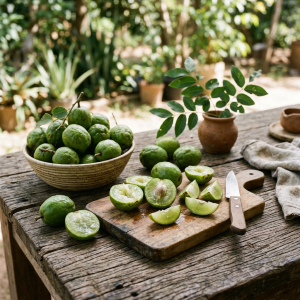

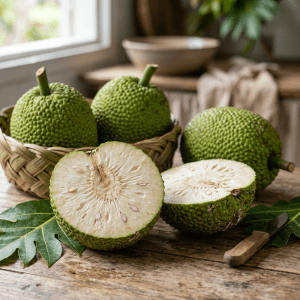
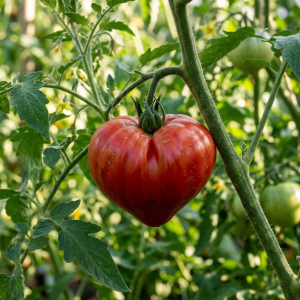
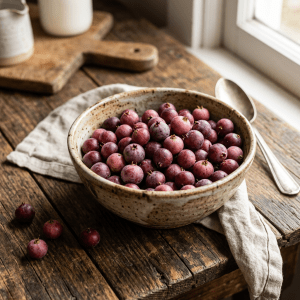
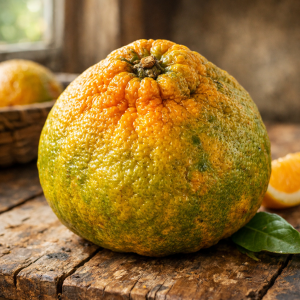
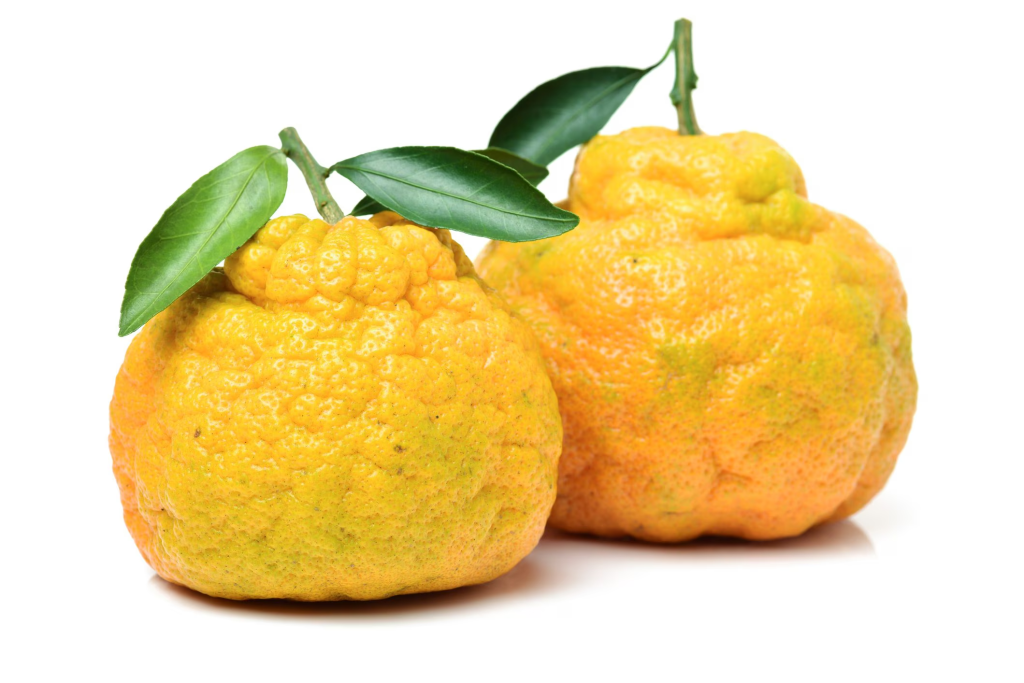
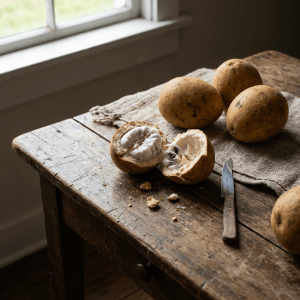
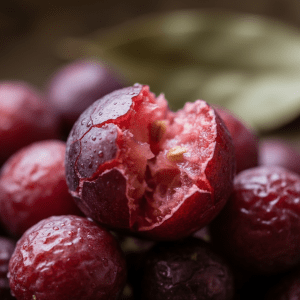
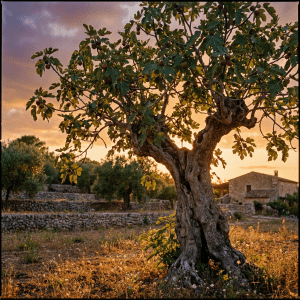
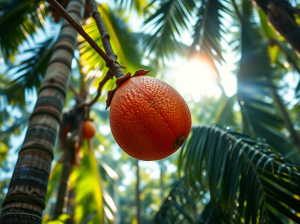
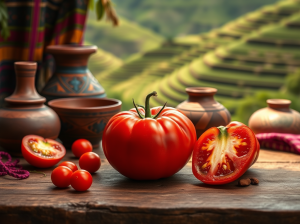
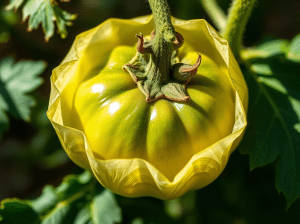
 EJADA
EJADA 