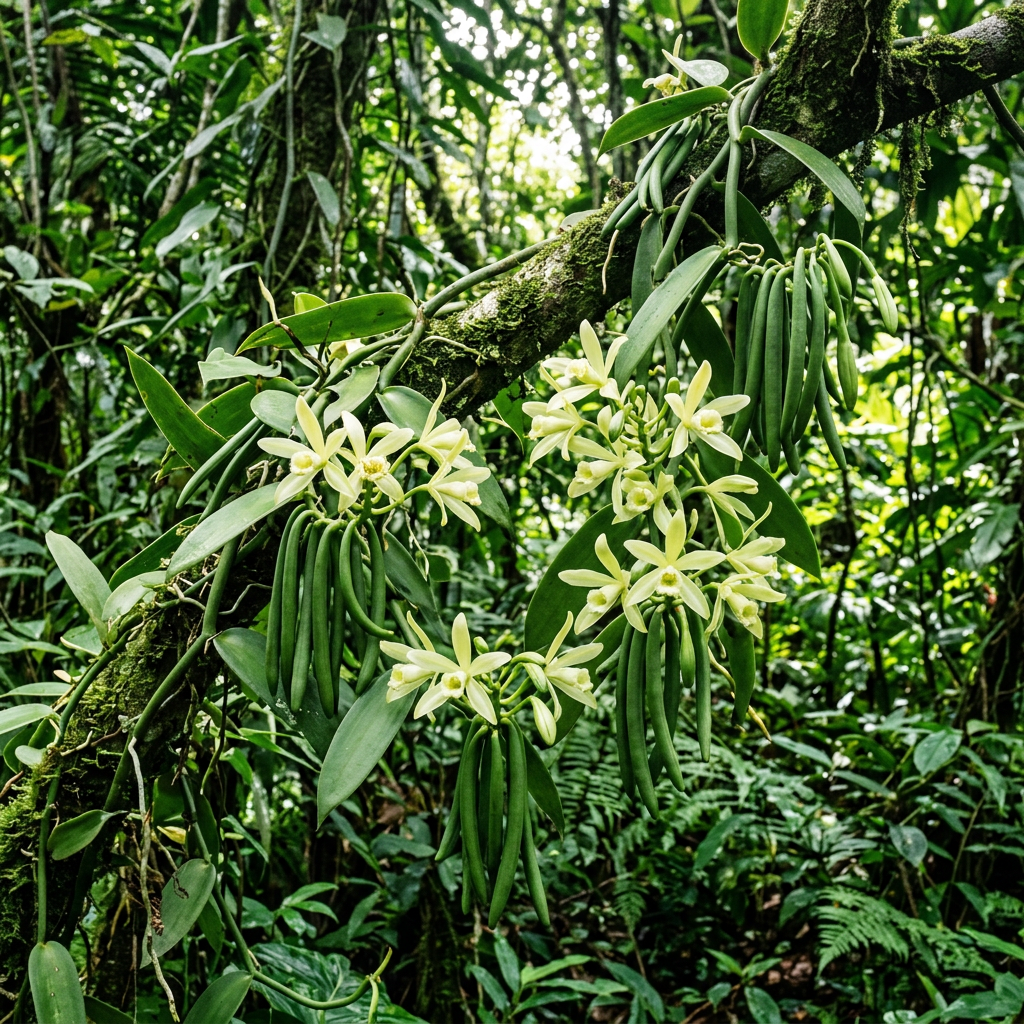
Vanilla Fruit (Vanilla Bean): The Orchid‑Born Treasure of Aroma, Flavor & Wellness
Vanilla is one of the most recognizable flavors in the world—but few people realize that it begins as a fruit. Long before it becomes an extract, a paste, or the tiny black specks in your favorite desserts, vanilla starts its life as a slender, green bean‑like pod growing from a tropical orchid. This makes vanilla one of the rarest and most labor‑intensive fruits on the planet, treasured for centuries for its fragrance, flavor, and healing properties.
🌿 Origins & First Cultivation: The Ancient Story of the Vanilla Fruit
Long before vanilla became a global flavor icon, it was a sacred fruit tended by the Totonac people of eastern Mexico. Growing wild in the lush tropical forests of Veracruz, the vanilla orchid (Vanilla planifolia) was first discovered, harvested, and cultivated by the Totonacs, who believed the plant was a divine gift. For centuries, they were the only civilization in the world to grow and cure vanilla, developing the earliest techniques for fermenting and drying the pods to unlock their signature aroma.
In the 15th century, the Aztecs conquered the Totonac region and demanded vanilla as tribute. They used the fragrant pods to flavor their royal cacao drink, creating one of the earliest recorded uses of vanilla in cuisine. When Spanish explorers encountered this drink in the 1500s, they carried both cacao and vanilla back to Europe—marking the beginning of vanilla’s global journey.
Yet for hundreds of years, vanilla remained nearly impossible to cultivate outside Mexico. The orchid’s natural pollinators—tiny stingless bees—existed only in its native region. That changed in 1841, when Edmond Albius, a 12‑year‑old enslaved boy on Réunion Island, discovered the hand‑pollination method still used worldwide today. His breakthrough unlocked global vanilla cultivation, paving the way for production in Madagascar, Tahiti, Indonesia, and beyond.
From sacred Totonac forests to modern tropical farms, the vanilla bean’s story is one of rarity, ingenuity, and cultural legacy—making it one of the most extraordinary fruits in your V‑series.
🌿 What Exactly Is the Vanilla Fruit?
Vanilla comes from the Vanilla planifolia orchid—an elegant climbing plant native to Mexico. After hand‑pollination (yes, nearly all vanilla is pollinated by hand), the orchid produces long, green pods. These pods are the vanilla fruits, commonly called vanilla beans.
Once harvested, the pods undergo a slow, meticulous curing process that transforms their natural compounds into the rich, warm aroma we know as vanilla.
Botanically, the vanilla bean is:
- A capsule‑type fruit
- Filled with thousands of tiny seeds
- Rich in aromatic compounds, especially vanillin
🌺 Origins & Cultural Significance
Vanilla has a deep, storied history:
- Ancient Totonac civilization (Mexico) was the first to cultivate vanilla.
- The Aztecs adopted it later, using vanilla to flavor cacao drinks.
- European explorers brought vanilla to the world, but its cultivation remained difficult due to the orchid’s complex pollination needs.
- Today, Madagascar, Mexico, and Tahiti are the largest producers.
Vanilla is often called “black gold” because of its high value and the labor required to produce it.
💛 Nutritional Profile (Per 100g of Vanilla Bean)
While vanilla is used in small amounts, its fruit contains beneficial compounds:
- Fiber
- Calcium
- Potassium
- Magnesium
- Trace antioxidants
- Vanillin, a potent aromatic compound with anti‑inflammatory properties
Even in small culinary doses, vanilla contributes wellness benefits through its antioxidant and mood‑supportive effects.
Vanilla beans contain small amounts of B‑vitamins, vitamin A, and vitamin E, but their real nutritional value comes from powerful antioxidant compounds like vanillin. Even in tiny culinary amounts, these compounds contribute to vanilla’s calming, anti‑inflammatory, and wellness‑supportive properties.
🌱 Health Benefits of Vanilla Fruit
Vanilla’s benefits go far beyond flavor. Here’s what makes it a quiet wellness powerhouse:
1. Rich in Antioxidants
Vanillin and other phenolic compounds help:
- Reduce oxidative stress
- Support cellular health
- Protect against free‑radical damage
2. Natural Mood Enhancer
The aroma of vanilla has been shown to:
- Reduce anxiety
- Promote relaxation
- Improve emotional well‑being
This is why vanilla is widely used in aromatherapy and self‑care products.
3. Anti‑Inflammatory Properties
Vanillin may help soothe inflammation, making vanilla a gentle addition to wellness routines.
4. Digestive Support
Traditionally, vanilla has been used to:
- Calm stomach discomfort
- Reduce nausea
- Support gentle digestion
5. Skin‑Friendly Compounds
Vanilla’s antioxidants help:
- Protect skin from environmental stress
- Support a healthy glow
- Reduce irritation
It’s often found in natural skincare formulations.
🍽️ Culinary Uses: More Than Just Dessert
Vanilla is one of the most versatile flavoring fruits in the world. Its warm, floral, slightly smoky notes pair beautifully with both sweet and savory dishes.
Popular Uses
- Baking: cakes, cookies, pastries, custards
- Beverages: lattes, teas, smoothies
- Savory dishes: seafood glazes, sauces, vinaigrettes
- Homemade extracts: alcohol‑infused vanilla pods
- Natural sweetener enhancer: boosts flavor without added sugar
Forms You’ll See
- Whole vanilla beans
- Vanilla paste
- Vanilla powder
- Vanilla extract
- Vanilla sugar
Each form offers a slightly different intensity and aromatic profile.
1. Vanilla Bean Ice Cream (No Eggs, Pure & Clean Flavor)
A simple, luxurious recipe that highlights the true aroma of the vanilla fruit.
Vanilla Bean Ice Cream
Prep 10 min
Cook 0 min (plus freezing)
Serves 6
Ingredients
2 cups
heavy cream
1 cup
whole milk
3/4 cup
sugar
1. vanilla bean, split and scraped
1 tsp
pure vanilla extract
Pinch
sea salt
Instructions
1. Infuse the vanillaIn a bowl, combine cream, milk, sugar, vanilla bean seeds, and the scraped pod. Let sit 10 minutes to infuse.
2. Whisk until sugar dissolves completely.
3. Add extract Stir in vanilla extract and a pinch of sea salt.
4. Chill Refrigerate mixture for at least 2 hours or until very cold.
5. Churn Pour into an ice cream maker and churn until thick and creamy.
6. Freeze Transfer to a container and freeze 3–4 hours until scoopable.
2. Vanilla Bean Syrup (Perfect for Lattes, Mocktails & Drizzling)
A fragrant, versatile syrup that elevates drinks, breakfasts, and desserts.
Ingredients
- 1 cup water
- 1 cup sugar
- 1 vanilla bean, split and scraped
- 1 tsp vanilla extract (optional for extra depth)
Instructions
- Add water, sugar, and the split vanilla bean to a small saucepan.
- Heat over medium until the sugar dissolves completely.
- Simmer 3–5 minutes, allowing the vanilla to infuse.
- Remove from heat, stir in vanilla extract if using.
- Cool, then strain out the pod.
- Store in a glass jar for up to 2 weeks.
Use it for: iced coffee, matcha, chia pudding, pancakes, fruit bowls, cocktails, or wellness tonics.
3. Vanilla Bean Panna Cotta (Light, Silky & Elegant)
A naturally gluten‑free, gently sweet dessert that showcases the floral warmth of real vanilla.
Ingredients
- 2 cups heavy cream
- 1 cup whole milk
- 1/3 cup sugar
- 1 vanilla bean, split and scraped
- 2 ½ tsp powdered gelatin
- 3 tbsp cold water
- Fresh berries or berry coulis (optional)
Instructions
- Sprinkle gelatin over cold water and let bloom for 5 minutes.
- In a saucepan, heat cream, milk, sugar, and vanilla bean seeds + pod until steaming (do not boil).
- Remove from heat, discard the pod, and whisk in the bloomed gelatin until fully dissolved.
- Pour into ramekins or glasses.
- Chill 4–6 hours until set.
- Serve plain or topped with berries for a wellness‑friendly finish.
🌍 Where Vanilla Grows
Vanilla thrives in warm, humid, tropical climates. Major producers include:
- Madagascar (Bourbon vanilla)
- Mexico (the birthplace of vanilla)
- Tahiti (floral, fruity vanilla)
- Uganda
- Indonesia
Because of its labor‑intensive cultivation, vanilla remains one of the most expensive spices in the world.
⚠️Vanilla Beans (or Should Limit Them)
While vanilla is generally safe and gentle, certain individuals may need to avoid it or consume it mindfully. Because vanilla is both a fruit and a highly aromatic botanical, it can trigger sensitivities in specific groups.
1. Individuals With Orchid or Vanilla Allergies
Vanilla comes from the Vanilla planifolia orchid. People with known sensitivities to:
- orchids
- tropical flower pollens
- aromatic plant extracts
may experience:
- itching
- swelling
- skin irritation
- respiratory discomfort
This is rare but documented.
2. People Sensitive to Fragrance Compounds
Natural vanilla contains vanillin, a potent aromatic compound. Those who are sensitive to:
- perfumes
- essential oils
- scented skincare
may experience headaches, dizziness, or mild nausea when consuming or inhaling concentrated vanilla products.
Whole vanilla beans are typically gentler than synthetic vanillin.
3. Individuals Avoiding Alcohol (for Extracts Only)
Vanilla extract is made by steeping beans in alcohol. People who avoid alcohol for:
- medical
- religious
- pregnancy
- recovery
- personal
reasons should choose:
- alcohol‑free vanilla extract
- vanilla bean paste
- whole vanilla beans
- vanilla powder
The fruit itself contains no alcohol.
4. People With Contact Dermatitis or Sensitive Skin
Handling fresh vanilla pods or concentrated vanilla paste may irritate:
- eczema‑prone skin
- dermatitis‑sensitive skin
- broken or inflamed skin
This is due to aromatic compounds and natural resins in the pod.
5. Individuals With Histamine Intolerance
Vanilla is considered moderately high in histamines, especially in cured beans and extracts. People with histamine intolerance may experience:
- flushing
- headaches
- digestive discomfort
Vanilla is usually tolerated in small amounts, but reactions vary.
6. Those With Diabetes (Certain Vanilla Products Only)
Vanilla beans themselves are low in sugar. However, many vanilla‑based foods contain:
- syrups
- sweetened extracts
- vanilla sugar
- desserts
People managing blood sugar should be mindful of added sugars, not the vanilla fruit itself.
7. Individuals With Migraines Triggered by Aromatics
Some migraine sufferers are sensitive to:
- strong scents
- aromatic compounds
- concentrated flavorings
Vanilla’s fragrance can be a trigger for a small subset of people.
8. Infants Under One Year
Not because vanilla is unsafe — but because:
- their digestive systems are still developing
- aromatic compounds may be too stimulating
- vanilla is often paired with sweeteners
Whole vanilla bean flavor in cooked foods is generally safe after age one.
9. People With Severe Food Chemical Sensitivities
Vanillin (natural or synthetic) can occasionally trigger:
- headaches
- skin reactions
- digestive upset
This is uncommon but worth noting for highly sensitive individuals.
🌟 Final Takeaway
The vanilla bean is far more than a beloved flavor — it’s a rare tropical fruit with a rich cultural legacy, a labor‑intensive growing process, and a surprising wellness profile. From its origins with the Totonac people of Mexico to its global spread after Edmond Albius’ hand‑pollination breakthrough, vanilla has traveled centuries to become the aromatic treasure we know today. Whether used in desserts, wellness rituals, or natural skincare, the vanilla fruit continues to offer warmth, comfort, and antioxidant benefits that elevate both body and spirit.
⚠️ Disclaimer
This article is for informational and educational purposes only. It is not intended to diagnose, treat, cure, or prevent any disease. Always consult a qualified healthcare professional before making changes to your diet, especially if you have allergies, medical conditions, or dietary restrictions.
📚 Sources & References
These are credible, publicly available sources that support the historical, botanical, and nutritional information in your post:
- Smithsonian Magazine – The Story of Vanilla
https://www.smithsonianmag.com/arts-culture/the-vanilla-bean-its-story-its-use-its-future-116722492/(smithsonianmag.com in Bing) - National Geographic – Vanilla’s Origins & Cultivation
https://www.nationalgeographic.com/culture/article/vanilla-mexico-orchid-flavor(nationalgeographic.com in Bing) - Encyclopedia Britannica – Vanilla (Plant & History)
https://www.britannica.com/plant/vanilla-plant(britannica.com in Bing) - FAO (Food and Agriculture Organization) – Vanilla Production & Global Cultivation
https://www.fao.org/3/y5136e/y5136e04.htm(fao.org in Bing) - Journal of Agricultural and Food Chemistry – Vanillin & Antioxidant Properties
https://pubs.acs.org/doi/10.1021/jf990986l(pubs.acs.org in Bing) - American Orchid Society – Vanilla planifolia Overview
https://www.aos.org/orchids/orchid-care/vanilla.aspx(aos.org in Bing) - University of Florida IFAS – Vanilla Orchid Botany
https://edis.ifas.ufl.edu/publication/HS1348(edis.ifas.ufl.edu in Bing) - World History Encyclopedia – Totonac Civilization https://www.worldhistory.org/Totonac/
- Journal of Ethnobiology – Traditional Uses of Vanilla in Mesoamerica
https://bioone.org/journals/journal-of-ethnobiology/(bioone.org in Bing) - NIH – Natural Antioxidants in Plant‑Based Foods
https://www.ncbi.nlm.nih.gov/pmc/articles/PMC5613902/(ncbi.nlm.nih.gov in Bing)
 EJADA
EJADA 
Leave a comment