🍊 Valencia Orange:
The Sunshine Citrus That Defines Summer
When it comes to citrus fruits that embody pure sunshine, few can compete with the Valencia orange. Known as the “juicing orange of the world,” this bright, sweet, and refreshingly aromatic fruit has become a global favorite for good reason. Whether you’re sipping a cold glass of fresh orange juice or enjoying the fruit straight from the peel, the Valencia orange delivers a burst of natural sweetness, hydration, and vitamin‑rich nourishment that fits beautifully into any wellness lifestyle.
The Valencia orange (Citrus × sinensis) is a late‑season sweet orange variety prized for its high juice content, balanced sweetness, and minimal bitterness. Unlike navel oranges, which are best in winter, Valencia oranges peak in late spring through summer, making them the perfect warm‑weather citrus.
Originally developed in California in the 19th century, the Valencia orange now grows in warm climates around the world, including the U.S., Spain, Morocco, and South Africa.
🍊 Flavor Profile
Valencia oranges are known for their:
- Bright, sweet flavor
- Low acidity
- Thin, smooth skin
- Deep orange color
- Exceptionally juicy flesh
They’re the go‑to orange for fresh juice because they stay sweet and flavorful even after refrigeration.
🏺 Cultural Significance of the Valencia Orange
The Valencia orange is more than a sweet summer citrus — it’s a fruit woven into the agricultural identity, culinary traditions, and economic history of multiple regions around the world. From the sun‑drenched groves of Spain to the citrus belts of California and Florida, the Valencia orange has shaped communities, inspired festivals, and become a symbol of abundance and vitality.
🌞 A Symbol of Sunshine and Prosperity
Because Valencia oranges ripen in late spring and peak in summer, they’ve long been associated with:
- Warmth
- Renewal
- Seasonal abundance
- Good health
In many cultures, oranges symbolize good fortune, prosperity, and joy, and the Valencia variety — with its glowing color and sweet juice — embodies these meanings beautifully.
Deep Roots in Spanish Citrus Culture
Although the Valencia orange was later perfected in California, its name honors Valencia, Spain, one of the world’s most iconic citrus‑growing regions.
In Spanish culture, oranges are:
- A symbol of the Mediterranean lifestyle
- A staple in regional cuisine
- A point of pride for local farmers
- A key export that shaped the region’s economy
The city of Valencia is surrounded by endless citrus groves, and the scent of orange blossoms — azahar — is so culturally significant that it appears in poetry, music, and wedding traditions.
🌼 Orange Blossoms in Tradition & Ritual
The blossoms of the Valencia orange tree carry their own cultural weight. In Mediterranean cultures, orange blossoms symbolize:
- Purity
- Fertility
- New beginnings
They are commonly used in:
- Bridal bouquets
- Religious ceremonies
- Spring festivals
- Perfumes and herbal remedies
The fragrance of orange blossoms is considered one of the defining scents of the Mediterranean spring.
A Fruit That Shaped American Agriculture
In the United States, the Valencia orange played a major role in the rise of the citrus industry.
California
The Valencia orange helped transform Southern California into a citrus powerhouse in the late 1800s and early 1900s. Entire towns grew around citrus packing houses, and the fruit became a symbol of:
- The California dream
- Agricultural innovation
- Sunshine and health
The famous “Orange Empire” of California owes much of its legacy to the Valencia variety.
Florida
In Florida, the Valencia orange became the backbone of the orange juice industry, shaping breakfast culture across the country. Its high juice content and balanced sweetness made it the preferred orange for commercial juicing.
🍊 A Staple in Global Culinary Traditions
Across cultures, Valencia oranges appear in:
- Summer drinks and fresh juices
- Mediterranean salads
- Spanish desserts and pastries
- Moroccan citrus preserves
- Middle Eastern marinades
- American breakfast tables
Their versatility has made them a beloved ingredient in both traditional and modern cuisine.
🎉 Festivals and Celebrations
In citrus‑growing regions, oranges — including Valencia varieties — are celebrated through:
- Harvest festivals
- Citrus blossom parades
- Local food fairs
- Agricultural exhibitions
These events honor the fruit’s role in community identity and economic livelihood.
🌍 A Fruit That Connects Continents
From Spain to California to North Africa, the Valencia orange represents:
- Agricultural heritage
- Cultural pride
- Seasonal celebration
- The universal joy of fresh, sweet citrus
Its journey across continents mirrors the movement of people, trade, and culinary traditions — making it a fruit with a truly global story.
💛 Nutritional Benefits
🍋 Vitamin C: Immune Support + Skin Health
Valencia oranges are exceptionally rich in vitamin C, often providing 70–90% of the daily recommended intake in a single medium fruit.
Why it matters
- Strengthens immune defenses
- Supports collagen production for firm, glowing skin
- Helps repair tissues and reduce inflammation
- Enhances iron absorption
- Protects cells from oxidative stress
Vitamin C is one of the reasons Valencia oranges are considered a top beauty‑from‑within fruit.
🌿 Antioxidants: Hesperidin, Carotenoids & More
Valencia oranges contain a wide range of bioactive plant compounds, including:
- Hesperidin — a powerful flavonoid linked to heart health
- Beta‑carotene — supports vision and skin health
- Lutein & Zeaxanthin — protect eye tissues
- Anthocyanins (trace amounts) — anti‑inflammatory support
These antioxidants help neutralize free radicals, reduce inflammation, and support long‑term cellular health.
💛 Fiber: Digestive Health + Blood Sugar Balance
A medium Valencia orange contains 2–3 grams of dietary fiber, mostly soluble fiber.
Benefits
- Supports healthy digestion
- Helps maintain stable blood sugar levels
- Nourishes beneficial gut bacteria
- Promotes satiety and reduces cravings
This makes Valencia oranges a smart choice for gut health and metabolic balance.
⚡ B‑Complex Vitamins: Natural Energy Support
Valencia oranges contain small but meaningful amounts of:
- Thiamine (B1)
- Riboflavin (B2)
- Niacin (B3)
- Vitamin B6
- Folate (B9)
These vitamins help convert food into energy, support brain function, and maintain a healthy nervous system.
💧 Potassium: Heart & Hydration Support
Valencia oranges are naturally rich in potassium, an essential electrolyte.
Why it matters
- Helps regulate blood pressure
- Supports heart rhythm
- Aids muscle function
- Enhances hydration
Combined with their high water content, Valencia oranges are a perfect warm‑weather hydration fruit.
🧡 Natural Sugars + Low Calorie
Despite their sweetness, Valencia oranges are:
- Low in calories (about 60–70 per fruit)
- Low glycemic
- Packed with water and fiber
This makes them a refreshing, guilt‑free option for energy and hydration.
🌱 Phytochemicals Unique to Citrus
Valencia oranges also contain:
- Limonoids — linked to detoxification and anti‑inflammatory benefits
- Citrus essential oils (in the peel) — mood‑boosting aromatics
- Pectin — a soluble fiber that supports gut health
These compounds give Valencia oranges their signature aroma and wellness benefits.
✨ Nutritional Snapshot (Per Medium Orange)
- Calories: ~62
- Vitamin C: 70–90% DV
- Fiber: 2–3 g
- Potassium: ~237 mg
- Folate: ~10% DV
- Carbohydrates: ~15 g
- Water content: ~85%
🌿 Health Benefits of Valencia Oranges
1. Strengthens Immunity
With one of the highest natural concentrations of vitamin C, Valencia oranges help your body fight inflammation and support immune resilience.
2. Supports Glowing Skin
Vitamin C is essential for collagen synthesis, helping maintain firm, youthful skin while protecting against oxidative stress.
3. Hydrates the Body
Valencia oranges are over 85% water, making them a delicious way to stay hydrated during hot months.
4. Heart‑Healthy Citrus
Their potassium and antioxidant content help maintain healthy blood pressure and reduce oxidative stress on the cardiovascular system.
5. Aids Digestion
The natural fiber in Valencia oranges supports regularity and nourishes beneficial gut bacteria.
🌍 Culinary Uses
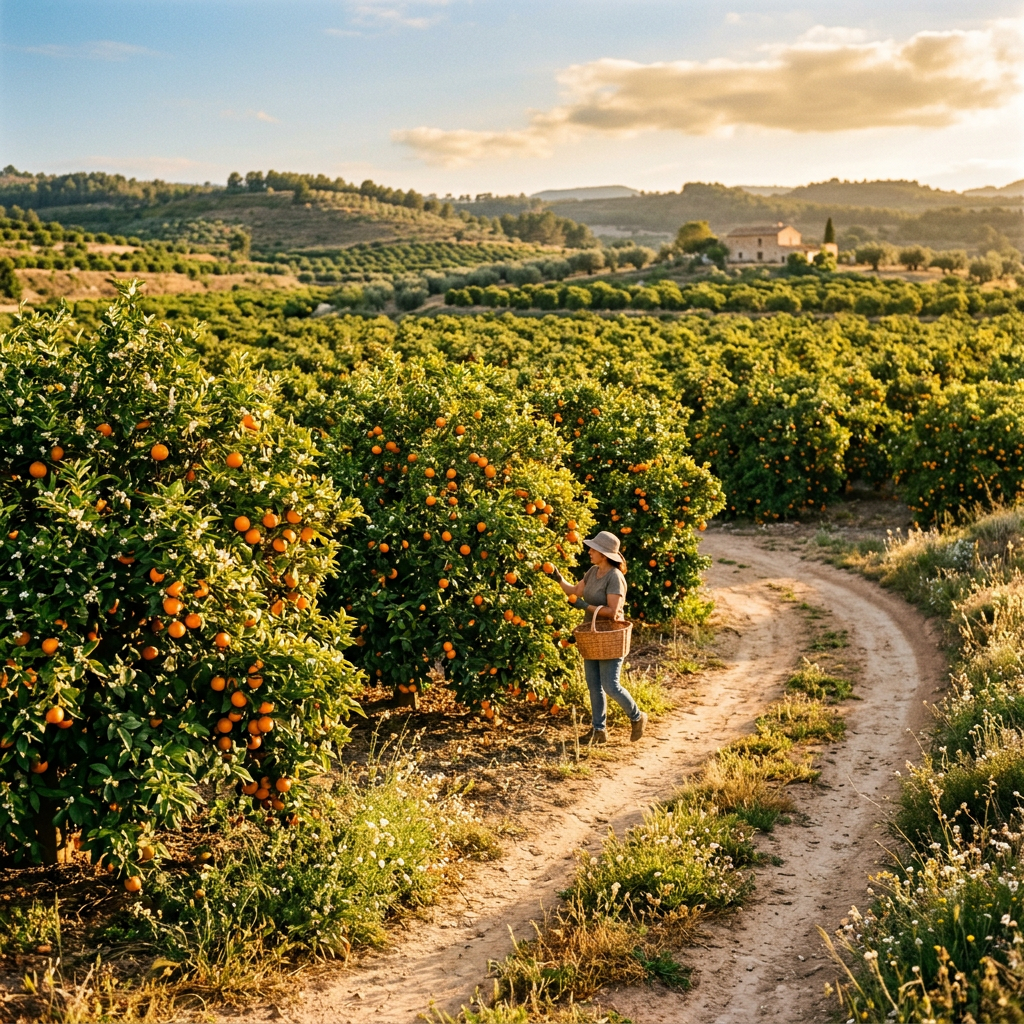
In Spain, Valencia oranges are famously associated with the region of Valencia, where citrus groves stretch across the coastline and the fruit is celebrated in local cuisine.
🍽️ Culinary Uses of the Valencia Orange
The Valencia orange is one of the most versatile citrus fruits in the culinary world. Its naturally sweet juice, fragrant zest, and vibrant color make it a staple in kitchens across the globe — from Mediterranean home cooking to modern wellness recipes. Whether used fresh, juiced, zested, or cooked down into syrups and sauces, the Valencia orange brings brightness, balance, and a touch of sunshine to every dish.
🍊 1. Fresh Juice & Wellness Drinks
Valencia oranges are the gold standard for juicing thanks to their high juice content and balanced sweetness.
Common uses include:
- Fresh morning orange juice
- Immunity‑boosting citrus shots
- Orange‑ginger wellness tonics
- Hydrating summer coolers
- Smoothies with banana, mango, or turmeric
Their juice stays sweet even after chilling, making it ideal for batch‑prepped drinks.
🥗 2. Salads & Light Meals
Valencia oranges add brightness and natural sweetness to both fruit and savory salads.
Popular pairings:
- Mint, honey, and pomegranate
- Fennel, arugula, and shaved Parmesan
- Avocado, red onion, and olive oil
- Mixed berries and chia seeds
Their segments (supremes) bring a refreshing, juicy contrast to greens and grains.
🍰 3. Baking & Desserts
The zest and juice of Valencia oranges shine in baked goods and sweet treats.
They’re commonly used in:
- Citrus cakes and loaf breads
- Orange‑infused cookies
- Sorbets and granitas
- Custards and panna cotta
- Marmalades and citrus curds
The zest adds aromatic oils that elevate desserts without overpowering them.
🍯 4. Sauces, Syrups & Glazes
Valencia oranges reduce beautifully into syrups and glazes that enhance both sweet and savory dishes.
Examples:
- Orange‑honey glaze for chicken or salmon
- Citrus reduction for roasted vegetables
- Orange‑ginger sauce for tofu or stir‑fries
- Sweet orange syrup for pancakes or yogurt bowls
Their natural sugars caramelize easily, creating depth and complexity.
🥘 5. Savory Dishes & Marinades
In Mediterranean and Middle Eastern cooking, Valencia oranges are used to balance spices, herbs, and rich proteins.
They pair well with:
- Rosemary, thyme, and oregano
- Garlic and olive oil
- Cumin, coriander, and paprika
- Chili flakes and ginger
Use the juice in marinades or the zest to brighten roasted meats, grains, and legumes.
🍹 6. Cocktails & Mocktails
Valencia oranges bring a smooth, sweet citrus note to beverages.
Common uses:
- Classic orange spritz
- Citrus mojitos
- Orange‑vanilla mocktails
- Summer sangrias
- Fresh orange margaritas
Their juice blends seamlessly with herbs like basil, mint, and thyme.
🍊 7. Preserves & Pantry Staples
Valencia oranges can be transformed into long‑lasting pantry items.
These include:
- Traditional orange marmalade
- Candied orange peel
- Citrus‑infused olive oil
- Orange‑spice tea blends
- Dried orange slices for garnishes
Their thin skin and aromatic oils make them ideal for preserving.
🧡 8. Zest as a Flavor Booster
Valencia orange zest is a culinary secret weapon.
Use it to brighten:
- Salad dressings
- Marinades
- Baked goods
- Oatmeal and yogurt
- Cocktails
- Homemade spice blends
Just a pinch adds fragrance and complexity.
🌞 Why Chefs Love Valencia Oranges
- High juice yield
- Balanced sweetness
- Thin, easy‑to‑zest skin
- Bright color
- Versatility across cuisines
They’re a fruit that effortlessly moves from breakfast to dessert to dinner — a true culinary chameleon.
🛒 Where to Find Valencia Oranges
In the U.S., Valencia oranges are typically available from March through September, depending on the region. They’re commonly found at:
- Grocery stores
- Farmers markets
- Produce co‑ops
- Juice bars
Peak season fruit will have a deep orange color, a slight heaviness for its size, and a fragrant citrus aroma.
🍹 Simple Ways to Enjoy Valencia Oranges
1. Fresh Valencia Orange Juice
Nothing compares to the flavor of freshly squeezed Valencia juice — bright, sweet, and naturally energizing.
2. Valencia Citrus Salad
Combine orange segments with mint, honey, and a sprinkle of sea salt for a refreshing summer dish.
3. Valencia Orange Smoothie
Blend with banana, yogurt, and ginger for a creamy, immune‑boosting drink.
4. Valencia Orange Zest
Use the zest to elevate baked goods, marinades, and salad dressings.
⚠️ Who Should Avoid or Limit Valencia Oranges
While Valencia oranges are generally safe and nourishing for most people, certain individuals may need to limit or avoid them due to their acidity, sugar content, or interactions with specific health conditions. Here’s a clear, reader‑friendly breakdown.
1. People With Citrus Allergies
Anyone with a known allergy to citrus fruits — including oranges, lemons, limes, or grapefruits — should avoid Valencia oranges.
Possible reactions include:
- Itching or swelling of the mouth
- Skin rashes
- Digestive discomfort
- In rare cases, anaphylaxis
2. Individuals With Acid Reflux, GERD, or Gastritis
Valencia oranges are naturally acidic. For people with acid‑sensitive digestive systems, they may trigger:
- Heartburn
- Stomach pain
- Acid reflux flare‑ups
These individuals may tolerate small amounts, but many find citrus aggravating.
3. Those With Mouth Ulcers or Sensitive Teeth
The acidity of Valencia oranges can irritate:
- Canker sores
- Gum inflammation
- Enamel‑sensitive teeth
Rinsing with water afterward can help, but avoidance during flare‑ups is best.
4. People With Diabetes (When Consuming Juice)
Whole oranges are generally fine due to their fiber, but orange juice — even fresh Valencia juice — is high in natural sugars and low in fiber.
This can cause:
- Rapid blood sugar spikes
- Increased insulin demand
Diabetics should prioritize whole fruit over juice.
5. Individuals With Kidney Disorders
Oranges contain potassium, which is healthy for most people but may be restricted for those with:
- Chronic kidney disease
- Impaired kidney filtration
- Dialysis requirements
These individuals should follow their healthcare provider’s potassium guidelines.
6. People Taking Certain Medications
While oranges are not as notorious as grapefruit for interactions, caution is still advised for:
- Beta‑blockers (which can increase potassium levels)
- Certain blood pressure medications
- Medications requiring low‑acid diets
Anyone on long‑term medication should check with their provider.
7. Individuals With Fructose Malabsorption
Valencia oranges contain natural fructose, which may cause:
- Bloating
- Gas
- Cramping
Those with diagnosed fructose intolerance should limit intake.
8. Infants Under 1 Year
Citrus acidity can irritate an infant’s digestive system and skin. Pediatric guidelines typically recommend introducing citrus after 12 months.
9. People With Citrus‑Triggered Migraines
A small subset of individuals experience migraines triggered by citrus compounds (like tyramine or limonene). These individuals should monitor their sensitivity.
📝 Disclaimer
This section is for educational purposes only and not a substitute for medical advice. Anyone with a chronic condition, medication concerns, or dietary restrictions should consult a healthcare professional before making changes to their diet.
🌞 Final Thoughts: The Radiance of the Valencia Orange
The Valencia orange is a fruit that truly lives up to its sunny reputation. From its vibrant color and naturally sweet juice to its deep cultural roots and impressive nutritional profile, it brings together everything we love about citrus — brightness, nourishment, and a sense of simple, joyful abundance. Whether you enjoy it fresh, sip it in a glass of golden juice, or use its zest to elevate your favorite recipes, the Valencia orange adds a touch of summer to every season.
As you continue your journey through the A–Z fruit series, the Valencia orange stands as a reminder of how even familiar fruits carry rich stories, global traditions, and powerful wellness benefits. It’s more than a breakfast staple — it’s a symbol of vitality, warmth, and the timeless beauty of nature’s harvest.
 EJADA
EJADA 
Leave a comment