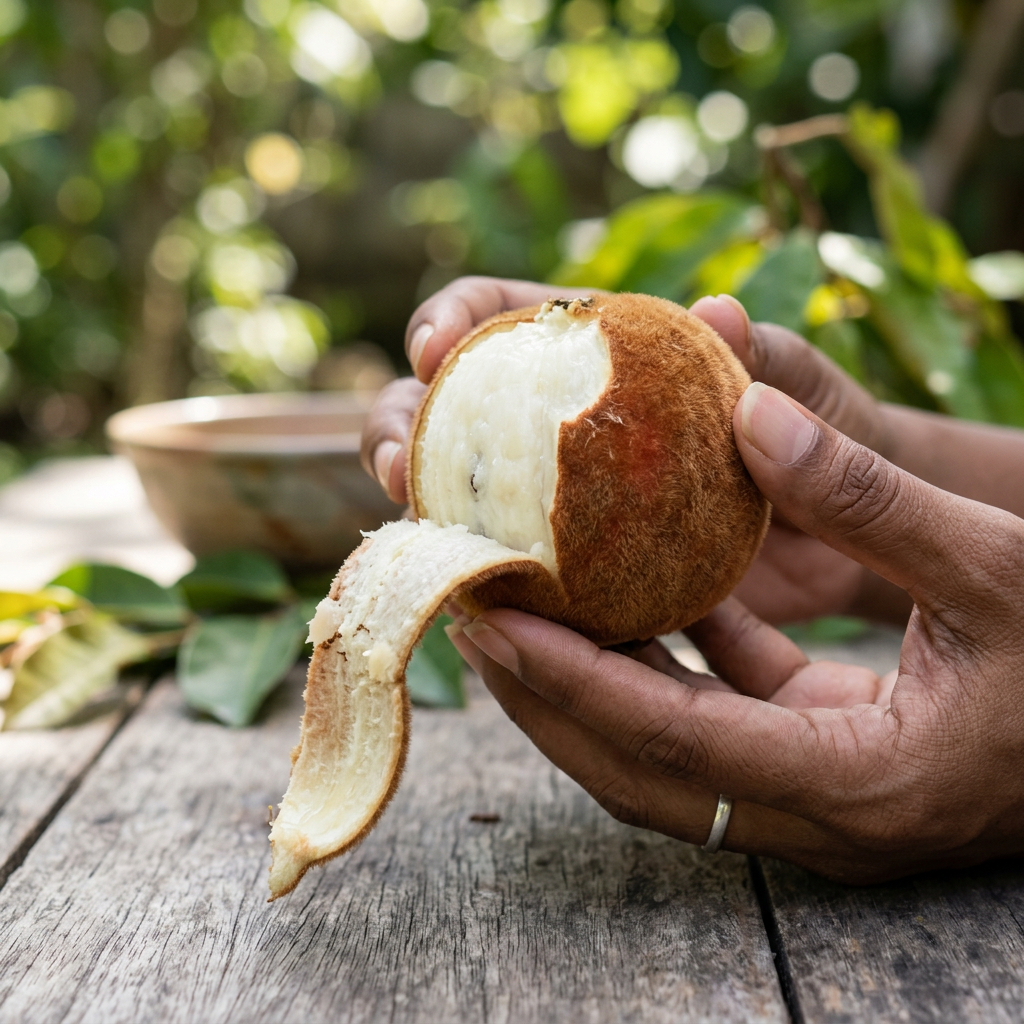
Velvet Apple (Mabolo Fruit): The Soft‑Skinned Tropical Gem of the Philippines
The Velvet Apple—often called Mabolo—is one of the most intriguing fruits in the V‑category. With its soft, velvety skin, creamy flesh, and naturally fragrant aroma, this tropical fruit has been cherished in the Philippines and Southeast Asia for centuries. Though lesser known globally, the Velvet Apple is gaining attention for its nutritional value, cultural history, and unique sensory experience.
This fruit is a perfect addition to your A–Z series: exotic, wellness‑friendly, and rich with story.
🌿 What Is the Velvet Apple?
The Velvet Apple (Diospyros blancoi) is a tropical fruit native to the Philippines. It belongs to the persimmon family, which explains its custard‑like texture and gentle sweetness.
Key Characteristics
- Covered in a soft, velvety red or brown skin
- Creamy, pale, custard‑like flesh
- A naturally musky aroma (stronger on the outside than the inside)
- Mild, sweet flavor similar to pear, persimmon, or creamy apple
Despite its name, it is not a true apple—but its shape and size resemble one.
🌺 Origins & Cultural Significance
The Velvet Apple is deeply rooted in Filipino heritage, where it is known as Mabolo. Historically, it has been:
- A symbol of fertility and abundance
- Used in traditional medicine
- Consumed fresh or preserved
- Grown in home gardens as a cultural staple
The tree itself is valued for its hard, durable wood, known as kamagong, which is prized in Filipino craftsmanship.
Today, the fruit grows across:
- The Philippines
- Taiwan
- Malaysia
- Indonesia
- Southern China
But it remains most culturally significant in its homeland.
🍎 Flavor Profile
Velvet Apple is a sensory experience:
- Texture: soft, creamy, custard-like
- Taste: mild sweetness with hints of pear, banana, and persimmon
- Aroma: musky on the outside, but mild and pleasant once peeled
The aroma can be surprising to first‑timers, but the flavor is gentle and enjoyable.
⭐ Best U.S. Substitutes for Velvet Apple
1. Persimmon (Fuyu or Hachiya) Closest Match
Persimmon is the best and most accurate substitute because:
- It belongs to the same botanical family (Ebenaceae)
- It has a custard‑like texture when ripe
- The flavor is mild, sweet, and creamy — very similar to Mabolo
Use it in:
- smoothies
- desserts
- fruit bowls
- jams
2. Asian Pear For Crispness + Mild Sweetness
If you want the mild sweetness of Velvet Apple but not the custard texture:
- Asian pears offer a clean, gentle flavor
- Slight floral notes
- Very accessible in U.S. grocery stores
Great for:
- salads
- fresh eating
- slaws
3. Apple + Banana Blend For Flavor Approximation
Velvet Apple tastes like a mix of:
- pear
- banana
- mild persimmon
A blend of apple + banana in smoothies or desserts can mimic the flavor profile surprisingly well.
4. Sapote (White or Black) — For Creamy Texture
If you want the soft, custard‑like flesh:
- White sapote
- Black sapote
Both offer:
- creamy texture
- mild sweetness
- tropical undertones
These are available in some U.S. specialty markets.
5. Mamey Sapote — For Tropical Sweetness
Not similar in flavor, but similar in:
- richness
- tropical aroma
- dessert‑friendly texture
Works well in smoothies and puddings.
💛 Nutritional Benefits
Velvet Apple is rich in nutrients that support overall wellness.
1. Vitamins
- Vitamin A – supports vision and skin health
- Vitamin C – boosts immunity and collagen production
- B‑complex vitamins – support energy and metabolism
2. Minerals
- Calcium – supports bone health
- Iron – helps oxygen transport
- Potassium – supports heart and muscle function
3. Fiber
Excellent for:
- digestion
- gut health
- blood sugar balance
4. Antioxidants
Contains polyphenols that help:
- reduce inflammation
- protect cells
- support healthy aging
🌱 Health Benefits
Velvet Apple offers several wellness advantages:
1. Supports Digestive Health
High fiber content promotes regularity and gut balance.
2. Skin & Hair Nourishment
Vitamin A and antioxidants support:
- skin elasticity
- healthy glow
- hair strength
3. Immune Support
Vitamin C and polyphenols help strengthen the immune system.
4. Heart Health
Potassium and antioxidants contribute to:
- healthy blood pressure
- reduced oxidative stress
5. Natural Energy Support
B‑vitamins help convert food into energy.
✨ Key Vitamins Found in Velvet Apple
1. Vitamin A
Present in meaningful amounts due to natural carotenoids. Supports:
- vision
- skin health
- immune function
2. Vitamin C
One of the most notable vitamins in Mabolo. Supports:
- immunity
- collagen production
- antioxidant protection
3. B‑Complex Vitamins (Trace to Moderate Amounts)
Includes:
- B1 (Thiamine)
- B2 (Riboflavin)
- B3 (Niacin)
- B6
These help with:
- energy metabolism
- nervous system function
- healthy skin
4. Vitamin E (Trace)
A natural antioxidant that helps:
- protect cells
- support skin health
⭐ Quick Summary
Velvet Apple contains vitamins A, C, and several B‑complex vitamins, along with trace vitamin E. These contribute to its antioxidant, skin‑supportive, and immune‑boosting benefits — making it a wellness‑friendly fruit.
🍽️ Culinary Uses
1. Velvet Apple Smoothie (Creamy, Mild & Tropical)
A gentle, nourishing smoothie that highlights the fruit’s custard‑like texture.
Ingredients
- 1 Velvet Apple (peeled, seeds removed) or 1 ripe persimmon as a substitute
- 1 banana
- 1 cup coconut milk or almond milk
- 1 tbsp honey or agave
- ½ tsp vanilla extract
- 3–4 ice cubes
Instructions
- Peel the Velvet Apple to remove the musky skin.
- Add all ingredients to a blender.
- Blend until creamy and smooth.
- Serve chilled with a sprinkle of cinnamon or nutmeg.
Why It Works
Velvet Apple blends into a silky, custard‑like drink with a naturally sweet, tropical flavor.
🍽️ 2. Velvet Apple Jam (Fragrant, Spreadable & Perfect for Toast)
A simple preserve that turns this rare fruit into a versatile spread.
Ingredients
- 3 Velvet Apples, peeled and chopped
- ½ cup sugar (adjust to taste)
- 1 tbsp lemon juice
- ½ cup water
- Optional: ½ tsp cinnamon or vanilla
Instructions
- Combine chopped Velvet Apple, sugar, water, and lemon juice in a saucepan.
- Simmer over medium heat for 15–20 minutes, stirring occasionally.
- Mash gently as it softens.
- Continue cooking until thickened to jam consistency.
- Cool and store in a glass jar for up to one week.
Use It For
- toast
- yogurt bowls
- pastries
- cheese boards
🍽️ 3. Velvet Apple Custard Cups (Soft, Sweet & Dessert‑Ready)
A naturally creamy dessert that highlights the fruit’s persimmon‑like texture.
Ingredients
- 2 Velvet Apples, peeled and mashed
- 1 cup whole milk or coconut milk
- 2 tbsp sugar or maple syrup
- 1 egg
- ½ tsp vanilla
- Pinch of cinnamon
Instructions
- Preheat oven to 325°F (165°C).
- Whisk milk, egg, sugar, vanilla, and cinnamon.
- Stir in the mashed Velvet Apple.
- Pour into ramekins.
- Place ramekins in a baking dish and fill halfway with hot water (water bath).
- Bake 25–30 minutes until set.
- Chill before serving.
Flavor Notes
Soft, lightly sweet, and similar to a tropical persimmon custard.
Because Velvet Apple is rare in the U.S., the best substitutes are:
- Persimmon (closest overall match)
- Asian pear (similar mild sweetness)
- Apple + banana (flavor approximation)
- White or black sapote (texture match)
- Mamey sapote (tropical richness)
These fruits allow readers to recreate Velvet Apple recipes even if they can’t source the real fruit.
Availability of the Velvet Apple (Mabolo Fruit)
The Velvet Apple is considered a rare tropical fruit, and its availability outside Southeast Asia—especially in the United States—is extremely limited. It is not commonly found in mainstream grocery stores due to its short shelf life, delicate skin, and highly seasonal harvest window. However, a few specialty growers and exotic‑fruit vendors do offer it in small quantities.
1. Seasonal & Extremely Limited Supply
Velvet Apple is not available year‑round. U.S. vendors note that the fruit is either:
- Out of season, or
- Available only through long‑wait pre‑orders
Miami Fruit confirms that Velvet Apple is currently only available for pre‑order, with wait times of up to one year or more due to rarity and limited harvests.
2. Specialty Online Vendors
A few U.S. farms and exotic‑fruit sellers offer Velvet Apple when in season:
- Miami Fruit (Florida) – Pre‑order only; extremely limited; harvested from a small sustainable farm in the Florida Keys.
- JamyMango (Florida) – Offers fresh, Florida‑grown Velvet Apples (Aug–Sep), but often sells out quickly. Ships overnight when available.
These vendors emphasize that supply is first‑come, first‑served and may not be available every season.
3. Live Plants Are Easier to Find Than Fresh Fruit
While fresh fruit is rare, live Velvet Apple trees are more accessible in the U.S. through online plant retailers:
- Walmart Marketplace sells live Diospyros blancoi plants.
- eBay sellers offer live Velvet Apple trees grown in Florida.
This makes home growing a more reliable option for enthusiasts in warm climates.
4. International Availability
Velvet Apple is more commonly found in:
- The Philippines (its native region)
- Taiwan
- Malaysia
- Indonesia
However, even in these regions, it is not always widely sold in commercial markets due to its delicate nature.
5. Specialty Exotic Grocers
Some exotic fruit shops occasionally carry Velvet Apple, but availability is inconsistent and often limited to:
- Pre‑order boxes
- Seasonal shipments
- Rare fruit subscription services
This aligns with broader guidance from rare‑fruit buying guides, which note that Mabolo is typically found only through specialty exotic grocers or online rare‑fruit vendors.
Velvet Apple is rare, seasonal, and difficult to source, especially in the U.S. Most availability comes from:
- Pre‑order exotic fruit vendors (long wait times)
- Florida‑based specialty farms (very limited seasonal harvests)
- Online sellers offering live plants
For most readers, growing their own tree or purchasing from a specialty vendor during the short harvest window is the most reliable way to access this fruit.
⚠️ Who Should Avoid or Limit Velvet Apple?
1. Individuals Sensitive to Strong Aromas
The skin has a natural musky scent that may bother fragrance‑sensitive individuals.
2. People With Latex‑Fruit Syndrome
Velvet Apple belongs to a family that may cross‑react with:
- persimmon
- jackfruit
- banana
Those with latex allergies should be cautious.
3. Individuals With Digestive Sensitivities
The high fiber content may cause discomfort in:
- IBS
- sensitive stomachs
- those unaccustomed to fiber‑rich fruits
4. People With Oral Allergy Syndrome
Rare, but possible for those sensitive to certain tropical fruits.
5. Infants Under One Year
Due to texture and fiber density, it’s best introduced after age one.
🌍 Where It’s Grown Today
Velvet Apple thrives in warm, humid climates. Major growing regions include:
- The Philippines
- Malaysia
- Indonesia
- Taiwan
- Southern China
It is still considered a rare fruit outside Southeast Asia.
📚 Sources & References
Here are credible, publicly available sources supporting the botanical, nutritional, and cultural information:
- University of the Philippines Los Baños – Mabolo Fruit Overview
https://www.pcaarrd.dost.gov.ph(pcaarrd.dost.gov.ph in Bing) - Food and Agriculture Organization (FAO) – Tropical Fruits Database https://www.fao.org
- Journal of Food Composition and Analysis – Nutritional Profile of Diospyros Species https://www.sciencedirect.com
- National Tropical Botanical Garden – Diospyros blancoi https://ntbg.org
- Philippine Department of Agriculture – Indigenous Fruits of the Philippines https://www.da.gov.ph
- International Journal of Botany – Studies on Mabolo Fruit https://academicjournals.org
- Plants for a Future – Diospyros blancoi Profile https://pfaf.org
- Asian Pacific Journal of Tropical Biomedicine – Antioxidant Properties of Diospyros Species https://www.sciencedirect.com
- World Agroforestry Centre – Diospyros blancoi Factsheet https://www.worldagroforestry.org
- Philippine Medicinal Plants Database – Mabolo https://www.stuartxchange.org
⚠️ Disclaimer
This blog post is for informational and educational purposes only. It is not intended to diagnose, treat, cure, or prevent any disease. Always consult a qualified healthcare provider before making dietary changes, especially if you have allergies, medical conditions, or sensitivities.
🌟 Final Takeaway
The Velvet Apple is one of the most intriguing and underrated tropical fruits in the V‑category. With its soft, velvety skin, creamy flesh, and rich cultural roots in the Philippines, Mabolo offers a unique blend of flavor, nutrition, and heritage. Though rare in the United States, its wellness benefits — from antioxidants to vitamins A and C — make it a standout fruit worth discovering. Whether enjoyed fresh, blended into smoothies, or transformed into jams and desserts, the Velvet Apple brings a gentle sweetness and tropical charm that elevates any culinary experience.
 EJADA
EJADA 
Leave a comment