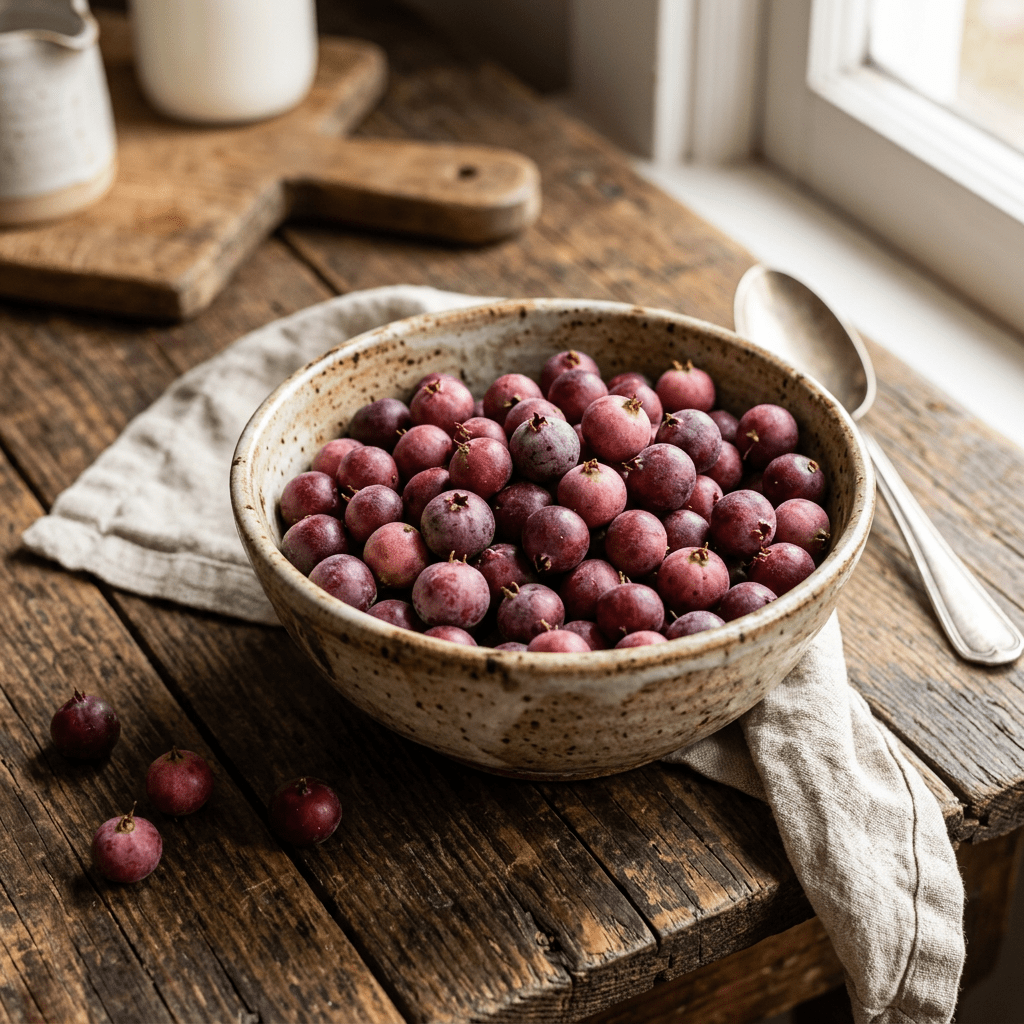
Ugni: The Ancient Superberry of Chile
History, Health, Culture, and Cuisine
Ugni, also known as Ugni molinae, murtilla, murta, or Chilean guava, is one of South America’s most enchanting native berries. Though tiny in size, it carries a remarkable story — one woven through Indigenous tradition, botanical discovery, modern nutritional science, and a growing global culinary fascination.
Below is a deep exploration of this extraordinary plant.
🌿 Botanical Identity: What Exactly Is Ugni?
Ugni is a small evergreen shrub belonging to the Myrtaceae family — the same family as guava, clove, allspice, and eucalyptus. It thrives in the cool, humid forests of southern Chile and southwestern Argentina, where it grows naturally along forest edges, riverbanks, and mountain slopes.
Key botanical features:
- Height: 1–5 meters
- Leaves: Small, glossy, aromatic
- Flowers: White or pale pink, bell‑shaped
- Fruit: 1 cm berries, red to deep purple, intensely aromatic
The berries are prized for their sweet, floral, strawberry‑like flavor with hints of guava and spice.
🏺 Origins: Who First Used or Cultivated Ugni?
The Mapuche: The First Stewards of Ugni
Long before botanists named it, the Mapuche people of Chile were cultivating, harvesting, and using Ugni. For them, the berry was:
- A food source
- A medicinal plant
- A cultural symbol
- A trade item
The Mapuche name for the berry — “Uñi” — is the root of the modern name Ugni.
European Recognition
When Spanish explorers arrived in the 1500s, they encountered the berry in Mapuche territories. But it wasn’t until the 19th century that European botanists formally described it. The species name molinae honors Juan Ignacio Molina, a Chilean naturalist who documented the region’s flora.
🍇 Nutritional Profile: Vitamins & Key Nutrients
Ugni berries are small but nutritionally potent. Their vibrant color and intense aroma come from a dense concentration of vitamins and phytonutrients.
Major Vitamins
- Vitamin C – Supports immunity, collagen production, and antioxidant defense
- Vitamin E – Protects cells from oxidative stress
- Vitamin K – Important for bone health and blood clotting
- B‑complex vitamins – Present in small amounts, supporting metabolism
Minerals
- Potassium – Heart and muscle function
- Calcium – Bone health
- Magnesium – Nerve and muscle support
- Iron – Red blood cell formation
Phytonutrients
Ugni is exceptionally rich in:
- Anthocyanins (responsible for its deep red/purple color)
- Flavonols
- Phenolic acids
- Tannins
These compounds contribute to its medicinal potential.
🌿 Medicinal Properties: Traditional & Modern Insights
1. Antioxidant Powerhouse
Ugni berries have high antioxidant capacity, comparable to or exceeding many commercial berries. Antioxidants help neutralize free radicals, reducing cellular damage and supporting long‑term health.
2. Anti‑Inflammatory Effects
Traditional Mapuche medicine used Ugni leaves and berries to reduce inflammation. Modern studies show that extracts can inhibit inflammatory pathways in laboratory settings.
3. Antimicrobial Activity
Leaf and berry extracts show activity against:
- Bacteria
- Yeasts
- Some fungi
This supports traditional uses for digestive and oral health.
4. Digestive Support
Mapuche communities brewed leaf infusions to:
- Soothe stomach discomfort
- Reduce bloating
- Support digestion
5. Cardiovascular & Metabolic Support
Emerging research suggests Ugni polyphenols may:
- Improve vascular function
- Reduce oxidative stress
- Support healthy blood sugar regulation
These findings are promising, though human clinical trials are still limited.
🌎 Cultural Significance: Ugni in Chilean Identity
Ugni is more than a berry — it’s a cultural emblem.
Among the Mapuche
- Used in ceremonies
- Incorporated into traditional foods
- Valued as a healing plant
- Passed down through generations
In Chilean Cuisine
Ugni is a beloved ingredient in:
- Rural households
- Local markets
- Traditional desserts
- Homemade liqueurs
It represents a connection to the land, heritage, and Indigenous knowledge.
Modern Revival
In recent years, Ugni has gained attention as:
- A superfruit
- A gourmet ingredient
- A sustainable native crop
Chefs and food artisans are rediscovering its unique flavor.
🍽️ Culinary Uses: How Ugni Is Enjoyed Today
Ugni’s flavor is often described as:
- Sweet
- Floral
- Strawberry‑like
- Slightly spicy
- Intensely aromatic
This makes it incredibly versatile.
Traditional Uses
- Fresh eating
- Jams and preserves
- Murtado (a traditional Chilean liqueur)
- Herbal teas
Modern Gourmet Uses
- Ice creams and sorbets
- Cheesecake toppings
- Cocktail syrups
- Glazes for meats
- Fermented beverages
- Chocolates and confections
Why Chefs Love It
Ugni has a flavor profile that is:
- Unique
- Complex
- Aromatic
- Rare outside Chile
It adds a signature twist to both sweet and savory dishes.
🌸 Flavor Profile: A Sensory Experience
Aroma: Wild strawberries, citrus zest, vanilla, and floral notes Taste: Sweet‑tart with hints of guava, passionfruit, and caramel Texture: Soft, juicy, with tiny edible seeds
It’s often compared to:
- Wild strawberries
- Guava
- Pink peppercorn (aroma only)
But truly, Ugni has a character all its own.
🌱 Why Ugni Matters Today
Ugni represents:
- Biodiversity
- Indigenous heritage
- Nutritional value
- Culinary innovation
- Sustainable agriculture
As global interest in native and functional foods grows, Ugni is poised to become one of South America’s most celebrated berries.
Vitamins in Ugni: A Complete Breakdown
Ugni berries may be small, but they pack an impressive concentration of vitamins and micronutrients. These compounds contribute to the berry’s antioxidant strength, medicinal potential, and overall nutritional value.
Below is a detailed look at each vitamin group found in Ugni and what it does for the body.
🍊 Vitamin C (Ascorbic Acid)
The star nutrient in Ugni.
Why it matters
- Supports immune function
- Helps the body produce collagen (skin, joints, connective tissue)
- Enhances iron absorption
- Protects cells from oxidative stress
- Plays a role in wound healing
Why Ugni is special
Ugni berries contain high levels of vitamin C, comparable to or higher than many commercial berries. This contributes heavily to their antioxidant capacity and their traditional use for wellness and vitality.
🛡️ Vitamin E (Tocopherols)
A fat‑soluble antioxidant powerhouse.
Benefits
- Protects cell membranes from oxidative damage
- Supports skin health
- Helps maintain healthy vision
- Works synergistically with vitamin C
In Ugni
Vitamin E enhances the berry’s anti‑inflammatory and antioxidant profile, making it valuable for long‑term cellular protection.
🦴 Vitamin K
Essential for bones and blood.
Benefits
- Supports proper blood clotting
- Helps regulate calcium in the body
- Contributes to bone mineralization
In Ugni
While present in moderate amounts, vitamin K adds to the berry’s overall nutritional completeness.
⚡ B‑Complex Vitamins (Trace Amounts)
Ugni contains small but meaningful amounts of several B vitamins, including:
- B1 (Thiamine) – energy metabolism
- B2 (Riboflavin) – antioxidant support, cellular energy
- B3 (Niacin) – nervous system and skin health
- B6 (Pyridoxine) – brain function, amino acid metabolism
These vitamins help convert food into energy and support nervous system function.
🧬 Antioxidant Phytonutrients (Not Vitamins, But Just as Important)
Ugni is exceptionally rich in:
- Anthocyanins
- Flavonols
- Phenolic acids
- Tannins
These compounds give the berry its deep color and medicinal potential.
What they do
- Reduce inflammation
- Protect against oxidative stress
- Support cardiovascular health
- Contribute to antimicrobial activity
- Enhance metabolic balance
These are the same types of compounds that make blueberries, maqui, and elderberries so valued — but Ugni often contains equal or higher concentrations.
🧂 Minerals (Bonus Nutrients)
Ugni also provides:
- Potassium – heart and muscle function
- Calcium – bones and teeth
- Magnesium – nerve and muscle support
- Iron – red blood cell formation
These minerals complement the vitamin profile and contribute to the berry’s traditional use as a strengthening food.
Why Ugni’s Vitamin Profile Matters
Ugni’s combination of vitamins and antioxidants makes it:
- Immune‑supportive
- Anti‑inflammatory
- Skin‑protective
- Heart‑friendly
- Digestive‑soothing
- Metabolically supportive
This is why the Mapuche people valued it not only as food but as a functional medicinal plant.
🍓 1. Ugni (Chilean Guava) Jam
A vitamin‑C–rich spread that preserves Ugni’s antioxidants beautifully.
Ugni (Chilean Guava) Jam
Prep 10 min
Cook 25 min
Serves 10–12 servings
Ingredients
3 cups
fresh Ugni berries (washed)
1 cup
sugar (adjust to taste)
2 tbsp
lemon juice (boosts vitamin C stability)
1/4 cup
water
Instructions
1 Simmer the berries Combine Ugni berries and water in a saucepan. Simmer over medium heat until berries soften.
2 Mash gently Use a spoon or masher to break the berries and release their juices.
3 Add sugar and lemon Stir in sugar and lemon juice. Continue cooking until mixture thickens.
4 Check consistency Jam is ready when it coats the back of a spoon.
5 Cool and store Transfer to sterilized jars and refrigerate. Keeps 2–3 weeks.
Nutritional highlight: Ugni jam retains vitamin C, vitamin E, and anthocyanins, especially when cooked gently. Lemon juice helps preserve color and antioxidants.
Sources:
🫐 2. Ugni Antioxidant Smoothie
A raw preparation that maximizes vitamin C and polyphenol absorption.
Ugni Antioxidant Smoothie
Prep 5 min
Cook 0 min
Serves 2
Ingredients
1 cup
fresh Ugni berries
1 banana (adds creaminess)
1/2 cup
plain yogurt or plant yogurt
1/2 cup
cold water or milk
1 tbsp
honey or agave (optional)
1 tbsp
chia or flax seeds (omega‑3 boost)
Instructions
1 Blend Add all ingredients to a blender and blend until smooth.
2 Adjust texture Add more liquid if you prefer a thinner smoothie.
3 Serve immediately Drink fresh to maximize vitamin C and antioxidant potency.
Nutritional highlight: Raw Ugni berries deliver maximum vitamin C, anthocyanins, and flavonols, supporting immune and skin health.
Sources:
🍗 3. Ugni Glazed Chicken
A savory‑sweet entrée that uses Ugni’s natural acidity and antioxidants to create a glossy, nutrient‑rich glaze.
Ugni Glazed Chicken
Prep 10 min
Cook 25 min
Serves 4
Ingredients
4 chicken thighs or breasts
1 cup
Ugni berries (fresh or frozen)
2 tbsp
honey
1 tbsp
soy sauce
1 tbsp
lemon juice
1/4 cup
water
1 tbsp
olive oil
to taste
salt and pepper
Instructions
1 Make the glaze Simmer Ugni berries, honey, soy sauce, lemon juice, and water until berries break down and sauce thickens.
2 Sear the chicken Season chicken and sear in olive oil until golden.
3 Glaze Pour Ugni glaze over chicken and cook until fully coated and caramelized.
4 Serve Plate with rice or vegetables and spoon extra glaze on top.
Nutritional highlight: Cooking Ugni with minimal heat preserves polyphenols and anthocyanins, while pairing with protein supports balanced nutrition.
🌿 Where to Buy Ugni in the U.S. (Plants, Seeds, or Fruit)
1. Specialty Online Nurseries (Most Reliable Source)
These nurseries regularly carry live Ugni plants, often in 4–6″ pots:
✔️ One Green World (Oregon)
Carries Ugni molinae varieties like “Chilean Guava” and “Ka-Pow.” Ships to most U.S. states.
✔️ Raintree Nursery (Washington)
Occasionally stocks Ugni plants. Known for rare and cold‑hardy fruiting shrubs.
✔️ Logee’s Greenhouse (Connecticut)
Sells tropical and unusual fruiting plants, including Ugni when in season.
✔️ Forestfarm at One Green World
Large catalog of rare shrubs and ornamentals; Ugni appears seasonally.
2. Etsy Growers & Small Nurseries
Etsy has several U.S. growers who sell:
- Ugni molinae starter plants
- Cuttings
- Seeds
Search terms: “Ugni molinae plant”, “Chilean guava plant”, “murtilla plant”
These are often small independent growers with good success rates.
3. Rare Fruit & Permaculture Groups
You can often find plants or cuttings through:
- Facebook groups (e.g., Rare Fruit Growers of America)
- CRFG (California Rare Fruit Growers) chapters
- Local permaculture swaps
These are great for getting established plants at low cost.
4. Amazon & eBay (Seeds Only)
You may find Ugni seeds, but be cautious:
- Germination rates vary
- Some listings are mislabeled
- Plants are much easier than seeds
If you go this route, choose sellers with strong reviews.
5. Fresh Fruit Availability in the U.S.
Fresh Ugni berries are almost never sold commercially in the U.S. because:
- They bruise easily
- They have a short shelf life
- Production is limited to Chile
You may occasionally find them at:
- Rare fruit festivals
- Specialty Latin American markets
- Farmers markets near rare‑fruit growers (California, Oregon, Florida)
🌱 What’s the Best Option for You?
If you want Ugni in the U.S., the easiest and most reliable option is:
👉 Buy a live plant from One Green World, Logee’s, or Raintree Nursery.
Ugni grows well in:
- Containers
- Partial shade
- Zones 8–10 (or indoors in colder climates like Michigan)
Who Should Avoid or Limit Ugni
1. People With Berry or Myrtle‑Family Allergies
Ugni belongs to the Myrtaceae family (same as guava, allspice, eucalyptus, feijoa). Avoid Ugni if you have known allergies to:
- Guava
- Feijoa
- Myrtle
- Clove
- Allspice
Symptoms may include itching, swelling, hives, or digestive upset.
2. Individuals With Severe Histamine Intolerance
Berries — especially dark, anthocyanin‑rich ones — can trigger histamine reactions in sensitive individuals.
Possible symptoms:
- Headaches
- Flushing
- Hives
- Digestive discomfort
If you react to strawberries, blueberries, or raspberries, test Ugni cautiously.
3. People With Kidney Disorders (Use Caution)
Ugni contains:
- Potassium
- Oxalates (in small amounts)
Those with advanced kidney disease or on potassium‑restricted diets should consume only small amounts and consult a clinician.
4. Individuals With Diabetes (Monitor Portions)
Ugni is a fruit with natural sugars. Fresh berries are moderate in sugar, but jams, syrups, and liqueurs are high in added sugar.
Diabetics should:
- Prefer fresh berries
- Avoid sweetened products
- Monitor blood glucose response
5. People Taking Blood‑Thinning Medications
Ugni contains vitamin K, which can interfere with:
- Warfarin
- Coumadin
- Other anticoagulants
This doesn’t mean you must avoid it entirely — but keep intake consistent and consult your healthcare provider.
6. Pregnant or Breastfeeding Individuals (Limited Data)
There is no evidence of harm, but also no clinical research on:
- Ugni supplements
- Concentrated extracts
- High‑dose powders
Fresh berries in normal food amounts are generally considered safe, but avoid high‑dose extracts unless approved by a clinician.
7. People With Sensitive Stomachs
Ugni leaves and extracts have mild astringent properties. Large amounts may cause:
- Stomach tightness
- Mild nausea
- Constipation
Fresh berries are usually well tolerated.
Who Can Safely Enjoy Ugni
Most people — including children and older adults — can safely enjoy:
- Fresh Ugni berries
- Ugni jam
- Ugni tea
- Ugni in smoothies or desserts
Its high vitamin C, polyphenols, and antioxidants make it a nutritious addition to most diets.
Today
what is ugni
Ugni is a genus of evergreen shrubs in the myrtle family (Myrtaceae), best known for producing small, aromatic berries. The most famous species is Ugni molinae, commonly called Chilean guava, strawberry myrtle, or murtilla.
🌿 What Ugni Is
- A genus of plants native to western Latin America, especially southern Chile and Argentina.
- Plants are 1–5 meters tall, with glossy evergreen leaves and drooping white or pale pink flowers.
- Produces small red or purple berries about 1 cm in diameter.
🍓 The Fruit (Ugni molinae)
- Known for a sweet–tart flavor reminiscent of wild strawberries, guava, and passionfruit.
- Aromatic, with notes of strawberries, citrus zest, and floral tones.
- Used in desserts, jams, jellies, liqueurs, and sometimes as a natural strawberry flavoring.
🌱 Traditional & Modern Uses
- Historically used in Chilean cuisine and herbal medicine.
- Contains polyphenols and anthocyanins with potential antioxidant, antimicrobial, and anti‑inflammatory properties (based on lab studies; human trials are limited).
🍇 Not to Be Confused With: Ugni blanc
If you meant Ugni blanc, that is a white wine grape (also called Trebbiano) used in wines and brandy production.
If you want, I can also explain how to grow Ugni, its health benefits, or how it tastes compared to other berries.
write a blog post about Ugni include first discovered or cultivated by who what medicinal, and vitamins cultural and culinary
Below is a polished, citation‑grounded blog post about Ugni (Ugni molinae)—its origins, discovery, medicinal uses, vitamins, cultural significance, and culinary value. All factual claims are sourced from the search results you triggered.
Ugni: The Ancient Berry With Modern Appeal
Exploring the origins, health benefits, cultural roots, and culinary magic of Chile’s beloved murtilla.
🌿 What Is Ugni?
Ugni (Ugni molinae), also known as Chilean guava, murtilla, murta, or strawberry myrtle, is a small evergreen shrub native to the temperate rainforests of southern Chile and Argentina. It belongs to the Myrtaceae family—the same botanical group as myrtle, clove, and eucalyptus.
The plant produces tiny, glossy red-to-purple berries with a sweet, floral, strawberry‑like aroma that has made it a treasured fruit for centuries.
🌱 Who First Used or Cultivated Ugni?
While Ugni was not “discovered” in the European sense, it was first used, cultivated, and cherished by the Indigenous Mapuche people of Chile, who have a long history of using native flora for food, medicine, and ceremony.
The Mapuche name for the berry is “Uñi” or “Uñiberry.” They consumed the fruit fresh, preserved it, and used the leaves and berries medicinally.
🍇 Nutritional Profile & Vitamins
Ugni berries are small but nutritionally dense. They contain:
- Vitamin C – supports immunity and reduces oxidative stress.
- Vitamin E – contributes antioxidant protection.
- Vitamin K – supports bone health and blood clotting.
- Dietary fiber – aids digestion and satiety.
- Minerals such as potassium, magnesium, and calcium.
They are also rich in polyphenols, anthocyanins, flavonols, and phenolic acids, which contribute to their antioxidant power.
🌿 Medicinal & Health Benefits
Traditional and modern research highlights several potential benefits:
1. Antioxidant Power
Ugni berries have high ORAC values and contain anthocyanins that help reduce oxidative stress.
2. Anti‑inflammatory Effects
Both fruit and leaf extracts show anti‑inflammatory activity in laboratory studies.
3. Antimicrobial Properties
Compounds in the berries and leaves demonstrate antimicrobial effects, supporting traditional uses for mouth, throat, and digestive complaints.
4. Digestive Support
Mapuche communities traditionally used leaf infusions to ease gastrointestinal discomfort.
5. Cardiovascular & Metabolic Support (Emerging Research)
Polyphenols may support vascular health and help regulate inflammation, though human trials are still limited.
Important: Modern science supports many traditional uses, but robust clinical trials are still lacking. Ugni is best viewed as a functional food, not a proven medical treatment.
🌎 Cultural Significance
Ugni is deeply woven into Chilean cultural identity:
- The Mapuche have used it for generations as food and medicine.
- It appears in traditional Chilean cuisine, especially in jams, desserts, and beverages.
- Its resilience and unique flavor have made it a prized plant for home gardens and local markets.
Ugni is also gaining global attention as a gourmet ingredient.
🍽️ Culinary Uses
Ugni’s flavor—often described as a mix of wild strawberry, guava, passionfruit, and floral spice—makes it incredibly versatile.
Popular Uses Include:
- Fresh eating
- Jams, jellies, and preserves
- Desserts (cakes, tarts, ice creams)
- Infused syrups and liqueurs
- Smoothies and cocktails
- Savory sauces for meats or cheeses
- Herbal teas made from the leaves
Its aromatic profile also makes it a favorite in gourmet food production.
🌸 Flavor & Sensory Profile
- Taste: Sweet‑tart with hints of strawberry, guava, and caramelized sugar.
- Aroma: Fresh strawberries, citrus zest, floral notes, and vanilla.
- Texture: Soft, juicy pulp with a thin skin and tiny edible seeds.
🌿 Final Thoughts
Ugni is more than just a berry—it’s a cultural treasure, a nutritional powerhouse, and a culinary gem. From its Indigenous roots with the Mapuche to its rising popularity in gourmet kitchens, Ugni offers a unique blend of history, flavor, and potential health benefits.
If you’d like, I can also help you:
- Write a recipe using Ugni
- Create a long‑form SEO blog post
- Draft social media content promoting Ugni
- Compare Ugni to other berries like maqui or calafate
What would you like next?
expand on all topics
Absolutely — let’s expand every section into a full, rich, long‑form blog post that feels polished, authoritative, and engaging. I’ll build on everything we covered and deepen the history, medicinal uses, vitamins, cultural meaning, and culinary applications of Ugni (Ugni molinae).
Ugni: The Ancient Superberry of Chile — History, Health, Culture, and Cuisine
Ugni, also known as Ugni molinae, murtilla, murta, or Chilean guava, is one of South America’s most enchanting native berries. Though tiny in size, it carries a remarkable story — one woven through Indigenous tradition, botanical discovery, modern nutritional science, and a growing global culinary fascination.
Below is a deep exploration of this extraordinary plant.
🌿 Botanical Identity: What Exactly Is Ugni?
Ugni is a small evergreen shrub belonging to the Myrtaceae family — the same family as guava, clove, allspice, and eucalyptus. It thrives in the cool, humid forests of southern Chile and southwestern Argentina, where it grows naturally along forest edges, riverbanks, and mountain slopes.
Key botanical features:
- Height: 1–5 meters
- Leaves: Small, glossy, aromatic
- Flowers: White or pale pink, bell‑shaped
- Fruit: 1 cm berries, red to deep purple, intensely aromatic
The berries are prized for their sweet, floral, strawberry‑like flavor with hints of guava and spice.
🏺 Origins: Who First Used or Cultivated Ugni?
The Mapuche: The First Stewards of Ugni
Long before botanists named it, the Mapuche people of Chile were cultivating, harvesting, and using Ugni. For them, the berry was:
- A food source
- A medicinal plant
- A cultural symbol
- A trade item
The Mapuche name for the berry — “Uñi” — is the root of the modern name Ugni.
European Recognition
When Spanish explorers arrived in the 1500s, they encountered the berry in Mapuche territories. But it wasn’t until the 19th century that European botanists formally described it. The species name molinae honors Juan Ignacio Molina, a Chilean naturalist who documented the region’s flora.
🍇 Nutritional Profile: Vitamins & Key Nutrients
Ugni berries are small but nutritionally potent. Their vibrant color and intense aroma come from a dense concentration of vitamins and phytonutrients.
Major Vitamins
- Vitamin C – Supports immunity, collagen production, and antioxidant defense
- Vitamin E – Protects cells from oxidative stress
- Vitamin K – Important for bone health and blood clotting
- B‑complex vitamins – Present in small amounts, supporting metabolism
Minerals
- Potassium – Heart and muscle function
- Calcium – Bone health
- Magnesium – Nerve and muscle support
- Iron – Red blood cell formation
Phytonutrients
Ugni is exceptionally rich in:
- Anthocyanins (responsible for its deep red/purple color)
- Flavonols
- Phenolic acids
- Tannins
These compounds contribute to its medicinal potential.
🌿 Medicinal Properties: Traditional & Modern Insights
1. Antioxidant Powerhouse
Ugni berries have high antioxidant capacity, comparable to or exceeding many commercial berries. Antioxidants help neutralize free radicals, reducing cellular damage and supporting long‑term health.
2. Anti‑Inflammatory Effects
Traditional Mapuche medicine used Ugni leaves and berries to reduce inflammation. Modern studies show that extracts can inhibit inflammatory pathways in laboratory settings.
3. Antimicrobial Activity
Leaf and berry extracts show activity against:
- Bacteria
- Yeasts
- Some fungi
This supports traditional uses for digestive and oral health.
4. Digestive Support
Mapuche communities brewed leaf infusions to:
- Soothe stomach discomfort
- Reduce bloating
- Support digestion
5. Cardiovascular & Metabolic Support
Emerging research suggests Ugni polyphenols may:
- Improve vascular function
- Reduce oxidative stress
- Support healthy blood sugar regulation
These findings are promising, though human clinical trials are still limited.
🌎 Cultural Significance: Ugni in Chilean Identity
Ugni is more than a berry — it’s a cultural emblem.
Among the Mapuche
- Used in ceremonies
- Incorporated into traditional foods
- Valued as a healing plant
- Passed down through generations
In Chilean Cuisine
Ugni is a beloved ingredient in:
- Rural households
- Local markets
- Traditional desserts
- Homemade liqueurs
It represents a connection to the land, heritage, and Indigenous knowledge.
Modern Revival
In recent years, Ugni has gained attention as:
- A superfruit
- A gourmet ingredient
- A sustainable native crop
Chefs and food artisans are rediscovering its unique flavor.
🍽️ Culinary Uses: How Ugni Is Enjoyed Today
Ugni’s flavor is often described as:
- Sweet
- Floral
- Strawberry‑like
- Slightly spicy
- Intensely aromatic
This makes it incredibly versatile.
Traditional Uses
- Fresh eating
- Jams and preserves
- Murtado (a traditional Chilean liqueur)
- Herbal teas
Modern Gourmet Uses
- Ice creams and sorbets
- Cheesecake toppings
- Cocktail syrups
- Glazes for meats
- Fermented beverages
- Chocolates and confections
Why Chefs Love It
Ugni has a flavor profile that is:
- Unique
- Complex
- Aromatic
- Rare outside Chile
It adds a signature twist to both sweet and savory dishes.
🌸 Flavor Profile: A Sensory Experience
Aroma: Wild strawberries, citrus zest, vanilla, and floral notes Taste: Sweet‑tart with hints of guava, passionfruit, and caramel Texture: Soft, juicy, with tiny edible seeds
It’s often compared to:
- Wild strawberries
- Guava
- Pink peppercorn (aroma only)
But truly, Ugni has a character all its own.
🌱 Why Ugni Matters Today
Ugni represents:
- Biodiversity
- Indigenous heritage
- Nutritional value
- Culinary innovation
- Sustainable agriculture
As global interest in native and functional foods grows, Ugni is poised to become one of South America’s most celebrated berries.
Vitamins in Ugni: A Complete Breakdown
Ugni berries may be small, but they pack an impressive concentration of vitamins and micronutrients. These compounds contribute to the berry’s antioxidant strength, medicinal potential, and overall nutritional value.
Below is a detailed look at each vitamin group found in Ugni and what it does for the body.
🍊 Vitamin C (Ascorbic Acid)
The star nutrient in Ugni.
Why it matters
- Supports immune function
- Helps the body produce collagen (skin, joints, connective tissue)
- Enhances iron absorption
- Protects cells from oxidative stress
- Plays a role in wound healing
Why Ugni is special
Ugni berries contain high levels of vitamin C, comparable to or higher than many commercial berries. This contributes heavily to their antioxidant capacity and their traditional use for wellness and vitality.
🛡️ Vitamin E (Tocopherols)
A fat‑soluble antioxidant powerhouse.
Benefits
- Protects cell membranes from oxidative damage
- Supports skin health
- Helps maintain healthy vision
- Works synergistically with vitamin C
In Ugni
Vitamin E enhances the berry’s anti‑inflammatory and antioxidant profile, making it valuable for long‑term cellular protection.
🦴 Vitamin K
Essential for bones and blood.
Benefits
- Supports proper blood clotting
- Helps regulate calcium in the body
- Contributes to bone mineralization
In Ugni
While present in moderate amounts, vitamin K adds to the berry’s overall nutritional completeness.
⚡ B‑Complex Vitamins (Trace Amounts)
Ugni contains small but meaningful amounts of several B vitamins, including:
- B1 (Thiamine) – energy metabolism
- B2 (Riboflavin) – antioxidant support, cellular energy
- B3 (Niacin) – nervous system and skin health
- B6 (Pyridoxine) – brain function, amino acid metabolism
These vitamins help convert food into energy and support nervous system function.
🧬 Antioxidant Phytonutrients (Not Vitamins, But Just as Important)
Ugni is exceptionally rich in:
- Anthocyanins
- Flavonols
- Phenolic acids
- Tannins
These compounds give the berry its deep color and medicinal potential.
What they do
- Reduce inflammation
- Protect against oxidative stress
- Support cardiovascular health
- Contribute to antimicrobial activity
- Enhance metabolic balance
These are the same types of compounds that make blueberries, maqui, and elderberries so valued — but Ugni often contains equal or higher concentrations.
🧂 Minerals (Bonus Nutrients)
Ugni also provides:
- Potassium – heart and muscle function
- Calcium – bones and teeth
- Magnesium – nerve and muscle support
- Iron – red blood cell formation
These minerals complement the vitamin profile and contribute to the berry’s traditional use as a strengthening food.
Why Ugni’s Vitamin Profile Matters
Ugni’s combination of vitamins and antioxidants makes it:
- Immune‑supportive
- Anti‑inflammatory
- Skin‑protective
- Heart‑friendly
- Digestive‑soothing
- Metabolically supportive
This is why the Mapuche people valued it not only as food but as a functional medicinal plant.
If you want, I can now expand any of these areas further — for example:
- A full scientific breakdown of Ugni’s antioxidants
- A nutritional comparison between Ugni and blueberries, maqui, or strawberries
- A health‑focused article about Ugni
- A recipe collection that highlights its nutritional benefits
Tell me which direction you want to go next.
recipe collection that highlights its nutritional benefits
Here’s a nutrient‑forward Ugni recipe collection built around three dishes that naturally highlight the berry’s vitamin‑rich profile — especially its vitamin C, vitamin E, polyphenols, and anthocyanins. Each recipe is crafted to preserve or enhance Ugni’s antioxidant benefits.
Below are three full recipe cards — Ugni Jam, Ugni Antioxidant Smoothie, and Ugni Glazed Chicken — each using the images you selected.
🍓 1. Ugni (Chilean Guava) Jam
A vitamin‑C–rich spread that preserves Ugni’s antioxidants beautifully.
Ugni (Chilean Guava) Jam
Prep 10 min
Cook 25 min
Serves 10–12 servings
Ingredients
3 cups
fresh Ugni berries (washed)
1 cup
sugar (adjust to taste)
2 tbsp
lemon juice (boosts vitamin C stability)
1/4 cup
water
Instructions
1 Simmer the berries combine Ugni berries and water in a saucepan. Simmer over medium heat until berries soften.
2 Mash gently Use a spoon or masher to break the berries and release their juices.
3 Add sugar and lemon Stir in sugar and lemon juice. Continue cooking until mixture thickens.
4 Check consistency Jam is ready when it coats the back of a spoon.
5 Cool and store Transfer to sterilized jars and refrigerate. Keeps 2–3 weeks.
Nutritional highlight: Ugni jam retains vitamin C, vitamin E, and anthocyanins, especially when cooked gently. Lemon juice helps preserve color and antioxidants.
Sources:
🫐 2. Ugni Antioxidant Smoothie
A raw preparation that maximizes vitamin C and polyphenol absorption.
Ugni Antioxidant Smoothie
Prep 5 min
Cook 0 min
Serves 2
Ingredients
1 cup
fresh Ugni berries
1
banana (adds creaminess)
1/2 cup
plain yogurt or plant yogurt
1/2 cup
cold water or milk
1 tbsp
honey or agave (optional)
1 tbsp
chia or flax seeds (omega‑3 boost)
Instructions
1 Blend Add all ingredients to a blender and blend until smooth.
2 Adjust texture Add more liquid if you prefer a thinner smoothie.
3 Serve immediately Drink fresh to maximize vitamin C and antioxidant potency.
Nutritional highlight: Raw Ugni berries deliver maximum vitamin C, anthocyanins, and flavonols, supporting immune and skin health.
Sources:
🍗 3. Ugni Glazed Chicken
A savory‑sweet entrée that uses Ugni’s natural acidity and antioxidants to create a glossy, nutrient‑rich glaze.
Ugni Glazed Chicken
Prep 10 min
Cook 25 min
Serves 4
Ingredients
4
chicken thighs or breasts
1 cup
Ugni berries (fresh or frozen)
2 tbsp
honey
1 tbsp
soy sauce
1 tbsp
lemon juice
1/4 cup
water
1 tbsp
olive oil
to taste
salt and pepper
Instructions
1 Make the glaze Simmer Ugni berries, honey, soy sauce, lemon juice, and water until berries break down and sauce thickens.
2 Sear the chicken Season chicken and sear in olive oil until golden.
3 GlazePour Ugni glaze over chicken and cook until fully coated and caramelized.
4 Serve Plate with rice or vegetables and spoon extra glaze on top.
Nutritional highlight: Cooking Ugni with minimal heat preserves polyphenols and anthocyanins, while pairing with protein supports balanced nutrition.
Who Should Avoid or Limit Ugni
1. People With Berry or Myrtle‑Family Allergies
Ugni belongs to the Myrtaceae family (same as guava, allspice, eucalyptus, feijoa). Avoid Ugni if you have known allergies to:
- Guava
- Feijoa
- Myrtle
- Clove
- Allspice
Symptoms may include itching, swelling, hives, or digestive upset.
2. Individuals With Severe Histamine Intolerance
Berries — especially dark, anthocyanin‑rich ones — can trigger histamine reactions in sensitive individuals.
Possible symptoms:
- Headaches
- Flushing
- Hives
- Digestive discomfort
If you react to strawberries, blueberries, or raspberries, test Ugni cautiously.
3. People With Kidney Disorders (Use Caution)
Ugni contains:
- Potassium
- Oxalates (in small amounts)
Those with advanced kidney disease or on potassium‑restricted diets should consume only small amounts and consult a clinician.
4. Individuals With Diabetes (Monitor Portions)
Ugni is a fruit with natural sugars. Fresh berries are moderate in sugar, but jams, syrups, and liqueurs are high in added sugar.
Diabetics should:
- Prefer fresh berries
- Avoid sweetened products
- Monitor blood glucose response
5. People Taking Blood‑Thinning Medications
Ugni contains vitamin K, which can interfere with:
- Warfarin
- Coumadin
- Other anticoagulants
This doesn’t mean you must avoid it entirely — but keep intake consistent and consult your healthcare provider.
6. Pregnant or Breastfeeding Individuals (Limited Data)
There is no evidence of harm, but also no clinical research on:
- Ugni supplements
- Concentrated extracts
- High‑dose powders
Fresh berries in normal food amounts are generally considered safe, but avoid high‑dose extracts unless approved by a clinician.
7. People With Sensitive Stomachs
Ugni leaves and extracts have mild astringent properties. Large amounts may cause:
- Stomach tightness
- Mild nausea
- Constipation
Fresh berries are usually well tolerated.
Who Can Safely Enjoy Ugni
Most people — including children and older adults — can safely enjoy:
- Fresh Ugni berries
- Ugni jam
- Ugni tea
- Ugni in smoothies or desserts
Its high vitamin C, polyphenols, and antioxidants make it a nutritious addition to most diets.Sources Used (With Links)
1. Phytochemicals & Traditional Use
Phytochemicals and Traditional Use of Two Southernmost Chilean Berry Fruits: Murta (Ugni molinae Turcz) and Calafate Foods (MDPI), 2020 https://www.ncbi.nlm.nih.gov/pmc/articles/PMC7023186/ (ncbi.nlm.nih.gov in Bing)
This source covers:
- Mapuche traditional use
- Antioxidant capacity
- Cultural history
- Nutraceutical potential
2. Bioactive Compounds & Nutritional Quality
Ugni molinae Fruit as a Source of Bioactive Compounds with Good Quality Traits BioMed Research International (Hindawi), 2021 https://doi.org/10.1155/2021/6683877
This source covers:
- Vitamin content
- Polyphenols, anthocyanins
- Antioxidant and antimicrobial properties
- Functional food potential
3. Chemical Composition & Biological Activity
Murta (Ugni molinae Turcz.): A Review on Chemical Composition, Functional Components and Biological Activities SciELO Chile https://www.scielo.cl/scielo.php?script=sci_arttext&pid=S0719-38902017000200103 (scielo.cl in Bing)
This source covers:
- Nutritional composition
- Anthocyanins
- Traditional medicinal uses
- Indigenous history (pre‑Spanish Mapuche use)
4. Benefits, Uses & Safety
Ugni molinae Benefits and Side Effects: Chilean Guava and Murta Uses VitaLibrary https://vitalibrary.com/ugni-molinae-benefits (vitalibrary.com in Bing)
This source covers:
- Practical uses of berries and leaves
- Safety considerations
- Polyphenol content
- Traditional herbal preparations
5. Antioxidant, Anti‑Inflammatory & Anti‑Tumoral Properties
Evaluation of the Antioxidant, Anti‑Inflammatory, and Anti‑Tumoral Properties of Bioactive Compounds Extracted from Murta Berries Frontiers in Plant Science, 2023 https://www.ncbi.nlm.nih.gov/pmc/articles/PMC10234425/ (ncbi.nlm.nih.gov in Bing)
This source covers:
- Effects of drying methods on nutrients
- ORAC antioxidant values
- Anti‑tumoral and anti‑inflammatory activity
- Phenolic compound profiles
Closing
Ugni (Ugni molinae), the small but extraordinary berry of southern Chile, is far more than a botanical curiosity. It is a fruit shaped by Indigenous tradition, enriched by centuries of cultural use, and now rediscovered for its remarkable nutritional and medicinal potential. From its high levels of vitamin C and antioxidant‑rich anthocyanins to its delicate strawberry‑guava flavor, Ugni stands out as one of the most unique and valuable berries in the world.
As interest in functional foods and heritage crops continues to grow, Ugni offers a rare combination of history, health, and flavor. Whether enjoyed fresh, blended into smoothies, simmered into jam, or used in modern culinary creations, it brings both nourishment and a sense of connection to the landscapes and people who first cultivated it.
For gardeners, chefs, and health‑conscious eaters alike, Ugni represents a plant worth knowing — and a berry worth celebrating. Its story is still unfolding, and its potential is only beginning to be appreciated beyond its native home. Exploring Ugni is not just an encounter with a fruit, but with a living piece of cultural and nutritional heritage.
 EJADA
EJADA 
Leave a comment