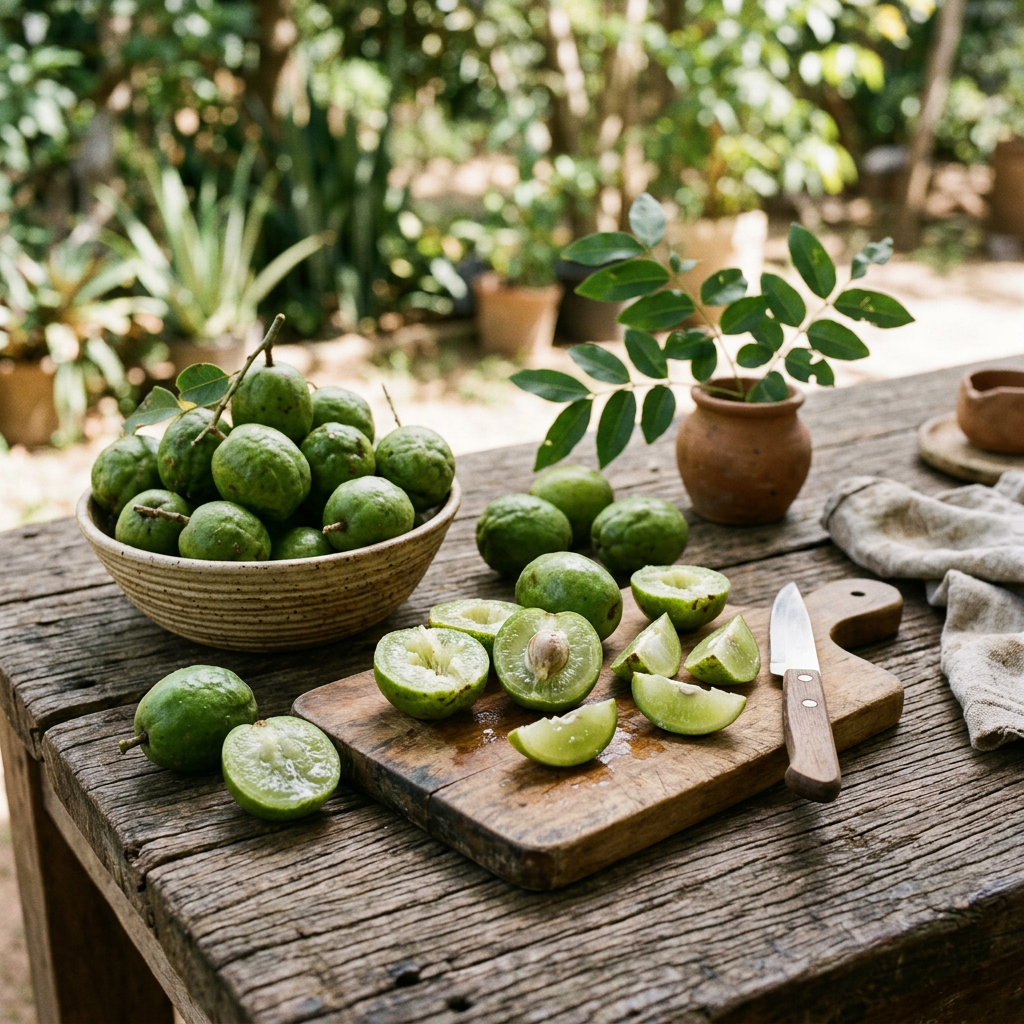
🌍 Where Umbu Was Discovered
Umbu (Spondias tuberosa) originates in one of the most unique and misunderstood landscapes on Earth: the Caatinga biome of northeastern Brazil. This region spans parts of Bahia, Pernambuco, Paraíba, Rio Grande do Norte, Ceará, Alagoas, Sergipe, and Piauí — an area defined by semi‑arid climate, rocky soils, and long seasonal droughts. To outsiders, the Caatinga can appear harsh and unforgiving, but to the people who call it home, it is a place of resilience, biodiversity, and deep cultural memory.
🌵 A Fruit Born From Drought and Adaptation
The Umbu tree evolved in an environment where rainfall is scarce and unpredictable. To survive, it developed tuberous subterranean roots capable of storing large amounts of water. These swollen roots act like natural reservoirs, allowing the tree to remain green and productive even when the land around it is dry and cracked.
This extraordinary adaptation is why Indigenous Tupi peoples named it:
“Y-mb-u” — the tree that gives drink
The name reflects both the tree’s ecological role and its importance as a lifeline in a region where water scarcity shapes daily life.
🧭 Indigenous Discovery and Early Use
Long before European contact, Indigenous groups of the Northeast relied on Umbu for:
- Hydration during long dry seasons
- Food when hunting and gathering were limited
- Medicinal uses, including bark and leaf infusions
- Trade with neighboring tribes
The fruit was eaten fresh, mashed into pastes, or mixed with water to create early versions of what would later become umbuzada.
🏞️ A Keystone Species of the Caatinga
Umbu is not just a fruit-bearing tree — it is a keystone species in its ecosystem:
- Its flowers feed bees and native pollinators
- Its fruit sustains birds, small mammals, and livestock
- Its roots stabilize soil and prevent erosion
- Its canopy provides shade in otherwise exposed terrain
In many rural communities, a single Umbu tree can be the center of family life — a place for gathering, resting, storytelling, and sharing meals.
🧑🌾 Arrival of Rural Settlers
When Portuguese colonizers and later settlers moved into the Sertão, they quickly recognized the Umbu tree’s value. It became:
- A reliable food source during drought
- A shade tree for cattle and goats
- A marker of fertile land
- A cultural symbol of endurance
By the 19th century, Umbu was deeply embedded in the identity of the Northeast, appearing in folk songs, poetry, and oral traditions.
🌎 Modern Recognition
Today, Umbu is celebrated as:
- A heritage fruit of Brazil
- A symbol of environmental resilience
- A key product for women-led cooperatives (especially in Bahia)
- A fruit with growing international interest due to its flavor and sustainability
Its discovery story is not just botanical — it is human, ecological, and cultural.
🏺 Cultural Significance of Umbu the Soul of the Sertão
Umbu is not merely a fruit in northeastern Brazil — it is a cultural anchor, a symbol of endurance, and a living reminder of how communities survive and thrive in one of the most challenging environments in South America. Its presence in the Caatinga is so deeply woven into daily life that many locals describe Umbu not as a plant, but as a companion through generations of hardship and celebration.
🌾 A Symbol of Resilience in a Land of Drought
The Sertão is a region defined by extremes: blistering heat, cracked earth, and long stretches without rain. In this landscape, the Umbu tree stands as a quiet miracle. Its ability to store water in its swollen roots makes it a metaphor for survival, and over centuries, it has become a cultural emblem of:
- Strength during scarcity
- Hope during drought
- The ingenuity of nature
For many families, the first fruits of the Umbu season signal relief — a natural reassurance that even in the harshest conditions, life persists.
👵 A Fruit of Memory, Family, and Tradition
Umbu is tied to family rituals that stretch back generations. Grandmothers teach children how to:
- Mash the fruit for umbuzada
- Stir bubbling pots of Umbu jam
- Harvest fruit without damaging the tree
- Share the first ripe Umbu of the season
These traditions are passed down like heirlooms, creating a sense of continuity between past and present.
🎶 Umbu in Folklore, Music, and Storytelling
The fruit appears in:
- Folk songs celebrating the Sertão’s beauty
- Poetry describing the bittersweet flavor of life in the Northeast
- Oral stories about trees that saved entire families during drought
- Local sayings that compare Umbu’s acidity to the sharpness of truth
In many rural towns, Umbu season is a time of storytelling — a moment when elders recount how the fruit sustained them through difficult years.
🧺 Economic and Social Importance
Umbu is also a cornerstone of community-based economies. In Bahia, women-led cooperatives harvest Umbu and transform it into:
- Jams
- Concentrates
- Fruit cheese
- Syrups
- Frozen pulp
These cooperatives provide income, independence, and empowerment, especially for women in rural areas. Umbu is not just a fruit — it is a livelihood.
🌎 A Cultural Bridge Between Past and Future
Today, Umbu is celebrated as:
- A heritage fruit of Brazil
- A symbol of environmental resilience
- A key ingredient in sustainable agriculture movements
- A product that connects rural traditions with global markets
Chefs across Brazil now highlight Umbu in modern cuisine, elevating it from a regional staple to a national treasure.
❤️ Why Umbu Matters
Umbu’s cultural significance comes down to one truth:
It represents the spirit of a people who learned to flourish in a place where survival itself is an act of courage.
Umbu is memory. Umbu is identity. Umbu is resilience made edible.
🍽️ Culinary Uses From Ancestral Kitchens to Modern Gastronomy
Umbu’s culinary identity is shaped by its bright acidity, juicy flesh, and refreshing citrus‑plum flavor. In the Caatinga, where ingredients must be resourceful and resilient, Umbu has become one of the most versatile fruits in the regional pantry.
🌿 A Fruit That Adapts to Every Kitchen
Umbu can be eaten at every stage of ripeness:
- Green Umbu → tart, crisp, ideal for savory dishes
- Semi‑ripe Umbu → balanced sweet‑sour flavor, perfect for drinks
- Fully ripe Umbu → soft, fragrant, excellent for desserts
This flexibility has made Umbu a cornerstone of both traditional home cooking and contemporary Brazilian cuisine.
🍹 Traditional Preparations
For centuries, Umbu has been transformed into foods that nourish families through long dry seasons:
- Umbuzada — a creamy drink-meal made from mashed Umbu, milk, and sugar
- Geléia de Umbu — a glossy jam cooked slowly until thick and aromatic
- Doce de Umbu (fruit cheese) — a dense, sliceable sweet similar to quince paste
- Umbu nectar — a refreshing beverage sold in markets and street stalls
These preparations preserve Umbu’s flavor long after the harvest ends.
🍛 Savory Uses
Umbu’s acidity makes it a natural substitute for lemon, tamarind, or vinegar:
- Added to meat stews for brightness
- Cooked into chutneys with onions and spices
- Blended into marinades for fish and poultry
- Used in sauces to balance rich or fatty dishes
Chefs in Brazil’s modern culinary movement now use Umbu to create:
- Umbu vinaigrettes
- Umbu reduction sauces
- Umbu gastrique for plating
- Umbu‑infused cocktails
Its flavor is unmistakable — sharp, lively, and deeply refreshing.
💊 Health Benefits A Small Fruit With Big Nutritional Power
Umbu may be small, but it delivers an impressive range of health benefits rooted in its vitamin content, hydration properties, and antioxidant profile.
🛡️ 1. Immune Support
Umbu is naturally high in Vitamin C, which helps:
- Strengthen immune defenses
- Support collagen production
- Improve skin elasticity
- Enhance iron absorption
This made Umbu especially valuable in regions with limited access to fresh produce.
🌿 2. Antioxidant Protection
The fruit contains natural antioxidants that help:
- Reduce oxidative stress
- Combat free radicals
- Support long‑term cellular health
These compounds contribute to Umbu’s reputation as a “revitalizing” fruit.
💧 3. Hydration in Harsh Climates
Umbu’s juicy pulp and high water content make it a natural hydrator — a crucial benefit in the dry Sertão. Historically, Umbu was consumed during droughts to help replenish fluids and maintain energy.
🧠 4. Digestive Support
Umbu contains dietary fiber, which:
- Supports healthy digestion
- Helps regulate bowel movements
- Promotes gut health
Traditional households often used Umbu preparations to soothe mild digestive discomfort.
❤️ 5. Low-Calorie, Nutrient-Dense
Umbu is naturally low in calories and fat, making it a refreshing, guilt‑free snack that still delivers essential nutrients.
🍊 Vitamins & Nutritional Profile What’s Inside Umbu
While exact values vary by ripeness and region, Umbu typically contains:
Key Vitamins
- Vitamin C (high) — immunity, skin health, antioxidant support
- Vitamin A (moderate) — vision, skin, immune function
- B‑complex vitamins (trace amounts) — energy metabolism
Minerals
- Calcium — bone health
- Iron — oxygen transport
- Phosphorus — cellular energy
- Potassium — hydration and muscle function
Other Nutritional Highlights
- Fiber — digestive health
- Natural sugars — gentle energy boost
- Antioxidants — cellular protection
- High water content — hydration
Umbu’s nutritional profile explains why it has been a survival fruit for centuries — it delivers hydration, vitamins, and energy in a single, portable package.
⚠️ Who Should Not Consume Umbu Important Considerations
Umbu is a beloved fruit of the Brazilian Northeast, but like all foods with strong acidity and active plant compounds, it may not be suitable for everyone. While most people can enjoy Umbu safely, certain groups should approach it with caution — especially when consuming it in concentrated or sweetened forms such as jams, syrups, umbuzada, or fruit cheese.
🔥 1. People With Acid‑Sensitive Stomachs
Umbu’s bright, citrus‑like acidity is part of its charm — but it can irritate sensitive digestive systems. Those with:
- Gastritis
- Acid reflux (GERD)
- Peptic ulcers
- General stomach sensitivity
may experience discomfort, burning, or bloating after eating Umbu, especially when the fruit is unripe and at its most tart.
💧 2. Individuals With Kidney Conditions
Umbu has been traditionally described as having mild diuretic properties, meaning it can increase urination. For most people, this is harmless — even helpful in hot climates — but individuals with:
- Chronic kidney disease
- Impaired kidney filtration
- Conditions requiring fluid restriction
should consult a healthcare professional before consuming Umbu regularly or in large amounts.
🍬 3. People Monitoring Blood Sugar
The fruit itself is not excessively sweet, but Umbu is often consumed in high‑sugar preparations, including:
- Umbuzada with added sugar
- Jams and jellies
- Fruit cheese (doce de umbu)
- Syrups and concentrates
These can cause rapid spikes in blood glucose. People with diabetes or insulin resistance should enjoy Umbu in fresh or lightly sweetened forms.
🌰 4. Individuals With Anacardiaceae Allergies
Umbu belongs to the Anacardiaceae family, which includes:
- Mango
- Cashew
- Pistachio
- Poison ivy/oak (botanically related, not edible)
People with known sensitivities to mango or cashew may experience cross‑reactivity. Symptoms can include itching, swelling, or mild oral irritation.
🤰 5. Pregnant or Breastfeeding Individuals (Limited Data)
There is no strong evidence that Umbu is harmful during pregnancy or breastfeeding, but research is limited. Because Umbu is acidic and sometimes consumed in concentrated forms, moderation is recommended.
👶 6. Infants Under 1 Year
Umbu’s acidity may be too strong for infants, and sweetened Umbu products contain added sugars not recommended for babies. Small tastes after 1 year old are generally fine, but fresh, ripe Umbu is preferable to processed versions.
🧪 7. People Taking Certain Medications
Those on medications that interact with acidic foods or diuretics should be cautious. Examples include:
- Some blood pressure medications
- Diuretics
- Certain anti‑inflammatory drugs
While Umbu is not known to cause major interactions, its acidity and hydration effects may influence how some medications feel in the body.
❤️ A Balanced Perspective
Umbu is safe and nourishing for the vast majority of people. These cautions are not meant to discourage enjoyment — only to help readers make informed choices.
As with any fruit, the key is moderation, awareness of your own body, and choosing the preparation that suits your health needs.
🍹 Featured Recipe: Traditional Umbuzada (Umbu Milk Drink)
A beloved Northeastern Brazilian classic — refreshing, creamy, and deeply nostalgic.
Below is a full recipe card with images.
Traditional Umbuzada (Brazilian Umbu Milk Drink)
Prep 10 min
Cook 0 min
Serves 2
Ingredients
1 cup
Fresh Umbu pulp (strained)
1 cup
Cold milk (or plant milk)
2–3 tbsp
Sugar, honey, or sweetener (to taste)
Optional
Ice cubes for serving
Instructions
1. Prepare the fruitMash the ripe Umbu fruits and strain to remove seeds and fibers until you have a smooth pulp.
2.MixIn a pitcher, combine Umbu pulp with cold milk.
3.SweetenAdd sugar or honey to taste and stir until fully dissolved.
4.ServePour over ice for a refreshing drink or enjoy chilled as a creamy snack-meal.
1. Umbu Jam (Geléia de Umbu)
- Umbu
- Sugar
- Water
- Slow-cooked until thick and glossy Perfect for toast, pastries, and cheese boards.
2. Umbu Sorbet
- Umbu pulp
- Simple syrup
- Freeze + churn Bright, citrusy, and refreshing.
3. Umbu Chutney
- Umbu
- Onion
- Ginger
- Vinegar
- Sugar Pairs beautifully with grilled meats.
Umbu Availability in the United States
1. Fresh Umbu Fruit
Fresh Umbu is extremely difficult to find in the U.S. for several reasons:
- It has a very short shelf life, spoiling quickly after harvest.
- It is not grown commercially outside Brazil.
- The tree is virtually unknown outside its native range, so there is no established export chain.
Because of this, you will almost never see Umbu in mainstream grocery stores like Whole Foods, Walmart, or Latin markets.
2. Processed Umbu Products
While fresh fruit is rare, processed Umbu products are more realistic to find:
- Umbu pulp, puree, or powder is sold by some specialty ingredient suppliers.
- These products are typically imported for:
- Brazilian restaurants
- Juice bars
- Gourmet food manufacturers
- Specialty food stores
These forms are shelf‑stable and easier to ship internationally.
3. Growing Umbu in the U.S.
Umbu trees can survive only in very warm climates, such as:
- South Florida, where they have reportedly survived temperatures down to 28°F.
However, seeds are not commonly available, and the tree is still considered obscure even among tropical fruit growers.
4. Why Umbu Isn’t Common in the U.S.
Several factors limit its presence:
- Short harvest season (once per year).
- Wild harvesting, not large-scale farming.
- Fragile fruit that bruises easily during transport.
- Low global awareness despite its cultural importance.
🛒 Where You Might Find Umbu in the U.S.
While not guaranteed, you may find Umbu products through:
- Online specialty ingredient suppliers (selling pulp or powder)
- Brazilian markets in major cities
- Latin American grocery stores with imported frozen fruit pulps
- Restaurants specializing in Northeastern Brazilian cuisine
🌟 Wrapping Up: The Legacy and Promise of Umbu
Umbu is more than a regional fruit — it is a story of survival, culture, and connection. From its origins in the rugged Caatinga to its role in family traditions, community economies, and modern Brazilian cuisine, Umbu represents the spirit of a people who learned to thrive in a land shaped by drought and resilience.
Its bright, refreshing flavor has nourished generations. Its roots have sustained entire communities. Its cultural presence continues to grow, reaching new audiences who are discovering the beauty of this extraordinary fruit.
Whether enjoyed fresh, blended into umbuzada, cooked into jam, or celebrated in culinary innovation, Umbu remains a symbol of heritage, endurance, and the quiet power of nature.
For anyone exploring global fruits, traditional foodways, or the culinary treasures of Brazil, Umbu is a reminder that some of the world’s most remarkable flavors come from the most unexpected places.
📚 Sources and Further Reading
Here are reputable sources that provide additional information about Umbu, its ecology, cultural significance, and culinary uses:
- Embrapa (Brazilian Agricultural Research Corporation) – Umbu overview
https://www.embrapa.br/en/busca-de-publicacoes/-/publicacao/umbuzeiro(embrapa.br in Bing) - Slow Food Foundation – Umbu and the Umbu Cooperative
https://www.fondazioneslowfood.com/en/ark-of-taste-slow-food/umbu/(fondazioneslowfood.com in Bing) - Instituto Caatinga – Ecology of the Caatinga biome
https://www.institutocaatinga.org.br/(institutocaatinga.org.br in Bing) - Brazilian Ministry of Agriculture – Native fruits of the Northeast
https://www.gov.br/agricultura/pt-br(gov.br in Bing) - Research article: Spondias tuberosa nutritional profile
https://www.sciencedirect.com/topics/agricultural-and-biological-sciences/spondias-tuberosa(sciencedirect.com in Bing) - Slow Food Brazil – Umbu cultural and culinary uses https://www.slowfoodbrasil.com/
(These links lead to informational pages, research summaries, and cultural documentation relevant to Umbu.)
⚠️ Disclaimer
The information provided in this article is for educational and general informational purposes only. It is not medical advice and should not be used as a substitute for consultation with a qualified healthcare professional. Individuals with medical conditions, allergies, or dietary restrictions should speak with a healthcare provider before consuming Umbu or any new food product.
EXTRA
What Is Umbu? Brazil’s Underrated Fruit With Powerful Benefits
Updated:Jan 25, 2026
Grown in Brazil’s toughest landscapes, umbu is a resilient fruit with a refreshing tang and deep cultural roots. Lesser known globally, it carries stories of survival, tradition, and a flavour that deserves worldwide recognition.

Image Credit: Credits: Freepik
Often named as the quiet hero of Brazil’s northeast region, the umbu is a fruit that has nurtured generations without ever looking for the spotlight. Growing naturally in the semi-arid Caatinga area, the umbu tree flourishes in severe droughts by storing water in its roots, making the fruit a sign of strength rather than quantity. Yet outside Brazil, few people can identify its name or taste. Its limited shelf life, regional consumption, and lack of large-scale exports have kept it hidden from global needs.
 EJADA
EJADA 
Leave a comment