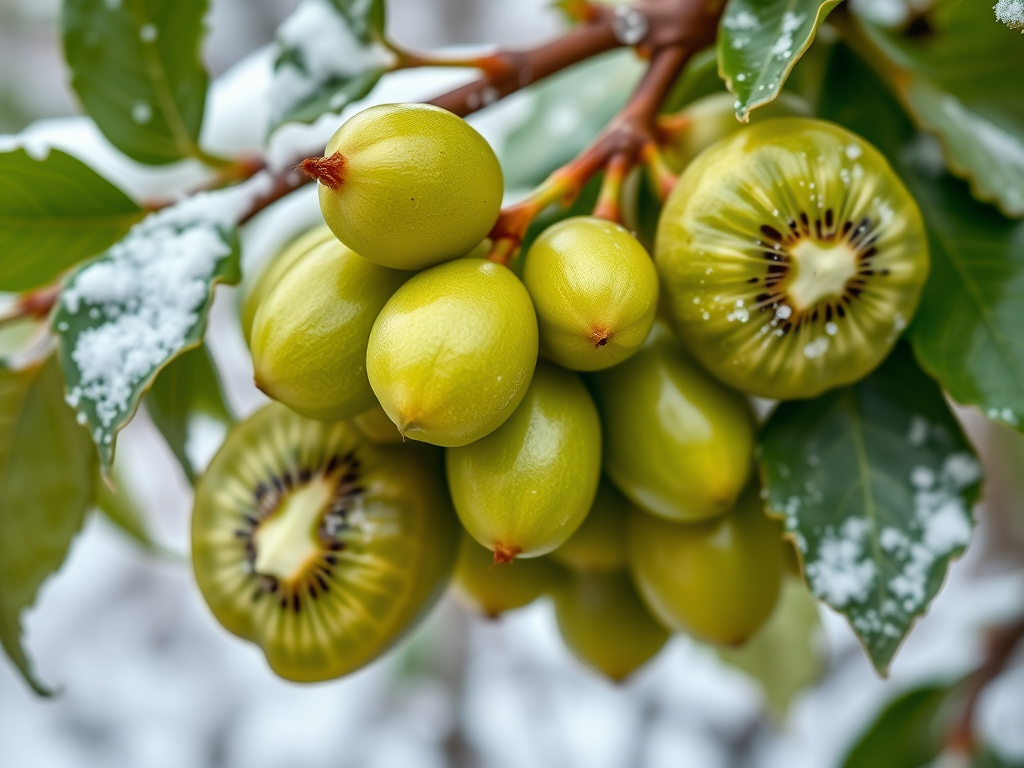
Meet the Hardy Kiwi: The Tiny Powerhouse That Laughs at Winter
Think kiwis are just tropical treats? Think again. The Hardy Kiwi (Actinidia arguta), also known as Arctic Kiwi or Kiwi Berry, is a cold-defying, grape-sized fruit that thrives in climates as frigid as -40°F. Native to Japan, Korea, and parts of Siberia, this vine is a botanical rebel—bringing tropical flavor to northern gardens.Historical Use of Hardy Kiwi
Modern Cultivation: While its commercial cultivation is relatively recent (20th century), its use as a wild edible fruit dates back much further in East Asian folk practices.
Cultural Origins: Native to Japan, Korea, Northern China, and the Russian Far East, hardy kiwi has been consumed for centuries in these regions. It was traditionally foraged in the wild and valued for its sweet, grape-like flavor and compact size.
Botanical Recognition: The species was first described in 1843 by botanists Philipp Franz von Siebold and Joseph Gerhard Zuccarini, and later classified under the genus Actinidia in 1867.
🌿 Why It’s a Game-Changer:
No fuzz, no fuss: Unlike its fuzzy cousin, you can pop these smooth-skinned berries straight into your mouth.
Nutrient-dense: Packed with vitamin C, B-complex, fiber, and antioxidants, it’s a superfruit in miniature form.
Vigorous & productive: Once established, a single vine can yield hundreds of berries each season.
Cultural roots: Revered in East Asian herbal traditions, hardy kiwi has been used to support digestion and vitality.Medicinal Use Through the Ages
Though most modern studies focus on the fuzzy kiwi (Actinidia deliciosa), hardy kiwi shares many of the same bioactive compounds and traditional uses:
Traditional Medicine: In East Asian herbal traditions, hardy kiwi and its relatives were used to:
Aid digestion and relieve gastrointestinal discomfort
Support liver function and detoxification
Alleviate inflammation and joint pain (e.g., in rheumatoid arthritis)
Treat hypertension and improve cardiovascular health3
Modern Insights: Research confirms hardy kiwi is rich in:Hardy Kiwi is gaining traction in the U.S. for its medicinal and nutritional potential, though it’s still considered a niche or novelty fruit in most markets.
Hardy Kiwi in U.S. Medicinal and Wellness Use
🧪 Nutritional & Medicinal Recognition
In the U.S., hardy kiwi (Actinidia arguta) is increasingly recognized for its health-promoting properties, particularly in natural health and permaculture circles:
Nutrient Density: Rich in vitamin C, folate, potassium, fiber, and antioxidants, it’s valued for supporting:
Immune health
Cardiovascular function
Digestive wellness
Anti-inflammatory effects
Bioactive Compounds: Like its fuzzy cousin (Actinidia deliciosa), hardy kiwi contains polyphenols, flavonoids, and pectin, which contribute to:
Gut health
Blood sugar regulation
Anti-aging and anti-cancer potential2
🌿 Functional Food & Herbal Interest
Natural health practitioners and functional medicine advocates in the U.S. are beginning to explore hardy kiwi as a functional food—a fruit that offers therapeutic benefits beyond basic nutrition.
It’s also being studied for its anti-inflammatory and antioxidant properties, especially about gut health and cardiovascular support.
🤯 Hardy Kiwi May Help Keep Your Blood Flowing Smoothly
Did you know that hardy kiwi contains natural compounds that may help reduce platelet aggregation, which is your body’s natural way of stopping bleeding. When a blood vessel is injured, platelets rush to the site and clump together to form a plug.
⚖️ Why It Matters:
✅ Normal aggregation = healthy healing
❌ Too much = risk of blood clots, heart attack, or stroke
🥝 Hardy Kiwi’s Hidden Talent:
Hardy kiwi contains enzymes like actinidin that may help reduce excessive platelet clumping, supporting healthy blood flow—a heart-smart benefit few people know about! The clumping of blood cells that can lead to clots?
This means it could support healthy circulation and reduce the risk of cardiovascular issues, much like aspirin—but in a juicy, bite-sized form!
🧬 Researchers have found that kiwi species, including Actinidia arguta, contain actinidin and other enzymes with anti-thrombotic properties, making this fruit a heart-smart snack.
⚠️ Disclaimer: While hardy kiwi may support cardiovascular health, always consult your healthcare provider before adding new foods to your diet—especially if you’re taking blood thinners or other medications.
📚 Research Spotlight: Hardy Kiwi in U.S. Studies
🧪 Nutritional & Medicinal Potential
- Ohio State University conducted a cultivar trial from 2018–2020 to evaluate hardy kiwi as a viable specialty crop in Ohio. The study highlighted its high vitamin C content, antioxidant levels, and potential as a functional food.
- Penn State University maintains a research plot of hardy kiwi at the Lake Erie Regional Grape Research and Extension Center. Their work focuses on cold-hardiness, sugar content (18–25% Brix), and varietal performance, especially the popular Annasara cultivar.
- University of Minnesota has been evaluating hardy kiwi for over 30 years, exploring its flavor profile, growing practices, and even its invasiveness potential in forested areas. Their research supports its use as a diversifying perennial crop with environmental and economic benefits.
🩸 Medicinal Insight (Emerging)
While most U.S. research focuses on cultivation, international studies (especially from Korea and China) have identified:
- Anti-thrombotic effects (reducing platelet aggregation)
- Anti-inflammatory and antioxidant activity
- Potential liver-protective and gut-supportive properties
These findings are beginning to influence functional food research in the U.S., especially as interest in natural cardiovascular support grows.
Read More: thepharmajournal.com.pdf
🔍 Summary
“While still emerging in mainstream U.S. wellness circles, hardy kiwi is quietly making its mark as a functional fruit, valued for its immune-boosting, gut-supportive, and anti-inflammatory properties. As interest in natural remedies and climate-resilient crops grows, this ancient East Asian vine is finding new life in American soil.”
🧑🌾 Permaculture & Regenerative Farming
Hardy kiwi is promoted in permaculture systems for its low maintenance, perennial growth, and high yield of nutrient-rich fruit.
Its cold-hardiness makes it a promising crop for climate-resilient agriculture in northern U.S. states like Michigan, Vermont, and Oregon.
🛠️ Grow It Like a Pro:
Zones: 3–8—yes, even Vermont winters can’t stop it.
Support: Needs a strong trellis or arbor—these vines are serious climbers.
Pollination: Plant both male and female vines for fruiting.
Harvest: Late summer to early fall—just when you need a burst of green energy.
🌱 Final Thought: A Fruit for the Future
From ancient forest floors in East Asia to modern regenerative farms in the U.S., the Hardy Kiwi is more than a novelty—it’s a symbol of resilience, adaptability, and untapped potential. Whether you’re a gardener, a wellness seeker, or a cultural explorer, this grape-sized powerhouse offers a delicious way to connect tradition with innovation.
As climate challenges grow and the search for functional foods intensifies, the hardy kiwi reminds us that sometimes the most powerful remedies come in the smallest, greenest packages.
 EJADA
EJADA 
Leave a comment