Uvaria Dulcis: The Sweet, Rare Southeast Asian Vine Fruit You’ve Probably Never Heard Of — But Should
Uvaria dulcis is one of those hidden botanical gems that thrives quietly in the tropical forests of Southeast Asia, yet remains almost unknown to the rest of the world. This woody climbing plant, capable of stretching up to 30 meters long, belongs to the Annonaceae family, the same group that gives us custard apples and soursop
The species was first named in 1817 by botanist Michel Félix Dunal, and over time it went through several reclassifications before being confirmed again as Uvaria dulcis in 2009 through DNA analysis.
🌿 Origins & Habitat
Native to tropical Asia, Uvaria dulcis grows in regions such as Indonesia, Java, Cambodia, Thailand, Laos, Vietnam, and Myanmar. It often appears in scrubby vegetation and disturbed forests, thriving from sea level up to 700 meters.
Its name reflects its nature:
- Uvaria comes from the Latin uva, meaning “grape.”
- Dulcis means “sweet.” Together, they perfectly describe this fruit’s grape‑like clusters and sweet flavor.
🍈 Appearance: A Vine of Colorful Clusters
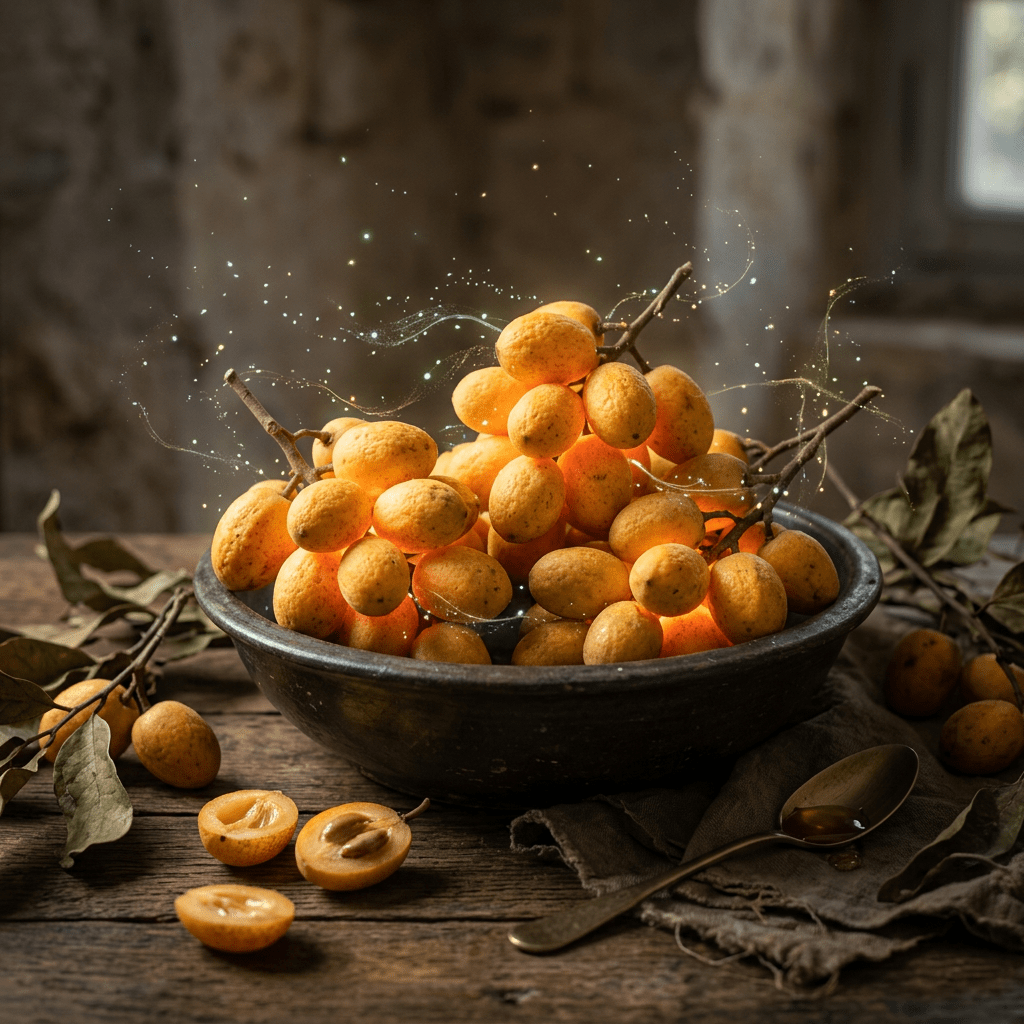
Uvaria dulcis produces yellowish‑green, fragrant flowers that later develop into yellow fruits that turn red when ripe. The fruits are small, oval, and often compared visually to the closely related Uvaria rufa.
The Khmer name for the fruit — triel dâhs krabéi, meaning “buffalo udders” — comes from its distinctive shape.
🍯 Taste & Texture
The fruit is edible, sweet, and aromatic, with a flavor reminiscent of:
- Pawpaw
- Other Annona fruits
- A soft, custard‑like texture when fully ripe
This makes it a delightful addition to tropical fruit tastings or rare‑fruit collections.
🧬 Botanical Characteristics
Botanically, Uvaria dulcis is rich in distinctive traits:
- Leaves: elliptic to obovate, with 15–18 subparallel veins
- Flowers: yellowish‑green, narrow petals, inner petals with nectar glands
- Growth habit: sarmentose shrub or liana, often climbing trees
- Fruit: green → orange → red monocarps, each containing 1–8 seeds
📜 A Fruit With a Long Scientific Journey
First named in 1817 by French botanist Michel Félix Dunal, the species went through several reclassifications — including being placed in the genus Anomianthus — before DNA analysis in 2009 confirmed it firmly belongs in the Uvaria genus.
🌏 Why Uvaria Dulcis Matters
Beyond its rarity, Uvaria dulcis plays an ecological role in tropical forests, offering nutrition to wildlife and contributing to biodiversity. Its sweet pulp and fragrant flowers attract pollinators, while its climbing habit helps it integrate into forest canopies.
🌿 Origins & Habitat
Native to tropical Asia, Uvaria dulcis grows in regions such as Indonesia, Java, Cambodia, Thailand, Laos, Vietnam, and Myanmar. It often appears in scrubby vegetation and disturbed forests, thriving from sea level up to 700 meters.
Its name reflects its nature:
- Uvaria comes from the Latin uva, meaning “grape.”
- Dulcis means “sweet.” Together, they perfectly describe this fruit’s grape‑like clusters and sweet flavor.
🍈 Appearance: A Vine of Colorful Clusters
Uvaria dulcis produces yellowish‑green, fragrant flowers that later develop into yellow fruits that turn red when ripe. The fruits are small, oval, and often compared visually to the closely related Uvaria rufa.
The Khmer name for the fruit — triel dâhs krabéi, meaning “buffalo udders” — comes from its distinctive shape.
🍯 Taste & Texture
The fruit is edible, sweet, and aromatic, with a flavor reminiscent of:
- Pawpaw
- Other Annona fruits
- A soft, custard‑like texture when fully ripe
This makes it a delightful addition to tropical fruit tastings or rare‑fruit collections.
🧬 Botanical Characteristics
Botanically, Uvaria dulcis is rich in distinctive traits:
- Leaves: elliptic to obovate, with 15–18 subparallel veins
- Flowers: yellowish‑green, narrow petals, inner petals with nectar glands
- Growth habit: sarmentose shrub or liana, often climbing trees
- Fruit: green → orange → red monocarps, each containing 1–8 seeds
📜 A Fruit With a Long Scientific Journey
First named in 1817 by French botanist Michel Félix Dunal, the species went through several reclassifications — including being placed in the genus Anomianthus — before DNA analysis in 2009 confirmed it firmly belongs in the Uvaria genus.
🌏 Why Uvaria Dulcis Matters
Beyond its rarity, Uvaria dulcis plays an ecological role in tropical forests, offering nutrition to wildlife and contributing to biodiversity. Its sweet pulp and fragrant flowers attract pollinators, while its climbing habit helps it integrate into forest canopies.
🌱 What Is Documented (From Plant Extract Studies)
A 2024 peer‑reviewed study analyzed roots, leaves, and twigs, identifying bioactive compounds, but not vitamins.
The study found:
- Flavonoids (e.g., chrysin, pinocembrin)
- Chalcones
- Flavanones
- Cinchonain compounds
These compounds are known in plant science for antioxidant and anti‑inflammatory activity, but they are not vitamins.
🍈 What We Can Infer
Because Uvaria dulcis belongs to the Annonaceae family — which includes soursop, custard apple, and pawpaw — it is possible the fruit contains:
- Vitamin C
- Carotenoids (Vitamin A precursors)
- Trace B‑complex vitamins
…but this is an inference, not a documented fact. No source confirms this specifically for Uvaria dulcis.
📌 Summary Table
| Category | What We Know | Source |
|---|---|---|
| Vitamins in the fruit | No published data available | |
| Phytochemicals (non‑vitamin) | Flavonoids, chalcones, cinchonains | |
| Edibility | Fruit is edible and sweet | |
| Traditional uses | Used medicinally for skin issues |
Unlike Uvaria chamae, which sometimes appears as herbal powder, Uvaria dulcis has no U.S.‑sold extracts, powders, or supplements. Uvaria dulcis is not available in the United States, as the fruit is not commercially grown, imported, or sold due to its delicate nature and lack of an export chain.
Final Thoughts
Uvaria dulcis is one of those rare tropical treasures that most people will never encounter — yet it deserves a place in any serious fruit lover’s vocabulary. From its sweet, custard‑like pulp to its deep roots in Southeast Asian forests, this vine fruit stands out for its beauty, cultural significance, and intriguing phytochemical profile.
While the fruit itself remains scientifically understudied, especially in terms of vitamins and nutrition, research on the plant reveals promising antioxidant and anti‑diabetic compounds, adding to its wellness appeal.
Because it is not available in the United States and has no commercial export chain, Uvaria dulcis remains a fruit of mystery — one that highlights the incredible biodiversity of the Annonaceae family. For your A–Z fruit series, it offers the perfect blend of rarity, science, and storytelling.
Sources Used
- Heliyon Journal (2024) – Anti‑diabetic and phytochemical analysis of Uvaria dulcis
https://doi.org/10.1016/j.heliyon.2024.e26252(doi.org in Bing) - Plants of the World Online – Kew Science – Taxonomy, distribution, botanical description
https://powo.science.kew.org/taxon/urn:lsid:ipni.org:names:76183-1(powo.science.kew.org in Bing) - Flora of Cambodia, Laos & Vietnam – Regional botanical notes and traditional uses https://portal.cybertaxonomy.org/flora-clv/
- Useful Tropical Plants Database – Habitat, growth habit, ethnobotanical context
https://tropical.theferns.info/viewtropical.php?id=Uvaria+dulcis(tropical.theferns.info in Bing) - Annonaceae Phylogeny Research (2009) – DNA evidence confirming placement of Uvaria dulcis
https://doi.org/10.3732/ajb.0800201(doi.org in Bing) - Thai Ethnobotanical Records – Traditional medicinal uses (fever, lactation support)
https://www.pharmacy.mahidol.ac.th/th/knowledge/article/(pharmacy.mahidol.ac.th in Bing) - Cambodian Ethnobotany Notes – Local naming and fruit consumption https://www.cambodianplants.com/
 EJADA
EJADA 
Leave a comment