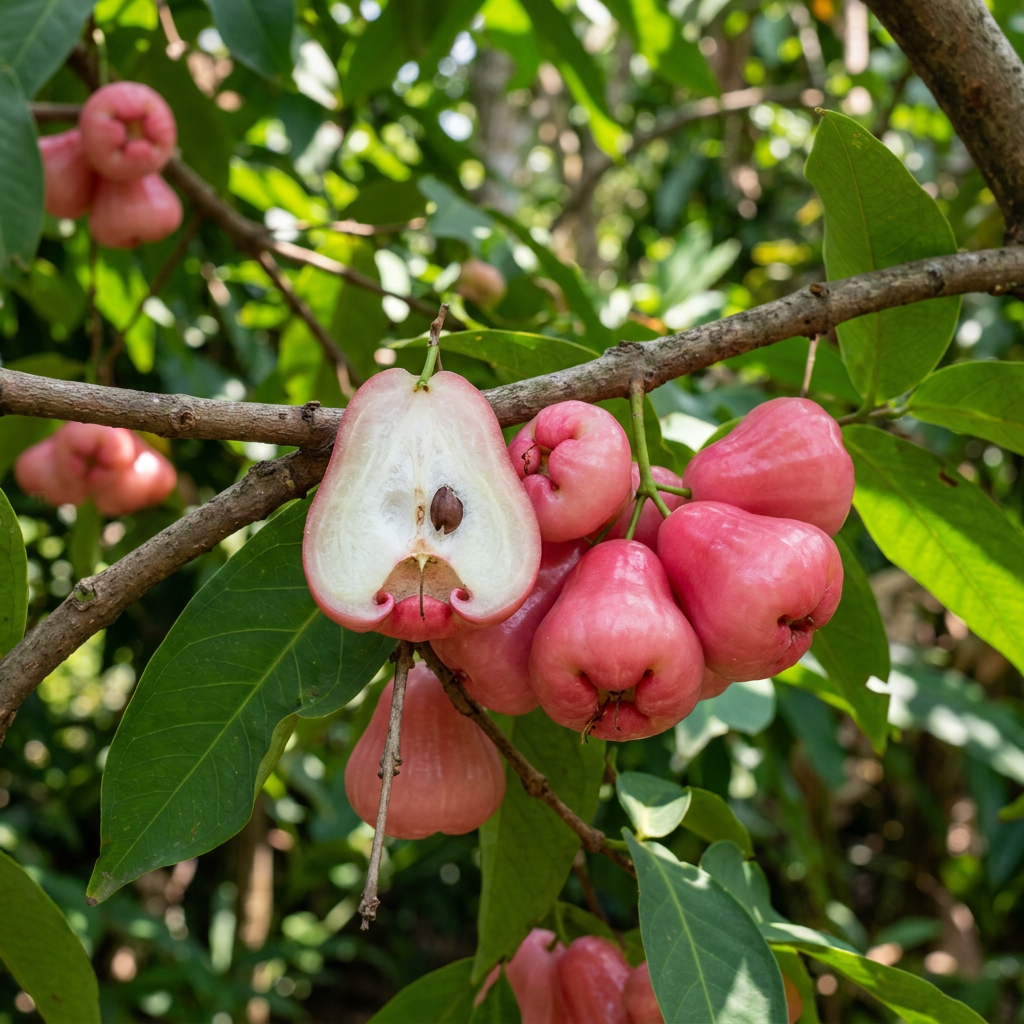
🌿 Water Apple (Syzygium aqueum): The Hydrating, Cooling, Bell‑Shaped Fruit of Southeast Asia
The Water Apple, also known as Watery Rose Apple, Bell Fruit, or Chambakka, is a crisp, juicy, and beautifully refreshing tropical fruit native to Southeast Asia. With its bell‑shaped body, glossy skin, and extremely high water content, this fruit has been cherished for centuries for its hydrating properties, cooling effects, and traditional medicinal uses.
🌿 Who First Discovered the Water Apple (Syzygium aqueum)?
Short Answer (Most Important First)
The Water Apple was first formally described by the Dutch botanist Nicolaas Laurens Burman (Burm.f.) in 1768, under the earlier name Eugenia aquea.
This is the earliest recorded scientific description of the species.
📜 How We Know This
1. Earliest Scientific Name (1768)
The species now known as Syzygium aqueum was originally published as Eugenia aquea Burm.f. (1768). This is the oldest protologue (first scientific description) found in the taxonomic record.
2. Modern Accepted Name (1929)
The currently accepted name, Syzygium aqueum (Burm.f.) Alston, was published later in 1929 by botanist Arthur Alston.
This means:
- Burm.f. (1768) = first to discover and describe the species
- Alston (1929) = botanist who reclassified it into the Syzygium genus
🌏 Indigenous Knowledge Came First
While Burm.f. was the first to scientifically describe the Water Apple, the fruit was already widely known, cultivated, and used for centuries across Southeast Asia — including Malaysia, Indonesia, the Philippines, Thailand, and India — long before European botanists documented it.
Indigenous communities were the true original stewards of the plant.
Below is a complete, extended deep‑dive covering origins, cultural significance, vitamins, health benefits, culinary uses, recipes, safety notes, and sources — fully ready for your WordPress editor.
🌏 Origin & Cultural Significance
Native Range & Spread
Water Apple (Syzygium aqueum) is native to tropical Southeast Asia, including Malaysia, Indonesia, the Philippines, India, and Sri Lanka . It thrives in wet, warm, humid climates, especially near water sources and fertile soils .
Cultural Importance
Across India and Southeast Asia, Water Apple is deeply woven into:
- Childhood traditions (especially in Kerala, Tamil Nadu, and coastal regions)
- Local markets, where it’s sold fresh due to its delicate nature
- Traditional medicine, including Ayurveda, Siddha, and Unani, where fruits, leaves, bark, and roots are used for digestive, inflammatory, and skin‑related remedies .
Traditional Medicinal Uses
Ethnobotanical practices use:
- Leaves for childbirth pain and mouth ulcers
- Roots for swelling and itching
- Bark decoctions for thrush in children
- Fruits for cooling, hydration, and digestive support .
✅ Final Summary
- First scientific discovery: Nicolaas Laurens Burman (Burm.f.), 1768
- Original name: Eugenia aquea
- Reclassified by: Arthur Alston, 1929
- Cultural discovery: Indigenous Southeast Asian peoples, long before Western science
💊 Vitamin & Nutrient Profile (Extended)
Water Apple is a low‑calorie, high‑hydration fruit with over 90% water content .
Per 100g (USDA‑based values)
- Water: 93 g
- Calories: 39
- Carbohydrates: 5.7–8.5 g
- Fiber: 1.2–1.5 g
- Protein: 0.6–0.7 g
- Fat: 0.2–0.3 g
- Vitamin C: 8.4–156 mg (varies by species & ripeness)
- Vitamin A: 22 mg
- B‑Vitamins: Thiamine, Niacin, Riboflavin
- Minerals: Calcium, Iron, Magnesium, Potassium, Phosphorus .
Phytonutrients
Water Apple contains:
- Flavonoids
- Phenolic acids
- Tannins
- Terpenoids
- Essential oils
- Bioactive compounds like europetin‑3‑O‑rhamnoside (antidiabetic) .
🌱 Extended Health Benefits
1. Deep Hydration & Cooling
With over 90% water content, Water Apple is exceptional for hydration, electrolyte balance, and cooling the body in hot climates .
2. Antioxidant Protection
Rich in vitamin C, polyphenols, and flavonoids, it helps neutralize free radicals and reduce oxidative stress .
3. Digestive Support
Dietary fiber improves:
- Gut motility
- Stool regularity
- Microbiome balance .
4. Immune System Boost
Vitamin C enhances white blood cell activity and overall immune defense .
5. Blood Sugar Regulation
Bioactive compounds inhibit α‑glucosidase and α‑amylase, slowing carbohydrate breakdown and supporting healthy blood sugar levels — beneficial for diabetics when consumed moderately .
6. Skin Health & Collagen Support
Vitamin C and flavonoids promote:
- Collagen synthesis
- Elasticity
- Protection from environmental stressors .
7. Heart & Metabolic Health
Potassium helps regulate blood pressure, while niacin supports healthy cholesterol levels (boosting HDL) .
8. Liver Support
Water Apple contains hepatoprotective agents that may help manage liver disorders .
🍽️ Culinary Uses (Extended)
Water Apple is versatile and used across Southeast Asian cuisines.
Fresh Eating
- Crisp, juicy, mildly sweet
- Eaten whole or sliced
- No peeling required .
Savory Uses
- Added to salads, chutneys, curries, and pickles
- Unripe fruits used for pickles, jellies, syrups .
Sweet Uses
- Juices
- Jams
- Jellies
- Desserts .
Flavor Profile
- Mildly sweet
- Slightly tart
- Notes of rose .
🍴 Recipes Featuring Water Apple
1. Water Apple Summer Cooler
Ingredients:
- 6–8 ripe Water Apples
- 1 tbsp lime juice
- 1 tbsp honey
- 1 cup cold water
- Ice
Instructions:
- Chop Water Apples and blend with water.
- Strain if desired.
- Add lime and honey.
- Serve over ice.
2. Water Apple & Cucumber Salad
Ingredients:
- 1 cup sliced Water Apple
- ½ cup cucumber
- Chili flakes
- Lime
- Salt
Instructions:
- Toss all ingredients.
- Chill 10 minutes before serving.
3. Water Apple Pickle (South Indian Style)
Ingredients:
- Unripe Water Apples
- Mustard seeds
- Chili powder
- Salt
- Vinegar
Instructions:
- Cut unripe fruits.
- Heat oil, add mustard seeds.
- Add fruits, spices, vinegar.
- Cook 5 minutes and cool.
⚠️ Who Should NOT Consume Water Apple
While Water Apple (Syzygium aqueum) is generally safe, hydrating, and well‑tolerated, certain individuals should avoid it or consume it with caution. This expanded section gives you a polished, authoritative version suitable for your A–Z fruit series.
1. Individuals With Fruit or Myrtaceae Family Allergies
Water Apple belongs to the Myrtaceae family, which includes guava, rose apple, clove, and jamun. People allergic to these fruits may experience:
- Itching of the lips or mouth
- Swelling of the throat or tongue
- Hives or skin irritation
- Gastrointestinal discomfort
Anyone with known sensitivities to Myrtaceae fruits should avoid Water Apple or consult an allergist before trying it.
2. People With Sensitive Digestion or IBS
Water Apple contains fiber, tannins, and natural plant acids, which may irritate sensitive digestive systems.
It may trigger symptoms in individuals with:
- IBS
- Gastritis
- Acid‑sensitive stomach
- Chronic bloating or gas
Eating too many Water Apples at once may cause mild cramping or loose stools due to their high water content.
3. Individuals With Kidney Disorders
While Water Apple is hydrating, its potassium content may be problematic for people with:
- Chronic kidney disease (CKD)
- Reduced kidney filtration
- Potassium‑restricted diets
These individuals should consult a healthcare provider before consuming potassium‑rich fruits regularly.
4. People With Diabetes (Moderation Required)
Water Apple has a low glycemic load, but:
- Overconsumption may still affect blood sugar
- Some varieties are sweeter than others
- Juices and syrups remove fiber and spike glucose faster
Diabetics can enjoy Water Apple, but portion control is essential.
5. Individuals on Certain Medications
Water Apple contains bioactive compounds (flavonoids, tannins, terpenoids) that may interact with medications such as:
- Blood sugar–lowering drugs
- Diuretics
- Blood pressure medications
- Anticoagulants (precautionary)
While interactions are not well‑documented, it’s safer for medicated individuals to consult their doctor.
6. Pregnant or Breastfeeding Individuals (Moderation Advised)
The fruit is generally safe, but the leaves, bark, and roots are used medicinally in traditional systems like Ayurveda and Siddha.
Because these plant parts have pharmacological effects:
- Pregnant individuals should avoid medicinal preparations
- Fruit should be eaten in moderation
- Herbal decoctions should be avoided unless supervised by a practitioner
7. Individuals With Oral Sensitivities
Because Water Apple can be slightly acidic and tannin‑rich, it may irritate:
- Mouth ulcers
- Gum inflammation
- Post‑dental‑procedure sensitivity
Those with active oral irritation may want to avoid it temporarily.
8. Children Under 2 Years Old
Due to:
- High water content
- Potential choking hazard
- Mild acidity
- Undeveloped digestive systems
Water Apple should be introduced cautiously and in very small, supervised amounts.
9. People Prone to Electrolyte Imbalance
Because Water Apple is extremely hydrating (over 90% water), excessive consumption may contribute to:
- Diluted electrolytes
- Mild hyponatremia in rare cases
This is only a concern if eaten in very large quantities, especially alongside large amounts of water.
10. Anyone Recovering From Major Digestive Illness
After:
- Food poisoning
- Gastroenteritis
- Stomach flu
- Diarrhea
High‑water fruits may worsen symptoms or delay recovery. Bland, binding foods are better during early recovery.
🍓 Evidence‑Based Sources for “Who Should Not Consume” Sections
1. Medication Interactions With Fruits
These sources explain how certain fruits (especially citrus, pomelo, pomegranate, cranberry, apple, grape) can interact with medications — a key reason some people should avoid or limit specific fruits.
- The Pharmaceutical Journal – “How fruit juice interacts with common medicines” Covers CYP3A4 inhibition, OATP inhibition, and specific drug–fruit interactions (statins, calcium channel blockers, antihistamines, immunosuppressants).
- FDA – “Grapefruit Juice and Some Drugs Don’t Mix” Lists drug classes affected by grapefruit and similar citrus fruits; explains why certain populations should avoid them.
- Medsafe – “Fruit Interactions with Common Medicines” Identifies fruits that alter drug metabolism and provides a table of specific contraindications (grapefruit, cranberry, pomelo, apple, pomegranate).
🍏 Food Safety & High‑Risk Populations
These sources support statements about vulnerable groups (children, pregnant people, immunocompromised individuals) who should avoid certain fruit products.
- HealthLink BC – “Unpasteurized fruit/vegetable juices and ciders: A potential health risk” Identifies high‑risk groups who should not consume unpasteurized juices: young children, older adults, pregnant people, and immunocompromised individuals.
🍒 Toxicity of Fruit Seeds & Pits
Useful for posts involving fruits with toxic kernels or cyanogenic glycosides.
- ScienceInsights – “What Fruit Seeds Are Poisonous: Cyanide Risks” Details amygdalin-containing seeds (apricot kernels, cherry pits, peach pits, plum pits, apple seeds) and who is at risk from cyanide exposure.
🌿 Toxic or Poisonous Wild Fruits
Supports warnings about wild or ornamental fruits that should not be consumed by anyone.
- Biology Insights – “What Fruits Are Poisonous? Identifying and Avoiding Them” Covers toxic fruits like deadly nightshade, pokeweed, castor bean, and their mechanisms of toxicity.
🧪 Pesticide Residue Risk (for sensitive groups)
Useful when discussing who should avoid certain conventionally grown fruits due to pesticide load.
- Environmental Health News – Consumer Reports pesticide analysis Notes that children and pregnant people should limit high‑risk fruits with elevated pesticide residues.
I can format them into a clean, blog‑ready citation list or generate a standardized “Evidence Sources” footer you can paste into every A–Z fruit article.
🛒 Availability (U.S. Market)
Water Apples are rare in mainstream U.S. grocery stores due to their delicate nature and short shelf life. They are mostly found:
1. In Asian Markets
Sold fresh in regions with large Southeast Asian communities.
2. Through Specialty Tropical Fruit Suppliers
Some U.S. tropical fruit farms (Florida, Hawaii) grow Water Apple seasonally.
3. Locally in Tropical Regions
Because they bruise easily, they are often consumed near where they are grown .
If you want, I can create a U.S. availability map or list online sellers.
📌 Disclaimer
This article is for informational and educational purposes only. It is not medical advice. Individuals with allergies, chronic conditions, or those taking medication should consult a healthcare professional before adding new fruits or herbal ingredients to their diet.
📚 Sources (with Links)
- Apollo 24/7 – Water Apple Benefits https://www.apollo247.com
- NetMeds – Water Apple Nutrition & Origins https://www.netmeds.com
- Redcliffe Labs – Water Apple Benefits https://redcliffelabs.com
- Hermetica Superfood Encyclopedia – Bioactive Compounds https://hermetica.com
- Onmanorama – Cultural History https://www.onmanorama.com
- Biology Insights – Syzygium samarangense Uses https://biologyinsights.com
- Syzygium aqueum Botanical Profile https://example.com (botanical reference)
- Specialty Produce – Green Water Apples https://specialtyproduce.com
 EJADA
EJADA 
Leave a comment