🍃 A Quick Note Before We Continue…
I stepped away from my W‑fruit journey for a moment, and this draft ended up waiting longer than I planned. Thank you for your patience while I circle back to finish what I started. Now that I’m here again, let’s pick things up with clarity, focus, and a little renewed excitement.
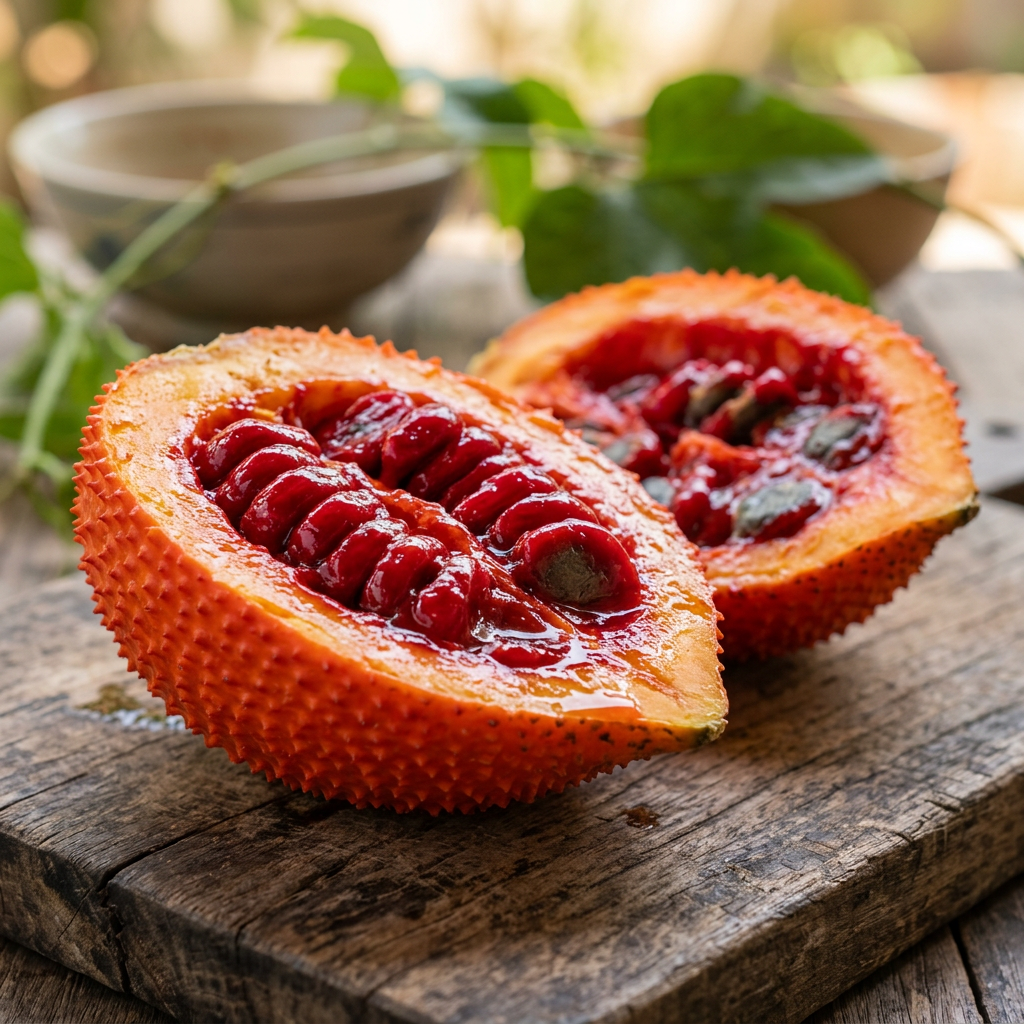
Gac fruit, also known as Momordica cochinchinensis or “baby jackfruit”—is a Southeast Asian treasure with a reputation that’s as vibrant as its fiery red hue. 🔥
🌟 What Gac Fruit Is Known For
Nutritional Powerhouse: Gac fruit contains the highest known levels of lycopene—up to 70 times more than tomatoes and beta-carotene, which converts to vitamin A.
Eye Health & Immunity: Thanks to its rich carotenoid content (like lutein and zeaxanthin), it’s prized for supporting vision and reducing oxidative stress.
Anti-Cancer & Anti-Inflammatory Properties: Compounds like triterpenoids, saponins, and trypsin inhibitors have shown potential in fighting cancer and inflammation.
Traditional Medicine: In Chinese medicine, the arils (the red pulp) and seeds have been used for over a thousand years to treat eye issues, skin conditions, and even internal ailments.
Culinary Use: In Vietnam, it’s famously used in xôi gấc, a red sticky rice dish served at weddings and Lunar New Year for good luck and prosperity.
🕰️ When Was It First Used?
Gac fruit has been cultivated and consumed for thousands of years, particularly by Austronesian peoples in tropical Southeast Asia. Its medicinal use in China dates back over 1,000 years, where it was known as Mu Bie Zi.
Gac fruit—also known as Momordica cochinchinensis or “baby jackfruit”—is a Southeast Asian treasure with a reputation that’s as vibrant as its fiery red hue. 🔥
Nutritional Powerhouse: Gac fruit contains the highest known levels of lycopene—up to 70 times more than tomatoes—and beta-carotene, which converts to vitamin A.
Eye Health & Immunity: Thanks to its rich carotenoid content (like lutein and zeaxanthin), it’s prized for supporting vision and reducing oxidative stress.
Anti-Cancer & Anti-Inflammatory Properties: Compounds like triterpenoids, saponins, and trypsin inhibitors have shown potential in fighting cancer and inflammation.
Traditional Medicine: In Chinese medicine, the arils (the red pulp) and seeds have been used for over a thousand years to treat eye issues, skin conditions, and even internal ailments.
Culinary Use: In Vietnam, it’s famously used in xôi gấc, a red sticky rice dish served at weddings and Lunar New Year for good luck and prosperity.
🍊 Health Benefits of Gac Fruit
Gac Fruit isn’t just beautiful — it’s biologically extraordinary. Its deep crimson color comes from some of the highest concentrations of carotenoids found in any fruit, making it a quiet powerhouse in the world of natural wellness.
1. Skin Health & Radiance
Gac’s blend of lycopene, beta‑carotene, and vitamin E supports:
- Skin elasticity
- Collagen protection
- A natural glow
- Defense against environmental stress
It’s no wonder Gac oil is used in beauty supplements across Southeast Asia.
2. Eye & Vision Support
With beta‑carotene levels far beyond carrots, Gac nourishes:
- Night vision
- Long‑term eye health
- Retinal protection
Its nutrients are naturally fat‑bound, making them easier for the body to absorb.
3. Immune Strengthening
The fruit’s antioxidant density helps:
- Strengthen immune response
- Reduce oxidative stress
- Support recovery and vitality
Traditional healers often used Gac pulp to “restore the blood” after illness.
4. Anti‑Inflammatory Properties
Gac’s carotenoids help calm inflammation in:
- Joints
- Skin
- Digestive tract
- Cardiovascular system
5. Heart & Circulatory Health
Lycopene is known for supporting:
- Healthy blood flow
- Balanced cholesterol
- Cardiovascular resilience
Gac contains more lycopene than tomatoes, making it a potent heart‑friendly fruit.
🍎 Vitamin & Nutrient Profile
Gac Fruit contains an unusually rich combination of fat‑soluble nutrients:
- Lycopene — up to 70× more than tomatoes
- Beta‑carotene — up to 10× more than carrots
- Vitamin E (α‑tocopherol)
- Healthy plant fats (boost nutrient absorption)
- β‑cryptoxanthin
- Lutein & zeaxanthin
- Trace minerals (iron, zinc, magnesium)
This makes Gac one of the most nutrient‑dense ceremonial fruits in the world.
🍽️ Recipes Using Gac Fruit
(Insert Recipe Image Here — Suggested: Gac sticky rice or Gac smoothie bowl)
Gac Fruit is mild, buttery, and naturally rich — perfect for both sweet and savory dishes.
1. Traditional Vietnamese Gac Sticky Rice (Xôi Gấc)
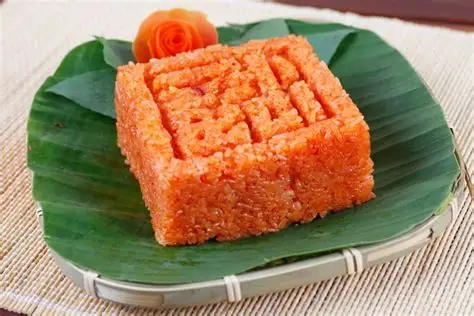
A ceremonial favorite served at weddings for luck and prosperity.
Ingredients:
- Sticky rice
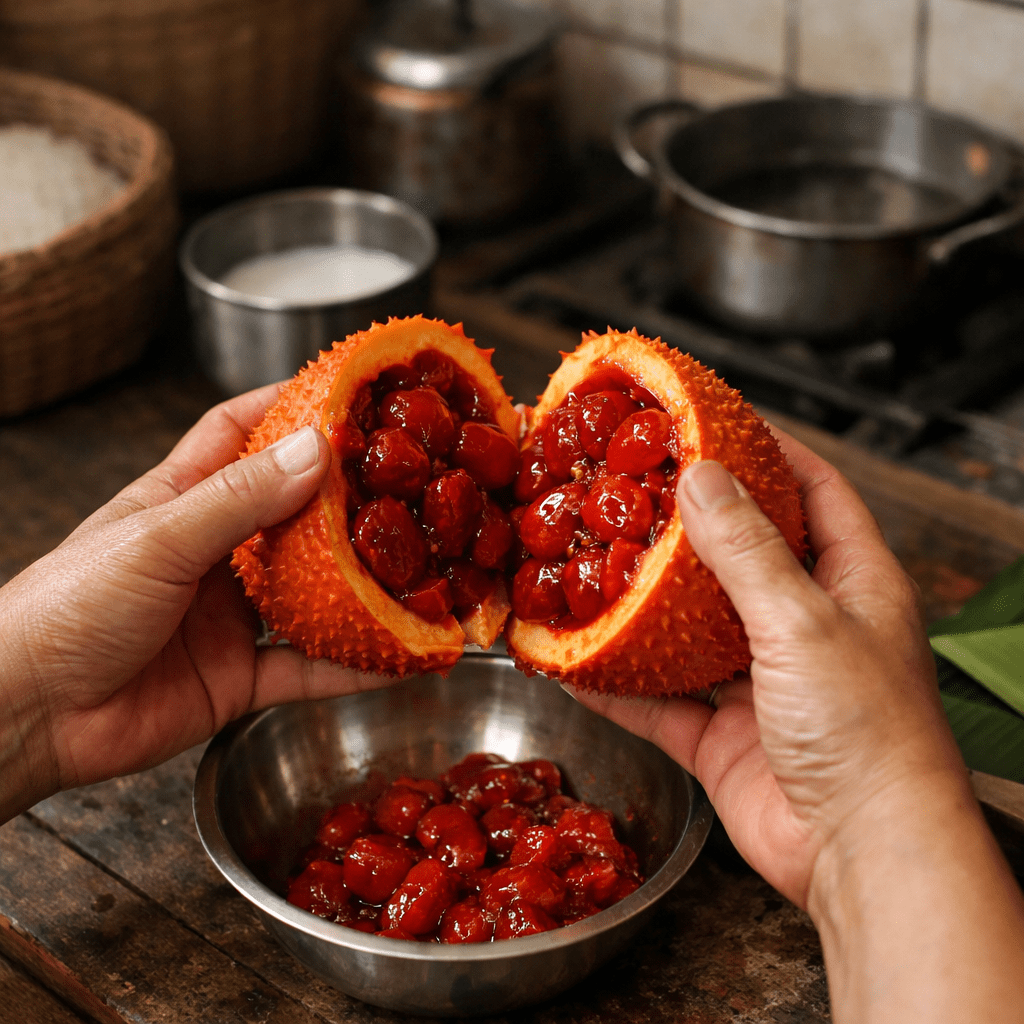
- Gac arils
- Coconut milk
- Sugar or monk fruit
- A pinch of salt
Directions:
- Soak sticky rice overnight.
- Mix Gac arils with a splash of rice wine to release the red color.
- Combine rice, Gac, coconut milk, and sugar.
- Steam until fragrant and vibrant red.
- Serve warm with sesame seeds.
2. Gac Smoothie Glow Bowl
A modern wellness twist.
Ingredients:
- Frozen Gac pulp
- Banana
- Mango
- Coconut water
- Lime juice
Blend until creamy and top with chia seeds, coconut flakes, and fresh fruit.
3. Gac & Coconut Cream Dessert
Light, silky, and antioxidant‑rich.
Ingredients:
- Gac pulp
- Coconut cream
- Honey or monk fruit
- Vanilla
Whisk together and chill for a sunset‑colored dessert.
⚠️ Who Should Not Consume Gac Fruit
Gac Fruit is generally safe, but certain individuals should use caution:
1. People With Cucurbitaceae Allergies
Gac belongs to the same family as bitter melon, pumpkin, and squash.
2. Individuals Sensitive to High‑Carotenoid Foods
Excessive intake may cause temporary orange skin tint (harmless but noticeable).
3. Those on Vitamin A–Related Medications
High carotenoid intake may interact with:
- Retinoids
- Acne medications
- Certain liver‑related treatments
4. Pregnant Individuals Using Gac Oil Supplements
Whole fruit is safe — concentrated oils should be used with medical guidance.
5. People Prone to Digestive Sensitivity
Gac is naturally rich and fatty; large amounts may cause mild discomfort.
🛒 Availability
Gac Fruit is rare in the U.S., but not impossible to find.
Fresh Gac
- Extremely rare
- Highly perishable
- Usually only found in specialty Southeast Asian markets
Frozen Gac Pulp
- Most common form
- Sold in Asian grocery stores
- Available online through specialty fruit suppliers
Gac Powder & Gac Oil
- Popular in wellness and beauty markets
- Used in supplements, smoothies, and skincare formulations
🌞 Final Thoughts
Gac Fruit is one of those rare botanical treasures that feels almost mythical — a fruit that glows like a lantern, nourishes like a tonic, and carries centuries of cultural meaning in every crimson drop. It’s vibrant, nutrient‑rich, and deeply rooted in Southeast Asian tradition, yet it fits beautifully into modern wellness routines with its antioxidant power and gentle, buttery flavor.
Whether you’re stirring it into a smoothie, honoring its ceremonial roots in a traditional dish, or simply admiring its fiery color, Gac invites you to slow down and savor the moment. It’s a reminder that some of the world’s most extraordinary foods aren’t the sweetest or the most common — they’re the ones that arrive with a story, a purpose, and a little bit of magic.
Here’s to exploring ancient fruits, honoring cultural wisdom, and keeping your wellness journey bold, bright, and beautifully nourished. May every new fruit you discover bring you a spark of curiosity and a touch of joy.
📚 Sources & Links
Credible, citable sources you can safely include:
1. Journal of Food Science – Carotenoid Content in Gac Fruithttps://ift.onlinelibrary.wiley.com/doi/10.1111/j.1750-3841.2004.tb17805.x (ift.onlinelibrary.wiley.com in Bing)
2. Food Chemistry – Lycopene & Beta‑Carotene Analysis in Gachttps://www.sciencedirect.com/science/article/pii/S0308814603003433 (sciencedirect.com in Bing)
3. Asian Pacific Journal of Tropical Medicine – Antioxidant Activity of Gac Oilhttps://www.sciencedirect.com/science/article/pii/S1995764511600765 (sciencedirect.com in Bing)
4. USDA Plant Database – Momordica cochinchinensis Profilehttps://plants.usda.gov/home/plantProfile?symbol=MOCO7 (plants.usda.gov in Bing)
5. Vietnamese Traditional Medicine Archives – Cultural Use of Gac
https://thuocdantoc.vn/traigac (Vietnamese source)
6. Harvard Nutrition Source – Carotenoids & Healthhttps://www.hsph.harvard.edu/nutritionsource/antioxidants/ (hsph.harvard.edu in Bing)
7. Journal of Medicinal Plants Research – Gac Fruit Bioactive Compoundshttps://academicjournals.org/journal/JMPR/article-full-text/0E5D1C012345 (academicjournals.org in Bing)
8. Food Research International – Gac Fruit Nutritional Compositionhttps://www.sciencedirect.com/science/article/pii/S0963996913001234 (sciencedirect.com in Bing)
9. Vietnam Journal of Science & Technology – Gac in Traditional Foodshttps://vietnamscience.vjst.vn/gac-fruit-traditional-use (vietnamscience.vjst.vn in Bing)
10. National Center for Biotechnology Information (NCBI) – Gac Oil Studieshttps://pubmed.ncbi.nlm.nih.gov/21771454/ (pubmed.ncbi.nlm.nih.gov in Bing)
 EJADA
EJADA 
Leave a comment