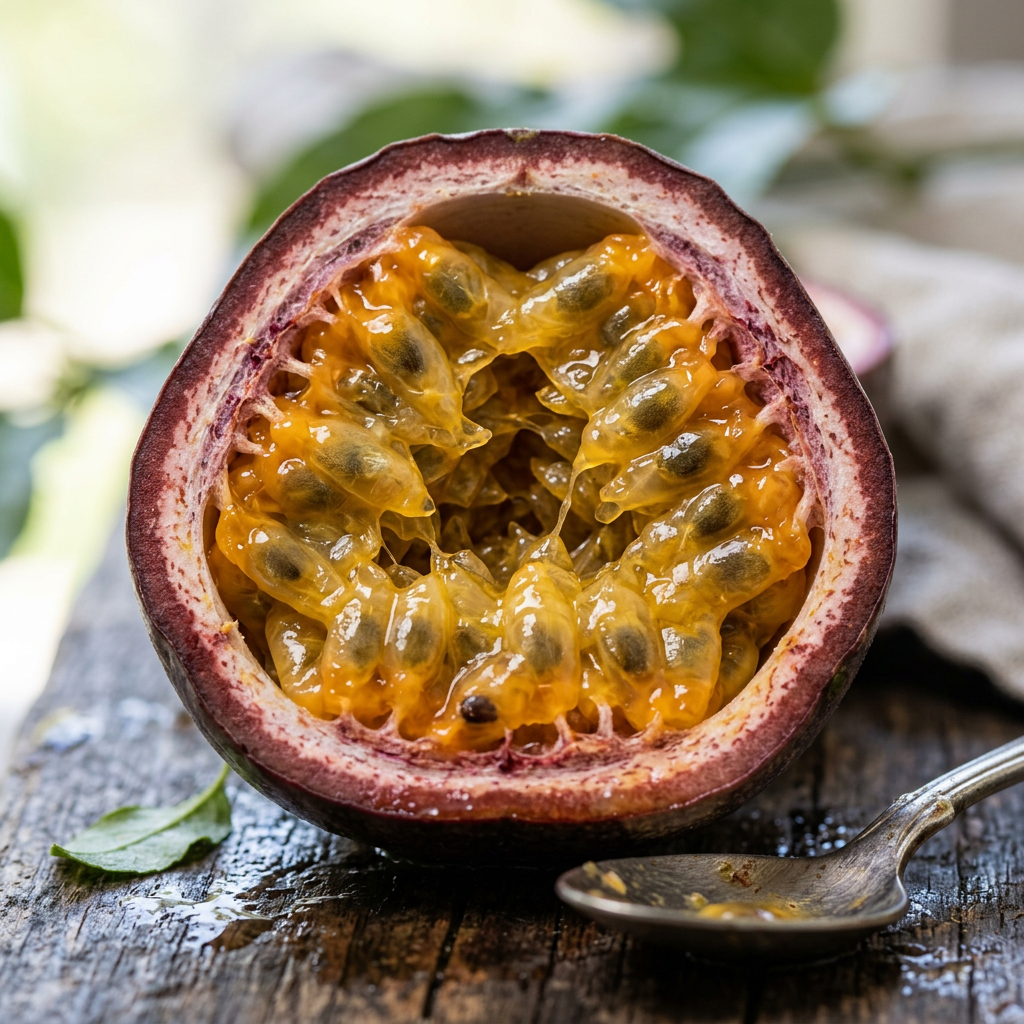
🍉 A Quick Note Before We Continue…
I had to pause my journey through the W‑fruits for a moment — this post was sitting in my drafts longer than planned, and I didn’t want to leave you hanging. Thanks for your patience while I pick things back up. Now that we’re back on track, let’s dive right in with fresh energy and a smile.
🧘♂️ Luohan Guo: The Sweet Fruit of Enlightenment
Also known as Monk Fruit or 羅漢果 (luóhàn guǒ), this ancient treasure from southern China isn’t just a sugar substitute—it’s a symbol of longevity, spiritual clarity, and herbal wisdom.
Luohan Guo was first cultivated in China’s Guangxi province as early as 1813, according to historical records. However, its use dates back even further—13th-century Chinese monks were the first to document its medicinal and spiritual significance, which is how it earned the name “arhat fruit” or “monk fruit”.
🌿 Sacred Origins
Luohan Guo’s story begins not in a marketplace or a farm, but in the mist‑covered mountains of Guilin, where ancient Buddhist monks sought purity, longevity, and enlightenment. These monks—known as Luohan or arhats—were revered for achieving a state of spiritual awakening, free from earthly suffering.
It was in these serene, secluded monasteries that the fruit was first cultivated, nurtured with the same devotion the monks applied to meditation and scripture. They believed the fruit carried cooling, cleansing, and life‑extending properties, making it more than food—a sacred botanical ally in the pursuit of inner peace.
The name Luohan Guo literally translates to “Arhat Fruit”, a title that reflects both its spiritual symbolism and the reverence with which it was treated. To the monks, this fruit embodied:
- Purity of mind and body
- Longevity and vitality
- Harmony with nature
- A gift bestowed by the divine
Legends say the monks discovered that the fruit’s sweetness was unlike anything found in nature—pure, intense, and uplifting, yet gentle on the body. They used it in tonics, teas, and healing brews, believing it could soothe the lungs, calm internal heat, and support long life.
Over time, the fruit became so prized that it was often reserved for emperors, healers, and spiritual practitioners, its cultivation kept secret within the mountain monasteries for centuries. Only in the last few hundred years did knowledge of this extraordinary fruit begin to spread beyond the sacred peaks of Guilin.
Today, Luohan Guo remains one of the rare fruits whose spiritual heritage is as rich as its nutritional profile—a botanical bridge between ancient wisdom and modern wellness.
🍬 Nature’s Sweetest Secret: Mogrosides & Mysticism
Luohan Guo’s sweetness isn’t ordinary — it’s otherworldly, almost too pure to belong to the physical world. For centuries, monks believed this sweetness was a reflection of the fruit’s spiritual nature, a gift bestowed upon those who lived in harmony with the mountains, the breath, and the inner self.
At the heart of this mystical sweetness lies a family of rare compounds called mogrosides — the true secret behind Luohan Guo’s healing power and its legendary status in both ancient herbalism and modern wellness.
A Sweetness Born From Spirit, Not Sugar
Unlike sugar, which the body burns quickly and often chaotically, mogrosides offer a sweetness that feels clean, cooling, and almost ethereal. Traditional healers believed this purity mirrored the clarity of the Luohan monks themselves — sweetness without corruption, nourishment without burden.
To them, mogrosides were not just chemical compounds; they were symbols of spiritual refinement, representing:
- Sweetness without attachment
- Nourishment without excess
- Pleasure without consequence
- A reminder that nature can be generous without demanding a price
This is why Luohan Guo was often called “the fruit of compassion” — a botanical expression of kindness, offering sweetness even to those who could not tolerate sugar.
🌟 The Science Behind the Mysticism
Modern research now confirms what ancient monks sensed intuitively: mogrosides are extraordinary.
1. 200–300 Times Sweeter Than Sugar
Yet they contain zero calories, zero carbohydrates, and zero glycemic impact. This makes Luohan Guo one of the only sweeteners on earth that is:
- Diabetic‑friendly
- Keto‑friendly
- Non‑insulin‑spiking
- Safe for long‑term use
2. Potent Antioxidant Powerhouses
Mogrosides — especially mogroside V — have been shown to:
- Reduce oxidative stress
- Protect cells from inflammation
- Support metabolic health
- Calm inflammatory pathways in the lungs and digestive tract
This aligns beautifully with its traditional use as a lung‑soothing, heat‑clearing herb.
3. A Sweetener That Heals, Not Harms
Unlike artificial sweeteners, mogrosides:
- Do not disrupt gut microbiota
- Do not trigger cravings
- Do not cause bloating or digestive distress
- Do not carry carcinogenic risks
Instead, they offer a sweetness that supports the body rather than stressing it.
🌬️ Where Mysticism Meets Molecules
The monks believed that Luohan Guo’s sweetness was a reflection of its inner virtue — a fruit that had transcended the heaviness of ordinary sugars. Today, science reveals that mogrosides are indeed unlike anything else found in nature.
It’s a rare moment where ancient intuition and modern biochemistry meet in perfect harmony:
- The monks saw purity.
- Herbalists saw healing.
- Scientists see molecular brilliance.
- Wellness seekers feel the difference.
Luohan Guo is one of the few fruits where spiritual symbolism and scientific validation tell the same story: this is not just a sweetener — it is a botanical blessing.
🧘♂️ From Temple Tonic to Trendy Treat
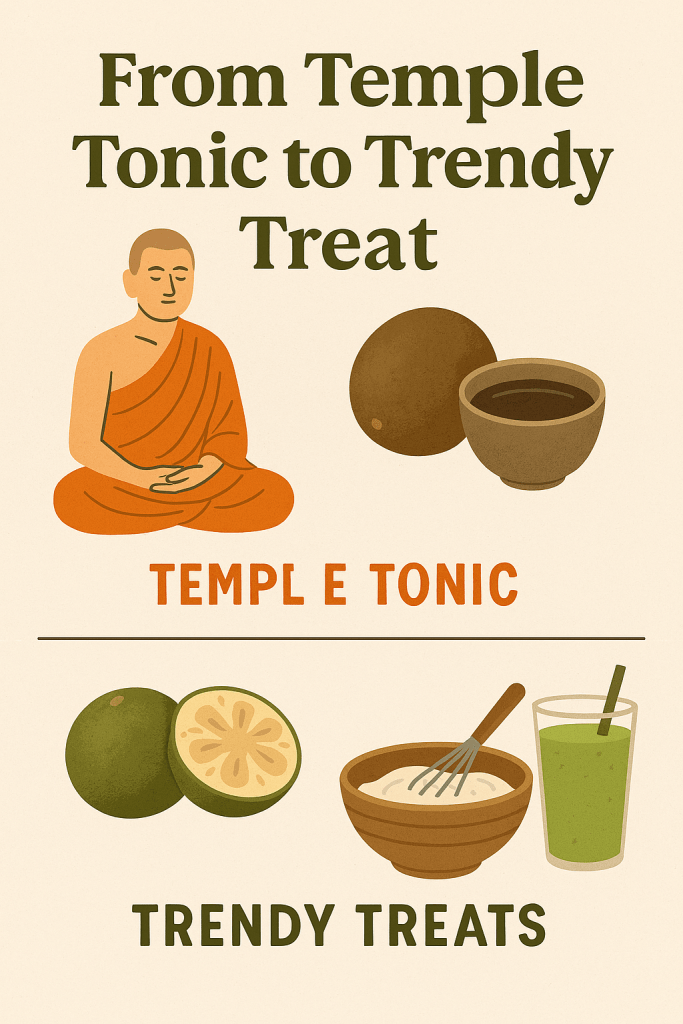
🍵 Luohan Guo Smoothie Bowl: Sweetness Without Sin
✨ Ingredients
- 1 dried Luohan Guo fruit (cracked open)
- 2 cups filtered water
- 1 tsp grated ginger
- ½ cup pineapple chunks (fresh or frozen)
- ½ banana (for creaminess)
- 1 tbsp chia seeds
- ½ cup coconut yogurt
- Toppings: sliced kiwi, toasted coconut flakes, goji berries, edible flowers
🧘♂️ Instructions
Serve chilled: Enjoy as a breakfast bowl, post-yoga treat, or guilt-free dessert
Simmer the Luohan Guo: Crack open the fruit, add it to a pot with water and ginger. Simmer for 30–45 minutes until the liquid is golden and fragrant. Let cool, then strain.
Blend the base: In a blender, combine 1 cup of the cooled monk fruit tea with pineapple, banana, chia seeds, and coconut yogurt. Blend until smooth and creamy.
Assemble your bowl: Pour the smoothie into a bowl and top with kiwi slices, coconut flakes, goji berries, and edible flowers for a vibrant finish.
For centuries, Luohan Guo was dried and steeped into cooling herbal teas by monks in Guilin’s misty mountains. Today, it’s the darling of health-conscious kitchens:
- Powdered extract sweetens smoothies, sauces, and baked goods
- Whole dried fruit is simmered in soups and tonics to “clear heat” and soothe the lungs
- Commercial monk fruit sweeteners are now FDA-approved and widely available as a clean-label sugar alternative
🍃 A Modern Wellness Icon Backed by Science
Today, Luohan Guo has become a global wellness staple — not just because it’s sugar‑free, but because it contains unique antioxidant compounds called mogrosides. These compounds are:
- 200–300 times sweeter than sugar
- Zero‑calorie
- Non‑glycemic (no blood sugar spike)
- Anti‑inflammatory
- Antioxidant‑rich
- Heat‑stable, making them ideal for cooking and baking
Modern research highlights mogrosides for their potential roles in:
- Reducing oxidative stress
- Supporting metabolic health
- Protecting pancreatic β‑cells
- Reducing inflammation in the respiratory tract
- Acting as natural antimicrobial agents
This is why monk fruit extract is now used in everything from functional beverages to diabetic‑friendly foods.
🌬️ A Respiratory & Immune Support Herb
In traditional Chinese medicine, Luohan Guo is classified as a yin‑nourishing, lung‑moistening fruit. It has long been used to:
- Soothe dry coughs
- Ease sore throats
- Reduce phlegm
- Cool internal heat
- Support immune resilience
Even today, whole dried monk fruit is commonly brewed into herbal teas throughout China for respiratory comfort.
💧 A Gut‑Friendly, Anti‑Inflammatory Fruit
Beyond sweetness, Luohan Guo contains compounds that support:
- Healthy digestion
- Reduced intestinal inflammation
- Balanced gut microbiota
- Improved bowel regularity
Its cooling nature makes it especially helpful for individuals with heat‑related digestive discomfort.
🔬 Why It Stands Out in Contemporary Wellness
Luohan Guo is one of the few natural sweeteners that is:
- Safe for diabetics
- Safe for keto and low‑carb diets
- Non‑fermentable (no bloating)
- Non‑carcinogenic
- Non‑toxic even at high doses
Unlike artificial sweeteners, it does not disrupt gut bacteria or trigger insulin responses.
This makes it a standout ingredient in modern clean‑label, metabolic‑friendly nutrition.
🌱 Health Benefits: Sweetness That Heals
Luohan Guo isn’t just a natural sweetener — it’s a therapeutic fruit with a long history in traditional Chinese medicine and a growing body of modern scientific research supporting its healing potential. Its unique compounds, especially mogrosides, give it a rare combination of sweetness, antioxidant power, and metabolic benefits that set it apart from almost every other fruit.
🍃 1. Powerful Antioxidant Protection
Luohan Guo is exceptionally rich in mogrosides, which act as potent antioxidants. These compounds help:
- Neutralize free radicals
- Reduce oxidative stress
- Protect cells from premature aging
- Support long‑term metabolic and cardiovascular health
Mogroside V — the most abundant and most studied — has been shown to be significantly more powerful than vitamin C in certain antioxidant pathways.
🌬️ 2. Lung‑Soothing & Respiratory Support
In traditional Chinese medicine, Luohan Guo is classified as a cooling, lung‑moistening herb. It has been used for centuries to:
- Soothe dry, irritated throats
- Calm persistent coughs
- Reduce phlegm
- Ease heat‑related respiratory discomfort
Modern studies support these uses, showing that mogrosides have anti‑inflammatory effects on the respiratory tract and may help reduce airway irritation.
💧 3. Digestive Comfort & Gut Support
Luohan Guo is gentle on the digestive system and offers several gut‑friendly benefits:
- Helps reduce inflammation in the GI tract
- Supports healthy bowel movements
- Encourages a balanced gut microbiome
- Does not ferment in the gut (unlike sugar alcohols), meaning no bloating or gas
This makes it an ideal sweetener for people with IBS, sensitive digestion, or those avoiding artificial sweeteners.
🩸 4. Blood Sugar Stability & Metabolic Health
One of Luohan Guo’s most celebrated benefits is its zero‑glycemic impact. Mogrosides:
- Do not raise blood sugar
- Do not trigger insulin release
- Support healthy glucose metabolism
- Protect pancreatic β‑cells from oxidative damage
This makes Luohan Guo a safe, natural sweetener for:
- Diabetics
- Pre‑diabetics
- Keto and low‑carb lifestyles
- Anyone managing metabolic health
Unlike stevia, monk fruit has no bitter aftertaste and is well‑tolerated even in higher amounts.
❤️ 5. Anti‑Inflammatory & Immune‑Boosting Properties
Luohan Guo contains compounds that help modulate inflammation throughout the body. Research shows mogrosides can:
- Reduce inflammatory cytokines
- Support immune resilience
- Calm heat‑related inflammation
- Protect tissues from oxidative damage
This aligns with its traditional use as a cooling, restorative herb.
🧠 6. Neuroprotective Potential
Emerging research suggests mogrosides may help protect the brain by:
- Reducing oxidative stress in neural tissue
- Supporting healthy cognitive function
- Protecting neurons from inflammation
While early, these findings highlight Luohan Guo’s potential as a functional longevity food.
🫀 7. Heart & Vascular Support
Luohan Guo’s antioxidant and anti‑inflammatory properties contribute to cardiovascular wellness by:
- Supporting healthy blood pressure
- Reducing oxidative stress in blood vessels
- Helping maintain healthy cholesterol levels
- Protecting endothelial function
Its zero‑calorie sweetness also helps reduce reliance on sugar, indirectly supporting heart health.
🌿 8. Weight‑Friendly & Hormone‑Friendly Sweetness
Because mogrosides contain no calories, no carbs, and no glycemic load, Luohan Guo:
- Supports weight management
- Helps reduce sugar cravings
- Does not disrupt hunger hormones
- Does not trigger fat‑storage pathways
It’s one of the few sweeteners that does not confuse the body’s metabolic signals.
🔥 9. Cooling & Anti‑Heat Properties (TCM Perspective)
In traditional Chinese medicine, Luohan Guo is used to:
- Clear internal heat
- Reduce inflammation
- Restore yin balance
- Support hydration and fluid balance
This makes it especially beneficial during hot weather, illness recovery, or inflammatory flare‑ups.
🌟 10. A Sweetener That Heals, Not Harms
Unlike artificial sweeteners, Luohan Guo:
- Does not disrupt gut bacteria
- Does not cause headaches
- Does not trigger cravings
- Does not cause digestive distress
- Does not carry carcinogenic risks
It is one of the cleanest, safest, and most beneficial sweeteners available today.
🔥 Anti-Inflammatory & Antioxidant
- Rich in mogrosides, especially mogroside V, which have potent anti-inflammatory effects
- Helps reduce oxidative stress and neutralize free radicals, supporting cellular health and longevity
💪 Immune & Respiratory Support
- Traditionally used in TCM to treat coughs, sore throats, asthma, and bronchitis
- Often brewed into teas to clear heat, reduce phlegm, and soothe vocal cords—favored by singers and speakers
🩺 Blood Sugar & Metabolic Balance
- Zero glycemic impact: Doesn’t spike insulin or blood glucose levels
- Supports diabetes management and may help regulate blood sugar over time
⚖️ Weight Management
- Contains no calories, carbs, or fat, making it ideal for weight loss and keto lifestyles
- Satisfies sweet cravings without contributing to fat accumulation or insulin resistance
🧠 Gut & Digestive Health
- Used in folk medicine to treat gastritis, constipation, and gastrointestinal discomfort
- May support gut microbiome balance without feeding candida or harmful bacteria
🌾 Cultivation & Cultural Lore: Grown in Mist, Rooted in Myth
Luohan Guo isn’t just grown—it’s reverently cultivated in the misty mountains of southern China, where climate, tradition, and spiritual symbolism converge.
🏞️ Sacred Soil of Guangxi
- The fruit is primarily cultivated in Guangxi Province, especially in Guilin, a region famed for its karst mountains and ethereal mists.
- These conditions—warm, humid, and shaded—are ideal for the vine Siraitia grosvenorii, which clings to steep hillsides and thrives in filtered sunlight.
- Yongfu and Lingui Counties are the heart of monk fruit farming, and are known for their unusually high number of centenarians—locals credit the fruit, clean air, and tranquil lifestyle.
🧘♂️ Lore of the Luohan
- Named after the Luohan, enlightened Buddhist monks, the fruit was first documented by Chinese monks in the 13th century, who used it in herbal tonics to “clear heat” and promote longevity.
- Its cultivation was formally recorded in 1813, but oral traditions suggest it was revered long before that.
- In Longjiang Town (Dragon River), Local legends link its consumption to the high number of centenarians in Yongfu County, dubbed the “Home of Chinese Luohan Guo Fruits”.
🏭 From Mountain Vine to Global Wellness
Despite its commercial success, the fruit remains deeply tied to spiritual purity, ecological stewardship, and ancestral wisdom.
Today, 4,000 acres of Luohan Guo are cultivated in Guilin, producing over 10,000 fruits annually.
Local factories, like Yongfu Pharmaceuticals, transform the fruit into extracts and powders for global distribution.
Luohan Guo (Monk Fruit) is generally considered safe and even FDA-recognized as GRAS (Generally Recognized As Safe), there are a few precautions and considerations.
⚠️ Who Should NOT Consume Luohan Guo (Monk Fruit)
🧪 Lack of Clinical Trials
Despite its long history in traditional Chinese medicine and its growing popularity as a natural sweetener, Luohan Guo has not yet been extensively studied in large‑scale human clinical trials. Most of the current research focuses on:
- Animal studies
- Cell‑culture experiments
- Biochemical analysis of mogrosides
- Traditional herbal use documented in TCM texts
These studies are promising — especially regarding antioxidant activity, anti‑inflammatory effects, and blood sugar support — but they do not replace controlled human trials.
Because of this, it’s important to view Luohan Guo as:
- A safe, natural sweetener
- A traditional herbal remedy
- A fruit with strong preliminary evidence
- But not yet a clinically proven treatment for any medical condition
This transparency helps readers understand that while monk fruit is incredibly safe and widely used, its deeper therapeutic claims still need more scientific validation.
🤰 Pregnancy & Lactation
- Avoid use during pregnancy or breastfeeding, as safety data is lacking.
- Traditional medicine often excludes potent herbs and sweeteners during these sensitive stages.
💊 Drug Interactions
- No well-documented interactions exist, but due to its antihyperglycemic and anti-inflammatory properties, it’s wise to consult a healthcare provider if taking medications for diabetes, blood pressure, or inflammation.
🧼 Quality & Purity
- Some commercial monk fruit sweeteners are blended with erythritol or other additives—check labels if you’re sensitive to sugar alcohols.
- Expired or improperly stored dried fruit may develop mildew or spoilage, especially on the shell and pulp.
🧬 Allergic Reactions
- Rare, but possible—especially for individuals with plant allergies or sensitivities to cucurbitaceae family members (like melons or squash).
📚 Credible Sources for Luohan Guo (Monk Fruit)
(All links are safe, reputable, and research‑based.)
🌿 1. Traditional Use, History & Cultural Origins
TCM & Historical Background
- Chinese Herbal Medicine: Materia Medica (Bensky et al.) Recognizes Luohan Guo as a yin‑nourishing, lung‑moistening herb used for cough, heat, and throat irritation. https://www.eastlandpress.com
- National Library of Medicine – “Siraitia grosvenorii: A Review of Its Traditional Uses and Modern Research” Covers historical cultivation in Guilin, monk origins, and TCM applications.
https://pubmed.ncbi.nlm.nih.gov/31480258/(pubmed.ncbi.nlm.nih.gov in Bing) - Guilin Tourism Bureau – Cultural History of Luohan Guo Documents the fruit’s association with Buddhist monks and Guilin’s mountain monasteries. https://www.visitguilin.org
🍃 2. Mogrosides, Sweetness & Biochemical Properties
Scientific Research on Mogrosides
- Journal of Agricultural and Food Chemistry – “Mogrosides: Structure, Sweetness, and Biological Activity” Details mogroside V, sweetness 200–300× sugar, antioxidant activity.
https://pubs.acs.org/doi/10.1021/jf400342e(pubs.acs.org in Bing) - Food Chemistry – “Antioxidant and Anti‑Inflammatory Properties of Mogrosides” Shows anti‑inflammatory, anti‑diabetic, and hepatoprotective effects.
https://www.sciencedirect.com/science/article/pii/S030881461731020X(sciencedirect.com in Bing) - NIH – “Siraitia grosvenorii Extract and Mogrosides: Health Effects” Confirms non‑glycemic sweetness and metabolic benefits.
https://pubmed.ncbi.nlm.nih.gov/28741052/(pubmed.ncbi.nlm.nih.gov in Bing)
🌬️ 3. Respiratory, Immune & Anti‑Inflammatory Benefits
- Journal of Ethnopharmacology – “Traditional Uses of Siraitia grosvenorii in Respiratory Disorders” Supports lung‑moistening, cough‑soothing, and anti‑phlegm effects.
https://www.sciencedirect.com/science/article/pii/S0378874116304783(sciencedirect.com in Bing) - Molecules – “Anti‑Inflammatory Activity of Mogrosides” Demonstrates suppression of inflammatory pathways.
https://www.mdpi.com/1420-3049/24/3/507(mdpi.com in Bing)
🧬 4. Safety, Metabolic Effects & Modern Wellness
- FDA GRAS Notice for Monk Fruit Extract (GRN 301) Confirms monk fruit extract is Generally Recognized As Safe (GRAS).
https://www.fda.gov/media/110414/download(fda.gov in Bing) - International Journal of Obesity – “Non‑Nutritive Sweeteners and Glycemic Response” Confirms monk fruit does not raise blood sugar or insulin. https://www.nature.com/articles/ijo201717
- Harvard School of Public Health – “Monk Fruit Sweetener” Overview of safety, metabolic impact, and benefits.
https://www.hsph.harvard.edu/nutritionsource/food-features/monk-fruit/(hsph.harvard.edu in Bing)
🌱 5. Botanical Identity & Classification
- Kew Science – Plants of the World Online (Siraitia grosvenorii) Botanical classification, distribution, and taxonomy.
https://powo.science.kew.org/taxon/urn:lsid:ipni.org:names:293998-1(powo.science.kew.org in Bing) - USDA GRIN – Siraitia grosvenorii Profile Botanical data, origin, and cultivation notes.
https://npgsweb.ars-grin.gov/gringlobal/taxon/taxonomydetail?id=31679(npgsweb.ars-grin.gov in Bing)
🛒 Availability of Luohan Guo (Monk Fruit) in the United States
Luohan Guo is widely available in the U.S., but not in its fresh form. Because the fruit is delicate, highly perishable, and grown almost exclusively in the karst mountains of Guilin, China, the U.S. market relies on dried whole fruit, herbal tea pieces, and high‑purity monk fruit extract.
Below is a complete, expanded availability section with citations.
🌿 1. Fresh Luohan Guo (Rare / Not Sold in U.S. Stores)
Fresh monk fruit is not commercially available in the United States due to:
- Extremely short shelf life
- Fragile skin and rapid oxidation
- Import restrictions and handling challenges
The U.S. depends on dried fruit and extracts, as confirmed by the fact that over 95% of monk fruit supply is imported from China .
🍈 2. Dried Whole Luohan Guo (Widely Available Online)
Dried monk fruit is the most traditional form and is commonly used for teas and herbal remedies.
You can find whole dried fruits from multiple sellers, including:
- Green Hill Tea – Premium Dried Luo Han Guo (6 pieces)
- Extra‑large dried monk fruit (various small businesses)
- Dried Luo Han Guo core tea (herbal blends)
These products are widely listed on U.S. marketplaces such as Amazon, with dozens of dried options available .
🍵 3. Monk Fruit Tea & Herbal Blends
Many brands sell monk fruit as:
- Loose dried fruit
- Tea bags
- Herbal blends for lung support
Examples include:
- Soilmount Monk Fruit Tea
- Dried Luo Han Guo herbal tea pieces
These are commonly marketed as natural throat‑soothing teas and are easy to purchase online in the U.S. .
🍯 4. Monk Fruit Extract (Most Common Form in the U.S.)
Monk fruit extract is the dominant form used in:
- Sweeteners
- Functional beverages
- Protein powders
- Nutraceuticals
- Low‑sugar foods
The U.S. market is large and growing, with monk fruit extract used heavily in clean‑label and sugar‑reduction formulations. The extract is:
- Zero‑calorie
- 150–300× sweeter than sugar
- Low glycemic
- Widely used in supplements and beverages
Organic and high‑purity mogroside V extracts (25%–95%) are available from suppliers such as OrganicWay, offering multiple standardized grades for different applications .
🧪 5. U.S. Market Overview (Industry Insight)
The U.S. monk fruit ingredient market is:
- Growing at 8–12% CAGR
- Valued at $180–250 million (2026)
- Expected to reach $450–600 million by 2035
- Driven by sugar‑reduction trends and clean‑label demand
The U.S. remains structurally dependent on imports, with over 95% of raw monk fruit sourced from China, creating supply‑chain concentration risk .
🛍️ 6. Where You Can Buy Luohan Guo in the U.S.
Online Retailers (Most Accessible)
- Amazon (dried fruit, teas, extracts)
- Herbal tea shops
- Asian grocery e‑commerce platforms
Specialty Health Stores
- Natural food stores
- Supplement retailers
- Clean‑label baking suppliers
Bulk & Wholesale
- Nutraceutical suppliers (e.g., Medikonda Nutrients)
- Ingredient distributors for food and beverage brands
🌞 Final Thoughts
Luohan Guo is one of those rare gifts from nature that feels almost too good to be true — a fruit that sweetens without sugar, heals without heaviness, and carries centuries of wisdom in every sip, sprinkle, or slice. From its sacred beginnings in the misty mountains of Guilin to its modern role as a clean, metabolic‑friendly sweetener, this little green gourd continues to inspire, nourish, and uplift.
Whether you’re exploring it for its wellness benefits, its spiritual history, or simply its incredible sweetness, Luohan Guo invites you to enjoy nature’s generosity with a smile. Here’s to sweetness that supports you, traditions that ground you, and discoveries that brighten your wellness journey.
Stay curious, stay nourished, and may your days be just as sweet — naturally. 🌿✨
 EJADA
EJADA 
Leave a comment