As we step into the Letter W of your A–Z fruit journey, we enter one of the most eclectic and wide‑ranging chapters yet. The W‑fruits bring together a fascinating blend of wild botanicals, tropical delicacies, medicinal treasures, and globally loved classics — each with its own story, flavor, and cultural footprint.
From the bitter, medicinal Wahoo fruit used in early North American herbal traditions to the sweet, grape‑like Wampee cherished across Southeast Asia… From the crisp, hydrating Water Apple found in tropical markets to the creamy, custard‑smooth White Sapote of Central America… And of course, familiar favorites like Watermelon, White Peach, and Williams Pear, which bring comfort, nostalgia, and everyday nourishment.
The Letter W is a celebration of diversity — in taste, texture, geography, and wellness benefits. These fruits span forests, coastlines, orchards, and tropical gardens, offering everything from antioxidant‑rich hydration to traditional healing uses passed down through generations.
Whether you’re here for exotic discoveries, nutritional insights, or culinary inspiration, the W‑fruits open the door to a world of vibrant flavors and botanical surprises. Let’s explore the fruits that make the Letter W one of the most intriguing chapters in your entire series.
🍂 Wahoo Fruit: The Bitter Wild Fruit with Deep Herbal Roots
The Wahoo Fruit (Euonymus atropurpureus), also known as Eastern Wahoo, Burning Bush, or Spindle Tree, is a small, vibrant, and historically significant fruit native to North America. While not commonly eaten due to its bitter taste, the Wahoo fruit has played an important role in traditional herbal medicine, Indigenous healing practices, and early American botanical history.
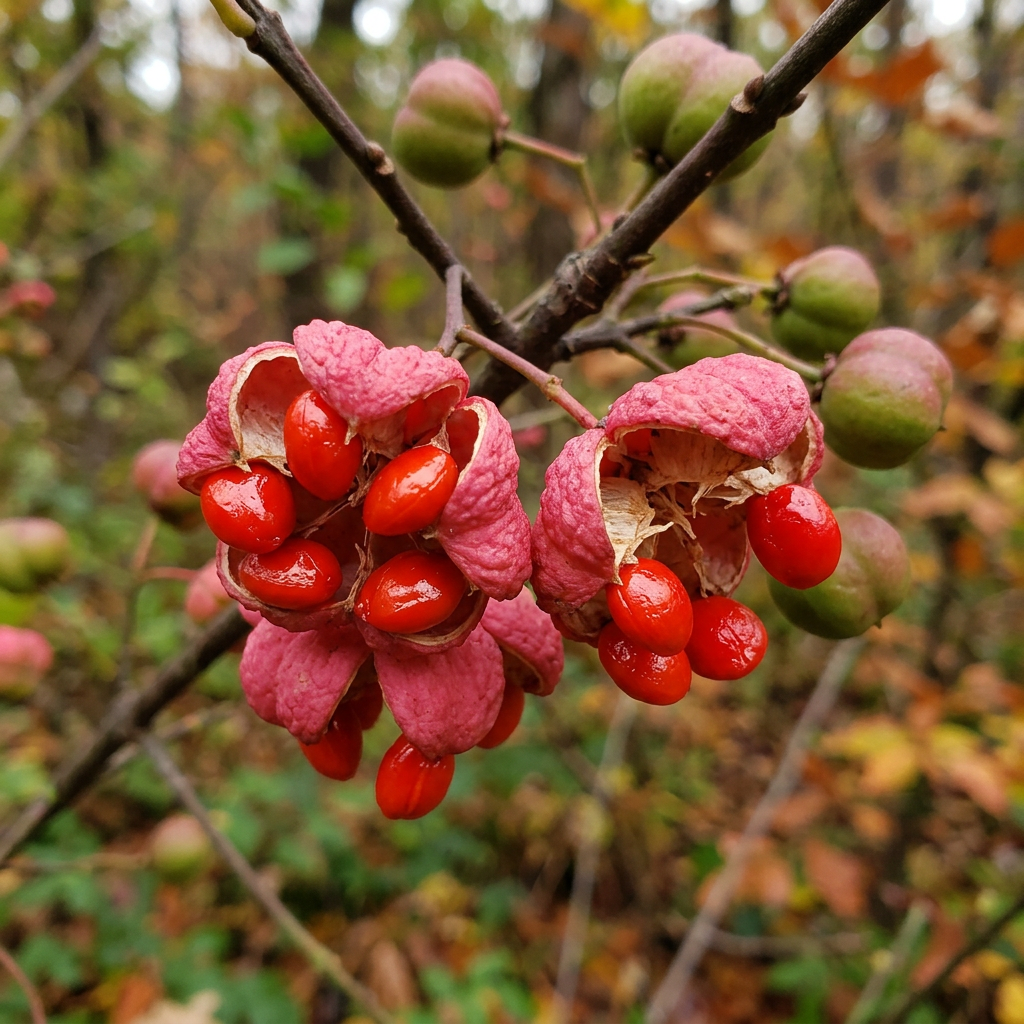
Its striking appearance — bright pink capsules that split open to reveal bold red seeds — makes it one of the most visually captivating fruits in the wild. Though not a culinary fruit, it is a powerful botanical with a story worth telling.
🌍 Origin & Botanical Background
The Wahoo shrub is native to the Midwestern and Eastern United States, thriving in:
- Forest edges
- Riverbanks
- Woodlands
- Moist, shaded areas
Botanical details:
- Scientific name: Euonymus atropurpureus
- Family: Celastraceae
- Common names: Wahoo, Eastern Wahoo, Burning Bush, Spindle Tree
- Fruit type: Capsule containing bright red arils
The plant is deciduous, with deep purple flowers in spring and eye‑catching fruit in fall.
💪 Health Benefits of Wahoo Fruit (Traditional Use)
While the fruit itself is not eaten as food, the plant has a long history in Indigenous and early American herbal medicine. Historically, the bark and fruit were used for:
1. Liver & Gallbladder Support
Traditional herbalists used Wahoo as a bitter tonic to stimulate digestion and support liver function.
2. Digestive Stimulation
Its natural bitter compounds were believed to help with sluggish digestion and appetite regulation.
3. Circulatory Support
Some early herbal texts mention Wahoo as a mild circulatory stimulant.
4. Anti‑Inflammatory Uses
Poultices made from the bark were used to soothe swelling and inflammation.
5. Laxative Properties
Historically, Wahoo bark was used as a strong herbal laxative, though this is not recommended today.
Important: Wahoo is considered medicinal, not edible, and should only be used under professional herbal guidance.
🍊 Vitamin & Nutrient Profile
Because Wahoo is not consumed as a food fruit, there is limited nutritional data. However, the plant contains:
- Bitter glycosides
- Tannins
- Resins
- Celastrin (a plant compound studied for biological activity)
These compounds contribute to its historical medicinal use but also to its toxicity when consumed improperly.
🧭 Cultural & Historical Significance
Wahoo holds a unique place in North American botanical history:
- Used by Indigenous tribes for digestive and liver support
- Adopted by 19th‑century American herbalists
- Listed in early U.S. pharmacopeias as a medicinal plant
- Valued for its ornamental beauty in fall landscapes
Its bright red seeds were also historically used for dyes and decorative crafts.
🍽️ Culinary Uses
Wahoo fruit is not used as food. Its bitterness and plant compounds make it unsuitable for eating.
However, the plant is valued for:
- Ornamental landscaping
- Fall color displays
- Wildlife interest (birds may eat the seeds)
🍂 Wahoo Fruit: The Bitter Wild Fruit with Deep Herbal Roots
The Wahoo Fruit (Euonymus atropurpureus), also known as Eastern Wahoo, Burning Bush, or Spindle Tree, is a small, vibrant, and historically significant fruit native to North America. While not commonly eaten due to its bitter taste, the Wahoo fruit has played an important role in traditional herbal medicine, Indigenous healing practices, and early American botanical history.
Its striking appearance — bright pink capsules that split open to reveal bold red seeds — makes it one of the most visually captivating fruits in the wild. Though not a culinary fruit, it is a powerful botanical with a story worth telling.
🌍 Origin & Botanical Background
The Wahoo shrub is native to the Midwestern and Eastern United States, thriving in:
- Forest edges
- Riverbanks
- Woodlands
- Moist, shaded areas
Botanical details:
- Scientific name: Euonymus atropurpureus
- Family: Celastraceae
- Common names: Wahoo, Eastern Wahoo, Burning Bush, Spindle Tree
- Fruit type: Capsule containing bright red arils
The plant is deciduous, with deep purple flowers in spring and eye‑catching fruit in fall.
💪 Health Benefits of Wahoo Fruit (Traditional Use)
While the fruit itself is not eaten as food, the plant has a long history in Indigenous and early American herbal medicine. Historically, the bark and fruit were used for:
1. Liver & Gallbladder Support
Traditional herbalists used Wahoo as a bitter tonic to stimulate digestion and support liver function.
2. Digestive Stimulation
Its natural bitter compounds were believed to help with sluggish digestion and appetite regulation.
3. Circulatory Support
Some early herbal texts mention Wahoo as a mild circulatory stimulant.
4. Anti‑Inflammatory Uses
Poultices made from the bark were used to soothe swelling and inflammation.
5. Laxative Properties
Historically, Wahoo bark was used as a strong herbal laxative, though this is not recommended today.
Important: Wahoo is considered medicinal, not edible, and should only be used under professional herbal guidance.
🍊 Vitamin & Nutrient Profile
Because Wahoo is not consumed as a food fruit, there is limited nutritional data. However, the plant contains:
- Bitter glycosides
- Tannins
- Resins
- Celastrin (a plant compound studied for biological activity)
These compounds contribute to its historical medicinal use but also to its toxicity when consumed improperly.
🏺 Cultural & Historical Significance of the Wahoo Fruit
The Wahoo Fruit (Euonymus atropurpureus)** may not be a culinary staple, but it holds a surprisingly deep and meaningful place in Indigenous traditions, early American herbalism, and North American natural history. Its striking appearance — rosy capsules that split open to reveal brilliant red seeds — made it a plant of symbolism, medicine, and seasonal storytelling long before modern botany gave it a Latin name.
🌾 Indigenous North American Traditions
For many Indigenous communities across the Midwest and Eastern Woodlands, Wahoo was valued not for its flavor, but for its medicinal and symbolic qualities.
Medicinal Use
Tribal healers used parts of the plant — especially the bark and root bark as:
- A digestive bitter
- A liver‑supporting tonic
- A circulatory stimulant
- A purifying herb during seasonal transitions
These uses were always handled with deep respect, as Wahoo was known to be potent and required careful preparation.
Symbolic Meaning
The fruit’s vivid red arils, revealed only when the capsule splits open, were seen as symbols of:
- Autumn transformation
- Inner vitality
- The hidden strength within nature
Some tribes used the fruit in seasonal ceremonies or as decorative elements in storytelling objects.
📜 Early American Herbalism & Folk Medicine
By the 1700s and 1800s, European settlers had adopted Wahoo into their own herbal practices, influenced heavily by Indigenous knowledge.
A Recognized Medicinal Plant
Wahoo became a staple in:
- Eclectic medicine (a 19th‑century American herbal tradition)
- Homeopathic preparations
- Early U.S. pharmacopeias
Herbalists prized it as a bitter tonic, liver stimulant, and digestive regulator, often comparing it to gentian or cascara.
A Frontier Remedy
In rural communities, Wahoo bark was used in:
- “Spring tonics”
- Digestive bitters
- Circulatory remedies
- Herbal purgatives
Its reputation as a strong, reliable plant medicine made it a household name in early American folk healing.
🍁 A Seasonal Marker in Rural Life
Beyond medicine, Wahoo became a beloved autumn landmark in the American landscape.
- Its bright pink capsules and red seeds signaled the shift into fall.
- Children collected the fruits for crafts and seasonal decorations.
- Farmers recognized Wahoo shrubs as markers of fertile, moist soil near rivers and woodlands.
Its presence in hedgerows and forest edges made it a familiar sight in 19th‑century rural life.
🎨 Craft, Dye, and Decorative Uses
The fruit’s vivid red arils were sometimes used as:
- Natural dyes for small textiles
- Decorative beads in folk crafts
- Seasonal ornaments in rural households
While not as widely used as elderberry or pokeweed dyes, Wahoo’s color was appreciated for its brightness and symbolic warmth.
🌿 A Botanical Curiosity in Modern Times
Today, Wahoo is valued for:
- Its ornamental beauty in fall
- Its role in native plant gardens
- Its importance in pollinator habitats
- Its place in historical herbalism
Although no longer used medicinally due to safety concerns, it remains a plant of cultural memory — a reminder of the deep relationship between people and the wild botanicals of North America.
🍽️ Culinary Uses
Wahoo fruit is not used as food. Its bitterness and plant compounds make it unsuitable for eating.
However, the plant is valued for:
- Ornamental landscaping
- Fall color displays
- Wildlife interest (birds may eat the seeds)
🚫 Who Should Not Consume Wahoo Fruit (Eastern Wahoo)
The Wahoo Fruit (Euonymus atropurpureus)** is not considered an edible fruit and should never be consumed as food. Historically, only the bark and root bark were used in herbal medicine — and even then, under strict guidance due to potency and toxicity. The fruit itself contains compounds that can be harmful if ingested.
Below is a comprehensive, wellness‑oriented guide to who should avoid Wahoo entirely.
1. Children and Infants
Wahoo fruit and bark contain potent glycosides that can cause:
- Nausea
- Vomiting
- Diarrhea
- Dizziness
Children are especially vulnerable to plant toxins, making Wahoo unsafe in any form.
2. Pregnant or Breastfeeding Individuals
Wahoo has historically been classified as a strong herbal stimulant, with effects on:
- Uterine contractions
- Circulation
- Digestive activity
Because of these actions, it may pose risks during pregnancy or lactation. Avoid completely.
3. Individuals With Heart Conditions
Wahoo contains compounds that may influence:
- Heart rhythm
- Circulation
- Blood pressure
Anyone with cardiovascular issues — including arrhythmias, hypertension, or heart disease — should avoid Wahoo entirely.
4. People With Liver or Kidney Conditions
Historically, Wahoo bark was used as a liver stimulant, but in modern herbalism, this is considered risky.
Those with:
- Fatty liver
- Hepatitis
- Cirrhosis
- Kidney impairment
- Chronic kidney disease
should avoid Wahoo due to its strong metabolic effects and potential toxicity.
5. Individuals Taking Prescription Medications
Wahoo may interact with medications due to its effects on:
- Liver metabolism
- Digestion
- Circulation
Avoid if taking:
- Blood pressure medications
- Heart medications
- Diuretics
- Blood thinners
- Medications metabolized by the liver
Because Wahoo is not a food fruit, interactions are unpredictable and potentially dangerous.
6. People With Digestive Disorders
Wahoo bark was historically used as a powerful laxative, meaning it can irritate the digestive tract.
Avoid if you have:
- IBS
- Ulcerative colitis
- Crohn’s disease
- Gastritis
- Ulcers
- Chronic diarrhea
Even small amounts can cause severe digestive distress.
7. Individuals With Allergies to Celastraceae Plants
Wahoo belongs to the Celastraceae family. Avoid if you have known allergies to:
- Burning bush
- Spindle tree
- Euonymus species
Symptoms may include itching, swelling, or digestive upset.
8. Anyone Without Professional Herbal Guidance
Because Wahoo is not an edible fruit and has a history of medicinal potency, it should never be used casually.
Only trained herbalists or practitioners familiar with historical North American botanicals should handle it — and even then, with caution.
⚠️ Important Safety Note
Wahoo is best appreciated as a botanical curiosity, not a dietary fruit. Its fruit, bark, and seeds contain compounds that can be toxic when ingested improperly.
This section is for educational purposes only and is not a substitute for medical advice.
Large amounts of Wahoo bark or fruit can be toxic.
🌿 Safety Note
Wahoo is best appreciated as a botanical, not a food. Its medicinal history is fascinating, but modern use should be cautious and guided by professionals.
Because Wahoo is not an edible fruit, the following groups should avoid it entirely:
- Children
- Pregnant or breastfeeding individuals
- Anyone with liver or kidney conditions
- Individuals taking prescription medications
- Anyone without guidance from a trained herbal practitioner
Large amounts of Wahoo bark or fruit can be toxic.
Wahoo is best appreciated as a botanical, not a food. Its medicinal history is fascinating, but modern use should be cautious and guided by professionals.
🌿 Wrap‑Up: Why Wahoo Fruit Matters in Your Botanical Journey
The Wahoo Fruit (Euonymus atropurpureus)** may not be a fruit you slice, taste, or blend into recipes — but it earns its place in the Letter W lineup through its deep cultural roots, striking appearance, and long history in North American herbal traditions. Its vivid red arils, medicinal legacy, and symbolic presence in Indigenous and early American healing practices make it one of the most intriguing botanicals in your entire series.
While Wahoo is not an edible fruit, its story enriches your readers’ understanding of how humans have interacted with wild plants for centuries — not just for nourishment, but for medicine, ceremony, and seasonal meaning. It reminds us that the world of fruits is broader than what appears in markets and kitchens; it includes the wild, the medicinal, the symbolic, and the historically significant.
📚 Sources & References for Wahoo Fruit (Euonymus atropurpureus)
1. VitaLibrary – Traditional Uses, Key Ingredients & Safety
A detailed overview of Wahoo’s historical medicinal use, active compounds, and safety concerns.
2. Wikipedia – Botanical Profile & Toxicity Notes
Provides botanical classification, habitat range, fruit description, and notes on toxicity and historical medicinal use.
3. Medicinal Herb Info – Plant Description, Biochemical Data & Historical Use
Covers Wahoo’s appearance, habitat, biochemical constituents, medicinal properties, and 19th‑century herbal history.
4. Wellness Naturally – Indigenous Use, Settler Adoption & Herbal Actions
Explores cultural origins, Native American use, early settler adoption, and Wahoo’s role as a liver and digestive stimulant.
5. Ingredient: Wahoo – Historical Herbalism & Bioactive Compounds
Summarizes Wahoo’s role in Indigenous medicine, 19th‑century herbal formulas, and its known glycosides and phytochemicals.
 EJADA
EJADA 
Leave a comment