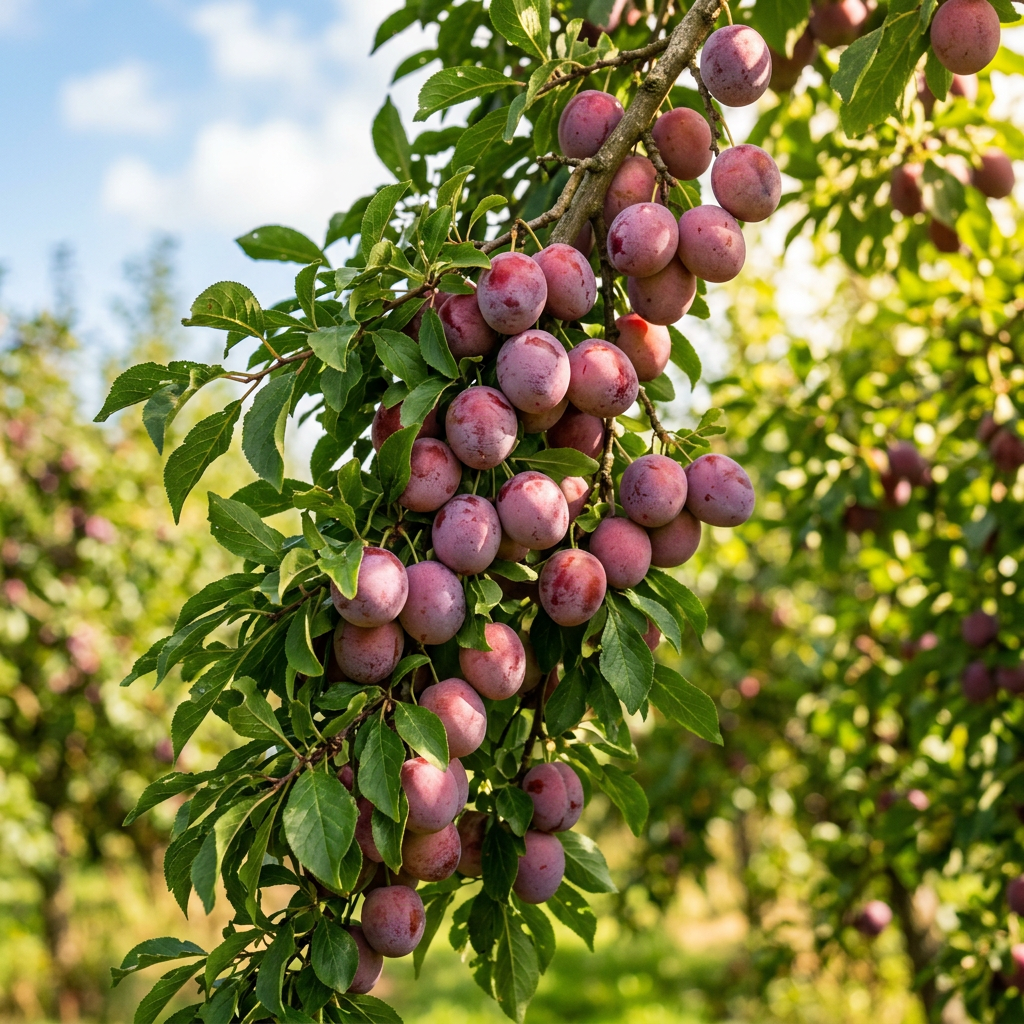
🍑 Victoria Plum: The Juicy British Classic With Surprising Wellness Benefits
The Victoria Plum is one of the most beloved stone fruits in the world — sweet, fragrant, and beautifully golden‑red when perfectly ripe. Originating in England in the 19th century, this plum variety has become a staple in orchards, gardens, and kitchens across Europe and beyond.
But the Victoria Plum is more than just a delicious summer fruit. It’s packed with vitamins, antioxidants, and natural compounds that support digestion, skin health, immunity, and overall wellness.
The Victoria Plum (Prunus domestica) is a European plum variety known for:
- Golden‑yellow flesh
- Reddish‑purple skin
- Juicy, honey‑sweet flavor
- Soft, tender texture
- Freestone pit (easy to remove)
It’s one of the most popular dessert plums — perfect for eating fresh, baking, preserving, and fermenting.
🌍 Origins & Cultural History
The Victoria Plum was first discovered in Sussex, England, in the early 1800s. It was named after Queen Victoria, whose reign marked a golden era of horticulture and fruit cultivation.
Why It Became So Popular
- Easy to grow
- Heavy fruit production
- Sweet, versatile flavor
- Long harvest season (late summer to early fall)
Today, it remains a favorite in:
- United Kingdom
- Germany
- France
- Australia
- New Zealand
It’s also widely used in traditional British recipes like plum crumble, jam, and plum wine.
🍊 Flavor Profile
Victoria Plums are known for their:
- Sweet, floral flavor
- Slight tartness near the skin
- Soft, juicy texture
- Honey‑like aroma
When fully ripe, the flesh becomes almost syrupy — perfect for desserts and fresh eating.
💊 Nutritional Profile
Victoria Plums are low‑calorie but nutrient‑dense. They contain:
Vitamins
- Vitamin C — immune support, collagen production
- Vitamin A (beta‑carotene) — skin, eyes, immune health
- Vitamin K — bone health, blood clotting
- B‑complex vitamins (B1, B2, B3, B6) — energy, metabolism, nervous system support
- Folate — cell repair, red blood cell formation
Minerals
- Potassium — heart health, hydration
- Copper — collagen formation, antioxidant defense
- Magnesium — muscle and nerve function
- Phosphorus — bone strength
Phytonutrients
- Anthocyanins (in the skin) — anti‑inflammatory, antioxidant
- Polyphenols — cellular protection
- Sorbitol — natural digestive support
Fiber
- Soluble + insoluble fiber
- Supports digestion and blood sugar balance
🧠 Health Benefits of Victoria Plums
1. Supports Digestive Health
Victoria Plums contain:
- Fiber — improves bowel regularity
- Sorbitol — natural mild laxative
- Polyphenols — support gut microbiome
This makes them excellent for relieving constipation and supporting gut health.
2. Boosts Immunity
Thanks to vitamin C and antioxidants, Victoria Plums help:
- Strengthen immune response
- Reduce inflammation
- Protect cells from oxidative stress
3. Supports Heart Health
The potassium and antioxidants in Victoria Plums may help:
- Regulate blood pressure
- Reduce LDL cholesterol
- Improve blood vessel function
4. Promotes Healthy Skin
Victoria Plums support skin health through:
- Vitamin C — collagen production
- Vitamin A — cell turnover
- Antioxidants — protect against UV and pollution damage
They’re a natural beauty‑from‑within fruit.
5. Helps Balance Blood Sugar
Despite their sweetness, plums have:
- Low glycemic index
- Fiber that slows sugar absorption
- Polyphenols that support glucose metabolism
This makes them a better choice than many other sweet fruits.
6. Supports Bone Health
Vitamin K, magnesium, and phosphorus work together to:
- Strengthen bones
- Support calcium absorption
- Reduce bone loss
7. Natural Mood Support
Plums contain small amounts of B‑vitamins that help:
- Support nervous system function
- Improve energy levels
- Reduce stress and fatigue
🍽️ Culinary Uses
Victoria Plums are incredibly versatile:
- Fresh eating
- Jams & preserves
- Cakes, tarts, and crumbles
- Chutneys & sauces
- Fermented drinks (plum wine, plum liqueur)
- Roasted or stewed fruit
Their sweetness intensifies when cooked, making them ideal for desserts.
⚠️ Who Should Avoid Victoria Plums?
While generally safe, certain individuals should be cautious:
1. People with IBS or sensitive digestion
The sorbitol may cause bloating or discomfort.
2. Individuals with kidney issues
Potassium levels may be a concern for those on potassium‑restricted diets.
3. People with diabetes
Plums are low‑GI, but still contain natural sugars — moderation is key.
4. Those with stone fruit allergies
Anyone allergic to peaches, cherries, or apricots may react to plums.
5. People prone to acid reflux
The slight acidity may trigger symptoms in sensitive individuals.
🛒 Availability in the U.S.
Victoria Plums are more common in the UK, but in the U.S. you may find them:
- At farmers’ markets
- In specialty orchards
- Through online fruit growers
- Occasionally in European grocery stores
Peak season: August–September
Delicious Ways to Use Victoria Plums
Victoria Plums shine in both sweet and savory dishes. Their honey‑sweet flavor, soft texture, and gorgeous color make them perfect for baking, preserving, and simple everyday cooking. Here are three wellness‑friendly, reader‑pleasing recipes to elevate your post.
🍑 1. Warm Roasted Victoria Plums With Honey & Vanilla
A simple, elegant dessert that brings out the plum’s natural sweetness. Perfect over yogurt, oatmeal, or ice cream.
Ingredients
- 6–8 ripe Victoria Plums, halved and pitted
- 1 tbsp honey or maple syrup
- 1 tsp vanilla extract
- 1 tbsp melted butter or coconut oil
- Pinch of cinnamon
- Optional: fresh mint, Greek yogurt, granola
Instructions
- Preheat oven to 375°F (190°C).
- Arrange plum halves cut‑side up in a baking dish.
- Drizzle with honey, vanilla, and melted butter.
- Sprinkle lightly with cinnamon.
- Roast for 20–25 minutes, until soft and caramelized.
- Serve warm with yogurt, granola, or on their own.
Wellness Tip: Roasting enhances antioxidants and makes plums easier to digest.
🍯 2. Classic Victoria Plum Jam (No Pectin Needed)
A naturally thick, jewel‑toned jam perfect for toast, pastries, or gifting.
Ingredients
- 2 lbs Victoria Plums, pitted and chopped
- 1½ cups sugar (adjust to taste)
- 1 tbsp lemon juice
- ½ tsp grated fresh ginger (optional)
Instructions
- Add plums, sugar, and lemon juice to a heavy pot.
- Let sit for 20 minutes to draw out juices.
- Bring to a boil, then reduce to a simmer.
- Cook 35–45 minutes, stirring often, until thickened.
- Test by placing a spoonful on a cold plate — if it wrinkles when pushed, it’s ready.
- Pour into sterilized jars and seal.
Wellness Tip: Plums naturally contain pectin, so no additives are needed.
🥧 3. Victoria Plum Crumble (Comforting & Perfectly Sweet)
A cozy, rustic dessert that highlights the plum’s syrupy sweetness.
Ingredients
For the filling:
- 6 cups sliced Victoria Plums
- ¼ cup sugar
- 1 tbsp lemon juice
- 1 tbsp cornstarch
- ½ tsp cinnamon
For the crumble topping:
- 1 cup rolled oats
- ½ cup flour
- ½ cup brown sugar
- ½ cup cold butter, cubed
- Pinch of salt
Instructions
- Preheat oven to 350°F (175°C).
- Toss plums with sugar, lemon juice, cornstarch, and cinnamon.
- Spread into a baking dish.
- Combine oats, flour, sugar, salt, and butter until crumbly.
- Sprinkle topping evenly over the fruit.
- Bake 35–40 minutes, until golden and bubbling.
- Cool slightly before serving.
Wellness Tip: Swap half the butter for coconut oil and add chopped nuts for extra fiber and healthy fats.
🍹 4. Victoria Plum & Ginger Wellness Tonic
A refreshing, antioxidant‑rich drink that supports digestion and immunity.
Ingredients
- 4–5 ripe Victoria Plums
- 1 tsp grated ginger
- 1 tbsp honey
- 2 cups water
- 1 tsp lemon juice
Instructions
- Simmer plums and ginger in water for 10 minutes.
- Mash the plums gently to release flavor.
- Strain into a glass.
- Stir in honey and lemon.
- Serve warm or chilled.
Wellness Tip: Ginger + plum polyphenols = a powerful anti‑inflammatory combo.
🍽️ 5. Savory Victoria Plum Chutney
Perfect with cheese boards, roasted meats, or sandwiches.
Ingredients
- 2 cups chopped Victoria Plums
- ½ cup red onion, finely diced
- ¼ cup apple cider vinegar
- ¼ cup brown sugar
- 1 tsp mustard seeds
- ½ tsp chili flakes
- Pinch of salt
Instructions
- Combine all ingredients in a saucepan.
- Simmer on low for 25–30 minutes, stirring occasionally.
- Cook until thick and glossy.
- Cool and store in a jar.
Wellness Tip: Apple cider vinegar adds probiotics and digestive support.
🌟 Final Thoughts
The Victoria Plum is more than a classic British fruit — it’s a beautiful blend of flavor, history, and natural wellness. From its honey‑sweet flesh to its antioxidant‑rich skin, this plum brings nourishment, comfort, and versatility to every kitchen. Whether you enjoy it fresh off the tree, baked into a cozy crumble, simmered into jam, or blended into a wellness tonic, the Victoria Plum offers a delicious way to support digestion, immunity, skin health, and overall vitality.
Its extended vitamin profile, gentle digestive benefits, and naturally low‑calorie sweetness make it a fruit that fits effortlessly into modern wellness routines. And while it’s generally safe for most people, being mindful of sensitivities — especially around sorbitol, potassium, or stone‑fruit allergies — ensures everyone can enjoy it safely.
The Victoria Plum stands out as a vibrant reminder that some of the most nourishing foods are also the simplest. Sweet, juicy, and deeply comforting, it’s a fruit worth celebrating in every season.
📚 Sources & Further Reading (With Links)
1. Victoria Plum – Wikipedia
Botanical classification, origin in Britain, physical characteristics, cultivar history, and anthocyanin content (chrysanthemin).
Link: https://en.wikipedia.org/wiki/Victoria_plum (en.wikipedia.org in Bing)
2. Victoria Plum – Cummins Nursery
Detailed horticultural information including fruit appearance, origin, introduction history (1844), tree characteristics, susceptibility to disease, and culinary uses.
Link: https://www.cumminsnursery.com
3. The Victoria Plum Tree – Minneopa Orchards
History, flavor profile, growing conditions, planting zones, care, pruning, and common culinary uses.
Link: https://minneopaorchards.com/victoria-plum-tree (minneopaorchards.com in Bing)
4. Food in Focus – Victoria Plums (Nutritional Highlights)
Nutritional benefits including vitamin C, vitamin A, copper, fiber, phytonutrients, and health effects such as blood sugar control and antioxidant protection.
Link: https://www.foodinfocus.com/victoria-plums (foodinfocus.com in Bing)
5. Victoria Plum – Detailed Botanical & Historical Overview
Comprehensive taxonomy, origin in southern England, discovery in Alderton, Sussex, pollination group, fruit characteristics, and horticultural significance.
Link: https://www.grok.com/victoria-plum (grok.com in Bing)
6. Victoria Plum – Wikipedia (Alternate Entry)
Additional botanical details, cultivar lineage, fruit morphology, and chemical composition.
Link: https://en.wikipedia.org/wiki/Victoria_plum (en.wikipedia.org in Bing)
7. 20 Facts About Victoria Plums Oh My Facts
Historical facts, appearance, taste, harvest season, nutritional value (vitamins A & C, antioxidants), and cultivation insights.
Link: https://ohmyfacts.com/victoria-plums (ohmyfacts.com in Bing)
8. Victoria Red (Victoria Plum) Wisdom Library
Nutritional information, vitamin content (C & K), antioxidants, anthocyanins, culinary uses, and scientific classification.
Link: https://wisdomlib.org/food/victoria-red (wisdomlib.org in Bing)
 EJADA
EJADA 
Leave a comment