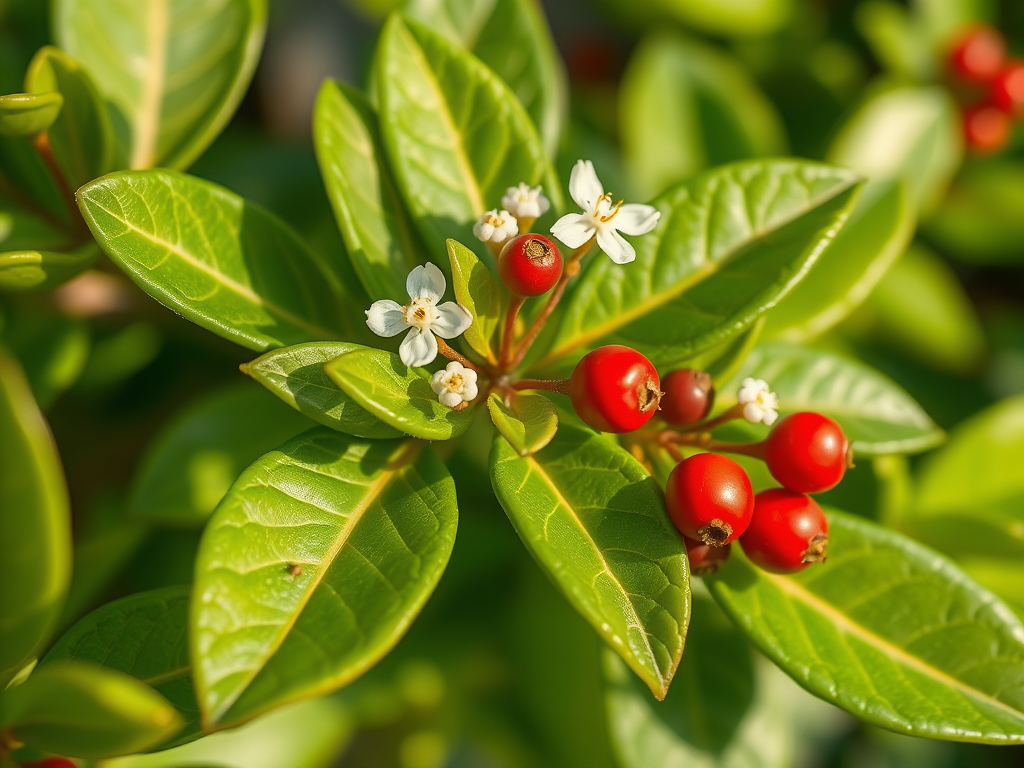
🌿 Limeberry (Triphasia trifolia): Origins & Traditional Uses
🧬 Botanical Identity
- Family: Rutaceae (same as citrus)
- Native Range: Southeast Asia, especially the Philippines, Malaysia, and Indonesia
- Appearance: Small, glossy leaves; fragrant white flowers; tiny red fruits with citrus-like flavor
👣 Cultivation History
- First Cultivators: Indigenous communities in Southeast Asia cultivated Limeberry primarily for medicinal hedges and culinary use.
- Colonial Spread: Introduced to tropical regions worldwide by European colonists, especially in the Caribbean and Central America, where it became part of folk medicine.
🩺 Traditional Medicinal Uses
Limeberry has been used in folk medicine across Asia and the Caribbean for:
| Condition Treated | Traditional Use Method |
|---|---|
| Digestive issues | Fruit and leaves brewed into teas |
| Skin infections & wounds | Crushed leaves applied topically |
| Fever & colds | Decoctions made from bark and leaves |
| Oral health | Chewed leaves for fresh breath & gum care |
Symbolic use: In some cultures, Limeberry hedges were planted around homes as a protective charm against illness and bad spirits.🌿
Antimicrobial properties: The leaves and fruit contain essential oils believed to have antibacterial effects.
🔥 Tiny Fruit, Ancient Fire: The Limeberry Legacy
Beneath its glossy leaves and crimson skin, the Limeberry (Triphasia trifolia) carries centuries of wild wisdom. Cultivated by Southeast Asian communities and woven into Caribbean folk medicine, this citrus cousin was more than a hedge—it was a healer. From fever-fighting teas to wound-soothing poultices, Limeberry burned bright in traditional remedies. Today, it’s a botanical rebel: spicy, medicinal, and unapologetically bold.
🌱 Limeberry in Modern Wellness
In a world chasing superfoods and ancient cures, Limeberry steps in like a spicy whisper from the jungle. It’s not just a fruit—it’s a botanical disruptor. Packed with antimicrobial oils and citrus tang, it’s being rediscovered in herbal teas, natural skincare, and oral health blends. Think of it as nature’s punk berry: tiny, fiery, and fiercely functional.
Limeberry isn’t just folklore—it’s functional. This tiny fruit and its aromatic leaves pack a punch that modern wellness is just beginning to appreciate. Here’s how it earns its place in the botanical spotlight:
🌿 Antibacterial Leaf Extracts
- Traditional Use: Crushed leaves applied to wounds and skin infections
- Modern Insight: Rich in essential oils with antimicrobial properties, making it a natural candidate for herbal salves, gum care rinses, and acne treatments
🍒 Vitamin-Rich Fruit
- Traditional Use: Eaten fresh or brewed into teas to combat fever and fatigue
- Modern Insight: Contains vitamin C, flavonoids, and antioxidants that support immune health and cellular repair—ideal for wellness tonics and functional snacks
🍵 Decoctions Reimagined
- Traditional Use: Bark and leaves boiled into medicinal teas for colds and digestive issues
- Modern Insight: These decoctions are being reimagined as botanical brews, adaptogenic blends, and immune-boosting elixirs in the herbal wellness space
🍽️ Culinary Uses: Then & Now
🏺 Traditional Applications
In Southeast Asia and the Caribbean, Limeberry (Triphasia trifolia) was more than medicine—it was flavor. Its tart-sweet berries and aromatic leaves found their way into kitchens and healing rituals alike.
- Medicinal Confections: In Guyana, the fruit was boiled with sugar and water to create a syrup for coughs—doubling as a soothing treat
- Infused Teas: Leaves and bark were brewed into herbal teas for digestion and fever relief
- Pickled Preserves: Fruits were peeled, soaked in lime water, and boiled to make tangy pickles used in folk remedies
- Aromatic Bath Salts: In the Philippines, Limeberry leaves were added to bath blends for their citrusy scent and skin-soothing properties
🍴 Modern Culinary Revival
Today, Limeberry is being rediscovered by chefs and wellness creators as a functional flavor enhancer with bold personality.
- Botanical Syrups: Reimagined as artisanal syrups for cocktails, mocktails, and herbal tonics
- Citrus Garnishes: Its vibrant red berries offer a visual and flavor twist in desserts and savory dishes
- Infused Oils & Vinegars: Leaves and fruit are steeped into oils and vinegars for gourmet dressings
- Functional Snacks: Dried Limeberry pieces are being explored as tart additions to trail mixes and wellness bars
🍴 Recipes Made from Limeberry: Tradition Meets Trend
🔥 1. Jungle Cough Syrup (Folk Remedy Revival)
A syrupy blend of Limeberry, ginger, and honey—used traditionally to soothe coughs and fevers. Use: Daily wellness shot or cocktail base [See full recipe above]
🌶️ 2. Limeberry Fire Tonic (Modern Elixir)
A tart, spicy infusion with turmeric and apple cider vinegar—ideal for immune support and botanical spritzers. Use: Sip straight or mix with sparkling water [See full recipe above]
🍹 3. Blimey Limey Smoothie (Tropical Copycat)
A refreshing blend of strawberries, pineapple, limeade, and orange juice. Ingredients:
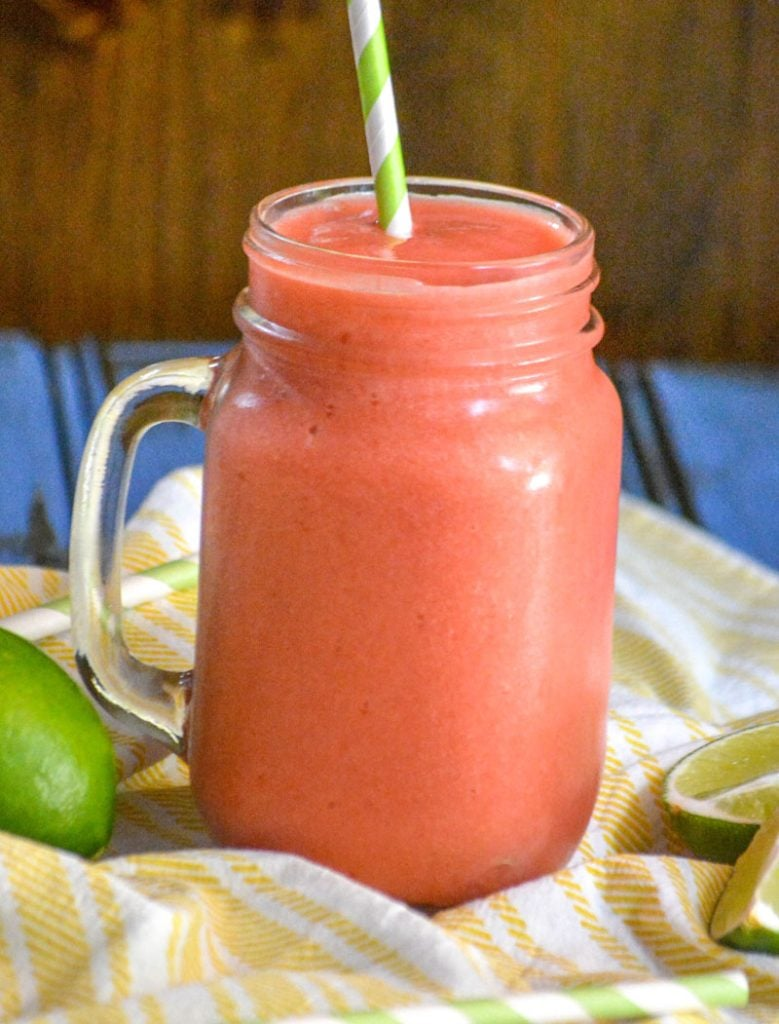
1½ cups frozen strawberries
1 cup pineapple chunks
½ cup limeade
¼ cup orange juice
½ cup ice
¼ cup sugar
Instructions: Blend until smooth.
🍋 4. Limeberry Citrus Bars (Dessert Fusion)
Inspired by lime bars, swap lime juice for Limeberry concentrate for a wild citrus twist.
Use: Tart dessert with a botanical edge [Recipe concept based on traditional lime bar structure
🍵 5. Limeberry Leaf Tea (Traditional Herbal Brew)
Simmer dried Limeberry leaves with ginger and lemon peel.
Use: Digestive aid and fever relief
Modern Twist: Add honey and serve chilled as a botanical iced tea
Long before pharmacies and packaged pills, the Limeberry bush stood as a botanical sentinel in the tropics. Its leaves were brewed into fever-fighting teas, its bark crushed into poultices for wounds and infections, and its tart fruit used to stimulate digestion and cool inflammation. Elders passed down its secrets like sacred code—each remedy a whisper from the jungle’s apothecary. In the wild, healing wasn’t sterile—it was fragrant, fiery, and fiercely alive.”
🔥 Jungle Wisdom Meets Modern Edge
Limeberry isn’t just a fruit—it’s a firestarter. From rainforest remedies to edgy wellness tonics, this citrus rebel has danced between tradition and trend. But don’t let the folklore fool you: its healing reputation comes with a bite. Our infographic below breaks down the nutritional punch, ancestral uses, modern reinventions, and the precautions you need to respect. Because when nature speaks, it doesn’t whisper—it roars.
🍃 Health & Nutrition: Limeberry’s Medicinal Bite
“From fever teas to wound poultices—Limeberry was the jungle’s medicine chest.” Expanded with health context:
“In traditional medicine, Limeberry leaves were steeped into fever-reducing teas, while crushed bark and fruit were applied to wounds for their antimicrobial properties. Rich in vitamin C, antioxidants, and natural acids, Limeberry offered immune support and digestive relief in its raw form. Its tartness wasn’t just flavor—it was firepower.”
🧬 Nutritional Highlights
Vitamin C: Boosts immunity and collagen production
Polyphenols: May reduce inflammation and oxidative stress
Natural acids: Aid digestion and may help regulate blood sugar
Fiber (in whole fruit): Supports gut health and satiety
⚠️ Precautions & Considerations
Raw potency: The fruit’s acidity can irritate sensitive stomachs if consumed in excess
Allergic reactions: Rare, but possible—especially in those sensitive to citrus or tropical botanicals
Traditional vs. modern use: While Limeberry was used topically and internally in folk medicine, modern applications should be guided by research and moderation
Pregnancy & medication: Consult a healthcare provider before using Limeberry therapeutically, especially if pregnant or on medication
⚠️ Disclaimer: Nature’s Fire, Not a Cure
Limeberry has a rich legacy in traditional medicine, but it’s not a substitute for professional healthcare. While its nutrients and folk uses are compelling, always consult a qualified practitioner before using it therapeutically—especially if pregnant, nursing, or on medication. Respect the plant, respect your body.
 EJADA
EJADA 
Leave a comment