EJADA

Living Healthy, Natural Healing, Herbal Health, and nutritional

  • Surinam Cherry: A Tropical Treasure Worth Discovering

    Surinam Cherry: The Scarlet Jewel of Tropical Gardens

    A Fruit With Fire, History, and Heart

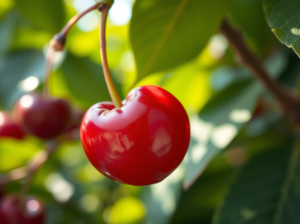
    Tucked into hedges, home gardens, and wild tropical thickets, the Surinam Cherry (Eugenia uniflora) glows like a tiny lantern — ribbed, glossy, and impossibly red. Known across the Caribbean, South America, and parts of Africa, this fruit carries a story of migration, resilience, and flavor that surprises anyone tasting it for the first time.

    The Surinam Cherry arrives in the world like a spark — small, bright, and impossible to ignore. Its ribbed skin catches the light the way a flame dances, shifting from glossy green to a fiery red or deep wine‑purple as it ripens. It’s the kind of fruit that announces itself before you even taste it, carrying a scent that feels both familiar and mysterious, like something passed down through generations.

    This fruit has traveled. It has crossed oceans, adapted to new soils, and rooted itself in the memories of people from Brazil to Barbados, from Suriname to East Africa. Wherever it grows, it becomes part of the landscape — a hedge, a boundary, a childhood landmark, a seasonal ritual.

    And yet, despite its global journey, the Surinam Cherry remains deeply personal. It’s the fruit children pluck on their way home from school, the one that stains fingertips red, the one that surprises newcomers with its bold, resinous bite. It’s a fruit that teaches you not to judge by appearance alone — because beneath its jewel‑like beauty is a flavor with attitude, a flavor that carries the heat of the tropics and the complexity of the cultures that embraced it.

    There is heart in this fruit. Heart in the way it grows — resilient, evergreen, generous. Heart in the way it’s shared — passed from hand to hand, folded into syrups and jams, offered as a taste of home. Heart in the way it holds memory — of gardens tended by elders, of breezes heavy with summer, of stories told under the shade of its branches.

    To taste a Surinam Cherry is to taste history, migration, and the quiet fire of a fruit that has never needed to be loud to be unforgettable. It is a small fruit with a big presence — a reminder that some of the world’s most powerful flavors come in humble, glowing packages.

    It’s a fruit that looks sweet but arrives with attitude — tart, aromatic, and unforgettable.

    What Exactly Is Surinam Cherry?

    Despite its name, the Surinam Cherry isn’t a true cherry. It’s a tropical berry from the Myrtaceae family — the same botanical family as guava and allspice.

    The Surinam Cherry is one of those fruits that defies its own name. It isn’t a cherry at all, but a tropical berry — a small, ribbed lantern from the Myrtaceae family, the same aromatic lineage that gives us guava, clove, and allspice. Everything about it feels intentional: the way its skin forms deep ridges like the folds of a tiny pumpkin, the way its color shifts from glossy green to a fiery red or deep maroon, and the way it softens at the slightest touch when it’s ready to be picked.

    Botanically known as Eugenia uniflora, the Surinam Cherry grows on an evergreen shrub or small tree that thrives in warmth. It’s a plant that loves sun, humidity, and open air — a natural fit for tropical gardens, coastal landscapes, and homesteads where fruit trees are part of the rhythm of daily life. Its leaves release a subtle, spicy fragrance when crushed, a quiet reminder of the aromatic oils that run through its entire family line.

    Key Characteristics

    • Fruit type: True berry
    • Family: Myrtaceae
    • Shape: Deeply ribbed, almost sculptural
    • Colors: Bright red, orange‑red, or deep purple depending on variety and ripeness
    • Tree: Evergreen, often used as a hedge or ornamental plant
    • Seeds: One to two large seeds inside a juicy, soft interior

    When ripe, the fruit detaches easily from the stem — a gentle tug is all it takes. Its skin is thin, its flesh tender, and its aroma unmistakable: sweet, floral, and slightly resinous, like a fruit that carries both sunlight and spice in its core.

    The Surinam Cherry is a plant that gives generously. It fruits in waves, often twice a year, offering handfuls of glowing berries that brighten gardens and feed families, birds, and curious children who learn early which shade of red means “perfectly ripe.”

    It is, in every sense, a fruit that blends beauty with boldness — a botanical jewel with a personality all its own.

    A Taste That Surprises

    Surinam Cherry has a flavor profile that people either adore or approach with caution. It’s bold, unapologetic, and layered.

    Flavor Notes

    • Sweetness that hits first
    • A tangy, citrus‑like brightness
    • A resinous, almost spicy finish
    • A juicy, soft texture when perfectly ripe

    The Surinam Cherry is a lesson in not assuming you know a fruit just because it looks familiar. Its glossy red skin suggests sweetness, something gentle and predictable — but the moment you bite into it, the fruit reveals its true personality. It arrives in layers, each one unfolding like a small revelation.

    At first, there’s the burst of juice, bright and refreshing, a sweetness that feels almost tropical in its simplicity. But then the flavor deepens, shifts, and sharpens. A tangy, citrus‑like brightness rises to the surface, followed by a resinous, spicy undertone that lingers on the tongue. It’s a flavor that carries the signature of the Myrtaceae family — that quiet, aromatic fire found in guava, clove, and allspice.

    This is not a fruit that tries to please everyone. It’s bold. It’s expressive. It’s honest.

    Some people fall in love with it instantly, drawn to its complexity and the way it refuses to be ordinary. Others need a moment — or a perfectly ripe, deep‑purple variety — to understand its charm. But once you taste a Surinam Cherry at its peak, soft and sun‑warmed, you begin to appreciate the fruit’s full story: the sweetness of its origins, the spice of its lineage, the brightness of its tropical home.

    Flavor Notes

    • Sweetness that greets you first
    • A tangy spark that wakes the palate
    • A resinous, almost peppery finish that gives the fruit its signature character
    • A soft, juicy texture when perfectly ripe

    The darker varieties — especially the deep maroon and almost black cultivars — are known to be sweeter and less resinous, offering a gentler introduction for those new to the fruit.

    But even then, the Surinam Cherry never loses its edge. It always carries a hint of the unexpected, a reminder that some fruits are meant to be experienced, not just eaten.

    This is a fruit with personality — one that doesn’t apologize for its boldness, one that invites you to taste not just sweetness, but story, lineage, and place.

    Traditional Uses

    The Surinam Cherry has lived many lives across the tropics — as food, medicine, memory, and ornament. Wherever it has traveled, it has woven itself into the rhythm of daily life, becoming one of those fruits that feels both humble and culturally significant.

    Culinary Traditions

    In Brazil, the Caribbean, and parts of Africa, the fruit is enjoyed in ways that honor its bold flavor:

    • Eaten fresh from the tree, still warm from the sun
    • Cooked into jams, jellies, and preserves that soften its resinous edge
    • Pressed into juices and syrups for cooling summer drinks
    • Fermented into wines and liqueurs, especially in Brazil
    • Added to desserts for color, brightness, and a tropical twist

    Families often plant the tree near their homes, not just for fruit, but for the ritual of harvesting — children racing to pick the ripest berries before they fall.

    Folk Medicine & Herbal Practices

    Traditional knowledge surrounding the Surinam Cherry extends beyond taste:

    • Leaves are brewed into teas believed to support digestion and respiratory comfort
    • Fruit is used as a gentle cleanser, especially when eaten fresh
    • Aromatic oils in the leaves are valued for their soothing, grounding scent

    These practices vary by region, but they all reflect a deep respect for the plant’s natural properties.

    Cultural Presence

    The Surinam Cherry is a fruit of memory:

    • A hedge that marks the boundary of a family home
    • A tree that shades a yard or walkway
    • A seasonal signal — the first red fruit announcing the arrival of warm months

    For many, the taste of Surinam Cherry is tied to childhood, community, and the simple joy of plucking a glowing berry from a familiar tree.

    Health Benefits

    The Surinam Cherry may be small, but it carries a surprising amount of nourishment. Its vibrant color hints at the antioxidants and plant compounds within, making it a meaningful addition to tropical diets.

    Rich in Vitamin C

    Supports:

    • Immune function
    • Skin vitality
    • Antioxidant protection

    The fruit’s brightness isn’t just visual — it’s nutritional.

    High in Antioxidants

    Its pigments and aromatic oils help:

    • Reduce oxidative stress
    • Support long‑term cellular health
    • Protect the body from environmental stressors

    This is part of what gives the fruit its “fire” — a quiet internal strength.

    Supports Healthy Digestion

    The natural fiber in the fruit helps:

    • Promote regularity
    • Support gut balance
    • Create a sense of fullness

    It’s a gentle, natural way to support the digestive system.

    Contains Beneficial Plant Compounds

    As a member of the Myrtaceae family, the Surinam Cherry carries aromatic compounds that may support:

    • Respiratory comfort
    • Anti‑inflammatory balance
    • Overall wellness

    These qualities are part of why the fruit and leaves appear in traditional herbal practices.

    Availability

    The Surinam Cherry is generous — fruiting in waves throughout the warm months and offering multiple harvests in many climates.

    Tropical Regions

    In places like Brazil, Suriname, and the Caribbean:

    • The fruit may be available nearly year‑round
    • Trees often produce two major harvests, with smaller flushes in between

    Warmth and humidity keep the cycle going.

    Subtropical Regions

    In areas with mild winters:

    • The main season is spring through early summer
    • A second, smaller crop may appear in late summer or early fall

    Gardeners often look forward to the first bright red fruits as a sign that warm weather has truly arrived.

    Home Gardens & Local Markets

    Surinam Cherry is rarely commercialized on a large scale, but it thrives in:

    • Backyard gardens
    • Community landscapes
    • Local markets where seasonal fruits are sold fresh

    Because the fruit bruises easily and drops quickly when ripe, it’s best enjoyed close to where it grows — making it a beloved “garden fruit” in many cultures.

    Surinam Cherry Ritual: A Ceremonial Preparation

    A Bowl of Fire and Sweetness

    This is not just a recipe. It is a small ceremony — a way of honoring a fruit that carries sunlight in its skin and memory in its scent. Surinam Cherry asks you to slow down, to touch each berry with intention, to taste not just flavor but lineage.

    This ritual is meant to be simple, grounding, and nourishing. A moment for you, your kitchen, and the quiet wisdom of the fruit.

    1. Ceremonial Surinam Cherry Offering

    Ingredients

    • A handful of ripe Surinam cherries
    • A drizzle of honey or agave
    • A squeeze of fresh lime
    • A few shavings of ginger (optional)
    • Cool water or coconut water

    Preparation as Ritual

    1. Begin with the fruit. Hold each cherry in your palm. Notice its ridges, its color, the way it yields slightly when perfectly ripe. This is your first blessing — presence.

    2. Remove the seeds gently. Split the fruit with your fingers, letting the juice stain your hands. This is your second blessing — release.

    3. Place the pulp in a small bowl. Add a drizzle of honey, a breath of lime, and a whisper of ginger if you want warmth. This is your third blessing — intention.

    4. Pour cool water or coconut water over the mixture. Stir slowly, clockwise, until the colors deepen and the flavors begin to open. This is your fourth blessing — transformation.

    5. Taste. Sip slowly. Let the sweetness arrive first, then the brightness, then the quiet fire that lingers at the back of the tongue. This is your final blessing — remembrance.

    Ceremonial Note

    This preparation is meant to be taken in the morning or at sunset — moments when the world is shifting and your spirit is open. It is a drink of clarity, warmth, and grounding. A reminder that even small fruits carry stories, and even simple rituals can steady the heart.

    2. Surinam Cherry Jam (Small‑Batch, No Pectin)

    Perfect for toast, yogurt bowls, or glazing roasted vegetables.

    Ingredients

    • 3 cups Surinam cherries, seeds removed
    • 1 cup sugar (or coconut sugar for a deeper flavor)
    • 1 tablespoon lemon juice
    • 1 small strip of orange peel (optional)

    Instructions

    1. Add cherries and sugar to a pot and let them sit for 10 minutes to release juices.
    2. Bring to a gentle simmer.
    3. Add lemon juice and orange peel.
    4. Cook 20–25 minutes, stirring often, until thickened.
    5. Remove peel and spoon into a clean jar.

    Ceremonial Note

    This jam captures the fruit’s duality — sweet and bright, with a whisper of spice.

    3. Surinam Cherry & Ginger Cooling Sorbet

    A simple, elegant dessert that honors the fruit’s natural color and aroma.

    Ingredients

    • 3 cups Surinam cherry pulp (from about 4–5 cups whole fruit)
    • ½ cup water
    • ½ cup sugar or honey
    • 1 teaspoon fresh grated ginger
    • Juice of 1 lime

    Instructions

    1. Heat water and sugar until dissolved; cool completely.
    2. Blend the cherry pulp, ginger, and lime juice.
    3. Add the cooled syrup and mix well.
    4. Freeze in an ice cream maker, or pour into a shallow dish and freeze, scraping every 30 minutes until fluffy.

    Ceremonial Note

    This sorbet feels like a tropical breeze — cooling, fragrant, and softly spiced.

    Surinam Cherry Ember Chutney

    A savory, spiced offering for roasted vegetables, grains, and warm evening meals

    A Chutney With Heat, Depth, and Ancestral Memory

    Surinam Cherry carries a quiet flame — a resinous brightness that transforms beautifully when paired with ginger, onion, and warm spices. This chutney honors the fruit’s fire, softening its edges while letting its boldness shine. It’s the kind of recipe that feels both ancient and new, like something passed down through hands that understood how to coax flavor from the land.

    This is a savory ritual — a way to turn a handful of glowing berries into a condiment that tastes like sunset heat and tropical earth.

    Ingredients

    • 3 cups ripe Surinam cherries, seeds removed
    • ½ small red onion, finely diced
    • 1 tablespoon fresh grated ginger
    • 1–2 cloves garlic, minced
    • 1 small hot pepper (Scotch bonnet, bird’s eye, or jalapeño), finely chopped
    • 2 tablespoons apple cider vinegar or lime juice
    • 2 tablespoons coconut sugar or brown sugar
    • ½ teaspoon mustard seeds
    • ½ teaspoon turmeric
    • ¼ teaspoon smoked paprika (optional, for depth)
    • 1 tablespoon coconut oil or olive oil
    • Salt to taste

    Preparation

    1. Begin with the flame.

    Warm the oil in a small pot. Add mustard seeds and let them crackle — this is the opening note, the awakening of the spices.

    2. Build the foundation.

    Add the onion, garlic, and ginger. Sauté until fragrant, until the kitchen smells like warmth and memory.

    3. Invite the heat.

    Stir in the chopped hot pepper. Let it bloom in the oil for a moment.

    4. Add the fruit.

    Fold in the Surinam cherries. Watch them soften, collapse, and release their ruby juices. This is the transformation — the fruit surrendering its fire.

    5. Season the story.

    Add turmeric, smoked paprika, vinegar or lime juice, and coconut sugar. Simmer 15–20 minutes, stirring gently, until the mixture thickens into a glossy, fragrant chutney.

    6. Taste and balance.

    Add salt to bring everything forward. Adjust sweetness or acidity as your spirit guides you.

    Ceremonial Note

    This chutney is meant to be shared. Spoon it over roasted sweet potatoes, grilled vegetables, rice bowls, or warm flatbread. It carries the fruit’s fire, the earth’s grounding, and the kitchen’s quiet alchemy.

    It tastes like a story — bright, bold, and rooted.

    A Note on Healthy Living Click Here

    Who Should Not Consume Surinam Cherry

    Surinam Cherry is generally enjoyed safely in many tropical regions, but like any fruit with a bold personality, there are a few groups who may want to approach it with awareness and moderation.

    People Sensitive to Aromatic or Resinous Fruits

    Surinam Cherry has a naturally resinous, spicy undertone. Anyone who reacts strongly to aromatic fruits (like guava, allspice, or clove‑family plants) may find it irritating or overwhelming.

    Individuals With Digestive Sensitivities

    The fruit can be:

    • acidic
    • bright
    • slightly astringent

    For some people, especially those with sensitive stomachs, this may cause discomfort when eaten in large amounts.

    Anyone Eating Unripe Fruit

    Unripe Surinam Cherries are:

    • very tart
    • firm
    • more resinous

    They can be harsh on the stomach and unpleasant in flavor. Fully ripe fruit — soft, deep red or purple — is best.

    People Trying It for the First Time

    Because the flavor is bold and unexpected, it’s wise to start with a small amount to see how your body responds.

    Pregnant or Breastfeeding Individuals

    There isn’t extensive modern research on the fruit’s effects during pregnancy or breastfeeding. For that reason, some people choose to enjoy it in moderation or check with a healthcare professional if they have concerns.

    Click Here for more information on healthy living

    References

    Botanical Realm. Surinam Cherry (Eugenia uniflora): Characteristics, origin, and cultivation. https://www.botanicalrealm.com/surinam-cherry-eugenia-uniflora (botanicalrealm.com in Bing)

    University of Florida IFAS Extension. Eugenia uniflora: Surinam Cherry — horticultural profile and landscape notes. https://edis.ifas.ufl.edu/publication/FPS202 (edis.ifas.ufl.edu in Bing)

    Wikipedia. Eugenia uniflora — taxonomy, distribution, and general uses. https://en.wikipedia.org/wiki/Eugenia_uniflora (en.wikipedia.org in Bing)

    Disclaimer

    This post is for informational and educational purposes only. It reflects traditional uses, cultural practices, and general knowledge about Surinam Cherry (Eugenia uniflora), but it is not medical advice, diagnosis, or treatment. Individual reactions to foods can vary, especially with aromatic or resinous fruits, and some people may need to avoid or limit them based on personal sensitivities.

    If you have health concerns, dietary restrictions, allergies, or questions about whether this fruit is appropriate for you, please speak with a qualified healthcare professional. Always listen to your body and introduce new foods mindfully.

    Want to know more on how to get healthy and stay healthy: Click Here and get two Bonuses
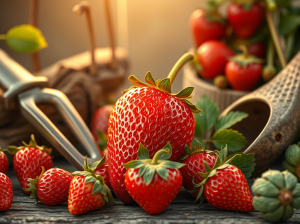
  • Strawberry Guava: From Brazil to Your Backyard

    🌱 Origins: A Fruit Rooted in Tropical Landscapes

    Strawberry guava (Psidium cattleianum) is a fruit born from warm forests — a child of humidity, red soil, and the quiet abundance of tropical ecosystems. Its story begins in Brazil, where it grew wild long before it had a name in English, long before it traveled across oceans, and long before it became a beloved backyard fruit in homes around the world.

    In its native landscape, strawberry guava thrived in the understory of coastal forests, nourished by filtered sunlight and the steady rhythm of tropical rain. Indigenous communities recognized its value early on: a fruit that required little tending, offered reliable sweetness, and could be eaten fresh, juiced, or folded into simple remedies. It was a fruit of the people — accessible, generous, and deeply woven into daily life.

    As Portuguese explorers moved through South America, they carried seeds of this small, fragrant fruit to new territories. Strawberry guava adapted effortlessly, taking root in places where the climate echoed its homeland. It found new life in:

    • Hawaii, where it naturalized so successfully it became part of the island’s everyday landscape
    • The Caribbean, where its sweetness blended into local drinks and preserves
    • Southeast Asia, where it joined the tapestry of tropical fruits in home gardens
    • Central America, where it thrived in warm valleys and coastal regions

    Wherever it traveled, strawberry guava kept its essence: resilient, aromatic, and quietly abundant.

    Its adaptability is part of its magic. Unlike fruits that demand careful cultivation, strawberry guava grows with ease — a reminder that some of the earth’s sweetest offerings come from plants that ask for very little. It is a fruit shaped by migration, climate, and the hands of communities who recognized its gifts long before it entered global markets.

    To understand strawberry guava’s origins is to see the fruit not just as food, but as a traveler — a bearer of tropical memory, a bridge between continents, and a testament to the way plants carry culture across oceans.

    🍓🌺 Flavor Identity: Sweet, Floral, and Quietly Luminous

    Strawberry guava has a flavor that feels like a small revelation — familiar enough to comfort, yet layered enough to surprise. It carries the sweetness of a berry, the perfume of a tropical flower, and the gentle acidity of a sun‑warmed fruit picked straight from the tree.

    ✨ Core Flavor Notes

    • Strawberry‑like sweetness that arrives immediately
    • Soft guava florals that bloom as you chew
    • A bright, tangy lift that keeps the fruit refreshing
    • A subtle wildness reminiscent of forest berries

    Each bite feels like a blend of summer warmth and tropical breeze — sweet, fragrant, and quietly complex.

    🌿 Texture & Mouthfeel

    • Thin, edible skin that gives a delicate snap
    • Soft, juicy interior that melts on the tongue
    • Tiny seeds that add a gentle crunch
    • A smooth, aromatic finish that lingers lightly

    It’s a fruit that doesn’t overwhelm the palate — it refreshes, brightens, and leaves a whisper of sweetness behind.

    🔥 How It Behaves in Cooking

    Strawberry guava adapts beautifully to both raw and cooked preparations:

    • Raw: bright, floral, and intensely aromatic
    • Juiced: sweet with a tropical perfume
    • Cooked: deepens into a jammy, almost candy‑like richness
    • Frozen: retains its fragrance, perfect for sorbets and smoothies

    Heat softens its tang and amplifies its floral notes, making it ideal for compotes, syrups, and simple desserts.

    🌸 Emotional & Cultural Identity

    Strawberry guava tastes like:

    • A warm afternoon in a tropical garden
    • Fruit picked straight from a backyard tree
    • Childhood sweetness wrapped in floral air
    • A moment of brightness in the middle of a busy day

    It carries the memory of tropical forests and the ease of foods that grow close to home — fruits that nourish without effort, sweetness that arrives without asking.

    💛 In One Line

    Strawberry guava tastes like a sweet strawberry wrapped in guava perfume — floral, bright, and quietly enchanting.

    🍓🌺 Strawberry Guava: A Small Fruit With a Big Story

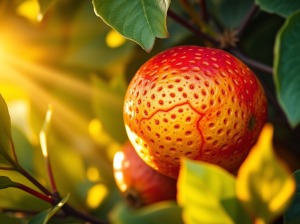
    Strawberry guava may be tiny, but it carries a world of flavor, history, and quiet nourishment inside its thin, ruby‑red skin. Known for its sweet‑tart perfume and soft floral notes, this fruit has traveled across continents, adapted to new climates, and become a beloved part of tropical foodways. It’s a fruit that feels both familiar and surprising — a bridge between the sweetness of strawberries and the aromatic depth of guava.

    🍓 A Fruit With Deep Roots

    Strawberry guava carries the memory of tropical forests — the warmth of sun‑drenched afternoons, the scent of wild fruit trees, and the ease of foods that grow without demand. It is a fruit shaped by migration, adaptation, and the quiet wisdom of communities who understood its value long before it reached global markets.

    Long before it appeared in markets or recipe books, strawberry guava lived in the rhythm of everyday life. Families gathered it from backyard trees, children ate it straight from the branch, and elders folded it into cooling drinks or simple remedies. It was a fruit that asked for little and offered much — sweetness, hydration, and a sense of abundance that felt both humble and generous.

    As it traveled across oceans, strawberry guava carried its lineage with it. In Hawaii, it became part of the landscape, growing wild along trails and hillsides. In the Caribbean, it blended into local preserves and juices. In Southeast Asia, it joined the chorus of tropical fruits that define home gardens and community harvests. Everywhere it went, it adapted — quietly, effortlessly, almost gratefully.

    To honor strawberry guava is to honor:

    • Indigenous stewardship — the early hands that recognized its gifts
    • Botanical resilience — its ability to thrive in new soils and climates
    • The beauty of small, potent fruits — sweetness concentrated in a single bite
    • The way flavor can hold history — carrying memory across continents

    Strawberry guava reminds us that nourishment doesn’t need to be grand to be meaningful. Sometimes the most powerful foods are the ones that grow quietly, generously, and close to the people — fruits that feel like a whisper from the land itself.

    🌿 Health & Vitamins

    Strawberry guava may be small enough to fit in the palm of your hand, but its nutritional profile is surprisingly powerful. This tiny fruit carries the kind of quiet strength found in many tropical plants — concentrated vitamins, gentle antioxidants, and natural compounds that support everyday wellness without heaviness. It’s a fruit that nourishes the body the way a warm breeze nourishes the spirit: softly, steadily, and with a sweetness that feels effortless.

    🍊 Vitamin C for Immune Support & Radiant Skin

    Strawberry guava is exceptionally rich in vitamin C, offering more per gram than many larger fruits. This essential nutrient supports:

    • Immune resilience
    • Collagen production for skin elasticity
    • Antioxidant protection
    • Wound healing and tissue repair

    Its bright, tangy flavor is a natural sign of this vitamin’s presence.

    🌱 Antioxidants for Cellular Protection

    The fruit contains a spectrum of plant compounds — including carotenoids, flavonoids, and polyphenols — that help the body manage oxidative stress. These antioxidants support:

    • Long‑term cellular health
    • Reduced inflammation
    • Heart wellness
    • Healthy aging

    The deeper the color, the richer the antioxidant content.

    💧 Hydration & Lightness

    With its high water content, strawberry guava offers natural hydration wrapped in sweetness. This supports:

    • Fluid balance
    • Skin moisture
    • A sense of lightness after eating

    It’s a beautiful choice for warm days or energizing snacks.

    🫀 Heart‑Friendly Nutrients

    Strawberry guava contains potassium, a mineral that helps maintain healthy blood pressure and supports overall cardiovascular wellness. Combined with its natural fiber, this fruit becomes a gentle ally for heart health.

    🌾 Digestive Support Through Natural Fiber

    The fruit’s soft, soluble fiber helps:

    • Support regular digestion
    • Promote gut comfort
    • Create a balanced, satisfied feeling

    Its fiber is gentle, making it suitable for most digestive systems.

    🔥 Low‑Calorie, High‑Nutrient Balance

    Strawberry guava offers sweetness without weight. Per serving, it is:

    • Low in calories
    • Low in fat
    • Rich in vitamins
    • Naturally hydrating

    This makes it a nourishing option for readers seeking foods that feel both indulgent and light.

    🌸 A Fruit That Supports Everyday Wellness

    Strawberry guava is not a “superfood” in the trendy sense — it is a naturally potent fruit that has supported communities for generations. Its benefits come from its simplicity: whole fruit, grown close to the earth, offering nutrients in their most natural form.

    🌺 Ceremonials & Cultural Traditions Around Strawberry Guava

    Strawberry guava may not appear in formal ritual texts, but across the tropics it is woven into quiet, meaningful practices that function like ceremonies. These traditions honor the land, the harvest, and the sweetness of fruits that grow close to home. They are intimate, ancestral, and rooted in everyday life.

    🌿 Backyard Harvest Rituals

    In Brazil, Hawaii, and parts of the Caribbean, strawberry guava is often gathered directly from backyard trees or wild hillsides. Harvesting is usually done in the early morning, when the fruit is cool and fragrant. Families pick together, offering a moment of connection to the land and to one another.

    🌸 First‑Fruit Offerings

    In some communities, the first ripe fruits of the season are set aside as offerings — placed on a small home altar, shared with elders, or given to ancestors in gratitude. This simple act honors abundance and acknowledges the fruit’s lineage.

    🌺 Cooling & Healing Traditions

    Strawberry guava is often used in cooling remedies during warm seasons. Preparing it — simmering it into tea, blending it into a refreshing drink, or offering it to someone recovering from heat — becomes a quiet ritual of care and restoration.

    🌙 Evening Sweetness Ritual

    In many Hawaiian households, strawberry guava is enjoyed in the evening as a soft, grounding sweetness. It’s a way to close the day gently, often paired with conversation, gratitude, and a moment of rest before night.

    🔥 Communal Preserving Traditions

    During peak season, families and neighbors gather to turn strawberry guava into jams, syrups, juices, and fermented drinks. The cutting, simmering, tasting, and sharing become a communal ritual — preserving not just fruit, but memory.

    🌼 Blessings for the Tree

    In rural areas of Brazil, it’s common to bless fruit trees at the start of the season. People touch the trunk, offer water, or speak a simple wish for abundance. These gestures are small but deeply ceremonial in spirit.

    🍓🌺 Strawberry Guava Recipes

    These recipes honor the fruit’s bright sweetness, floral perfume, and tropical ease — dishes your readers can make quickly, with ingredients that feel familiar and nourishing.

    🍓🌺 1. Strawberry Guava Sunrise Bowl

    Serves: 1 Time: 5 minutes Style: Fresh, bright, hydrating

    Ingredients

    • 1 cup strawberry guava, halved
    • ½ cup strawberries, sliced
    • 1 tsp honey or agave
    • 1 tbsp lime juice
    • 3–4 mint leaves, sliced
    • Optional: coconut yogurt or chia pudding

    Instructions

    1. Add strawberry guava and strawberries to a bowl.
    2. Drizzle with honey and lime.
    3. Add mint for brightness.
    4. Serve as is, or spoon over yogurt for a fuller breakfast.

    🍓🌺 2. Strawberry Guava Cooler (Non‑Alcoholic)

    Serves: 2 Time: 10 minutes Style: Cooling, fragrant, summer‑ready

    Ingredients

    • 1 cup strawberry guava, halved
    • ½ cup strawberries
    • 2 cups cold water or coconut water
    • 1 tbsp lemon or lime juice
    • 1 tsp honey (optional)
    • Ice
    • Fresh mint

    Instructions

    1. Blend strawberry guava, strawberries, and water until smooth.
    2. Strain if you prefer a lighter texture.
    3. Add lemon juice and honey.
    4. Pour over ice and garnish with mint.

    🍓🌺 3. Warm Strawberry Guava Compote

    Serves: 2 Time: 10 minutes Style: Jammy, cozy, naturally sweet

    Ingredients

    • 1 cup strawberry guava, halved
    • ½ cup strawberries, chopped
    • 2 tbsp water
    • 1 tsp honey or maple syrup
    • A pinch of cinnamon

    Instructions

    1. Add all ingredients to a small saucepan.
    2. Cook on low heat for 7–10 minutes until soft and jammy.
    3. Serve warm over oatmeal, pancakes, yogurt, or toast.

    🍓🌺 4. Strawberry Guava & Lime Chia Fresca

    Serves: 1 Time: 5 minutes Style: Light, energizing, fiber‑rich

    Ingredients

    • ½ cup strawberry guava
    • ½ cup strawberries
    • Juice of 1 lime
    • 1 cup cold water
    • 1 tsp chia seeds
    • Honey to taste

    Instructions

    1. Blend strawberry guava, strawberries, and water.
    2. Stir in lime juice and chia seeds.
    3. Let sit for 5 minutes.
    4. Sweeten lightly if desired and serve chilled.

    🍓🌺 5. Simple Strawberry Guava Fruit Salad

    Serves: 1–2 Time: 5 minutes Style: Fresh, bright, nourishing

    Ingredients

    • 1 cup strawberry guava, halved
    • ½ cup strawberries, sliced
    • ½ cup papaya or mango (optional)
    • 1 tsp honey
    • 1 tsp lemon juice
    • A pinch of black pepper (optional but beautiful)

    Instructions

    1. Combine all fruits in a bowl.
    2. Whisk honey and lemon juice.
    3. Drizzle over the fruit.
    4. Add black pepper for a subtle lift.

    If you want, I can also create:

    • Recipe card versions for WordPress
    • Pinterest‑optimized recipe blocks
    • A ceremonial recipe intro
    • A dessert‑focused strawberry guava set
    • SEO tags for this recipe section

    Just tell me what direction you want to shape next.

    ⚠️ Who Should Avoid Strawberry Guava

    Strawberry guava is generally gentle and well‑tolerated, but a few readers may want to enjoy it with awareness or avoid it altogether. These notes help your audience make choices that feel aligned with their bodies and their wellness needs.

    🌿 1. Individuals With Digestive Sensitivities

    Strawberry guava contains small, firm seeds that may be difficult for some people to digest. Those with sensitive digestion, diverticular concerns, or discomfort with seeded fruits may prefer to strain the pulp or choose seedless preparations.

    🍃 2. People Sensitive to Tropical Fruits

    Some individuals experience mild reactions to tropical fruits such as guava, mango, or papaya. If someone knows they react to similar fruits, it’s wise to introduce strawberry guava slowly and mindfully.

    🍋 3. Those With Acid‑Sensitive Digestion

    Strawberry guava has a natural tang that may be noticeable for people with:

    • Acid reflux
    • Heartburn
    • Sensitive stomachs

    Pairing it with yogurt, oats, or coconut milk can soften the acidity.

    🌱 4. Individuals Monitoring Fiber Intake

    Because the fruit contains natural fiber and seeds, very large portions may cause discomfort for those who need to limit fiber temporarily.

    👶 5. Young Children

    Whole strawberry guavas can be a choking hazard due to their size and seeds. Slicing or mashing them makes the fruit safer for little ones.

    🧼 6. Anyone Concerned About Surface Residues

    Like all thin‑skinned fruits, strawberry guava should be washed thoroughly to remove dust or environmental particles — especially when gathered from wild or backyard trees.

    📚 Sources Used & Links

    WebMD – Strawberry Guava: Health Benefits, Nutrients, Preparation A medically reviewed overview of strawberry guava’s nutrition, antioxidants, and wellness properties.

    diet/health-benefits-strawberry-guava (webmd.com in Bing)

    Gardeners’ Magazine – Strawberry Guava: Description, Flavor, Benefits, and Uses Botanical background, flavor notes, culinary uses, and nutritional value.

    🌼 Closing

    May strawberry guava remind you that nourishment can be small, fragrant, and quietly powerful. A fruit shaped by warm forests, carried across oceans, and offered to us with a sweetness that asks for nothing in return.

    As you taste its floral brightness, may you feel connected to the places it comes from — the rain‑fed hillsides, the backyard trees, the hands that have gathered it for generations. Let each bite be a moment of presence, a soft pause in your day, a reminder that the earth still gives generously.

    May this fruit bring lightness to your body, clarity to your mind, and a gentle sweetness to your table.

    ⚠️ Disclaimer

    This post is for general informational and cultural purposes only. It is not medical advice, and it should not be used to diagnose, treat, or manage any health condition. If you have dietary restrictions, allergies, or specific health concerns, please speak with a qualified healthcare professional before making changes to your diet.

  • Monkey Orange: Africa’s Unique Wild Fruit

    The Monkey Orange: Africa’s Tough‑Shelled Hidden Gem

    A Wild Fruit With a Story

    Across the savannas and woodlands of sub‑Saharan Africa grows a fruit that looks like it belongs in a fantasy novel: the monkey orange, scientifically known as Strychnos spinosa. With its hard, golden shell and sweet‑tart pulp, this fruit has nourished people and wildlife for generations — yet many outside Africa have never heard of it.

    What Exactly Is a Monkey Orange?

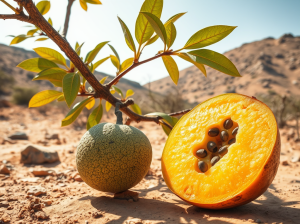
    Botanically, the monkey orange is a true berry, though it hardly resembles the soft berries most people imagine. Instead, it forms a large, spherical fruit with a thick, woody rind that protects the soft, edible interior.

    Key Characteristics

    • Fruit type: Berry
    • Appearance: Green when young, turning bright yellow when ripe
    • Shell: Hard and durable — it can be used as a container once emptied
    • Pulp: Sweet‑sour, aromatic, and brownish
    • Seeds: Numerous and very hard

    The fruit grows on a small, thorny tree that thrives in dry climates, making it an important food source in regions where cultivated fruits may be scarce.

    A Taste of the Wild

    The flavor of monkey orange pulp is often described as:

    • Sweet with a citrus‑like tang
    • Slightly caramel‑like when very ripe
    • Rich and fragrant

    It’s eaten fresh, dried, or made into juices, jams, and even fermented beverages.

    Cultural and Ecological Importance

    Long before botanists formally described the species, Indigenous communities valued the monkey orange for its:

    • Nutrition — rich in vitamin C, fiber, and minerals
    • Versatility — the shell becomes bowls, ornaments, or storage containers
    • Reliability — the tree produces even in harsh seasons

    Wildlife also depends on it. Monkeys, baboons, elephants, and antelope all enjoy the fruit, helping disperse its seeds across the landscape.

    A Relative With a Dangerous Reputation

    The Strychnos genus is famous — or infamous — for containing Strychnos nux‑vomica, the source of the poison strychnine. But Strychnos spinosa is different:

    • The pulp is safe and edible
    • The seeds, however, should not be eaten

    This duality adds to the fruit’s mystique.

    Why the World Should Pay Attention

    As interest grows in climate‑resilient crops and underutilized fruits, the monkey orange stands out. It’s:

    • Drought‑tolerant
    • Nutrient‑dense
    • Naturally pest‑resistant
    • Flavorful and unique

    With proper cultivation and processing, it could become a valuable fruit for both local communities and global markets.

    Health Benefits of the Monkey Orange

    The monkey orange isn’t just a wild delicacy — it’s a nutritional powerhouse hiding beneath a tough yellow shell. Communities across Africa have long valued it for the energy and nourishment it provides, and modern nutritional studies are beginning to highlight why.

    Rich in Vitamin C

    Monkey orange pulp contains impressive levels of vitamin C, supporting:

    • Immune function
    • Skin health
    • Antioxidant protection

    It’s a natural boost in regions where citrus fruits may not grow easily.

    High in Dietary Fiber

    The fruit’s dense, sticky pulp is packed with fiber, which helps:

    • Support healthy digestion
    • Promote fullness and steady energy
    • Maintain gut health

    It’s one of the reasons the fruit is so satisfying.

    Natural Source of Minerals

    Monkey orange provides essential minerals such as:

    • Potassium — supports heart and muscle function
    • Magnesium — important for nerves, muscles, and energy production
    • Calcium — contributes to bone health

    These nutrients make it a valuable food in areas with limited access to diverse diets.

    Energy‑Dense and Sustaining

    The pulp contains natural sugars and carbohydrates that offer:

    • Quick energy
    • Sustained fuel for long periods
    • A reliable food source during dry seasons

    It’s no surprise that both people and wildlife rely on it.

    Antioxidant Properties

    Like many wild fruits, monkey orange contains plant compounds that help:

    • Reduce oxidative stress
    • Support long‑term cellular health
    • Protect the body from environmental stressors

    These benefits are especially important in hot, arid climates.

    A Climate‑Smart Superfruit

    Because the tree thrives in drought‑prone areas, the monkey orange offers:

    • Nutrient‑dense food where other crops fail
    • A sustainable, low‑input fruit source
    • Potential for future cultivation and food security

    It’s a reminder that some of the world’s most resilient foods are still underappreciated.

    Traditional Uses of the Monkey Orange

    For generations, communities across sub‑Saharan Africa have relied on the monkey orange not just as a food source, but as a versatile resource woven into daily life. Its tough shell, fragrant pulp, and resilient tree have all found meaningful roles in traditional culture.

    A Nutritious Wild Food

    The most widespread use of the monkey orange is, of course, as a wild fruit snack. Families gather the ripe yellow fruits during the dry season when other foods are scarce. The pulp is eaten:

    • Fresh from the shell
    • Dried into chewy pieces
    • Mixed into porridges
    • Fermented into refreshing drinks

    In many regions, it’s considered a seasonal treat that signals the height of summer.

    Natural Containers and Craftwork

    Once the pulp is removed, the hard, woody shell becomes a valuable material. Traditionally, it’s used to make:

    • Small bowls
    • Storage containers
    • Decorative carvings
    • Musical rattles
    • Children’s toys

    The shell’s durability and smooth finish make it ideal for crafting.

    Traditional Medicine

    While the seeds are not eaten, other parts of the plant have been used in folk remedies. In some communities:

    • The root or bark is boiled for herbal infusions
    • The pulp is used as a gentle digestive aid
    • The shell is sometimes burned and used in ceremonial contexts

    These practices vary widely by region and are part of long-standing local knowledge.

    Wildlife and Ecological Importance

    Traditional ecological knowledge recognizes the monkey orange tree as a key species in the landscape. It provides:

    • Food for monkeys, baboons, elephants, and antelope
    • Shade and shelter for smaller animals
    • A reliable fruiting cycle even in drought

    Communities often protect mature trees because they support both people and wildlife.

    A Social Fruit

    In many rural areas, collecting monkey oranges is a communal activity. Children climb trees to shake down ripe fruits, families gather them in baskets, and neighbors share the harvest. The fruit often appears at local markets, where it’s sold fresh or processed into snacks.

    Who Should Avoid Monkey Orange

    While the pulp of Strychnos spinosa is widely enjoyed and generally considered safe when ripe, there are a few groups who may need to be cautious.

    People Sensitive to New or Wild Foods

    Anyone with a history of food sensitivities or allergies may want to introduce the fruit slowly. Wild fruits can contain unfamiliar compounds that some individuals react to.

    Individuals Who Accidentally Consume the Seeds

    The seeds should not be eaten. Like many members of the Strychnos genus, the seeds may contain toxic alkaloids. The pulp is the edible part — the seeds are discarded.

    Pregnant or Breastfeeding Individuals

    Because the fruit hasn’t been widely studied in modern nutrition science, people who are pregnant or breastfeeding may prefer to avoid it or consume it in moderation until more research is available.

    People With Digestive Sensitivities

    The pulp is very high in fiber, which can be difficult for some individuals to digest, especially in large amounts.

    Anyone Eating Unripe Fruit

    Unripe monkey oranges can be:

    • Sour
    • Hard
    • Potentially irritating to the stomach

    The fruit should be fully yellow and aromatic before eating.

    Sources Used

    1. Kew Science – Plants of the World Online (POWO)

    Taxonomic details, botanical description, author citation (“Lam.”). https://powo.science.kew.org/taxon/urn:lsid:ipni.org:names:602003-1 (powo.science.kew.org in Bing)

    2. SANBI (South African National Biodiversity Institute)

    Species profile, habitat, distribution, and traditional uses. https://pza.sanbi.org/strychnos-spinosa (pza.sanbi.org in Bing)

    3. Useful Tropical Plants Database

    Ethnobotanical uses, edible parts, and general plant information. http://tropical.theferns.info/viewtropical.php?id=Strychnos+spinosa (tropical.theferns.info in Bing)

    4. PROTA (Plant Resources of Tropical Africa)

    Comprehensive information on African plants, including food uses and cultural significance. Archived version (PROTA is no longer updated): https://uses.plantnet-project.org/en/Strychnos_spinosa_(PROTA) (uses.plantnet-project.org in Bing)

    5. FAO – Wild Edible Plants Reports

    Nutritional and ecological context for African wild fruits. https://www.fao.org/3/i8739en/I8739EN.pdf (fao.org in Bing) (Contains sections on indigenous fruits including Strychnos species.)

    6. Peer‑Reviewed Research Articles

    Examples you can cite:

    • Nutritional composition of monkey orange (Strychnos spinosa) https://doi.org/10.1016/j.sjbs.2014.11.018 (doi.org in Bing)
    • Ethnobotanical uses of Strychnos species in Southern Africa https://doi.org/10.4102/abc.v43i1.210 (doi.org in Bing)

    Seasonal Availability

    🌦 Rain‑Dependent Fruiting

    • The tree produces flowers September–February (spring–summer in Southern Africa).
    • Fruits appear only after good rains, meaning availability varies year to year.
    • In many regions, ripe fruit is most common late summer to early autumn.

    🌍 Regional Notes

    • Southern Africa: Ripe fruit typically found January–April, depending on rainfall.
    • East Africa: Availability may extend slightly longer due to bimodal rainfall patterns.
    • Dry years: Fruit may be scarce or absent.

    Market Availability

    • Monkey oranges are not widely commercialized and are mostly sold in local rural markets near harvesting areas.
    • Availability in markets is seasonal, aligning with the ripening period after rains.

  • Strychnos cocculoides: The Hidden Treasures of Monkey Orange

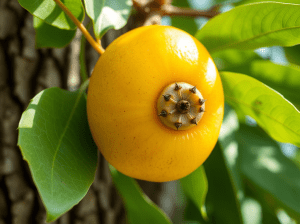
    🌳 Strychnos cocculoides (Corky‑Bark Monkey Orange)

    Strychnos cocculoides is one of southern Africa’s most intriguing wild fruits — a hard‑shelled, sweet‑pulped treasure carried through generations of Indigenous knowledge. Known for its thick, corky rind and fragrant interior, this fruit holds both nourishment and caution, beauty and complexity. It is a fruit shaped by dry woodlands, ancestral foodways, and the resilience of the African landscape.

    🌿 Who First Discovered Strychnos cocculoides?

    About “discovery,” there are two parallel truths

    1. Indigenous Discovery (the true first discovery)

    Long before Western science documented the species, Strychnos cocculoides was already known, harvested, and used by Indigenous communities across southern Africa — particularly in what is now:

    • Namibia
    • Botswana
    • Zimbabwe
    • Zambia
    • Mozambique
    • Angola

    These communities were the first discoverers, the first cultivators, and the first to understand the fruit’s edible pulp and the dangers of its seeds. Their knowledge predates written records by centuries.

    So in the truest sense: The fruit was discovered by the Indigenous peoples of southern Africa, long before colonial science existed.

    2. Western Scientific Discovery (the documented discovery)

    The species entered Western science when it was collected and identified by European botanists working in southern Africa during the late 1800s.

    Formal scientific discovery:

    John Gilbert Baker (an English botanist) Year: 1895 Event: He published the first formal scientific description in the Bulletin of Miscellaneous Information (Kew).

    This is the moment Western science recognizes as “discovery,” even though the fruit had been known and used for generations.

    🌿 Why this matters

    Indigenous communities of southern Africa first discovered and used Strychnos cocculoides long before Western science formally documented it in 1895 through botanist John Gilbert Baker.

    In botany, “discovery” usually refers to the first formal scientific description, not the first human encounter. Indigenous communities across southern Africa had known and used the fruit for generations before Western science documented it.

    So the timeline looks like this:

    • Long before 1895: Indigenous peoples across southern Africa used the fruit traditionally.
    • 1895: John Gilbert Baker formally described and named Strychnos cocculoides in a scientific publication.

    🌍 Origins: A Fruit Rooted in Southern Africa

    Strychnos cocculoides grows naturally across Namibia, Botswana, Zimbabwe, Zambia, Mozambique, Angola, Tanzania, and South Africa. It thrives in savannahs, woodlands, and rocky hillsides, often appearing in places where the soil is sandy, dry, or difficult for other fruit trees to survive.

    Long before Western science documented it, the fruit was known, harvested, and used by Indigenous communities. It served as:

    • A seasonal food source
    • A trade item in local markets
    • A fruit shared during gatherings
    • A symbol of abundance in rural households

    Its true discovery belongs to the people who lived with it, tended it, and understood its gifts.

    🌿 What the Tree Looks Like

    • A small deciduous tree (2–8 m tall) with a rounded crown
    • Deeply ridged, corky bark — its most recognizable feature
    • Branches often armed with curved spines
    • Green, woody fruits that ripen to orange
    • Thick, hard shells with whitish pulp and bony seeds

    🍊 The Fruit

    The fruit — commonly called monkey orange — is considered one of the most important wild fruits in Tanzania and Namibia. It is:

    • Pleasantly flavored
    • Eaten raw when fully ripe
    • Sold in local markets
    • Used in rural food traditions and sometimes preserved

    The pulp is edible, but the seeds are considered poisonous.

    Earthy, and Distinct

    The pulp of the ripe fruit is:

    • Sweet with a mild tang
    • Earthy and fragrant
    • Soft and creamy when fully ripe

    Its flavor is often compared to a blend of tropical fruit and subtle caramel notes a quiet sweetness wrapped in a rugged shell.

    🌱 Cultural Presence

    Strychnos cocculoides holds a quiet but enduring place in the cultural life of southern Africa. It is not a commercial fruit in the global sense — it is a community fruit, a seasonal treasure, and a symbol of rural abundance. Its presence is woven into daily rhythms, childhood memories, and the ancestral relationship between people and the land.

    🌍 A Fruit of the People

    Across Namibia, Botswana, Zimbabwe, Zambia, and Mozambique, the monkey orange is gathered from the wild rather than cultivated in orchards. Families collect the fruit during the dry season, often walking together to known trees that have been visited for generations. The act of gathering becomes a moment of connection — to place, to lineage, and to one another.

    🍊 Market Life & Seasonal Economy

    In many rural markets, the fruit appears in small piles or baskets, sold by women and elders who rely on seasonal harvests for income. Its hard shell allows it to store well, making it valuable in regions where fresh fruit is scarce during certain months. For many households, selling monkey oranges is part of the seasonal economy that supports school fees, household needs, and community trade.

    🧡 A Childhood Memory

    For many who grew up in southern Africa, the monkey orange is a fruit of childhood:

    • Cracking open the hard shell on a rock
    • Sharing the soft pulp with siblings
    • Carrying the fruit home in pockets or small bags
    • Waiting for the exact moment of ripeness

    It is a fruit that evokes nostalgia — a sweetness tied to place and time.

    🔥 Communal Processing Traditions

    In some regions, families gather to prepare the fruit together. The pulp may be:

    • Eaten fresh
    • Mixed into traditional drinks
    • Dried for later use
    • Added to porridges or festive dishes

    These shared preparations become communal rituals — preserving not just food, but memory.

    🌿 Symbol of Resilience

    Because the tree thrives in dry, challenging landscapes, it is often seen as a symbol of endurance. Its corky bark and tough shell reflect the resilience of the communities who have relied on it — people who understand how to live with the land rather than against it.

    🌼 A Fruit With Ancestral Echoes

    Though not tied to formal ceremonies, the fruit carries a spiritual presence. In some households, the first ripe fruits of the season are shared with elders or placed on small home altars as a gesture of gratitude. This quiet offering honors the land, the ancestors, and the cycles of abundance.

    🌿 Health & Nutritional

    Strychnos cocculoides offers a quiet kind of nourishment — the kind found in wild fruits that grow far from commercial farms, shaped instead by sun, soil, and ancestral landscapes. While the pulp is modest in size, it carries hydration, natural sugars, and plant compounds that have supported rural communities for generations.

    🍊 Natural Energy From Wild Fruit Sugars

    The ripe pulp contains gentle, naturally occurring sugars that provide quick energy without heaviness. This makes the fruit a welcome source of nourishment during:

    • Long walks
    • Harvest days
    • Dry‑season fatigue

    It is a fruit that restores softly, offering sweetness wrapped in earthiness.

    💧 Hydration in Dry Climates

    Because the fruit ripens during the dry season, its moisture content is especially valued. The pulp helps support:

    • Hydration
    • Electrolyte balance
    • A sense of refreshment in hot weather

    Its thick shell protects the pulp from drying out, allowing it to stay fresh longer than many wild fruits.

    🌱 Fiber for Gentle Digestion

    The edible pulp contains natural fiber that supports:

    • Regular digestion
    • A comfortable, satisfied feeling
    • Slow, steady energy release

    The fiber is soft and easy on the stomach — though the seeds must never be eaten, as they are toxic.

    🧡 Plant Compounds With Traditional Value

    While scientific research is still emerging, many Strychnos species contain beneficial plant compounds in their pulp, including:

    • Antioxidants
    • Polyphenols
    • Natural phytochemicals

    These compounds help the body manage everyday oxidative stress and support long‑term wellness in subtle ways.

    🌾 A Wild Fruit With Nutritional Modesty

    Unlike commercial fruits bred for high vitamin content, Strychnos cocculoides offers a more modest nutritional profile — but what it provides is meaningful in context:

    • Hydration
    • Natural sugars
    • Fiber
    • Trace minerals
    • Plant compounds

    Its value lies not in being a “superfood,” but in being a resilient, accessible, and culturally rooted source of nourishment.

    🌼 Traditional Uses for Wellness

    In some communities, the pulp is used:

    • As a gentle snack for children
    • As a source of energy during fieldwork
    • Mixed into porridges for added sweetness
    • In seasonal drinks that cool and refresh

    These uses reflect a deep understanding of the fruit’s strengths — hydration, energy, and comfort.

    🍊 Uses of the Fruit

    1. Eaten Fresh When Fully Ripe

    The soft, fragrant pulp is enjoyed as a seasonal treat. Its sweetness offers quick energy and hydration during the dry season.

    2. Traditional Drinks & Beverages

    In many regions, the pulp is mixed with water to create:

    • Refreshing juices
    • Light fermented drinks
    • Seasonal beverages shared during gatherings

    These drinks carry the fruit’s earthy sweetness and are often enjoyed chilled.

    3. Porridges & Local Dishes

    The pulp is sometimes stirred into:

    • Morning porridges
    • Festive dishes
    • Sweetened grain meals

    It adds flavor, moisture, and a gentle sweetness.

    4. Dried Pulp for Later Use

    In some communities, the pulp is dried and stored. This allows families to enjoy the fruit long after the harvest season ends.

    5. Market Trade & Seasonal Income

    Monkey oranges are sold in rural markets, providing:

    • Income for women and elders
    • A seasonal economic boost
    • A culturally rooted trade item

    The fruit’s long shelf life makes it ideal for selling.

    6. Childhood Food & Cultural Memory

    For many, the fruit is tied to childhood:

    • Cracking the shell on a rock
    • Sharing pulp with siblings
    • Carrying fruit home from the bush

    It is a fruit of memory, belonging, and place.

    The fruit nourishes, refreshes, and connects communities to seasonal rhythms.

    This Wellness Fruit needs no cautions, and get a FREE BONUS

    ⚠️ Who Should Avoid This Fruit

    While the ripe pulp of Strychnos cocculoides is traditionally enjoyed across southern Africa, the fruit also carries important cautions. Its seeds and unripe parts contain toxic alkaloids, so awareness is essential. This section helps readers make informed, mindful choices.

    🌿 1. Individuals Unfamiliar With the Fruit

    Because the seeds are toxic and the shell is extremely hard, anyone who has never handled the fruit before should avoid eating it without guidance. Safe enjoyment requires:

    • Identifying fully ripe fruit
    • Knowing how to open the shell
    • Discarding all seeds

    If these steps feel uncertain, it’s best to avoid the fruit.

    🍃 2. People Sensitive to Bitter Alkaloids

    Some individuals react strongly to bitter plant compounds found in certain wild fruits. If someone has sensitivities to:

    • Bitter tropical fruits
    • Alkaloid‑rich plants
    • Wild foraged foods

    they may want to avoid Strychnos cocculoides or try only a very small amount of ripe pulp.

    👶 3. Young Children

    The fruit poses two risks for children:

    • Choking hazard from the hard shell and seeds
    • Toxicity if seeds are accidentally swallowed

    For safety, young children should not handle or eat the fruit unless an adult prepares it carefully.

    🍂 4. Individuals With Digestive Sensitivities

    The pulp is fibrous and earthy. Those with sensitive digestion may experience discomfort if they consume large amounts. It’s best to start with a small portion and observe how the body responds.

    🌱 5. Anyone Without Access to Local Knowledge

    Because this is a wild fruit with both edible and toxic parts, it is safest when prepared by someone familiar with:

    • The correct stage of ripeness
    • How to open the shell
    • How to remove seeds fully

    If that knowledge isn’t available, avoiding the fruit is the safest choice.

    🧼 6. People Concerned About Wild‑Harvested Foods

    The fruit is often gathered from the wild, which means:

    • Dust
    • Insects
    • Environmental residues

    may be present on the shell. Those who prefer cultivated or washed fruits may choose to avoid it.

    🔥 7. Anyone Unsure About Ripeness

    Unripe Strychnos cocculoides can contain higher concentrations of toxic compounds. If the fruit is:

    • Green
    • Hard
    • Not aromatic

    it should not be eaten.

    In Essence

    The ripe pulp is traditionally enjoyed and valued. The seeds and unripe fruit should never be consumed. And for those unfamiliar with the fruit, caution is a form of respect for the plant, for the land, and for the body.

    🛒 Availability

    Strychnos cocculoides is not a commercial supermarket fruit. Its presence is deeply local, seasonal, and tied to the landscapes where it naturally grows. Because of this, availability depends on region, climate, and traditional harvesting rhythms.

    🌍 Where It’s Commonly Found

    The fruit is primarily available in southern African countries, especially:

    • Namibia
    • Botswana
    • Zimbabwe
    • Zambia
    • Mozambique
    • Angola
    • Tanzania
    • Northern South Africa

    In these regions, it is gathered from the wild rather than cultivated in orchards.

    🧺 Where People Usually Buy It

    You’ll most often find the fruit in:

    • Rural markets
    • Roadside stands
    • Village trading posts
    • Seasonal community gatherings

    It is rarely exported and almost never appears in international grocery stores.

    🍂 Seasonal Availability

    The fruit typically ripens during the dry season, when fresh produce is limited. Depending on the region, this is usually:

    • Late winter to early summer in southern Africa
    • With peak availability during local dry months

    Its thick, hard shell allows it to store for months, making it valuable long after harvest.

    🌱 Availability Outside Africa

    Outside its native regions, the fruit is:

    • Extremely rare
    • Mostly found through specialty African markets
    • Occasionally available via diaspora communities
    • Sometimes sold dried or as pulp, but not commonly

    Fresh fruit is almost never exported due to its weight, shell hardness, and limited commercial cultivation.

    🌳 Why It’s Not Widely Available

    Several factors limit global distribution:

    • It grows wild, not in large-scale farms
    • The tree takes years to mature
    • The fruit is heavy and costly to ship
    • The seeds are toxic, requiring careful handling
    • Demand is primarily local and cultural, not global

    Its availability reflects its identity: a fruit of place, tradition, and ancestral landscapes.

    🌼 Closing

    Strychnos cocculoides is a fruit of resilience — a sweetness hidden inside a hard shell, shaped by sun, soil, and the quiet strength of southern African landscapes. To learn about it is to learn about the people who have gathered it for generations, the markets where it appears in small baskets, and the ancestral knowledge that teaches which parts nourish and which parts must be respected.

    May this fruit remind you that not all nourishment is obvious at first glance. Some gifts arrive wrapped in toughness, waiting for patient hands and a listening heart. And when they open, they offer a taste of place, memory, and the enduring relationship between people and the land.

    ⚠️ Disclaimer

    This profile is for general informational and cultural purposes only. It reflects traditional uses, regional knowledge, and publicly available botanical information. It is not medical advice, and it should not be used to diagnose, treat, or manage any health condition.

    Because Strychnos cocculoides contains both edible and toxic parts, please use care:

    • Only the ripe pulp is traditionally eaten.
    • The seeds are toxic and must never be consumed.
    • Unripe fruit should be avoided.
    • If you are unfamiliar with identifying or preparing this fruit, seek guidance from someone with local knowledge.
    • Individuals with allergies, digestive sensitivities, or health concerns should consult a qualified healthcare professional before trying new wild fruits.

    Your safety matters. Honor the fruit, honor the land, and honor your body’s needs.

  • Boost Your Dog’s Health with Homemade Meals

    We are all concentrating on our health but what about your pet?

    Luckily, it’s not too late to turn things around and save your dogs life…

    Today – I’m going to show you a simple, inexpensive, and fun way to add years to your dog’s life…

    Make Your Pet’s Food At Home!

    …and quite possibly, cancer-free years!

    This can rapidly improve, literally, every aspect of your dog’s health…

    …diminish arthritis, soothe painful joints…

    strengthen your dog’s bones and muscles…

    drastically reduce shedding while giving them a soft, shiny coat…

    End bad breath…

    If you have a puppy all the way to a senior dog…listen very closely – the sooner you remove this item from your home, the healthier your family dog will be.With this common household item that nearly 100% of DOG OWNERS have in their home, I shortened my dog’s life, killing her with cancer…without even knowing it…

    and I guarantee, YOU are doing the same exact thing to your dog

    Buried by greedy corporations

    Corporations filled with the greed of money and the highest profits ever recorded…

    However, I will share this method with you today.

    Dog owners that use this method are happily reporting their four-legged-friends now have…

    More energy, better mobility, and a stronger immune system than ever before.

    Make Your Pet’s Food At Home!

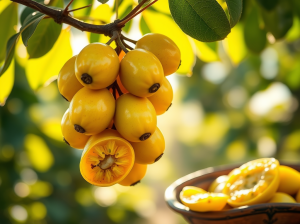
  • June Plum: The Tropical Fruit with Cultural Richness

    June Plum, also known as Spondias dulcis: A Bright, Tropical Jewel With Deep Roots

    Spondias dulcis is a beloved tropical fruit, celebrated for its refreshing acidity and its deep cultural roots across the Caribbean, Pacific, and Southeast Asia.

    Spondias dulcis—known across the tropics as Ambarella, June Plum, Golden Apple, Pomme Cythère, or Hog Plum—feels like a small piece of sunlight made edible. Its skin holds a quiet glow, and inside, the flesh offers that unmistakable balance of crispness, tartness, and gentle sweetness. It’s the kind of fruit that announces itself with brightness: a sharp, refreshing bite that wakes the senses and lingers with a soft, citrus‑kissed finish.

    Across the Caribbean, Southeast Asia, the Pacific, and pockets of West Africa, this fruit is more than a seasonal harvest. It’s a familiar presence—found in market baskets, roadside stalls, kitchen bowls, and childhood memories. People grate it into salads, simmer it into chutneys, blend it into coolers, or simply enjoy it with a pinch of salt and chili. Wherever it appears, it carries the warmth of home.

    Spondias dulcis doesn’t just nourish the body; it restores the spirit. It’s a fruit that cools, refreshes, and reconnects people to the places and traditions that shaped them. In every bite, there’s a reminder of sunlit afternoons, shared meals, and the simple comfort of something grown close to the earth.

    🌿 When It Was First Cultivated

    Current research indicates that Spondias dulcis was cultivated in prehistoric times, long before written records existed. It originated in Melanesia and parts of Island Southeast Asia, where it grew wild and was gradually domesticated by local communities.

    🌊 Who First Spread It

    The fruit was not “discovered” in the modern sense. Instead, it was intentionally carried and cultivated by Austronesian seafarers, who transported it as a canoe plant during their vast oceanic migrations. These early navigators spread Spondias dulcis throughout:

    • Island Southeast Asia
    • Polynesia
    • Micronesia

    Their voyages—spanning thousands of miles—brought the fruit to new islands where it became part of local diets, medicine, and culture.

    🌍 Later Introductions

    Centuries later, during the colonial era, the fruit was introduced to the Caribbean and the Americas. For example:

    • Jamaica received the fruit in 1782, after which it spread throughout the Caribbean.

    In Short

    Spondias dulcis doesn’t have a single inventor or discoverer. Its story is one of Indigenous cultivation, oceanic migration, and cultural exchange—a fruit carried by human hands across the Pacific long before maps, borders, or written history.

    If you’d like, I can shape this into a polished paragraph for your WordPress post, or weave it into the expanded introduction you’re building.

    🌍 Cultural Significance

    Caribbean

    Used in chutneys, juices, pepper sauces, and pickles. In Trinidad & Tobago, ambarella juice is a beloved street-side refreshment.

    Southeast Asia

    In Vietnam and Cambodia, it’s eaten with chili-salt mixtures or shaved into salads for crunch and acidity.

    Pacific Islands

    Traditionally enjoyed fresh or preserved, often shared during gatherings and celebrations.

    West Africa

    Known as “golden apple,” it appears in relishes, snacks, and festive meals.

    Across cultures, Ambarella is a fruit of refreshment, hospitality, and everyday nourishment.

    🍈 Flavor & Sensory Experience

    Ambarella has a personality all its own:

    • Texture: Firm, crisp, almost apple-like when unripe
    • Flavor: Tart with a citrusy brightness; ripened fruit becomes mellow and lightly sweet
    • Aroma: Green, fresh, and subtly floral
    • Color: Green when young, turning golden as it ripens

    It’s the kind of fruit that wakes up the palate—bright, refreshing, and full of life.

    🌱 Nutritional Notes

    Spondias dulcis may be small and unassuming, but its nutritional profile is quietly impressive. Like many tropical fruits, it’s built for hydration, replenishment, and everyday nourishment—qualities that make it beloved in warm climates where refreshment is a form of care.

    A Bright Source of Vitamin C

    Ambarella is naturally rich in vitamin C, a nutrient that supports immune function and helps protect cells from oxidative stress. This is part of why the fruit tastes so vibrant: that tart, citrus‑leaning acidity is a sensory clue to its vitamin content.

    Fiber for Gentle Digestion

    The fruit’s crisp flesh contains dietary fiber, which supports healthy digestion and helps create a sense of fullness. Whether eaten fresh, grated into salads, or blended into juices, it offers a light, natural way to support digestive comfort.

    Hydration From the Inside Out

    With its high water content and refreshing acidity, Ambarella is often enjoyed during hot seasons for its cooling, thirst‑quenching qualities. Many cultures turn it into juices, coolers, or lightly salted snacks to help restore the body after heat or exertion.

    Antioxidants & Plant Compounds

    Like many fruits in the Anacardiaceae family, Spondias dulcis contains antioxidants and phytonutrients that contribute to its color, flavor, and protective properties. These compounds help the fruit resist environmental stress—and offer similar benefits when included in a balanced diet.

    Minerals for Everyday Wellness

    Ambarella provides small amounts of minerals such as calcium, iron, and potassium. While not a primary source, these minerals contribute to the fruit’s overall nutritional value and make it a meaningful addition to plant‑forward meals.

    A Light, Nourishing Energy

    Because it’s naturally low in fat and contains modest natural sugars, Ambarella offers gentle energy without heaviness. It’s the kind of fruit that feels refreshing rather than indulgent—perfect for juices, salads, and mid‑day snacks.

    🌿 Traditional & Folk Uses (General Information Only)

    Across the tropics, Spondias dulcis has long been valued not only as a refreshing fruit but as a quiet companion in everyday wellness traditions. Its bright acidity, cooling nature, and mineral-rich flesh have made it a trusted ingredient in home practices passed down through families and communities.

    A Cooling Fruit for Hot Climates

    In many Caribbean and Pacific Island households, Ambarella is considered a naturally cooling fruit. Its juice is often enjoyed during the hottest months to help the body feel refreshed after time in the sun or physical work. This belief is rooted in generations of observation and seasonal living.

    Support for Digestion

    Because of its fiber and gentle acidity, the fruit is traditionally eaten after meals or used in lightly salted preparations to support comfortable digestion. In some regions, grated unripe Ambarella is added to salads or relishes believed to “wake up” the digestive system.

    Soothing Preparations

    In parts of Southeast Asia, lightly sweetened Ambarella juice is a common home remedy for soothing the throat or offering comfort during seasonal changes. Families often prepare it chilled, describing it as both calming and restorative.

    Nourishment During Recovery

    Across several cultures, the fruit is offered to people recovering from heat exhaustion or fatigue. Its hydrating quality and bright flavor make it a gentle, easy-to-enjoy source of nourishment.

    Traditional Preserves & Tonics

    Ambarella is frequently turned into pickles, syrups, and chutneys that are believed to support overall vitality. These preparations are less about targeted healing and more about maintaining balance, hydration, and everyday wellness.

    A Fruit of Everyday Care

    What stands out across regions is the way Ambarella is woven into daily rhythms of care—shared between generations, offered to guests, and used in simple, comforting preparations that reflect the wisdom of living close to the land.

    🍽️ Culinary Uses

    Spondias dulcis is one of those rare fruits that moves effortlessly between sweet, savory, spicy, and refreshing. Its bright acidity and crisp texture make it a natural enhancer—lifting dishes, balancing heat, and adding a clean, green brightness wherever it appears.

    Fresh & Simple Preparations

    • Sliced with chili-salt: A beloved street snack across Southeast Asia and the Caribbean.
    • Lightly salted: Enhances the fruit’s natural tartness and makes it even more refreshing.
    • Eaten ripe: Softens slightly, becoming mellow and lightly sweet.

    Juices, Coolers & Drinks

    Ambarella juice is iconic in many tropical regions. Blended with water, lime, and a touch of sweetener, it becomes a cooling drink enjoyed on hot afternoons. Some cultures add ginger or mint for extra brightness.

    Salads & Slaws

    Unripe Ambarella is often grated or julienned into salads where its crispness shines.

    • In Vietnam and Cambodia, it’s tossed with herbs, chili, and fish sauce.
    • In the Caribbean, it appears in fresh slaws paired with peppers and onions.

    Chutneys, Relishes & Pepper Sauces

    Its tartness makes it a perfect base for condiments:

    • Caribbean chutneys with garlic, hot pepper, and spices
    • Sweet-tart relishes served with grilled fish or roasted meats
    • Ambarella pepper sauce, a staple in some island kitchens

    Pickles & Preserves

    Ambarella pickles are common across the tropics. The fruit holds its texture well, absorbing brine and spices while keeping its signature crunch. Ripe fruit is also cooked down into jams, syrups, and preserves that capture its golden flavor.

    Curries & Savory Dishes

    In parts of Southeast Asia, Ambarella is added to curries and soups to bring acidity and depth—similar to how tamarind or green mango is used.

    Desserts & Sweet Preparations

    Though less common, ripe Ambarella can be folded into fruit salads, blended into smoothies, or simmered with sugar and spices to create a fragrant compote.

    A Fruit of Versatility

    Whether it’s brightening a salad, cooling the body in a drink, or adding tang to a curry, Ambarella adapts to the cook’s intention. It’s a fruit that invites creativity while staying deeply rooted in tradition.

    Ceremonial & Poetic Recipes With Spondias dulcis

    These are not just recipes. They are small rituals—moments of brightness gathered from a fruit that carries sunlight in its skin. Prepare them slowly. Let the scent rise. Let the fruit teach you something about refreshment, about returning to yourself.

    🥤 Ambarella Cooler: A Drink for Cooling the Spirit

    This is the drink you make when the day feels heavy and the air sits warm on your shoulders. A drink that tastes like shade, like a breeze moving through leaves.

    Ritual

    Peel the Ambarella as though unveiling a small sun. Cut the flesh away from its fibrous heart— a reminder that even brightness has a core.

    Blend it with cool water until the mixture softens into a pale green cloud. Strain it, letting the fibers go, keeping only what refreshes.

    Add lime for clarity, sweetness for balance, and a pinch of salt to remind the body of what it has lost to heat.

    Pour over ice. Drink slowly. Let it return you to yourself.

    🥗 Green Ambarella Salad: A Bowl of Brightness

    This salad is a celebration of crispness, of green things, of the way herbs can lift the spirit.

    Ritual

    Julienne the unripe Ambarella—thin, bright ribbons of tartness. Add carrot for color, herbs for breath, chili for awakening.

    Whisk the dressing gently, as though coaxing sweetness into harmony with salt and citrus.

    Toss everything together with your hands if you can. Feel the textures. Let the scent rise.

    Serve it as a reminder that nourishment can be light, sharp, and alive.

    🌶️ Caribbean Ambarella Chutney: A Jar of Heat & Memory

    This chutney is a story— sweetness meeting fire, tartness meeting warmth, fruit meeting flame.

    Ritual

    Grate the Ambarella until it becomes a fragrant pile of gold. Add onion, garlic, pepper— the holy trinity of island kitchens.

    Simmer everything together: sugar melting into fruit, vinegar rising in small clouds, spices opening like flowers in heat.

    When it thickens, taste it. It should feel like a memory— bright, bold, impossible to forget.

    Let it cool. Keep it close. Use it to wake up any meal that feels quiet.

    🥒 Pickled Ambarella: A Jar of Patience

    Pickling is a slow ritual, a practice of trust. You prepare today what will nourish you tomorrow.

    Ritual

    Slice the Ambarella into crescents— moons of green and gold.

    Pack them into a jar with garlic and seeds that crackle with promise.

    Pour the hot brine over the fruit. Listen to the quiet sizzle. Seal the jar.

    Let time do what only time can do. Return tomorrow to a brighter version of what you began.

    🍲 Ambarella Curry: A Bowl for Softening

    This curry is a gentle ceremony— a meeting of coconut, spice, and the fruit’s tender sourness.

    Ritual

    Sauté onion and garlic until they release their sweetness. Add turmeric and curry powder— watch the color bloom.

    Place the Ambarella into the pot like an offering. Pour broth and coconut milk over it. Let everything soften together, each ingredient surrendering to the warmth.

    Serve with rice. Eat slowly. Let the tang and cream remind you that balance is a practice.

    🛒 Availability

    Spondias dulcis is widely grown across tropical and subtropical regions, but its availability varies depending on location and season.

    Tropical Regions

    In the Caribbean, Southeast Asia, the Pacific Islands, and parts of Africa, Ambarella is commonly found in:

    • Local markets
    • Roadside stalls
    • Home gardens
    • Seasonal harvest festivals

    In many of these regions, the tree fruits once or twice a year, depending on climate.

    United States & Non-Tropical Regions

    Outside the tropics, Ambarella is considered a specialty fruit. It may be available:

    • In Caribbean, Southeast Asian, or African grocery stores
    • At international markets in major cities
    • Through specialty produce distributors
    • Occasionally frozen or in preserved forms (chutneys, syrups, pickles)

    Seasonality

    While exact timing varies by region, Ambarella is generally harvested during:

    • Late spring to early summer, and
    • A second crop in early fall in some climates

    Because the tree is generous and fast-growing, fruit often appears in abundance during peak season.

    Forms You May Find It In

    • Fresh, green, or golden-ripe
    • Frozen pulp
    • Bottled juice
    • Pickled slices
    • Chutneys and pepper sauces
    • Dried or candied pieces in some regions

    ⚠️ Who Should Avoid Spondias dulcis

    (General information only — not medical advice)

    While Spondias dulcis is enjoyed widely across the tropics, there are a few groups who may choose to limit or avoid it based on common dietary considerations and traditional guidance.

    1. People Sensitive to Acidic Foods

    Ambarella is naturally tart and acidic. Those who experience discomfort from acidic fruits — such as citrus, green mango, or pineapple — may find that Ambarella causes:

    • stomach irritation
    • acid reflux flare‑ups
    • mouth or tongue sensitivity

    2. Individuals With Known Allergies to Anacardiaceae Family Fruits

    Spondias dulcis belongs to the same botanical family as:

    • mango
    • cashew
    • pistachio

    People with known sensitivities to this family may choose to avoid Ambarella as a precaution.

    3. Those Managing Blood Sugar With Professional Guidance

    Ambarella contains natural sugars. While not high‑sugar, individuals who are monitoring carbohydrate intake under medical supervision may need to consider portion size.

    4. Anyone With Mouth Ulcers or Oral Sensitivity

    Because of its acidity, the fruit may sting or irritate existing sores or sensitive tissue.

    5. People Following Low‑Acid Diets for Medical Reasons

    Some individuals are advised by their healthcare providers to avoid acidic foods. Ambarella would fall into that category.

    6. Infants Under One Year Old

    Many cultures avoid giving highly acidic fruits to very young children due to the potential for irritation. This is a traditional practice rather than a medical rule, but it’s widely observed.

    A Gentle Reminder

    These points are based on general dietary considerations and cultural practices, not medical guidance. Anyone with specific health concerns should speak with a qualified healthcare professional for personalized advice.

    📚 Sources Used

    1. Botanical Origin, Cultivation, Cultural Spread

    Wikipedia – Spondias dulcis Covers botanical classification, native range (Melanesia & Southeast Asia), Austronesian spread as a canoe plant, Caribbean introduction (1782), and general cultivation details. https://en.wikipedia.org/wiki/Spondias_dulcis (en.wikipedia.org in Bing)

    2. Historical Significance, Cultivation Practices, Nutritional Profile

    The Ambarella Tree: Exploring its History, Cultivation, and Health Benefits Provides historical context, traditional reverence in Southeast Asia, cultivation timelines, and nutritional highlights (vitamin C, fiber, minerals). https://www.plantshospital.com/ambarella-tree (plantshospital.com in Bing)

    3. Geographic Origin (Melanesia & Polynesia)

    Ambarella Tree Guide: Cultivation, Harvesting, Benefits Supports origin details and regional distribution across Pacific islands. https://www.gardeningknowhow.com/ambarella-tree-guide (gardeningknowhow.com in Bing)

    ⚠️ Disclaimer

    The information shared in this post is for general educational and cultural purposes only. Spondias dulcis (Ambarella) has a long history of traditional use across many regions, but these practices are not medical guidance. Nutritional details, folk uses, and culinary notes are provided to help readers understand the fruit’s heritage and everyday role in food culture.

    This content is not intended to diagnose, treat, cure, or prevent any condition, and it should not replace advice from a qualified healthcare professional. Anyone with specific health concerns, dietary restrictions, allergies, or medical questions should consult a licensed practitioner for personalized guidance.

    🧠 Are There Any Brain‑Related Benefits?

    (General information only — not medical advice)

    Spondias dulcis isn’t traditionally known as a “brain food” in the way blueberries or walnuts are often described, but the nutrients inside the fruit can play supportive roles in overall wellness, including the systems that help the brain function well.

    Think of it as a fruit that contributes to the environment your brain likes to work in: hydrated, nourished, and supported by antioxidants.

    Where neuroscience meets sound.
    The Brain Song is a simple, 12-minute digital audio that helps naturally activate healthy brainwave patterns linked with BDNF – Brain-Derived Neurotrophic Factor, the key molecule that supports learning, focus, and overall brain wellness.

    BDNF is known by neuroscientists as a “fertilizer for the brain” — it helps support healthy communication between brain cells and overall mental performance.

  • Starfruit Recipes for Healthy Living

    Starfruit: The Crisp, Luminous Fruit Bringing Brightness to Everyday Wellness

    Some fruits feel like sunlight — bright, refreshing, and quietly uplifting. Starfruit, also known as carambola, is one of those gifts. Slice it once and it reveals its natural star shape, a small moment of wonder that never gets old. But beyond its beauty, starfruit carries a long lineage across tropical regions, where it has nourished families for generations with its hydrating sweetness and cooling, citrus‑leaning tang.

    🌱 Origins: A Fruit Born of Tropical Soil

    Starfruit, or carambola, is a fruit with roots that reach deep into the humid, sun‑drenched landscapes of Southeast Asia. Long before it appeared in markets or cookbooks, it grew wild in the forests and home gardens of Malaysia, Indonesia, the Philippines, and southern China, where communities tended it as naturally as they tended their own rhythms of daily life.

    This is a fruit that didn’t need to be “discovered.” It was simply known — gathered by hand, sliced into cooling snacks, folded into herbal drinks, and shared across generations. Its star‑shaped cross‑section made it a small wonder for children, while its crisp, hydrating flesh made it a trusted companion in tropical heat.

    As Austronesian seafarers traveled across the Pacific and Indian Oceans, starfruit traveled with them — carried in boats, traded in ports, planted in new soils. Over centuries, it took root in Sri Lanka, India, the Caribbean, Central America, and parts of South America, adapting to each climate with quiet ease.

    Wherever it landed, it became part of the local story:

    • In Southeast Asia, it was a garden fruit — eaten fresh, juiced, or simmered into chutneys.
    • In India and Sri Lanka, it found its way into pickles and cooling drinks.
    • In the Caribbean, it became a refreshing snack during warm afternoons.

    Starfruit’s journey is not one of conquest or commercial cultivation — it’s a story of migration, climate, and community, carried by people who recognized its value long before it had a name in English.

    To speak of starfruit’s origins is to honor the tropical homelands that shaped it: places where fruit trees grow close to the home, where nourishment is shared, and where something as simple as a crisp, star‑shaped slice can feel like a small blessing in the heat.

    In a world where wellness often feels complicated this book makes it simple unlock the answes Free

    🌿 A Fruit With Deep Roots

    Starfruit may look whimsical with its bright, five‑pointed shape, but its story is anything but ornamental. This is a fruit with deep, ancestral roots — shaped by tropical rain, monsoon winds, and the quiet knowledge of the communities who tended it long before it had a name in English.

    In the humid landscapes of Malaysia, Indonesia, the Philippines, and southern China, starfruit grew close to the home. Families planted it near their kitchens, where its branches offered shade and its fruit offered refreshment during long, warm seasons. Children learned to recognize the perfect ripeness by touch alone; elders sliced it into cooling snacks or simmered it into herbal drinks meant to soothe the body.

    Starfruit’s journey across the world wasn’t driven by commerce — it was carried by Austronesian seafarers, who traveled vast ocean routes with seeds, stories, and plants that held meaning. Wherever they settled, starfruit took root: in Sri Lankan gardens, Indian courtyards, Caribbean backyards, and Central American orchards. It adapted easily, as if each new coastline felt familiar.

    What makes starfruit special is not just its flavor or its shape, but its continuity. It is a fruit that has remained close to the people — grown in home gardens, shared between neighbors, folded into everyday meals. It carries the memory of tropical homelands, the rhythm of warm climates, and the quiet wisdom of those who understood its cooling, hydrating nature long before nutrition science gave it language.

    To call starfruit a fruit with deep roots is to honor the way it has lived alongside people for centuries — not as a novelty, but as a companion. A fruit shaped by place, carried by migration, and cherished for the simple nourishment it offers.

    Flavor Identity: Crisp, Cooling, and Quietly Floral

    Starfruit has a flavor that feels like a breath of tropical air — light, refreshing, and instantly hydrating. Its identity lives in the space between sweet and tart, offering a brightness that wakes up the palate without overwhelming it.

    ✨ Core Flavor Notes

    • Crisp, juicy freshness reminiscent of green grapes
    • A gentle sweetness similar to pear or young apple
    • A mild citrus tang that brightens each bite
    • Soft floral undertones that linger lightly on the tongue

    Ripe starfruit leans sweet and fragrant, while unripe fruit carries a sharper, more refreshing acidity — perfect for salads, relishes, and cooling drinks.

    🌿 Texture & Mouthfeel

    • Firm, smooth skin that’s entirely edible
    • A juicy, almost water‑rich interior
    • A delicate crunch that feels clean and cooling
    • A refreshing finish that doesn’t coat the palate

    It’s the kind of fruit that feels like a sip of cold water on a warm day.

    🔥 How It Behaves in Cooking

    Starfruit adapts beautifully to both sweet and savory dishes:

    • Raw: crisp, bright, and hydrating
    • Juiced: lightly sweet with a citrus‑leaning lift
    • Cooked: softens into a mellow, tangy base for chutneys and relishes
    • Garnished: its natural star shape adds visual delight without overpowering flavor

    Heat softens its acidity, bringing forward its gentle sweetness and floral notes.

    🌼 Emotional & Cultural Identity

    Starfruit tastes like:

    • Tropical afternoons
    • Garden snacks shared between neighbors
    • Cooling drinks during monsoon heat
    • Childhood curiosity — that first slice revealing a perfect star

    It carries the memory of warm climates, home gardens, and the ease of foods that refresh the body without heaviness.

    💛 In One Line

    Starfruit tastes like a crisp, lightly sweet citrus‑pear with a cooling, floral finish — refreshing, bright, and effortlessly hydratin

    🍽️ How Starfruit Is Used in Traditional Cooking

    Across tropical regions, starfruit shows up in dishes that feel cooling, refreshing, and deeply tied to place:

    • Fresh snacks sprinkled with salt or chili
    • Fruit salads that balance sweetness and acidity
    • Juices and cooling drinks served during hot afternoons
    • Chutneys and relishes that pair beautifully with rice and grilled foods
    • Light stews and curries where its acidity brightens the broth

    Its natural star shape also makes it a favorite garnish — a small, edible moment of beauty.

    Starfruit is naturally hydrating and rich in nutrients that support gentle, everyday wellness:

    🌿 Nutritional & Wellness Benefits

    Starfruit is one of those fruits that nourishes in a way that feels effortless — crisp, hydrating, and naturally supportive of everyday balance. Its nutritional profile leans light and refreshing, making it a beautiful addition to plant‑forward meals, cooling drinks, and gentle wellness routines.

    🍋 Rich in Vitamin C for Everyday Vitality

    Starfruit is naturally high in vitamin C, offering support for:

    • Immune function
    • Skin health and collagen formation
    • Natural antioxidant protection

    It’s a simple way to bring brightness and nourishment into the day.

    💧 Deep Hydration from the Inside Out

    With its high water content, starfruit acts almost like a fruit‑based hydration boost. It supports:

    • Fluid balance
    • Gentle cooling during warm weather
    • A refreshed, energized feeling after meals

    This is why it’s so beloved in tropical climates — it meets the body where it is.

    🌱 Light, Digestive‑Friendly Fiber

    Starfruit contains natural dietary fiber that helps:

    • Support smooth digestion
    • Promote regularity
    • Create a sense of lightness after eating

    Its crisp texture makes it easy to enjoy without heaviness.

    Natural Antioxidants for Cellular Support

    Starfruit contains plant compounds that help the body manage everyday oxidative stress. These antioxidants contribute to:

    • Cellular protection
    • Overall vitality
    • A sense of internal balance

    It’s gentle, steady nourishment — not overwhelming, just supportive.

    🔥 Low‑Calorie, High‑Nutrient Balance

    Starfruit offers sweetness without weight. Per 100g, it’s naturally:

    • Low in calories
    • Low in sugar
    • High in water
    • Rich in micronutrients

    This makes it a beautiful choice for readers seeking foods that feel refreshing and energizing rather than heavy.

    🌼 A Fruit That Supports Ease

    Starfruit fits seamlessly into a wellness lifestyle because it’s:

    • Easy to prepare
    • Naturally hydrating
    • Versatile in both sweet and savory dishes
    • Gentle enough for light meals and snacks

    It’s the kind of fruit that supports the body without demanding much in return.

    It’s the kind of fruit that feels good to eat — crisp, cooling, and easy on the body.

    ⚠️ Caution & Sensitivities

    Starfruit contains compounds that can be harmful for individuals with kidney disease. Anyone with kidney concerns should avoid starfruit unless advised otherwise by a healthcare professional.

    Starfruit is refreshing, hydrating, and widely enjoyed across tropical regions — but like many naturally potent fruits, it comes with a few important considerations. .

    🌿 1. Kidney Health Considerations

    Starfruit contains natural compounds that can be difficult for the kidneys to filter. For individuals with kidney disease or reduced kidney function, these compounds may build up in the body and cause adverse effects. Anyone with kidney concerns should avoid starfruit unless advised otherwise by a qualified healthcare professional.

    🍋 2. Natural Acidity

    Starfruit’s crisp, citrus‑leaning tang may be too sharp for those sensitive to acidic foods. Readers who experience discomfort with citrus, pineapple, or sour tropical fruits may want to start with small amounts or choose fully ripe fruits, which tend to be gentler.

    🌱 3. Digestive Sensitivities

    Because starfruit contains natural fiber and organic acids, it may cause mild digestive reactions in people with very sensitive stomachs. Cooking the fruit — in chutneys, stews, or relishes — often softens its acidity and makes it easier to tolerate.

    ✨ 4. Allergic Reactions (Rare but Possible)

    Although uncommon, some individuals may experience:

    • Tingling in the mouth
    • Mild itching
    • Sensitivity around the lips or tongue

    These reactions are typically mild but worth noting for readers who are prone to fruit‑related sensitivities.

    🍃 5. Interaction With Certain Medications

    Starfruit contains natural compounds that may interact with how the body processes certain medications. Readers taking prescription medications — especially those metabolized through the liver — should check with a healthcare professional if unsure.

    👶 6. Children & Older Adults

    For young children or older adults, softer, ripe starfruit is generally easier to chew and digest than firm, tart slices. Serving it in small portions or blended into drinks can make it more accessible.

    🌼 7. Traditional Uses vs. Medical Advice

    Starfruit has a long history in traditional wellness practices, but these uses are cultural and not a substitute for medical guidance. Readers with underlying health conditions or dietary restrictions should consult a healthcare professional before making significant changes.

    For most people, starfruit is enjoyed safely, but as with any fruit, moderation and awareness are key.

    🍽️ Simple Starfruit & Lime Cooler (Recipe)

    A refreshing drink for warm days — hydrating, bright, and naturally sweet.

    Ingredients

    • 2 ripe starfruits, sliced
    • Juice of 1 lime
    • 1–2 tsp honey or agave (optional)
    • 1 cup cold water
    • Ice
    • Mint leaves (optional)

    Instructions

    1. Blend the starfruit slices with water until smooth.
    2. Strain if you prefer a clearer drink.
    3. Stir in lime juice and honey.
    4. Pour over ice and garnish with mint or a starfruit slice.

    Light, cooling, and perfect for afternoons when the body needs a gentle reset.

    📊 Nutritional Values (Approx. per 100g of Starfruit)

    NutrientAmount
    Calories30–35 kcal
    Carbohydrates6–7 g
    Dietary Fiber2–3 g
    Vitamin CHigh
    PotassiumModerate
    Water ContentVery high
    Fat
    Protein

    Values vary by ripeness and region.

    🌼 Closing

    Starfruit reminds us that wellness doesn’t always need to be heavy or complex. Sometimes it’s as simple as a crisp, hydrating fruit that brightens the day — a slice of sunlight on the plate.

    It’s a fruit of ease, of tropical memory, of cooling nourishment. And in sharing it with your readers, you’re offering them a moment of brightness they can return to again and again.

    May this bright, star‑shaped fruit remind you of the small wonders that nourish us — the ones that arrive quietly, offering refreshment without demand. Starfruit carries the warmth of tropical homelands, the ease of garden afternoons, and the simple joy of slicing into something that reveals its own light.

    As you bring it into your kitchen, may it offer clarity, hydration, and a moment of brightness in the middle of your day. A reminder that wellness can be gentle. A reminder that nourishment can be beautiful. A reminder that even the simplest foods can feel like a blessing.

    May each slice be a small star on your table — a symbol of ease, renewal, and the quiet abundance that grows from the earth.

    📚 Sources Used

    Carambola (Starfruit) — Botanical Profile, Origins, Distribution, Caution Notes

    • Wikipedia. Carambola (Averrhoa carambola) — native range, cultivation history, Austronesian spread, oxalic acid and caramboxin cautions. https://en.wikipedia.org/wiki/Carambola

    Starfruit Nutritional Values & Historical Cultivation

    • PGCPS Food & Nutrition Education. Star Fruit (Averrhoa carambola) — Geography, History, Description, Taste, and USDA Nutrient Table. https://www.pgcps.org

    Carambola — Culinary Uses, Flavor Notes, Traditional Medicinal Uses

    Disclaimer

    The information in this post is intended for general wellness and educational purposes only. Starfruit is enjoyed safely by many people, but it may not be suitable for everyone. Individuals with kidney conditions or sensitivities to acidic fruits should avoid starfruit unless advised otherwise by a qualified healthcare professional. This content is not medical advice, diagnosis, or treatment, and should not replace guidance from a licensed healthcare provider. Always listen to your body and consult a professional if you have questions about your personal health needs.

    Full Body Wellness Learn More

    https://54fdaqqjo9sm7027wr2rv6-nod.hop.clickbank.net

  • Spondias Pinnata: The Tangy Fruit for Everyday Wellness

    🌿 Spondias pinnata: The Wild, Tangy Fruit Rooted in Tradition & Everyday Wellness

    Some fruits arrive in our kitchens with a story already woven into them — a memory of forests, village paths, and the quiet rituals of home cooking. Spondias pinnata, often called hog plum or wild mango, is one of those fruits. It’s not flashy. It doesn’t demand attention. Yet it carries a depth of flavor and cultural presence that has nourished communities for generations.

    In a world where wellness trends rise and fall overnight, Spondias pinnata offers something steadier: a return to simple, grounded nourishment.

    🌍 A Fruit of Many Homelands

    Spondias pinnata is a traveler — a fruit that has crossed borders, languages, and landscapes without ever losing its sense of belonging. It’s one of those ingredients that feels at home wherever it grows, adapting to the rhythms of each region while carrying a quiet thread of familiarity from one culture to the next.

    Across India, Nepal, Bangladesh, Myanmar, Thailand, Laos, Cambodia, Vietnam, and southern China, this fruit appears under different names, in different dishes, and with different stories attached to it. Yet the essence remains the same: a bright, tangy fruit that brings life to the pot and comfort to the table.

    In India, it slips into fish curries and village pickles. In Nepal, it’s simmered into broths that warm the body after long walks through terraced hills. In Thailand and Laos, it brightens sour soups and herbal preparations. In Cambodia and Vietnam, it’s folded into relishes that balance heat, salt, and acidity with effortless grace.

    Everywhere it goes, it becomes part of the local vocabulary — not just in cooking, but in memory. Children grow up snacking on it with salt and chili. Elders know exactly when the fruit is ready by the way its skin wrinkles or the way it falls from the branch. Home cooks instinctively reach for it when a dish needs brightness, depth, or a touch of the familiar.

    What makes Spondias pinnata special is not just its flavor, but its ability to belong to many places at once. It’s a fruit shaped by migration, trade routes, monsoon climates, and the shared wisdom of communities who learned to use what the land offered.

    To call it a fruit of many homelands is to honor the way it has woven itself into kitchens and cultures across Asia — not as an exotic ingredient, but as a trusted companion. A fruit that carries the imprint of every place it has touched, yet remains unmistakably itself.

    🍋 Flavor Identity: Bright, Wild, and Deeply Aromatic

    Spondias pinnata has a flavor that doesn’t sit neatly in one category — it lives in the space between citrus, mango, and something distinctly its own. Its identity is shaped by contrast: sharp yet softening with heat, wild yet comforting, familiar yet unmistakably unique.

    ✨ Core Flavor Notes

    • Tangy brightness that wakes up the palate
    • Citrus‑leaning acidity similar to green mango or tamarind
    • A gentle resinous aroma that hints at its mango‑family lineage
    • A clean, refreshing finish that lingers lightly

    🌿 Texture & Mouthfeel

    • Firm and fibrous when raw
    • Softens beautifully when simmered
    • Holds its shape in curries and pickles
    • Releases a fragrant, almost floral tang when cooked

    🔥 How It Behaves in Cooking

    Heat transforms the fruit:

    • The sharpness mellows into a rounded, aromatic sourness
    • The resinous notes deepen, adding complexity
    • The fruit becomes a natural brightener for broths, dals, and stews

    It’s the kind of ingredient that doesn’t dominate — it lifts everything around it.

    🌍 Emotional & Cultural Identity

    Spondias pinnata tastes like:

    • Monsoon kitchens
    • Village gardens
    • Childhood snacks with salt and chili
    • The tang that cuts through heat and humidity
    • A fruit that feels both wild and deeply rooted

    It carries the memory of place — the kind of flavor that instantly transports you back to where it was grown.

    💛 In One Line

    Spondias pinnata tastes like a wild, citrus‑kissed mango with a bright, tangy soul and a fragrance that deepens when touched by heat.

    🍲 How It’s Used in Traditional Cooking

    Across regions, Spondias pinnata shows up in dishes that feel like home:

    • Chutneys and relishes that balance heat with tang
    • Fish curries in Bengal and Assam, where its acidity brightens the broth
    • Pickles that stay crisp and flavorful
    • Sour soups in Southeast Asia
    • Fermented preparations in tribal and rural communities

    Its natural tartness makes it a perfect souring agent — a role similar to tamarind or green mango, but with its own aromatic signature.

    🌼 Cultural & Traditional Wellness Notes

    For many families, Spondias pinnata is more than a fruit — it’s part of seasonal rhythms and home remedies. Traditionally, it has been used for:

    • Gentle digestive support
    • Cooling preparations during hot months
    • Light tonics for appetite and hydration
    • Ritual meals tied to festivals or seasonal transitions

    It’s a fruit that carries memory — of monsoon kitchens, shared meals, and the quiet wisdom of elders.

    💛 Nutritional & Wellness Benefits

    Spondias pinnata offers a simple, natural boost to everyday wellness:

    • Vitamin C for immune support
    • Antioxidants that help protect cells
    • Dietary fiber for digestion
    • Trace minerals that support overall balance
    • Plant compounds linked to gut comfort and metabolic ease

    It’s not a “superfood” in the trendy sense — it’s a steady, nourishing fruit that supports the body in gentle, meaningful ways.

    🌿 Health Benefits of Spondias Pinnata

    Spondias pinnata has been part of traditional diets and home remedies for generations, and its natural composition offers gentle support for everyday wellness. While it isn’t a cure‑all, it brings together nutrients and plant compounds that help the body feel balanced and nourished.

    🍋 1. Rich in Vitamin C

    The fruit’s natural tartness comes from its vitamin C content, which supports:

    • Immune function
    • Skin health
    • Natural antioxidant protection

    It’s a simple way to add brightness and nourishment to meals.

    🌱 2. Supports Healthy Digestion

    The fiber and natural acids in Spondias pinnata can help:

    • Promote smoother digestion
    • Encourage regularity
    • Support gut comfort after meals

    Many traditional cuisines use it as a natural souring agent that’s easy on the stomach.

    🔥 3. Natural Antioxidant Activity

    The fruit contains plant compounds that help the body manage everyday oxidative stress. These antioxidants contribute to:

    • Cellular protection
    • Overall vitality
    • A sense of internal balance

    💧 4. Hydration & Electrolyte Support

    In hot climates, the fruit is often used in cooling drinks and broths because it helps:

    • Replenish fluids
    • Add gentle electrolytes
    • Refresh the body during warm seasons

    🌼 5. Traditional Wellness Uses

    Across regions, Spondias pinnata has been used in home remedies for:

    • Light digestive tonics
    • Seasonal cooling preparations
    • Gentle appetite support

    These uses reflect cultural wisdom passed down through families and communities.

    🍽️ 6. A Supportive Addition to Plant‑Forward Eating

    Because it’s low in calories and rich in flavor, Spondias pinnata fits beautifully into:

    • Plant‑based meals
    • Light soups and curries
    • Fresh chutneys and relishes

    It adds brightness without heaviness.

    🌾 Bringing It Into Your Healthy Living Routine

    If you’re exploring more plant‑based, culturally rooted ingredients, Spondias pinnata is a beautiful addition. You can:

    • Add it to soups for brightness
    • Blend it into chutneys for a tangy kick
    • Use it in pickles for a crisp, sour note
    • Simmer it into curries for depth
    • Enjoy it raw with a sprinkle of salt and chili

    It’s a reminder that wellness doesn’t always come from new discoveries — sometimes it comes from remembering what has always been there.

    Add this to your wellness routine and get a FREE BONUS

    🍽️ Recipe: Tangy Spondias pinnata Chutney

    This chutney captures everything beautiful about Spondias pinnata — its brightness, its gentle sourness, and the way it wakes up a meal. It’s simple, aromatic, and rooted in the everyday kitchens where this fruit has been loved for generations.

    Ingredients

    • 6–8 Spondias pinnata fruits (peeled and chopped)
    • 1–2 green chilies, sliced
    • 1 small onion, finely chopped
    • 1 tsp mustard seeds
    • 1 tsp grated ginger
    • 1–2 tbsp jaggery or raw sugar (adjust to taste)
    • ½ tsp turmeric
    • Salt to taste
    • 1 tbsp oil
    • ½ cup water
    • Optional: fresh cilantro for garnish

    Instructions

    1. Warm the oil in a small pan over medium heat.
    2. Add mustard seeds and let them crackle.
    3. Stir in the onions, ginger, and chilies. Sauté until fragrant.
    4. Add the chopped Spondias pinnata and turmeric. Mix well.
    5. Pour in the water and simmer until the fruit softens.
    6. Add jaggery and salt. Continue cooking until the chutney thickens and the flavors come together.
    7. Taste and adjust sweetness or salt as needed.
    8. Garnish with cilantro and serve warm or chilled.

    Serving Ideas

    • Spoon over rice bowls
    • Pair with grilled fish or roasted vegetables
    • Use as a tangy spread for wraps
    • Serve alongside dal, curries, or flatbreads

    This chutney brings a bright, refreshing note to any meal — a little tang, a little heat, and a lot of tradition.

    🍛 Recipe: Spondias pinnata & Lentil Stew (Light, Comforting, Traditional)

    This stew is the kind of dish that feels like home — warm, tangy, nourishing, and perfect for days when you want something gentle on the body but full of flavor. The fruit’s natural acidity brightens the lentils, creating a balanced bowl that’s both grounding and refreshing.

    Ingredients

    • 1 cup red lentils (masoor dal), rinsed
    • 3–4 Spondias pinnata fruits, peeled and lightly crushed
    • 1 small onion, chopped
    • 1 tomato, chopped
    • 1–2 green chilies, slit
    • 1 tsp turmeric
    • 1 tsp cumin seeds
    • 1 tsp grated ginger
    • 1 tbsp oil or ghee
    • Salt to taste
    • 3 cups water
    • Optional: fresh cilantro, squeeze of lime

    Instructions

    1. Add lentils, turmeric, salt, and water to a pot. Bring to a gentle boil.
    2. Add the crushed Spondias pinnata pieces directly into the pot.
    3. Simmer until the lentils soften and the fruit begins to break down.
    4. In a separate pan, heat oil or ghee.
    5. Add cumin seeds and let them sizzle.
    6. Stir in onions, ginger, chilies, and tomatoes. Cook until soft and fragrant.
    7. Pour this mixture into the lentils and stir well.
    8. Simmer for 5–7 minutes to let the flavors meld.
    9. Adjust salt and consistency as needed.
    10. Garnish with cilantro and a squeeze of lime if desired.

    Serving Ideas

    • Serve over steamed rice
    • Pair with warm flatbread
    • Enjoy as a light, nourishing bowl on its own
    • Add sautéed greens for extra depth

    This stew is gentle, aromatic, and deeply satisfying — the kind of dish that supports the body without heaviness.

    📊 Nutritional Values (Approx. per 100g of Spondias pinnata)

    NutrientAmount
    Calories65–75 kcal
    Carbohydrates15–18 g
    Dietary Fiber2–3 g
    Vitamin CModerate to high (varies by ripeness)
    Vitamin ATrace amounts
    PotassiumPresent in small amounts
    AntioxidantsNaturally occurring plant compounds
    Fat
    Protein

    Values vary by region, ripeness, and preparation. This table is for general educational use.

    ⚠️ Caution & Sensitivities

    Spondias pinnata is generally enjoyed safely across many cultures, but as with any fruit or traditional ingredient, a few considerations can help readers make informed choices.

    🌿 1. Natural Acidity

    The fruit’s bright, sour profile may be too strong for individuals who are sensitive to acidic foods. Those who experience discomfort with citrus, tamarind, or green mango may want to start with small amounts.

    🌱 2. Digestive Sensitivities

    Because the fruit contains natural fiber and plant acids, it may cause mild digestive reactions in people with very sensitive stomachs. Cooking the fruit often makes it gentler and easier to tolerate.

    🥭 3. Family Connection to Mango & Cashew

    Spondias pinnata belongs to the Anacardiaceae family — the same botanical family as mangoes and cashews. Individuals with known sensitivities to this plant family may want to use caution and consult with a healthcare professional if unsure.

    🍃 4. Ripeness Matters

    Unripe fruits are more sour and astringent, which some people find harsh. Ripe or lightly cooked preparations tend to be milder and more balanced.

    🌼 5. Traditional Uses vs. Medical Advice

    While the fruit has a long history in traditional wellness practices, these uses are cultural and not a substitute for professional medical guidance. Anyone with underlying health conditions, dietary restrictions, or concerns should speak with a qualified healthcare provider.

    👶 6. Children & Older Adults

    For young children or older adults, softer, cooked preparations are typically easier to digest than raw, very tart pieces.

    📦 Availability

    Spondias pinnata isn’t a mainstream grocery‑store fruit in the U.S., but it is accessible if you know where to look. Most availability comes in the form of seeds, saplings, or specialty imports, depending on the season and the seller.

    🌱 Seeds (Most Widely Available)

    Several reputable online seed suppliers currently list Spondias pinnata seeds as in stock, including:

    • Trade Winds Fruit — offers Malaysian Mombin (Spondias pinnata) seeds, available through their seed store.
    • RarePalmSeeds — lists Spondias pinnata (Andaman Mombin) seeds as in stock, with worldwide shipping options. Import into the U.S. requires a USDA permit.
    • JSP Seeds — sells fresh Spondias pinnata seeds with high germination rates and international shipping.

    These sources are the most reliable way for U.S. buyers to access the fruit in any form.

    🌳 Saplings & Live Plants

    Live plants are less commonly available in the U.S. due to climate and import restrictions. When they do appear, it’s usually through:

    • Specialty tropical plant nurseries
    • Seasonal online plant shops
    • Private growers in warm states (Florida, Hawaii, Southern California)

    Because Spondias pinnata prefers tropical to subtropical climates, it’s rarely sold as a mature plant in northern regions.

    🍈 Fresh Fruit

    Fresh Spondias pinnata is rare in U.S. markets. You may occasionally find it:

    • In Southeast Asian grocery stores in major cities
    • Through specialty importers during peak season
    • At cultural festivals or community markets serving South/Southeast Asian communities

    However, availability is inconsistent and highly regional.

    📍 For Readers in the U.S.

    Most people will access Spondias pinnata through seeds or dried/preserved forms rather than fresh fruit. Growing it at home is possible in warm climates or indoors with controlled conditions.

    📚 Sources & References

    Spondias pinnata – Botanical, Geographic, and Cultural Information

    Traditional Uses, Habitat, Edibility, and Distribution

    • Useful Tropical Plants Database. Spondias pinnata (L.f.) Kurz. https://tropical.theferns.info/viewtropical.php?id=Spondias+pinnata (tropical.theferns.info in Bing)

    Culinary Use Overview

    🌿 A Closing Reflection Three Spondias Fruits

    Exploring Spondias pinnata, Spondias dulcis, and Spondias mombin is like walking through three neighboring homes in the same ancestral village — each familiar, each distinct, each carrying its own story, flavor, and cultural memory.

    Spondias pinnata brings the wild tang of forest edges and monsoon kitchens — bright, aromatic, and deeply rooted in traditional cooking. Spondias dulcis offers a gentler, tropical sweetness, the kind that feels sun‑warmed and refreshing, often eaten fresh or folded into cooling drinks. Spondias mombin carries a bold, resinous personality, beloved in chutneys, preserves, and dishes that call for depth and character.

    Together, they form a small but powerful lineage fruits that have traveled across continents, adapted to countless kitchens, and remained woven into the daily rhythms of the communities that cherish them.

    They remind us that wellness isn’t always about discovering something new. Sometimes it’s about returning to ingredients that have nourished people quietly, consistently, and lovingly for generations. Fruits with lineage. Fruits with memory. Fruits that carry the imprint of land and culture in every bite.

    And in bringing them into your Healthy Living space, you’re not just sharing information you’re honoring a whole ecosystem of tradition, flavor, and ancestral wisdom.

  • Strawberries: Health Benefits and Nutritional Insights

    🍓 Who First Cultivated the Strawberry?

    Strawberries were first cultivated by the French in the 1300s, when they began transplanting the wild European wood strawberry (Fragaria vesca) from forests into gardens. This marks the earliest documented intentional cultivation of strawberries.

    Later, in the 1500s, the French also cultivated the musky strawberry (Fragaria moschata). By the 1600s, the Virginia strawberry (Fragaria virginiana) from North America arrived in Europe — eventually leading to the hybrid ancestors of the modern strawberry.

    🍓 The Strawberry: A Bright, Heart‑Shaped Fruit Rooted in History and Everyday Joy

    Few fruits carry the emotional warmth of the strawberry — bright, fragrant, heart‑shaped, and woven into memories of summer, celebration, and sweetness. But beyond its charm, the strawberry is a fruit with a deep agricultural lineage, centuries of cultivation, and a nutritional profile that supports gentle, everyday wellness.

    This post brings together its origins, flavor identity, cultural presence, and nourishing qualities in a way that feels grounded, intentional, and aligned with your Healthy Living voice.

    🌱 Origins: A Fruit Cultivated Through Centuries

    Strawberries have been gathered since ancient times, but true cultivation began in 14th‑century France, when gardeners transplanted wild wood strawberries into managed plots.

    Over the next few centuries:

    • 1500s: The musky strawberry (Fragaria moschata) entered European gardens.
    • 1600s: The Virginia strawberry from North America arrived in Europe, valued for its hardiness.
    • 1700s: A chance hybridization between the Virginia strawberry and the Chilean strawberry in France produced the ancestors of the modern large, juicy strawberry.

    From these crossings came the strawberries we know today — larger, sweeter, and more aromatic than their wild ancestors.

    Strawberries are now grown worldwide, but their story begins with careful hands in medieval French gardens and the slow, centuries‑long blending of species across continents.

    🍓 A Fruit With Deep Roots

    They are a fruit shaped by both nature and human care — a lineage carried through time, climate, and culture.

    Strawberries may feel like a modern delight — folded into desserts, blended into smoothies, or sliced over morning bowls — but their story reaches far deeper than their bright sweetness suggests. This is a fruit shaped by forests, migration, and centuries of human care. A fruit that began small, wild, and fragrant, long before it became the plump, heart‑shaped berry we know today.

    For thousands of years, wild strawberries grew along woodland edges across Europe, Asia, and the Americas. They were tiny, intensely aromatic, and cherished by the communities who gathered them season after season. These early berries were not cultivated; they were encountered — found in meadows, forest clearings, and riverbanks, eaten fresh or used in simple remedies and seasonal dishes.

    The strawberry’s deeper transformation began in 14th‑century France, when gardeners started transplanting wild European strawberries into cultivated plots. This was the first time the fruit was intentionally grown rather than gathered. Over the next few centuries, the strawberry became a quiet agricultural project — shaped by patience, curiosity, and the desire to coax more sweetness, more size, more fragrance from the land.

    Then came the turning point.

    In the 1600s and 1700s, two New World species — the Virginia strawberry from North America and the Chilean strawberry from South America — arrived in Europe. When these two species were planted near each other in French gardens, they naturally cross‑pollinated. The result was extraordinary: a larger, juicier, more robust berry than any that had existed before. This hybrid became the ancestor of the modern strawberry.

    From that moment, the strawberry’s story expanded across continents. It moved from forest floors to royal gardens, from cottage farms to global agriculture. Yet even with its evolution, it has never lost its connection to the land. It remains a fruit that carries the memory of wildness — the scent of summer fields, the softness of mossy paths, the sweetness of something once gathered by hand.

    To call the strawberry a fruit with deep roots is to honor the way it has lived alongside people for centuries. It is a fruit shaped by nature, refined by human hands, and cherished across cultures as a symbol of sweetness, tenderness, and the quiet abundance of the earth.

    🌸 Flavor Identity: Sweet, Fragrant, and Bright

    Strawberries offer a sensory experience that feels instantly familiar:

    Core Flavor Notes

    • Bright, juicy sweetness
    • Gentle acidity that lifts the flavor
    • Floral undertones
    • A soft, fragrant aroma that signals ripeness

    Texture & Mouthfeel

    • Tender flesh with a juicy burst
    • Tiny seeds that add subtle texture
    • A clean finish that doesn’t overwhelm the palate

    How They Behave in Cooking

    • Fresh: sweet, aromatic, hydrating
    • Cooked: deepens into a jammy richness
    • Frozen: retains sweetness, perfect for smoothies
    • Baked: softens into warm, fragrant pockets of flavor

    Strawberries adapt beautifully — from salads to desserts to drinks — always bringing brightness.

    🌿 Health & Vitamins: Gentle Nourishment in a Bright, Red Fruit

    Strawberries may be small, but they carry a powerful spectrum of nutrients that support everyday vitality. Their sweetness is light, their calories are low, and their wellness benefits reach far beyond their size. This fruit nourishes without heaviness — a perfect companion for readers seeking foods that feel refreshing, energizing, and naturally supportive.

    🍊 Rich in Vitamin C for Immune Support & Radiant Skin

    Strawberries are one of the best natural sources of vitamin C. This essential nutrient supports:

    • Immune function
    • Collagen production for skin health
    • Antioxidant protection against everyday stress
    • Wound healing and tissue repair

    Just one cup of strawberries provides more vitamin C than an orange.

    ❤️ Antioxidants for Cellular Protection

    Strawberries contain a variety of plant compounds — including anthocyanins, ellagic acid, and quercetin — that help the body manage oxidative stress. These antioxidants support:

    • Cellular health
    • Heart wellness
    • Reduced inflammation
    • Long‑term vitality

    Their deep red color is a visual sign of these protective compounds.

    🌱 Folate for Cellular Growth & Energy

    Folate (vitamin B9) is essential for:

    • Healthy cell formation
    • Energy metabolism
    • Support during pregnancy
    • Cognitive function

    Strawberries offer a gentle, natural source of this important nutrient.

    💧 Hydration & Lightness

    With their high water content, strawberries help the body stay hydrated while offering a refreshing, cooling sensation. This supports:

    • Fluid balance
    • Skin moisture
    • A sense of lightness after eating

    They’re a beautiful choice for warm days or energizing snacks.

    🫀 Heart‑Friendly Nutrients

    Strawberries contain potassium and fiber — two nutrients known to support heart health. Together, they help:

    • Maintain healthy blood pressure
    • Support smooth digestion
    • Promote overall cardiovascular wellness

    Their natural sweetness makes them a heart‑friendly alternative to heavier desserts.

    🌾 Digestive Support Through Natural Fiber

    Strawberries provide gentle dietary fiber that helps:

    • Support regularity
    • Promote gut health
    • Create a balanced, satisfied feeling after meals

    Their fiber is soft and easy on the digestive system.

    🔥 Low‑Calorie, High‑Nutrient Balance

    Strawberries offer sweetness without weight. Per 100g, they are:

    • Low in calories
    • Low in sugar
    • High in water
    • Rich in vitamins and antioxidants

    This makes them a nourishing choice for readers seeking foods that feel both indulgent and light.

    ⚠️ Caution & Sensitivities

    For most people, strawberries are a gentle, nourishing addition to the diet.

    Strawberries are widely loved for their sweetness and lightness, but like all naturally potent fruits, they come with a few considerations. This section helps readers enjoy them mindfully while honoring the body’s unique needs.

    Some individuals — especially those sensitive to birch pollen — may experience mild reactions when eating strawberries. These can include:

    • Tingling around the lips or mouth
    • Mild itching
    • Slight swelling

    🍓 2. Natural Acidity

    Strawberries carry a bright, natural acidity that may be uncomfortable for those with:

    • Acid reflux
    • Sensitive digestion
    • Mouth sores or dental sensitivity

    Pairing strawberries with yogurt, cream, or oats can soften their acidity.

    🌱 3. Histamine Sensitivity

    Strawberries can release histamine in the body, which may cause mild reactions in individuals with histamine intolerance. Symptoms may include:

    • Flushing
    • Itching
    • Mild digestive discomfort

    🧼 4. Surface Residues

    Because strawberries are grown close to the ground and have a porous surface, they can hold onto:

    • Soil
    • Dust
    • Agricultural residues

    A thorough rinse under cool water helps remove surface particles before eating.

    👶 5. Children & Older Adults

    For young children or older adults, whole strawberries can be a choking hazard. Slicing them into smaller pieces or mashing them into soft foods makes them easier to enjoy safely.

    💊 6. Medication Considerations

    While strawberries are generally safe, readers taking medications that interact with acidic foods may want to check with a healthcare professional if unsure.

    🌼 7. Moderation for Sensitive Stomachs

    Because strawberries contain natural fruit acids and fiber, very large portions may cause mild digestive discomfort in sensitive individuals. Enjoying them in balanced servings helps maintain ease.

    A refreshing, bright dish perfect for mornings or light snacks.

    Ingredients

    • 1 cup fresh strawberries, sliced
    • 1 tsp honey or maple syrup
    • 3–4 mint leaves, finely sliced
    • A squeeze of lemon (optional)

    Instructions

    1. Combine sliced strawberries in a bowl.
    2. Drizzle with honey and toss gently.
    3. Add mint and a touch of lemon.
    4. Serve immediately for peak freshness.

    🍓Cooling Strawberry & Basil Infused Water

    Serves: 1–2 Time: 10 minutes Style: Hydrating, gentle, summer‑bright

    Ingredients

    • 5–6 strawberries, sliced
    • 3 basil leaves
    • 2 cups cold water
    • Ice

    Instructions

    1. Add strawberries and basil to a glass or jar.
    2. Fill with cold water and ice.
    3. Let steep for 10–15 minutes.
    4. Sip slowly and enjoy the quiet sweetness.

    Notes

    • Add a squeeze of lemon for extra brightness.
    • Best enjoyed within 24 hours.

    🍓 Warm Strawberry Compote No Refined Sugar

    Serves: 2 Time: 10 minutes Style: Cozy, jammy, naturally sweet

    Ingredients

    • 1 cup strawberries, halved
    • 1–2 tbsp water
    • 1 tsp honey or maple syrup (optional)
    • A pinch of cinnamon (optional)

    Instructions

    1. Add strawberries and water to a small saucepan.
    2. Cook on low heat for 5–7 minutes until soft and jammy.
    3. Stir in honey and cinnamon if desired.
    4. Serve warm or store chilled for up to 3 days.

    Notes

    • Perfect for oatmeal, pancakes, yogurt, or toast.
    • Add a splash of vanilla for a deeper flavor.

    🍓Strawberry & Lime Chia Fresca

    Serves: 1 Time: 5 minutes Style: Bright, energizing, fiber‑rich

    Ingredients

    • 1 cup strawberries
    • Juice of 1 lime
    • 1 tsp chia seeds
    • 1 cup cold water
    • Honey to taste

    Instructions

    1. Blend strawberries with water and lime juice.
    2. Stir in chia seeds and let sit for 5 minutes.
    3. Sweeten lightly if desired.
    4. Serve chilled.

    Notes

    • Add mint for extra freshness.
    • Let it sit longer for a thicker texture.

    🍓Strawberry Salad with Honey‑Lemon Dressing

    Serves: 1–2 Time: 5 minutes Style: Fresh, bright, nourishing

    Ingredients

    • 1 cup sliced strawberries
    • 1 handful baby spinach or mixed greens
    • 1 tbsp chopped walnuts or almonds
    • 1 tsp honey
    • 1 tsp lemon juice
    • 1 tsp olive oil

    Instructions

    1. Arrange greens and strawberries in a bowl.
    2. Whisk honey, lemon, and olive oil.
    3. Drizzle over the salad.
    4. Top with nuts and serve immediately.

    Notes

    • Add feta or goat cheese for a creamy contrast.
    • Swap nuts for pumpkin seeds for a lighter crunch.

    📊 Nutritional Snapshot (per 100g)

    NutrientAmount
    Calories~32 kcal
    Vitamin CHigh
    Fiber2 g
    FolateModerate
    Water ContentVery high
    Fat
    Protein

    🌼 Ceremonial Closing

    May the strawberry remind you that sweetness can be simple, honest, and close to the earth. A fruit shaped by forests, tended by centuries of hands, and carried into our present moment with its bright, familiar tenderness.

    As you slice into each berry, may you feel the quiet lineage it carries — the wildness of old meadows, the patience of gardeners, the warmth of summer fields. May its fragrance soften your breath. May its color brighten your table. May its sweetness offer a pause in your day, a moment of nourishment that asks for nothing in return.

    Let this small, heart‑shaped fruit be a reminder that care can be gentle, that wellness can be joyful, and that the earth still offers gifts that feel like comfort.

    May every bowl, every handful, every bite be a small blessing — a soft invitation back to yourself.

  • The Quiet Shift That’s Helping Thousands Reset Their Health in 2026

    If you’ve been fighting stubborn weight, low energy, or that “nothing works anymore” feeling… you’re about to understand exactly why.

    Because a small group of insiders has been quietly using a tropical metabolic trigger that’s helping everyday people break through plateaus faster than anything they’ve tried before.

    And no — it’s not a diet. It’s not a workout plan. And it’s definitely not another influencer‑pushed “miracle.”

    This is different. This is a metabolic reset method that’s exploding across the wellness world for one reason:

    👉 People are seeing results they can feel. You Can Get a Free Bonus

    Why This Method Is Hitting So Hard Right Now

    It taps into a metabolic switch most people don’t even know exists. When this switch is sluggish, your body fights you at every turn. When it’s activated, everything becomes easier:

    • Faster calorie burn
    • Smoother digestion
    • More stable energy
    • Fewer cravings
    • A lighter, cleaner feeling throughout the day

    Users say it feels like their body finally “woke up.”

    The Hidden Reason Most People Stay Stuck

    It’s not willpower. It’s not discipline. It’s not your age, schedule, or genetics.

    It’s a blocked metabolic pathway — something modern diets, stress, and processed foods shut down.

    This method was designed to unblock that pathway naturally, quickly, and without forcing you into extreme routines.

    Who This Hits the Hardest

    If you’ve been:

    • Gaining weight even while eating “healthy.”
    • Feeling foggy or sluggish
    • Watching your motivation disappear
    • Starting over every Monday
    • Wondering why nothing works anymore

    This is built for you.

    Why You Should Act Now

    This approach is gaining traction fast — and once the big brands catch on, it’s game over. Prices rise. Supplies vanish. And the people who waited get left behind.

    If you’re even slightly curious, now is the moment to check it out.

    👇 Tap the button below to see why thousands are switching to this metabolic reset — and how you can claim your free bonus today.

    👉 People are seeing results they can feel GONOW

  • Spondias Mombin: Cultural Significance and Nutrition

    🌼 Spondias mombin (Yellow Mombin / Hog Plum / Cajá)

    A fruit of ancestry, migration, and bright, tangy resilience.

    Spondias mombin is a tropical fruit with deep Indigenous American roots, carried across continents through trade, colonization, and cultural exchange. Known by many names — yellow mombin, hog plum, cajá, amra, omora, ambazham, and cajazeira — it remains a beloved fruit across the Caribbean, Central and South America, West Africa, and South Asia.

    🌿 Botanical Profile

    • Scientific name: Spondias mombin
    • Family: Anacardiaceae (mango, cashew, pistachio)
    • Type: Deciduous tropical fruit tree
    • Height: Up to 20 meters
    • Native range: Tropical Americas
    • Introduced regions: West Africa, India, Nepal, Bangladesh, Sri Lanka, Thailand

    The tree is known for its deeply fissured bark, sweet‑scented flowers, and bright yellow fruits that ripen in clusters.

    🌍 Origins & Cultural History

    Spondias mombin is native to the tropical Americas, where Indigenous communities used the fruit, bark, leaves, and resin for food, ceremony, and traditional healing. During the 1600s, Portuguese traders carried the tree to West Africa and South Asia, where it naturalized and became part of local cuisines and folk practices.

    Today, it is woven into the cultural fabric of:

    • Brazil (cajá)
    • Jamaica & Trinidad (hog plum)
    • Ghana & Nigeria (iyeye)
    • Nepal (lapsi)
    • Thailand (makok)
    • India & Bangladesh (amra)

    Each region has its own way of honoring the fruit.

    🍋 Appearance & Sensory Profile

    • Color: Bright yellow when ripe
    • Shape: Small, oval, plum‑like
    • Texture: Thin layer of juicy pulp around a spiny seed
    • Flavor: Sharp, sweet‑tart, aromatic, more intense than Spondias dulcis
    • Aroma: Fruity, slightly resinous, tropical

    The fruit’s thin pulp makes it prized for juices, preserves, and condiments.

    🍽️ Culinary Uses

    Spondias mombin is a versatile fruit that adapts beautifully to both sweet and savory preparations.

    Fresh

    • Eaten with salt, chili, or sugar
    • Added to fruit bowls or roadside snacks

    Drinks

    • Juices
    • Concentrates
    • Sherbets and frozen treats
    • Fermented beverages in some regions

    Preserves

    • Jams and jellies
    • Syrups
    • Dried fruit (Nepal’s lapsi ko maada)

    Savory Dishes

    • Pickles and chutneys (South Asia)
    • Sour element in salads like Thai som tam
    • Paired with fish, rice dishes, and curries

    Its acidity makes it a natural brightener in any dish.

    🌱 Nutritional Profile

    (General information only)

    Spondias mombin contains:

    • Vitamin C
    • Vitamin A
    • Dietary fiber
    • Potassium & magnesium
    • Antioxidants & polyphenols

    These nutrients support overall wellness and make the fruit a refreshing, hydrating choice in hot climates.

    🌿 Traditional & Folk Uses

    (General information only — not medical advice)

    Across the Americas, Africa, and South Asia, different parts of the tree have been used traditionally for:

    • Digestive comfort
    • Fever and seasonal ailments
    • Postpartum support
    • Skin and wound care
    • General vitality tonics

    These practices reflect cultural heritage, not clinical recommendations.

    🌿 Health & Nutritional Benefits of Spondias mombin

    Grounded in current research and ethnobotanical literature.

    🍋 Nutritional Benefits

    Research shows that Spondias mombin (yellow mombin / hog plum) contains a wide range of essential nutrients that support overall wellness.

    Key Nutrients

    • Vitamin C — strong antioxidant; supports immune function
    • Vitamin A + carotenoids — supports vision, skin health, and cellular repair (β‑carotene, α‑carotene, lutein, zeinoxanthin, β‑cryptoxanthin)
    • Minerals:
      • Potassium
      • Magnesium
      • Calcium
      • Iron
      • Phosphorus
      • Copper These minerals support bone health, muscle function, and metabolic balance.
    • Dietary fiber — supports digestion and healthy bowel movements
    • Low in fat, sodium, and cholesterol — supportive for heart‑conscious diets

    🌱 Health‑Supporting Properties

    (General information only — not medical advice)

    1. Antioxidant Activity

    Extracts from the fruit and leaves show strong antioxidant effects, helping neutralize free radicals and reduce oxidative stress.

    2. Anti‑inflammatory Effects

    Traditionally used to ease inflammation; studies show plant extracts may help manage inflammatory conditions.

    3. Digestive Support

    Used across the Americas and Africa to support digestion, ease constipation, and soothe diarrhea or dysentery. High fiber content supports gut health.

    4. Immune Support

    High vitamin C and antioxidant compounds help support immune resilience.

    5. Bone & Connective Tissue Support

    Vitamin K, copper, and minerals in the fruit may support bone strength and connective tissue health.

    6. Antimicrobial Properties

    Extracts show activity against certain bacteria and fungi, supporting traditional uses for wound care and infections.

    7. Cardiovascular Support

    Traditional use includes supporting heart health and healthy blood pressure.

    8. Reproductive & Women’s Wellness (Traditional Use)

    Used in some regions for menstrual discomfort and postpartum support. These uses are cultural and not clinically validated.

    🌼 Ethnomedicinal Context

    A 2023 comprehensive review documents over 100 bioactive compounds across the fruit, leaves, bark, and seeds, supporting its long history in traditional medicine for:

    • Fever
    • Digestive pain
    • Postpartum care
    • Wounds
    • Respiratory discomfort
    • General vitality tonics

    These reflect cultural practices, not medical recommendations.

    ⚠️ General Caution

    • The fruit is acidic and may cause tooth sensitivity when eaten in excess.
    • As part of the Anacardiaceae family, the sap may irritate sensitive skin.
    • Traditional uses should not replace professional medical care.

    📚 Sources Used Health & Nutritional Benefits

    1. Comprehensive Review of Nutritional & Bioactive Compounds

    Journal of Pharmacy and Pharmacology (2023) – “Phytochemical and Pharmacological Review of Spondias mombin”** A peer‑reviewed scientific review detailing antioxidants, vitamins, minerals, anti‑inflammatory properties, and over 100 identified bioactive compounds. https://doi.org/10.1093/jpp/rgac086 (doi.org in Bing)

    2. Nutrient Composition & Food Uses

    Biodiversity for Food and Nutrition (Brazilian Ministry of the Environment) Provides nutrient data including vitamin A, vitamin C, minerals, and culinary applications. https://www.b4fn.org/resources/species-database/spondias-mombin/ (b4fn.org in Bing)

    3. Botanical, Nutritional & Traditional Uses Overview

    Wikipedia – Spondias mombin Summarizes distribution, traditional uses, nutritional notes, and ethnobotanical context. https://en.wikipedia.org/wiki/Spondias_mombin (en.wikipedia.org in Bing)

    4. Ethnobotanical & Traditional Medicine Context

    Plants for a Future Database – Spondias mombin Includes traditional uses, plant parts used, and general nutritional insights. https://pfaf.org/user/Plant.aspx?LatinName=Spondias+mombin (pfaf.org in Bing)

    5. Antioxidant & Anti‑inflammatory Properties

    African Journal of Biomedical Research – Studies on Spondias mombinextracts Documents antioxidant, antimicrobial, and anti‑inflammatory activity of fruit and leaf extracts. https://www.ajol.info/index.php/ajbr

    🌳 Growing & Seasonality

    • Thrives in tropical and subtropical climates
    • Fruits ripen July–September in many regions
    • Strong root system helps prevent soil erosion
    • Often found in home gardens, village landscapes, and wild groves

    The tree is hardy, drought‑tolerant, and generous.

    ⚠️ Who May Want to Avoid It

    (General information only)

    • Individuals sensitive to acidic fruits
    • Anyone with allergies to Anacardiaceae family plants
    • Those avoiding acidic foods for dietary reasons
    • People with oral sensitivity or mouth ulcers

    The sap may cause irritation in sensitive individuals.

    🛒 Availability

    You may find Spondias mombin in:

    • Caribbean and Latin American markets
    • West African grocery stores
    • South Asian markets (as amra or lapsi)
    • Specialty produce shops in major U.S. cities
    • Frozen pulp, concentrates, or preserves online

    Fresh availability varies by region and season.

    Introduction to the Recipes

    Before you begin, pause for a breath. Spondias mombin is not just a fruit — it is a traveler, a keeper of stories, a small golden vessel that has crossed oceans and generations to arrive in your hands.

    In the Americas, it grew in the shade of ancient forests. In West Africa, it rooted itself into new soil and new memory. In South Asia, it became part of kitchens, rituals, and the quiet rhythm of everyday nourishment.

    When you prepare these recipes, you join that lineage.

    Let the fruit’s bright scent rise. Let its tartness wake your senses. Let its history move through your palms as you peel, slice, simmer, and stir.

    These dishes are not only food — they are offerings, they are remembrance, they are a way of honoring the places this fruit has touched and the people who carried it forward.

    Begin with intention. Cook with presence. Taste with gratitude. RECIPES FOR SPONDIAS MOMBIN

    🥤 Yellow Mombin Juice: A Drink for Clearing the Heat

    Peel the fruit as though you’re uncovering a small sun. Let the pulp fall into your hands — bright, fragrant, alive.

    Blend it with cool water until it becomes a golden cloud. Strain away the fibers, keeping only what refreshes.

    Sweeten gently. Add lime if your spirit needs brightness.

    Drink slowly. Let it cool the places inside you that have been working too hard.

    🌶️ Hog Plum Chutney: A Jar of Fire and Memory

    Mash the fruit until it softens into a fragrant paste. Add onion, garlic, and pepper — the rhythm of island kitchens.

    Let everything simmer together: sweetness melting, vinegar rising, spices opening like small flowers.

    When it thickens, taste it. It should feel like a story — bold, bright, unforgettable.

    Keep it close. Use it to wake up any meal that feels quiet.

    🥒 Amra Pickle: A Practice of Patience

    Slice the fruit into crescents — moons of yellow and gold. Pack them into a jar with seeds that crackle with promise.

    Pour the hot brine over the fruit. Listen to the soft hiss — the sound of transformation beginning.

    Seal the jar. Let time do what only time can do.

    Return tomorrow to a sharper, brighter version of what you started.

    🍧 Cajá Sorbet: A Bowl of Tropical Light

    Blend the pulp with sweetness and lime. Let the mixture rest in the cold, stirring now and then as it slowly becomes itself.

    Scoop it into a bowl. Taste the sun, the rain, the soil — all the places this fruit has traveled to reach you.

    If this journey with Spondias mombin stirred something in you — a memory, a curiosity, a hunger for more ancestral fruits — stay close. There are so many stories still waiting in the branches.

    Share this post with someone who loves tropical flavors. Save it for your next kitchen ritual. Leave a comment with how you prepare this bright, tangy fruit in your home.

    And if you’re exploring the world of heritage produce, traditional recipes, or the quiet ceremonies of everyday nourishment, wander through the rest of the blog. There’s always another fruit, another story, another moment of presence waiting for you.

    Let this be the beginning of your next delicious discovery.

    Closing

    As you finish with Spondias mombin, pause for a moment of quiet gratitude. This small golden fruit has traveled far — through forests, across oceans, into the hands of cooks, healers, and families who understood its brightness long before it reached your kitchen.

    Let this be your reminder: food carries memory, flavor carries lineage, and every recipe is a way of honoring the places and people who tended these trees before us.

    May the tartness awaken you. May the sweetness soften you. May the fruit’s long journey bless your own.

    Close your kitchen gently. Carry the scent with you. Let the nourishment linger.

    📚 Sources Used

    1. Botanical Origin, Distribution & Cultural Spread

    Wikipedia – Spondias mombin Covers native range (tropical Americas), introduction to South Asia by the Portuguese in the 17th century, naturalization across Africa and Asia, botanical description, and culinary uses. https://en.wikipedia.org/wiki/Spondias_mombin (en.wikipedia.org in Bing)

    2. Nutritional Composition & Traditional Uses

    Journal of Pharmacy and Pharmacology (2023) – Comprehensive Review of Spondias mombin Provides detailed information on nutritional values, ethnomedicinal uses, phytochemical constituents, and traditional applications across tropical regions. https://doi.org/10.1093/jpp/rgac086

    3. Nutrient Data & Culinary Uses (Brazilian Biodiversity Database)

    Biodiversity for Food and Nutrition – Spondias mombin Includes vitamin A content, vitamin C levels, mineral profile, and common culinary uses such as juices, jellies, and sherbets. https://www.b4fn.org/resources/species-database/spondias-mombin/ (b4fn.org in Bing)

    ⚠️ Disclaimer

    The information shared in this post is offered for general educational and cultural purposes only. Spondias mombin has a long history of traditional use across many regions, but these practices reflect heritage and food culture — not medical guidance.

    Nothing in this article is intended to diagnose, treat, cure, or prevent any condition. Nutritional notes, folk uses, and culinary suggestions are provided to help readers understand the fruit’s role in everyday life and ancestral foodways.

    Anyone with specific health concerns, allergies, dietary restrictions, or medical questions should consult a qualified healthcare professional for personalized advice.

    Get a FREE COPY

    👉New Scientific Breakthrough

  • 🌿 The Soursop

    What Kind of Fruit Is It?

    A tropical fruit that carries the warmth of sun‑heavy forests and the hush of ancient breezes

    There are fruits that simply feed the body… and there are fruits that feel like they were shaped by the earth’s own breath.

    Soursop belongs to the latter.

    Born from the Annona muricata tree — a broadleaf evergreen that thrives where the air is warm and the rains arrive like blessings — this fruit carries the spirit of the tropics in every soft, fragrant fold.

    Its skin is green and spined, like a guardian protecting something tender. Its flesh is white, creamy, and yielding, as if the sun itself melted into fruit.

    🍈 A Flavor That Remembers Sunlight

    When you open a soursop, you release a scent that feels like a memory, bright, sweet, and quietly wild.

    Its flavor is a weaving of worlds:

    • the brightness of pineapple
    • the softness of banana
    • the sweetness of strawberry
    • the whisper of citrus on the tongue

    It tastes like a place where time moves slowly, where afternoons stretch long, and where nourishment is both flavor and feeling.

    Bright, tender, and shaped by the warmth of the tropics

    To taste soursop is to taste sunlight made soft.

    Its flavor carries the warmth of long afternoons, the hush of humid forests, and the sweetness that only comes from fruit ripened slowly under a generous sky.

    When you open a soursop, its fragrance rises like a memory — bright, sweet, and quietly wild. It is the scent of places where the air is warm even at dawn, where fruit trees grow heavy, and where the earth gives without hurry.

    The first bite is a weaving of familiar notes, yet the combination feels entirely its own:

    • the brightness of pineapple,
    • the tenderness of banana,
    • the sweetness of strawberry,
    • the whisper of citrus that lingers on the tongue.

    Each flavor is distinct, yet they fold into one another like sunlight filtering through leaves — layered, gentle, and alive.

    Its texture is part of the experience: creamy, yielding, almost custard‑like, as if the fruit has been softened by the very heat that grew it. It melts rather than breaks, inviting you to slow down, to savor, to let the flavor unfold at its own pace.

    There is something nostalgic about soursop, even for those tasting it for the first time. It feels like a fruit you once knew, a sweetness you somehow remember, a comfort that arrives without explanation.

    It is a flavor that carries sunlight — not the harsh, blazing kind, but the warm, golden light that rests on the skin and lingers in the heart.

    A flavor that reminds you that nourishment can be gentle, that sweetness can be soft, and that some fruits taste like the places they come from — lush, warm, and full of life.

    🌱 A Fruit With Lineage

    Soursop is part of the custard apple family, a lineage of fruits known for their softness, their perfume, their gentle sweetness.

    It is a cousin to cherimoya and sugar apple — fruits that have fed generations and carried stories across oceans.

    The tree that bears it is evergreen, steady, rooted, offering its fruit like a quiet act of generosity.

    Rooted in ancestry, carried through continents, held in the memory of many kitchens

    Soursop does not stand alone. It comes from a line of fruits that have nourished humanity for centuries, a family known for its softness, its perfume, and its quiet ability to comfort the body.

    It belongs to the Annonaceae family — a lineage of fruits that feel almost ceremonial in their tenderness. This family includes cherimoya, sugar apple, custard apple, and other fruits whose flesh melts like cream and whose scent carries the warmth of tropical air.

    These are fruits that were never meant to be rushed. Fruits that soften in the hand. Fruits that invite you to pause, breathe, and taste with intention.

    Soursop is one of the elders of this lineage — a fruit that has traveled across oceans, adapted to new soils, and woven itself into the traditions of many cultures.

    From the Caribbean to West Africa, from Central America to Southeast Asia, it has been welcomed, planted, harvested, and cherished. Each region has given it a new name, a new story, a new way of being prepared — yet its essence remains the same.

    A fruit of softness. A fruit of fragrance. A fruit that carries the memory of the tropics wherever it grows.

    Its lineage is not only botanical — it is cultural, ancestral, and deeply human. It is a reminder that food is not just sustenance, but inheritance. A thread connecting people across time, climate, and geography.

    To taste soursop is to taste a fruit with history. A fruit with family. A fruit with lineage.

    🌍 A Fruit of Many Homelands

    Soursop first grew in the tropical Americas — in the Caribbean, in Central America, in the northern edges of South America where the air is warm and the soil remembers rain.

    Carried by wind, water, and human hands — rooted in the warmth of countless landscapes

    Soursop was born in the tropical Americas, in places where the air hangs heavy with humidity and the soil remembers the footsteps of ancient peoples.

    It first grew in the Caribbean, where its fragrance drifted through open‑air markets and its soft flesh became part of island kitchens long before borders or maps existed.

    It grew in Central America, where families harvested it from backyard trees and blended it into cooling drinks to soothe the heat of long afternoons.

    It grew in the northern edges of South America, where it was folded into traditional remedies and shared as a gesture of hospitality and care.

    But Soursop did not stay in one place. It traveled — carried by explorers, traders, farmers, and migrating families who recognized its sweetness and brought it with them as a piece of home.

    Across oceans, it found new soil.

    In West and Central Africa, it rooted itself in red earth and tropical rain, becoming part of local markets and morning rituals.

    In Southeast Asia, it settled into lush landscapes, thriving beside coconut palms and banana trees, woven into juices, desserts, and street‑side offerings.

    In India and Sri Lanka, it took on new names, new uses, new stories — a guest that became family.

    Wherever Soursop arrived, it adapted. It listened to the land. It learned the rhythms of new climates and the hands of new caretakers.

    It became a fruit of many homelands — not claimed by one culture, but embraced by many.

    A fruit that carries the memory of migration. A fruit that reminds us that belonging can be plural. A fruit that teaches that sweetness can take root anywhere the earth is warm and the people are welcoming.

    🍽️ A Fruit That Invites Creativity

    Soursop is eaten in many ways, each one a small ceremony:

    Its texture is soft, its flavor generous, its presence unmistakable.

    Soft enough to shape, bold enough to inspire, generous enough to transform any dish it touches

    Soursop is a fruit that doesn’t simply sit in the kitchen — it participates. It invites you to touch, taste, blend, stir, and imagine.

    Its creamy white flesh yields easily beneath the spoon, opening itself to whatever direction you choose to take it. It is a fruit that says: “Let’s create something together.”

    Because of its softness, its perfume, its bright‑yet‑gentle sweetness, soursop becomes a canvas for culinary play.

    🍹 In drinks, it becomes silk.

    Blended with water or coconut milk, it turns into a cooling tonic — a drink that feels like shade on a hot day, like a breeze moving through palm leaves.

    Add lime for brightness, ginger for warmth, or mint for clarity. Soursop welcomes every companion.

    🍨 In desserts, it becomes comfort.

    Fold it into ice creams, sorbets, or chilled puddings and it transforms into something soft and nostalgic — a dessert that tastes like childhood, like summer afternoons, like sweetness without effort.

    Its custard‑like texture makes it feel luxurious even in the simplest preparations.

    🥣 In breakfasts, it becomes nourishment.

    Stir it into yogurt, oats, or chia bowls and it brings a tropical softness that turns an ordinary morning into a small ceremony of care.

    🍰 In baked goods, it becomes surprise.

    Add it to cakes, breads, or pastries and it lends moisture, fragrance, and a quiet sweetness that feels both familiar and new.

    🍵 In warm preparations, it becomes comfort.

    In many cultures, soursop is gently warmed into soothing beverages and tonics — a reminder that fruit can be both food and comfort, both flavor and ritual.

    Soursop is a fruit that adapts, that listens to the ingredients around it, that blends seamlessly into whatever you ask of it.

    It is generous. It is versatile. It is endlessly creative.

    A fruit that invites you to experiment, to trust your senses, to let your hands guide you, and to rediscover the joy of making something that nourishes both body and spirit.

    A fruit that turns the kitchen into a place of imagination.

    ⚠️ A Gentle Note of Care

    Like all fruits with lineage and character, soursop asks for mindfulness:

    Because even the most generous fruits ask to be approached with mindfulness

    Soursop is a fruit of softness and sunlight, but like many gifts from the earth, it carries its own rhythms, boundaries, and needs. Honoring these is part of the ritual of enjoying it well.

    🌱 Honor the Fruit’s Natural Design

    Inside the creamy flesh lie dark, glossy seeds — beautiful to look at, but not meant to be eaten. They hold compounds that the body cannot process, so they should always be removed with care before blending, cooking, or tasting.

    🍈 Wait for True Ripeness

    Soursop reveals its sweetness only when fully ripe. A ripe fruit feels soft beneath the fingers, its skin yielding gently, its fragrance warm and inviting. Eating it before this moment can be harsh on the stomach and far less enjoyable. Let the fruit come to you in its own time.

    🌿 Listen to Your Body’s Sensitivities

    As a tropical fruit rich in natural compounds, soursop may feel intense for those with delicate digestion or sensitivities to tropical produce. Approach slowly, with small tastes, allowing your body to guide the experience.

    🧡 A Note for Those Exploring New Foods

    If you live with specific dietary needs, health conditions, or are navigating a wellness journey, it’s wise to check in with a trusted professional before making soursop a regular part of your routine. This is not restriction — it is self‑respect.

    👶 Not a Fruit for Little Ones

    Because of its seeds, texture, and strong natural compounds, soursop is best reserved for older children and adults. Infants and toddlers should enjoy gentler fruits that align with their developing systems.

    🌬️ Enjoy With Presence

    Soursop is a fruit that asks you to slow down — to remove the seeds with intention, to taste with awareness, to honor the body that receives it. This mindfulness is part of the nourishment.

    🌼 A Closing Blessing for Soursop

    For the fruit that carries sunlight, softness, and the quiet generosity of the tropics

    May this fruit remind you that sweetness does not always arrive loudly — sometimes it comes wrapped in green armor, waiting for the right moment to soften.

    May the soursop teach you that tenderness is a strength, that ripening is a process, and that becoming ready is its own kind of wisdom.

    As you taste its bright, creamy flesh, may you feel the warmth of the places it comes from — the humid forests, the sun‑heavy afternoons, the lands where fruit grows in abundance and nourishment is a daily blessing.

    May its fragrance awaken something gentle in you, a memory of ease, a moment of rest, a reminder that your body deserves comfort and your spirit deserves sweetness.

    May its lineage — rooted in the Caribbean, carried through the Americas, welcomed in Africa and Asia — remind you that belonging can be many things, and that home can be carried within you like a seed.

    May its softness invite you to slow down, to savor, to honor the small rituals that nourish your life.

    And as you close this page, may you carry with you the blessing of this tropical fruit: a reminder that the earth still offers gifts that soothe, heal, and bring you back to yourself.

    A fruit of sunlight. A fruit of softness. A fruit of quiet abundance.

    May its sweetness stay with you.

    Smarter Blood Sugar Managerment Tip