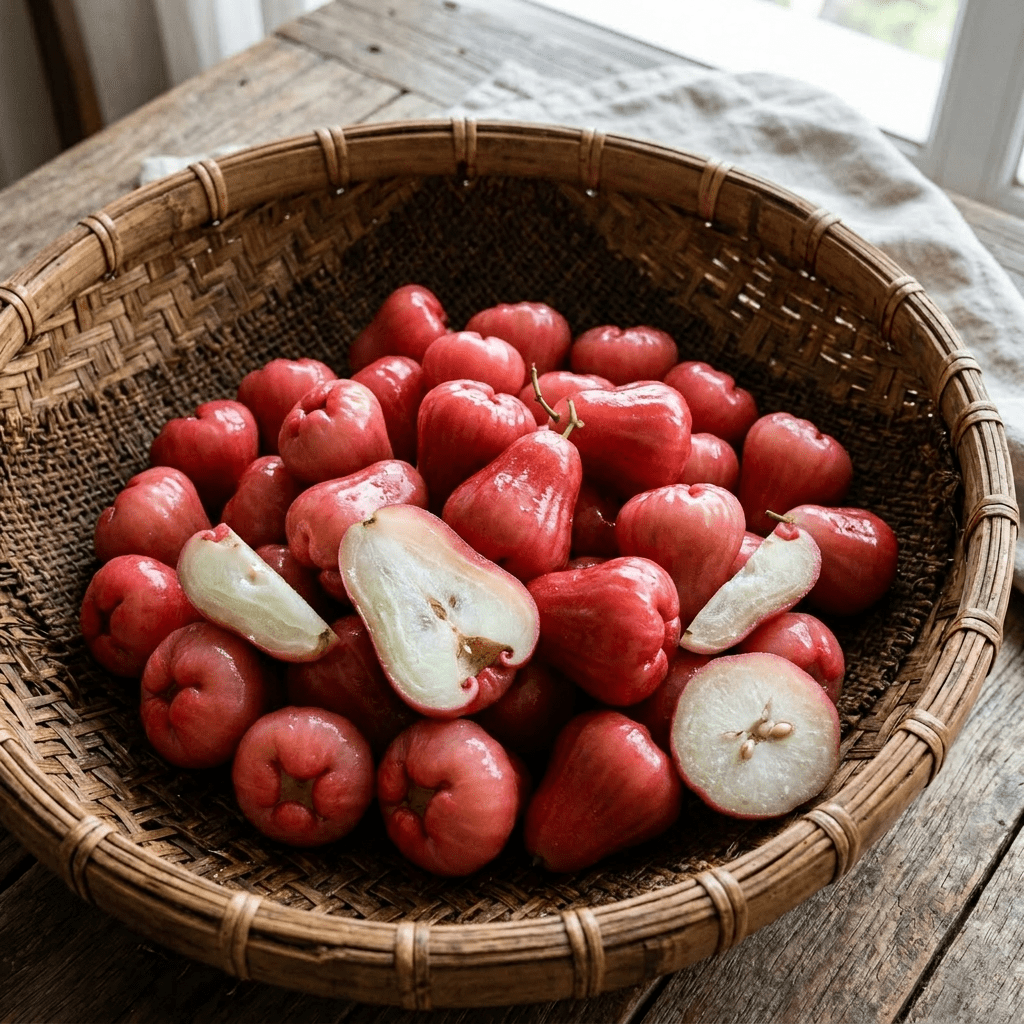
🍐✨ Wax Apple — The Crisp, Cooling Jewel of the Tropics
🍃 A Fresh, Bright Beginning
The Wax Apple is one of those fruits that instantly catches your eye — glossy, bell‑shaped, and almost too pretty to eat. But the real magic happens the moment you take that first bite. The crisp snap, the cool rush of juice, and the light, airy sweetness feel like stepping into a tropical breeze. It’s refreshing without being sugary, hydrating without being heavy, and satisfying without weighing you down.
This fruit has a way of waking up your senses. It’s bright, clean, and cooling — the kind of snack that makes you pause for a moment because it tastes like nature’s version of a deep breath. Whether you’re discovering it for the first time or revisiting a childhood favorite, the Wax Apple brings a sense of calm, clarity, and tropical joy to your day.
🌿 Origins & Cultural Roots
The Wax Apple has deep roots in the warm, humid landscapes of Malaysia, Indonesia, and the Andaman Islands, where it has been cherished for generations as a fruit that cools, refreshes, and restores balance. In these regions, the fruit isn’t just eaten — it’s woven into daily life. Families enjoy it chilled on hot afternoons, markets display it in glossy clusters, and traditional healers value it for its naturally cooling properties.
As trade and migration spread across Southeast Asia, the Wax Apple traveled with it, becoming a beloved staple in:
- 🇹🇼 Taiwan, where farmers developed premium varieties like Black Pearl, Green Diamond, and Jade, each known for exceptional crispness and sweetness.
- 🇹🇭 Thailand, where Wax Apples are enjoyed fresh, dipped in chili‑salt mixtures, or sliced into vibrant salads.
- 🇻🇳 Vietnam, where they’re called mận and often served during festivals and family gatherings.
- 🇮🇳 India, where the fruit appears in Ayurvedic traditions for its cooling and hydrating qualities.
- 🇵🇭 The Philippines, where it’s known as makopa and often grown in home gardens as a symbol of abundance.
Across these cultures, the Wax Apple is more than a refreshing snack — it’s a fruit tied to heat relief, hospitality, and seasonal celebration. Its presence at markets and family tables signals warmth, welcome, and the simple joy of sharing something crisp and cooling on a hot day.
🍐 What Exactly Is a Wax Apple?
Despite the name, it’s not an apple at all. It’s a tropical berry from the myrtle family — related to cloves and eucalyptus.
Signature traits: ✨ Bell‑shaped ✨ Glossy, waxy skin ✨ Crisp, airy flesh ✨ Mild sweetness ✨ Ultra‑hydrating
Inside, it’s almost hollow — giving it that signature light, refreshing crunch.
🥥 Flavor & Texture
Think of it as:
- Crisp like a pear
- Juicy like watermelon
- Cooling like cucumber
- Light and airy
- Mildly sweet with floral notes
It’s the fruit equivalent of a cool breeze.
🌸 Health Benefits
The Wax Apple may look delicate, but it carries a surprisingly powerful wellness profile. Its cooling nature, hydrating flesh, and antioxidant‑rich composition make it one of Southeast Asia’s most cherished fruits for balance, beauty, and everyday vitality.
💧 1. Deep Hydration & Natural Cooling
Wax Apples are over 85% water, making them one of the most hydrating fruits in the tropics. They help replenish fluids, cool the body from the inside out, and support healthy kidney function. This makes them perfect for hot weather, workouts, and anyone who needs a refreshing lift without heaviness.
🛡️ 2. Antioxidant Protection for Cellular Health
These fruits contain flavonoids, tannins, and phenolic compounds — plant antioxidants that help reduce inflammation and neutralize free radicals. This supports long‑term cellular health, slows oxidative stress, and contributes to healthier skin, tissues, and overall vitality.
🌿 3. Gentle Digestive Support
With light fiber and high water content, Wax Apples help keep digestion smooth and comfortable. They support regularity, reduce bloating, and soothe the digestive tract without overwhelming the stomach. Their low fructose content also makes them easier to tolerate than many tropical fruits.
✨ 4. Skin‑Loving Vitamins for Glow & Elasticity
Wax Apples contain vitamin C, vitamin A, and hydrating phytonutrients that nourish the skin from within. These nutrients help support collagen production, brighten the complexion, reduce inflammation, and promote a naturally radiant glow. Their cooling nature also helps calm heat‑related skin irritation.
❤️ 5. Heart & Circulation Support
The potassium in Wax Apples helps regulate blood pressure, maintain electrolyte balance, and support healthy circulation. Combined with their antioxidants, this makes them a heart‑friendly fruit that refreshes without adding excess sugar or calories.
🔥 6. Low‑Calorie, Low‑Sugar Goodness
A single Wax Apple often contains under 30 calories, making it an ideal snack for weight balance, clean eating, and anyone who prefers gentle sweetness. Their airy texture satisfies cravings without heaviness or sugar spikes.
🧘 7. Immune System Support
Vitamin C and plant antioxidants work together to strengthen the immune system, support white blood cell activity, and help the body respond to environmental stressors. They’re especially helpful during hot seasons when immunity can dip.
💦 8. Helps Reduce Water Retention
Wax Apples are naturally hydrating yet mildly diuretic. This combination helps flush excess sodium, reduce puffiness, and support kidney function. It’s one of the reasons they’re considered a “cooling fruit” in traditional wellness practices.
🦴 9. Bone & Tissue Support
They contain small but meaningful amounts of calcium, iron, and magnesium, which support bone strength, oxygen transport, and muscle function. While not a primary source of minerals, they contribute to overall nutritional balance.
🍽️ Culinary Uses
Wax Apples shine in:
- Fruit bowls 🍇
- Tropical salads 🥗
- Smoothies & coolers 🧊
- Pickles (India & Sri Lanka)
- Light stir‑fries
Their crispness makes them perfect for refreshing dishes.
Little Known Facts
Wax Apple was used medicinally, and its use goes back centuries across Southeast Asia.
📌 Who used it?
Traditional medical systems across Southeast Asia — including communities in Malaysia, Indonesia, Thailand, Taiwan, and the Greater Sunda Islands — used Wax Apple (Syzygium samarangense) as part of their herbal and folk‑medicine practices.
- It is specifically noted as an immunostimulant and antibacterial medicine in traditional medicine systems.
- In Taiwanese and broader Southeast Asian traditions, it was valued for its cooling, hydrating, and balancing properties, especially during hot seasons.
📌 When was it used?
While exact dates are not provided in the sources, the fruit was:
- Introduced in prehistoric times to regions beyond its native range, indicating very early traditional use.
- Used long before modern scientific study, as part of longstanding indigenous and local healing practices.
📌 What medicinal purposes did it serve?
Traditional uses include:
- Immunostimulant (boosting immune response)
- Antibacterial applications (leaves, bark, and fruit extracts)
- Cooling and hydrating remedy in Taiwanese and Southeast Asian wellness traditions
- Digestive support due to mild astringent compounds (traditional + supported by modern analysis)
📌 What parts of the plant were used?
Traditional medicine used:
- Fruit
- Leaves
- Flowers
- Bark
These contain tannins, flavonoids, ellagitannins, and phenolic acids — compounds responsible for antioxidant, antimicrobial, and anti‑inflammatory effects.
📌 Modern research confirms many of these traditional uses
Scientific reviews show Wax Apple has:
- Antioxidant
- Antibacterial
- Anti‑inflammatory
- Anticancer
- Anti‑glycation
- Anti‑hyperglycemic
- Relaxant & spasmolytic properties
These findings align with its historical medicinal role.
⭐ Summary
Wax Apple has been used for centuries in Southeast Asian traditional medicine, especially in regions like Malaysia, Indonesia, Taiwan, and the Greater Sunda Islands. Communities used the fruit and its leaves, bark, and flowers as cooling remedies, immune boosters, and antibacterial treatments. Modern research now validates many of these traditional uses, confirming its antioxidant, antimicrobial, and anti‑inflammatory properties.
🍹 Simple Recipes
1. Chilled Wax Apple Salad 🥗
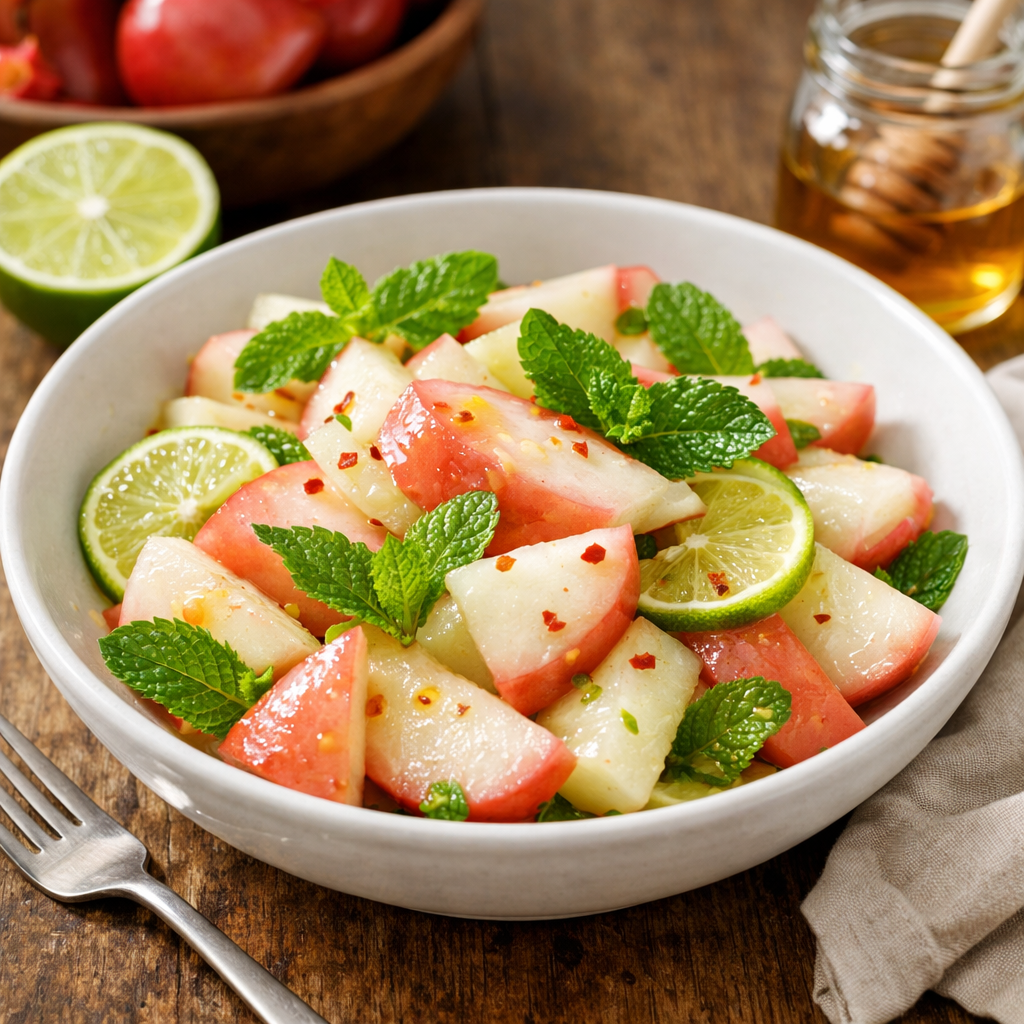
- Sliced wax apples
- Lime juice
- Mint
- Honey drizzle
2. Wax Apple & Cucumber Cooler 🍹

- Wax apple
- Cucumber
- Coconut water
- Ice
- Agave
Blend + serve cold.
3. Tropical Fruit Bowl 🍍

- Wax apple
- Pineapple
- Mango
- Lime zest
- Toasted coconut
⚠️ Who Should Not Consume Wax Apples
Even though Wax Apples are light, hydrating, and gentle, they’re not the perfect match for everybody. While most people enjoy them without any issues, certain individuals may need to be more mindful of how their body responds. Factors like allergies, digestion, underlying health conditions, and medication interactions can influence how well someone tolerates this fruit. Because Wax Apples are naturally cooling, low in calories, and mildly diuretic, they can be refreshing for many — but not ideal for those who require more stable blood sugar, controlled potassium intake, or careful digestive balance. Understanding these nuances helps ensure that each person enjoys this fruit in a way that supports their health, comfort, and overall, well‑being.
❌ 1. Individuals With Low Blood Sugar (Hypoglycemia)
Wax Apples are extremely low in calories and natural sugars. For most people, that’s a good thing — but for someone who struggles with low blood sugar, eating them alone may cause:
- Lightheadedness
- Shakiness
- Fatigue
- Sudden hunger
If you’re prone to dips in blood sugar, pair Wax Apples with protein or healthy fats.
❌ 2. People Allergic to Myrtle Family Plants
Wax Apples belong to the Myrtaceae family, which includes:
- Cloves
- Eucalyptus
- Rose apples
- Guava
If you’ve ever reacted to these plants, you may experience:
- Itchy mouth
- Mild swelling
- Tingling lips
- Throat irritation
Allergies are rare — but possible.
❌ 3. Those With IBS or Sensitive Digestion
Wax Apples are high in water and contain light fiber. For sensitive stomachs, this can sometimes trigger:
- Bloating
- Loose stools
- Cramping
If you have IBS, start with a small amount and see how your body responds.
❌ 4. Individuals on Potassium‑Restricted Diets
Wax Apples contain moderate potassium, which is great for most people — but not for those with:
- Chronic kidney disease
- Dialysis requirements
- Potassium‑restricted medical diets
Too much potassium can strain the kidneys, so moderation or medical guidance is key.
❌ 5. People Taking Diuretics or Blood Pressure Medications
Wax Apples are naturally hydrating and mildly diuretic. Combined with certain medications, this may lead to:
- Dizziness
- Electrolyte imbalance
- Excessive urination
- Dehydration
If you’re on fluid‑regulating meds, enjoy them in moderation.
❌ 6. Individuals Recovering From Digestive Illness
After food poisoning, stomach flu, or major digestive upset, your body needs:
- Electrolytes
- Calories
- Easy‑to‑digest foods
Wax Apples are refreshing but not calorie‑dense, so they shouldn’t be your main recovery food.
❌ 7. Infants Under 1 Year Old
Wax Apples are crisp, hollow, and slippery — a combination that increases choking risk. Wait until your child is confidently chewing solid foods.
❌ 8. Pregnant or Breastfeeding Individuals (Moderation)
Wax Apples are safe, but eating too many may cause:
- Bloating
- Reduced appetite
- Mild digestive discomfort
Balance is best during pregnancy and postpartum.
❌ 9. People With Oral Allergy Syndrome (OAS)
If you’re allergic to birch pollen, grass pollen, or certain tree pollens, you may experience:
- Tingling lips
- Itchy throat
- Mild swelling
Chilling or lightly cooking the fruit often reduces symptoms.
❌ 10. Anyone on Extremely Low‑Calorie or Fasting Diets
Wax Apples are refreshing but not energy‑rich. Relying on them during fasting or detox diets may lead to:
- Fatigue
- Weakness
- Nutrient gaps
They’re a supporting fruit — not a meal replacement.
⚠️ Disclaimer
The information in this section is intended for general wellness education only and should not be used as a substitute for professional medical advice, diagnosis, or treatment. Individual reactions to foods can vary, especially for those with underlying health conditions, allergies, or dietary restrictions. If you have concerns about how Wax Apples may affect your health — particularly if you are pregnant, breastfeeding, managing a medical condition, or taking prescription medications — please consult a qualified healthcare provider before adding them to your diet.
🌼 Wrap‑Up
The Wax Apple is the kind of fruit that instantly brightens your day — light, juicy, crisp, and totally refreshing. 🍐💦 It’s the perfect grab‑and‑go snack for warm weather, busy afternoons, or anytime you want something hydrating and feel‑good without weighing you down. Add it to your fruit bowls, salads, smoothies, or enjoy it chilled straight from the fridge — this tropical beauty brings a burst of cool, clean energy every single time. 🌴✨
🛍️ Availability of the Wax Apple (Worldwide & U.S.)
Wax Apples thrive in warm, tropical climates, which is why they’re most abundant across Southeast Asia — especially in Malaysia, Indonesia, Thailand, Vietnam, Taiwan, and the Philippines. In these regions, the fruit is widely grown, sold fresh in markets, and enjoyed throughout much of the year, with peak harvests typically from late spring through early autumn.
Availability in the United States
In the U.S., Wax Apples are far less common due to their need for consistent heat and humidity. However, they are available in a few keyways:
- Domestic Growing Regions: Small farms in South Florida, Hawaii, and occasionally Southern California grow Wax Apples seasonally. These areas offer the tropical climate the trees need to thrive.
- Imported Supply: During warmer months, imported Wax Apples from Thailand, Taiwan, and Vietnam appear in Asian grocery stores and specialty produce markets in major cities like Los Angeles, New York, Houston, Chicago, and San Francisco.
- Seasonal Window: In the U.S., the best availability is from late spring to early fall, though imports may extend access into winter depending on demand and shipping conditions.
- Names to Look For: Wax Apples may be labeled as Java Apple, Rose Apple, Wax Jambu, or Water Apple — all referring to the same crisp, hydrating fruit.
Because Wax Apples are delicate and high in water content, they’re best enjoyed fresh and locally grown when possible. Imported varieties can be delicious too, but they tend to be more expensive and sell out quickly due to limited supply.
📚 Verified Sources
1. Comprehensive Scientific Review (Phytochemical + Physiological)
Wax Apple (Syzygium samarangense): A Comprehensive Review in Phytochemical and Physiological Perspectives Covers: metabolites, antioxidant activity, anti‑inflammatory effects, cultivation challenges, postharvest treatments, and enhancement techniques.
Link: https://www.academia.edu (search title above)
2. ResearchGate – Full Scientific Review
Duplicate scientific review confirming biological activities, cultivar diversity, and postharvest technologies.
Link: https://www.researchgate.net (search title above)
3. Postharvest Biology & Technology (ScienceDirect)
Wax apple and related species Covers: postharvest handling, storage, physiology, and tropical fruit behavior.
Link: https://www.sciencedirect.com (search title above)
4. Al‑Hayat Journal of Biology & Applied Biology
Peer‑reviewed article confirming: – biological activities – phytochemical profile – enhancement techniques – environmental stress factors
Link: https://journal.walisongo.ac.id (journal.walisongo.ac.id in Bing) (search title above)
5. Genomic Insights Into Wax Apple (Chinese Academy of Sciences)
Covers: genome sequencing, sugar metabolism genes, fruit size genes, male sterility (seedless varieties), and breeding potential.
Link: https://www.newswise.com (search title above)
6. Wikipedia – Syzygium samarangense (Botanical + Geographic)
Covers: – taxonomy – native regions – global cultivation – fruit characteristics – culinary uses
Link: https://en.wikipedia.org/wiki/Syzygium_samarangense (en.wikipedia.org in Bing)
7. FruitInformation.org – Nutrition, Uses, Propagation
Covers: – nutritional values – vitamins & minerals – propagation – harvesting seasons – culinary + medicinal uses
Link: (search “wax apple nutrition facts fruitinformation”)
8. Index of Sciences – Health Benefits of Macopa (Wax Apple)
Covers: – digestion – immunity – hydration – heart health – bone health – skin & hair benefits – side effects & precautions
Link: https://www.indexofsciences.com (search title above)
 EJADA
EJADA 
Leave a comment