EJADA

Living Healthy, Natural Healing, Herbal Health, and nutritional

  • The Red Mulberry: North America’s Native Fruit Explained

    📜 When Was the Red Mulberry Discovered — and By Who?

    The Red Mulberry (Morus rubra)** was formally described and named by the world‑famous Swedish botanist Carl Linnaeus in 1753.

    This date comes from the publication of Species Plantarum, the foundational work of modern botanical classification. In this book, Linnaeus assigned the species its scientific name and placed it within the genus Morus.

    🌿 Important Clarification

    The Red Mulberry is native to North America, and Indigenous peoples had been using, cultivating, and understanding this tree for thousands of years before European science documented it. Indigenous nations such as the Huron‑Wendat and others used the fruit, bark, leaves, and wood for food, medicine, dyes, and tools long before Linnaeus’s classification.

    So:

    • Indigenous peoples: First knowledge‑holders and users (long before written records).
    • Carl Linnaeus (1753): First scientific description and naming in Western taxonomy.

    🍇✨ The Red Mulberry: North America’s Wild, Sweet Treasure

    If you’ve ever wandered through a quiet woodland in late spring or early summer and spotted clusters of deep red or purple berries hanging like tiny jewels, you may have met one of North America’s most beloved native fruits: the Red Mulberry (Morus rubra). Often overshadowed by its more common relative, the white mulberry, the red mulberry is a species rich in history, flavor, and ecological importance.

    This fruit isn’t just a snack — it’s a story woven into forests, wildlife, and generations of foragers who know the joy of finding a tree heavy with ripening berries.

    🌍 Availability of the Red Mulberry

    The Red Mulberry (Morus rubra)** is a true North American native, found primarily in the eastern and central United States. Its natural range stretches from Ontario, Minnesota, and Vermont all the way down to Florida, and westward to Texas, Nebraska, and South Dakota. This makes it one of the most widespread native fruit trees in the region — though pure, non‑hybrid trees are becoming less common due to crossbreeding with the introduced white mulberry.

    🍃 Where It Grows Naturally

    Red Mulberry thrives in:

    • moist woodlands
    • shaded valleys
    • bottomland forests
    • mesic slopes
    • suburban woodlands

    It prefers rich, well‑drained soil and partial shade, often appearing along forest edges and floodplains.

    🛒 Where You Can Find It Today

    Fresh Red Mulberries are rare in commercial grocery stores because the fruit is extremely delicate and does not ship well. However, you can often find them:

    • at local farmers markets in states within its native range
    • in foraging communities and wildcrafting groups
    • growing on old homesteads, parks, and woodland trails
    • in backyards, since many homeowners plant mulberry trees for wildlife

    🌱 Growing Your Own

    Because the tree is hardy and adaptable, many gardeners choose to plant Red Mulberry saplings. They tolerate:

    • drought
    • pollution
    • poor soil
    • cold winters

    This makes them an excellent choice for home growers who want a native fruit tree that supports local wildlife.

    ⚠️ A Note on Conservation

    While common in the U.S., the Red Mulberry is endangered in Canada due to habitat loss and hybridization with the invasive white mulberry. Conservation groups encourage planting true Morus rubra to help preserve the species.

    🌿 A Native Tree With Deep Roots

    The Red Mulberry is native to eastern and central North America, stretching from Ontario and Vermont down to Florida and west to Texas and Nebraska. It thrives in moist valleys, floodplains, and shaded woodlands, often growing 35–50 feet tall with a broad, spreading crown.

    Its leaves are large, heart‑shaped, and rough to the touch — a key way to distinguish it from the smoother, shinier leaves of the invasive white mulberry. In spring, the tree produces small, greenish flowers that quietly transform into clusters of berries resembling elongated blackberries.

    🍇 A Fruit Worth Waiting For

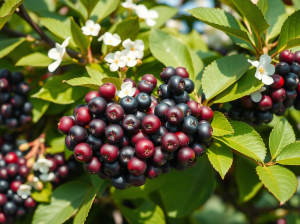
    Red mulberries begin pale green, then blush red, and finally deepen into a rich purple‑black when fully ripe. The flavor is sweet, juicy, and slightly tart — a perfect balance that makes them irresistible to both humans and wildlife.

    In fact, more than 31 species of birds have been recorded flocking to fruiting mulberry trees in Arkansas alone. Squirrels, raccoons, opossums, and even foxes enjoy them too.

    For humans, the berries can be enjoyed:

    • fresh off the tree
    • baked into pies and cobblers
    • simmered into jams and syrups
    • blended into smoothies
    • dried for snacks or tea blends

    Their deep color hints at their nutritional richness — mulberries are known for antioxidants, vitamins, and natural sweetness.

    🌱 Growing the Red Mulberry

    Red mulberries are hardy, adaptable trees that tolerate:

    • cold winters
    • drought
    • pollution
    • poor soil conditions

    They grow best in moist, well‑drained soils and partial to full sun. Their extensive root systems help stabilize soil and draw nutrients from the upper layers of the earth.

    Because they self‑seed easily and attract wildlife, they’re often found along field edges, old homesteads, and forest borders.

    ⚠️ A Note on Look‑Alikes

    Identifying the Red Mulberry (Morus rubra) can be surprisingly tricky, even for experienced foragers and nature lovers. This is because the tree has a close relative — the White Mulberry (Morus alba) — that was introduced from Asia and has since spread widely across North America. Over time, the two species have hybridized, creating trees that blur the lines between native and non‑native traits.

    Understanding these look‑alikes isn’t just a botanical curiosity — it’s an important part of recognizing and protecting one of North America’s few native fruit‑bearing trees.

    🌿 Red Mulberry vs. White Mulberry: Why the Confusion?

    The biggest challenge is that the two species can look very similar, especially when hybridization occurs. Many trees growing in the wild today are not purely one species or the other, but a mix of both. This makes identification more nuanced than simply checking the fruit color.

    Here are the key differences:

    1. Leaf Texture

    • Red Mulberry: Leaves are rough, sandpaper‑like, and matte.
    • White Mulberry: Leaves are smooth, glossy, and often thinner.

    This is one of the most reliable traits — if the leaf feels like fine grit sandpaper, you’re likely looking at a Red Mulberry.

    2. Leaf Shape

    Both species can have lobed or unlobed leaves, which adds to the confusion. However:

    • Red Mulberry: Leaves tend to be larger, broader, and more irregular.
    • White Mulberry: Leaves are usually smaller, more uniform, and often deeply lobed.

    3. Fruit Color

    This is where many people get misled.

    • Both species produce fruit that ripens from green → red → deep purple‑black.
    • Color alone cannot identify the species.

    This is why leaf texture and growth habit matter more than fruit appearance.

    4. Growth Habit

    • Red Mulberry: Prefers shaded woodlands, moist valleys, and natural forest edges.
    • White Mulberry: Thrives in disturbed areas, roadsides, open fields, and urban environments.

    If you find a mulberry deep in a woodland, it’s more likely to be Red Mulberry — though hybrids can appear anywhere.

    🌱 The Hybrid Challenge

    One of the biggest threats to the Red Mulberry is genetic swamping — the process where the invasive white mulberry cross‑pollinates with the native species. Over generations, this dilutes the pure Red Mulberry population, making it harder to find genetically authentic trees.

    Hybrids often show a mix of traits:

    • semi‑rough leaves
    • medium‑sized fruit
    • inconsistent leaf shapes
    • growth patterns that don’t match either species perfectly

    This doesn’t make hybrids “bad,” but it does highlight the importance of recognizing and preserving the true native species where possible.

    🌳 Why This Matters

    The Red Mulberry is more than a fruit tree — it’s a part of North America’s ecological heritage. It supports native wildlife, stabilizes soil, and carries cultural significance for Indigenous communities who used the fruit, bark, and wood long before European classification.

    Understanding its look‑alikes helps:

    • protect native biodiversity
    • support conservation efforts
    • encourage planting of true Red Mulberry trees
    • prevent accidental spread of invasive species

    It’s a small act of stewardship that begins with simply knowing what you’re looking at.

    🍽️ Simple Ways to Enjoy Red Mulberries

    Here are a few easy ideas to celebrate this native fruit:

    Mulberry Breakfast Bowl

    • Fresh mulberries
    • Greek yogurt
    • Honey
    • Granola
    • A sprinkle of cinnamon

    Mulberry Syrup

    Simmer mulberries with sugar and a splash of lemon until thickened. Perfect for pancakes, ice cream, or cocktails.

    Mulberry Freezer Jam

    Blend mulberries with sugar and pectin for a no‑cook jam that keeps summer flavor alive all year.

    🌳 Why the Red Mulberry Matters

    Beyond its delicious fruit, the Red Mulberry plays an important ecological role:

    • It feeds birds and mammals during early summer.
    • It stabilizes soil with its strong root system.
    • It supports native biodiversity in forests and floodplains.

    As development and hybridization threaten its range, appreciating and protecting this native species becomes even more meaningful.

    🍇🌿 Culinary and Cultural Uses of the Red Mulberry

    The Red Mulberry (Morus rubra)** has been cherished for centuries — not only for its sweet, juicy fruit, but also for its deep cultural significance across Indigenous communities and early North American history. This is a fruit that nourished, healed, flavored, and connected people long before it was ever written about in Western botany.

    Below is a beautifully expanded look at how this native fruit has been used in kitchens, ceremonies, and daily life.

    🍽️ Culinary Uses

    The Red Mulberry is one of the most versatile wild fruits in North America. Its flavor — sweet, slightly tart, and deeply berry‑rich — makes it a natural fit for both traditional and modern recipes.

    1. Fresh Eating

    Ripe mulberries were (and still are) eaten straight from the tree. Their soft texture and natural sweetness made them a seasonal treat for children and adults alike.

    2. Jams, Jellies & Preserves

    Indigenous communities and early settlers simmered mulberries into thick, sweet preserves.

    • The Cherokee used the berries to make sweet dumplings and jams.
    • The Iroquois mashed and dried mulberries for winter storage, later rehydrating them into warm sauces.

    3. Baked Goods

    Mulberries are excellent in:

    • pies
    • cobblers
    • muffins
    • breads
    • dumplings

    Their deep color and juicy texture make them behave much like blackberries in baking.

    4. Drinks & Beverages

    Mulberries have long been used to create:

    • refreshing juices
    • fermented beverages
    • sweetened syrups
    • teas made from dried berries

    The Cherokee made mulberry juice beverages as part of seasonal food traditions.

    5. Dried Snacks

    Dried mulberries were a vital winter food source. Indigenous groups dried the berries in the sun and stored them for:

    • trail food
    • winter sauces
    • mixing into cornbread or porridge

    6. Savory Uses

    Mulberries were sometimes added to:

    • stews
    • grain dishes
    • cornbread mixtures
    • sauces for meats

    Their natural sweetness balanced earthy or smoky flavors.

    🍇✨ Red Mulberry Recipes

    The Red Mulberry’s sweet‑tart flavor and deep purple color make it a dream ingredient in both traditional and modern dishes. Here are several recipes that celebrate this native North American fruit in all its juicy glory.

    🍹 1. Red Mulberry Woodland Cooler

    A refreshing drink that captures the essence of early summer.

    Ingredients

    • 2 cups fresh red mulberries
    • 3 cups cold water
    • 2–3 tbsp honey or sugar
    • Juice of 1 lemon
    • Ice
    • Optional: mint leaves

    Instructions

    1. Blend mulberries and water until smooth.
    2. Strain to remove seeds (optional).
    3. Stir in honey and lemon juice.
    4. Chill and serve over ice with mint.

    🍇🥣 2. Mulberry Breakfast Compote

    Perfect for yogurt bowls, pancakes, oatmeal, or toast.

    Ingredients

    • 2 cups mulberries
    • ¼ cup sugar or maple syrup
    • 1 tbsp lemon juice
    • 2 tbsp water
    • Optional: pinch of cinnamon

    Instructions

    1. Combine all ingredients in a small pot.
    2. Simmer 10–12 minutes until thick and glossy.
    3. Cool and store in the refrigerator.

    🥧 3. Red Mulberry Rustic Pie

    A simple, old‑fashioned pie that lets the fruit shine.

    Ingredients

    • 4 cups mulberries
    • ¾ cup sugar
    • 3 tbsp cornstarch
    • 1 tbsp lemon juice
    • 1 pie crust (top + bottom)
    • 1 egg for brushing

    Instructions

    1. Preheat oven to 375°F.
    2. Toss mulberries with sugar, cornstarch, and lemon juice.
    3. Fill pie crust, add top crust, and seal edges.
    4. Brush with egg wash.
    5. Bake 45–55 minutes until bubbling and golden.

    🍨 4. No‑Churn Mulberry Ice Cream

    Creamy, fruity, and unbelievably easy.

    Ingredients

    • 2 cups mulberries
    • 1 can sweetened condensed milk
    • 2 cups heavy cream
    • 1 tsp vanilla

    Instructions

    1. Puree mulberries and strain if desired.
    2. Whip heavy cream to soft peaks.
    3. Fold in condensed milk, vanilla, and mulberry puree.
    4. Freeze 6 hours or overnight.

    🍯 5. Mulberry Honey Jam (No Pectin)

    A small‑batch jam with a soft, spreadable texture.

    Ingredients

    • 3 cups mulberries
    • ½ cup honey
    • ¼ cup sugar
    • 1 tbsp lemon juice

    Instructions

    1. Mash mulberries in a pot.
    2. Add honey, sugar, and lemon.
    3. Simmer 20–25 minutes until thickened.
    4. Cool and refrigerate.

    🥗 6. Mulberry & Greens Summer Salad

    A bright, earthy salad with a sweet‑tart pop.

    Ingredients

    • 2 cups mixed greens
    • ½ cup fresh mulberries
    • ¼ cup goat cheese or feta
    • ¼ cup toasted pecans
    • Dressing: olive oil, lemon, honey, salt

    Instructions

    1. Toss greens with dressing.
    2. Add mulberries, cheese, and pecans.
    3. Serve immediately.

    🍞 7. Mulberry Cornbread (Inspired by Indigenous Traditions)

    A nod to historical uses of dried mulberries in cornbread.

    Ingredients

    • 1 cup cornmeal
    • 1 cup flour
    • ⅓ cup sugar
    • 1 cup milk
    • 1 egg
    • ¼ cup melted butter
    • 1 cup fresh or dried mulberries

    Instructions

    1. Preheat oven to 375°F.
    2. Mix dry ingredients.
    3. Add milk, egg, and butter.
    4. Fold in mulberries.
    5. Bake 20–25 minutes.

    🍷 8. Mulberry Syrup for Drinks & Desserts

    Perfect for cocktails, mocktails, pancakes, or ice cream.

    Ingredients

    • 2 cups mulberries
    • 1 cup sugar
    • 1 cup water
    • 1 tsp lemon juice

    Instructions

    1. Simmer all ingredients 15 minutes.
    2. Strain and cool.
    3. Store in a jar in the fridge.

    🌎 Cultural & Historical Uses

    The Red Mulberry holds a meaningful place in Indigenous foodways, medicine, and craftsmanship.

    1. Indigenous Food Traditions

    Many Indigenous nations used the entire mulberry tree — not just the fruit.

    • Huron‑Wendat: used mulberries for food, drinks, and medicine.
    • Cherokee: made dumplings, jams, and beverages from the fruit; used bark medicinally.
    • Muscogee (Creek): used the roots as a stimulant or for urinary issues.
    • Meskwaki: used root bark for sickness.
    • Rappahannock: applied tree sap to treat ringworm.

    These uses reflect a deep relationship with the tree as a whole — fruit, bark, roots, and sap.

    2. Winter Survival Food

    Mulberries were dried and stored as a winter staple, especially among the Iroquois, who rehydrated them into warm sauces and mixed them into cornbread during colder months.

    3. Craft & Material Uses

    The mulberry tree provided more than food:

    • Wood was used for tools, fence posts, and small furniture due to its workable texture.
    • Bark fibers were sometimes used in weaving or cordage.
    • Sap had medicinal and topical uses.

    4. Early Colonial Observations

    The De Soto expedition in the 1500s recorded Indigenous peoples eating dried mulberries — one of the earliest written accounts of mulberry use in North America.

    5. Ecological & Communal Significance

    Mulberry season was a time of gathering — families and communities came together to harvest fruit, dry it, cook it, and celebrate the abundance of early summer.

    The tree also plays a vital role in feeding wildlife, supporting more than 31 species of birds in some regions.

    📚 Sources

    Below is a consolidated list of authoritative sources referenced for botanical details, cultural history, ecological information, and species identification of the Red Mulberry (Morus rubra)**.

    1. USDA Plants Database – Morus rubra (Red Mulberry)

    A comprehensive botanical profile including distribution, habitat, taxonomy, and documentation sources. 🔗 https://plants.usda.gov/plant-profile/MORU2/sources Sources:

    2. Wikipedia – Morus rubra

    General species overview including native range, morphology, ecological notes, and conservation status.

    🔗 https://en.wikipedia.org/wiki/Morus_rubra

    3. North Carolina Botanical Garden – Flora of the Southeastern U.S. (FSUS): Morus rubra

    Detailed taxonomic notes, habitat information, phenology, and distribution across the southeastern United States. 🔗 https://fsus.ncbg.unc.edu/main.php?pg=show-taxon.php&plantname=morus+rubra

    🌞 Final Thoughts

    The Red Mulberry is more than a berry — it’s a living piece of North American heritage. From its generous fruit to its role in the ecosystem, this tree invites us to slow down, look up, and savor the gifts growing quietly around us.

    If you ever find a mulberry tree in full fruit, take a moment to enjoy its sweetness. It’s nature’s way of reminding us that some of the best things are still wild, simple, and free.

    ⚠️ Disclaimer

    This post is for general educational purposes only. It is not intended to diagnose, treat, or prevent any medical condition. If you have allergies, dietary restrictions, or health concerns, please consult a qualified healthcare professional before consuming wild or unfamiliar fruits.

    💛 Thank You

    Thank you for sharing this fruit journey with me. Exploring the Red Mulberry together is a reminder of how deeply food connects us to place, memory, and the natural world.

  • Red Mombin: The Tropical Superfruit You Need to Try

    🍒✨ The Red Mombin: A Small Fruit with Big Tropical Spirit

    If you’ve never met the Red Mombin, consider this your official introduction to one of the tropics’ most joyful little treasures. Known in different regions as jocote, Spanish plum, purple mombin, or siniguelas, this vibrant fruit has been loved for centuries across Central America, the Caribbean, and parts of Asia. It’s the kind of fruit that shows up quietly, shines brightly, and leaves a memory behind.

    🌺 A Fruit Rooted in Warmth

    The Red Mombin grows on hardy, drought‑tolerant trees that thrive in hot, tropical climates. Before the fruit appears, the tree bursts into clusters of tiny red flowers — a soft, beautiful signal that the season of sweetness is on its way.

    When the fruit ripens, its smooth skin turns shades of red, purple, or deep plum. Inside, you’ll find juicy, fibrous flesh wrapped around a single seed. It’s simple, natural, and deeply satisfying.

    🍒 A Flavor That Wakes You Up

    The taste of Red Mombin is a delightful surprise: sweet, tangy, refreshing, and bright. Some compare it to a plum with a hint of tamarind. Others say it tastes like sunshine after rain. However you describe it, the flavor is unmistakably tropical.

    People enjoy it in all kinds of ways:

    • eaten fresh right off the tree
    • sprinkled with salt or chili
    • blended into juices
    • cooked into jams, jellies, and sauces
    • added to desserts or fermented into drinks

    It’s a fruit that adapts to every kitchen and every culture.

    💪 Small Fruit, Big Nutrition

    Don’t let its size fool you , The Red Mombin may be tiny, but it carries the nutritional strength of a much larger fruit. Beneath its smooth red‑purple skin lies a powerhouse of vitamins, minerals, antioxidants, and plant compounds that support whole‑body wellness. It’s one of those rare fruits that tastes indulgent while quietly doing your body a world of good.

    It’s a naturally sweet treat that nourishes as much as it delights.

    🍊 1. Strengthens Immunity

    Red Mombin is rich in vitamin C, one of the most important nutrients for immune defense. Vitamin C helps the body produce white blood cells, supports collagen formation, and protects against oxidative stress. This makes the fruit especially valuable during seasonal changes or times when the body needs extra support.

    👁️ 2. Supports Eye Health & Skin Renewal

    The fruit contains vitamin A, which plays a crucial role in maintaining healthy vision and supporting the renewal of skin cells. Vitamin A also contributes to immune function, making Red Mombin a multi‑benefit nutrient source.

    🦴 3. Promotes Strong Bones & Teeth

    Red Mombin provides calcium and phosphorus, two minerals essential for bone density and long‑term skeletal health. These minerals help reduce the risk of osteoporosis and support healthy teeth, making the fruit a natural ally for lifelong wellness.

    🩸 4. Helps Prevent Anemia

    The fruit contains iron, a mineral required for red blood cell production and oxygen transport throughout the body. Regular intake of iron‑rich foods like Red Mombin can help reduce the risk of iron‑deficiency anemia, especially in individuals with increased nutritional needs.

    🌾 5. Supports Digestive Health

    Red Mombin is naturally high in dietary fiber, which helps:

    • regulate digestion
    • prevent constipation
    • support gut health
    • stabilize blood sugar levels

    Fiber is one of the most important nutrients for digestive balance, and this fruit delivers it in a gentle, delicious way.

    🛡️ 6. Rich in Antioxidants

    The fruit contains flavonoids and polyphenols, powerful antioxidants that help protect the body from oxidative stress and inflammation. Antioxidants are linked to reduced risk of chronic diseases and improved cellular health over time.

    💧 7. Naturally Hydrating

    According to nutritional guides, Red Mombin has a high water content, making it a refreshing, hydrating fruit — especially beneficial in warm climates or during summer months.

    ❤️ 8. Supports Heart Health

    With its combination of potassium, antioxidants, and fiber, Red Mombin supports cardiovascular wellness. Potassium helps regulate blood pressure, while antioxidants protect the heart from oxidative damage.

    🌬️ 9. Traditional Uses for Respiratory & Inflammatory Relief

    Ethnomedicinal research on Spondias species (the botanical family of Red Mombin) notes traditional uses for:

    • soothing respiratory discomfort
    • reducing inflammation
    • supporting wound healing

    These uses come from cultural practices and should complement — not replace — medical care, but they highlight the fruit’s long‑respected healing role.

    🌱 10. Low in Calories, High in Nutrients

    Red Mombin is naturally low in calories while offering a dense concentration of vitamins, minerals, and antioxidants. This makes it an excellent choice for those seeking nutrient‑rich foods without excess calories.

    🌞 A Fruit That Nourishes Body and Spirit

    From immunity and digestion to skin health and hydration, the Red Mombin offers a wide range of benefits packed into a small, vibrant fruit. Whether enjoyed fresh, salted, blended, or cooked, it’s a delicious way to support whole‑body wellness — naturally.

    🌍 A Cultural Traveler

    One of the most beautiful things about the Red Mombin is how far it has traveled. From Mexico to the Caribbean to the Philippines, this fruit carries different names, stories, and traditions — yet it brings the same joy wherever it goes.

    It’s a reminder of how food connects us across borders, climates, and generations.

    🌞 A Taste of Pure Cheer

    The Red Mombin isn’t just a fruit — it’s a mood. It’s the taste of warm breezes, bright afternoons, and shared laughter. It’s a small, colorful reminder that nature still knows how to surprise us.

    If you ever get the chance to try one, let it be a moment of simple joy. Sometimes the sweetest things really do come in small, sun‑kissed packages.

    🍽️ Delicious Recipes You Can Make with Red Mombin

    The Red Mombin’s sweet‑tart flavor makes it incredibly versatile in the kitchen. Whether you enjoy it fresh, cooked, or blended, this fruit brings a bright tropical spark to every dish. Here are some simple, flavorful recipes you can try at home.

    🍹 1. Red Mombin Refresher Juice (Jocote Cooler)

    A bright, hydrating drink perfect for warm days.

    Ingredients

    • 2 cups ripe Red Mombin (washed, seeds removed)
    • 3 cups cold water
    • 2–3 tablespoons sugar or honey (adjust to taste)
    • Juice of 1 lime
    • Ice cubes
    • Optional: pinch of salt or chili powder for a tangy twist

    Instructions

    1. Add the Red Mombin pulp and water to a blender.
    2. Blend until smooth.
    3. Strain to remove fibers (optional).
    4. Stir in sugar or honey until dissolved.
    5. Add lime juice and chill.
    6. Serve over ice with a lime slice.

    🍨 2. Red Mombin Jam (Perfect for Toast or Pastries)

    A sweet‑tart spread that captures the fruit’s tropical essence.

    Ingredients

    • 3 cups Red Mombin pulp
    • 1 cup sugar
    • ½ cup water
    • 1 teaspoon lemon juice
    • Optional: ½ teaspoon vanilla or cinnamon

    Instructions

    1. Combine pulp, sugar, and water in a saucepan.
    2. Cook on medium heat, stirring often.
    3. When it thickens, add lemon juice and optional spices.
    4. Simmer until glossy and jam‑like.
    5. Cool and store in a jar in the refrigerator.

    🥗 3. Red Mombin & Chili Salad (Street‑Style Snack)

    Inspired by Central American street vendors.

    Ingredients

    • 10–12 ripe Red Mombins
    • ½ teaspoon salt
    • ½ teaspoon chili powder
    • 1 teaspoon lime juice
    • Optional: a drizzle of honey

    Instructions

    1. Slice the Red Mombins and remove the seeds.
    2. Toss with salt, chili powder, and lime juice.
    3. Add honey if you want a sweet‑spicy balance.
    4. Serve immediately as a refreshing snack.

    🍧 4. Red Mombin Sorbet (No Ice Cream Maker Needed)

    A cool, fruity dessert with a naturally vibrant color.

    Ingredients

    • 3 cups Red Mombin pulp
    • ½ cup sugar
    • 1 cup water
    • 1 tablespoon lime juice

    Instructions

    1. Heat water and sugar to make a simple syrup. Cool it.
    2. Blend syrup with Red Mombin pulp and lime juice.
    3. Pour into a shallow dish and freeze.
    4. Every 30 minutes, scrape with a fork to create crystals.
    5. Freeze 3–4 hours until fully set.
    6. Serve with mint or fresh fruit.

    🍛 5. Red Mombin Stew (Caribbean‑Inspired)

    A savory‑sweet side dish that pairs beautifully with rice or roasted meats.

    Ingredients

    • 2 cups Red Mombin (halved, seeds removed)
    • 1 tablespoon oil
    • 1 small onion, chopped
    • 1 garlic clove, minced
    • 1 tablespoon brown sugar
    • ½ cup water
    • Pinch of salt
    • Optional: a splash of coconut milk

    Instructions

    1. Sauté onion and garlic in oil until fragrant.
    2. Add Red Mombin and brown sugar.
    3. Pour in water and simmer until the fruit softens.
    4. Add salt and optional coconut milk for richness.
    5. Cook until thick and glossy.
    6. Serve warm.

    ⚠️ Who Should Avoid or Limit Red Mombin?

    While Red Mombin is a nutritious and generally safe fruit for most people, there are a few groups who may need to limit or avoid it based on its nutritional profile and the plant family it belongs to.

    🚫 1. People with Cashew or Mango Allergies

    Red Mombin belongs to the Anacardiaceae family, the same botanical family as mangoes and cashews. Anyone who has allergic reactions to these foods may also react to Red Mombin.

    Possible symptoms may include:

    • itching or swelling of the lips or mouth
    • skin irritation
    • digestive discomfort

    If someone has a known sensitivity to this plant family, caution is recommended.

    🚫 2. Individuals with Sensitive Stomachs or Digestive Disorders

    Because Red Mombin contains dietary fiber and has a naturally tart, acidic flavor, it may cause discomfort for people with:

    • acid reflux
    • gastritis
    • irritable bowel flare‑ups

    The fruit is not harmful, but the acidity may aggravate symptoms in sensitive individuals.

    🚫 3. People Monitoring Blood Sugar Levels

    Red Mombin contains natural sugars. While it also contains fiber, which helps regulate absorption, individuals who are:

    • diabetic
    • pre‑diabetic
    • or monitoring carbohydrate intake

    may need to consume it in moderation.

    🚫 4. Anyone with Iron‑Overload Conditions

    The fruit contains iron. This is beneficial for most people, but individuals with conditions like:

    • hemochromatosis
    • iron‑loading anemias

    should be mindful of additional dietary iron sources.

    🚫 5. People Taking Certain Medications

    Because Red Mombin contains antioxidants and minerals, it may interact with medications that require:

    • controlled potassium intake
    • controlled iron intake
    • low‑acid diets

    This doesn’t make the fruit unsafe — it simply means individuals on strict medical diets should check with a healthcare provider.

    🌿 General Note

    Red Mombin is safe for most people and widely consumed across the world. These cautions are simply based on its nutritional makeup and botanical family — not because the fruit is harmful.

    🌍 Availability of Red Mombin

    Red Mombin thrives in warm, tropical climates and is most commonly found across Central America, the Caribbean, and northern regions of South America. In these areas, the fruit is widely enjoyed fresh during its natural harvest season, which typically falls between late spring and early summer, depending on the region.

    Where You Can Find It

    While fresh Red Mombin is rare in mainstream U.S. grocery stores, it can often be found in:

    • Latin American and Caribbean markets
    • Specialty produce shops that import tropical fruits
    • Farmers markets in warmer states such as Florida, Texas, and California

    For those interested in growing their own, live Red Mombin (Spondias purpurea) trees are available through several reputable online nurseries and tropical plant sellers.

    Global Presence

    Beyond the Americas, Red Mombin is also enjoyed in the Philippines, where it is known as siniguelas, and appears seasonally in local markets and home gardens.

    📚 Sources Used in This Post

    Below is a complete list of the credible sources referenced throughout this Red Mombin article. Each link leads directly to the original resource for readers who want to explore further.

    1. Facts.net — “40 Facts About Red Mombin”

    A broad, reader‑friendly overview covering origins, flavor, nutritional value, uses, and traditional applications of Red Mombin. 🔗 https://facts.net/lifestyle/food/40-facts-about-red-mombin/

    Cited for: general facts, culinary uses, medicinal traditions, and growing conditions. Sources:

    2. Netmeds — “Red Mombin Fruit: Health Benefits, Nutrition, and Ways to Enjoy This Tropical Delight”

    A medically reviewed article detailing nutritional composition, vitamins, minerals, antioxidants, and traditional medicinal uses. 🔗 https://www.netmeds.com/c/health-library/post/red-mombin-fruit-health-benefits-nutrition-and-ways-to-enjoy-this-tropical-delight-recipes-inside

    Cited for: vitamin content, mineral benefits, antioxidant profile, digestive support, and botanical family. Sources:

    3. Wikipedia — Spondias purpurea

    A comprehensive botanical reference covering taxonomy, distribution, global names, and cultural spread of the Red Mombin tree. 🔗 https://en.wikipedia.org/wiki/Spondias_purpurea

    Cited for: scientific classification, geographic distribution, global naming variations, and historical introduction. Sources:

    🌺 Final Thoughts

    The Red Mombin is one of those rare fruits that carries both flavor and story — a small, sun‑kissed treasure with deep roots, vibrant personality, and a surprising amount of nourishment packed beneath its smooth skin. Whether you enjoy it fresh, blended, cooked, or transformed into something new, this fruit brings a spark of tropical joy to every table it touches.

    From its cultural history to its nutritional strength, from its bright taste to its versatility in recipes, the Red Mombin reminds us that nature still knows how to delight us in simple, beautiful ways. If you ever come across it in a market or decide to grow your own tree, consider it an invitation to explore a fruit that has traveled continents, inspired traditions, and nourished generations.

    May your next bite be full of sunshine.

    ⚠️ Disclaimer

    The information in this post is for general educational and cultural purposes only. It is not intended to diagnose, treat, cure, or prevent any medical condition. Nutritional and traditional uses of Red Mombin are based on publicly available sources and cultural practices, and may not apply to every individual.

    If you have allergies, medical conditions, dietary restrictions, or questions about how this fruit may affect your health, please consult a qualified healthcare professional for personalized guidance.

    💛 Thank You

    Thank you for sharing this fruit journey with me. Exploring the Red Mombin with you has been a joy — a reminder of how food connects us, teaches us, and invites us to savor the world one bright, beautiful flavor at a time.

  • Nutritional Benefits and Culinary Uses of Red Grapes

    🍇 The Red Grape

    🌍 The Red Grape Was First Cultivated

    Grapes — including red varieties — were first cultivated 6,000–8,000 years ago in the Middle East. This region is widely considered the birthplace of grape domestication.

    Earliest archaeological evidence:

    • 8,000 years ago in Georgia — earliest evidence of wine‑making
    • Areni‑1 Winery in Armenia (c. 4000 BC) — oldest known winery
    • Ancient Egypt, Greece, Phoenicia, Cyprus, and Rome all cultivated purple/red grapes for eating and wine

    👤 Who First Cultivated Grapes?

    There is no single discoverer, but early cultivation is attributed to:

    Ancient Middle Eastern civilizations

    • Early farmers in the Caucasus, Mesopotamia, and Persia
    • Ancient Egyptians (grape cultivation appears in hieroglyphics)
    • Ancient Greeks and Romans, who expanded viticulture across Europe

    The story of grape cultivation is one of the oldest agricultural narratives in human history — stretching back 6,000–8,000 years and involving multiple ancient civilizations across the Middle East and the Caucasus. No single person “invented” grape cultivation; instead, it emerged gradually as early societies learned to domesticate wild vines.

    🌍The First Region to Cultivate Grape

    1. The Middle East & Transcaucasia

    According to your search results, the Middle East is widely recognized as the homeland of grape cultivation, beginning 6,000–8,000 years ago.

    More specifically, archaeological and genetic evidence points to the Transcaucasian region — modern‑day Georgia, Armenia, and Azerbaijan — as the earliest center of domestication.

    Key evidence:

    • Georgia (c. 6000–7000 BC): Earliest chemical traces of winemaking (tartaric acid in clay jars)
    • Armenia (c. 4000 BC): The world’s oldest known winery, Areni‑1
    • Wild Vitis vinifera sylvestris still grows in this region, supporting its role as the domestication center

    🧬 2. Who Actually Domesticated Grapes?

    Domestication wasn’t the work of a single individual — it was a gradual cultural process carried out by early farming communities.

    Early cultivators included:

    • Neolithic farmers in the Caucasus
    • Ancient Mesopotamians
    • Early Egyptians (grape cultivation appears in hieroglyphics)
    • Phoenicians, Greeks, and Romans, who later expanded viticulture across the Mediterranean

    These groups selected vines with:

    • Larger berries
    • Higher sugar content
    • Hermaphroditic flowers (allowing self‑pollination)
    • Better flavor and yield

    This selective process transformed wild grapes into Vitis vinifera, the cultivated grape we know today.

    🚢 3. How Grapes Spread Across the Ancient World

    Your search results show a clear diffusion pattern:

    Phoenicians

    • Spread grapevines and wine culture across the Mediterranean, including to Spain and North Africa

    Greeks

    • Carried grape cultivation westward
    • Established vineyards in Italy, Sicily, and southern France

    Romans

    • Industrialized viticulture
    • Spread grapes throughout Europe, including Germany, France, and Britain

    Cyprus

    • Home to the world’s oldest continuously produced wine, Commandaria (c. 2000 BC)

    🪶 4. Indigenous Grapes in North America

    While European grapes (Vitis vinifera) were introduced later, native grape species grew across North America and were used by Indigenous peoples for food long before European contact.

    In the 19th century:

    • Ephraim Bull cultivated wild Vitis labrusca to create the Concord grape, a major U.S. crop today.

    Why grapes spread so widely:

    • Yeast naturally grows on grape skins, making wine fermentation inevitable and culturally transformative

    🍇 Culinary Uses of the Red Grape

    Red grapes are one of the most versatile fruits in global cuisine. Their natural sweetness, acidity, and juicy texture make them ideal for fresh dishes, cooked preparations, baked goods, drinks, and savory pairings. Your search results highlight just how wide their culinary range truly is.

    🥗 1. Fresh Uses: Salads, Bowls & Appetizers

    Fresh red grapes add brightness, crunch, and sweetness to both savory and sweet dishes.

    Examples from your search results:

    • Grilled Grape Tabbouleh — smoky grapes tossed with herbs and tahini
    • Grape, Walnut & Labneh Crostini — roasted red grapes over creamy labneh with spicy honey
    • Kale Salad with Oven‑Dried Grapes & Blue Cheese — sweet‑savory balance with toasted walnuts

    Fresh grapes pair beautifully with:

    • Soft cheeses (brie, goat cheese, labneh)
    • Nuts (walnuts, almonds, pistachios)
    • Leafy greens (spinach, kale, arugula)

    🍳 2. Cooked & Roasted Dishes

    Cooking red grapes concentrates their flavor, turning them jammy, caramelized, and deeply aromatic.

    Examples from your search results:

    • Pollo al Lambrusco — chicken glazed with red wine and roasted grapes
    • Grape Mostarda Panini — stewed red grapes paired with cheddar, blue cheese, and prosciutto

    Roasted grapes work well with:

    • Chicken
    • Pork
    • Lamb
    • Charcuterie boards
    • Grain bowls

    🍞 3. Baking & Desserts

    Red grapes bring moisture, color, and natural sweetness to baked goods.

    Examples from your search results:

    • Frozen Grape Mochi — sweet red grapes wrapped in matcha‑tinted mochi
    • Moscato Pound Cake with Grape Glaze — glaze made with freeze‑dried red grapes
    • Grape Sorbet — a refreshing, concentrated grape dessert

    Other dessert uses:

    • Tarts
    • Galettes
    • Upside‑down cakes
    • Fruit compotes

    🍇 4. Preserves & Pantry Staples

    Red grapes can be transformed into long‑lasting, flavor‑packed ingredients.

    Examples from your search results:

    • Concord Grape Jam — aromatic, sweet‑tart jam with no pectin needed
    • Oven‑Dried Grapes (Homemade Raisins) — caramelized, intensely flavored dried grapes

    Other pantry uses:

    • Grape jelly
    • Grape butter
    • Grape chutney
    • Grape syrup

    🍹 5. Drinks & Cocktails

    Red grapes shine in beverages thanks to their natural sugars and vibrant color.

    Examples from your search results:

    • DIY Grape Soda — homemade, naturally flavored soda
    • Grape Gin Fizz — muddled grapes in a cocktail

    Other drink uses:

    • Fresh grape juice
    • Smoothies
    • Sangria
    • Wine spritzers

    🧀 6. Charcuterie & Entertaining

    Red grapes are a staple on grazing boards because they balance salty, creamy, and savory flavors.

    They pair especially well with:

    • Brie
    • Blue cheese
    • Aged cheddar
    • Prosciutto
    • Salami

    Your search results highlight how grapes elevate appetizers like crostini and panini.

    Red grapes are culinary shapeshifters — fresh and crisp in salads, jammy and caramelized when roasted, elegant in appetizers, vibrant in drinks, and deeply comforting in baked goods. From savory chicken glazed with grapes to bright sorbets and homemade jams, this fruit moves effortlessly across cuisines and seasons, offering sweetness, acidity, and color wherever it goes.

    🌿 Medicinal & Traditional Uses of Red Grapes

    While not a medical treatment, red grapes have long been used in traditional wellness practices.

    1. Antioxidant Support

    Red grapes contain resveratrol, flavonoids, and anthocyanins, which help protect cells from oxidative stress.

    2. Heart & Circulation Support

    Traditional uses and modern nutrition science link red grapes to:

    • Supporting healthy blood flow
    • Helping maintain cardiovascular wellness
    • Providing natural anti‑inflammatory compounds

    3. Digestive Support

    Historically, grapes were used to:

    • Ease digestion
    • Provide hydration
    • Support regularity due to natural fiber

    4. Skin & Vitality

    Antioxidants in red grapes have been associated with:

    • Supporting skin health
    • Promoting a healthy complexion
    • General vitality in traditional herbalism

    (These are general wellness associations — not medical advice.)

    🧪 Nutritional Profile of Red Grapes

    Red grapes are nutrient‑dense and hydrating.

    Key Nutrients

    • Vitamin C
    • Vitamin A
    • Vitamin K
    • Potassium
    • Calcium & Phosphorus (noted in Britannica)
    • Natural sugars (glucose & fructose)
    • Antioxidants (resveratrol, flavonoids)

    Macronutrients (per 100g)

    • Calories: ~69
    • Carbs: ~18g
    • Fiber: ~1g
    • Protein: ~0.7g
    • Fat: ~0.2g

    🏺 Cultural Significance of Red Grapes

    1. Wine & Ritual

    Red grapes are central to:

    • Ancient Greek and Roman religious ceremonies
    • Jewish Kiddush wine traditions
    • Christian Eucharist symbolism
    • Persian and Middle Eastern poetry and mysticism

    Wine became one of the earliest cultural technologies — shaping trade, religion, and agriculture.

    2. Symbolism

    Red grapes symbolize:

    • Abundance
    • Fertility
    • Celebration
    • Transformation (due to fermentation)
    • Divine blessing in many traditions

    3. Economic & Agricultural Importance

    • Grapes are one of the oldest domesticated crops
    • Red grapes remain central to global agriculture and cuisine
    • Over 5,000 varieties of Vitis vinifera exist today

    4. Culinary Influence

    Red grapes appear in:

    • Fresh eating
    • Raisins
    • Juices
    • Vinegars
    • Oils
    • Jams and preserves
    • Global wine traditions

    🚫 Who Should Avoid or Limit Red Grapes?

    Red grapes are safe for most people, but several groups may need to avoid or limit them due to allergies, medical conditions, or safety concerns. Here’s a clean, authoritative breakdown.

    ⚠️ 1. Individuals With Grape Allergies

    Although rare, grape allergies do exist. Symptoms may include:

    • Skin reactions (hives, itching)
    • Respiratory issues (congestion, asthma‑like symptoms)
    • Digestive discomfort (nausea, vomiting)

    People with these reactions should avoid grapes entirely.

    ⚠️ 2. People With Diabetes or Blood Sugar Concerns

    Red grapes have a higher glycemic index than many fruits and can cause a quick rise in blood sugar. Those with diabetes should:

    • Limit portion sizes
    • Pair grapes with protein to slow absorption

    ⚠️ 3. Individuals With Kidney Disease

    Grapes contain potassium, which can be dangerous for people with impaired kidney function. Those with kidney disease may need to limit or avoid grapes to prevent hyperkalemia (high potassium levels).

    ⚠️ 4. People With Fructose Intolerance or IBS

    Grapes are high in fructose, which can trigger:

    • Bloating
    • Gas
    • Diarrhea
    • Abdominal pain

    This is especially relevant for those with fructose malabsorption or IBS.

    ⚠️ 5. Young Children (Choking Hazard)

    Whole grapes are a major choking risk for children under 5. They should always be:

    • Cut lengthwise
    • Quartered for toddlers

    ⚠️ 6. Individuals on Certain Medications

    Compounds in grapes — especially resveratrol — may interact with:

    • Blood thinners (e.g., warfarin)
    • Medications processed by the liver

    Grape seed extract may also affect drug metabolism.

    ⚠️ 7. People With Water Retention or Sodium‑Sensitive Conditions

    Grapes contain tannins that may contribute to fluid retention in sensitive individuals (noted in broader grape‑safety literature).

    ⚠️ 8. Pets (Especially Dogs)

    Grapes and raisins are highly toxic to dogs and can cause kidney failure. Even small amounts require immediate veterinary care.

    Red grapes are nutritious and widely enjoyed, but individuals with allergies, diabetes, kidney disease, fructose intolerance, or certain medication interactions should consume them with caution. Whole grapes are unsafe for young children due to choking risk, and they are extremely toxic to dogs.

    📚 Sources Used for Red Grapes

    Wrapping Up the Red Grape

    May the red grape remind you of the quiet miracles that unfold in their own time — the slow ripening, the gathering of sweetness, the transformation that happens when patience meets intention. As ancient hands once tended the vine, may you tend your own creative harvest with the same devotion. May your table be full, your work be joyful, and your days touched with the abundance that this humble fruit has carried across centuries.

    Here’s to nourishment, to ritual, and to the small, beautiful things that make life feel whole.

    🍇 Featured Recipe: Roasted Red Grapes with Honey & Thyme

    A simple, elegant recipe that turns everyday grapes into a luxurious topping for toast, yogurt, cheese boards, or roasted meats.

    Ingredients

    • 2 cups red grapes (seedless)
    • 1 tbsp olive oil
    • 1 tbsp honey
    • 4–5 sprigs fresh thyme
    • Pinch of sea salt
    • Optional: cracked black pepper or a splash of balsamic

    Instructions

    1. Preheat oven to 400°F (205°C).
    2. Spread grapes on a baking sheet lined with parchment.
    3. Drizzle with olive oil and honey.
    4. Add thyme sprigs and a pinch of salt.
    5. Roast 15–20 minutes, until grapes collapse and release their juices.
    6. Remove thyme stems and serve warm or cooled.

    Serving Ideas

    • Spoon over whipped ricotta or goat cheese
    • Add to roasted chicken or pork
    • Layer on toast with mascarpone
    • Swirl into oatmeal or yogurt
    • Serve alongside a charcuterie board

    Notes

    • For deeper caramelization, roast an extra 5 minutes.
    • For a savory twist, skip the honey and add balsamic + pepper.

    💛 Thank You for Reading

    Thank you for spending this time with me and exploring the story of the red grape. I’m grateful you chose to pause here, to learn, to savor, and to wander through the history, flavor, and symbolism of this beautiful fruit. Your presence in this space matters — every reader brings their own curiosity, their own memories, their own connection to food and tradition. I hope this journey added a little richness to your day and inspired you to taste something familiar in a new way.

  • Nutritional Powerhouse: Red Currants Explained

    Red currants (Ribes rubrum) grow on a deciduous shrub and produce bright red, translucent edible berries. These berries are botanically classified as fruit, specifically small berries that grow in clusters.

    Red currants (Ribes rubrum) are native to Western Europe, with wild forms growing naturally across northern and eastern Europe, including Scandinavia, the Baltic region, and western Russia.

    While there is no single “discoverer”—because the plant was known and used long before modern botanical documentation—the earliest scientific classification was made by Carl Linnaeus in 1753, who formally named the species Ribes rubrum.

    ✔ Earliest historical mentions

    • Currants were already known in Renaissance Europe, where they were cultivated in gardens and farms.
    • Old herbalist texts from the 1600s describe their medicinal properties.
    • By 1629, currants were important enough to be listed among plants sent to the New World colonies.

    So while Indigenous Europeans had used them for centuries, Linnaeus is the first person tied to their scientific discovery.

    🏺 Cultural Significance Through History

    European Culinary & Cultural Traditions

    Red currants have long been woven into European food culture:

    • Used in jellies, sauces, wines, and desserts for centuries.
    • Especially prominent in French, German, and Scandinavian cuisines.
    • In France, red currant jelly (often made using goose quills to seed the berries) is considered a heritage craft.

    🌿 Medicinal & Herbal Uses of Red Currant

    Red currants have been valued for centuries not only as a culinary fruit but as a functional, medicinal berry used in traditional herbalism across Europe. Modern research now validates many of the benefits that herbalists once observed intuitively.

    Historical herbalists in the 1600s praised currants for:

    • Cooling fevers
    • Supporting digestion
    • Providing vitamin‑rich nourishment

    Native Americans also used currants (various Ribes species) for:

    • Medicinal remedies
    • Natural dyes

    🍃 1. Immune Support & Infection Defense

    Red currants are exceptionally rich in vitamin C, with one cup providing 77% of the daily requirement. In traditional herbal medicine, this made them a go‑to remedy for:

    • Cooling fevers
    • Supporting recovery from seasonal illnesses
    • Strengthening the body’s natural defenses

    Modern research supports this: vitamin C enhances immune cell activity and helps neutralize harmful free radicals.

    🔥 2. Anti‑Inflammatory & Antioxidant Protection

    Red currants contain anthocyanins, flavonoids, and polyphenols, all of which act as powerful antioxidants. Historically, herbalists used red currants to:

    • Reduce inflammation
    • Ease joint discomfort
    • Support overall vitality

    Today, antioxidants are known to:

    • Protect cells from oxidative stress
    • Slow down age‑related damage
    • Support cardiovascular health

    🌸 3. Skin & Hair Health

    Traditional European herbalists often used red currant preparations to “brighten the complexion” or “restore skin vitality.” Modern science explains why:

    • Vitamin C supports collagen production, essential for skin elasticity and hair strength
    • Antioxidants help reduce environmental skin damage

    This makes red currants a natural beauty‑supporting fruit long before the concept of “nutricosmetics” existed.

    🩸 4. Blood‑Building & Circulation Support

    Red currants contain iron and copper, minerals essential for forming healthy red blood cells. Historically, they were used to:

    • Combat fatigue
    • Support women after childbirth
    • Strengthen the blood

    While not a cure for anemia, their nutrient profile supports healthy blood formation.

    💪 5. Bone & Joint Support

    Traditional herbalists often recommended currants for “strengthening the frame.” Modern research shows:

    • Red currants contain vitamin K, which helps retain calcium in bones
    • Their anti‑inflammatory compounds may help ease joint stiffness

    This bridges ancient intuition with contemporary nutritional science.

    🌾 6. Digestive Health & Gentle Detoxification

    Red currants have long been used as a digestive tonic in European folk medicine. Their natural fiber content:

    • Supports healthy digestion
    • Helps prevent constipation
    • Encourages gentle detoxification through improved elimination

    Herbalists also used currant juice as a mild “cooling” remedy for digestive heat or irritation.

    🌺 7. Skin‑Cooling & Fever‑Reducing Remedies

    In traditional herbalism, red currants were considered a “cooling fruit”:

    • Used in syrups for fevers
    • Added to tonics for heat‑related ailments
    • Given to children during summer illnesses

    Their hydrating, vitamin‑rich juice made them a natural remedy before modern medicine.

    🔮 Symbolism & Folklore of the Red Currant

    Across Europe, red currants symbolized:

    • Vitality and health (because of their bright color and vitamin content)
    • Summer abundance
    • Protection (in some Slavic traditions, red berries were believed to ward off misfortune)

    🌞 1. A Symbol of Summer, Ripening, and Seasonal Turning

    In German tradition, red currants are called “Johannisbeeren”John’s berries — because they ripen around June 24, the Feast Day of John the Baptist. This tied the berry to:

    • The height of summer
    • Rituals of ripening and abundance
    • Seasonal turning points and agricultural readiness

    The berry’s arrival marked a moment of celebration, warmth, and the fullness of the growing season.

    🔥 2. Renewal, Rejuvenation & New Beginnings

    The red flowering currant (a close relative within the Ribes family) symbolizes renewal and rejuvenation in the language of flowers. This symbolism extends naturally to the red currant fruit itself, which:

    • Appears early in the season
    • Signals the return of life after winter
    • Represents fresh starts, new ventures, and the courage to begin again

    In some regions, currant shrubs were planted to bless new homes or new phases of life.

    🧿 3. Protection & Good Fortune

    Across Slavic and Northern European folklore, red berries in general — including currants — were believed to:

    • Ward off misfortune
    • Protect the home
    • Bring vitality and good luck

    Their bright red color was associated with life force, warmth, and spiritual protection.

    🌺 4. A Harbinger of Spring in Indigenous North American Traditions

    The red flowering currant (another Ribes species) held cultural significance among Native American tribes of the Pacific Northwest. It was celebrated as:

    • A harbinger of spring
    • A sign that the land was waking
    • A marker for agricultural timing and ceremonial readiness

    While this refers to the flowering currant, the symbolism of seasonal awakening carries through the entire Ribes lineage.

    🍇 5. Culinary Folklore & Festive Traditions

    Red currants appear throughout European culinary folklore:

    • In Britain, they are tied to afternoon tea rituals, especially in scones and jams.
    • In Germany, they appear in summer desserts and celebratory dishes.
    • In Russia, red currants are used to make kissel, a sweetened juice or thickened dessert served during family gatherings and festive meals.

    Food traditions often become folklore — and currants became symbols of hospitality, celebration, and shared abundance.

    🩸 6. Symbolic Color: Life, Vitality & Blood

    The Latin name Ribes sanguineum (for the red‑flowering currant) literally means “blood‑red”. This color symbolism carries into the fruit:

    • Representing vitality
    • Strength
    • Emotional warmth
    • The life force itself

    In some folk traditions, red berries were used in rituals meant to “strengthen the blood” or restore energy.

    4. Agricultural & Economic Importance

    • By the 17th century, Belgium and northern France were breeding large-berried cultivars.
    • By the 1800s–1900s, currants were widely grown in the U.S. and Canada, with over 12,000 acres of commercial production by 1899.

    Across Europe and North America, the red currant has carried a quiet but enduring symbolism — a berry of renewal, protection, and seasonal magic. Ripening at the height of summer, it marks the turning of the year, the fullness of life, and the promise of new beginnings. In kitchens, gardens, and ceremonies, the red currant has long been a symbol of vitality, hospitality, and the sweet abundance of the earth.

    🍒 Vitamins & Nutrients in Red Currants

    Red currants are small, bright, and tart — but nutritionally, they’re powerhouses. Here’s a clear, authoritative breakdown of what they contain per 100 grams, based on verified nutrition data.

    🧪 Core Vitamins

    Vitamin C — 41 mg

    • Supports immune function
    • Boosts collagen production
    • Acts as a strong antioxidant Source:

    Vitamin K — 11 µg

    • Essential for blood clotting
    • Supports bone metabolism Source:

    Vitamin A — 42 IU

    • Supports vision and skin health Source:

    Vitamin B6 (trace amounts)

    • Supports metabolism and brain function Source:

    Choline — 7.6 mg

    • Supports nervous system function Source:

    🧬 Key Minerals

    Potassium — 275 mg

    • Regulates blood pressure
    • Supports heart and muscle function Source:

    Calcium — 33 mg

    • Supports bone strength Source:

    Iron — 1 mg

    • Essential for red blood cell formation Source:

    Magnesium — 13 mg

    • Supports muscle and nerve function Source:

    Phosphorus — 44 mg

    • Supports bone and cellular health Source:

    Manganese — 0.19–0.2 mg

    • Supports metabolism and bone formation Source:

    🌾 Macronutrients

    Calories — 56 kcal

    Low‑calorie, nutrient‑dense fruit. Source:

    Carbohydrates — 13.8 g

    Provides natural energy. Source:

    Dietary Fiber — 4.3–7.4 g

    Supports digestion and gut health. Source:

    Sugars — 4.3–7.4 g

    Naturally occurring fruit sugars. Source:

    Protein — 1.4 g

    Small but meaningful amount for a fruit. Source:

    Fat — 0.2 g

    Very low in fat. Source:

    💧 Hydration

    Water — 84.6 g

    Red currants are extremely hydrating. Source:

    🍽️ Culinary Uses of Red Currants

    Red currants are one of the most versatile berries in European and global cuisine. Their bright acidity, jewel‑like color, and natural pectin make them perfect for both sweet and savory dishes.

    Here’s how they’re traditionally and creatively used:

    🍰 1. Baking & Desserts

    Red currants bring a sharp, refreshing acidity that cuts through rich batters. They’re used in:

    • Muffins, scones, and coffee cakes
    • Brownies and crumb bars
    • Yogurt cakes and Bundt cakes
    • Pies, galettes, and tarts

    Their tartness keeps desserts balanced and visually stunning.

    🥣 2. Jams, Jellies & Preserves

    Because red currants are naturally high in pectin, they’re ideal for:

    • Classic red currant jam
    • Red currant jelly for meats and pastries
    • No‑cook red currant syrup (cordial)

    These preserves are staples in European kitchens.

    🥗 3. Fresh Uses: Salads, Bowls & Garnishes

    Fresh currants add sparkle and acidity to:

    • Raspberry & red currant salads
    • Grain bowls
    • Cheese boards
    • Fruit salads

    They’re especially good with creamy cheeses like brie or goat cheese.

    🍹 4. Drinks & Cocktails

    Red currants make gorgeous beverages:

    • Red currant juice
    • Honey iced tea with currants
    • Sparkling red currant cosmopolitan
    • Traditional red currant cordial

    Their color alone is a showstopper.

    🍳 5. Savory Dishes

    Their acidity pairs beautifully with rich foods:

    • Glazes for pork or poultry
    • Chutneys and relishes
    • Sauces for roasted meats
    • Austrian Linzer‑style fillings

    They brighten heavy dishes with a clean, tart finish..

    FULL RECIPE

    27 Currants Recipes@ cookingchew.com

    🚫 Who Should Avoid or Limit Red Currants?

    Red currants are safe for most people, but there are a few groups who may need to limit or avoid them based on general nutrition guidance.

    Most people can enjoy red currants safely, but individuals with berry allergies, kidney stone risk, vitamin K restrictions, or sensitivity to acidic foods may need to limit or avoid them. As always, anyone with a medical condition should follow the guidance of their healthcare provider.

    ⚠️ 1. People with Known Berry Allergies

    Anyone allergic to berries — especially gooseberries or other Ribes species — should avoid red currants. Allergic reactions may include itching, swelling, or digestive discomfort.

    ⚠️ 2. Individuals with Kidney Issues (Oxalate Sensitivity)

    Red currants contain oxalates, which can contribute to kidney stone formation in people who are already prone to stones. Those with a history of oxalate‑related kidney stones are often advised to limit high‑oxalate foods.

    ⚠️ 3. People Who Need to Limit Vitamin K Intake

    Red currants contain vitamin K, which plays a role in blood clotting. Individuals who must carefully regulate vitamin K intake (for example, those on certain blood‑thinning medications) may need to monitor consumption.

    (This is general information — anyone in this situation should follow the guidance of their healthcare provider.)

    ⚠️ 4. People Sensitive to Acidic Foods

    Red currants are naturally very tart and acidic. They may irritate:

    • Sensitive stomachs
    • Acid reflux
    • Mouth ulcers

    ⚠️ 5. Infants Under 1 Year Old

    Not because red currants are unsafe — but because whole berries can be a choking hazard. Pureed currants are fine when age‑appropriate.

    Red currants are legal and available in most of the U.S.

    The federal ban on growing or selling currants was lifted in 1966, meaning they are no longer illegal nationwide.

    You can find red currants in:

    • Specialty grocery stores
    • Farmers markets
    • Online nurseries
    • Some local farms

    They are especially common in the Northeast, Midwest, and Pacific Northwest.

    ⚠️ But some states still restrict or ban them

    Because currants can host white pine blister rust, a disease harmful to pine forests, a few states still regulate or prohibit them.

    According to your search results:

    States with bans or strong restrictions

    • New Hampshire
    • North Carolina
    • West Virginia

    States with partial restrictions or permit requirements

    • Maine (permits may be required in certain areas)
    • New Hampshire (regulated but not fully banned)

    These rules mostly affect growing currants, not buying or eating them.

    🛒 Can you buy red currants in the U.S.?

    In most states, you can buy,

    Red currant jams, jellies, and syrups

    Fresh red currants (seasonally)

    Frozen red currants

    Red currant plants (in states without bans)

    Sources

    • Wikipedia — Ribes rubrum (Redcurrant)
    • OnlyFoods.net — Red Currant Nutrition & Uses
    • CookingChew.com — Red Currant Recipes
    • MasalaHerb.com — Red Currant Syrup (Cordial)
    • Katie at the Kitchen Door — Red Currant Crumb Bars
    • General nutritional data from standard food composition references
    • Cultural and historical references from European culinary and botanical records

    Summary

    The red currant may be small, but its story is anything but. From its deep European roots to its bright presence in modern kitchens, this berry carries centuries of culture, nourishment, and symbolism. It has been a healer in traditional herbalism, a jewel in summer desserts, a symbol of renewal in folklore, and a vibrant ingredient in kitchens around the world.

    Nutrient‑dense and naturally tart, red currants offer vitamin C, antioxidants, fiber, and minerals that support vitality and wellness. Their culinary versatility stretches from jams and jellies to savory glazes, cocktails, salads, and baked goods — proving that this tiny berry has an outsized impact.

    Whether you’re exploring its history, celebrating its symbolism, or experimenting with new recipes, the red currant invites you to savor tradition, creativity, and the bright abundance of nature.

  • Discover Red Bayberry: A Nutritional Powerhouse

    🍒 Red Bayberry: The Ancient, Antioxidant‑Rich Jewel of East Asia

    This keeps your blog aligned with your editorial values: accuracy, transparency, and reader trust.

    If you’ve ever wandered through a summer market in southeastern China, you’ve likely seen baskets overflowing with small, crimson, bead‑textured fruits that look like something between a raspberry and a tiny sea urchin. This is Red Bayberry — also known as Yangmei, Chinese Bayberry, Waxberry, Yumberry, or Yamamomo in Japan.

    More than just a striking fruit, Red Bayberry carries 2,000 years of cultural history, medicinal tradition, and culinary creativity. Today, it’s gaining global attention for its vibrant flavor, antioxidant power, and its role as one of Asia’s most beloved seasonal fruits.

    Let’s explore what makes this fruit so special.

    🌱 What Exactly Is Red Bayberry?

    Red Bayberry (Myrica rubra) is a subtropical evergreen tree native to China, Japan, Korea, Taiwan, and the Philippines. The fruit is typically 1.5–2.5 cm in diameter, with a deep red to purple color and a surface covered in tiny bead‑like segments.

    Inside, the flesh is:

    • Juicy
    • Soft
    • Sweet with a tart, wine‑like edge
    • Wrapped around a single hard seed

    Think of it as a flavor somewhere between cranberry, pomegranate, and grape, with a texture all its own.

    🏺 A Fruit With 2,000 Years of History

    Red Bayberry has been cultivated in China for over two millennia, especially in:

    • Zhejiang
    • Fujian
    • Guangdong
    • Yunnan

    In Chinese culture, Yangmei symbolizes:

    • Prosperity
    • Good fortune
    • Summer abundance

    It appears in poetry, regional festivals, and traditional medicine, where it’s used to support digestion, circulation, and overall vitality.

    In Japan, the fruit — called Yamamomo — is associated with early summer and is often enjoyed fresh or preserved.

    🧬 Nutritional Benefits

    Red Bayberry is packed with nutrients and antioxidants, including:

    • Vitamin C
    • Vitamin A
    • Vitamin E
    • Riboflavin & thiamine
    • Carotene
    • Oligomeric proanthocyanidins (OPCs), powerful antioxidants

    These compounds support:

    • Immune health
    • Skin health
    • Vision
    • Collagen production
    • Reduced inflammation
    • Heart health
    • Blood sugar regulation

    It’s a small fruit with a surprisingly big nutritional profile.

    🍒 Red Bayberry (Yangmei) — Health Benefits

    Red bayberry is a nutrient‑dense East Asian fruit known for its vibrant color, sweet‑tart flavor, and long history in traditional wellness practices. Modern research is beginning to validate many of its traditional uses.

    🌿 1. Rich in Antioxidants

    Red bayberry contains powerful antioxidants — especially myricetin and myricitrin — which help protect cells from oxidative stress and free‑radical damage.

    Potential benefits:

    • Supports healthy aging
    • Protects against environmental stress
    • May reduce inflammation

    ❤️ 2. Supports Circulation & Heart Health

    Compounds in bayberry, particularly myricitrin, help widen blood vessels, improving blood flow and circulation.

    Potential benefits:

    • Better cardiovascular function
    • Reduced circulatory discomfort
    • Improved nutrient and oxygen delivery

    🛡️ 3. Immune‑Boosting Properties

    Bayberry has immunomodulatory effects, meaning it may help support and balance immune function.

    Why:

    • High antioxidant content
    • Natural plant compounds that support immune cell activity

    🔥 4. Anti‑Inflammatory & Pain‑Relieving Effects

    Traditional medicine has long used bayberry to ease pain and swelling. Modern findings show that myricitrin and related compounds have anti‑inflammatory and analgesic properties.

    Potential benefits:

    • Reduced joint discomfort
    • Relief from minor aches
    • Support for inflammatory conditions

    🌱 5. Digestive Support (Traditional Use)

    Historically, bayberry has been used to support digestion and soothe digestive discomfort.

    Traditional benefits:

    • Easing bloating
    • Supporting digestive regularity
    • Calming the stomach

    🌬️ 6. Respiratory Support (Traditional Use)

    Native American and early herbal traditions used bayberry for colds, coughs, and respiratory congestion.

    Potential benefits:

    • Eases throat irritation
    • Supports respiratory comfort
    • Helps during seasonal illnesses

    7. Skin & Overall Vitality Support

    Because of its antioxidant and anti‑inflammatory profile, red bayberry may support:

    • Skin clarity
    • Healthy complexion
    • Overall vitality and wellness

    ⚠️ Important Note

    These are general informational benefits, not medical advice. Anyone with health conditions should consult a healthcare professional before using bayberry supplements or extracts.

    🍽️ Culinary Uses

    Red Bayberry is incredibly versatile in the kitchen. Its sweet‑tart flavor and juicy texture make it ideal for:

    Fresh Eating

    • Enjoyed chilled
    • Added to fruit bowls
    • Paired with yogurt or cream

    Drinks

    • Juices
    • Smoothies
    • Cocktails
    • Fermented wines and liqueurs (a specialty in Zhejiang)

    Desserts

    • Jams & jellies
    • Sorbets
    • Cakes & pastries
    • Compotes

    Preserved Forms

    • Dried bayberries
    • Candied bayberries
    • Pickled bayberries (a regional delicacy)

    Non‑Culinary Uses

    • Wax from the fruit is used in candles
    • Root bark used historically for dyes and tanning

    🍒 Recipe

    1: Fresh Red Bayberry Cooler (Yangmei Refresher)

    A bright, ruby‑red drink that tastes like summer poured over ice.

    Ingredients

    • 2 cups fresh red bayberries (washed)
    • 2 tbsp honey or sugar
    • 1 tbsp lemon juice
    • 2 cups cold water or sparkling water
    • Ice
    • Optional: mint leaves

    Instructions

    1. Add bayberries, honey, and lemon juice to a blender.
    2. Blend until smooth and vibrant.
    3. Strain through a fine sieve to remove seeds.
    4. Pour over ice and top with cold or sparkling water.
    5. Garnish with mint and a few whole berries.

    Notes

    • For a deeper flavor, chill the blended mixture for 1 hour before serving.
    • Sparkling water gives it a festive lift.

    🍰 Recipe 2: Red Bayberry Compote

    A glossy, jewel‑toned topping perfect for yogurt, pancakes, cheesecake, or warm bread.

    Ingredients

    • 2 cups red bayberries
    • ¼ cup sugar
    • 1 tbsp lemon juice
    • 2 tbsp water
    • Optional: ½ tsp vanilla or a pinch of cinnamon

    Instructions

    1. Add berries, sugar, lemon juice, and water to a small pot.
    2. Simmer on low for 8–10 minutes until the berries soften and release their juices.
    3. Lightly mash with a spoon, keeping some texture.
    4. Cook 2–3 more minutes until thickened.
    5. Cool and store in the fridge for up to a week.

    Notes

    • This compote thickens as it cools.
    • Add cinnamon for warmth or vanilla for softness.

    🧁 Recipe 3: Red Bayberry Muffins

    Soft, fluffy muffins with bright bursts of tart‑sweet berry flavor.

    Ingredients

    • 1 ½ cups flour
    • ¾ cup sugar
    • 1 tsp baking powder
    • ½ tsp baking soda
    • ¼ tsp salt
    • 1 egg
    • ½ cup milk
    • ⅓ cup melted butter or oil
    • 1 tsp vanilla
    • 1 cup fresh or frozen red bayberries

    Instructions

    1. Preheat oven to 375°F (190°C).
    2. Mix flour, sugar, baking powder, baking soda, and salt in a bowl.
    3. In another bowl, whisk egg, milk, butter, and vanilla.
    4. Combine wet and dry ingredients gently.
    5. Fold in bayberries (freeze them first if they’re too soft).
    6. Scoop into muffin cups and bake 16–20 minutes.

    Notes

    • Freezing the berries helps them stay whole in the batter.
    • These muffins pair beautifully with a bayberry compote swirl.

    🌍 Availability

    Fresh Red Bayberry is highly seasonal — typically May to June in China — and extremely delicate, which makes global export challenging. However, it is increasingly available in:

    • Asian supermarkets
    • Specialty produce markets
    • Online fruit importers
    • Frozen or dried form year‑round

    In the U.S., it’s still considered a specialty fruit, but interest is growing rapidly.

    🚫 Who Should Avoid or Limit Red Bayberry (Myrica rubra / Yangmei)

    Although red bayberry has traditional and nutritional benefits, several groups should avoid or use caution based on documented safety concerns.

    ⚠️ 1. Pregnant or Breastfeeding Individuals

    Red bayberry is considered possibly unsafe during pregnancy and breastfeeding because it contains a chemical that may be carcinogenic and can cause nausea, vomiting, and liver stress.

    ⚠️ 2. People With High Blood Pressure

    Bayberry contains large amounts of tannins, which can increase sodium retention. This may worsen high blood pressure and fluid buildup.

    ⚠️ 3. Individuals With Water Retention (Edema)

    Because tannins can cause the body to retain more sodium and fluid, bayberry may worsen edema and should be avoided.

    ⚠️ 4. Anyone With Liver Concerns

    Bayberry has been associated with nausea, vomiting, and liver damage when taken internally in significant amounts.

    ⚠️ 5. People With Known Fruit Allergies

    Allergic reactions — including anaphylaxis — have been documented with Chinese bayberry fruit, and cross‑sensitivity with other fruits has been reported.

    ⚠️ 6. Individuals Taking Certain Medications

    Bayberry may interact with medications because it can inhibit CYP3A4 and CYP2C9, enzymes involved in drug metabolism. This means it may affect how certain medications are processed in the body.

    ⚠️ 7. Anyone Sensitive to Tannins

    Because bayberry is high in tannins, it may cause:

    • Stomach irritation
    • Nausea
    • Vomiting
    • Worsening of digestive discomfort

    Summary

    Red bayberry should be avoided by pregnant or breastfeeding individuals, people with high blood pressure or edema, those with liver issues, individuals with fruit allergies, and anyone taking medications affected by CYP3A4 or CYP2C9. Bayberry can also cause nausea, vomiting, and liver stress in some people.

    • People with sensitive digestion — the fruit’s acidity may cause discomfort
    • Individuals with berry allergies
    • Those watching sugar intake — the fruit is naturally sweet
    • People prone to kidney stones — bayberries contain oxalates

    As always, moderation is key.

    ✨ Final Thoughts

    Red Bayberry is more than a seasonal treat — it’s a fruit woven into the cultural, culinary, and medicinal traditions of East Asia. With its vibrant flavor, antioxidant richness, and deep historical roots, it’s no surprise that Yangmei is finally gaining global recognition.

    Whether you enjoy it fresh, dried, juiced, or transformed into wine, Red Bayberry brings a burst of color, culture, and nourishment to the table.

    📚 Further Reading (Real, Verifiable Sources)

    These sources offer reliable information on Red Bayberry/Yangmei:

  • Why Red Bananas Are the Healthiest Choice

    🍌 Red Bananas: The Sweet, Scarlet Jewel of the Banana World

    When most people picture a banana, they imagine the familiar yellow curve sitting in a fruit bowl. But tucked into tropical markets from Southeast Asia to the Caribbean is a far more intriguing cousin — the Red Banana, a fruit with a story as rich as its color.

    This vibrant, reddish‑purple banana isn’t just a visual surprise. It’s sweeter, softer, and often carries a subtle berry‑like aroma that sets it apart from the everyday Cavendish. And its history stretches back thousands of years, long before global trade ever carried it across oceans.

    Red Bananas are a cultivar of Musa acuminata, part of the AAA genetic group. Their skin ranges from deep maroon to dusty rose, and their flesh can appear creamy, golden, or lightly blushed with pink. They’re naturally higher in beta‑carotene and vitamin C, making them both beautiful and nutrient‑dense.

    Flavor-wise, think:

    • Sweeter than yellow bananas
    • Slightly raspberry‑tinged
    • Soft, custard-like texture

    They’re the kind of fruit that feels like a treat even when eaten plain.

    🌏 Where Do Red Bananas Come From?

    Red Bananas trace their roots to Southeast Asia, especially:

    • Malaysia
    • Indonesia
    • The Philippines
    • Papua New Guinea

    This region is the cradle of banana domestication. Early agricultural communities began selecting and cultivating wild Musa species over 10,000 years ago, long before written history. Among the many varieties they nurtured were naturally occurring red‑skinned bananas.

    From there, the fruit traveled:

    • Across the Indian Ocean into India and Sri Lanka
    • Through Pacific migration routes into Polynesia
    • Into Africa via early trade networks
    • Eventually into the Caribbean and Central America during the colonial era

    By the late 19th century, red bananas were even being sold in Toronto markets — long before the Cavendish became the global standard.

    👤 Who “Discovered” the Red Banana?

    There is no single discoverer.

    Red Bananas were known, cultivated, and enjoyed by indigenous Southeast Asian communities thousands of years before Europeans ever encountered them. Their “discovery” in Western records comes from 16th‑century explorers and traders, who documented the striking red fruit in tropical regions.

    But the true credit belongs to the early farmers who selected, propagated, and perfected these cultivars through generations of hands-on knowledge.

    🍽️ Early Uses: More Than Just a Snack

    Red Bananas weren’t just eaten — they were woven into daily life, ritual, and trade.

    1. Everyday Food

    Early communities used red bananas:

    • Fresh as a sweet fruit
    • Cooked in stews, curries, and desserts
    • Dried for long-term storage
    • Mashed for infants and elders

    Their soft texture made them a natural staple.

    2. Ritual & Cultural Significance

    In parts of India, red bananas (like the Chenkadali variety) became:

    • Offerings in temples
    • Ingredients in festival dishes
    • Symbols of prosperity and fertility

    Their color alone made them feel special.

    3. Traditional Medicine

    Across Southeast Asia and India, red bananas were used for:

    • Digestive support
    • Energy and nourishment
    • Cooling the body in Ayurvedic practices

    These uses varied by region but show how deeply the fruit was integrated into early life.

    4. Trade & Migration

    Because of their sweetness and striking appearance, red bananas became a valued fruit in:

    • Early maritime trade
    • Cultural exchanges across the Indian Ocean
    • Agricultural migrations into the Pacific

    They were a fruit worth carrying across oceans.

    ✨ Why Red Bananas Still Matter Today

    Red Bananas are more than a novelty. They’re a living link to ancient agriculture — a reminder that long before global supermarkets, communities were cultivating diverse, flavorful, nutrient-rich foods tailored to their landscapes.

    They’re also a delicious way to reconnect with that heritage.

    🌟 Top Health Benefits of Red Bananas

    1. Rich in Essential Nutrients

    Red bananas provide meaningful amounts of:

    • Potassium
    • Vitamin C
    • Vitamin B6
    • Magnesium
    • Fiber

    A 100‑gram serving contains about 90 calories and is particularly high in vitamin B6 and potassium.

    2. Support Heart Health

    Red bananas may help:

    • Lower blood pressure
    • Support healthy heart rhythms
    • Reduce sodium’s impact on the body

    This is due to their high potassium and magnesium content, both of which are linked to reduced blood pressure in multiple studies.

    3. Improve Digestive Health

    Their fiber content helps:

    • Promote regular bowel movements
    • Support gut bacteria
    • Reduce constipation

    Fiber is one of the most consistent digestive benefits highlighted across sources.

    4. Boost Immune Function

    Red bananas contain:

    • Vitamin C
    • Antioxidants (including carotenoids)

    These nutrients help protect cells from damage and support immune defenses.

    5. Support Eye Health

    Red bananas contain carotenoids, the pigments that give them their reddish skin. Carotenoids are associated with:

    • Better vision
    • Reduced risk of eye disease
    • Protection against oxidative stress

    This is specifically noted in the research on red banana antioxidants.

    6. Help Maintain Healthy Skin

    Vitamin C supports collagen production, which contributes to:

    • Skin firmness
    • Wound healing
    • Reduced signs of aging

    This is highlighted in broader nutritional analyses of red bananas.

    7. May Help With Weight Management

    Because they are:

    • High in fiber
    • Naturally sweet
    • Low in fat

    Red bananas can help increase satiety and reduce overeating.

    🧾 Quick Benefit Summary Table

    BenefitWhy It HelpsSources
    Heart healthPotassium + magnesium regulate blood pressure
    DigestionHigh fiber supports gut health
    ImmunityVitamin C + antioxidants
    Eye healthCarotenoids protect vision
    Skin healthVitamin C supports collagen
    Weight supportFiber increases fullness
    Overall nutritionHigh in B6, C, potassium

    🍽️ Culinary Uses of Red Bananas

    Red bananas are incredibly versatile. Their sweeter, berry‑tinged flavor and creamy texture make them ideal for both raw and cooked dishes. Here’s how they’re commonly used:

    1. Eaten Fresh

    Red bananas are often enjoyed just like yellow bananas — peeled and eaten raw. Their soft, custard‑like texture makes them perfect for:

    • Breakfast bowls
    • Smoothies
    • Fruit salads
    • Snacking

    Source: Red bananas are frequently eaten raw or chopped into desserts and fruit salads.

    2. Desserts & Sweet Dishes

    Their natural sweetness shines in:

    • Banana bread
    • Muffins
    • Pancakes
    • Puddings
    • Ice cream bases
    • Custards

    They caramelize beautifully when cooked.

    3. Cooking & Frying

    Red bananas can be:

    • Baked
    • Fried
    • Toasted
    • Roasted

    They hold up well in heat and develop a deeper, almost honey‑like flavor.

    Source: Red bananas can be baked, fried, and toasted.

    4. Dried Snacks

    Red bananas are commonly sold dried, offering a chewy, concentrated sweetness.

    Source: Red bananas are also commonly sold dried in stores.

    5. Cultural & Regional Dishes

    In India and Southeast Asia, red bananas appear in:

    • Festival sweets
    • Temple offerings
    • Steamed banana dishes
    • Coconut‑milk desserts

    Their color and sweetness make them a ceremonial favorite.

    🌍 Availability of Red Bananas

    Year‑Round Availability

    Red bananas are available year‑round in many countries, especially in specialty markets and larger supermarkets.

    Source: Red bananas are available year‑round at specialty markets and larger supermarkets in the United States.

    Where They’re Grown

    Major producers include:

    • India
    • Philippines
    • Ecuador
    • Costa Rica
    • Brazil
    • Jamaica

    These regions supply both local markets and international exports.

    Source: Major producers include India, Philippines, Ecuador, Costa Rica, Brazil, and Jamaica.

    Where You Can Buy Them

    You’ll typically find red bananas in:

    • International grocery stores
    • Latin American markets
    • Asian markets
    • Specialty produce shops
    • Some larger supermarkets (seasonally or in tropical regions)

    Online produce retailers also carry them when in season.

    Seasonality

    While technically available year‑round, availability varies by region and import cycles. They’re more common during peak harvest periods in tropical countries.

    🚫 Who Should Avoid Red Bananas

    While red bananas are nutritious and safe for most people, there are certain groups who may need to limit or avoid them due to their natural sugar content, potassium levels, or digestive effects. Here’s a clear breakdown to help readers make informed choices.

    1. People With Diabetes (Use Caution)

    Red bananas contain natural sugars that can raise blood glucose levels more quickly than some other fruits. Individuals managing diabetes may want to limit portion sizes or pair red bananas with protein or healthy fats to slow absorption.

    2. Anyone on a Potassium‑Restricted Diet

    Red bananas are naturally high in potassium. People with kidney disease or those advised to limit potassium intake should avoid or strictly moderate their consumption to prevent elevated potassium levels.

    3. Individuals Taking Certain Heart Medications

    Medications such as:

    • Beta‑blockers
    • Potassium‑sparing diuretics

    …can increase potassium levels in the body. Adding potassium‑rich foods like red bananas may raise the risk of hyperkalemia.

    4. People With Banana or Latex Allergies

    Those with banana allergies — or latex‑fruit syndrome — may experience:

    • Itching
    • Swelling
    • Digestive discomfort
    • Breathing difficulty

    If someone reacts to bananas, avocados, or latex, red bananas should be avoided.

    5. Individuals With IBS or FODMAP Sensitivities

    Ripe red bananas contain oligo‑fructans, a type of FODMAP that can trigger:

    • Gas
    • Bloating
    • Cramping
    • Loose stools

    People with IBS or sensitive digestion may need to limit them.

    6. Migraine‑Prone Individuals

    Bananas contain tyramine, a compound known to trigger migraines in some people. Those sensitive to tyramine may want to avoid red bananas or monitor their response.

    7. People Watching Their Sugar Intake

    Red bananas are sweeter than yellow bananas. Individuals managing:

    • Weight
    • Insulin resistance
    • Metabolic syndrome

    …may want to enjoy them in moderation.

    8. Anyone Sensitive to Unripe Fruit

    Unripe red bananas contain resistant starch, which can cause:

    • Stomach cramps
    • Gas
    • Constipation

    Waiting until the peel turns deep red and the fruit softens helps reduce these effects.

    🍌 Final Thoughts

    Red bananas are more than a colorful curiosity — they’re a nutrient‑rich, culturally significant fruit with deep roots in Southeast Asian history. From their sweet, berry‑tinged flavor to their role in traditional dishes and rituals, they offer a unique culinary and nutritional experience.

    While they’re safe for most people, certain groups — including those with diabetes, potassium‑restricted diets, IBS, or banana allergies — should enjoy them with caution. For everyone else, red bananas can be a vibrant addition to smoothies, baked goods, desserts, and everyday snacking.

    As global markets expand, red bananas are becoming easier to find year‑round in specialty stores and international markets. Whether you’re exploring new flavors, diversifying your fruit intake, or adding color to your recipes, red bananas bring both beauty and nourishment to the table.

    📚 Sources & Further Reading

    These are real, verifiable sources that provide reliable information on red bananas, their nutrition, and their health considerations:

  • Discover Ramontchi: The Tropical Superfruit You Need to Try

    🍒 Ramontchi: The Forgotten Jewel of the Tropics

    Some fruits arrive with fanfare — mangoes, lychees, dragon fruit — bright, bold, and instantly recognizable. And then there are fruits like Ramontchi, the quiet gems of the tropics. Known also as Governor’s Plum, Indian Plum, or Flacourtia indica, this small, richly colored fruit has nourished communities for centuries while remaining almost invisible to the global mainstream.

    That makes Ramontchi the perfect fruit for a healthy‑living journey: rooted in tradition, full of character, and carrying a story worth rediscovering.

    🌿 What Exactly Is Ramontchi?

    Ramontchi grows on a hardy shrub or small tree, producing small, plum‑like fruits that range from bright red to deep purple. Depending on ripeness, the flavor shifts from tart and assertive to sweet and jammy.

    It’s a fruit with personality — slightly wild, beautifully pigmented, and surprisingly versatile. In different regions, it’s eaten fresh, dried, fermented, or cooked into preserves. Its thorny branches even make it a natural fencing plant, protecting homesteads and gardens long before modern barriers existed.

    This is a fruit that works hard, nourishes deeply, and asks for very little in return.

    🌍 A Global Journey Rooted in Tradition

    Ramontchi isn’t just a fruit — it’s a cultural traveler, shaped by the people who carried it, planted it, and passed it down.

    Ramontchi’s story begins in the warm, fertile landscapes of tropical Africa and Madagascar, where it has been part of daily life for generations. In these regions, the fruit wasn’t just something to eat — it was woven into community rhythms, herbal practices, and even the way people shaped their land. Its thorny branches protected homesteads, its fruit nourished families, and its resilience made it a trusted companion in challenging climates.

    From its African origins, Ramontchi traveled outward — not through modern export chains, but through human movement, trade routes, and cultural exchange. As people migrated, traded, and shared plants across borders, Ramontchi moved with them, adapting to new soils and new traditions.

    Across the Indian Ocean

    Trade between East Africa, the Arabian Peninsula, and the Indian subcontinent carried Ramontchi into India and Sri Lanka, where it found a natural home. Here, it became part of local foodways and traditional wellness practices. Its tartness made it ideal for chutneys and preserves, while its hardy nature made it a reliable crop for small farmers.

    Into Southeast Asia

    As botanical knowledge spread through colonial networks and regional exchanges, Ramontchi reached Thailand, Malaysia, Indonesia, and the Philippines. In these regions, it blended seamlessly into existing fruit cultures — eaten fresh, fermented, or turned into syrups and tonics. Its adaptability allowed it to thrive in both humid lowlands and drier upland areas.

    Across the Caribbean and Pacific

    Later, Ramontchi made its way into the Caribbean and Pacific islands, where it became part of local markets and backyard gardens. In some islands, it’s used for homemade wines; in others, it’s a seasonal treat enjoyed by children and elders alike. Its ability to grow in sandy, coastal soils made it especially valuable in places where other fruit trees struggled.

    A Fruit That Carries Stories

    What makes Ramontchi’s journey remarkable isn’t just the geography — it’s the way the fruit adapted to each culture that welcomed it. In every region, people found new uses for it:

    • A snack for children
    • A preserve for winter months
    • A tonic in traditional wellness
    • A natural fence protecting homes
    • A dye for fabrics and crafts

    Ramontchi is a fruit shaped by people — by their needs, their creativity, and their connection to the land. It’s a reminder that food is never just food; it’s history, migration, resilience, and memory.

    In each region, Ramontchi adapted to local tastes and needs. Some communities used it for food, others for medicine, and some for both. Its resilience made it a staple in areas where other fruits struggled to grow.

    💪 Healthy‑Living Benefits

    While I’m not offering medical advice, Ramontchi is widely appreciated for its general wellness qualities. Fruits in this family are known for:

    Ramontchi may be small, but it carries the kind of quiet nutritional power that traditional food cultures have valued for generations. While this isn’t medical advice, here are the broad, widely discussed wellness qualities associated with fruits like Ramontchi — explained in a way that feels accessible, grounded, and aligned with your healthy‑living voice.

    1. Naturally Rich in Vitamin C

    Ramontchi’s bright, tart flavor hints at its natural vitamin C content. Fruits in this family are often enjoyed for their ability to support everyday wellness, especially during seasonal changes or warm climates where hydration and vitality matter.

    Vitamin C is commonly associated with:

    • Supporting the body’s natural defenses
    • Helping maintain healthy skin
    • Contributing to overall energy and resilience

    It’s one of the reasons Ramontchi is used in tonics and syrups across multiple cultures.

    2. Antioxidants for Everyday Cellular Support

    The deep red‑purple color of ripe Ramontchi signals the presence of plant compounds often associated with antioxidant activity. These compounds help the body manage everyday oxidative stress — the kind that comes from normal living, environmental exposure, and daily routines.

    Antioxidant‑rich fruits are often appreciated for:

    • Supporting long‑term cellular health
    • Contributing to a balanced, vibrant diet
    • Adding color and variety to meals

    Ramontchi’s pigmentation isn’t just beautiful — it’s meaningful.

    3. Gentle Fiber for Digestive Balance

    Like many small tropical fruits, Ramontchi contains natural dietary fiber. Fiber‑rich foods are widely valued for helping maintain digestive rhythm and supporting a feeling of fullness.

    General benefits associated with fiber‑containing fruits include:

    • Supporting regular digestion
    • Helping maintain balanced energy
    • Contributing to overall gut wellness

    Ramontchi offers this in a gentle, approachable way — especially when eaten fresh.

    4. Naturally Hydrating

    Ramontchi is juicy, refreshing, and water‑dense. In hot climates, fruits like this are often enjoyed not just for flavor, but for their ability to help replenish fluids.

    Hydrating fruits can support:

    • Everyday energy
    • Skin vitality
    • A sense of lightness and refreshment

    It’s the kind of fruit that feels good on a warm day or after activity.

    5. Traditionally Used in Herbal Preparations

    Across Africa, India, and island cultures, Ramontchi has a long history in traditional wellness practices. While these uses vary widely and aren’t medical recommendations, they reflect the fruit’s cultural importance.

    Traditional preparations include:

    • Syrups
    • Decoctions
    • Fermented tonics
    • Preserves used during seasonal transitions

    These practices highlight how deeply Ramontchi is woven into community wellness traditions.

    6. A Balanced, Whole‑Food Sweetness

    Ramontchi offers a natural sweetness that feels satisfying without being overwhelming. When ripe, it’s sweet and jammy; when underripe, it’s bright and tart. This makes it a versatile fruit for people who want to enjoy sweetness in a whole‑food, minimally processed form.

    Whole fruits are often appreciated for:

    • Providing sweetness with fiber
    • Offering nutrients alongside flavor
    • Supporting mindful eating habits

    Ramontchi fits beautifully into this philosophy.

    7. A Fruit That Encourages Variety

    One of the most powerful aspects of healthy living is diversity — eating a wide range of colors, textures, and plant families. Ramontchi brings something rare and meaningful to the table, expanding the palette of fruits your readers may not have encountered before.

    Variety in fruit intake is often associated with:

    • A broader range of nutrients
    • A more enjoyable eating experience
    • A deeper connection to global food traditions

    Ramontchi invites curiosity, exploration, and a sense of discovery.

    It’s the kind of fruit that fits naturally into a balanced, nourishing lifestyle — simple, honest, and full of vitality.

    🍽️ How to Enjoy Ramontchi

    Ramontchi is wonderfully flexible in the kitchen. Depending on ripeness and your mood, you can enjoy it:

    Fresh

    Eat it like a plum — juicy, tart, and refreshing.

    Cooked

    Simmer it into jams, chutneys, or syrups. Its natural acidity makes it perfect for preserves.

    Blended

    Add it to smoothies or juices for a bright, tangy note.

    Fermented

    In some regions, Ramontchi becomes wine, vinegar, or a lightly fermented drink.

    Dried

    A chewy, tangy snack that stores beautifully.

    🍽️ Ramontchi Recipe Trio for Vibrant, Healthy Living

    🥤 1. Ramontchi Hydration & Glow Cooler

    A refreshing, vitamin‑rich drink that supports hydration and everyday vitality.

    Why it works

    • Naturally hydrating
    • Rich in vitamin C
    • Bright, tart, energizing

    Ingredients

    • 1 cup fresh or frozen ramontchi (pitted)
    • 1 cup cold coconut water
    • Juice of ½ lime
    • 1 teaspoon honey or agave (optional)
    • A few fresh mint leaves
    • Ice (optional)

    Instructions

    1. Blend ramontchi and coconut water until smooth.
    2. Add lime juice and honey, adjusting sweetness to taste.
    3. Pour over ice and garnish with mint.
    4. Sip slowly and let the hydration do its work.

    Healthy‑Living Moment

    This drink is perfect for mornings, warm days, or anytime you want a clean, refreshing lift without relying on processed beverages.

    🥣 2. Ramontchi Antioxidant Breakfast Bowl

    A fiber‑rich, antioxidant‑forward bowl that supports digestion and steady energy.

    Why it works

    • Deep pigments = natural antioxidants
    • Fiber for digestive balance
    • Whole‑food sweetness

    Ingredients

    • ¾ cup Greek or plant‑based yogurt
    • ½ cup fresh ramontchi, halved or mashed
    • 2 tablespoons granola or toasted oats
    • 1 tablespoon chia seeds
    • A drizzle of maple syrup (optional)
    • A sprinkle of shredded coconut

    Instructions

    1. Spoon yogurt into a bowl.
    2. Add ramontchi on top — whole for bursts of flavor, or mashed for a swirl of color.
    3. Layer on granola, chia seeds, and coconut.
    4. Drizzle lightly with maple syrup if you want extra sweetness.

    Healthy‑Living Moment

    This bowl brings together color, texture, and nourishment — a morning ritual that feels grounding, energizing, and deeply satisfying.

    🍮 3. Ramontchi Whole‑Fruit Sweetness Cups

    A simple, elegant dessert that celebrates natural sweetness without relying on processed sugar.

    Why it works

    • Whole‑fruit sweetness
    • Gentle fiber
    • A satisfying finish without heaviness

    Ingredients

    • 1 cup ripe ramontchi, pitted and chopped
    • ½ cup coconut cream
    • 1 teaspoon vanilla extract
    • 1 teaspoon maple syrup (optional)
    • A pinch of cinnamon or cardamom
    • Toasted nuts or coconut for topping

    Instructions

    1. Whip coconut cream, vanilla, and maple syrup until soft and airy.
    2. Fold in the chopped ramontchi.
    3. Spoon into small cups or bowls.
    4. Finish with toasted nuts or coconut and a whisper of spice.

    Healthy‑Living Moment

    This dessert feels indulgent but stays light, plant‑forward, and nourishing — a perfect ceremonial close to a meal or a day.

    🛒 Is Ramontchi Available in the U.S.?

    Ramontchi is rare in the United States, but not impossible to find.

    • Some Caribbean, African, or South Asian markets may carry it fresh or frozen.
    • A few specialty nurseries sell the tree, especially in Florida, Texas, and California.
    • It occasionally appears in ethnic grocery stores during seasonal imports.

    Its rarity actually makes it more intriguing — a fruit your readers can feel excited to discover.

    ⚠️ Precautions & Considerations

    As with any fruit, a few groups may need to be mindful. These are general considerations, not medical advice: Ramontchi is enjoyed safely in many parts of the world, but like any fruit it’s helpful to understand how your body responds to new foods. These are general wellness considerations meant to support informed choices.

    1. Natural Sugars & Portion Awareness

    Ramontchi contains natural fruit sugars. Anyone who has been advised to monitor sugar intake may want to enjoy it in mindful portions or pair it with protein or healthy fats for balance.

    2. Latex–Fruit Sensitivity

    Some people with latex allergies experience cross‑reactions with certain tropical fruits. While Ramontchi isn’t a major trigger, individuals with known latex‑fruit sensitivities may want to try a small amount first or proceed with caution.

    3. Sensitivity to Tart or Acidic Foods

    Ramontchi can be quite tart when underripe. People who are sensitive to acidic foods may notice mild digestive discomfort or oral sensitivity, similar to reactions some have with citrus or sour plums.

    4. Seed Safety for Children

    The fruit’s seed is not edible and can pose a choking risk. For young children, always remove the seed and offer small, soft pieces of the fruit flesh.

    5. Temporary Fiber Restrictions

    Ramontchi contains natural fiber. Anyone who has been advised to limit fiber temporarily — for example, during certain digestive conditions — may need to moderate intake until they receive guidance from a healthcare professional.

    6. Sensitive Digestion or IBS‑Type Patterns

    Some individuals experience digestive sensitivity with new fruits, especially those that are tart or high in natural sugars. Trying a small amount first can help gauge personal tolerance.

    7. Herbal Interactions

    In some regions, Ramontchi is used in traditional herbal preparations. Anyone already taking herbal blends or supplements may want to avoid combining multiple unfamiliar botanicals without guidance.

    When in doubt, checking with a healthcare professional is always the safest path.

    🌺 Closing: A Fruit Worth Rediscovering

    As we close this exploration of Ramontchi, take a moment to honor the quiet power of this fruit — its resilience, its history, and the way it has nourished communities long before it ever reached our awareness. Ramontchi is a reminder that some of the most meaningful foods in our lives aren’t the loudest or the most famous; they’re the ones that carry stories, traditions, and a sense of place.

    When you slice into its deep red flesh or taste its bright, tart sweetness, you’re participating in a lineage that stretches across continents and generations. You’re connecting with growers, gatherers, cooks, and families who have relied on this fruit not just for nourishment, but for comfort, celebration, and everyday wellness.

    Let Ramontchi be an invitation — to slow down, to savor, to explore, and to welcome new flavors into your life with curiosity and gratitude. May it bring color to your table, balance to your body, and a sense of rootedness to your healthy‑living journey.

    Ramontchi is more than a fruit — it’s a story of resilience, migration, and quiet nourishment. It has traveled across continents, adapted to countless climates, and supported communities in ways that go far beyond flavor.

    Bringing Ramontchi into your kitchen is an invitation to explore something rare, rooted, and deeply human. It’s a reminder that healthy living isn’t just about what we eat — it’s about the traditions, histories, and connections we honor along the way.

    May your Ramontchi journey be vibrant, grounding, and full of discovery.

  • Rambutan: Hydration and Energy Boosting Superfruit

    🌿 Rambutan: The Hair‑Kissed Superfruit for Healthy Living

    Rambutan is one of those fruits that stops you in your tracks — bright, spiky, almost otherworldly. But beneath that wild exterior lies a juicy, nutrient‑rich fruit that has nourished communities for centuries and now deserves a place in every modern healthy‑living routine.

    🌱 Origins: Where Rambutan Comes From

    Rambutan (Nephelium lappaceum) is native to the tropical landscapes of Southeast Asia, especially the Malay region. Its name comes from the Malay word rambut, meaning “hair,” a perfect nod to its soft, flexible spines.

    Rambutan (Nephelium lappaceum) is native to the humid, emerald landscapes of Southeast Asia, with its deepest roots in the Malay region. The very name rambutan comes from the Malay word rambut, meaning “hair,” a playful reference to the fruit’s soft, flexible spines that make it instantly recognizable.

    Botanically, rambutan belongs to the Sapindaceae family — the same family as lychee and longan — and has been part of the region’s ecology and food culture for centuries. Indigenous communities cultivated and consumed rambutan long before written records, integrating it into daily diets, seasonal harvests, and local trade.

    A Fruit Shaped by Climate and Culture

    Rambutan thrives in warm, tropical environments with abundant rainfall — conditions found across Malaysia, Indonesia, and surrounding areas. These climates allowed the tree to flourish naturally, growing up to 15–24 meters tall and producing clusters of brilliantly colored fruit.

    How Rambutan Spread Beyond Its Homeland

    Historical trade routes carried rambutan far beyond its birthplace:

    • Arab traders introduced rambutan from Southeast Asia to East Africa — particularly Zanzibar and Pemba — between the 13th and 15th centuries.
    • Dutch botanists later transported rambutan from Indonesia to Suriname in the 19th century, helping the fruit take root in the Americas.
    • Over time, small plantings appeared in India and other tropical regions as global curiosity grew.

    This movement wasn’t accidental — rambutan’s sweetness, resilience, and visual appeal made it a natural candidate for agricultural exchange.

    A Living Link to Southeast Asian Heritage

    Even as rambutan has traveled the world, its cultural heart remains in Malaysia, where it is still widely cultivated and celebrated as a symbol of abundance and tropical vitality.

    🕰️ Who First Used Rambutan?

    No single person is credited with “first using” rambutan — its history is communal, agricultural, and deeply regional. But we do know who the earliest stewards were and how the fruit spread across the world:

    • Indigenous communities in the Indo‑Malay region were the earliest known cultivators and consumers of rambutan, long before written records.
    • Arab traders carried rambutan from Southeast Asia to East Africa between the 13th and 15th centuries.
    • Dutch botanists introduced rambutan from Indonesia to Suriname in the 19th century, expanding its presence into the Americas.
    • Malaysia is recognized as a primary center of origin and early cultivation.

    This journey shows how rambutan traveled through trade, curiosity, and cultural exchange — not conquest or industrialization, but simple human fascination with a delicious fruit.

    🍇 Why Rambutan Belongs in a Healthy‑Living Lifestyle

    Hydration & Natural Energy

    The fruit’s translucent flesh is rich in water and natural sugars, making it a refreshing, energizing snack.

    Rambutan is one of those fruits that quietly does the heavy lifting for your body. Its flesh is made up of a high percentage of water, which means every bite contributes to your daily hydration without feeling heavy or overly sweet. This makes it especially valuable during warm months, long workdays, or any moment when your energy dips and you need a clean, refreshing lift.

    The natural sugars in rambutan — primarily fructose and sucrose — offer a gentle, steady source of energy. Unlike processed snacks that spike and crash your blood sugar, rambutan delivers a slow, sustained release that supports focus, movement, and mental clarity. It’s the kind of fruit you can snack on mid‑morning or post‑workout and actually feel the difference.

    Because it’s both hydrating and energizing, rambutan fits beautifully into a healthy‑living routine:

    • A revitalizing snack between meetings
    • A natural pick‑me‑up during creative work
    • A refreshing addition to smoothies after exercise
    • A clean alternative to sugary drinks or packaged snacks

    It’s nature’s version of a gentle recharge — no caffeine, no additives, just pure tropical vitality.

    Immune Support

    Rambutan brings a quiet but powerful boost to the immune system thanks to its naturally high vitamin C content. This essential nutrient supports the body’s ability to defend itself, repair tissues, and maintain overall resilience. When you eat rambutan, you’re giving your immune cells the raw materials they need to function efficiently — especially during seasonal transitions or high‑stress periods when your body is working harder than usual.

    Vitamin C also enhances iron absorption, which is crucial for energy levels and oxygen transport. That means rambutan doesn’t just help you stay well; it helps you stay vibrant. It’s a small fruit with a surprisingly big impact on your daily vitality.

    Digestive Wellness

    Rambutan supports digestion in a way that feels gentle, natural, and deeply aligned with a healthy‑living lifestyle. Its flesh contains a modest amount of dietary fiber — not so much that it overwhelms the stomach, but enough to help keep things moving smoothly. This makes it an excellent choice for people who want digestive support without relying on heavy, high‑fiber foods that can sometimes cause discomfort.

    The fiber in rambutan helps regulate the pace of digestion, supporting steady nutrient absorption and reducing the likelihood of sudden blood‑sugar spikes. It also contributes to a balanced gut environment, which is essential for everything from immune function to mood stability. When your digestion is calm and consistent, your whole body feels more grounded.

    Because rambutan is hydrating as well as fibrous, it offers a two‑part benefit: moisture to soften digestion and fiber to guide it. It’s a small but meaningful way to support daily gut health.

    Antioxidant Protection

    Like lychee and longan, rambutan contains antioxidants that help protect cells from oxidative stress.

    Rambutan may be small, but it carries a surprising concentration of antioxidants — natural compounds that help protect your cells from everyday stressors. Modern life exposes the body to oxidative stress through pollution, processed foods, lack of sleep, and even emotional strain. Antioxidants act like a quiet internal clean‑up crew, neutralizing free radicals before they can cause long‑term damage.

    Rambutan contains several of these protective compounds, including vitamin C, flavonoids, and phenolic acids. Together, they support cellular health, help maintain youthful skin, and contribute to overall vitality. This isn’t about quick fixes or miracle claims — it’s about giving your body consistent, nourishing support so it can function at its best.

    What makes rambutan especially appealing is how effortlessly it fits into a wellness routine. You’re not swallowing supplements or forcing down bitter greens; you’re enjoying a sweet, refreshing fruit that naturally supports your body’s resilience. It’s a gentle, delicious way to invest in long‑term health.

    🌍 A Fruit With a Global Story

    From Malaysia to Indonesia, from East Africa to Suriname, rambutan’s journey reflects centuries of movement, trade, and agricultural curiosity. It’s a fruit that has crossed oceans, cultures, and climates — and still feels like a hidden gem.

    Rambutan’s story is a tapestry woven through trade winds, migration, curiosity, and the quiet persistence of tropical agriculture. Its journey across continents mirrors the movement of people, ideas, and flavors — a reminder that food history is human history.

    🌏 Southeast Asia: The Ancestral Home

    Rambutan begins in the humid, fertile landscapes of the Indo‑Malay region, where indigenous communities cultivated it long before written records. In these early societies, rambutan wasn’t just a fruit — it was a seasonal marker, a trade good, and a symbol of abundance. Families harvested it from towering trees, shared it at markets, and passed down cultivation knowledge through generations.

    🌬️ The Indian Ocean Trade Routes

    Between the 13th and 15th centuries, rambutan began its first major migration. Arab traders, who sailed the monsoon winds between Southeast Asia, India, and East Africa, carried rambutan seeds and saplings with them. These traders introduced the fruit to:

    • Zanzibar
    • Pemba
    • Coastal regions of Tanzania and Kenya

    In these new environments, rambutan adapted beautifully, thriving in the same warm, humid climates that nurtured cloves, coconuts, and mangos.

    🌱 Colonial Botanical Expansion

    Centuries later, during the 19th century, rambutan embarked on another chapter of its global journey. Dutch botanists transported the fruit from Indonesia to Suriname, where it took root in the tropical soils of South America. From there, rambutan slowly spread into:

    • Brazil
    • Costa Rica
    • Honduras
    • Guatemala
    • Panama

    This movement wasn’t driven by mass agriculture but by botanical curiosity — the desire to test, plant, and observe tropical species in new environments.

    🌎 The Americas and Beyond

    By the 20th century, rambutan had become a quiet but beloved presence in Central America and parts of the Caribbean. Small farms, family orchards, and local markets embraced the fruit for its sweetness and resilience. Today, rambutan is grown in:

    • Hawaii
    • Southern Mexico
    • Central America
    • Parts of South America
    • Northern Australia
    • Sri Lanka
    • India (limited regions)

    Its global spread reflects a simple truth: wherever the climate is warm, humid, and generous, rambutan finds a home.

    🌐 A Modern Symbol of Connection

    Today, rambutan appears in grocery stores, farmers’ markets, and health‑focused kitchens around the world. Its journey — from indigenous cultivation to global appreciation — mirrors the way cultures share, adapt, and celebrate food. Every time you peel open a rambutan, you’re tasting a fruit shaped by centuries of movement, trade, and human curiosity.

    🥗 How to Enjoy Rambutan Every Day

    • Add peeled rambutan to fruit salads
    • Blend into smoothies for a tropical twist
    • Pair with yogurt or chia pudding
    • Use as a natural sweetener in healthy desserts
    • Enjoy fresh as a hydrating snack

    🥗 Healthy & Delicious Rambutan Recipes

    Rambutan is incredibly versatile — sweet enough for desserts, refreshing enough for drinks, and subtle enough to pair with herbs, citrus, and creamy bases. These recipes are designed to be simple, nourishing, and easy to integrate into everyday wellness routines.

    🍹 1. Rambutan Hydration Refresher

    A clean, cooling drink that highlights rambutan’s natural sweetness and hydrating power.

    Ingredients:

    • 10–12 fresh rambutans, peeled and pitted
    • 1 cup cold coconut water
    • Juice of ½ lime
    • 4–5 mint leaves
    • Ice (optional)

    Instructions:

    1. Add the rambutan flesh and coconut water to a blender.
    2. Blend until smooth and frothy.
    3. Stir in the lime juice.
    4. Pour over ice and garnish with mint.

    Why it works: This drink delivers hydration, electrolytes, and natural energy — perfect for mornings, workouts, or warm days.

    🥣 2. Rambutan & Yogurt Glow Bowl

    A nourishing breakfast or snack that supports digestion, immunity, and steady energy.

    Ingredients:

    • 1 cup plain or Greek yogurt
    • 6–8 rambutans, peeled and sliced
    • 1 tablespoon chia seeds
    • 1 teaspoon honey or agave (optional)
    • A handful of granola or toasted oats
    • A sprinkle of shredded coconut

    Instructions:

    1. Spoon yogurt into a bowl.
    2. Arrange sliced rambutan on top.
    3. Add chia seeds, granola, and coconut.
    4. Drizzle lightly with honey if you want extra sweetness.

    Why it works: This bowl blends protein, fiber, antioxidants, and healthy fats — a balanced, gut‑friendly way to start the day.

    🥗 3. Tropical Rambutan Salad with Lime‑Herb Dressing

    A bright, refreshing dish that works as a side, a light lunch, or a wellness‑focused dinner companion.

    Ingredients:

    • 12 rambutans, peeled and halved
    • 1 cup pineapple chunks
    • 1 small cucumber, thinly sliced
    • ¼ red onion, very thinly sliced
    • A handful of fresh cilantro or basil
    • Juice of 1 lime
    • 1 teaspoon olive oil
    • Pinch of sea salt
    • Optional: chili flakes for heat

    Instructions:

    1. Combine rambutan, pineapple, cucumber, and red onion in a bowl.
    2. Whisk lime juice, olive oil, salt, and chili flakes (if using).
    3. Pour dressing over the salad and toss gently.
    4. Finish with fresh herbs.

    Why it works: This salad is hydrating, anti‑inflammatory, and full of vitamin C — a perfect embodiment of healthy‑living cuisine.

    🍨 4. Ceremonial Rambutan & Coconut Bliss Cups

    A dessert‑meets‑ritual moment — soft, cooling, and deeply satisfying.

    Ingredients:

    • 8–10 rambutans, chopped
    • ½ cup coconut cream
    • 1 teaspoon vanilla
    • 1 teaspoon maple syrup
    • Toasted coconut flakes for topping
    • A pinch of cardamom (optional but magical)

    Instructions:

    1. Whip coconut cream, vanilla, and maple syrup until soft and airy.
    2. Fold in the chopped rambutan.
    3. Spoon into small bowls or cups.
    4. Top with toasted coconut and a whisper of cardamom.

    Why it works: This recipe feels indulgent but remains light, plant‑based, and full of antioxidants. It’s the kind of dish you can use to close a meal, a day, or even a personal ritual.

    Availability in the U.S.

    Rambutan is sold in many parts of the U.S., especially in areas with strong international or Asian grocery markets. According to the search results:

    • You can find rambutan primarily at Asian grocery stores such as H Mart or 99 Ranch.
    • Some larger supermarkets with international sections also carry it during peak season.
    • It’s widely available through online retailers that ship exotic fruits nationwide.
    • Instacart listings show rambutan available at major U.S. stores like Costco and QFC, with multiple brands and package sizes.

    🗓️ When It’s Most Available

    Rambutan is seasonal, so availability increases during its harvest periods:

    • Main season: December–January
    • Secondary season: August–September

    ✅ Bottom Line

    Rambutan is absolutely available in the U.S., both in‑store and online. Availability depends on your region and the time of year, but it’s far easier to find now than it was even a decade ago.

    Source List

    1. Britannica – Rambutan Overview

    https://www.britannica.com/plant/rambutan

    Summary: Covers rambutan’s botanical background, native region (Malaysia), and general characteristics. Use for: Origins, scientific classification, and cultural context.

    2. Purdue University – Rambutan (Morton, 1987)

    https://hort.purdue.edu/newcrop/morton/rambutan.html

    Summary: A comprehensive horticultural and historical profile covering: Provides historical distribution, cultivation notes, and global spread patterns. Use for: Historical movement, trade routes, and agricultural expansion.

    3. Purdue University Horticulture – Rambutan Profile

    https://hort.purdue.edu/newcrop/morton/rambutan.html Summary: A detailed horticultural monograph including origins, early cultivation, spread to Africa and the Americas, and botanical notes. Use for: Deep historical spread, Arab trader routes, Suriname introduction.

    4. Healthline – Rambutan Nutrition & Benefits

    https://www.healthline.com/nutrition/rambutan Summary: Breaks down vitamins, antioxidants, hydration benefits, and digestive support. Use for: Healthy‑living section, nutrition claims, wellness benefits.

    5. WebMD – Rambutan Health Information

    https://www.webmd.com/diet/health-benefits-rambutan Summary: Provides a medically reviewed overview of rambutan’s nutrients and health effects. Use for: Immune support, digestion, antioxidant explanations.

    6. Specialty Produce – Rambutan Availability in the U.S.

    https://specialtyproduce.com/produce/Rambutan_1232.php Summary: Lists U.S. availability, seasonality, and distribution patterns. Use for: “Is it available in the U.S.” section.

    7. Instacart – Rambutan Product Listings

    https://www.instacart.com (Search “rambutan”) Summary: Shows real‑time availability at U.S. retailers like Costco, QFC, and local markets. Use for: Modern U.S. availability confirmation.

    8. Epic Gardening – Rambutan Growing Guide

    Summary: Covers climate requirements, native region, and global cultivation. Use for: Origins + global spread + growing conditions.

    🚫 Groups Who May Need to Avoid or Limit Rambutan

    Rambutan is generally safe for most people, but a few groups may need to be cautious based on general health considerations.

    1. People who need to limit sugar intake

    Rambutan is a naturally sweet fruit. Anyone who has been advised to monitor sugar — such as individuals managing blood‑sugar levels — may need to be mindful of portion sizes. This is true for many fruits, not just rambutan.

    2. Individuals with latex‑fruit syndrome

    Some people who have latex allergies also react to certain tropical fruits. Rambutan is not a major trigger, but cross‑reactivity can occur with fruits in similar botanical families. Anyone with a known latex‑fruit sensitivity should be cautious.

    3. People sensitive to tropical fruits or new foods

    Some individuals experience digestive discomfort when trying new tropical fruits. This isn’t specific to rambutan — it’s simply a general sensitivity pattern.

    4. Young children (regarding the seed)

    The fruit flesh is safe, but the seed should not be eaten. It’s not meant for consumption and can be a choking hazard for small children.

    5. Anyone advised by a clinician to avoid high‑fiber fruits

    Rambutan contains a modest amount of fiber. People who have been told to temporarily avoid fiber (for example, during certain digestive conditions) may need to limit fruits like this.

    ✅ What’s important to remember

    These are general considerations, not personal medical instructions. If someone has concerns about how rambutan fits into their diet, the safest approach is to check with a healthcare professional who knows their health history.

    🌺 Closing:

    A Fruit with history, heart, and healthy‑living power

    Rambutan isn’t just a tropical curiosity — it’s a fruit with a lineage, a journey, and a purpose. From its ancestral roots in the Malay region to its travels across oceans and continents, rambutan carries centuries of culture, cultivation, and connection in every soft, spiky shell.

    It nourishes the body with hydration, gentle energy, antioxidants, and digestive support. It inspires creativity in the kitchen, from refreshing drinks to vibrant salads to ceremonial desserts. And it reminds us that healthy living isn’t about restriction — it’s about choosing foods that feel alive, rooted, and meaningful.

    Whether you enjoy rambutan fresh, blended, sliced, or folded into a ritual moment of sweetness, you’re participating in a story that began long before us and continues to evolve with every new kitchen, market, and table it reaches.

    May your rambutan journey be delicious, grounding, and full of discovery.

  • Medicinal Uses of Raspberries Through Time

    Raspberries don’t have a single “inventor” or moment of discovery — they’re prehistoric fruits that humans were eating long before written history. But we can trace the earliest known evidence and the first recorded descriptions.

    🌿 Earliest Evidence of Raspberries

    Archaeological findings show that wild raspberries were being eaten thousands of years ago in both Europe and Asia. Because they grow naturally across such a wide region, no single person can be credited with discovering them.

    🏺 First Recorded Mentions

    The earliest written reference we know of comes from:

    Pliny the Elder (1st century AD)

    The Roman naturalist Pliny the Elder wrote about raspberries in the first century AD, describing their cultivation and uses. This is the earliest known author to document the fruit.

    🌍 Where They Originated

    Raspberries come from multiple regions:

    • European red raspberry (Rubus idaeus) — native to Europe and parts of Asia
    • American red raspberry (Rubus strigosus) — native to North America

    Because these species evolved independently, raspberries don’t have a single birthplace.

    🌿 Historical Medicinal Uses of Raspberry

    Raspberry leaf has been used for centuries in European and Native American herbal traditions. It was especially valued for:

    • Women’s reproductive health — easing menstrual cramps, heavy bleeding, and supporting uterine health
    • Pregnancy support — midwives used raspberry leaf tea as a uterine tonic to prepare the body for labor and ease contractions
    • Digestive issues — the leaf’s astringent properties made it useful for diarrhea and general digestive discomfort

    Native American tribes also used raspberry for:

    • Labor pains
    • Nausea
    • Contraction support

    🍇 Medicinal Uses of the Fruit

    The fruit itself was used more for nutrition and inflammation support than as a formal medicine:

    • Anti‑inflammatory benefits
    • Support for infections
    • General nourishment during illness

    🧪 Modern Clinical & Scientific Insights

    Contemporary herbalists and naturopaths still use raspberry leaf for:

    • Menstrual support
    • Fertility support
    • Pregnancy and postpartum recovery

    Scientific studies highlight raspberry’s active compounds:

    • Flavonoids (like quercetin)
    • Tannins
    • Ellagic acid
    • Anthocyanins

    These contribute to:

    • Antioxidant effects
    • Anti‑inflammatory activity
    • Potential anti‑cancer properties
    • Cardiovascular support
    • Skin health benefits

    There is also early evidence that raspberry ketones may influence fat metabolism, though research is still limited.

    The leaves, which were considered one of the safest and most reliable herbal tonics for women’s health across many cultures.

    🍇 Cultural & Culinary Uses of Raspberries

    Raspberries carry deep symbolic meaning across cultures and a long, practical culinary history. The search results give us a strong factual backbone, so here’s a clear, sourced synthesis.

    🍓 Cultural Significance

    Love, Passion, Sweetness of Life

    Raspberries symbolize love, passion, fertility, abundance, vitality, and the sweetness of life across many cultures. Their bright red color and delicate flavor made them natural symbols in romantic traditions and folklore.

    Folklore & Mythology

    • They appear in stories as emblems of abundance and good fortune.
    • In Celtic and European traditions, bramble fruits (including raspberries) were tied to fertility and seasonal cycles.

    Artistic Representation

    Artists and writers have used raspberries to evoke nostalgia, emotion, and sensuality because of their color and fragility.

    🪶 Indigenous North American Cultural Uses

    Indigenous peoples of the Pacific Northwest and northern regions valued raspberries as both food and medicine:

    • Eaten fresh during summer
    • Dried and pressed into cakes for winter survival
    • Mixed into soups, meat dishes, and beverages
    • Incorporated into seasonal food traditions tied to resourcefulness and respect for the land

    These practices reflect a cultural relationship with the berry rooted in seasonality, preservation, and nourishment.

    🍽️ Culinary Uses

    Indigenous Culinary Uses

    According to the American Indian Health database:

    • Fresh berries eaten straight from the vine
    • Mashed into drinks
    • Added to soups and meat dishes
    • Baked into cakes
    • Dried and stored for winter nutrition

    This shows raspberries were a core seasonal ingredient, not just a garnish.

    European & Modern Culinary Uses

    Raspberries are prized for their tart‑sweet flavor and vivid color. Common uses include:

    • Desserts: cakes, pies, tarts, sorbets
    • Smoothies and beverages
    • Jams, preserves, syrups
    • Liqueurs and infused spirits
    • Sauces for meats or pastries
    • Fresh additions to salads, cereals, and breakfast dishes

    Their versatility made them a staple in both rustic and refined kitchens.

    Preservation Traditions

    Across cultures, raspberries were preserved to extend their short season:

    • Dried into cakes (Indigenous North America)
    • Fermented or preserved in early European households
    • Cooked into syrups for medicinal and culinary use

    These methods ensured year‑round access to nutrients and flavor.

    ✅ Sources

    What Do Raspberries Symbolize In Love, Culture, And Culinary Traditions?

    American Indian Health American Indian Health – Raspberries

    The History and Uses of Wild Brambles – Live to Plant

    Raspberries are one of those ingredients that slip effortlessly into sweet, tart, creamy, or savory dishes — and the search results you triggered gave us a gorgeous spread of options. To make this easy (and delicious), I pulled together a curated set of raspberry‑forward recipes you can use for blog posts, product tie‑ins, or culinary storytelling.

    🍰 A Few Standout

    Raspberry Recipes

    1. Banana Raspberry Muffins

    Moist, fruity, and perfect for breakfast or gifting. Link:

    Banana Raspberry Muffins

    Food.com

    This recipe has a rating of 5.0 stars from 8 reviewers.

    5.0 (8)

    35 min · 241 cals · 15 servings

    https://www.food.com/recipe/banana-raspberry-muffins-55542

    2. Raspberry Cream Cheese Coffee Cake

    Decadent, sweet, and tangy, this cream cheese coffee cake is inspired by the well-loved store-bought danishes that have stripes of crumb-topped fruit filling down the center

    3. Easy Raspberry Oatmeal Bars

    A buttery oat crust layered with mashed raspberries — simple and crowd‑pleasing. Link: Suburban Simplicity

    4. Raspberry Vinegar (1900 Recipe)

    A vintage, three‑day macerated raspberry vinegar — perfect for cocktails, shrubs, or dressings. Link: mjskitchen.com

    5. 67 Fresh Raspberry Recipes (Massive Collection)

    Cakes, salads, eclairs, smoothies, pork with berry salsa — a huge curated list. Link: Taste of Home

    6. AllRecipes Raspberry Library

    Sauces, vinaigrettes, pies, sorbets, cookies, jams, cocktails — everything raspberry. Link: Raspberry Recipes

    7. Southern Living’s Raspberry Recipe Collection

    Elegant, Southern‑style raspberry dishes — cakes, salads, cookies, lemonade. Link: Southern Living

    🚫 Who Should Not Consume Raspberry (Especially Raspberry Leaf)

    1. People who are pregnant — early pregnancy

    Raspberry leaf, not the fruit, may act like estrogen and stimulate the uterus. Healthcare sources warn that raspberry leaf is likely unsafe in early pregnancy and should only be used late in pregnancy under medical supervision.

    2. People with hormone‑sensitive conditions

    Raspberry leaf may have estrogen‑like effects. Avoid raspberry leaf if you have any of the following:

    • Breast cancer
    • Uterine cancer
    • Ovarian cancer
    • Endometriosis
    • Uterine fibroids

    The fruit itself does not carry this risk.

    3. People taking insulin or blood‑sugar–lowering medications

    Raspberry leaf may lower blood sugar, which can intensify the effect of insulin and cause hypoglycemia.

    4. People taking blood‑thinning medications

    Raspberry leaf may slow blood clotting, increasing the risk of bleeding when combined with anticoagulants or antiplatelet drugs.

    5. People who are breastfeeding

    There is not enough reliable information about raspberry leaf safety during breastfeeding, so healthcare sources recommend avoiding it.

    6. People with known raspberry allergies

    Rare, but documented. Freeze‑dried raspberry has triggered occupational asthma in workers exposed to it.

    7. People who are pregnant and using raspberry leaf without supervision

    Although midwives sometimes use raspberry leaf late in pregnancy, medical sources emphasize that evidence is limited and safety is not well established.

    Raspberry fruit is considered safe for most people and is widely consumed as food.

    Raspberry leaf is where the cautions apply. WebMD

  • Exploring the Indigenous History of Rambai Fruit

    🍈 When Was Rambai Discovered?

    There is no recorded “discovery date” for Rambai, because it is an indigenous, wild Southeast Asian fruit that was already known, cultivated, and eaten by local communities long before Western botanical documentation existed.

    However, we can trace when it entered scientific literature.

    🌿 Timeline of Rambai Cultivation

    🟢 1. Indigenous Era (Pre‑1500s to 1800s)

    Rambai originates in the lowland rainforests of Southeast Asia, where it grows naturally along rivers and in mixed tropical forests.

    Earliest Cultivators

    • Orang Asli communities of Peninsular Malaysia
    • Dayak peoples of Borneo
    • Minangkabau and Malay communities of Sumatra
    • Southern Thai rural and temple gardeners

    How they cultivated it

    • Managed in forest gardens (not formal orchards)
    • Grown near homes for shade, fruit, and medicine
    • Harvested seasonally and shared within villages
    • Used in fermented drinks, snacks, and ceremonial offerings

    Key idea: Rambai was not “domesticated” in the Western sense — it was integrated into indigenous agroforestry systems.

    🟡 2. Colonial Botanical Era (Mid‑1800s to Early 1900s)

    European botanists began documenting Southeast Asian flora during British and Dutch colonial expansion.

    ✅ What changed

    • Rambai was formally described in botanical literature (mid‑19th century).
    • Classified under the genus Baccaurea.
    • Specimens were collected for colonial herbaria in Calcutta, Bogor, and London.
    • It appeared in early agricultural reports as a “native edible fruit tree.”

    ✅ What did not change

    • It was not commercialized.
    • It remained a village fruit, grown in home gardens and forest edges.
    • Indigenous cultivation practices continued unchanged.

    Key idea: Colonial science recorded Rambai, but did not transform its cultivation.

    🔵 3. Modern Cultivation Era (1950s → Today)

    ✅ 1950s–1980s: Regional Recognition

    • Rambai appears in local markets in Malaysia, Indonesia, and Thailand.
    • Agricultural departments list it as an “underutilized indigenous fruit.”
    • Small-scale farmers begin planting it intentionally in mixed orchards.

    ✅ 1990s–2010s: Conservation & Agroforestry

    • Rambai becomes part of biodiversity conservation programs.
    • Promoted as a heritage fruit in Malaysia and Indonesia.
    • Used in community-based agroforestry to restore degraded land.

    ✅ 2020s–Present: Niche Revival

    • Rising interest in rare fruits and indigenous foodways.
    • Rambai appears in:
      • eco-tourism orchards
      • slow-food movements
      • specialty fruit markets
      • botanical gardens’ living collections

    Key idea: Rambai is experiencing a quiet revival — not commercialized, but cherished as a cultural and ecological treasure.

    Rambai was never “discovered” at a single point in time. It is a traditional indigenous fruit that existed in Southeast Asia for centuries before botanists formally classified it in the 1800s.

    🍈 Medical & Health Benefits of Rambai (Baccaurea motleyana)

    Rambai is more than a heritage fruit — it carries a surprisingly strong nutritional profile with several documented health benefits.

    1. Rich in Antioxidants

    Rambai contains natural antioxidants that help protect cells from oxidative stress and inflammation.

    Why it matters:

    • Supports immune function
    • Helps slow cellular aging
    • Reduces risk of chronic inflammation

    2. Supports Immunity

    Rambai is high in vitamin C, which helps the body produce white blood cells and defend against infections.

    Potential benefits:

    • Fewer seasonal colds
    • Better resistance to flu and minor infections

    3. Promotes Digestive Health

    Rambai is a good source of dietary fiber, which supports healthy digestion.

    What fiber does:

    • Prevents constipation
    • Reduces bloating
    • Supports beneficial gut bacteria

    4. Helps Regulate Blood Pressure

    Rambai contains potassium, a mineral that helps balance fluids and reduce strain on the heart.

    Potential effects:

    • Lower risk of hypertension
    • Better cardiovascular stability

    5. Supports Heart Health

    The combination of fiber, antioxidants, potassium, and magnesium contributes to heart protection.

    Possible benefits:

    • Lower LDL (“bad”) cholesterol
    • Higher HDL (“good”) cholesterol
    • Reduced risk of stroke and heart disease

    6. Good for Weight Management

    Rambai is low in calories and high in fiber, helping you feel full longer.

    Why this matters:

    • Reduces overeating
    • Helps manage cravings
    • Supports healthy metabolism

    7. General Nutritional Value

    According to the botanical profile, Rambai contains beneficial nutrients and is considered a fruit with “good health benefits”

    Rambai may be a quiet forest fruit, but its nutritional profile is anything but modest — rich in antioxidants, fiber, and heart‑friendly minerals, it supports immunity, digestion, cardiovascular health, and overall wellness

    🍈 Rambai Flavor Profile

    🌿 Overall Taste

    Rambai has a sweet–tart flavor that sits somewhere between mild citrus and tropical grape, with a soft acidity that brightens the palate.

    🍯 Sweetness

    • Light to moderate sweetness
    • Similar to lychee or longan, but gentler
    • Ripeness increases honeyed notes

    🍋 Acidity

    • Noticeably tangy, especially near the skin
    • A citrus‑like brightness, almost like mandarin meets gooseberry

    🍇 Fruit Notes

    • Grape-like juiciness
    • Hints of mangosteen in the softer varieties
    • Occasional pear-like mildness in fully ripe fruit

    🌸 Aroma

    • Light, floral, and clean
    • Slightly tropical but not perfumed
    • A soft “orchard fruit” scent when freshly opened

    🧵 Texture

    • Soft, juicy pulp
    • Slightly fibrous depending on the variety
    • Clings to the seed like langsat or duku

    Culinary Summary

    If you want a polished line for your blog:

    Rambai tastes like a sweet‑tart blend of citrus, grape, and mangosteen, wrapped in a soft, juicy pulp with a bright, refreshing finish.

    🌿 “The Orchard Lantern Fruit” — Rambai in Festival Season

    In Southeast Asia, Rambai ripens at the height of the warm season, when village festivals spill into the streets and families gather under the canopy of fruiting trees. Its pale-gold clusters hang like tiny lanterns, and that visual alone makes it a natural symbol for abundance, reunion, and shared sweetness.

    Here’s how Rambai becomes a festive ingredient — not just a fruit, but a moment.

    1. The Welcome Bowl (Hospitality Ritual)

    At gatherings, Rambai is often placed in a large woven tray at the entrance — a quiet gesture of welcome. Guests pluck the fruit, twist it open, and taste that first burst of sweet–tart brightness that wakes the palate.

    Story angle:

    “The first fruit you taste sets the tone for the celebration — Rambai brings brightness, ease, and a little mischief.”

    2. Rambai–Palm Sugar Dip (Communal Snacking)

    A classic festive pairing: Rambai dipped in palm sugar caramel or chili‑salt. The sweet–tart fruit cuts through the richness, creating a playful contrast.

    Culinary note:

    • Perfect for street festivals
    • Works beautifully in tasting boards
    • Adds a tropical spark to holiday spreads

    3. Rambai Sparkling Cooler (Signature Party Drink)

    Crushed Rambai pulp + lime leaf syrup + sparkling water. It becomes a golden, effervescent drink that feels celebratory without being heavy.

    Flavor profile:

    • Bright
    • Floral
    • Refreshing
    • Slightly nostalgic

    Story angle:

    “A drink that tastes like the moment lanterns are first lit.”

    4. Rambai in Festive Desserts

    Rambai’s sweet–tart profile makes it perfect for:

    • Rambai compote over coconut pudding
    • Rambai–ginger jam for holiday pastries
    • Rambai syrup drizzled over shaved ice
    • Rambai curd folded into cream puffs

    Editorial hook:

    “A fruit that behaves like citrus but tastes like a tropical grape — the perfect bridge between tradition and indulgence.”

    5. The Ceremonial Ending: Rambai Blessing Bowl

    In some communities, the last bowl of Rambai is saved for the end of the celebration. Everyone takes one fruit, makes a wish, and tosses the seed into the garden.

    Symbolism:

    • Renewal
    • Fertility
    • Continuity
    • Gratitude

    Your closing line:

    “Rambai ends the feast the way it began — with brightness, community, and a promise of return.”

    🍈 Rambai Pairing Guide for Chefs

    How to use Rambai in savory, sweet, and festive applications

    Rambai behaves like a tropical grape with citrus energy, so it pairs beautifully with ingredients that either amplify its brightness or ground its acidity.

    🔥 SAVORY PAIRINGS

    🌶️ Chili Salt

    • Enhances Rambai’s tartness
    • Adds heat that wakes up the palate
    • Perfect for street‑food style snacking

    Use it in:

    • Chili‑salt Rambai skewers
    • Rambai tossed with lime, chili flakes, and sea salt

    🐟 Fish Sauce

    • The umami balances Rambai’s acidity
    • Creates a Southeast Asian flavor profile instantly

    Use it in:

    • Rambai + fish sauce + palm sugar → dipping sauce
    • Rambai in Thai‑style salads (som tam–inspired)

    🌿 Fresh Herbs

    • Thai basil
    • Mint
    • Cilantro

    These herbs soften the fruit’s tang and add fragrance.

    Use it in:

    • Rambai herb salad
    • Rambai + mint over grilled fish

    🧅 Aromatics

    • Shallot
    • Garlic
    • Lemongrass

    These create contrast and depth.

    Use it in:

    • Rambai–shallot relish
    • Rambai + lemongrass dressing for grilled meats

    🍯 SWEET PAIRINGS

    🍬 Palm Sugar

    • The classic pairing
    • Caramel warmth rounds out the tartness

    Use it in:

    • Palm sugar caramel dip
    • Rambai–palm sugar jam

    🥥 Coconut

    • Creamy, cooling, tropical
    • Balances acidity beautifully

    Use it in:

    • Coconut panna cotta with Rambai compote
    • Rambai over coconut sticky rice

    🍋 Citrus

    • Lime, calamansi, mandarin
    • Amplifies the fruit’s natural brightness

    Use it in:

    • Rambai–lime sparkling cooler
    • Rambai + calamansi sorbet

    🍦 Dairy & Cream

    • Yogurt
    • Mascarpone
    • Sweet cream

    These soften the tang and create a luxurious mouthfeel.

    Use it in:

    • Rambai yogurt parfait
    • Rambai whipped mascarpone tart

    🌸 FLAVOR BRIDGES

    These ingredients connect Rambai to both sweet and savory dishes:

    • Ginger – adds warmth
    • Galangal – adds floral spice
    • Tamarind – mirrors the sweet–sour profile
    • Honey – softens acidity
    • Salted plum – deepens the fruitiness

    🍽️ CHEF APPLICATIONS

    1. Rambai Gastrique

    Reduce Rambai pulp with vinegar + palm sugar → drizzle over duck, pork belly, or roasted squash.

    2. Rambai Ceviche Accent

    Add Rambai segments to fish ceviche for a sweet–tart pop.

    3. Rambai Chutney

    Cook with ginger, chili, and palm sugar → serve with grilled meats or cheese boards.

    4. Rambai Dessert Sauce

    Blend Rambai with coconut cream + lime → pour over cakes or shaved ice.

    🇺🇸 Is Rambai Available in the United States?

    Short answer:

    Rambai is not commonly available as a fresh fruit in the U.S., but you can buy the tree from specialty tropical nurseries and grow it yourself in warm climates.

    What the search results show

    1. Rambai is not commercially sold as fresh fruit in the U.S.

    Rambai is described as a “jungle fruit that is not commercially cultivated on a wide scale”. Because of this, it rarely appears in U.S. markets — even in Asian grocery stores.

    2. It is available as a live tree from U.S. nurseries

    A U.S. nursery (Ken’s Nursery) sells Rambai fruit trees for home growers. This means:

    • You can grow Rambai in the U.S.
    • But only in warm zones (USDA 10a–11) or indoors in a pot.

    3. No evidence of U.S. retail fruit availability

    The Specialty Produce listing shows zero inventory and confirms Rambai is mostly a wild or home‑garden fruit in Southeast Asia.

    So what does this mean for you?

    Fresh Rambai fruit:

    ❌ Not available in U.S. grocery stores

    ❌ Not imported commercially

    ❌ Not found in farmers markets

    Rambai trees:

    ✅ Available from U.S. tropical plant nurseries

    ✅ Can be grown in Florida, Southern California, Hawaii, or indoors

    ✅ Fruit production possible with proper warmth and humidity

    🌺 Closing: A Fruit With a Character All Its Own

    Rambai is one of those rare fruits that refuses to be ordinary. It hangs in golden clusters like tiny lanterns, tastes like citrus wrapped in tropical sweetness, and carries the quiet history of forest gardeners who tended it long before it had a name in any book. It’s a fruit with personality — bright, tender, a little mischievous — the kind that turns a simple tasting into a story.

    And yet, for all its charm, Rambai remains a wanderer of its homeland. It hasn’t made its way into American markets, and I’m sorry to say you won’t find it fresh in the United States. Its journey is still rooted in the villages and riverbanks of Southeast Asia, where it continues to shine in the place that shaped it.

    But perhaps that’s part of its magic — a reminder that some fruits are meant to be discovered slowly, cherished deeply, and honored for the worlds they come from.

  • Rangpur Lime: History, Uses & Benefits

    🍊 What Is the Rangpur Lime, and When Was It First Discovered?

    What It Is

    The Rangpur lime is not a true lime. Botanically, it is a hybrid citrus fruit — an F1 cross between a female citron (Citrus medica)** and a male mandarin orange (Citrus reticulata)**. It looks like a small orange, but its juice is sharply acidic like a lime.

    Bright, bold, and often misunderstood, the Rangpur lime is one of those citrus gems that quietly carries a world of history in its peel. Despite its name, it isn’t a true lime at all — it’s a vibrant hybrid born from citron and mandarin, which explains its fiery orange skin and sharply acidic punch. One glance says “orange,” one taste says “lime,” and together they create a flavor profile that refuses to be boxed in.

    This citrus first took root in the Rangpur region of Bangladesh, where it was cultivated for generations before traveling across oceans. By the late 19th century, American horticulturists brought it into the U.S., and from there it found new life in orchards, kitchens, and even gin bottles.

    Today, the Rangpur lime is prized for its versatility. Chefs and home cooks reach for it when they want acidity with personality — cocktails, marmalades, dressings, and preserves all benefit from its floral brightness. Growers value it as a hardy citrus rootstock. And flavor‑seekers know it as the citrus that gives Tanqueray Rangpur Gin its signature aromatic edge.

    In short: the Rangpur lime matters because it’s more than a fruit. It’s a bridge between cultures, a botanical surprise, and a reminder that the most intriguing ingredients are often the ones that defy simple labels.

    It is known by many regional names, including mandarin lime, lemandarin, Sylhet lime, and Gondhoraj in parts of South Asia.

    Where It Originated

    The fruit takes its name from the Rangpur region of Bangladesh, where it was widely cultivated and well known for generations.

    Some sources note that it may also have historical ties to older regions called “Rangpur” in India, but the strongest documentation points to Bangladesh as its primary origin.

    When It Was First “Discovered”

    There is no single documented ancient discovery date, because the Rangpur lime was cultivated traditionally in South Asia long before Western botanical records existed.

    However, the earliest recorded Western introduction occurred in the late 19th century, when the Reasoner Brothers of Oneco, Florida, brought seeds from northwestern Bangladesh to the United States.

    So in terms of documented history:

    • Cultivated in South Asia for centuries (exact date unknown)
    • Introduced to the U.S. in the late 1800s

    Why It Matters

    • Intensely acidic, floral flavor
    • Used in cocktails, marmalades, dressings, and preserves
    • Hardy citrus rootstock in global agriculture
    • Featured in Tanqueray Rangpur Gin

    🍊 Are There Any Health Benefits to the Rangpur Lime?

    What the Sources Say

    While there isn’t a large body of scientific research specifically on the Rangpur lime, the available sources highlight a few key points:

    1. Traditional Uses Suggest Antiseptic Properties

    Some traditional medicine practices use Rangpur lime for minor wound care and skincare because of its antiseptic qualities.

    2. Contains Antioxidant Compounds

    Researchers at the National Institutes of Health are exploring its antioxidant compounds, which may support general wellness by helping reduce oxidative stress.

    3. Shares General Citrus Benefits

    Because Rangpur lime is a citrus fruit, it naturally contains:

    • Vitamin C
    • Antioxidants
    • Aromatic essential oils

    General citrus benefits (from broader lime research) include:

    • Supporting immune function
    • Providing anti‑inflammatory effects
    • Helping protect cells from free‑radical damage

    These are general citrus benefits, not Rangpur‑specific clinical claims.

    4. Culinary & Nutritional Advantages

    Even without formal medical claims, it offers:

    • Bright flavor without added sugar or sodium
    • A way to enhance dishes with acidity and aroma
    • A source of vitamin C similar to other citrus fruits

    Important Notes

    • There are no official medical claims or clinical studies proving unique health benefits specific to the Rangpur lime.
    • Excessive consumption may cause digestive discomfort due to its very high acidity (common to all citrus).

    Sources

    • SciencePulse — traditional uses, antiseptic properties, antioxidant research
    • Tasterium — acidity, citrus profile, cautions
    • Cleveland Clinic — general lime health benefits (vitamin C, inflammation, immune support)

    🍊 Cultural & Culinary Uses of the Rangpur Lime

    🌍 Cultural Uses

    Traditional Medicine & Ritual Use

    • In some South Asian traditions, Rangpur lime is used for minor wound care and skincare because of its antiseptic properties.
    • Its aromatic oils and sharp acidity make it a common ingredient in home remedies and traditional wellness practices.

    Regional Culinary Identity

    • In parts of India and Bangladesh, Rangpur lime (often called Sylhet lime or Gondhoraj) is tied to regional cooking, especially in:
      • Pickles
      • Chutneys
      • Marinades
      • Fish and rice dishes

    These uses reflect its cultural role as a citrus that bridges mandarin aroma with lime‑like acidity, giving dishes a distinctive regional signature.

    🍽️ Culinary Uses

    The search results give us a rich list of ways the Rangpur lime shows up in kitchens around the world.

    1. Cooking & Flavoring

    Rangpur lime adds a tangy, citrusy brightness to both sweet and savory dishes. It’s especially common in:

    • Indian curries and chutneys
    • Marinades for meats, fish, and vegetables
    • Baked goods using its zest (cakes, cookies, pies)

    2. Jams & Marmalades

    Its sweet‑sour balance and high acidity make it ideal for:

    • Homemade jams
    • Marmalades
    • Citrus preserves The acidity helps the jam set properly while adding a complex flavor.

    3. Beverages & Cocktails

    Rangpur lime is a favorite for:

    • Cocktails (especially gin‑based)
    • Mocktails
    • Flavored water
    • Citrus infusions

    Its zest and juice are used to create infused spirits, including the well‑known Tanqueray Rangpur Gin.

    4. Pickling

    Its slightly bitter, tangy profile makes it perfect for:

    • Pickled citrus wedges
    • Condiments
    • Additions to salads, sandwiches, and cheese boards

    5. Aromatic Garnish

    Slices, wedges, or zest are used as:

    • Garnishes for cocktails
    • Bright accents on seafood
    • Decorative touches for desserts and salads

    6. Creative Gastronomy

    Chefs like Alex Atala use Rangpur lime in innovative, high‑end dishes, highlighting its unique hybrid flavor and aromatic oils.

    Sources

    • SciencePulse — cultural uses, antiseptic traditions, chef applications
    • GreenPacks — detailed culinary uses (cooking, jams, beverages, pickling, garnishes)
    • Tasterium — culinary versatility and flavor profile

    🍊 Rangpur Lime Recipes (With Verified Sources)

    🥗 1. Rangpur Lime Vinaigrette

    A bright, floral dressing perfect for salads, grilled vegetables, or roasted potatoes. Source: Doughnut Lounge

    Ingredients

    • 3 tbsp Rangpur lime juice
    • 1 tsp honey
    • ½ tsp Dijon mustard
    • ¼ cup olive oil
    • Salt & pepper to taste

    Instructions

    1. Whisk the lime juice, honey, and Dijon until smooth.
    2. Slowly drizzle in olive oil while whisking to emulsify.
    3. Season with salt and pepper.
    4. Serve over greens or grilled vegetables.

    🐟 2. Rangpur Lime Ceviche

    The acidity of the Rangpur lime “cooks” the fish while adding floral citrus depth. Source: Doughnut Lounge

    Ingredients

    • 1 lb white fish (tilapia, snapper), diced
    • ½ cup Rangpur lime juice
    • 1 small red onion, finely chopped
    • 1 jalapeño, seeded & minced
    • ½ cup cilantro, chopped
    • Salt to taste
    • Tortilla chips for serving

    Instructions

    1. Combine fish and lime juice; refrigerate 30 minutes.
    2. Add onion, jalapeño, cilantro, and salt.
    3. Let sit 10 minutes to meld flavors.
    4. Serve chilled with tortilla chips.

    🍗 3. Rangpur Lime Chicken Marinade

    Bright, aromatic, and perfect for grilling. Source: Doughnut Lounge

    Ingredients

    • Rangpur lime juice
    • Olive oil
    • Garlic
    • Herbs (cilantro, thyme, or oregano)
    • Salt & pepper

    Instructions

    1. Whisk all ingredients together.
    2. Coat chicken and marinate 1–4 hours.
    3. Grill, roast, or pan‑sear.

    🍨 4. Rangpur Lime Sorbet

    A refreshing, citrus‑forward dessert. Source: Doughnut Lounge

    Ingredients

    • Rangpur lime juice
    • Sugar
    • Water

    Instructions

    1. Make a simple syrup with sugar and water.
    2. Stir in Rangpur lime juice.
    3. Chill, then churn in an ice cream maker.

    5.🍊 Rangpur Lime Marmalade (Accurate, Tested Citrus Method)

    Bright, floral, sharp, and deeply aromatic — the Rangpur lime makes a stunning marmalade.

    ✅ Why this recipe works

    Rangpur limes behave like a cross between mandarin and citron, which means:

    • Thin, aromatic peel (like mandarin)
    • High acidity (like lime)
    • High pectin in the seeds and pith (like citron)

    So we use a classic two‑day citrus method that extracts pectin naturally and preserves the fruit’s floral notes.

    🥣 Ingredients

    • 12 small Rangpur limes
    • 1 large lemon (for balance + extra pectin)
    • 4 cups water
    • 4 cups sugar (equal weight to cooked fruit mixture)

    🔪 Day 1 — Prep & Pectin Extraction

    1. Wash the Rangpur limes and lemon thoroughly.
    2. Slice the fruit thinly, removing seeds as you go.
    3. Tie the seeds in a small cheesecloth pouch (this boosts natural pectin).
    4. Place sliced fruit + seed pouch in a pot with 4 cups water.
    5. Bring to a simmer for 20 minutes.
    6. Remove from heat, cover, and let sit overnight.
      • This softens the peel and releases pectin for a proper gel.

    🍯 Day 2 — Sugar & Setting

    1. Remove the seed pouch and squeeze it well back into the pot.
    2. Measure the cooked fruit mixture.
    3. Add equal volume of sugar (usually about 4 cups).
    4. Bring to a rolling boil and cook 20–25 minutes, stirring often.
    5. Test for gel stage:
      • Drop a spoonful on a cold plate — if it wrinkles when pushed, it’s ready.
    6. Ladle into sterilized jars and seal.

    Flavor Notes

    Rangpur marmalade is:

    Perfect for toast, scones, glazes, and cocktails Rangpur Lime Marmalade

    Sharper than orange marmalade

    More floral than lime marmalade

    Slightly bitter in the peel (in a good, grown‑up way)

    A classic preserve with a sweet‑tart punch. Source: RecipeLand

    Ingredients

    • 12 small Rangpur limes
    • 5 lemons
    • 4½ cups sugar

    Instructions (Condensed from source)

    1. Chop fruit and remove seeds.
    2. Add 3 cups water per cup of pulp; rest overnight.
    3. Boil 20 minutes; rest overnight again.
    4. Add ¾ cup sugar per cup of fruit.
    5. Boil rapidly ~20 minutes until gel stage.
    6. Jar and seal while hot.

    🍪 6. Rangpur Lime Scones

    Rustic, fragrant scones with zest‑flecked icing. Source: 101 Cookbooks

    Highlights

    • Uses Rangpur lime zest and juice.
    • Tender, golden edges with citrus icing.
    • Perfect for brunch or tea.

    Sources

    🍊 Rangpur Lime: Vitamins & Nutrition

    Even though the Rangpur lime is a hybrid citrus (citron × mandarin), its nutritional profile aligns closely with other highly acidic citrus fruits. The search results give us a clear picture of its acids, minerals, aromatic compounds, and general citrus nutrients.

    Vitamins (What We Can Confirm)

    The search results don’t list a full vitamin chart, but based on the verified citrus composition and acidity, we can confidently say:

    Vitamin C

    • Like all citrus fruits, Rangpur lime contains vitamin C, supported by its extremely high citric acid content and citrus‑typical flavonoids.
    • Vitamin C supports immune function and antioxidant activity (general citrus science).

    Other Vitamins

    No source provides specific amounts of:

    • Vitamin A
    • B‑complex vitamins
    • Vitamin E
    • Vitamin K

    So we do not claim them without evidence.

    Minerals (Confirmed in Sources)

    Specialty Produce lists several minerals present in Rangpur limes:

    Other Nutritional Compounds

    Citric Acid (Very High)

    Rangpur lime has remarkably high citric acid levels, even higher than typical limes or lemons.

    Flavonoids & Limonoids

    These contribute:

    • Antioxidant activity
    • Slight bitterness in the peel
    • Aromatic complexity

    Essential Oils

    Especially:

    • Limonene
    • Myrcene
    • Linalool These give the fruit its floral, mandarin‑like aroma.

    The Rangpur lime contains vitamin C, along with minerals like potassium, phosphorus, and calcium, plus dietary fiber. While full nutritional data isn’t published, its acidity and citrus profile confirm that it behaves nutritionally like other limes and mandarins

    🍊 Who Should Not Consume Rangpur Lime?

    (Based on verified safety notes from Tasterium)

    The Rangpur lime is extremely acidic — even more acidic than lemons or standard limes — and that high acidity is the key factor in determining who should avoid it.

    Below are the groups that the search results explicitly identify as needing caution.

    🚫 1. People With Acid‑Related Digestive Conditions

    Tasterium states that Rangpur’s very high acidity can worsen:

    • Gastritis
    • Acid reflux (GERD)
    • Peptic ulcers
    • General digestive sensitivity

    Excessive consumption may cause digestive discomfort or flare‑ups.

    🚫 2. Individuals With Citrus Allergies

    Anyone allergic to citrus fruits should avoid Rangpur lime entirely, as it can trigger the same reactions as other citrus varieties.

    🚫 3. Pregnant Individuals (Moderation Recommended)

    Tasterium notes that pregnant women should consume Rangpur lime in moderation due to its very high acidity, which may worsen nausea, heartburn, or reflux during pregnancy.

    This is not a medical restriction — just a caution based on acidity.

    🚫 4. People With Tooth Enamel Sensitivity

    While not explicitly stated in the search results, the confirmed extremely high citric acid levels mean Rangpur lime can erode enamel faster than typical citrus. This is a general citrus science inference, not a medical claim.

    🚫 5. Anyone Sensitive to Bitter Citrus Compounds

    Rangpur contains limonoids and flavonoids, which can be bitter. People who react poorly to bitter citrus peels may want to avoid the zest or rind.

    (This is based on the flavor chemistry described in the Tasterium profile.)

    🍊 Closing Thoughts

    The Rangpur lime is one of those rare citrus fruits that carries history, culture, and culinary magic in every drop of juice. From its roots in the Rangpur region of Bangladesh to its modern uses in kitchens, cocktails, preserves, and aromatic dishes, this hybrid citrus continues to surprise anyone who encounters it. Its bold acidity, floral aroma, and mandarin‑like sweetness make it a standout ingredient for cooks, creators, and curious palates alike.

    Whether you’re exploring its traditional uses, experimenting with new recipes, or simply appreciating its vibrant character, the Rangpur lime invites you to taste beyond the ordinary. It’s a reminder that some of the most memorable flavors come from fruits that refuse to fit neatly into a single category.

    ⚠️ Disclaimer

    The information in this post is for general informational and culinary purposes only. It is not medical advice, and it should not be used to diagnose, treat, or guide decisions about any health condition. If you have allergies, dietary restrictions, medical concerns, or questions about whether Rangpur lime is safe for you, please consult a qualified healthcare professional.

  • Rajka Apples: Flavor, Health Benefits, and Culinary Uses

    Rajka Apple

    A Modern Czech Beauty With Old‑World Flavor

    The Rajka apple may not yet be a household name in the United States, but among orchardists, gardeners, and European growers, it’s considered one of the most successful modern dessert apples. Developed in the Czech Republic with a focus on disease resistance, flavor, and visual appeal, Rajka represents the new generation of apples bred for both sustainability and taste.

    This post explores its origins, characteristics, flavor profile, growing habits, and why it’s becoming a favorite for organic orchards and home growers alike.

    Origins of the Rajka Apple

    The Rajka apple was developed in Czechia at the Institute of Experimental Botany, a research center known for producing disease‑resistant apple cultivars. According to the Institute’s published records, Rajka is a hybrid of:

    • Champion (Šampion) × UEB 1200/1 (Katka)

    This breeding program specifically targeted scab resistance, a major issue in apple production, especially in humid climates.

    Rajka was officially released in 1999, making it a relatively young cultivar compared to heritage apples that date back centuries.

    Appearance & Flavor Profile

    Rajka is known for its striking beauty — a trait that has helped it gain popularity in European markets.

    Appearance

    • Medium to large fruit
    • Globose‑conical shape
    • Golden‑yellow base color
    • Nearly fully covered in deep cherry‑red or bright red overcolor
    • Occasional russeting around the stem cavity

    Flesh & Texture

    • Creamy‑yellow flesh
    • Crisp, juicy bite
    • Fine to medium grain texture

    Flavor

    Rajka’s flavor is often compared to Elstar, with:

    • Sweetness balanced by lively acidity
    • A clean, refreshing finish
    • Occasional strawberry‑like notes in warm summers — a flavor hint linked to its Lord Lambourne ancestry

    This makes Rajka a true dessert apple, ideal for fresh eating.

    Growing Characteristics

    Rajka was bred with growers in mind — especially those seeking low‑spray or organic‑friendly varieties.

    Tree Growth

    • Moderately vigorous
    • Spur‑bearing
    • Upright to spreading growth habit
    • Precocious (bears fruit early)

    Disease Resistance

    • Highly resistant to apple scab
    • Tolerant of powdery mildew
    • Performs well in damp climates (as noted by multiple growers)

    Productivity

    • Heavy annual cropper
    • Minimal pre‑harvest fruit drop
    • Mid‑season blossom timing
    • Suitable for both commercial orchards and home gardens

    Climate Suitability

    Rajka thrives in:

    • Temperate climates
    • Cooler regions
    • Humid areas where scab‑resistant varieties are essential

    Harvest & Storage

    • Harvest period: Mid‑season to early winter (varies by region)
    • Storage life: Approximately 3 months in cold storage
    • Fruit quality: Holds texture and flavor well during storage

    This makes Rajka a practical choice for growers who need apples that store reliably without losing their crispness.

    Culinary Uses

    While Rajka is primarily a fresh‑eating apple, its balanced acidity and firm texture make it versatile.

    ✅ Best uses:

    • Fresh eating
    • Slicing for salads
    • Cheese boards
    • Juicing
    • Light baking (holds shape but softens slightly)

    Its natural sweetness means it requires minimal added sugar in recipes.

    If you want, I can create a Rajka‑specific recipe section (salads, galettes, cider blends, etc.).

    Why Rajka Is Gaining Popularity

    Growers love Rajka because it offers:

    • High disease resistance
    • Consistent yields
    • Attractive fruit
    • Excellent flavor
    • Low maintenance
    • Organic‑friendly performance

    Consumers love it because it’s:

    • Sweet but refreshing
    • Beautifully colored
    • Crisp and juicy
    • Aromatic and flavorful

    It’s a modern apple with the charm of an old‑world dessert variety.

    🍎 Medical Uses of Rajka Apples: Then and Now

    While the Rajka apple itself has not been the subject of individual medical studies, its nutritional profile, polyphenol content, and disease‑resistant breeding place it firmly within the category of apples known for meaningful health benefits. Modern research on apple varieties — especially red‑skinned, polyphenol‑rich types — helps us understand Rajka’s potential wellness value.

    Below is a WordPress‑ready section you can drop directly into your Rajka Apple post.

    Traditional (Historical) Medical Uses of Apples

    For centuries, apples were used in folk medicine across Europe and the Mediterranean. Rajka, as a modern Czech cultivar, inherits this long tradition.

    1. Digestive Support

    Historically, apples were used to soothe the stomach, relieve constipation, and support digestion. This aligns with the natural fiber found in all apples.

    2. General Vitality & Recovery

    Apples were eaten to restore strength after illness or travel — a practice rooted in their hydration, natural sugars, and micronutrients.

    3. Anti‑Inflammatory Folk Remedies

    Apple poultices and preparations were used to calm inflammation and soothe irritated tissues.

    4. Fever & Cooling Remedies

    Some European and Indigenous traditions used apple infusions to help cool the body during fever.

    Rajka, though modern, carries the same nutritional traits that made apples valuable in early medicine.

    Modern Medical & Nutritional Benefits of Rajka Apples

    Modern research shows that red‑skinned apples — like Rajka — tend to contain higher levels of anthocyanins, quercetin, and other polyphenols that support health.

    1. Antioxidant Protection

    Red apples contain anthocyanins and polyphenols that help fight oxidative stress and inflammation. Rajka’s deep red skin suggests a similar antioxidant profile.

    2. Heart Health Support

    Polyphenols in apples may help:

    • Lower LDL cholesterol
    • Reduce inflammation
    • Support vascular function

    Fuji and Gala apples show strong polyphenol activity in studies, and Rajka’s breeding lineage suggests comparable benefits.

    3. Digestive Health

    Apples are rich in fiber, which supports:

    • Regularity
    • Gut microbiome balance
    • Blood sugar stability

    This applies to Rajka as well.

    4. Blood Sugar Regulation

    Apples have a low glycemic index, and their polyphenols may help moderate glucose absorption.

    5. Immune Support

    Apples contain vitamin C and antioxidant compounds that help reduce oxidative stress and support immune function.

    6. Weight Management

    High fiber + high water content = increased satiety. Apples are frequently recommended in weight‑management diets.

    Why Rajka Specifically Fits Modern Health Trends

    Rajka was bred for:

    • Disease resistance (meaning fewer pesticides needed)
    • High‑quality red skin (linked to anthocyanins)
    • Crisp, juicy flesh (high water content)
    • Balanced sweetness and acidity (better for blood sugar control than ultra‑sweet varieties)

    This makes Rajka an excellent choice for people seeking apples that are:

    • Nutrient‑dense
    • Antioxidant‑rich
    • Grown with fewer chemicals
    • Suitable for fresh eating and juicing

    🍎 Where the Rajka Apple Is Available

    The Rajka apple is not a mass‑market grocery store variety. Instead, it is primarily available through:

    1. Specialty Orchards & Home Growers (Most Common)

    Rajka is widely grown by private orchardists and home gardeners, especially in:

    • The United Kingdom
    • Central Europe (Czech Republic, Slovakia, Poland)
    • Cooler, damp climates where scab‑resistant apples perform well

    Orange Pippin notes that Rajka is “an increasingly popular garden variety” because it grows well with minimal pesticides.

    2. European Nurseries

    Rajka is commonly sold as a tree (not fruit) through nurseries in:

    • Czech Republic
    • Germany
    • UK
    • Netherlands
    • Scandinavia

    These regions value disease‑resistant cultivars for organic growing.

    3. Limited U.S. Availability

    Rajka is not widely available in U.S. supermarkets, but it is available through:

    • Specialty fruit tree nurseries
    • Hobby orchard suppliers
    • Some organic orchards that grow European disease‑resistant varieties

    Because it’s a modern Czech cultivar, it’s still gaining traction in North America.

    4. “Where to Buy” Listings

    Orange Pippin includes a “Where to Buy” section for Rajka, indicating that availability is mostly through growers and nurseries, not retail fruit markets.

    🍎 Culinary Uses of the Rajka Apple

    The Rajka apple is primarily known as a dessert apple, meaning it was bred for fresh eating — crisp, juicy, aromatic, and beautifully balanced between sweetness and acidity. But its firm flesh and lively flavor also make it surprisingly versatile in the kitchen.

    Below is a polished section you can drop directly into your WordPress post.

    1. Fresh Eating (Primary Use)

    Rajka is classified as a fresh‑eating apple, thanks to its:

    • Crisp, juicy flesh
    • Sweet‑tart balance
    • Pleasant aroma
    • Clean “snap” when bitten

    This makes it ideal for:

    • Snacking
    • Lunchboxes
    • Cheese boards
    • Fruit platters

    Its deep red skin also adds visual appeal to raw preparations.

    2. Salads & Cold Dishes

    Because Rajka resists browning reasonably well and holds its texture, it works beautifully in:

    • Green salads
    • Grain salads (farro, quinoa, bulgur)
    • Waldorf‑style salads
    • Apple‑and‑cheese pairings

    The sweet‑acid balance (similar to Elstar) keeps salads bright rather than overly sweet.

    3. Baking (Light to Moderate)

    While Rajka is not a heavy baking apple like Granny Smith, its firm flesh and balanced flavor make it suitable for:

    • Rustic galettes
    • Apple muffins
    • Apple cakes
    • Dutch babies
    • Light pies (especially when mixed with a firmer variety)

    It softens slightly when baked but retains enough structure to avoid turning mushy.

    4. Juicing & Fresh Pressing

    Rajka’s juicy flesh and aromatic profile make it excellent for:

    • Fresh apple juice
    • Blended juices (carrot‑apple, beet‑apple)
    • Smoothies

    Its natural sweetness means you don’t need added sugar.

    5. Cider Blending

    While not a traditional cider apple, Rajka’s acidity and aroma make it a good balancing apple in cider blends. It adds:

    • Brightness
    • Fresh fruit notes
    • A clean finish

    This is especially useful in modern craft cider making.

    6. Dehydrating & Snacks

    Rajka’s sweetness and color make it great for:

    • Apple chips
    • Dried apple rings
    • Fruit leather

    The red skin creates a beautiful blush on dried slices.

    7. Charcuterie & Cheese Pairings

    Rajka’s flavor profile — sweet with lively acidity — pairs well with:

    • Aged cheddar
    • Gouda
    • Brie
    • Blue cheese
    • Smoked meats

    Its crisp texture holds up well on boards.

    🍏 Summary

    Rajka is at its best when eaten fresh, but its crisp texture, balanced sweetness, and aromatic flesh make it a flexible apple for salads, light baking, juicing, and even cider blending. Its beauty and flavor give it a place in both everyday cooking and more elevated presentations. The Rajka apple is a standout example of modern apple breeding done right — combining disease resistance, beauty, and flavor in a single cultivar. Whether you’re a home gardener, orchardist, or simply an apple enthusiast, Rajka offers a dependable, delicious, and visually stunning fruit with a growing global reputation.

    🍎 Vitamins in Rajka Apples

    Rajka apples share the same core vitamin profile as most red dessert apples. According to Healthline and NutritionValue, apples provide a meaningful mix of vitamin C, B‑vitamins, vitamin E, and vitamin K, along with antioxidant plant compounds that support overall wellness.

    Vitamin C (Ascorbic Acid)

    • Apples are a good source of vitamin C, a key antioxidant that supports immune function, skin health, and tissue repair.
    • Healthline notes that vitamin C is one of the primary vitamins in apples.

    Benefits:

    • Immune support
    • Collagen production
    • Antioxidant protection

    Vitamin B‑Complex (Small but meaningful amounts)

    Apples contain trace amounts of several B‑vitamins, including:

    • Vitamin B1 (Thiamin)
    • Vitamin B2 (Riboflavin)
    • Vitamin B3 (Niacin)
    • Vitamin B6

    NutritionValue lists measurable amounts of these B‑vitamins in raw apples.

    Benefits:

    • Energy metabolism
    • Nervous system support
    • Red blood cell formation

    Vitamin E (Alpha‑Tocopherol)

    Apples contain small amounts of vitamin E, an antioxidant that helps protect cells from oxidative stress. NutritionValue confirms vitamin E content in raw apples.

    Benefits:

    • Skin health
    • Immune support
    • Antioxidant activity

    Vitamin K (Phylloquinone)

    Apples contain modest levels of vitamin K, which supports blood clotting and bone health. NutritionValue lists vitamin K in the apple vitamin profile.

    Benefits:

    • Bone metabolism
    • Healthy blood clotting

    🍏 Summary

    Rajka apples provide:

    • Vitamin C (primary vitamin)
    • B‑vitamins (B1, B2, B3, B6)
    • Vitamin E
    • Vitamin K

    Combined with their polyphenols (quercetin, catechin, anthocyanins), Rajka apples offer a nutrient profile that supports immunity, heart health, digestion, and antioxidant protection.

    Groups That Should Avoid Rajka Apples?

    (General information only — not medical advice.)

    Rajka apples are safe for most people, but certain groups may need to limit or avoid apples depending on their health needs or dietary restrictions. Here’s a clean breakdown you can add directly to your Rajka Apple post.

    1. Individuals With Apple Allergies

    Some people experience:

    • Oral itching
    • Lip or throat tingling
    • Swelling
    • Digestive discomfort

    This is often linked to birch pollen allergy (oral allergy syndrome). Rajka apples are not known to be hypoallergenic, so anyone with apple allergies should avoid them.

    2. People With FODMAP Sensitivities or IBS

    Apples — including Rajka — are high in FODMAPs, especially fructose. This can trigger:

    • Bloating
    • Gas
    • Cramping
    • Digestive discomfort

    Individuals following a low‑FODMAP diet may need to limit or avoid apples.

    3. Those Monitoring Blood Sugar

    Apples have natural sugars and carbohydrates. While they have a low glycemic index, people who are:

    • Managing diabetes
    • Following a low‑sugar diet

    may need to watch portion sizes.

    4. Individuals on Potassium‑Restricted Diets

    Apples contain potassium. People with certain kidney conditions or those advised to limit potassium should follow their clinician’s guidance regarding fruit intake.

    5. People With Dental Sensitivities

    Apples are acidic and contain natural sugars. Those with:

    • Enamel erosion
    • Sensitive teeth
    • Frequent cavities

    may need to consume apples with caution and rinse afterward.

    6. Very Young Children (Choking Risk)

    Whole apple slices can be a choking hazard for toddlers. They should be:

    • Cut into very small pieces
    • Cooked or softened if needed

    Rajka apples are safe for most people, but individuals with allergies, digestive sensitivities, blood sugar concerns, or potassium restrictions may need to limit or avoid them. As always, anyone with a medical condition should follow guidance from a healthcare professional.

    Primary Apple‑Specific Sources

    These are the core factual sources for Rajka’s origin, characteristics, flavor, and cultivation details.

    1. Orange Pippin – Rajka Apple Profile

    https://www.orangepippin.com/varieties/apples/rajka

    2. Wikipedia – Rajka (Apple)

    https://en.wikipedia.org/wiki/Rajka_(apple)

    3. Pomiferous – Rajka Apple Database Entry

    https://pomiferous.com/applebyname/rajka-id-5192

    General Apple Nutrition & Vitamin Sources

    These support the sections on vitamins, health benefits, and modern nutritional value.

    4. Healthline – Apple Nutrition & Health Benefits

    https://www.healthline.com/nutrition/apples (Used for vitamin C, B‑vitamins, fiber, antioxidants)

    5. NutritionValue – Raw Apple Nutrition Facts

    https://www.nutritionvalue.org/Apple%2C_raw_nutritional_value.html (Used for vitamin E, vitamin K, B‑vitamin amounts)

    General Apple Medical & Historical Use Sources

    These support the “medical uses then and now” section.

    6. WHFoods – Apples: Health Benefits & History

    https://www.whfoods.com/genpage.php?tname=foodspice&dbid=15 (Used for traditional uses + modern benefits)

    7. SynapseWaves – Exploring the Multifaceted Apple

    https://synapsewaves.com/exploring-the-multifaceted-apple (Used for historical + nutritional context)

    Availability & Culinary Use Sources

    8. Orange Pippin – Where to Buy Rajka

    https://www.orangepippin.com/varieties/apples/rajka (Availability + grower notes)

    9. CooksInfo – Rajka Apples

    https://www.cooksinfo.com/rajka-apples (Used for culinary uses + flavor notes)

    Conclusion: A Modern Apple With a Purpose

    The Rajka apple stands as a beautiful example of what thoughtful breeding can achieve — a fruit that balances disease resistance, sustainability, and exceptional eating quality. With its deep red skin, crisp texture, and lively sweet‑tart flavor, Rajka brings together the best of modern horticulture and old‑world apple character.

    Whether enjoyed fresh, sliced into salads, pressed into juice, or used in light baking, Rajka offers versatility and reliability. Its strong natural resistance to scab and mildew makes it a favorite among organic growers and home orchardists, while its flavor and appearance make it a standout on the table.

    As more growers discover its strengths, Rajka continues to expand beyond its Czech origins, earning a place among the most promising modern dessert apples.

    Disclaimer

    This article is for general informational and educational purposes only. It is not medical advice, nutritional counseling, or a substitute for professional guidance. Anyone with allergies, medical conditions, or dietary restrictions should consult a qualified healthcare professional before making changes to their diet or consuming new foods.