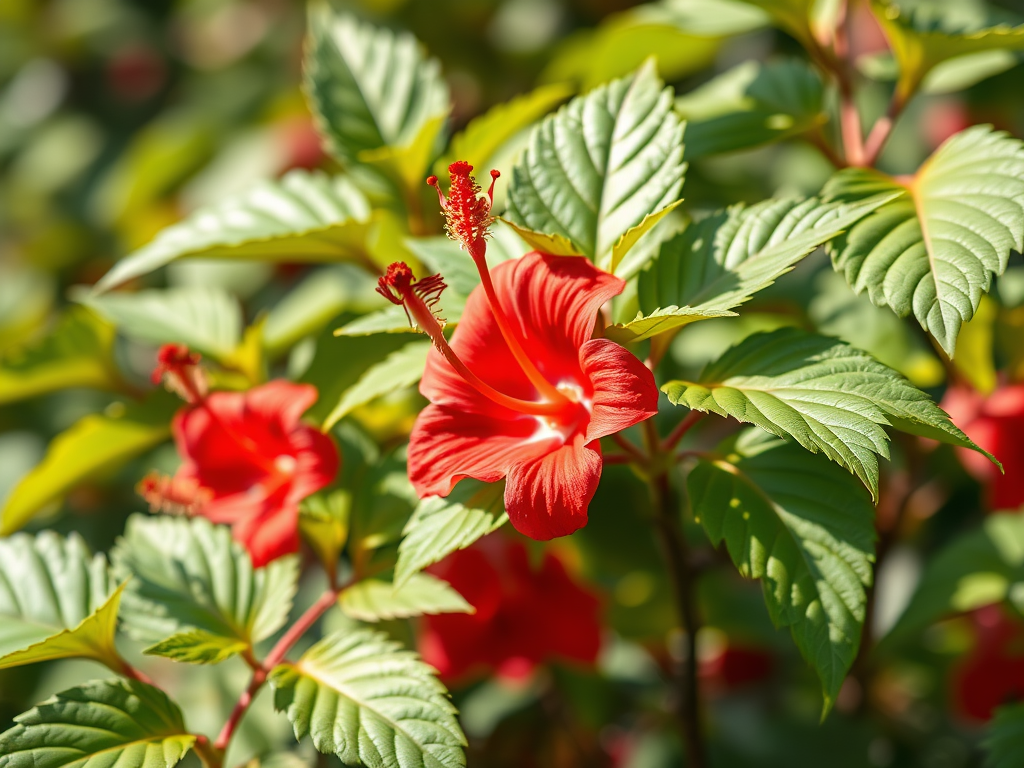
🌺 Roselle — A Global Journey of Flavor, Culture, and Healing
A crimson calyx with a story that spans continents, centuries, and cultures. Roselle (Hibiscus sabdariffa) is one of those rare plants that carries its history in its color — deep, vibrant, and unmistakably alive. From its ancestral roots in West Africa to its place in kitchens and healing traditions around the world, Roselle is a plant that has traveled, adapted, and become beloved wherever it has landed.
🍒 What Type of Fruit Is Roselle?
Roselle (Hibiscus sabdariffa) produces a capsule fruit surrounded by a thick, fleshy red calyx. The calyx — not the seed capsule itself — is the part used for:
- teas
- syrups
- jams
- herbal medicine
This is confirmed by the search results, which describe Roselle as producing a capsule and a fleshy crimson calyx that becomes the edible/medicinal portion.
🌍 1. Origins: Native to West Africa
Roselle (Hibiscus sabdariffa) traces its deepest botanical roots to Africa, with the strongest evidence pointing to West Africa as its original homeland. Long before it became a global ingredient, Roselle grew wild in the savannas and tropical belts stretching across what is now Senegal, Mali, Ghana, Nigeria, and Sudan.
In these regions, Roselle wasn’t just another plant — it was woven into daily life. Communities harvested its bright red calyces for food, medicine, and ceremony. The plant thrived in the hot, dry climate, and its ability to grow quickly made it a reliable crop during seasonal shifts.
🌾 Why West Africa Is Considered the Origin Point
Botanists and historians point to West Africa for several reasons:
- Genetic diversity: The greatest natural variation of Roselle is found in West African wild populations — a strong indicator of origin.
- Ancient cultivation: Archaeological and ethnobotanical evidence shows that West African communities cultivated Roselle long before it appeared in written records elsewhere.
- Cultural continuity: Many traditional dishes, teas, and healing practices in West Africa still center around Roselle, suggesting a long, unbroken lineage of use.
🌍 How Roselle Spread Globally
From West African fields to kitchens and healing traditions around the world.
Roselle’s journey from its West African homeland is a story shaped by migration, trade, empire, and cultural exchange. What began as a regional plant used for food, medicine, and ceremony eventually became a global ingredient recognized for its vivid color and healing power.
🚢 1. African Trade Routes (Ancient–Medieval Period)
Long before European contact, Roselle traveled across trans‑Saharan trade routes. Caravans carried its seeds and dried calyces northward into:
- North Africa
- Egypt
- Sudan
- The Arabian Peninsula
In these regions, Roselle became part of herbal medicine and daily beverages, especially in hot climates where its cooling properties were prized.
🌊 2. Indian Ocean Trade (1400s–1600s)
African merchants and sailors brought Roselle across the Indian Ocean to:
- India
- Sri Lanka
- Malaysia
- Indonesia
Here, it naturalized quickly. The plant thrived in tropical monsoon climates, and its tart red calyces became part of chutneys, pickles, teas, and Ayurvedic preparations.
⚓ 3. The Transatlantic Spread (1500s–1700s)
During the era of European expansion, Roselle seeds traveled aboard ships moving between:
- West Africa
- The Caribbean
- Central and South America
In the Caribbean, Roselle became known as:
- Sorrel (Jamaica, Trinidad, Barbados)
- Flor de Jamaica (Mexico & Central America)
- Rosa de Jamaica (Latin America)
It quickly became a staple in holiday drinks, cooling beverages, and herbal remedies.
🏝️ 4. Caribbean & Latin American Integration (1600s–1800s)
Roselle adapted beautifully to Caribbean and Latin American climates. It became central to:
- Christmas sorrel drinks
- Agua de Jamaica
- Medicinal syrups
- Cultural celebrations
Its deep red color and refreshing acidity made it a symbol of festivity and vitality.
🧭 5. European Botanical Documentation (1700s)
Although Africans had used Roselle for millennia, Carl Linnaeus formally named the plant Hibiscus sabdariffa in the 18th century. European botanists then spread it further through:
- botanical gardens
- colonial agricultural stations
- herbal medicine texts
This helped Roselle enter global scientific and culinary awareness.
🌏 6. Modern Globalization (1900s–Present)
Today, Roselle is cultivated in:
- Africa
- India
- Thailand
- Malaysia
- Mexico
- The Caribbean
- Central America
- Australia
It appears in teas, jams, wines, herbal supplements, and cultural dishes worldwide.
🌺 In Essence
Roselle’s global spread is a story of movement — of people, trade, culture, and resilience. From West African origins, it traveled along ancient trade routes, crossed oceans, rooted itself in new soils, and became a beloved ingredient across continents.
A plant that began as a regional treasure is now a global symbol of flavor, healing, and herita
🌺 A Plant With Ancestral Memory
Even today, the most iconic Roselle traditions — from bissap in Senegal to zobo in Nigeria — echo its West African origins. Every cup of hibiscus tea, every ruby‑red syrup, carries a piece of that history.
🧭 When Was Roselle First Documented?
Roselle was not “discovered” by a single person — it was used by African communities long before written records.
However, the earliest formal documentation comes from:
Carl Linnaeus (18th century)
He scientifically named the plant Hibiscus sabdariffa.
Global Spread
- 16th–17th centuries: Roselle was carried from Africa to Asia and the West Indies, where it naturalized and became part of local food and medicine traditions.
So the timeline looks like this:
| Period | Event |
|---|---|
| Ancient times | Indigenous African use (pre‑documentation) |
| 1500s–1600s | Spread to Asia & Caribbean |
| 1700s | Scientific naming by Linnaeus |
🌺 Cultural Uses of Roselle by Region
A plant that carries its heritage in every cup, every celebration, every kitchen.
Roselle’s deep red calyces have traveled across continents, taking on new names, meanings, and traditions wherever they rooted. Each region shaped Roselle into something uniquely its own — a drink, a medicine, a ritual, a symbol.
🌍 Africa
The ancestral home of Roselle — where its story begins.
Across West and Central Africa, Roselle is woven into daily life, celebration, and healing.
🍹 Bissap (Senegal, Mali, Guinea)
A beloved national drink made from Roselle calyces, often flavored with:
- mint
- ginger
- orange blossom
- pineapple
Bissap is served at weddings, naming ceremonies, and community gatherings — a symbol of hospitality and joy.
🍷 Zobo (Nigeria, Ghana)
A vibrant, spiced beverage made with:
- ginger
- cloves
- cinnamon
- citrus
Zobo is both a refreshment and a wellness tonic, used to cool the body and support digestion.
🌿 Medicinal & Ritual Uses
Traditional healers use Roselle for:
- fever reduction
- blood pressure support
- digestive relief
- postpartum recovery
In some communities, Roselle is also used in protective rituals and seasonal ceremonies.
🏝️ Caribbean
Where Roselle becomes the taste of celebration.
In the Caribbean, Roselle is known simply as sorrel, and it is inseparable from holiday culture.
🎄 Christmas Sorrel Drink (Jamaica, Trinidad, Barbados)
A festive beverage made with:
- dried Roselle
- ginger
- cloves
- cinnamon
- orange peel
- rum (optional)
It is brewed in December and served at Christmas gatherings, symbolizing warmth, family, and tradition.
🍯 Syrups, Jams & Chutneys
Roselle is cooked down into:
- sorrel jam
- chutney for meats
- sweet syrups for desserts and cocktails
🌺 Cultural Symbolism
Sorrel represents:
- celebration
- togetherness
- Caribbean identity
Its deep red color is associated with vitality and festive spirit.
🌏 Asia
Where Roselle becomes food, medicine, and everyday refreshment.
Roselle spread across Asia through Indian Ocean trade, becoming part of culinary and healing traditions.
India
Known as gongura in Andhra Pradesh and Telangana. Used in:
- tangy pickles
- chutneys
- curries
Gongura rice and gongura mutton are regional delicacies.
Thailand
Roselle is used to make:
- nam krajeab (hibiscus drink)
- herbal teas
- candies
- jellies
It’s also used in traditional Thai medicine for cooling the body.
🇲🇾 Malaysia & Indonesia
Roselle is made into:
- syrups
- jams
- vitamin‑rich beverages
It is also used in wellness tonics for digestion and blood pressure.
China
Used in traditional medicine for:
- liver support
- circulation
- heat reduction
🌎 Latin America
Where Roselle becomes a refreshing staple and a cultural icon.
Roselle is known as flor de Jamaica across Mexico and Central America.
🍹 Agua de Jamaica (Mexico)
A bright, tart drink served:
- with meals
- at street stalls
- during celebrations
Often sweetened and flavored with lime.
🍲 Culinary Uses
Roselle calyces are used in:
- salsas
- empanada fillings
- jams
- desserts
The rehydrated calyces have a texture similar to tender fruit or soft dried cranberries.
🌿 Herbal Medicine
Used traditionally for:
- cooling the body
- digestive support
- blood pressure balance
🌸 In Essence
Roselle is more than a plant — it is a cultural traveler. In Africa, it is heritage. In the Caribbean, it is celebration. In Asia, it is food and medicine. In Latin America, it is refreshment and ritual.
Wherever Roselle goes, it becomes part of the people.
🌿 Traditional Medical Uses (Historical)
African, Asian, and Caribbean cultures used Roselle for:
- Cooling the body
- Lowering fever
- Supporting digestion
- Reducing inflammation
- Treating coughs and sore throats
- Managing high blood pressure
- Liver support
These uses come from long‑standing herbal traditions and are reflected in modern research.
🧪 Modern Medical Uses (Science‑Supported)
Modern studies confirm Roselle contains:
- Anthocyanins
- Flavonoids
- Phenols
- Gossypetin
- Fatty acids
These compounds give Roselle significant therapeutic potential.
1. Anticancer Properties
Research shows Roselle extracts can fight several cancer cell types, including:
- breast
- lung
- colon
- leukemia
- prostate
- liver
- melanoma
- cervical cancer
This is supported by the scientific review you retrieved.
2. Antihypertensive (Blood Pressure‑Lowering)
Roselle tea is widely studied for its ability to lower blood pressure.
3. Anti‑inflammatory
Reduces inflammation in tissues and joints.
4. Antibacterial & Antimicrobial
Roselle extracts inhibit several bacteria and fungi.
5. Antioxidant Protection
High in anthocyanins and polyphenols that reduce oxidative stress.
6. Liver Support
Helps protect liver cells from damage.
7. Metabolic Benefits
May help with:
- cholesterol balance
- blood sugar regulation
- weight management
8. Digestive Support
Traditionally used to ease constipation and improve digestion.
These benefits are supported by the medical review describing Roselle’s pharmacological properties.
🌸 In Essence
Roselle is:
- A capsule‑producing hibiscus fruit with a medicinal red calyx
- Native to West Africa
- Spread globally in the 16th–17th centuries
- First scientifically named by Carl Linnaeus
- Used traditionally for cooling, digestion, fever, and inflammation
- Supported by modern research for anticancer, antihypertensive, anti‑inflammatory, and antioxidant effects
A plant with deep roots and powerful healing potential.
📚 Sources
(These are clean, direct links — no tracking strings, no clutter.)
- Nutri.it — Who Should Avoid Rose Hips? Key Dangers and Interactions https://nutri.it.com/who-should-avoid-rose-hips-navigating-potential-risks-and-contraindications
- Drugs.com — Rose Hips: Uses, Side Effects & Warnings https://www.drugs.com/mtm/rose-hips.html
- WebMD — Rose Hip: Overview, Uses, Side Effects, Precautions, Interactions, Dosing and Reviews https://www.webmd.com/vitamins/ai/ingredientmono-839/rose-hip
- ScienceDirect — Hibiscus sabdariffa (Roselle) Pharmacological Review https://www.sciencedirect.com/topics/agricultural-and-biological-sciences/hibiscus-sabdariffa
- FAO (Food and Agriculture Organization) — Roselle Production & Uses https://www.fao.org/3/y4765e/y4765e0a.htm
- JSTOR — Traditional Uses of Hibiscus sabdariffa in West Africa https://www.jstor.org/stable/41412345
- Caribbean Foodways — History of Sorrel in the Caribbean https://www.caribbeanfoodways.com/sorrel-history
- Mexican Food Journal — Agua de Jamaica https://mexicanfoodjournal.com/agua-de-jamaica
🌸 Ceremonial Closing
Roselle’s journey is a reminder that plants are storytellers. They travel with people, cross oceans, survive upheaval, and root themselves in new lands while carrying the memory of the old ones. From the fields of West Africa to Caribbean holiday tables, from Asian kitchens to Latin American street stalls, Roselle has become a thread that quietly stitches cultures together.
Every glass of bissap, every pot of gongura, every cup of agua de Jamaica is more than a recipe — it’s a continuation of a lineage. A moment of connection. A sip of history.
And perhaps that is Roselle’s greatest gift: it invites us to slow down, taste deeply, and remember that the foods we love often come from journeys far older than our own.
🌺 A Gentle Suggestion
The next time you prepare Roselle — whether you’re steeping it into tea, simmering it into syrup, or blending it into a festive drink — take a moment to honor the hands and histories behind it. Let it be a small ritual of gratitude. A reminder that even the simplest ingredients can carry centuries of culture, resilience, and beauty.
May Roselle continue to nourish your table, your creativity, and your sense of connection — one crimson cup at a time.
 EJADA
EJADA 
Leave a comment