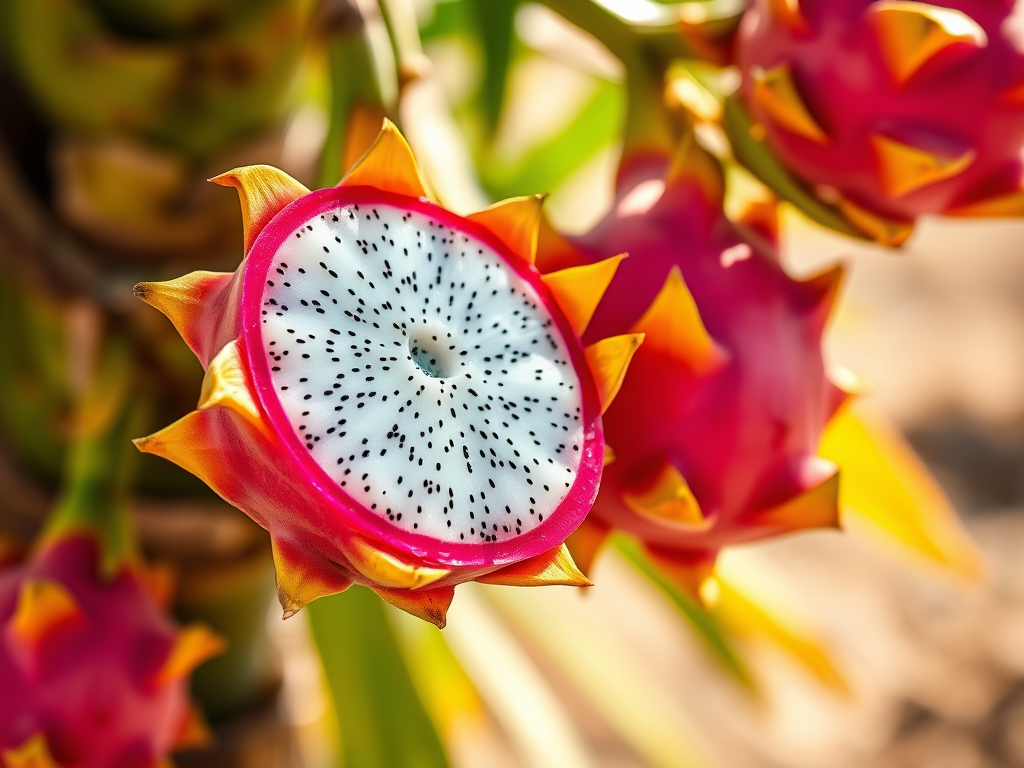
Pitaya
Pitaya refers to the edible fruits produced by several columnar or tree-like cacti in the genus Stenocereus and closely related taxa. Pitaya fruits are distinct from the commonly called dragon fruit (Selenicereus), and the two names should not be conflated.
Origins and early history
Spread beyond the Americas: The fruit was introduced to Indochina by the French around 1860 and later became widely cultivated across Southeast Asia, East Asia, the Caribbean, Australia, and other tropical and subtropical regions12.t.
Native range: Pitaya is indigenous to southern Mexico and the Pacific coasts of Guatemala, Costa Rica, and El Salvador1.
Early use and discovery: Indigenous peoples of the Americas consumed and cultivated various pitaya species for centuries; some arid-region Stenocereus species (sour pitayas) were important local food sources for groups such as the Seri1.
Common varieties and appearance
- Stenocereus species: Often called pitaya; many are sour or tangy and adapted to arid zones.
- Selenicereus (Hylocereus) species: Often called dragon fruit; sweet types include pink-skinned with white flesh, pink-skinned with red flesh, and yellow-skinned with white flesh varieties.
🌵 Discovery and Botanical Naming of Pitaya (Genus Stenocereus)
Indigenous Origins and Early Human Use
- Native habitat: Pitaya fruits originate from arid and semi-arid regions of southern Mexico, Guatemala, and parts of Central America.
- Indigenous stewardship: Long before European contact, Indigenous peoples such as the Seri of northwestern Mexico cultivated and foraged pitaya species like Stenocereus gummosus (pitaya agria) and Stenocereus thurberi (pitaya dulce) as seasonal staples.
- Ceremonial and ecological roles: These fruits were not only nutritional but also embedded in seasonal rituals, ecological knowledge, and oral traditions.
🧭 European Encounter and Scientific Classification
- Colonial botanical surveys: During the 17th–19th centuries, European naturalists exploring the Americas began documenting cactus species, including pitaya-bearing varieties.
- Taxonomic placement: The genus Stenocereus was formally described in the 20th century, distinguishing these columnar cacti from other fruiting genera like Selenicereus.
- Species naming: Botanists assigned Latin binomials based on morphology, geography, and flowering traits. For example:
- Stenocereus thurberi — named for its organ pipe-like structure and sweet fruit.
- Stenocereus griseus — dagger cactus, known for its May-season fruiting.
- Stenocereus queretaroensis — native to Querétaro, Mexico, with locally revered fruit.
🧬 Botanical Characteristics
- Genus traits: Stenocereus species are typically tall, ribbed, and columnar with nocturnal blooms and fruit that ripens in dry seasons.
- Pollination ecology: Flowers open at night and are pollinated by bats and moths, a trait that links them to desert rhythms and nocturnal biodiversity.
- Fruit morphology: Pitaya fruits from Stenocereus are often more sour, juicy, and aromatic than their dragon fruit cousins, with thicker skins and stronger flavor profiles.
🌵 The Pitaya Festival A Legacy of Desert Ceremony
Seasonal timing: The ritual began when the cactus flower bloomed and dropped — signaling that the Pitaya fruit was forming. By May through July, the fruit ripened to the size of a tennis ball, and the Pitaya Festival commenced.
Communal gathering: Tribes traveled across desert regions to gather and feast together, reinforcing social bonds and intertribal unity. It was a time of joyful abundance in an otherwise austere landscape.
Fermentation and feasting: The fruit’s juice was often fermented, and the celebration included dancing, courtship, and storytelling. Clothing was optional, and inebriation sometimes led to spontaneous matrimony — a ritual of renewal and lineage.
Ecological reverence: The flower of the Pitaya, which blooms for only one night, was seen as a symbol of ephemeral beauty and sacred timing. Its intoxicating aroma attracted nocturnal pollinators like bats, reinforcing the fruit’s role in desert biodiversity.
Second harvest ritual: After consuming the fruit whole (seeds and all), the Cochimí would defecate in designated spots, later gathering and drying the feces to reclaim the seeds. These were washed and,ground into meal — a practice the Jesuits called the “second Pitaya harvest,” though they were repulsed by it.
Pitaya: Legacy of a Lost Baja Culture A blossom of history @ San Diego Red
A Sacred Fruit , the PITAYA@ lifestyles villa
🌿 Legacy-Rich Transition: From Ancestral Wisdom to Scientific Naming
Pitaya: A Legacy of Nourishment and Desert Ceremony
Editorial Resonance (intro block): “Before Pitaya was cataloged in Latin or indexed in herbariums, it thrived in the hands of desert stewards — Indigenous communities who knew its rhythms not by taxonomy, but by taste, bloom, and season…”
Before Pitaya was ever cataloged in Latin or indexed in herbariums, it thrived in the hands of desert stewards — Indigenous communities who knew its rhythms not by taxonomy, but by taste, bloom, and season. The fruit was not “discovered” in the colonial sense; it was already revered, harvested with gratitude, and woven into ecological memory.
As European botanists arrived with notebooks and nomenclature, they encountered a fruit already embedded in ceremony. What they named Stenocereus thurberi, locals called by names that echoed through generations — names tied to migration, rainfall, and ritual.
This transition — from oral tradition to Latin binomial — is not a replacement but a layering. Scientific rigor adds structure, yes, but the legacy lives in the soil, in the hands that still harvest pitaya at dusk, in the bats that pollinate its nocturnal blooms.
To honor this fruit is to honor both: the ancestral wisdom that first knew its gifts, and the botanical clarity that now protects its uniqueness.
Traditional and contemporary uses
Food: Fresh eating, dried or fermented preparations, preserves, and blended beverages.
Beverage and fermentation: Local traditional fermentations and alcoholic beverages have used pitaya in regions where it is abundant.
Cultural: Seasonal foraging and ceremonial uses where pitaya trees are part of local ecosystems.
Agricultural: Locally cultivated and managed in arid‑land agroecosystems for subsistence and local markets.
Nutrition and health benefits
Calories and macronutrients: Low to moderate in calories and sugars relative to many tropical fruits.
Fiber: A significant source of dietary fiber that supports digestion and satiety.
Vitamins and minerals: Contains vitamin C and modest amounts of B vitamins, iron, calcium, and phosphorus depending on species and soil.
Antioxidants and phytonutrients: Many pitaya species contain polyphenols and pigments with antioxidant activity that reduce oxidative stress.
Prebiotic potential: Fibers and oligosaccharides in pitaya may support beneficial gut bacteria and improve gut health markers.
Practical dietary role: Hydrating, nutrient‑dense snack that contributes fiber and micronutrients without high calorie load.
🌿 Health Benefits of Pitaya (Genus Stenocereus)
💧 1. Hydration and Electrolyte Balance
- High water content (up to 90%) makes Pitaya a natural hydrator — ideal for desert climates and post-fasting rituals.
- Contains potassium and magnesium, supporting fluid balance and muscle function.
🌾 2. Digestive Support
- Rich in dietary fiber, especially from the seeds, which aids in gut motility and prebiotic nourishment.
- Traditionally consumed as a cooling digestive tonic during hot months.
🛡️ 3. Antioxidant Protection
- Contains betalains, flavonoids, and vitamin C — compounds that help neutralize free radicals and reduce oxidative stress.
- These antioxidants may support skin health, immune resilience, and cellular repair.
❤️ 4. Cardiovascular Wellness
- The seeds are a source of healthy fats, including linoleic acid, which may help regulate cholesterol levels.
- Potassium supports blood pressure regulation and heart rhythm.
🧠 5. Cognitive and Mood Support
- Magnesium plays a role in mood regulation, sleep quality, and nerve function.
- The fruit’s vibrant color and ceremonial use may also contribute to emotional uplift and sensory joy.
🧘 6. Anti-Inflammatory Potential
- Betalains and polyphenols in Pitaya may help reduce inflammation — supporting joint health and metabolic balance.
🧬 7. Skin and Hair Nourishment
- Seed oil, rich in fatty acids, has been used in traditional topical applications for moisturizing and soothing sun-exposed skin.
- Vitamin C supports collagen synthesis and skin elasticity.
Nutritional Profile of Pitaya (per 100g)
| utrient | Approximate Value | Editorial Resonance |
|---|---|---|
| Calories | 36–50 kcal | Light, hydrating nourishment — ideal for fasting breaks |
| Water | ~90% | Desert hydration, cellular renewal |
| Carbohydrates | 9–11 g | Slow-release energy with ceremonial pacing |
| Sugars | 7–8 g | Naturally occurring — tangy and joyful |
| Dietary Fiber | 3 g | Gut support, digestive clarity |
| Protein | 1–2 g | Modest, but meaningful in ritual pairings |
| Fat | 0.1–0.6 g | Mostly from seeds — rich in linoleic acid |
🌿 Vitamin & Mineral Content
| Vitamin/Mineral | Approximate Value | Editorial Resonance |
|---|---|---|
| Vitamin C | 3–9 mg | Antioxidant protection, collagen support |
| Vitamin B1 (Thiamine) | 0.01–0.03 mg | Energy metabolism, ceremonial vitality |
| Vitamin B2 (Riboflavin) | 0.02–0.05 mg | Cellular repair, skin clarity |
| Vitamin B3 (Niacin) | 0.2–0.5 mg | Digestive health, emotional steadiness |
| Calcium | 6–10 mg | Bone support, grounding rituals |
| Iron | 0.2–0.4 mg | Blood oxygenation, endurance |
| Magnesium | 10–18 mg | Mood regulation, muscle ease |
| Potassium | 150–200 mg | Electrolyte balance, heart rhythm |
Ancestral Ingenuity and Ecological Intimacy
Before Pitaya was measured in calories or cataloged for export, it was revered in desert rituals — not just as food, but as a teacher.
Indigenous communities didn’t just eat the fruit. They fermented its juice for celebration, recovered its seeds from dried feces to create nutrient-rich meal, and used its fleeting flower as a metaphor for sacred timing. The Pitaya’s bloom — one night only — reminded them that beauty is brief, and nourishment must be honored.
Even the seed oil, rich in linoleic acid, found its way into skin rituals. And in the hottest months, Pitaya was a cooling digestive tonic — a hydrating balm for the gut and spirit.
These practices weren’t eccentric. They were ecological. They were ceremonial. They were wise.
To speak of Pitaya is to speak of legacy — of zero-waste rituals, nocturnal pollinators, and the sacred loop of consumption and renewal. We honor not just the fruit, but the hands that knew it before it had a Latin name.
Quick Distinctions
- Pitaya — commonly used for fruits of the genus Stenocereus in some regions; these are often called sour pitayas and grow in arid parts of the Americas.
- Pitahaya / Dragon fruit — most often used for fruits of the genus Selenicereus (formerly Hylocereus); these are the sweet, colorful dragon fruits widely cultivated in Southeast Asia and elsewhere.
- Everyday usage — people often call both kinds “pitaya,” “pitahaya,” or “dragon fruit” without distinguishing genus, so context, region, and appearance (sweet vs sour, skin color, flesh color) usually indicate which one is meant.
🍽️ Practical Culinary Notes: How to Eat, Store, and Select Pitaya Fruit
🥄 How to Eat
- Raw and reverent: Slice the fruit lengthwise and scoop out the flesh with a spoon. The texture is often juicy and slightly fibrous, with a tangy-sweet flavor that varies by species.
- Seed wisdom: The tiny black seeds are edible and rich in healthy fats. Some traditional preparations include grinding the seeds into meal or fermenting the pulp for beverages.
- Ceremonial pairings: Pair with cooling herbs like mint or basil, or serve alongside roasted agave or cactus paddles for a desert-inspired ritual plate.
- Fermented joy: In regions like Baja California, the juice was traditionally fermented into a mildly alcoholic drink — ideal for seasonal celebration or storytelling.
🍴 Culinary Uses of Pitaya Tangy, Sacred, and Ingenious
🧃 1. Fresh Consumption
- Traditional method: Split the fruit open and scoop out the juicy, tangy flesh with a spoon — often eaten communally during harvest festivals.
- Flavor profile: Tart, aromatic, and refreshing — more intense than dragon fruit, with watermelon-strawberry notes and desert minerality.
🧉 2. Fermented Beverages
- Ancestral ritual: Indigenous groups fermented Pitaya juice into mildly alcoholic drinks for seasonal celebrations, courtship, and storytelling.
- Modern echo: Can be adapted into probiotic tonics, shrub-style mixers, or desert-inspired cocktails.
🥣 3. Seed Meal and Recovery
- Second harvest ritual: After digestion, seeds were recovered from dried feces, washed, and ground into a nutrient-rich flour — used in porridges or ceremonial breads.
- Editorial note: This practice honored zero-waste cycles and digestive reverence, turning consumption into renewal.
🍨 4. Frozen and Dried Preparations
- Sun-dried slices: Used as trail food or stored for off-season nourishment.
- Frozen pulp: Blended into smoothies, sorbets, or ice creams — often paired with lime, agave, or coconut for balance.
🥗 5. Salads and Savory Pairings
- Desert fusion: Cubed Pitaya pairs beautifully with cactus paddles (nopales), roasted corn, or chili-lime dressings.
- Textural contrast: Its juicy flesh complements crunchy seeds and fibrous greens, adding hydration and tang.
🍵 6. Infusions and Teas
- Floral steeping: Though less common, Pitaya flowers (when available) can be steeped into aromatic teas — symbolizing ephemeral beauty and nocturnal bloom.
🍶 7. Seed Oil Applications
- Culinary drizzle: The oil, rich in linoleic acid, can be used sparingly as a finishing oil — especially in raw preparations or ceremonial tastings.
- Topical crossover: Though not strictly culinary, its skin-soothing properties blur the line between nourishment and care.
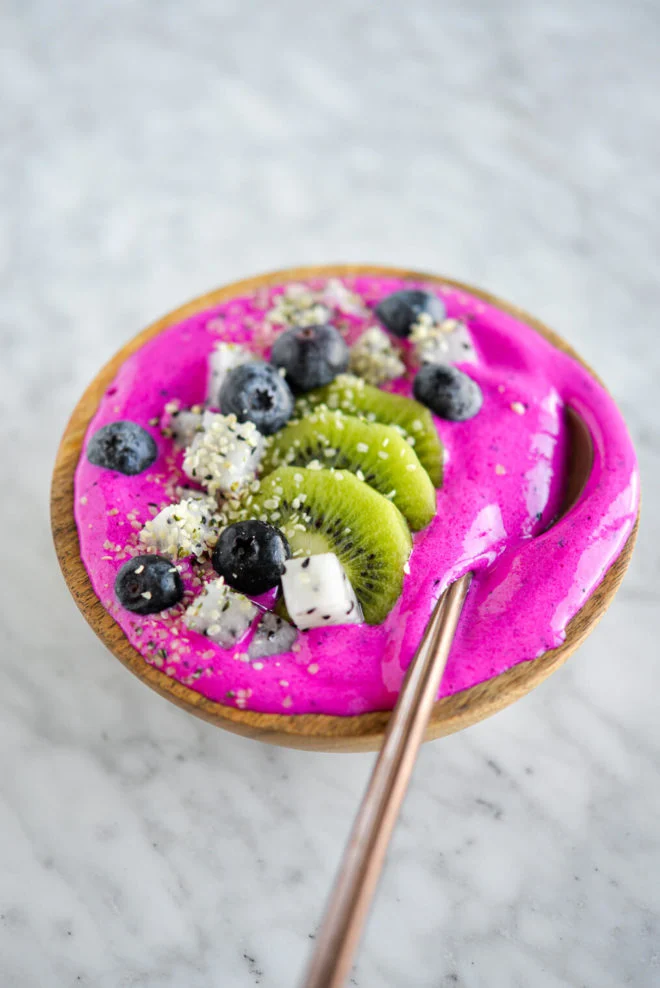
Easy Pitaya (Dragon Fruit) Smoothie Bowl Recipe @ FED AND FIT
- Pitaya – to make the base of this smoothie bowl, you’ll start with a 6 ounce frozen, unsweetened pitaya (dragon fruit) smoothie pack.
- Orange Juice – for the liquid and a nice tang, you’ll add a ½ cup of orange juice.
- Protein Powder – 1 scoop of protein powder provides an extra protein boost (collagen peptides pictured).
- Frozen Mango – a ½ cup of frozen mango makes for the creamiest consistency.
❄️ How to Store
- Whole fruit: Keep uncut Pitaya at room temperature if slightly underripe; once ripe, refrigerate to preserve freshness for 3–5 days.
- Cut fruit: Store in an airtight container in the fridge and consume within 48 hours to retain flavor and hydration.
- Preservation rituals: Pitaya pulp can be frozen for smoothies or dried for trail mixes. Indigenous communities sometimes sun-dried slices for off-season nourishment.
🛒 How to Select
- Skin signals: Choose fruit with vibrant, unblemished skin. Some Stenocereus species have thicker, ribbed skins with subtle color shifts — look for firmness and aromatic hints.
- Weight and feel: A ripe Pitaya feels heavy for its size and yields slightly to gentle pressure. Avoid overly soft spots or shriveled tips.
- Seasonal timing: In native regions, Pitaya ripens between May and July — aligning with traditional harvest festivals and ecological rhythms.
⚠️ Disclaimer: Who Should Avoid Pitaya
While Pitaya is generally safe and nourishing, certain individuals should exercise caution:
- Allergy-sensitive individuals: Rare cases of allergic reactions have been reported — including swelling, rash, or tingling sensations.
- Diabetics on medication: Pitaya may lower blood sugar levels. If combined with antidiabetic drugs, it could cause hypoglycemia.
- Pre-surgery patients: Pitaya may interfere with blood sugar control. Avoid consumption at least two weeks before surgery.
- Pregnant or breastfeeding individuals: There’s insufficient data on medicinal use during pregnancy. Stick to food amounts only.
This post is for informational and ceremonial purposes only. Always consult a qualified health professional before making dietary changes, especially if you have underlying conditions or are on medication.
🍒 Closing Ritual: A Strange Fruit, Revered
Pitaya is strange — not because it’s exotic, but because it defies easy categorization. It blooms for one night, thrives in arid silence, and nourishes with a tang that’s both wild and wise.
It was fermented for joy, recovered from feces for renewal, and honored in rituals that saw no waste, only return.
To call it “strange” is to admit that we’ve forgotten how to listen to fruit. To call it “revered” is to remember.
So we close this post not with a recipe, but with a ritual: A moment of gratitude for the desert, the bloom, the hands that knew this fruit before it had a name.
 EJADA
EJADA 
Leave a comment