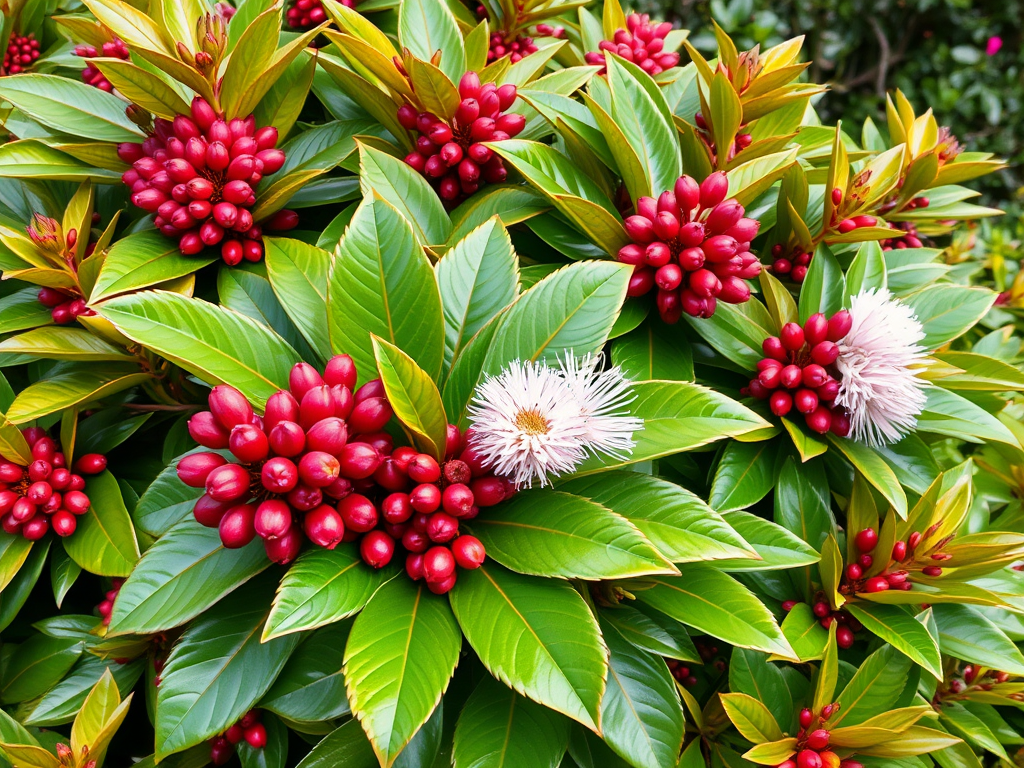
The Australian Lilly Pilly is a beloved native plant known for its lush foliage, vibrant new growth, and edible berries. It belongs to three genera—Syzygium, Acmena, and Waterhousea—and is commonly used in landscaping across Australia
🌱 Key Features
- Evergreen Beauty: Dense, glossy green leaves with colorful new growth in shades of bronze, pink, red, or copper.
- Edible Fruit: Produces red or purple berries that are often used in jams and preserves. Birds love them too!
- Fragrant Blooms: White or pink fluffy flowers appear in summer, adding ornamental charm.
- Hardy Performer: Thrives in a wide range of soil types and climates, including drought, frost, and coastal conditions.
- Versatile Use: Ideal for hedges, privacy screens, windbreaks, or ornamental garden features.
🌿 First Cultivation of Lilly Pilly: A Historical Glimpse
The earliest recorded encounter with a Lilly Pilly in Australia dates back to May 3, 1770, when Joseph Banks, the botanist aboard Captain Cook’s Endeavour, documented a fruit resembling cherries at Botany Bay. He referred to it as of the “Jambosa kind”—a term historically linked to the genus Syzygium, which includes Lilly Pilly species like Syzygium paniculatum.
📜 Timeline Highlights
- 1770: Joseph Banks collects and describes Syzygium paniculatum at Botany Bay.
- Early 1800s–1840s: Explorers like Captain Watkin Tench and Ludwig Leichhardt record multiple species of Eugenia (an older classification for Syzygium).
- Mid-20th Century onward: Lilly Pilly species become popular in Australian horticulture, especially for hedging and ornamental use.
While Indigenous Australians had long used Lilly Pilly berries as bush food, formal cultivation for landscaping and commercial fruit production began much later, likely in the 20th century, as native plant appreciation grew.
🌸 Popular Varieties
| Variety Name | Genus | Height | Notable Traits |
|---|---|---|---|
| Sublime | Acmena smithii | ~5m | Tough, drought-tolerant, minimal fruit |
| Backyard Bliss | Syzygium paniculata | ~6m | Fast-growing, psyllid-resistant |
| Goodbye Neighbours | Acmena smithii | ~6m | Bronze new growth, great for screening |
| Resilience | Syzygium australe | ~3m | Psyllid-resistant, compact hedge |
| Winter Lights | Syzygium | ~3m | Dwarf size, colorful new foliage |
🍒 Cultural and Culinary Notes: The Lilly Pilly Legacy
The Lilly Pilly isn’t just a pretty hedge—it’s a botanical bridge between Indigenous tradition, colonial history, and modern Australian cuisine. Here’s a deeper dive into its cultural and culinary significance:
🌏 Indigenous Heritage
- Bush Tucker Staple: Indigenous Australians have long harvested Lilly Pilly berries for their tart, aromatic flavor. They were eaten fresh or mashed into pastes and drinks.
- Medicinal Use: Some communities used the fruit and leaves for traditional remedies, including antiseptic washes and digestive aids.
- Seasonal Indicator: The fruiting of Lilly Pilly trees often signaled seasonal changes and guided foraging patterns.
🧭 Colonial Encounters
- Joseph Banks’ Journal (1770): The first recorded European tasting of Lilly Pilly fruit occurred at Botany Bay. Banks described it as “much in colour and shape resembling cherries… light acid… eaten with much pleasure”.
- Early Settler Use: Colonists adopted the fruit into their diets, often using it in jams and jellies. Its resilience made it a reliable backyard crop.
🍽️ Modern Culinary Applications
- Jams & Jellies: The berries’ tartness pairs beautifully with sugar, creating vibrant preserves.
- Chutneys & Sauces: Lilly Pilly chutney adds a native twist to cheese boards and grilled meats.
- Fermented Drinks: Some artisan producers experiment with Lilly Pilly kombucha and bush cordials.
- Desserts: The fruit’s color and acidity make it ideal for syrups, sorbets, and compotes.
🌿 Flavor Profile
- Taste: Crisp, pithy, mildly acidic, and aromatic—some varieties are more palatable than others.
- Color Range: Berries vary from white to pink, red, and deep purple depending on species.
- Texture: Fleshy and juicy, often with a single seed.
🌏 Global Connections
In Southeast Asia and India, related species are known as Jambos or Rose Apples, and are widely consumed.
The name “Jambosa” used by Banks links Lilly Pilly to the broader Syzygium genus, which includes culinary staples across tropical regions.
Long before the Lilly Pilly adorned suburban hedges and gourmet platters, it thrived in the wild heart of Australia, cherished by Indigenous communities as both nourishment and medicine. Its glossy leaves whispered seasonal secrets, while its tart berries offered bursts of flavor and healing.
When Joseph Banks first tasted its fruit at Botany Bay in 1770, he likened it to cherries—lightly acidic and surprisingly delightful. Today, the Lilly Pilly bridges past and present, its vibrant foliage and edible jewels embodying a legacy of resilience, beauty, and cultural depth. Whether simmered into jam or admired in bloom, it remains a living testament to Australia’s botanical soul.
🍒 Culinary
In the kitchens of bush tucker tradition and modern Australian gastronomy alike, Lilly Pilly berries have earned their place as tart little treasures. Their flavor—bright, musky, and reminiscent of cranberries kissed with clove—makes them a natural fit for jams, chutneys, and sauces that dance between sweet and savory.
Indigenous communities once gathered them fresh, drying or preserving the fruit for long journeys, while today’s chefs pickle them for punchy garnishes or simmer them into jewel-toned jellies. Whether folded into apple-like desserts, infused into cordials, or blitzed into vibrant smoothies, Lilly Pilly’s versatility bridges ancestral wisdom with contemporary flair
Here’s a simple yet flavorful recipe that showcases Lilly Pilly’s tart-sweet charm in a bush-to-table style:
🍓 Lilly Pilly & Apple Chutney Recipe
Ingredients:
- 2 cups fresh Lilly Pilly berries (washed and pitted)
- 2 medium apples (peeled and diced)
- 1 small red onion (finely chopped)
- 1/2 cup apple cider vinegar
- 1/3 cup brown sugar
- 1 tsp grated ginger
- 1/2 tsp ground cinnamon
- Pinch of salt
- Optional: 1 small chili (finely chopped, for heat)
Instructions:
- In a saucepan over medium heat, combine all ingredients.
- Stir until sugar dissolves, then reduce heat and simmer for 30–40 minutes.
- Mash gently with a spoon to break down the fruit, leaving some texture.
- Cook until thickened and glossy.
- Cool and store in sterilized jars. Keeps for up to 2 weeks refrigerated.
Serving Ideas:
- Spoon over grilled meats or roasted vegetables.
- Pair with sharp cheese and crackers.
- Use as a tangy spread in sandwiches or wraps.
🍬 Candied Lilly Pilly (Riberry)

buy here explore the taste
Ingredients:
500g ripe red Lilly Pilly berries (riberries)
4½ cups white sugar
½ cup corn syrup
Instructions:
Wash and dry the Lilly Pillies.
Place fruit in a heavy-based saucepan and just cover with water. Simmer gently until berries begin to look transparent.
Drain, reserving 1 cup of the cooking liquid.
Place berries in a single layer in a baking dish.
In the saucepan, combine reserved liquid with ½ cup sugar and all the corn syrup. Bring to a gentle boil for 1 minute.
Pour syrup over berries and refrigerate overnight.
Each day, pour off syrup, reheat with an additional ½ cup sugar, boil gently, and pour back over berries. Repeat daily until all sugar is used and syrup is thick.
On the final day, transfer berries into sterilized jars, pour over syrup, seal, and store for at least 3 weeks before using.
Tip: For a native twist on desserts, serve candied Lilly Pillies over panna cotta, ice cream, or folded into scones.
Vitamins in Lilly Pilly (Riberry)
Lilly Pilly berries—especially Syzygium luehmannii, also known as riberries—are nutritionally rich and offer a vibrant mix of vitamins and minerals. Here’s a breakdown of their key vitamin content and health benefits:
🍒 Vitamin Profile (per 100g of fruit)
| Nutrient | Amount | Benefit |
|---|---|---|
| Vitamin C | High | Boosts immunity, collagen production, skin health2 |
| Vitamin A | Trace | Supports vision and immune function |
| Fruit Acids (AHA) | Natural source | Promotes skin renewal and radiance |
💪 Other Nutritional Highlights
- Energy: 325 kJ
- Water: 82 g
- Protein: 0.9 g
- Carbohydrates: 18.4 g
- Fibre: 6.8 g
- Potassium: 250 mg
- Calcium: 100 mg
- Magnesium: 48 mg
- Iron: 0.9 mg
🌿 Health Benefits of Lilly Pilly
- Antioxidant-rich: Helps neutralize free radicals and reduce oxidative stress
- Anti-inflammatory: Supports joint and heart health
- Astringent properties: Tightens skin and improves texture3
- Antibacterial & antifungal: Traditionally used for wound healing and oral health
1. Rich in Vitamin C
- Boosts immune function
- Promotes collagen production for youthful skin
- Helps fight infections and supports wound healing
2. Antioxidant Power
- Neutralizes free radicals
- Reduces oxidative stress linked to chronic diseases
- Supports overall cellular health
3. Anti-Inflammatory Effects
- May help reduce inflammation associated with arthritis, heart disease, and diabetes
- Supports recovery from minor injuries or infections
4. Natural Astringent
- Tightens skin and minimizes pores
- Helps reduce excess oil and blemishes
- Often used in skincare products for its firming effects
5. Antibacterial and Antifungal Properties
- Traditionally used by Aboriginal Australians for its healing properties
- May help prevent minor skin infections or irritations
6. Digestive Support
- High in dietary fiber (6.8g per 100g)
- Promotes regular bowel movements and gut health
7. Skin and Hair Health
- Vitamin C and antioxidants contribute to radiant skin and strong hair
- May help reduce signs of aging and improve texture
8. Oral Health
- Astringent and antibacterial qualities may support gum health and fresh breath
9. Nutritional Profile Highlights
| Nutrient | Amount per 100g |
|---|---|
| Energy | 325 kJ |
| Vitamin C | High |
| Fiber | 6.8 g |
| Potassium | 250 mg |
| Calcium | 100 mg |
| Iron | 0.9 mg |
⚠️ Precautions and Considerations
1. Allergic Reactions
- Rare, but possible—especially for those sensitive to tropical fruits or Syzygium species
2. Overconsumption
- High fiber may cause digestive discomfort if consumed in large quantities
3. Culinary Use
- Tart flavor may not suit all palates; often balanced with sweeteners or other ingredients
- Best consumed with other foods to enhance taste and reduce acidity
4. Storage
- Fresh berries last up to two weeks refrigerated
- Juice can be frozen; dried berries store well in airtight containers
🌟 Final Thought
From its antioxidant-rich berries to its traditional healing legacy, Lilly Pilly is more than just a vibrant bush—it’s a botanical bridge between wellness and heritage. Whether infused into skincare, stirred into chutneys, or celebrated in native gardens, it invites us to reconnect with nature’s quiet brilliance.
“In every berry lies a story—of resilience, renewal, and the wild wisdom of the land.”
 EJADA
EJADA 
Leave a comment