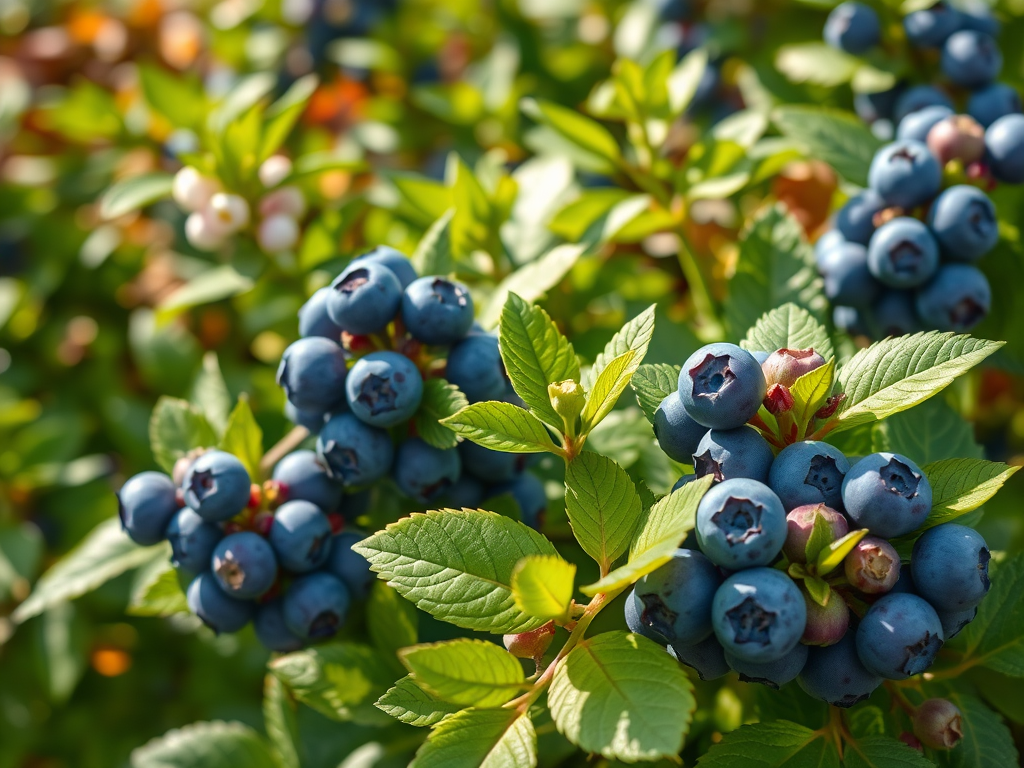
The Highbush Blueberry (Vaccinium corymbosum) is renowned for its large, sweet, antioxidant-rich berries, its ornamental beauty, and its cultural and ecological significance. Here’s a breakdown of what it’s known for and its historical roots:
🫐 What the Highbush Blueberry Is Known For
Nutritional Powerhouse: Rich in antioxidants, especially anthocyanins, which give the berries their deep blue color and contribute to heart and brain health.
Culinary Versatility: Used in fresh eating, baking, jams, juices, and dried snacks.
Ornamental Appeal: Offers year-round beauty—white to pink bell-shaped flowers in spring, lush green foliage in summer, and vibrant red-orange leaves in fall.
Wildlife Support: Provides food for birds, mammals, and pollinators, such as bees and butterflies.
Cultural Importance: Used by Native American tribes for food, medicine, and dye. The berries were dried and stored for winter, and the plant was used in various traditional remedies.
🌱 First Cultivation and Regional Origins
| Aspect | Details |
|---|---|
| Native Range | Eastern North America—from Ontario and Nova Scotia to Florida and Texas |
| First Cultivated | 1908–1912 by Elizabeth Coleman White and USDA botanist Frederick Coville5 |
| First Commercial Harvest | 1916, in Whitesbog, New Jersey |
| Traditional Use | Cultivated and used by Native American tribes long before commercial farming |
White and Coville’s pioneering work in New Jersey marked the beginning of the modern blueberry industry, transforming a wild shrub into a staple of North American agriculture.
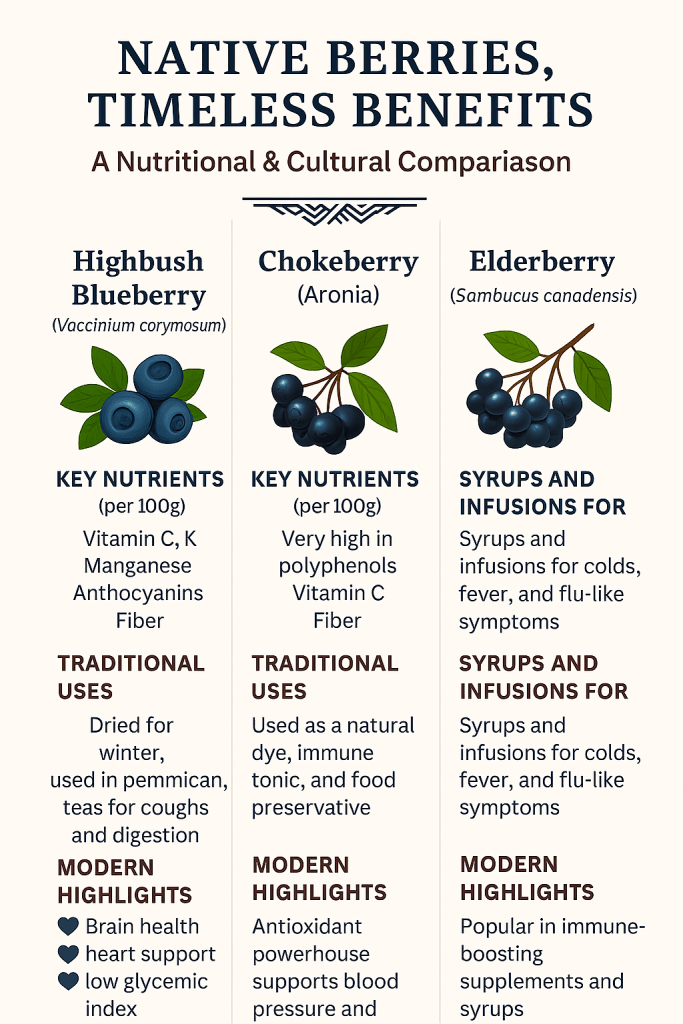
🧬 Proven Health Benefits of Highbush Blueberries
Highbush Blueberries (Vaccinium corymbosum) are more than just a sweet treat—they’re a scientifically recognized superfood. Rich in antioxidants, vitamins, and fiber, these berries offer a wide range of health benefits:
❤️ 1. Cardiovascular Health
Anthocyanins in blueberries help reduce oxidation of LDL (“bad”) cholesterol, a key factor in heart disease.
A 2024 review found that daily blueberry consumption improved blood flow and reduced blood pressure in adults.
🧠 2. Brain Function & Memory
Regular intake is linked to improved memory and cognitive performance, especially in older adults.
Anthocyanins reduce oxidative stress and inflammation in the brain, supporting long-term neurological health.
🛡️ 3. Immune Support
High levels of vitamin C and flavonoids boost the immune response and help protect against infections.
💪 4. Anti-Inflammatory & Antioxidant Power
Blueberries rank among the top antioxidant-rich fruits, helping neutralize free radicals and reduce chronic inflammation.
This may lower the risk of diseases like cancer, diabetes, and neurodegeneration4.
🩸 5. Blood Sugar Regulation
Despite their natural sweetness, blueberries have a low glycemic index and may help improve insulin sensitivity, making them an ideal choice for individuals with or at risk of type 2 diabetes.
🦴 6. Bone & Skin Health
Contain vitamin K, manganese, and copper, which support bone density and collagen production for healthy skin.
Modern science continues to validate what Indigenous communities have long known: Highbush Blueberries are a potent source of nourishment and healing.
🌿 From forest medicine to functional food, the Highbush Blueberry continues to prove its worth in both traditional healing and modern science.
Sources
- U.S. Highbush Blueberry Council – Research Overview
- Blueberry.org – Health Benefits
- Distinguished Nutrition Experts on Blueberry Science – USHBC
🍽️ From Forest to Table: A Modern Take on Traditional Blueberry Use
To bridge the past and present, consider adding a recipe block that reimagines a traditional Indigenous preparation using modern ingredients. Here’s a ready-to-paste section:
🔥 Dried Blueberry & Seed Trail Mix (Inspired by Pemmican)
Ingredients:
- ½ cup dried Highbush Blueberries
- ¼ cup roasted pumpkin seeds
- ¼ cup sunflower seeds
- 2 tbsp crushed walnuts or pecans
- 1 tbsp unsweetened shredded coconut (optional)
- Pinch of sea salt
- Optional: 1 tsp maple syrup or honey for a touch of sweetness
Instructions:
- Combine all ingredients in a bowl and mix well.
- Store in an airtight jar for up to 2 weeks.
- Enjoy as a nutrient-dense snack that echoes ancestral wisdom.
🌿 This trail mix honors the traditional use of dried berries and seeds while offering a modern, plant-based energy boost.
While Highbush Blueberries (Vaccinium corymbosum) are generally safe and beneficial for most people, there are a few groups who should consume them with caution or consult a healthcare provider before regular use:
⚠️ Groups Who Should Limit or Avoid Highbush Blueberries
| Group | Reason for Caution |
|---|---|
| People on Blood Thinners (e.g., Warfarin) | Highbush Blueberries are rich in vitamin K, which can interfere with blood clotting and reduce the effectiveness of anticoagulant medications. |
| Individuals with Salicylate Sensitivity | Blueberries naturally contain salicylates, compounds similar to aspirin. People with salicylate intolerance may experience headaches, rashes, or digestive issues. |
| Those with Oxalate Sensitivity or Kidney Stones | Blueberries contain moderate levels of oxalates, which can contribute to kidney stone formation in susceptible individuals. |
| People with Pollen-Food Allergy Syndrome (PFAS) | Some individuals allergic to birch pollen may experience oral allergy symptoms (itchy mouth, throat) when eating raw blueberries. |
| Infants under 12 months (for dried or whole berries) | Whole berries can pose a choking hazard and should be mashed or pureed for babies. |
🧬 Additional Considerations
Pesticide Residues: While blueberries are often praised for their health benefits, conventionally grown berries may carry pesticide residues. Washing thoroughly or choosing organic can reduce exposure. guidance-now-available/
⚠️ Who Should Be Cautious with Highbush Blueberries?
Drug Interactions: Blueberries may enhance the effects of antihypertensive drugs due to their natural blood pressure-lowering properties. Monitor blood pressure if consuming large amounts regularly.
🌿 Salicylate Sensitivity: Naturally occurring salicylates in blueberries may trigger reactions in sensitive individuals.
🧊 Kidney Stone Risk: Moderate oxalate levels may contribute to stone formation in susceptible people.
🌸 Pollen-Food Allergy Syndrome (PFAS): May cause oral allergy symptoms in those allergic to birch pollen.
👶 Infants Under 12 Months: Whole berries can be a choking hazard—serve mashed or pureed.
A Delicious Legacy of Health
From the forest floor to farmers’ markets, the Highbush Blueberry (Vaccinium corymbosum) carries a legacy that’s as rich in flavor as it is in history. Once dried and stored by Indigenous communities for survival and ceremony, today it’s celebrated as a global superfruit—bursting with antioxidants, brain-boosting compounds, and heart-healthy nutrients.
Whether you enjoy it fresh, dried, steeped in tea, or blended into a vibrant mocktail, the Highbush Blueberry offers a delicious and healthy bridge between tradition and innovation.
🌿 Let every bite remind you that nourishment can be both ancestral and modern—rooted in wisdom, and ripe with possibility.
 EJADA
EJADA 
Leave a comment