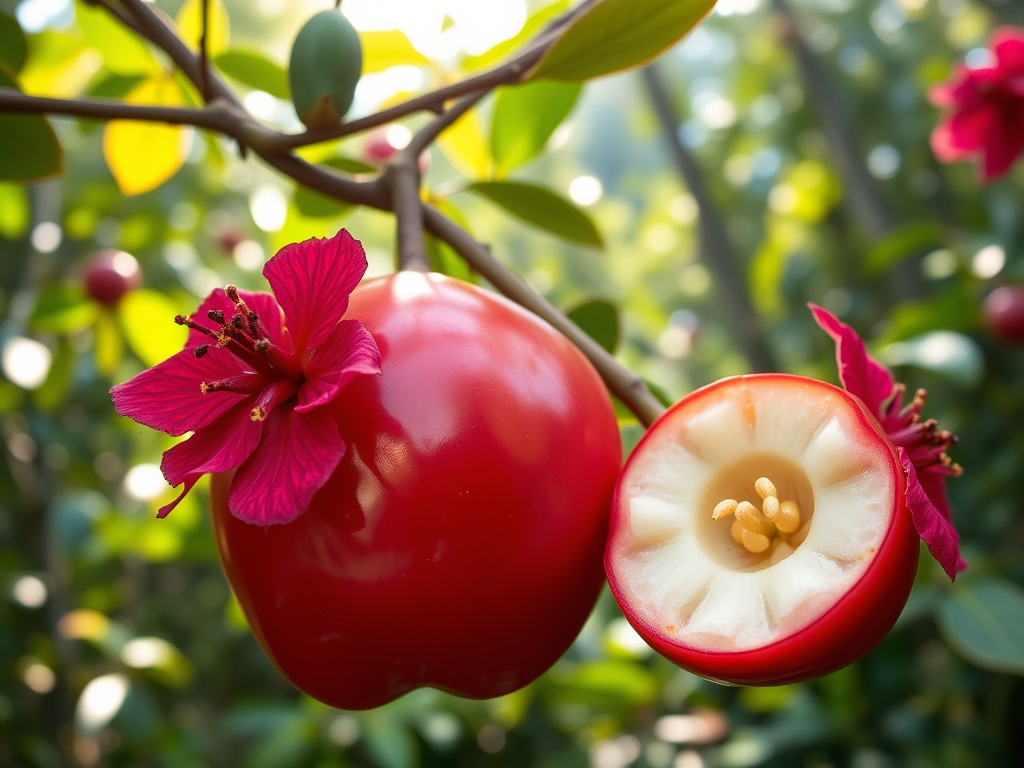
The Hawaiian Mountain Apple—ʻŌhiʻa ʻai in Hawaiian, Syzygium malaccense in science—is a stunning tropical fruit with deep cultural roots and a flavor as unique as its bloom.”
🌺 Charged by Canoes, Rooted in Rainforests: The Hawaiian Mountain Apple’s Journey 🌺
Before it ever graced backyard gardens in Hilo or burst into magenta fireworks on Big Island trunks, the Hawaiian Mountain Apple—ʻŌhiʻa ʻai—was a voyager’s treasure. Carried across the Pacific in double-hulled canoes, this bell-shaped beauty isn’t just a fruit; it’s a living legacy of Polynesian ingenuity, resilience, and reverence for the land.
Origins of the Name
Scientific Name – Syzygium malaccense: This reflects its Southeast Asian origin, particularly the Malay Peninsula, where it’s also known as Malay apple or rose apple.
“Mountain Apple”: This name likely comes from the tree’s preferred habitat—humid, elevated rainforest regions in places like Hilo, Waipiʻo Valley, and Puna on the Big Island. The fruit thrives in these lush, mountainous areas, hence the descriptor “mountain.”
“Apple”: Though not botanically related to apples, early Western settlers often used familiar European terms to describe unfamiliar tropical fruits. The crisp texture and mildly sweet flavor of the fruit may have reminded them of apples, leading to the name.
Hawaiian Name – ʻŌhiʻa ʻai:
ʻŌhiʻa refers to the tree, which is distinct from the native ʻōhiʻa lehua but shares a similar growth habit.
ʻAi means “to eat” in Hawaiian, so ʻŌhiʻa ʻai roughly translates to “edible ʻōhiʻa.”
🌺 Cultural and Historical Significance
Polynesian Canoe Crop: Brought by early settlers for food and wood, making it a part of the “canoe plants” that shaped Hawaiian agriculture
Traditional Uses: The wood was used for tools and construction; the fruit was eaten fresh or used in dyes
🌳 Tree Characteristics
Growth: Fast-growing, reaching up to 60 feet tall
Habitat: Thrives in humid, rainy areas like Hilo, Waipiʻo Valley, and Puna on the Big Island
Flowers: Deep magenta blossoms that resemble fireworks and bloom directly from the trunk and branches—a phenomenon called cauliflory
🍐 Fruit Description
| Feature | Description |
|---|---|
| Shape | Bell-shaped or heart-shaped |
| Skin | Glossy, waxy, and vibrant red (sometimes white) |
| Flesh | Creamy-white, soft yet crisp—similar to a ripe pear |
| Flavor | Mildly sweet, floral, and refreshing—often compared to a Comice pear |
| Seed | Large, dark, and inedible—similar to a date pit |
🍽️ Culinary Delights with Hawaiian Mountain Apple
🥗 Fresh & Simple
Eaten raw: Crisp and juicy, it’s often enjoyed straight from the tree, especially during summer harvests.
Salads: Sliced into tropical fruit salads with pineapple, papaya, and lime juice for a refreshing crunch.
Yogurt bowls & granola: Adds a floral sweetness and pear-like texture.
🍰 Sweet Treats
Mountain Apple Pie: A tropical twist on the classic, often paired with cinnamon and ginger.
Cakes & Tarts: Baked into spiced cakes or layered into fruit tarts for a light, fragrant flavor.
Jams & Jellies: A traditional way to preserve the fruit’s delicate sweetness.
Candy Apples: Coated in syrup for a Hawaiian take on a fairground favorite.
🍹 Beverages & Ferments
Smoothies: Blended with coconut milk, banana, and ginger for a hydrating tropical drink.
Juice & Cocktails: The juice adds a pear-like twist to sangria, apple martinis, or mocktails.
Fermented drinks: Used in traditional Hawaiian preparations for mildly alcoholic or probiotic beverages.
🍖 Savory Surprises
Sautéed with pork: Adds a sweet contrast to savory dishes, especially in island-style stir-fries.
Sandwiches & wraps: Thinly sliced for a crisp, fruity layer in vegetarian or grilled meat wraps.
🌺 Hawaiian Mountain Apple: A Tropical Healer Then and Now
Say aloha to the Hawaiian Mountain Apple—ʻŌhiʻa ʻai—a fruit that’s more than just a pretty face! With its glossy crimson skin and delicate floral crunch, this tropical gem has been nourishing bodies and spirits across centuries. But did you know it also carries a legacy of healing?
🌿 Traditional Healing: Wisdom of the Ancestors
Long before it became a backyard treat in Hilo, the Mountain Apple was cherished by Polynesian voyagers for its soothing and restorative properties:
Bark decoctions were brewed into teas to treat sore throats and respiratory ailments.
Leaves and bark were used in poultices to reduce swelling and skin irritations.
The fruit’s cooling nature made it a go-to for quenching thirst and easing fevers in tropical heat.
In Hawaiian tradition, healing wasn’t just physical—it was spiritual. Consuming ʻŌhiʻa ʻai was a way to connect with the land and honor the plants that sustained life.
🧪 Modern Insights: Nature Meets Science
Today, researchers are rediscovering what Indigenous knowledge has long known:
Antioxidant-rich: The vibrant red skin is packed with anthocyanins, which help fight inflammation and oxidative stress.
Hydrating and low-calorie: Perfect for heart health and weight-conscious diets.
Mild antimicrobial properties: Studies suggest extracts from the bark and leaves may inhibit certain bacteria.
And let’s not forget—it’s high water content and gentle sweetness make it a natural electrolyte booster after a long hike or beach day. 🏄♀️
🍃 From Canoe Crop to Superfruit
Whether it’s steeped in a healing tea or sliced into a fruit salad, the Hawaiian Mountain Apple continues to bridge tradition and innovation. It’s a reminder that the best medicine often grows quietly in our own backyards.
🧡 Nutritional Powerhouse: What’s Inside the ʻŌhiʻa ʻai?
The Hawaiian Mountain Apple isn’t just a tropical beauty—it’s a nutrient-rich gem that supports health from the inside out. Whether you’re sipping it in a smoothie or savoring it fresh, here’s what your body gets in every juicy bite:
🌿 Key Vitamins
Vitamin C – Boosts immunity, supports collagen production, and helps fight oxidative stress
Vitamin A – Supports eye health and skin regeneration
🧂 Essential Minerals
Potassium – Helps regulate blood pressure and supports heart health
Calcium – Strengthens bones and teeth
Magnesium – Supports muscle function and energy production
💧 Bonus Benefits
High water content – Naturally hydrating and refreshing, especially in tropical climates
Low in fat and calories – A guilt-free snack that satisfies without weighing you down
Rich in antioxidants – Especially anthocyanins in the red skin, which help reduce inflammation and protect cells
This fruit’s nutritional profile makes it a natural ally for modern wellness, echoing its traditional role as a healing food in Hawaiian and Polynesian culture
So next time you spot those magenta blossoms bursting from a tree trunk, smile—you’re looking at a living pharmacy wrapped in aloha. 🌸
Several credible research sources document the traditional and potential medicinal uses of the Hawaiian Mountain Apple (Syzygium malaccense). Here are some highlights from both ethnobotanical and scientific perspectives:
📚 Cited Research on Medicinal Uses
1. Ethnobotanical and Archaeological Evidence
A study published in Economic Botany and archived on JSTOR documents the use of mountain apple bark, flowers, and leaves in traditional Hawaiian medicine. It notes:
Bark teas were used for sore throats.
Leaves and flowers had topical applications for inflammation and skin issues.
The fruit was considered both nutritive and cooling, ideal for tropical fevers.
2. Prehistoric Use in Hawaiian Domestic Structures
A 1991 paper by Marshall Weisler, available on Academia.edu, explores archaeological finds of S. malaccense wood in ancient Hawaiian homes. It reinforces the plant’s cultural and medicinal significance, including its use in dyes and healing rituals.
3. Botanical and Forestry Documentation
The University of Hawaiʻi’s College of Tropical Agriculture and Human Resources (CTAHR) notes in its forestry guide that:
A tea brewed from the bark was used for sore throats.
The bark, flowers, and leaves were used in folk remedies across the tropics.
The fruit is nutrient-rich, with hydrating and mildly astringent properties.
🧪 Modern Scientific Interest
While more clinical studies are needed, researchers have begun exploring:
Antioxidant activity due to anthocyanins in the red skin
Antimicrobial potential of bark and leaf extracts
Hydration and electrolyte balance from the fruit’s high water and potassium content
Yes, Hawaiian Mountain Apples (Syzygium malaccense) are available in the U.S.—but mostly in Hawaii, and only seasonally in select mainland specialty markets. Here’s a breakdown of where and how you might find them:
🌴 Availability in the U.S. 36eddddddddddddddddddddf
🚚 On the U.S. Mainland
Very limited availability
Occasionally found at specialty tropical fruit markets or Hawaiian cultural festivals
Some small farms or nurseries may ship live trees or seeds, but not fresh fruit, due to perishability
Online nurseries may offer saplings for home growers in warm, humid climates (e.g., Florida and parts of California)
🏝️ In Hawaii
Widely available during the peak season (late summer through fall)
Found at farmers’ markets, and roadside stands, and sometimes shared between neighbors due to their abundance
Rarely sold in supermarkets because the fruit bruises easily and has a short shelf life
📦 Why It’s Hard to Find Elsewhere
The fruit’s thin, delicate skin makes it unsuitable for long-distance shipping
It ripens quickly and is best eaten within a few days of harvest
Most of the supply is consumed locally in Hawaii, where it’s considered a nostalgic favorite
Final Thought: Aloha from Afar
The Hawaiian Mountain Apple is more than just a fruit—it’s a story of voyaging, healing, and community wrapped in a glossy red glow. While it may not be readily available across the mainland U.S. (sorry, fruit lovers!), its spirit of aloha still travels far.
Whether you’re lucky enough to taste it fresh in Hilo or simply savor its story from afar, ʻŌhiʻa ʻai reminds us that some of the sweetest things in life are worth the journey. 🌺
 EJADA
EJADA 
Leave a comment