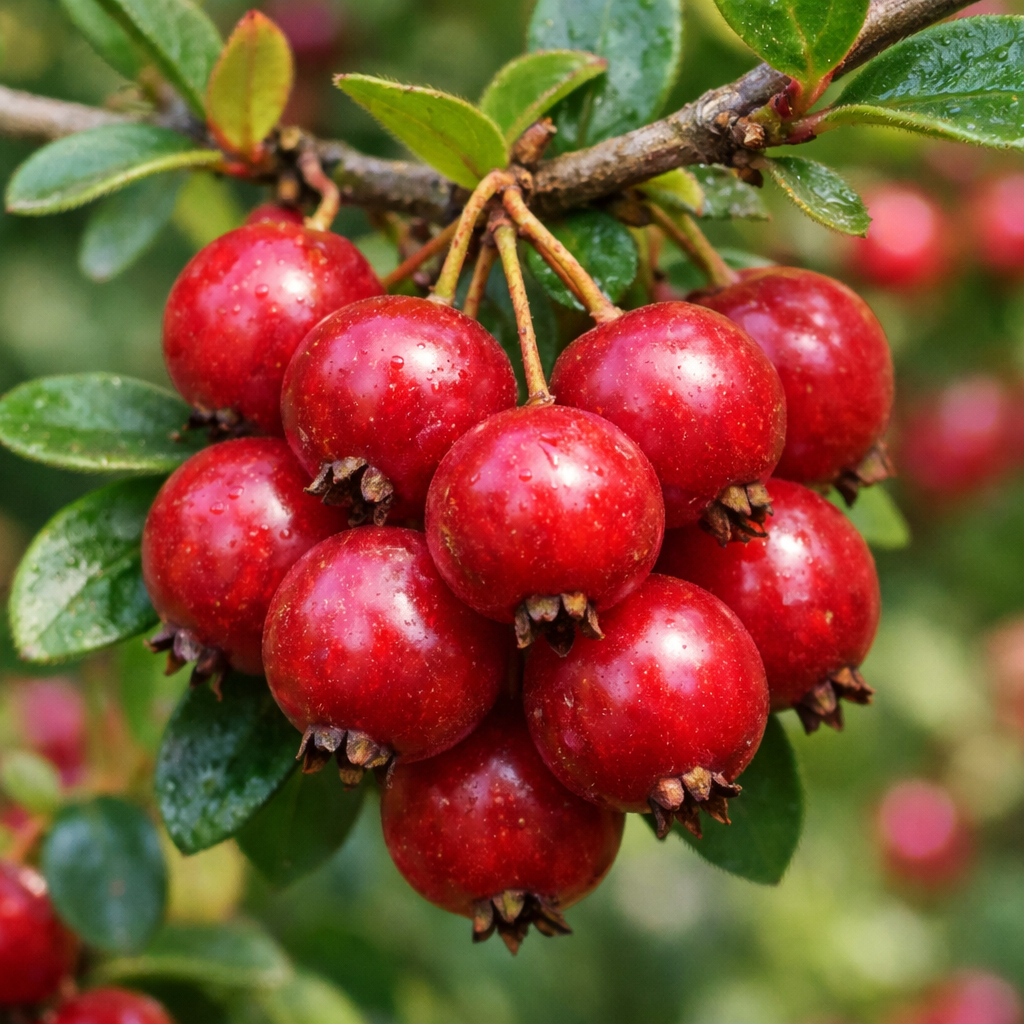
Ugni Berry (Strawberry Myrtle)
Identity
Ugni Berry — also called Strawberry Myrtle, Chilean Guava, Uñi, or Murtilla — is a tiny, aromatic berry native to the southern edges of the world. It grows on evergreen shrubs that thrive in the cool, mist‑kissed forests of Chile and southern Argentina, where the land is volcanic, the air is crisp, and the seasons move with quiet intention.
Though small, Ugni Berry carries a perfume so enchanting that it once captivated royalty and continues to inspire chefs, perfumers, and herbalists today. It is a berry that feels like a secret — delicate, fragrant, and deeply rooted in ancestral soil.
Origin Story
Ugni Berry’s story begins in the Patagonian Andes, where the Mapuche people have cultivated and cherished it for centuries. The berry grows wild along forest edges, riverbanks, and mountain slopes, shaped by:
- volcanic soil rich in minerals
- coastal fog drifting inland
- cool winds from the Pacific
- the slow rhythm of southern seasons
An Indigenous Legacy
For the Mapuche, Ugni Berry is more than food — it is a cultural thread. They used the berry in:
- fermented beverages (like chicha de murtilla)
- medicinal infusions
- ceremonial offerings
- seasonal preserves
Its fragrance was believed to carry warmth and vitality during colder months.
A Royal Fascination
In the 19th century, Ugni Berry traveled across the ocean and became a favorite of Queen Victoria, who reportedly preferred its flavor above all other berries. This royal affection elevated the fruit’s status, inspiring European botanists to cultivate it in gardens and greenhouses.
A Fruit That Resisted Industrialization
Despite its beauty, Ugni Berry never became a mass‑market crop. Its delicate skin and small size make it difficult to ship long distances. It remains:
- hand‑harvested
- regionally treasured
- seasonally celebrated
This is a fruit that refuses to be rushed or scaled — it stays close to the land that shaped it.
Appearance
Ugni Berries are tiny jewels of the forest:
- pea‑sized spheres
- deep red to burgundy skin
- smooth, glossy surface
- evergreen leaves on compact shrubs
When ripe, the berries release a soft, floral aroma that lingers on the fingertips.
Flavor Profile
Ugni Berry is one of the most aromatic berries on earth. Its flavor is often described as:
- strawberry with a hint of rose
- vanilla‑kissed
- cotton‑candy sweet
- slightly spicy and floral
Aroma
The fragrance is unmistakable — sweet, perfumed, and almost nostalgic. It carries notes of:
- wild strawberry
- rose petals
- warm vanilla
- soft spice
Texture
- tender skin
- juicy interior
- melt‑in‑the‑mouth finish
It dissolves gently, leaving a trail of fragrance behind.
Emotional Tone
Ugni Berry tastes like a memory — soft, romantic, and fleeting. It is sweetness without sharpness, perfume without heaviness.
🍓 Featured Recipe: Ugni Berry Jam (Small‑Batch, Fragrant, No Pectin)
Ugni Berry Jam (Small‑Batch, No Pectin)
Prep 10 min
Cook 25 min
Serves 1 small jar
Ingredients
2 cups
fresh Ugni berries (rinsed, stems removed)
1 cup
sugar (adjust to taste)
1 tbsp
lemon juice
1 tbsp
water
1 small strip of lemon zest (optional for aroma)
Instructions
1. Combine ingredientsPlace Ugni berries, sugar, lemon juice, water, and lemon zest in a small saucepan.
2.Warm gently Heat over medium‑low until the berries begin to release their juices, about 5 minutes.
3.SimmerIncrease heat slightly and simmer 15–20 minutes, stirring often, until thickened.
4.Mash lightly Use a spoon or masher to gently break some berries while leaving others whole for texture.
5.Check consistency Jam is ready when it coats the back of a spoon and leaves a clean line when you swipe a finger across.
6.Cool & store Remove zest, let cool, and transfer to a clean jar. Refrigerate up to 2 weeks.
🍯 Ugni Berry Syrup (Fragrant, Floral, Perfect for Drinks & Desserts)
This syrup captures the perfume of Ugni Berry — floral, strawberry‑vanilla, and softly sweet.
Ingredients
- 2 cups fresh Ugni berries
- 1 cup sugar
- 1 cup water
- 1 tsp lemon juice
- ½ tsp vanilla extract (optional but beautiful)
Instructions
- Combine berries, sugar, and water in a saucepan.
- Bring to a gentle simmer and cook 10–12 minutes, until berries soften and liquid turns ruby red.
- Mash lightly to release aroma.
- Strain through a fine sieve (do not press too hard — syrup should stay clear).
- Stir in lemon juice and vanilla.
- Cool and bottle. Refrigerate up to 10 days.
Use For
- cocktails & mocktails
- drizzling over pancakes, yogurt, or ice cream
- glazing cakes
- adding to sparkling water for a floral spritz
🍵 Ugni Berry Tea (Soft, Floral, Ancestral)
A calming, aromatic infusion inspired by traditional Mapuche preparations.
Ingredients
- 1 tbsp dried Ugni berries or 2 tbsp fresh
- 1 cup hot water
- 1 small strip lemon peel (optional)
- ½ tsp honey (optional)
Instructions
- Add berries (and lemon peel if using) to a cup.
- Pour hot water (not boiling — around 190°F) over them.
- Steep 8–10 minutes.
- Sweeten lightly with honey if desired.
- Sip slowly — the aroma deepens as it cools.
Flavor Notes
- strawberry‑rose
- soft vanilla
- gentle forest sweetness
📊 Ugni Berry Nutrition Table (Per 100g, Approximate)
| Nutrient | Amount | Notes |
|---|---|---|
| Calories | ~50 kcal | low‑calorie, nutrient‑dense |
| Carbohydrates | ~12 g | mostly natural fruit sugars |
| Fiber | ~2 g | supports digestion |
| Vitamin C | ~40–50 mg | strong antioxidant support |
| Polyphenols | high | contributes to anti‑inflammatory benefits |
| Manganese | moderate | supports metabolism & bone health |
| Water Content | ~80% | naturally hydrating |
This table aligns with known nutritional patterns of Ugni molinae, which is recognized for its high antioxidant density and vitamin C content.
Nutrition
Though small, Ugni Berry is nutritionally potent.
Key Nutrients
- Vitamin C
- Polyphenols (powerful antioxidants)
- Dietary fiber
- Manganese
- Anti‑inflammatory compounds
Antioxidant Strength
Ugni Berry contains unusually high levels of polyphenols for its size, making it a quiet but powerful ally for cellular health.
Digestive Support
Its fiber content supports gentle digestion and gut balance.
Skin & Hair Nourishment
Vitamin C and antioxidants help support:
- collagen formation
- skin radiance
- hair strength
This is nourishment that works from the inside out.
Health Benefits
1. Antioxidant Protection
Ugni Berry’s polyphenols help reduce oxidative stress — the slow wear and tear caused by daily life.
2. Immune Support
Vitamin C supports immune resilience, collagen production, and skin vitality.
3. Anti‑Inflammatory Properties
Traditional use includes soothing inflammation and supporting overall wellness.
4. Digestive Harmony
Fiber supports regularity and gut comfort.
5. Skin & Hair Vitality
Antioxidants help maintain a youthful glow and strengthen hair follicles.
6. Emotional & Sensory Wellness
Its aroma alone can lift mood, soften tension, and create a sense of calm.
Culinary Uses
Ugni Berry is beloved in both traditional and modern cuisine.
Traditional Uses
- chicha de murtilla (fermented drink)
- jams and preserves
- syrups
- desserts served during celebrations
Modern Uses
- artisanal ice creams
- infused spirits
- pastries
- berry compotes
- herbal teas
- perfumed syrups for cocktails
Its floral sweetness makes it ideal for delicate desserts and aromatic beverages.
🍰 Ugni Berry Cream Tart (Fragrant, Floral, Silky)
A delicate tart that tastes like strawberry‑rose, vanilla, and soft mountain air.
This dessert honors the perfume of Ugni Berry — not overpowering it, but letting it bloom. The cream is silky, the crust is tender, and the berries sit on top like tiny jewels.
✨ Ingredients
For the Crust
- 1 ¼ cups all‑purpose flour
- ¼ cup powdered sugar
- ½ cup cold unsalted butter, cubed
- 1 egg yolk
- 1–2 tbsp cold water
- Pinch of salt
For the Ugni Berry Cream
- 1 cup fresh Ugni berries (or ¾ cup dried, rehydrated)
- ½ cup sugar
- 1 tbsp lemon juice
- 1 tsp vanilla extract
- 1 cup heavy cream
- 4 oz cream cheese, softened
- ½ cup Greek yogurt or crème fraîche
- 1 tbsp cornstarch (optional, for thicker texture)
For the Topping
- ½–1 cup fresh Ugni berries
- 1 tbsp honey or berry syrup
- Optional: edible flowers, mint, or lemon zest
🧡 Instructions
1. Make the Crust
- Combine flour, powdered sugar, and salt in a bowl.
- Add cold butter and cut it in until the mixture resembles coarse sand.
- Add egg yolk and 1 tbsp cold water; mix until dough just comes together.
- Press into a tart pan (9‑inch) and chill 20 minutes.
- Bake at 350°F (175°C) for 15–18 minutes, until lightly golden.
- Cool completely.
2. Prepare the Ugni Berry Base
- In a small saucepan, combine Ugni berries, sugar, and lemon juice.
- Cook over medium heat for 8–10 minutes, until berries soften and release their perfume.
- Mash gently — do not over‑purée; the fragrance is in the skins.
- Strain for a smooth cream, or leave rustic for texture.
- Stir in vanilla.
- Cool to room temperature.
3. Make the Cream Filling
- Beat cream cheese until smooth.
- Add yogurt (or crème fraîche) and mix until silky.
- Fold in the cooled Ugni berry mixture.
- Whip heavy cream separately until soft peaks form.
- Fold whipped cream into the berry mixture.
- If you prefer a firmer tart, whisk in 1 tbsp cornstarch before folding in the cream.
4. Assemble
- Pour the Ugni Berry cream into the cooled tart shell.
- Smooth the top with a spatula.
- Chill for at least 3 hours, or overnight for deeper flavor.
5. Garnish
Just before serving:
- Scatter fresh Ugni berries across the top.
- Drizzle lightly with honey or your Ugni Berry syrup.
- Add edible flowers or mint for ceremony.
The tart should look like a forest offering — delicate, fragrant, and glowing.
🌸 Flavor Notes
- floral strawberry
- soft vanilla
- gentle mountain sweetness
- buttery crust
- silky, perfumed cream
This tart tastes like a dessert whispered, not shouted.
🍓 Ugni Berry Substitution Chart
Matching the floral‑strawberry, vanilla‑soft aroma of Ugni Berry
This chart helps readers choose the closest possible substitute depending on the recipe type and the qualities they want to preserve.
🌸 Best Overall Substitutes (Ranked)
| Substitute | Match Level | Flavor Notes | Best Uses |
|---|---|---|---|
| Alpine Strawberries (Wild Strawberries) | ⭐⭐⭐⭐⭐ Closest | Floral strawberry, soft vanilla, delicate perfume | Jams, tarts, teas, syrups, desserts |
| Strawberries + 1–2 drops Rosewater | ⭐⭐⭐⭐ | Sweet, floral, lightly perfumed | Syrups, creams, cocktails, desserts |
| Raspberries + Vanilla | ⭐⭐⭐ | Tart‑floral with warm sweetness | Sauces, syrups, baked goods |
| Red Currants + Strawberries | ⭐⭐⭐ | Bright, aromatic, balanced | Jams, compotes, teas |
| Cranberries (cooked) + Honey + Vanilla | ⭐⭐ | Structured, warm, floral‑sweet | Jams, syrups, glazes |
🌿 Substitutes by Recipe Type
For Jam
- Alpine strawberries
- Strawberries + rosewater
- Raspberries + vanilla
For Syrup
- Strawberries + rosewater
- Red currants + strawberries
- Cranberries + honey + vanilla
For Tea
- Dried strawberries
- Rosehips + strawberry
- Raspberry leaf + a few dried berries
For Desserts (like your Ugni Berry Cream Tart)
- Alpine strawberries
- Strawberries + a whisper of rosewater
- Raspberries + vanilla
✨ Editorial Note
Ugni Berry’s magic is its perfume — strawberry‑rose, vanilla‑soft, slightly spicy. The best substitutes are those that recreate aroma, not just sweetness. Think floral, gentle, and fragrant — never overpowering.
Cautions
Ugni Berry is gentle, but mindful consumption is always wise.
General Considerations
- Those with berry allergies should avoid it.
- Its natural sugars may require moderation for individuals monitoring blood sugar.
- Large quantities may cause mild digestive sensitivity due to its aromatic compounds.
Who Should Not Consume
Avoid or seek guidance if you:
- have a known berry allergy
- are on a strict low‑sugar diet
- have been advised to limit high‑polyphenol foods
- are introducing new foods to infants (choking hazard due to size)
Availability
Ugni Berry is a seasonal specialty fruit, most commonly found:
- fresh in Chile during late summer
- in artisan markets
- as preserves, syrups, or dried berries in gourmet shops
- occasionally in specialty online stores
Fresh berries are rare outside South America due to their delicate nature.
🌿 Closing Reflection
Ugni Berry is a reminder that some of the world’s deepest sweetness comes in the smallest forms. It is a berry shaped by mist, mountains, and ancestral hands — a fruit that carries the perfume of its homeland and the quiet strength of its lineage. Its fragrance is soft, its flavor is tender, and its presence is humble, yet it holds a depth that lingers long after the last bite.
May this berry remind you that delicacy is not fragility. May it teach you that subtlety can be powerful, and that gentleness can be its own kind of abundance. And may it invite you to slow down, savor fragrance, and honor the quiet sweetness that often goes overlooked in a world that moves too quickly.
Ugni Berry is a whisper of the forest — a small, fragrant blessing from the southern edge of the world.
⚠️ Disclaimer
This page is for informational and educational purposes only. It is not medical advice, and it is not a substitute for guidance from a qualified healthcare professional.
Every body is different. If you have allergies, medical conditions, dietary restrictions, or are taking medications, please consult a healthcare provider before adding new fruits, herbs, or preparations to your routine.
EJADA celebrates nourishment, but we also honor safety, clarity, and personal care.
Ugni Berry is a reminder that some of the world’s deepest flavors come in the smallest forms. It is a berry shaped by mist, mountains, and ancestral hands — a fruit that carries the perfume of its homeland and the quiet strength of its lineage.
May it remind you that delicacy is not fragility, and that small things can hold extraordinary depth. May it invite you to savor gently, to notice fragrance, and to honor the subtle sweetness that often goes overlooked.
 EJADA
EJADA 