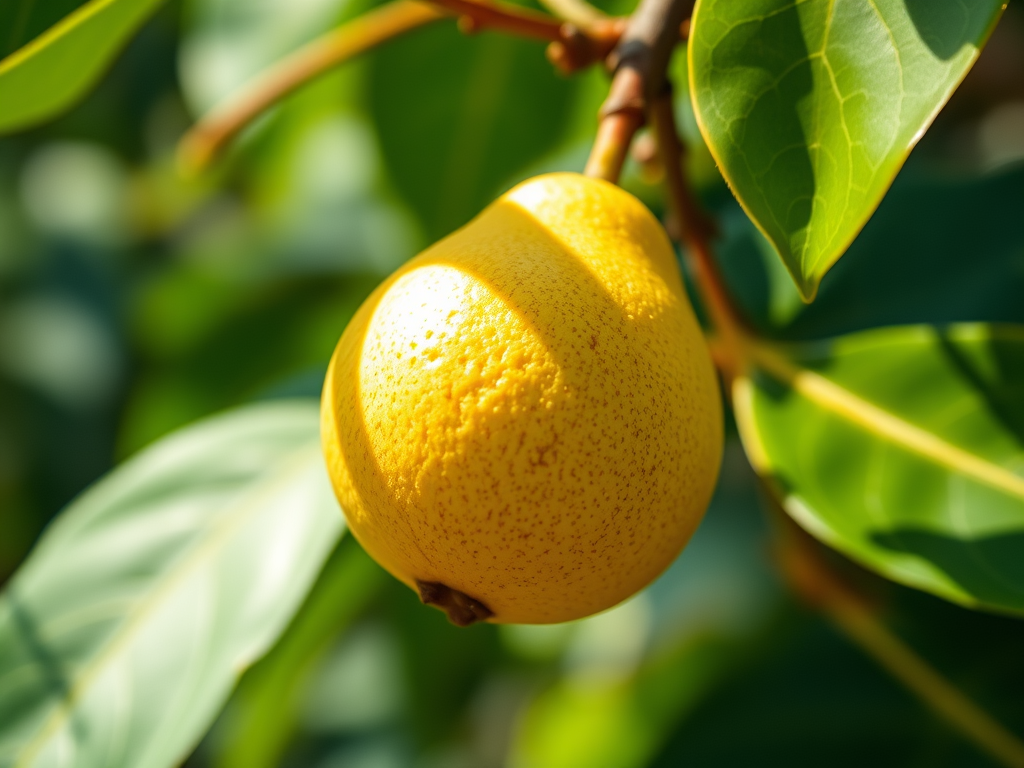
Scientific name and common names of the Arazá
The scientific name of the arazá is Eugenia stipitata (Mc Vaugh) . Its common names are arazá, the most widespread, although it is also called Peruvian guava, Amazonian guava (Peru), Brazilian guava, arazá-boi (Brazil)Araza, scientifically known as Eugenia stipitate, is a tropical fruit native to the Amazon rainforest, particularly in regions of Brazil, Colombia, and Peru. It belongs to the guava family (Myrtaceae) and is sometimes referred to as the “Amazonian pear.” (https://delamazonas.com read more…
Key Characteristics:
- Appearance: Araza is a small, round fruit with a thin, velvety skin that turns yellow or pale green when ripe.
- Flavor: It has a very sour and acidic taste, often compared to lemons, making it less common to eat raw. However, its tartness is perfect for juices, marmalades, ice creams, and other culinary uses.
- Nutritional Value: Araza is rich in Vitamin C, antioxidants, and dietary fiber, making it a nutritious addition to a diet.
The fruit is not widely cultivated due to its delicate nature and short shelf life, but it remains a hidden gem in the Amazon. Araza is not widely available in the U.S. due to its delicate nature and short shelf life. However, some specialty nurseries and online stores, like Guacalina Nursery, may offer Araza trees or seeds for cultivation. The fruit itself is rare to find fresh but might be available in frozen or processed forms, such as juices or jams, through niche suppliers.
If you’re interested in trying Araza, exploring tropical fruit markets or online exotic fruit retailers could be a good start!
Read More: Beyond its delectable flavor, araza is a nutritional powerhouse, packed with essential vitamins, minerals, and antioxidants. It is an excellent source of vitamin C, a potent antioxidant that supports immune function and collagen production. Araza is also rich in vitamin A, crucial for maintaining healthy vision and skin. Additionally, it contains significant amounts of potassium, a mineral essential for regulating blood pressure and muscle function
Source: https://exoticfruitsandvegetables.com/araza/facts-about-araza
 EJADA
EJADA 
Leave a comment