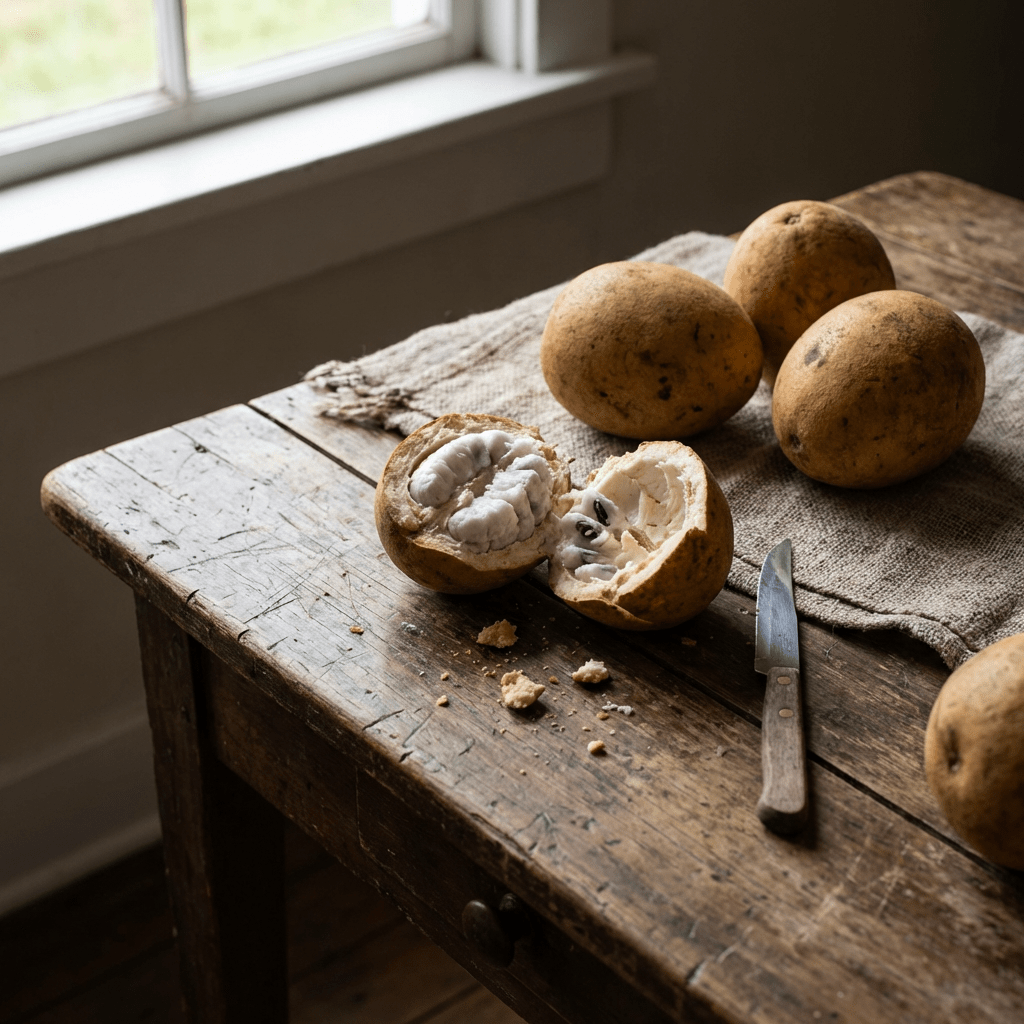
🌺 UDARA (African Star Apple)
A fruit of memory, tartness, sweetness, and ancestral rhythm
Udara is one of those fruits that carries a whole season inside it — a fruit that announces its arrival with color, scent, and childhood nostalgia. Known across West Africa by many names — Udara in Igbo, Agbalumo in Yoruba, Alasa in Ghana — this fruit is more than food. It is a ritual of the dry season, a reminder of home, and a taste that lives in the mouth long after the fruit is gone.
Its flavor is unmistakable: a pull of tartness, a bloom of sweetness, a soft collapse of flesh that feels like memory itself. Udara is a fruit that teaches patience, because you must wait for it to ripen fully. And it teaches presence, because once you open it, you must savor it before it dries.
This page honors Udara as both nourishment and story.
🌍 Botanical Profile
| Feature | Details |
|---|---|
| Common Names | Udara, Agbalumo, African Star Apple, Alasa |
| Scientific Name | Chrysophyllum albidum |
| Family | Sapotaceae |
| Origin | West Africa |
| Flavor | Tart, sweet, slightly resinous |
| Texture | Soft, chewy pulp with a gummy center |
| Season | December–April (varies by region) |
Udara trees are tall, majestic, and deeply rooted in the landscapes of Nigeria, Ghana, and surrounding regions. Their fruits drop like small suns onto the earth, signaling the height of the dry season.
🍊 Cultural Significance
Udara is a fruit of childhood rituals — the kind you remember with your whole body.
- Children pressing the fruit gently to soften it
- The satisfying pop when the skin is broken
- The slow release of tart juice
- The sweet, sticky center that feels like a reward
In many communities, Udara is a seasonal marker — a sign that the year is turning, that harmattan winds are near, that festivities are approaching.
It is also a fruit of sharing. Rarely eaten alone, Udara is passed between friends, siblings, and neighbors. It is a fruit that builds community.
🍽 Culinary Uses
1. Fresh Eating (Most Common)
- Press to soften
- Break open
- Suck the pulp
- Enjoy the sweet‑tart balance
2. Udara Juice
A refreshing drink made by:
- Soaking the pulp
- Straining
- Adding ginger or honey
3. Udara Jam
A modern twist:
- Cook pulp with sugar and lemon
- Spread on toast or pastries
4. Udara in Smoothies
Pairs beautifully with:
- Pineapple
- Mango
- Coconut milk
5. Dried Udara
Sun‑dried pulp becomes:
- Chewy
- Intensely flavored
- Perfect for snacks
🌿 Medicinal Uses
Traditional practices, cultural memory, and gentle, community‑rooted healing (For educational purposes only — not medical advice)
Udara has been part of West African healing traditions for generations. Its tartness, resin, and mineral‑rich pulp have made it a fruit of both nourishment and gentle remedy. While not a clinical treatment, Udara carries a long lineage of folk medicine, shaped by observation, season, and community wisdom.
🍃 1. Digestive Support & Stomach Comfort
Across Nigeria and Ghana, Udara is often used as a natural digestive soother.
- The fruit’s resinous center is believed to help settle mild stomach discomfort
- The tartness stimulates saliva and digestive juices, supporting appetite
- Warm Udara water is sometimes used to ease bloating or slow digestion
This is one of the most widely recognized traditional uses.
🌬 2. Throat & Respiratory Ease
In some communities, Udara pulp is mixed with warm water to create a soothing drink.
Traditionally used for:
- Dry throat
- Mild cough
- Harmattan‑season irritation
The fruit’s natural acidity and vitamin C content make it a comforting seasonal remedy.
🩸 3. Blood Sugar Awareness in Folk Tradition
Udara’s sharp tartness has long been associated with appetite control.
- Some people use it to reduce cravings
- Others enjoy it after meals to support a sense of fullness
This is cultural wisdom, not a medical claim — but it’s a meaningful part of the fruit’s story.
🌿 4. Anti‑Inflammatory Folk Uses
The bark and leaves of the Udara tree are used in traditional herbalism for:
- Mild inflammation
- Skin irritations
- Topical poultices
These practices vary by region and are typically guided by experienced herbalists.
🧘🏽♀️ 5. Seasonal Strengthening & Nourishment
Udara is considered a dry‑season tonic.
Communities use it to:
- Replenish minerals
- Support hydration
- Provide natural energy
- Nourish children during seasonal transitions
Its balance of fiber, vitamin C, and minerals makes it a grounding fruit during harsh weather.
🌱 6. Oral Health Traditions
The natural resin in Udara has been used in some regions as a chewing aid.
Traditionally believed to:
- Strengthen gums
- Freshen breath
- Clean the mouth after meals
This practice is more cultural than medicinal, but it remains part of the fruit’s identity.
🌼 7. Skin & Topical Uses (Traditional)
In some herbal traditions, the latex from the fruit or tree is used:
- In small amounts on minor skin irritations
- As part of herbal mixtures for topical care
These uses are highly localized and should be approached with caution due to latex sensitivity.
📌 Important Note
These practices reflect ancestral knowledge, not modern clinical evidence. They are shared to honor the cultural significance of Udara — not to replace medical care.
🥗 Nutritional Table (Per 100g Udara Pulp)
| Nutrient | Amount (Approx.) | Notes |
|---|---|---|
| Calories | 67–80 kcal | Light, energy‑supportive |
| Carbohydrates | 15–18 g | Natural sugars + fiber |
| Fiber | 3–4 g | Supports digestion |
| Protein | 2–3 g | Higher than many fruits |
| Fat | 0.5–1 g | Low‑fat |
| Vitamin C | 20–25 mg | Immune support |
| Calcium | 20–30 mg | Bone health |
| Iron | 1–1.5 mg | Gentle mineral support |
| Potassium | 200–250 mg | Electrolyte balance |
| Antioxidants | High | Polyphenols + carotenoids |
🍊 Udara (African Star Apple) Juice — Recipe
Udara (African Star Apple) Juice
Prep 10 min
Cook 0 min
Serves 2
Ingredients
6–8
ripe Udara (African Star Apple) fruits
2 cups
cold water
1–2 tbsp
honey or sugar (optional)
1 tsp
fresh ginger, grated (optional)
1
lemon wedge (optional, for brightness)
Instructions
1
Prepare the fruitWash the Udara fruits thoroughly. Press each fruit gently to soften, then break open and scoop out the pulp. Remove all seeds.
2
Mash the pulpPlace the pulp in a bowl and mash with a spoon or your hands until it becomes soft and creamy.
3
Add waterPour cold water over the mashed pulp and stir well to release the flavor and color.
4
StrainUse a fine sieve or cheesecloth to strain the mixture into a clean bowl or jug, pressing to extract all the juice.
5
Sweeten (optional)Add honey or sugar to taste. Stir until fully dissolved.
6
Add ginger or lemon (optional)For a brighter, more refreshing flavor, add grated ginger or a squeeze of lemon.
7
ServePour into glasses over ice and enjoy immediately.
Sources:
🚫 Who Should Not Consume Udara
Udara is a beloved seasonal fruit, but certain individuals may need to avoid it or enjoy it with caution. These notes are for general awareness only and are not medical advice.
1. Individuals Sensitive to Latex
Udara’s skin and sticky resin contain natural plant latex. People with latex sensitivity may experience:
- Mouth tingling
- Mild irritation
- Itchy lips or gums
Those with known latex allergies should avoid the fruit or proceed carefully.
2. People With Acid‑Sensitive Digestion
Udara is naturally tart and acidic, especially when not fully ripe. It may aggravate:
- Acid reflux
- Gastritis
- Sensitive stomachs
Ripe fruit is gentler, but caution is still recommended.
3. Individuals Monitoring Blood Sugar
While Udara is not extremely high in sugar, it does contain:
- Natural fruit sugars
- A resinous center that may influence appetite
People managing blood sugar levels should enjoy it mindfully.
4. Young Children (Seed Hazard)
Udara contains large, slippery seeds that can pose a choking risk. Children should only eat the fruit:
- With supervision
- With seeds removed
5. People With Dental Sensitivities
The fruit’s sticky resin can:
- Adhere to teeth
- Cause discomfort for those with dental issues
- Be difficult to remove if consumed in large amounts
Those with dental sensitivity or recent dental work may want to avoid it.
6. Individuals With Certain Kidney Restrictions
Udara contains potassium, which is beneficial for most people. However, those on potassium‑restricted diets (due to kidney conditions) may need to limit intake.
7. Anyone Experiencing Allergic Reactions
Though rare, some individuals may react to:
- The latex
- The resin
- The fruit’s natural compounds
Any signs of discomfort should be taken seriously.
📌 Gentle Reminder
These cautions are general educational guidance, not medical recommendations. Anyone with specific health concerns should consult a qualified healthcare professional.
📦 Availability
Udara is primarily available in:
- West African markets
- Diaspora stores (seasonally)
- Imported fruit shops in major cities
Fresh Udara is seasonal, but dried or frozen pulp may be available year‑round in some regions.
🌸 Closing Reflection
Udara is a fruit that teaches us about contrast — the way tartness and sweetness can coexist, the way memory and flavor intertwine, the way a simple fruit can hold the weight of a season. It is a reminder that nourishment is not always soft or predictable; sometimes it arrives with a sharpness that wakes us, a sweetness that grounds us, and a story that refuses to be forgotten.
As you close this page, may Udara invite you to honor the foods that shaped your earliest joys, the fruits that taught you patience, and the flavors that remind you of who you’ve been and who you’re becoming.
 EJADA
EJADA 
Leave a comment