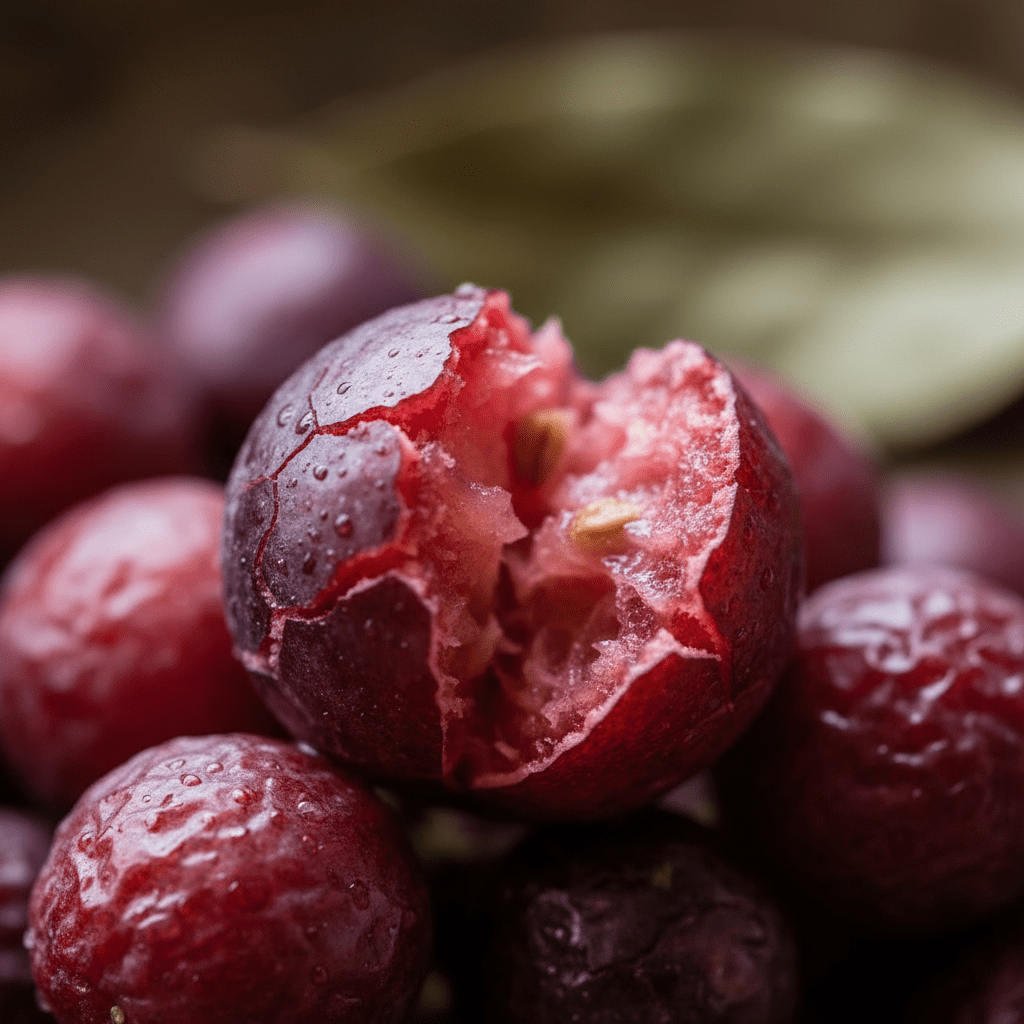
🍇 The U‑Fruits Journey Begins
There is something tender about arriving at the letter U — a quiet corner of the fruit world where rare names live, where ancestral fruits still grow in the shade of forests and homesteads, and where language carries flavors that have not yet reached the global stage. This chapter invites us to slow down, to listen, and to honor the fruits that rarely get named but have nourished communities for generations.
We begin with Ububese — a fruit of softness, resilience, and deep African lineage.
🌿 Ububese (African Custard Apple)
Annona senegalensis
Ububese is one of those fruits that carries a quiet power — a fruit that doesn’t demand attention, yet holds centuries of nourishment, healing, and cultural memory inside its soft, golden skin. It belongs to the Annonaceae family, the same lineage that gives us soursop, cherimoya, and sugar apple, but Ububese stands apart in its wildness. It is not a plantation fruit. It is a land fruit, a people’s fruit, a fruit that grows where stories live.
🌱 Expanded Botanical Identity
A Fruit of the Savanna
Ububese thrives in:
- Dry savannas
- Woodland edges
- Village perimeters
- Open grasslands
It is a plant that understands resilience — it grows where water is scarce, where heat is constant, where the soil is sandy and unforgiving. Yet it produces a fruit that is soft, creamy, and unexpectedly sweet.
Tree & Growth Habit
- A small, multi‑stemmed shrub or tree
- Reaches 2–6 meters in height
- Produces fragrant flowers before fruiting
- Fruit ripens to a warm yellow or orange
The contrast between its rugged environment and its tender flesh is part of its beauty.
🌍 Expanded Cultural Roots
Ububese is woven into the daily life of many African communities:
A Childhood Fruit
Children often gather it after school, cracking open the ripe fruit with their hands and sharing it under the shade of a tree.
A Communal Fruit
It appears in:
- Village markets
- Seasonal celebrations
- Family meals
- Traditional healing practices
It is not a fruit of export or commerce — it is a fruit of belonging.
A Fruit of Memory
For many, Ububese tastes like:
- Home
- Childhood
- Dry season sweetness
- The generosity of the land
It is a fruit that carries emotional geography.
🍯 Expanded Culinary Uses
Ububese is versatile in traditional kitchens:
Fresh Eating
The most common way — eaten straight from the skin, seeds spat out, fingers sticky with sweetness.
Porridges & Soft Foods
Mashed into:
- Millet porridge
- Sorghum porridge
- Soft breakfast bowls for children
Fermented Drinks
In some regions, the pulp is added to:
- Lightly fermented beverages
- Seasonal brews
- Community drinks shared during gatherings
Dried for Storage
The pulp can be sun‑dried and stored for later use, especially in rural households.
🌿 Expanded Traditional Medicinal Uses
Ububese is valued not only as food but as a gentle healer in many African herbal traditions.
Digestive Comfort
- The pulp is soothing to the stomach
- Used for mild digestive discomfort
- Given to children during periods of low appetite
Skin & Wound Support
- Leaves and bark used in poultices
- Fruit pulp applied to minor irritations
- Sometimes used to soothe insect bites
Strengthening & Recovery
- Considered a restorative fruit
- Given to elders and those recovering from illness
- Used as a natural energy food
Root & Bark Uses
In some traditions:
- Roots are used in decoctions
- Bark is used in topical preparations
(These reflect traditional practices, not medical advice.)
🥗 Expanded Nutritional Notes
Ububese is known to contain:
- Natural sugars for energy
- Vitamin C for immune support
- Iron and potassium for mineral balance
- Antioxidants that protect the body
- Dietary fiber for gentle digestion
It is a fruit that nourishes without overwhelming — a quiet, steady source of strength.
⚠️ Wellness Cautions
🍈 1. Seeds Are Not Edible
Ububese seeds are hard, inedible, and should not be swallowed.
- Can pose a choking risk for children
- Not digestible
- Should always be removed before mashing or adding to porridges
This is one of the most important safety notes for this fruit.
🌿 2. Latex Sensitivity
The skin and stem of Ububese contain natural plant latex, similar to other Annonaceae fruits.
Individuals sensitive to:
- latex
- papaya
- jackfruit
- soursop
may experience:
- mouth tingling
- mild irritation
- skin sensitivity
Peeling the fruit fully and washing hands after handling can help.
🌾 3. Digestive Sensitivity
Ububese is gentle for most people, but:
- Unripe fruit may cause stomach discomfort
- Overripe fruit can ferment quickly in hot climates
- Eating large amounts may lead to loose stools due to natural sugars and fiber
For those with sensitive digestion, start with small portions.
🧪 4. Traditional Medicinal Uses Should Not Replace Care
Ububese is used in many African herbal traditions, but:
- Folk remedies are not substitutes for medical treatment
- Bark, roots, and leaves should not be used without proper knowledge
- Topical applications may irritate sensitive skin
This keeps your content responsible and aligned with your brand’s integrity.
🩺 5. Not Suitable for Certain Dietary Restrictions
Because Ububese contains natural sugars and fiber:
- Individuals monitoring blood sugar should enjoy it mindfully
- Those on low‑FODMAP or restricted‑fiber diets may need caution
- People with kidney‑related potassium restrictions should be aware of mineral content
Again, this is general awareness — not medical guidance.
🍃 6. Wild‑Harvest Variability
Ububese is often harvested from the wild, which means:
- Flavor, ripeness, and nutrient density vary
- Some fruits may contain insect damage
- Overripe fruits can ferment internally
Choosing firm, fragrant, evenly colored fruits is best.
🌍 7. Limited Availability Outside Africa
Because Ububese is not commercially cultivated:
- Imported or diaspora‑market fruit may be overripe
- Storage conditions may affect quality
- Dried or preserved forms may contain added sugars
This helps readers set realistic expectations.
📌 Gentle Reminder
This section is for general educational purposes only. Readers with specific health concerns should consult a qualified healthcare professional for personalized guidance.
📦Availability
Ububese remains a wild and local fruit, rarely entering global markets. It is primarily found:
- In rural African communities
- In local markets during harvest season
- Occasionally in diaspora specialty shops (very rare)
Its scarcity is part of its identity — a fruit that resists commercialization.
🍽 Common Recipes Using Ububese (African Custard Apple)
1. Fresh Ububese Pulp (Traditional Snack)
The simplest and most common way to enjoy Ububese.
How it’s made:
- Crack open a ripe fruit
- Scoop out the creamy pulp
- Remove seeds
- Eat immediately
Why it’s loved: Soft, sweet, custard‑like — a childhood fruit in many communities.
2. Ububese Porridge (Millet or Sorghum)
A nourishing breakfast for children and elders.
Ingredients:
- Ripe Ububese pulp
- Cooked millet or sorghum porridge
- A little honey or sugar (optional)
Method: Mash the pulp and fold it into warm porridge for a creamy, fruity finish.
3. Ububese Fruit Drink (Lightly Fermented or Fresh)
A refreshing village beverage.
Ingredients:
- Ububese pulp
- Water
- A touch of sugar
- Optional: ginger or lemon
Method: Mash the pulp, mix with water, strain, and chill. Some communities let it ferment lightly for a tangy, probiotic drink.
4. Ububese Jam or Spread
A modern adaptation inspired by traditional pulp‑preserving methods.
Ingredients:
- Ububese pulp
- Sugar
- Lemon juice
Method: Simmer until thick and glossy. Perfect for toast, pastries, or yogurt bowls.
5. Ububese Dessert Mash
A simple, sweet treat.
Ingredients:
- Ububese pulp
- Coconut milk
- A drizzle of honey
- A pinch of cinnamon
Method: Blend into a silky dessert bowl — similar to custard.
6. Ububese Ice Cream or Sorbet (Modern)
A beautiful fusion recipe.
Ingredients:
- Ububese pulp
- Coconut cream or condensed milk
- Vanilla
- A squeeze of lemon
Method: Blend and freeze. The fruit’s natural creaminess makes it perfect for frozen desserts.
7. Ububese + Banana Smoothie
A nourishing, energy‑rich drink.
Ingredients:
- Ububese pulp
- Banana
- Milk or plant milk
- Honey
- Ice
Method: Blend until smooth — creamy, tropical, and naturally sweet.
8. Ububese Fruit Leather (Sun‑Dried)
A traditional preservation method.
Method: Spread mashed pulp thinly on a clean surface and sun‑dry until leathery. Cut into strips for a chewy, sweet snack.
🥗 Nutritional Table (Per 100g Ububese Pulp)
| Nutrient | Amount (Approx.) | Notes |
|---|---|---|
| Calories | 80–95 kcal | Naturally sweet, energy‑supportive |
| Carbohydrates | 18–22 g | Mostly natural fruit sugars |
| Fiber | 2.5–4 g | Supports digestion and gut motility |
| Protein | 1.5–2.2 g | Higher than many tropical fruits |
| Fat | 0.3–0.6 g | Very low‑fat fruit |
| Vitamin C | 25–35 mg | Immune and skin support |
| Potassium | 250–320 mg | Electrolyte and heart balance |
| Calcium | 20–30 mg | Bone and muscle support |
| Magnesium | 15–22 mg | Nervous system + muscle relaxation |
| Iron | 0.5–1.2 mg | Gentle mineral support |
| Antioxidants | High | Polyphenols + carotenoids |
| Water Content | ~70% | Contributes to hydration |
Closing
Ububese reminds us that some of the world’s sweetest gifts grow quietly — far from markets, far from global attention, held instead in the hands of children, in the rhythms of village life, in the memory of land that has fed generations. Its softness is a lesson in trust. Its wildness is a reminder that nourishment does not always need to be cultivated or perfected; sometimes it simply arrives, golden and ready, asking only to be received.
As you close this chapter, may Ububese invite you to honor the fruits that shaped people long before they were named in books or listed in markets. May it call you back to the foods that feel like home, the flavors that carry lineage, and the sweetness that asks nothing of you except presence. In this quiet fruit, we meet a truth: that nourishment can be humble, wild, and deeply sacred.
📘 Disclaimer
The information shared here is for general educational and cultural purposes only. Ububese and other traditional fruits carry long histories of community use, but they are not medical treatments, nor should they replace guidance from a qualified healthcare professional. Individual bodies, sensitivities, and dietary needs vary, and readers with specific health concerns should seek personalized advice from a trusted medical provider.
This page honors the fruit’s heritage and the communities that have carried its knowledge forward, while encouraging mindful, informed enjoyment.
 EJADA
EJADA 
Leave a comment