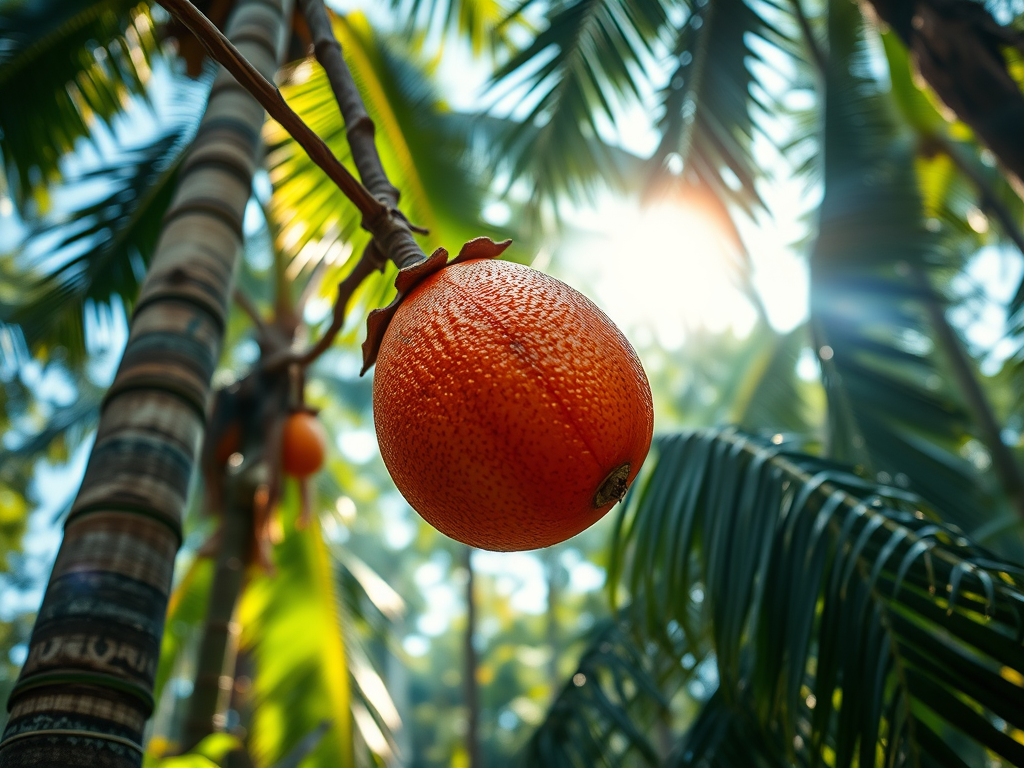
🧡 Tucumã
The Amazon’s Golden Flame
Astrocaryum vulgare
Tucumã is one of the Amazon’s quiet treasures — a fruit of fire‑colored flesh, deep cultural roots, and a presence that feels both ancient and alive. It is a fruit of strength, nourishment, and identity for the communities that have carried it through generations.
This page honors its origins, its uses, its healing qualities, and the ways it continues to shape life in the Amazon and beyond.
🌍 Where Tucumã Comes From
Tucumã grows in the Amazon rainforest, especially in northern Brazil, where the palm tree that bears it rises tall and spined, protected by nature’s own armor.
It is native to:
- Amazonas
- Pará
- Acre
- Roraima
- Rondônia
For centuries, Indigenous communities have harvested Tucumã as both food and medicine — a fruit woven into daily life, ritual, and survival.
🧭 When It Was First Known
Tucumã was not “discovered” in the Western sense — it was always known by the Indigenous peoples of the Amazon. Long before written records, Tucumã was:
- Gathered from wild palms
- Eaten fresh for energy
- Used in body‑strengthening foods
- Incorporated into traditional healing practices
European documentation of Tucumã began in the 18th and 19th centuries, when naturalists and explorers cataloged Amazonian plants. But the fruit’s true history lives in oral tradition, not in books.
🌿 Who First Used Tucumã
Tucumã has been used for generations by Indigenous groups such as:
- The Tukano
- The Yanomami
- The Baré
- The Baniwa
- The Sateré‑Mawé
For these communities, Tucumã is not just nourishment — it is identity. It is eaten during long journeys, shared in communal meals, and used in rituals that honor strength and vitality.
🍽️ What Tucumã Was Traditionally Used For
Tucumã served many roles in Amazonian life:
As Food
- Eaten fresh
- Mixed with cassava flour
- Added to porridges
- Used as a quick source of energy for hunters and travelers
As Medicine
- Strengthening the body
- Supporting skin health
- Nourishing during recovery
- Providing natural fats and vitamins
As Material
The tucumã palm also provides:
- Fibers for weaving
- Strong black seeds used in jewelry
- Materials for tools and ceremonial items
The fruit and the tree are part of a complete ecosystem of use.
🌱 Medicinal Uses — Then & Now
Traditional Uses (Then)
Indigenous communities used Tucumã for:
- Energy and stamina during long days
- Skin nourishment from its rich oils
- Supporting recovery after illness
- Strengthening the body with natural fats
Its bright orange flesh signaled vitality — a fruit of fire and resilience.
Modern Understanding (Now)
Today, Tucumã is recognized for its nutrient density and plant compounds.
General Nutritional Qualities
- Rich in beta‑carotene (Vitamin A precursor)
- Contains healthy fats
- Offers fiber
- Provides Vitamin C
- Contains potassium and other minerals
General Wellness Support
- Skin nourishment
- Antioxidant support
- Gentle digestive support
- Natural energy from healthy fats
Tucumã butter (from the fruit’s pulp) is now used in natural skincare for its moisturizing qualities.
🌾 Cultural Uses Across the Amazon
Tucumã is woven into the cultural fabric of northern Brazil.
In Daily Life
- Eaten with tapioca flour
- Added to rice and fish dishes
- Used in morning meals for energy
In Manaus & Amazonas Cuisine
The iconic “X‑Tucumã” sandwich — bread, cheese, eggs, and fresh Tucumã — is a beloved regional food.
In Indigenous Traditions
- Shared during communal gatherings
- Used in rituals honoring strength
- Incorporated into seasonal celebrations
Tucumã is not just a fruit — it is a symbol of Amazonian identity.
🍽️ Culinary Uses
Tucumã has a unique flavor: earthy, buttery, slightly smoky, and deeply nourishing.
It can be:
- Eaten fresh
- Mixed with cassava flour
- Added to porridges
- Blended into smoothies
- Used in sandwiches
- Added to rice dishes
- Turned into spreads or butters
Its natural oils give it a richness that feels almost ceremonial.
🥘 Recipes with Tucumã
1. Tucumã & Cassava Flour Bowl (Traditional Amazonian Style)
A grounding, energy‑rich dish.
Ingredients
- 1 cup fresh Tucumã pulp
- 2–3 tbsp cassava flour
- Pinch of salt
- Optional: honey or banana
Instructions
- Mash Tucumã pulp in a bowl.
- Add cassava flour and mix gently.
- Season lightly with salt.
- Add honey or banana for sweetness.
How It Feels
This is the Amazon in a bowl — simple, nourishing, ancestral.
2. Tucumã Spread (Modern Adaptation)
A creamy, vibrant spread for bread or crackers.
Ingredients
- 1 cup Tucumã pulp
- 1 tbsp olive oil
- Pinch of salt
- Squeeze of lime
Instructions
- Blend all ingredients until smooth.
- Adjust salt and lime to taste.
How It Feels
Bright, buttery, and deeply satisfying.
3. X‑Tucumã Sandwich (Manaus Classic)
A beloved regional dish.
Ingredients
- Bread roll
- Sliced Tucumã
- Fried egg
- Cheese
- Butter or Tucumã spread
Instructions
- Toast bread lightly.
- Layer cheese, egg, and Tucumã slices.
- Add Tucumã spread if desired.
How It Feels
Comforting, rich, and unmistakably Amazonian.
🍊 Tucumã Is a Fruit
Tucumã is a fruit, both botanically and culinarily. It grows from the flower of the tucumã palm and contains seeds, placing it firmly within the botanical definition of a fruit. In the kitchen, it behaves like one as well — offering natural oils, sweetness, and a rich, buttery flavor that reflects its Amazonian origins.
🍅 Health & Vitamins
Tucumã is one of the Amazon’s most nutrient‑dense fruits — a bright, golden source of natural oils, antioxidants, and vitamins that support the body in gentle, steady ways. Its deep orange color is not just beautiful; it signals the presence of compounds that Indigenous communities have relied on for generations.
Below is a fuller, richer exploration of Tucumã’s nutritional qualities, written in your warm, grounding voice.
🧡 Beta‑Carotene (Vitamin A Precursor) The Fruit’s Golden Fire
The vivid orange flesh of Tucumã comes from beta‑carotene, a plant pigment the body converts into Vitamin A. This supports:
- Skin renewal
- Eye health
- Cellular repair
- Immune balance
Beta‑carotene is also a powerful antioxidant, helping the body soften the effects of daily stress and environmental exposure.
Tucumã is considered one of the richest natural sources of this compound in the Amazon.
🍊 Healthy Fats — Natural Energy & Skin Nourishment
Unlike most fruits, Tucumã contains natural plant oils that offer:
- Sustained energy
- Soft, internal nourishment
- Support for skin moisture
- A sense of fullness and grounding
These fats are part of why Tucumã feels so satisfying — it’s a fruit that feeds both body and spirit.
🌿 Vitamin C — Gentle Daily Support
Tucumã provides a soft, steady amount of Vitamin C, which contributes to:
- Immune resilience
- Collagen formation
- Skin brightness
- Antioxidant protection
It’s not overwhelming — just a quiet, daily offering of support.
💧 Potassium — Hydration & Balance
The fruit contains potassium, a mineral that helps:
- Maintain fluid balance
- Support muscle function
- Regulate natural rhythms in the body
This makes Tucumã a grounding fruit for warm climates and active days.
🌾 Fiber — Digestive Ease & Satiety
Tucumã’s fiber content supports:
- Gentle digestion
- Regularity
- A feeling of fullness
- Balanced energy throughout the day
It’s the kind of fiber that feels nourishing rather than heavy.
🔥 Antioxidants — Quiet Protection
Beyond beta‑carotene, Tucumã contains a constellation of plant compounds that help the body soften oxidative stress:
- Carotenoids
- Polyphenols
- Natural oils with protective qualities
These compounds work quietly, supporting the body’s natural balance.
🧴 Skin‑Nourishing Oils — From Fruit to Ritual
The oils in Tucumã pulp are so rich that they are used in natural skincare as Tucumã butter, known for:
- Deep moisture
- Softening dry skin
- Supporting elasticity
- Offering a natural glow
This mirrors the fruit’s traditional use as a source of strength and vitality.
🍊 A Fruit of Strength, Color, and Nourishment
Tucumã is not a delicate fruit — it is a fruit of resilience. Protected by a spined palm, glowing with color, and rich with natural oils, it offers nourishment that feels ancestral and grounding.
It is a fruit that feeds the body with warmth, the skin with softness, and the spirit with a sense of rootedness.
Availability of Tucumã in the United States
✅ What is available
While the fresh fruit itself is not commonly imported, you may find:
- Tucumã oil (cosmetic use)
- Tucumã butter (skincare)
- Frozen pulp from Brazilian importers
- Seeds or palm seedlings from rare plant nurseries (not for fruit consumption)
These are typically sold through specialty Amazonian food suppliers or cosmetic ingredient retailers. Some U.S. exotic fruit nurseries list the palm, but seeds are often unavailable or sold out.
❌ What is not available
- Fresh Tucumã fruit — not sold in U.S. supermarkets
- Commercial imports of whole fruit — extremely rare
- Large‑scale distribution — does not exist
Tucumã is a highly regional Amazonian fruit, and its short shelf life makes international shipping difficult.
🌿 Why it’s hard to find
- The fruit is highly perishable.
- Importing fresh palm fruits requires strict agricultural clearance.
- Demand in the U.S. is still niche.
- Most production is consumed locally in the Amazon region.
🛒 Where you might find Tucumã products
While not guaranteed, these are your best chances:
- Brazilian markets in major U.S. cities
- Online Amazonian specialty shops
- Cosmetic ingredient suppliers (for tucumã oil/butter)
- Rare plant nurseries (for palm seeds or seedlings)
🌿 Closing Reflection
Tucumã is a fruit that carries the Amazon in its body — the heat of the sun, the patience of the palm, and the quiet strength of the communities who have tended it for generations. It grows behind thorns yet offers a softness that feels almost tender, a reminder that resilience and nourishment often live side by side.
To taste Tucumã is to step into a lineage of endurance and care. It is a fruit that has fed travelers, anchored rituals, and held meaning long before its story reached the outside world. Even now, its golden flesh continues to nourish in ways that feel both ancient and immediate — a bridge between the forest and the table.
As you explore Tucumã, may it invite you to honor the foods that come from deep roots, the cultures that have carried them forward, and the quiet ways nourishment can feel like belonging. Some fruits don’t just feed the body — they remind us where our strength comes from, and how much wisdom lives in the land itself.
⚠️ Disclaimer
This page shares general information about Tucumã, including its cultural history, traditional uses, and nutritional qualities. It is meant for learning and personal curiosity, not as medical guidance. Every body is different, and foods can affect people in unique ways. If you have questions about how Tucumã or any fruit fits into your own health needs, please speak with a qualified healthcare professional.
 EJADA
EJADA 
Leave a comment