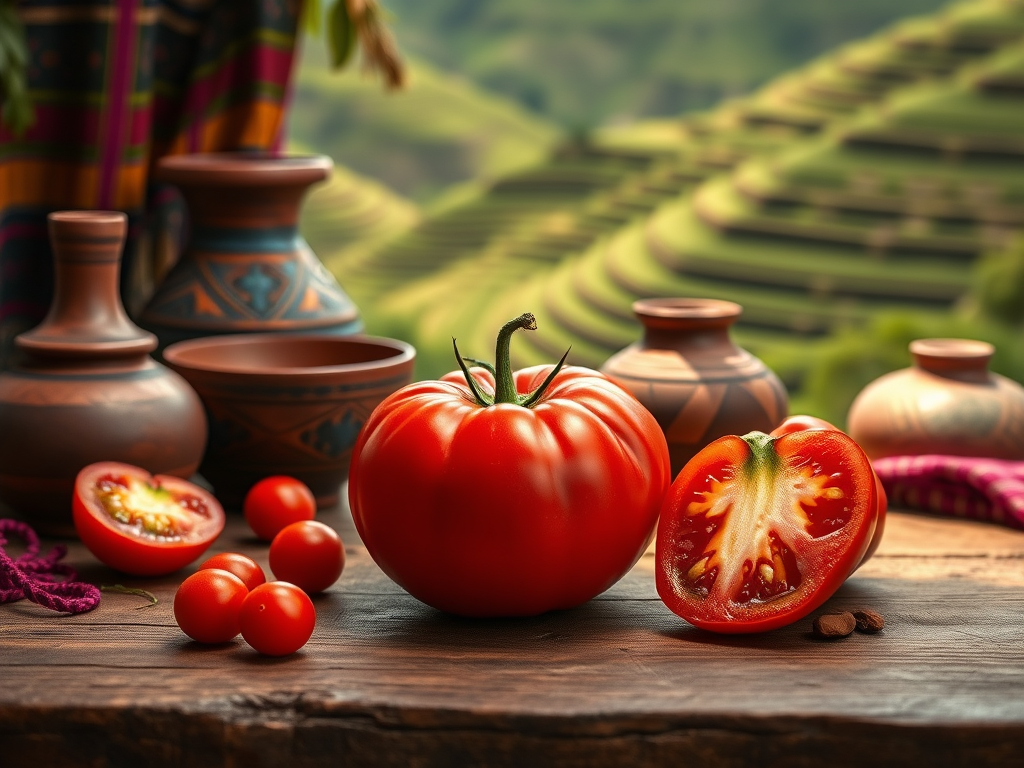
🍅 Tomato — The Wanderer That Changed the World
Solanum Lycopersicum
Some fruits change history quietly. The tomato did not. It arrived like a spark — bright, red, and impossible to ignore — reshaping cuisines, cultures, and entire continents. Today it feels so familiar, so woven into our daily meals, that it’s easy to forget it was once a stranger, a curiosity, even a feared fruit.
This is the story of how the tomato traveled from ancient gardens to global kitchens, carrying with it medicine, myth, and the power to transform the way the world eats.
🌍 When the Tomato Was First Discovered
The tomato is native to the Andean region of South America, especially present‑day Peru, Ecuador, and northern Chile. Wild ancestors of the tomato grew as small, berry‑like fruits — bright, tangy, and eaten by Indigenous peoples long before the world knew their name.
It was later cultivated and domesticated by the Aztecs and other Mesoamerican cultures in what is now Mexico. By the time Europeans arrived, tomatoes were already part of daily life, language, and food.
The Aztec word “xitomatl” (pronounced shee‑to‑ma‑tl) is the root of our modern word tomato.
🧭 Who First Documented the Tomato
The earliest written European record of the tomato comes from Spanish explorers in the early 1500s, who encountered it in Aztec markets and gardens.
The first detailed botanical description was made by Pietro Andrea Mattioli, an Italian physician and botanist, in 1544. He believed it was a type of eggplant — and at the time, that was close enough.
🌿 What the Tomato Was Originally Used For
In Mesoamerica (Before European Contact)
- Eaten fresh
- Cooked into sauces
- Combined with chili and herbs
- Used in stews and ceremonial dishes
- Incorporated into medicinal preparations
The tomato was not exotic — it was everyday food.
In Early Europe
At first, Europeans grew tomatoes as ornamental plants, believing the fruit was poisonous because it belonged to the nightshade family. For nearly 200 years, tomatoes were admired but not eaten.
It wasn’t until the 1700s that Mediterranean cultures — especially Italy and Spain — embraced the tomato as food.
And once they did, the world changed.
🌱 Medicinal Uses — Then & Now
The tomato has lived many lives. Long before it became the heart of sauces and stews, it was a plant of healing — a fruit that carried cooling, cleansing, and restorative qualities across cultures. Its journey through medicine is a story of observation, intuition, and eventually, science catching up to what people already knew.
🌿 Traditional & Historical Uses (Then)
In its earliest homelands — the Andean region and Mesoamerica — the tomato was more than food. It was a cooling fruit, used to settle heat in the body and soothe irritation.
Among Indigenous Peoples of the Americas
Tomatoes were used to:
- Cool fevers
- Soothe inflammation
- Ease digestive discomfort
- Moisten and soften irritated skin
- Balance heat in spicy or acidic dishes
The fruit’s natural juiciness and gentle acidity made it a quiet healer — something that brought the body back into equilibrium.
Early European Herbalism
When tomatoes reached Europe, they were first feared, then studied, then slowly embraced. Herbalists in the 16th–17th centuries believed tomatoes could:
- Support bile flow
- Stimulate appetite
- Aid liver function
- Help with constipation
- Purify the blood (a common belief of the time)
These uses were based on the doctrine of signatures — the idea that a plant’s appearance reveals its purpose. The tomato’s bright red color was associated with vitality and circulation.
🍅 Modern Understanding (Now)
Today, the tomato is recognized not just as food, but as a nutrient‑dense powerhouse with compounds that support the body in subtle, everyday ways.
Lycopene — The Tomato’s Signature Antioxidant
Lycopene is one of the most studied plant compounds in the world. It is linked to:
- Cellular protection
- Heart wellness
- Skin support
- Reduced oxidative stress
Interestingly, lycopene becomes more available when tomatoes are cooked — a rare case where heat deepens a fruit’s medicinal potential.
Vitamin C & Immune Support
Fresh tomatoes offer a gentle dose of Vitamin C, supporting:
- Immune resilience
- Skin repair
- Collagen formation
- Antioxidant defense
It’s not overwhelming — just steady, daily nourishment.
Hydration & Electrolytes
With their high water content and natural potassium, tomatoes help:
- Hydrate the body
- Support muscle function
- Maintain fluid balance
They are a quiet ally during warm seasons or long days.
Digestive Ease
Tomatoes contain natural acids and soft fibers that can:
- Support digestion
- Encourage regularity
- Help the stomach process heavier foods
In many cultures, tomatoes are added to rich dishes to “lighten” them — a culinary instinct that mirrors their digestive benefits.
Skin & Sun Protection (General Information)
Lycopene and beta‑carotene are associated with supporting the skin’s natural defenses. This doesn’t replace sun protection — but it reflects the tomato’s long history as a fruit of cooling and soothing.
A Fruit That Heals Quietly
The tomato’s medicinal story is not dramatic. It doesn’t promise miracles. Instead, it offers daily support — small, consistent benefits that accumulate over time.
It is a fruit of balance, hydration, and quiet protection. A fruit that nourishes the body the way a steady flame warms a home: gently, continuously, and without fanfare.
🌾 Cultural Uses Across the World
The tomato is one of the great travelers of history — a fruit that crossed oceans, rewrote cuisines, and reshaped identity. Wherever it landed, it didn’t just enter kitchens; it entered culture. It became a symbol, a foundation, a flavor that people built their lives around.
Below is a deeper, more expansive journey through the tomato’s cultural presence across the world.
Mexico & Central America — The Birthplace of the Tomato
In its homeland, the tomato is not exotic — it is ancestral. It appears in:
- Salsas (fresh, roasted, fermented)
- Moles
- Stews and tamales
- Atole‑style preparations
- Medicinal broths
For the Aztecs and other Indigenous peoples, tomatoes were part of daily life and ceremonial cooking. They were paired with chilies, herbs, and maize — forming the flavor architecture that still defines Mexican cuisine today.
The tomato here is not an ingredient; it is a root memory.
Italy — Where the Tomato Became Identity
Italy did not invent the tomato — but it transformed it into poetry.
By the 1700s, Italians embraced the tomato with a devotion that reshaped the world. It became the heart of:
- Pomodoro sauces
- Pizza Napoletana
- Caprese salads
- Bruschetta
- Slow‑cooked ragù
In Italy, the tomato became a symbol of home, warmth, and the Mediterranean sun. It is the soul of the cucina povera tradition — simple ingredients elevated through care.
Spain — The Tomato as Celebration
Spain welcomed the tomato early, weaving it into:
- Gazpacho
- Pan con tomate
- Sofrito
- Paella bases
And of course, the world‑famous La Tomatina festival, where tomatoes become a joyful, communal offering — a celebration of abundance and play.
India — The Tomato as Transformation
The Portuguese brought tomatoes to India, and India turned them into a cornerstone of flavor.
Today, tomatoes are essential in:
- Curries
- Dals
- Chutneys
- Sabzis
- Rasam and sambar
Tomatoes brought acidity and brightness to Indian cooking, balancing spices and deepening gravies. They became a bridge between old traditions and new tastes.
🌍 Middle East & North Africa — The Tomato as Foundation
Across the Middle East and North Africa, tomatoes are the quiet base note of countless dishes:
- Shakshuka
- Tagines
- Tomato‑based stews
- Salads like tabbouleh and fattoush
- Slow‑cooked rice dishes
Here, tomatoes symbolize warmth, hospitality, and the comfort of home cooking.
🌍 East & West Africa — The Tomato as Everyday Strength
In many African cuisines, tomatoes form the backbone of beloved dishes:
- Jollof rice
- Pepper soups
- Tomato stews
- Fried tomato bases for vegetables and meats
Tomatoes are part of the rhythm of daily cooking — chopped, simmered, and transformed into deep, layered flavors.
United States — The Tomato as Icon
In the U.S., the tomato became both comfort and culture:
- Tomato soup
- Ketchup
- BLTs
- Southern tomato pies
- Summer heirloom salads
From backyard gardens to diner counters, the tomato became a symbol of American seasonality and simplicity.
Southeast Asia — The Tomato as Brightness
In the Philippines, Indonesia, and Malaysia, tomatoes add acidity and freshness to:
- Sinigang
- Stir‑fries
- Fish stews
- Noodle dishes
They balance sour, salty, and spicy flavors — a quiet harmonizer.
🌏 A Fruit That Belongs Everywhere
The tomato’s cultural journey is a story of adaptation. Wherever it traveled, it listened. It learned the language of local spices, local climates, local hands. It became a vessel for memory — a fruit that carries the taste of home, no matter where home is.
If you want, I can now continue with:
🍽️ Culinary Uses
Tomatoes are one of the most versatile fruits on earth. They can be:
- Raw
- Roasted
- Sun‑dried
- Stewed
- Blended
- Pickled
- Grilled
- Slow‑cooked
- Turned into sauces, soups, and broths
Their acidity, sweetness, and umami make them foundational in cuisines worldwide.
🍽️ Recipes: The Many Lives of the Tomato
The tomato is one of the few ingredients that can be everything at once — bright, deep, sweet, acidic, comforting, and bold. It can be the base of a dish or the star. It can be raw, roasted, stewed, sun‑dried, or crushed into something that tastes like memory.
Below is an expanded set of recipes that honor the tomato’s global story — each one simple, intentional, and rooted in the quiet ritual of cooking.
🥣 1. Slow‑Roasted Tomato Ritual
A grounding, time‑softening recipe that turns tomatoes into caramelized sweetness.
Ingredients
- 6–8 ripe tomatoes
- Olive oil
- Sea salt
- Cracked pepper
- Fresh thyme or rosemary
- 3–4 garlic cloves, smashed
- Optional: drizzle of honey or balsamic
Instructions
- Slice tomatoes in half and place cut‑side up on a baking sheet.
- Drizzle with olive oil and season with salt, pepper, and herbs.
- Scatter garlic around the pan.
- Roast at 250°F (120°C) for 2–3 hours until soft and sweet.
How It Feels
This is a recipe that slows the world down. The tomatoes collapse gently, becoming deeper, sweeter, almost jam‑like — a transformation that feels ceremonial.
🍅 2. Fresh Tomato & Herb Salad (Mediterranean Style)
A bright, cooling dish that tastes like sunlight and sea air.
Ingredients
- 3–4 ripe tomatoes, chopped
- 1 small cucumber, diced
- Handful of fresh parsley or basil
- Olive oil
- Lemon juice
- Sea salt
- Black pepper
Instructions
- Combine tomatoes, cucumber, and herbs in a bowl.
- Dress with olive oil, lemon, salt, and pepper.
- Toss gently and serve immediately.
How It Feels
This is the tomato in its purest form — crisp, juicy, alive.
🍛 3. Tomato Masala Base (Indian Kitchen Essential)
A foundational recipe used in countless curries, dals, and sabzis.
Ingredients
- 3 tomatoes, finely chopped
- 1 onion, diced
- 2 cloves garlic
- 1 inch ginger
- ½ tsp turmeric
- ½ tsp cumin
- ½ tsp coriander
- Salt to taste
- Oil
Instructions
- Sauté onions, garlic, and ginger until golden.
- Add tomatoes and spices.
- Cook until the tomatoes break down and the oil separates.
How It Feels
This is the heartbeat of Indian cooking — warm, aromatic, grounding.
🍞 4. Pan Con Tomate (Spanish Simplicity)
A rustic, soulful dish that turns bread and tomatoes into something transcendent.
Ingredients
- Crusty bread
- 1 ripe tomato
- Olive oil
- Sea salt
- Garlic clove (optional)
Instructions
- Toast bread.
- Rub lightly with garlic.
- Grate tomato directly onto the bread.
- Drizzle with olive oil and sprinkle salt.
How It Feels
This is simplicity elevated — a dish that tastes like summer mornings.
🍝 5. Classic Pomodoro Sauce (Italian Comfort)
A soft, silky sauce that honors the tomato’s sweetness.
Ingredients
- 6–7 ripe tomatoes or canned San Marzano
- Olive oil
- 2 garlic cloves
- Salt
- Basil
Instructions
- Sauté garlic in olive oil until fragrant.
- Add tomatoes and salt.
- Simmer 20–30 minutes.
- Finish with basil.
How It Feels
This is the tomato’s love letter to Italy — warm, soft, and deeply comforting.
🍲 6. Tomato & Lentil Stew (North African Inspired)
A hearty, grounding dish with warmth and depth.
Ingredients
- 2 tomatoes, chopped
- 1 cup red lentils
- Onion
- Garlic
- Cumin
- Paprika
- Salt
- Oil
Instructions
- Sauté onion and garlic.
- Add tomatoes and spices.
- Add lentils and water.
- Simmer until soft and thick.
How It Feels
This stew feels like a blanket — warm, earthy, nourishing.
🍜 7. Tomato & Ginger Broth (Healing, Light, Restorative)
A gentle, soothing broth for days when the body needs softness.
Ingredients
- 2 tomatoes
- 1 inch ginger
- Salt
- Water
- Optional: scallions or cilantro
Instructions
- Simmer tomatoes and ginger in water for 20 minutes.
- Strain or mash lightly.
- Season with salt.
How It Feels
This is a bowl of calm — warm, bright, and restorative.
🍅 A Fruit That Can Be Anything
The tomato is one of the rare ingredients that adapts to every culture, every mood, every season. It can be raw and bright, slow‑cooked and deep, or transformed into something that tastes like memory.
It is a fruit that listens — to heat, to herbs, to the hands that prepare it.
🫑 Is the Tomato a Fruit or a Vegetable?
The tomato lives in two worlds — and that duality is part of its magic. It is a fruit by nature, a vegetable by culture, and a symbol of how food can hold more than one truth at the same time.
Below is a deeper, expanded exploration of this question, written with clarity, warmth, and a sense of lineage.
🌱 Botanically: The Tomato Is a Fruit
In the language of plants, a fruit is the part of the plant that develops from the flower and carries seeds. By this definition, the tomato fits perfectly.
It grows from the blossom. It holds seeds within its flesh. It follows the same botanical pattern as:
- Peppers
- Cucumbers
- Eggplants
- Squash
- Melons
So in the world of botany — the world of roots, flowers, and plant lineage — the tomato is undeniably a fruit.
But that’s only one part of the story.
🍽️ Culinarily: The Tomato Is a Vegetable
In the kitchen, we don’t classify foods by their anatomy — we classify them by their flavor, function, and how they behave in a dish.
Fruits are usually sweet or eaten raw. Vegetables are usually savory or used in cooked dishes.
Tomatoes, with their bright acidity and umami depth, behave like vegetables in:
- Soups
- Stews
- Curries
- Sauces
- Salads
- Roasted dishes
They sit beside onions, garlic, peppers, and herbs — the savory backbone of global cooking.
So in the culinary world, the tomato is treated as a vegetable because of how it tastes and how we use it.
⚖️ Legally: The Tomato Was Declared a Vegetable
In 1893, the U.S. Supreme Court ruled that tomatoes should be classified as vegetables for trade and tariff purposes.
The case — Nix v. Hedden — wasn’t about science. It was about taxes.
Vegetables were taxed. Fruits were not.
The court decided that because tomatoes were used like vegetables in everyday cooking, they should be taxed as such.
So legally, in the United States, the tomato is a vegetable.
🌿 Emotionally: The Tomato Is Both
Food is not just science or law — it is memory, culture, and the way a flavor makes us feel.
The tomato is:
- A fruit in the garden
- A vegetable in the kitchen
- A symbol in the marketplace
- A foundation in global cuisines
It is a shape‑shifter, a bridge between categories, a reminder that not everything needs to fit neatly into one box.
The tomato teaches us that identity can be layered. That something can be two things at once. That truth can be botanical and cultural, scientific and emotional.
🍅 Health & Vitamins
The tomato is one of those rare fruits that nourishes the body in layers — hydration, antioxidants, minerals, and gentle daily support. It doesn’t overwhelm. It doesn’t demand attention. It simply offers what the body needs in a way that feels natural and steady.
Below is a deeper, expanded look at the health benefits and vitamins that make the tomato such a beloved part of global wellness traditions.
🌿 Vitamin C Daily Resilience
Tomatoes carry a soft but meaningful amount of Vitamin C, supporting:
- Immune balance
- Skin repair and collagen formation
- Antioxidant protection
- Iron absorption
It’s not a megadose — it’s a daily, steadying presence.
👁️ Vitamin A (as Beta‑Carotene) Vision & Skin Support
The tomato’s natural pigments contain beta‑carotene, which the body converts into Vitamin A. This supports:
- Eye health
- Skin renewal
- Cellular repair
- Immune function
The deeper the color, the richer the beta‑carotene.
🩸 Vitamin K — Bone & Blood Support
Tomatoes offer Vitamin K, which plays a role in:
- Bone strength
- Healthy blood clotting
- Supporting the body’s natural repair processes
It’s a quiet vitamin, but essential.
💧 Potassium Hydration & Heart Balance
Tomatoes are naturally rich in potassium, a mineral that helps:
- Maintain fluid balance
- Support heart rhythm
- Ease muscle tension
- Regulate blood pressure (general information)
This is part of why tomatoes feel so refreshing in warm weather.
🔥 Lycopene The Tomato’s Signature Antioxidant
Lycopene is the tomato’s most celebrated compound — a powerful antioxidant linked to:
- Cellular protection
- Heart wellness
- Skin support
- Reduced oxidative stress
And here’s the beautiful part: Lycopene becomes more available when tomatoes are cooked. Heat unlocks it — turning sauces, soups, and roasted tomatoes into quiet wellness allies.
🌾 Fiber Gentle Digestive Support
Tomatoes contain soft, soluble fiber that helps:
- Support digestion
- Encourage regularity
- Balance the gut gently
It’s the kind of fiber that feels soothing rather than heavy.
💦 Hydration A Fruit of Water & Lightness
Tomatoes are more than 90% water. This makes them naturally hydrating and supportive during:
- Warm seasons
- Long days
- Physical activity
- Times when the body needs replenishment
They offer hydration with minerals — not just water.
🌱 Phytonutrients Quiet Protectors
Tomatoes contain a constellation of plant compounds that work behind the scenes:
- Flavonoids
- Carotenoids
- Polyphenols
These help soften inflammation and support the body’s natural balance.
🍅 A Fruit That Nourishes Without Noise
The tomato’s health benefits aren’t dramatic — they’re steady. It’s a fruit that supports the body the way a good routine supports a life: quietly, consistently, and with a kind of everyday grace.
🌿 Closing Reflection
The tomato is a reminder that some of the most transformative things in our lives arrive quietly — a seed carried across oceans, a fruit once feared, a flavor that slowly became home. It teaches us that identity can evolve, that belonging can be learned, and that something unfamiliar can become essential with time and care.
From ancient gardens to modern kitchens, the tomato has been a companion to migration, memory, and nourishment. It is a fruit that adapts, listens, and offers itself generously — bright when needed, deep when cooked, comforting when transformed into sauce or stew.
As you explore the tomato in your own kitchen, may it invite you to honor the foods that have traveled far to reach you, the traditions that shaped your table, and the quiet ways nourishment finds its way into your life.
⚠️ Disclaimer
This page offers general information about tomatoes, their history, cultural uses, and nutritional qualities. It is not medical advice and should not be used to diagnose, treat, or replace guidance from a qualified healthcare professional. Every body is different — always listen to your own needs and consult a professional if you have questions about how certain foods may affect you.
 EJADA
EJADA 
Leave a comment