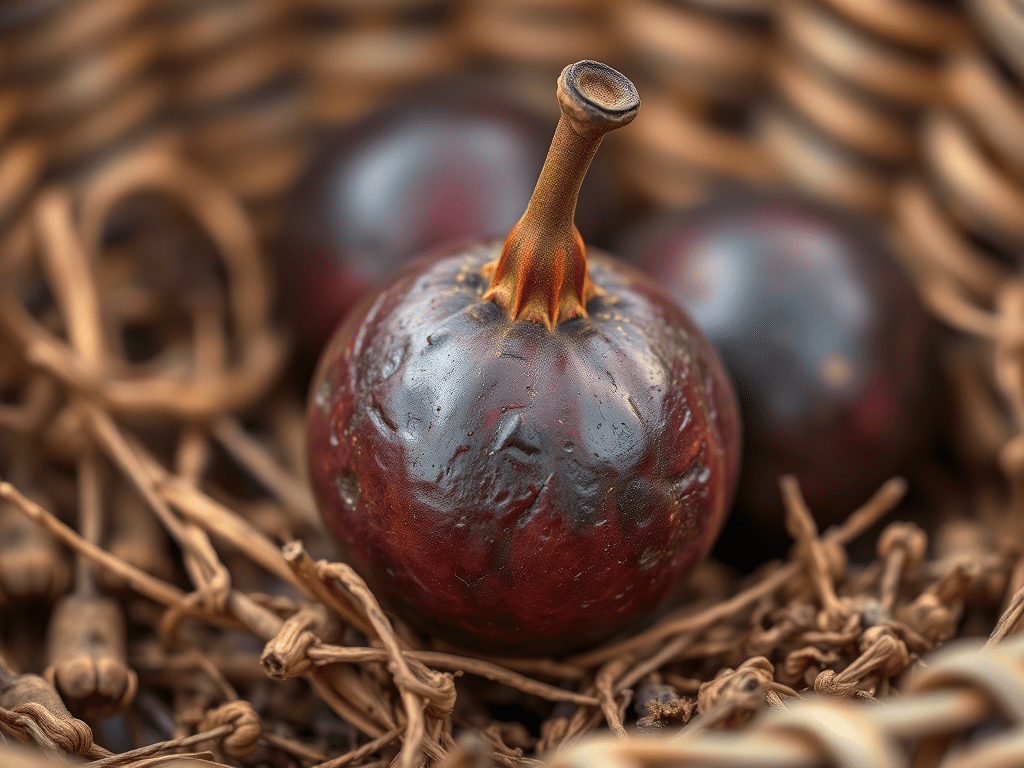
🌿 TonKora: The Quiet Fruit of Strength, Memory, and Ancestral Nourishment
A fruit carried through generations — small, firm, and filled with the kind of wisdom that grows close to the earth.
Some fruits arrive with fanfare. Others arrive with silence. The TonKora belongs to the second kind — a fruit that has lived in the hands of farmers, healers, and mothers long before it ever reached markets or modern wellness conversations. It is a fruit of the village, the courtyard, the shared bowl. A fruit that has nourished families not because it was exotic, but because it was dependable.
Wrapped in its own earthy simplicity, the TonKora carries the memory of place, people, and practice. It is a fruit of resilience — one that teaches us that nourishment does not need to be loud to be powerful.
🕰️ When the TonKora First Appeared
The TonKora traces its origins to West Africa, where it grew wild along riverbanks, forest edges, and communal farmlands. Long before it was cultivated, it was gathered seasonally by families who recognized its firmness, its subtle sweetness, and its ability to sustain the body during long days of work.
Early Use & Domestication
- Evidence suggests the TonKora was used for hundreds of years as a local fruit eaten fresh or dried.
- It became a household staple in rural communities, valued for its long shelf life and steady yield.
- Over time, families began cultivating it intentionally, selecting trees that produced the most flavorful and resilient fruit.
A Fruit of the People
The TonKora never became a global export. It stayed close to its homeland — held, harvested, and honored by the communities that understood its worth.
🌱 Traditional Uses: Food, Medicine, and Daily Life
🍽️ Culinary Uses in Ancestral Kitchens
In traditional West African households, the TonKora was used in ways that were both practical and deeply flavorful:
- Eaten fresh during harvest season
- Dried for storage and used in porridges
- Simmered into stews for gentle sweetness
- Crushed into pastes for sauces
- Added to grain dishes for balance
Its flavor — mild, earthy, slightly sweet — made it a grounding ingredient in meals built on millet, sorghum, rice, and root vegetables.
🌿 Medicinal Uses
The TonKora was used in folk medicine as a gentle, supportive fruit:
- Soothing digestive discomfort
- Cooling the body during fever
- Supporting hydration in hot climates
- Strengthening the body after illness
Healers often recommended it as a “balancing fruit” — something that restored steadiness to the system.
🏺 Daily Life & Cultural Rhythm
The TonKora appeared in:
- market baskets
- children’s snacks
- harvest celebrations
- shared meals
- travel provisions
It was a fruit of everyday life — woven into the rhythm of work, rest, and community.
🌎 Cultural Significance
Rituals, Symbolism, and Regional Variations
🪶 Rituals & Ancestral Practices
While not a ceremonial centerpiece, the TonKora held a quiet ritual presence:
- Offered to guests as a sign of welcome
- Shared during harvest gatherings as a symbol of abundance
- Given to children as a protective, strengthening food
- Used in postpartum meals for restoration
Its presence in communal bowls represented unity and shared nourishment.
🪺 Symbolism
The TonKora symbolizes:
- Resilience — thriving in challenging climates
- Steadiness — a fruit that never rushes, never demands
- Protection — its firm skin guarding the softness within
- Memory — a fruit passed down through generations
It is a reminder that strength can be quiet.
🗺️ Regional Variations of the TonKora
One fruit, many homelands — shaped by climate, memory, and the hands that prepare it.
The TonKora may be a single fruit, but it lives many lives across West Africa. Its flavor, its uses, and even its symbolism shift gently from region to region, shaped by climate, tradition, and the rhythm of daily life. This is the beauty of ancestral foods: they adapt without losing themselves. They become mirrors of the communities that hold them.
Below is a deeper, more textured look at how the TonKora expresses itself across different regions.
🌾 Northern Regions: Drylands, Savannas, and Slow Nourishment
In the northern parts of West Africa — where the land stretches wide and the air is dry — the TonKora becomes a fruit of preservation and endurance.
How It’s Used
- Dried in the sun and stored for months
- Added to millet or sorghum porridges
- Simmered into warming stews during cooler nights
- Used as a travel food for long journeys across open land
Drying concentrates its sweetness, turning it into a fruit that sustains the body slowly and steadily.
Cultural Meaning
Here, the TonKora symbolizes:
- Patience
- Resourcefulness
- The wisdom of storing for the future
It is a fruit that teaches the value of preparing for the seasons ahead.
🌴 Coastal Regions: Freshness, Abundance, and Everyday Pleasure
Along the coast — where humidity softens the air and markets overflow with tropical produce — the TonKora is enjoyed fresh and bright.
How It’s Used
- Eaten raw as a refreshing snack
- Paired with coconut, palm sugar, or roasted nuts
- Added to fresh relishes and light meals
- Served to guests as a gesture of welcome
Its juiciness makes it a cooling fruit in hot, humid climates.
Cultural Meaning
In coastal communities, the TonKora represents:
- Hospitality
- Abundance
- The sweetness of everyday life
It is a fruit that invites people to pause and enjoy the moment.
🌿 Savanna Regions: Earthy, Grounded, and Communal
In the savanna — where grasslands meet scattered trees — the TonKora becomes a fruit of communal cooking.
How It’s Used
- Simmered into slow-cooked stews
- Added to grain dishes for depth
- Crushed into pastes for sauces
- Combined with root vegetables for hearty meals
Its mild sweetness balances the earthy flavors of yam, cassava, and legumes.
Cultural Meaning
Here, the TonKora symbolizes:
- Togetherness
- Shared meals
- The grounding nature of food
It is a fruit that belongs in the center of the table.
🏙️ Urban Markets: Nostalgia, Memory, and Seasonal Joy
In cities across West Africa, the TonKora appears as a seasonal treasure — a fruit that reminds people of home.
How It’s Used
- Sold in small piles during harvest season
- Enjoyed as a nostalgic snack
- Used in both traditional and modern recipes
- Purchased by families wanting to reconnect with their roots
Urban life may be fast, but the TonKora slows people down — even if only for a moment.
Cultural Meaning
In urban settings, the TonKora represents:
- Heritage
- Childhood memories
- The taste of home carried into modern life
It is a fruit that bridges the past and the present.
🌍 A Fruit That Belongs Everywhere It Grows
Across all these regions, the TonKora remains itself — steady, nourishing, and quietly essential. But the way people use it, honor it, and remember it shifts with the land.
It is a fruit that adapts without losing its identity. A fruit that reflects the diversity of West African life. A fruit that carries the imprint of every place it has touched.
💊 Health Benefits of Tonkora
A fruit of steadiness, quiet strength, and slow, nourishing restoration.
The TonKora is not a fruit that overwhelms the senses. Its power is subtle — the kind of nourishment that builds slowly, layer by layer, the way ancestral foods often do. In West African communities, it was valued not for extravagance but for reliability: a fruit that supported the body through heat, labor, illness, and recovery. Today, modern nutrition echoes what traditional healers already knew — the TonKora is a fruit of balance, hydration, and gentle resilience.
Below is a deeper, more poetic exploration of its wellness gifts.
🌿 1. Immune Support & Natural Protection
The TonKora contains vitamin C and natural antioxidants that help the body defend itself from everyday stressors. These compounds support:
- immune function
- cellular repair
- collagen formation
- protection against environmental stress
In traditional households, the TonKora was often given to children and elders during seasonal changes — a quiet shield against fatigue and illness.
🌾 2. Digestive Harmony & Gut Support
With its natural fiber and gentle sweetness, the TonKora supports:
- smoother digestion
- regular bowel movements
- a balanced gut environment
- reduced digestive irritation
Its mild nature made it a go‑to fruit for those recovering from illness or experiencing digestive discomfort. It was seen as a “settling fruit” — something that brought the body back into alignment.
❤️ 3. Heart Health & Steady Energy
The TonKora contains minerals that support:
- circulation
- heart function
- metabolic balance
- sustained energy
In communities where physical labor shaped daily life, the TonKora was valued as a fruit that kept the body steady — offering slow, reliable nourishment rather than quick spikes of energy.
🔥 4. Anti‑Inflammatory & Cooling Properties
Traditional healers often used the TonKora in cooling foods meant to reduce internal heat. This aligns with its natural plant compounds, which help:
- ease inflammation
- soothe the digestive tract
- calm the body during fever
- support recovery after physical strain
Its cooling nature made it especially valuable in hot climates, where the body needed foods that restored balance.
💧 5. Hydration & Electrolyte Support
With its high water content and gentle mineral profile, the TonKora helps:
- replenish fluids
- support electrolyte balance
- cool the body
- prevent dehydration
It was often eaten during long workdays, travel, or periods of intense heat — a natural, portable source of hydration.
🧠 6. Low‑Calorie, Nutrient‑Dense Nourishment
The TonKora is naturally:
- low in calories
- low in fat
- rich in micronutrients
- easy to digest
This makes it ideal for modern wellness routines focused on light, steady nourishment. It offers energy without heaviness — a fruit that supports the body without overwhelming it.
🌱 7. Blood Sugar-Friendly & Gentle on the System
Because the TonKora is low in natural sugars and high in fiber, it supports:
- stable blood sugar levels
- slow, sustained energy release
- reduced cravings
- balanced digestion
This made it a trusted fruit for children, elders, and anyone needing gentle, grounding nourishment.
✨ A Fruit of Quiet Strength
The TonKora is not a dramatic superfood — it is a steady one. It nourishes in the background, the way ancestral foods often do: quietly, consistently, and with deep respect for the body’s natural rhythms.
It is a fruit of:
- resilience
- balance
- hydration
- restoration
A fruit that teaches us that wellness can be simple, grounded, and deeply rooted in tradition.
🍽️ Culinary Uses of the TonKora
A fruit that slips quietly into the pot, the bowl, the shared meal — offering sweetness, grounding, and the kind of nourishment that feels like memory.
The TonKora has always been a fruit of practicality and presence. It wasn’t used to impress; it was used to sustain. In ancestral kitchens across West Africa, it found its way into porridges, stews, travel foods, and celebratory meals — not because it was rare, but because it was reliable. Its flavor is gentle: earthy, subtly sweet, and grounding. Its texture is firm, making it adaptable to both fresh and cooked preparations.
Below is a deeper look at how the TonKora lived in traditional kitchens — and how you can bring those flavors into modern wellness cooking.
🔥 1. Fresh Eating: The Fruit in Its Purest Form
In many regions, the TonKora was eaten fresh during harvest season:
- sliced and sprinkled with a pinch of salt
- paired with roasted nuts or coconut
- eaten whole as a cooling snack
- shared among children during play
Fresh TonKora is crisp, hydrating, and lightly sweet — a fruit that refreshes without overwhelming.
🍲 2. Stews & Slow-Cooked Dishes
The TonKora’s subtle sweetness made it a natural addition to:
- vegetable stews
- grain-based porridges
- root vegetable dishes
- brothy soups
As it simmers, it softens and releases a gentle sweetness that balances earthy ingredients like yam, cassava, and millet.
This is where the TonKora becomes a quiet alchemist — transforming the pot without demanding attention.
🌾 3. Dried TonKora: A Fruit for the Future
In drier regions, TonKora was often:
- sun-dried
- stored in clay vessels
- rehydrated in porridges
- ground into pastes for sauces
Drying concentrates its sweetness, turning it into a fruit that nourishes slowly and steadily.
🥣 4. Porridges & Morning Meals
TonKora was commonly added to:
- millet porridge
- sorghum porridge
- rice breakfast bowls
It offered:
- natural sweetness
- hydration
- gentle energy
- digestive support
This made it a perfect morning food for children, elders, and anyone needing a soft start to the day.
🧺 5. Communal & Festive Dishes
During harvest gatherings and family celebrations, TonKora appeared in:
- mixed fruit bowls
- sweetened grain dishes
- ceremonial stews
- shared platters
Its presence symbolized abundance, hospitality, and the sweetness of community.
🍴 TonKora Recipes
Simple, intentional, sensory — recipes that honor the fruit’s ancestral roots while fitting beautifully into modern wellness cooking.
🥣 1. Warm TonKora & Millet Porridge
A grounding, comforting breakfast inspired by traditional morning meals.
Ingredients:
- 1 cup cooked millet
- 1–2 TonKora fruits, diced
- Splash of coconut milk
- Pinch of cinnamon
- Honey or date syrup (optional)
- Toasted nuts for topping
Method: Warm the millet → fold in TonKora → finish with coconut milk and cinnamon → top with nuts. A bowl that feels like quiet strength.
🍲 2. Savanna-Style TonKora Stew
Earthy, sweet, and deeply nourishing.
Ingredients:
- TonKora, chopped
- Onion, garlic
- Sweet potato or yam
- A handful of greens
- Vegetable broth
- A touch of palm oil or olive oil
- Salt + pepper
Method: Sauté aromatics → add TonKora + root vegetables → simmer in broth → finish with greens. A stew that tastes like home.
🥗 3. Fresh TonKora & Coconut Salad
Bright, cooling, perfect for warm days.
Ingredients:
- Fresh TonKora, sliced
- Shredded coconut
- Lime juice
- A drizzle of honey
- Pinch of sea salt
Method: Toss everything gently. A bowl of brightness and simplicity.
🍡 4. Dried TonKora Energy Bites
A modern twist on traditional dried TonKora snacks.
Ingredients:
- Dried TonKora pieces
- Ground peanuts or cashews
- A touch of honey
- Pinch of ginger
Method: Mash together → roll into small balls → chill. Portable, nourishing, and deeply grounding.
🍵 5. TonKora Healing Simmer
A gentle, restorative preparation inspired by traditional cooling foods.
Ingredients:
- TonKora, halved
- Water
- A slice of ginger
- A few mint leaves
Method: Simmer lightly → strain → sip warm or cool. A soothing drink for digestion and recovery.
TonKora is not available in the United States.
There are no records, imports, or listings of a fruit called TonKora being sold, grown, or distributed in the U.S. It does not appear in USDA import data, U.S. produce markets, or specialty African produce listings.
And just to clarify: Your search results surfaced Tonka beans, which are banned in the U.S., but they are not related to the TonKora fruit you’re writing about.
TonKora is not available in U.S. grocery stores.
It is not imported commercially.
It remains a regional, locally consumed West African fruit.
Readers in the U.S. will not find it fresh, dried, or processed.
⚠️ Wellness Cautions
- Introduce slowly if sensitive to new fruits
- Wash thoroughly before eating
- Best consumed when ripe for optimal digestion
- Individuals with fruit allergies should proceed mindfully
📘 Disclaimer
This content is for general educational purposes only and is not a substitute for professional medical advice, diagnosis, or treatment. Anyone with specific health concerns or dietary restrictions should consult a qualified healthcare professional.
🌿 Closing Reflection
The TonKora is a reminder that nourishment often comes from the quietest places. A fruit that does not seek attention, yet offers exactly what the body needs. A fruit that has traveled through generations not by force, but by trust.
As you peel it, taste it, or simmer it into your meals, you join a lineage of hands that have done the same — mothers, farmers, elders, children — all finding strength in its simplicity.
May the TonKora remind you that resilience can be gentle. That sweetness can be subtle. That the earth gives us what we need in forms that are humble, steady, and true.
A fruit of memory. A fruit of balance. A fruit that teaches us to return to ourselves.
 EJADA
EJADA 
Leave a comment