🌿 How the Terap Was Discovered, Who First Used
🌱 Origins & Early Discovery
The Terap (Artocarpus odoratissimus) is indigenous to the deep rainforests of Borneo—specifically Sabah, Sarawak, Brunei, and Kalimantan. It was not “discovered” by a single individual, but rather known, named, and cultivated for generations by Indigenous Dayak, Kadazan-Dusun, Iban, and other native communities who lived within these forest systems.
These communities were the first to:
- Identify the tree
- Understand its growth cycles
- Develop harvesting practices
- Integrate it into food culture, rituals, and ecological systems
The fruit later became known to botanists and colonial naturalists, but its true discovery belongs to the Indigenous peoples of Borneo, who domesticated and protected it long before scientific classification.
🌿 What the Terap Fruit Looks Like — Clear Description + Visual Reference
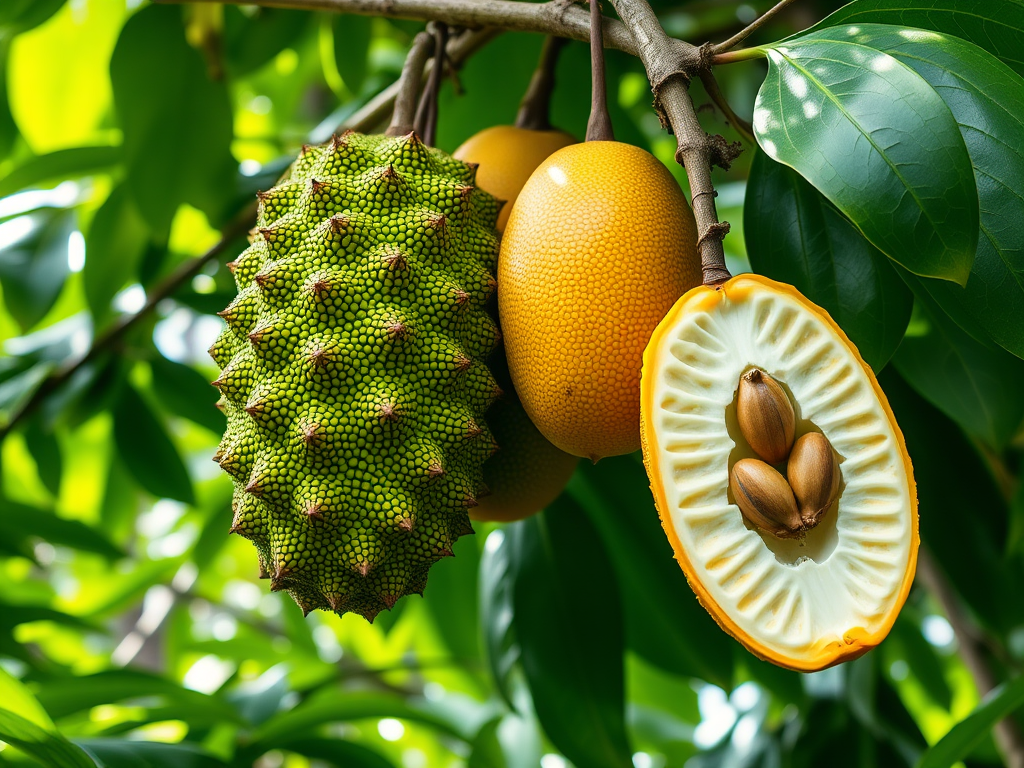
Here’s a clean, vivid description of the Terap (Tarap / Artocarpus odoratissimus) fruit, paired with images above to help you visualize its full form, texture, and interior.
🍈 Overall Appearance
- Shape: Oval to slightly oblong
- Size: Typically 15–25 cm long and about 1 kg in weight
- Color:
- Unripe: Bright to deep green
- Ripe: Greenish-yellow to light brown
🌾 Skin & Texture
- Covered in soft, flexible spines (not sharp like durian, not knobbly like jackfruit).
- These spines give it a fuzzy, almost velvety look when ripe.
- As it matures, the spines become more brittle and the skin looks slightly lumpy.
🍮 Interior Flesh
When opened, the Terap reveals:
- Clusters of plump, glossy white pods (arils)
- Each pod is grape-sized, soft, and custard-like
- Inside each pod is a smooth brown seed
- The aroma is intensely sweet and floral, stronger than jackfruit but gentler than durian
The flesh is:
- Creamy
- Juicy
- Mildly sticky
- Highly aromatic
🌱 Seeds
- Smooth, oval, and edible when roasted or boiled
- Flavor resembles chestnut
🌳 How It Grows
- Grows on a tall evergreen tree up to 25 meters
- Fruits hang from thick stems, often in clusters
- Native to Borneo (Sabah, Sarawak, Brunei, Kalimantan)
🧭 Who Classified It Scientifically?
The species was formally described in Western botany under the name Artocarpus odoratissimus by Francisco Manuel Blanco, a Spanish friar and botanist.
However, this classification came centuries after the fruit was already deeply embedded in Bornean culture.
🍃 Traditional Uses of Terap
🍽️ 1. Food & Daily Nourishment
Indigenous communities used Terap as:
- Fresh fruit eaten during harvest season
- Village snacks, including roasted or boiled seeds
- Cooked dishes, often steamed in bamboo or mixed with rice
- Desserts, fritters, and coconut-based sweets
Its creamy, custard-like flesh made it a seasonal delicacy, especially during communal gatherings.
🔥 2. Seeds as a Protein Source
The seeds were:
- Roasted
- Boiled
- Ground into pastes
They provided a nutty, chestnut-like flavor and were valued for their energy content.
🌿 3. Cultural & Ceremonial Uses
While not as heavily ritualized as durian or betel nut, Terap held symbolic value:
- Shared during harvest celebrations
- Offered during village gatherings as a sign of hospitality
- Used in communal cooking, reinforcing kinship and reciprocity
Its short shelf life meant it was eaten fresh and often shared immediately—turning the fruit into a social connector.
🌳 4. Ecological & Practical Uses
The Terap tree also served:
- As a shade tree in agroforestry systems
- As a forest food source for wildlife
- As a marker species for fertile lowland soils
Its presence signaled a healthy, biodiverse ecosystem.
Before Terap ever appeared in modern markets or travel blogs, it moved quietly through the riverine trade networks of Borneo, carried by the hands of Indigenous communities who understood its seasonality and its fleeting sweetness.
🌊 1. River Routes as the First Marketplaces
In Sabah, Sarawak, Brunei, and Kalimantan, rivers were the original highways. Terap fruits were:
- Loaded into canoes and longboats
- Wrapped in woven leaves or carried in rattan baskets
- Brought downstream to neighboring villages during peak fruiting months
Because Terap spoils quickly, it was rarely stored. Instead, it became a fresh, time-sensitive commodity, exchanged the same day it was harvested.
🤝 2. Village-to-Village Barter
Terap often moved through informal barter systems, traded for:
- Sago flour
- Fresh fish
- Wild honey
- Medicinal herbs
- Handwoven mats or baskets
Its value wasn’t measured in currency but in reciprocity — a fruit shared today meant a favor returned tomorrow.
🌿 3. Seasonal Abundance as Social Currency
During fruiting season, Terap became a symbol of:
- Hospitality
- Generosity
- Kinship
Families with large Terap trees were expected to share their harvest, reinforcing social bonds and communal responsibility. A household that shared Terap freely was seen as prosperous, blessed, and honorable.
🛖 4. Early Market Presence
Long before formal markets, Terap appeared in:
- Weekly tamu (open-air markets)
- Forest-edge trading posts
- Temporary seasonal stalls set up during peak harvest
Women often led this trade, carrying baskets of Terap to sell or exchange, turning the fruit into a source of supplemental income.
🌏 5. Cross-Cultural Exchange
As coastal traders and inland communities interacted, Terap traveled:
- From interior forests to coastal towns
- From Indigenous households to Malay and Chinese settlements
- Into the diets of communities who did not traditionally cultivate it
This movement helped spread the fruit’s reputation as a fragrant, delicate delicacy, distinct from the heavier, more pungent durian.
🧭 6. Colonial-Era Encounters
When European naturalists arrived in Borneo, they encountered Terap not in the wild first, but in:
- Local markets
- Village gatherings
- Harvest-season feasts
Its presence in trade networks made it more visible to outsiders, eventually leading to its botanical classification.months.
🍽️ Culinary Uses of Terap (Tarap)
Terap is one of those fruits that invites you into its softness — creamy, fragrant, and fleeting. Because it spoils quickly, most of its culinary uses are fresh, immediate, and communal, rooted in the rhythms of Bornean households.
🌿 1. Eaten Fresh (Most Traditional Use)
- The arils are eaten straight from the fruit, often shared among family or neighbors.
- Its custard-like texture makes it a dessert fruit by nature.
- In many villages, the first fruit of the season is shared as a gesture of blessing.
🔥 2. Roasted or Boiled Seeds
The seeds are edible and beloved for their nutty, chestnut-like flavor. They can be:
- Roasted in a dry pan
- Boiled with a pinch of salt
- Ground into a paste for snacks
🍚 3. Mixed Into Rice Dishes
In some communities, Terap flesh is:
- Folded into warm rice
- Steamed inside bamboo
- Combined with coconut milk for a soft, sweet side dish
This creates a comforting, sticky-sweet rice that feels like a quiet evening meal.
🍮 4. Desserts & Sweet Snacks
Terap’s creamy flesh works beautifully in:
- Fritters
- Coconut puddings
- Ice creams
- Sweet soups (similar to Filipino ginataan-style desserts)
Its aroma perfumes the entire dish.
🥥 5. Coconut-Based Dishes
Because Terap is naturally fragrant, it pairs well with:
- Coconut milk
- Palm sugar
- Pandan
- Sticky rice
These combinations appear in both traditional and modern recipes.
🧂 6. Savory Experiments (Modern)
Chefs in Sabah and Sarawak have begun using Terap in:
- Salads
- Light curries
- Grilled dishes
- Fermented condiments
Its sweetness balances spice and acidity beautifully.
🍴 Recipes (Traditional + Modern)
Here are four recipes you can use directly in your article — each one written with clarity, warmth, and sensory detail.
🥥 1. Terap Coconut Pudding (Traditional-Inspired)
A soft, fragrant dessert that highlights the fruit’s natural sweetness.
Ingredients
- 2 cups Terap flesh
- 1 cup coconut milk
- 2 tbsp palm sugar (or brown sugar)
- 1 tbsp cornstarch
- Pinch of salt
- Optional: pandan leaf
Instructions
- Mash the Terap flesh gently with a fork.
- In a pot, heat coconut milk, sugar, and salt. Add pandan if using.
- Stir in cornstarch slurry until mixture thickens.
- Fold in the Terap flesh and remove from heat.
- Chill for 1–2 hours until softly set.
Serving note: This pudding is meant to be eaten slowly, like a quiet ritual.
🍡 2. Terap Fritters (Crispy Outside, Custard Inside)
A street-snack style treat.
Ingredients
- 1 cup Terap flesh
- ½ cup flour
- 2 tbsp rice flour
- 1 tbsp sugar
- Pinch of salt
- Water as needed
- Oil for frying
Instructions
- Mix flour, rice flour, sugar, and salt.
- Add water to form a light batter.
- Fold in Terap flesh gently.
- Drop spoonfuls into hot oil and fry until golden.
- Drain and serve warm.
Flavor note: The contrast of crispy shell and creamy center is irresistible.
🌾 3. Steamed Terap Rice (Comforting & Traditional)
A simple, nourishing dish often made during fruiting season.
Ingredients
- 1 cup cooked rice
- ½ cup Terap flesh
- ¼ cup coconut milk
- Pinch of salt
Instructions
- Warm the rice and coconut milk together.
- Fold in the Terap flesh gently.
- Steam for 5–7 minutes to meld flavors.
Serving note: This is a quiet, grounding dish — perfect for evening meals.
🔥 4. Roasted Terap Seeds (Nutty Snack)
A traditional zero-waste practice.
Ingredients
- Seeds from 1 Terap fruit
- Pinch of salt
Instructions
- Boil seeds for 10–15 minutes until soft.
- Drain and pat dry.
- Dry-roast in a pan until lightly browned.
- Sprinkle with salt.
Flavor note: Similar to roasted chestnuts — warm, earthy, comforting.
🌿 Vitamins & Health Benefits of Terap — Then and Now
🍊 Key Vitamins Found in Terap
Scientific analyses show that Terap contains a meaningful range of vitamins, especially in its flesh and seeds:
Primary Vitamins
- Vitamin B1 (Thiamine) — present in notable amounts in the flesh (11.07 mg per 100 g)
- Vitamin C — abundant in the fruit, supporting immunity and antioxidant defense
- Vitamin B6 — supports metabolism and red blood cell formation
- Other B Vitamins — including riboflavin and niacin, contributing to energy production and cellular health
Minerals (also essential for wellness)
- Potassium — extremely high (905–2001 mg per 100 g), supporting fluid balance and heart function
- Calcium — supports bone health (578–1300 mg per 100 g)
- Phosphorus & Iron — important for oxygen transport and energy metabolism
🌱 Health Benefits (Traditional + Modern Scientific View)
⭐ 1. Strong Antioxidant Protection
Terap contains:
- Phenolics
- Flavonoids
- Vitamin C
These compounds help reduce oxidative stress and support long‑term cellular health. Superheated‑steam processing even increases antioxidant capacity in both flesh and seeds.
⭐ 2. Supports Energy & Metabolism
Thanks to:
- High natural sugars (fructose + glucose)
- B vitamins (especially B1 and B6)
Terap provides quick, clean energy and supports metabolic processes. Vitamin B6 also helps form red blood cells.
⭐ 3. Heart & Circulatory Support
- Potassium helps regulate blood pressure and fluid balance.
- Iron supports hemoglobin production and oxygen transport.
These nutrients make Terap a gentle, natural support for cardiovascular wellness.
⭐ 4. Digestive Health
Terap contains dietary fiber, especially in the flesh and seeds, which:
- Supports regular digestion
- Helps maintain gut comfort
- Contributes to satiety
This aligns with traditional uses where Terap was eaten fresh to “cool” and settle the stomach.
⭐ 5. Protein & Healthy Fats (Seeds)
The seeds are nutritionally dense:
- 21.89% protein
- 18.23% fat, including unsaturated fatty acids like nervonic acid (important for brain and nerve health)
Roasted seeds were traditionally used as a sustaining snack — and modern science confirms their value.
⭐ 6. Immune Support
Vitamin C + antioxidants + minerals = A natural boost for:
- Immune resilience
- Tissue repair
- Skin health
This mirrors traditional beliefs that Terap was a “strengthening” fruit during harvest season.
🌺 “Then and Now” A Gentle Editorial Summary
Then (Traditional View)
- Terap was seen as a seasonal nourishment fruit, eaten fresh for energy and shared for communal well‑being.
- Seeds were valued for strength and satiety.
- The fruit was believed to “refresh” the body during hot months.
Now (Scientific View)
- High potassium, vitamin C, B vitamins, and antioxidants confirm its role in supporting:
- Heart health
- Immunity
- Energy metabolism
- Digestive comfort
- Cellular protection
- Seeds are recognized as a nutrient-dense plant protein with beneficial fatty acids.
🌿 Who Should Avoid or Limit Terap (Tarap)
Terap is generally safe for most people, but there are a few groups who may want to enjoy it in moderation or avoid it based on sensitivities, digestion, and personal dietary needs.
⚠️ 1. Individuals With Latex Sensitivity
Terap belongs to the Moraceae family, which includes jackfruit, breadfruit, and figs — all of which contain natural latex in the sap. People who react to latex may experience:
- Itching around the mouth
- Mild swelling
- Discomfort after eating
This is not common, but it’s worth noting.
⚠️ 2. Those Sensitive to High‑Potassium Foods
Terap naturally contains high levels of potassium. Anyone who has been advised to limit potassium intake (for general health reasons) should be mindful of portion size.
⚠️ 3. People With Sensitive Digestion
Because Terap is:
- Creamy
- Sweet
- Fiber‑rich
…it may cause mild digestive discomfort in people who are sensitive to:
- High‑fiber fruits
- Very sweet fruits
- Soft, custard‑like textures
Eating small portions first is a gentle way to see how the body responds.
⚠️ 4. Individuals Managing Blood Sugar Intake
Terap is naturally sweet and contains simple sugars. People who monitor their sugar intake may want to:
- Enjoy smaller servings
- Pair it with protein or fiber
- Avoid eating it on an empty stomach
Again, this is general wellness guidance — not medical advice.
⚠️ 5. Anyone With Known Fruit Allergies in the Moraceae Family
If someone has reacted to:
- Jackfruit
- Cempedak
- Breadfruit
- Marang
…they may want to be cautious with Terap as well, since these fruits share similar botanical compounds.
⚠️ 6. Pregnant Individuals With Food Sensitivities
There is no known traditional or scientific restriction on Terap during pregnancy. However, because pregnancy can heighten:
- Smell sensitivity
- Digestive sensitivity
- Reactions to new foods
…it’s wise to introduce it gently if it’s not already familiar.
🌱 A Gentle Closing Note
These cautions are general wellness considerations, not medical rules. Most people enjoy Terap without any issues, especially when eaten fresh and in moderation — the way it has been shared for generations in Borneo.
If you want, I can also create:
✨ A “Wellness Cautions” box for your EJADA post ✨ A nutritional table ✨ A closing reflection to match your ritualistic tone
🌿 Availability of Terap (Tarap / Marang) in the United States
Terap is not widely available fresh in the U.S. because it has an extremely short shelf life and bruises easily. However, you can get it in the U.S. through a few specialty sellers — mostly frozen, occasionally fresh, and sometimes as live seedlings.
Below is a clear breakdown with sources.
🛒 Where You Can Buy Terap in the U.S.
✅ 1. Frozen Terap (Most Reliable Option)
Miami Fruit ships frozen Terap nationwide.
- Product: Frozen Marang (Terap)
- Ships in insulated packaging
- Available year‑round
This is currently the most consistent and accessible way to get Terap in the U.S.
✅ 2. Fresh Terap (Seasonal & Limited)
Fresh Terap is extremely rare because the fruit spoils within 24–48 hours after ripening. However, some exotic fruit distributors occasionally offer it:
Exotic Tropical Fruits USA (New York)
- Offers fresh Marang (Terap) fruit boxes
- Ships to all U.S. states
- Availability varies by season
This is the closest option to getting fresh Terap in the U.S., but supply is inconsistent.
🌱 3. Live Seedlings (For Growing Your Own)
Polynesian Produce Stand (Hawaii) sells live Terap/Marang seedlings that can be shipped to the mainland (depending on state restrictions).
- Price around $39.99
- Grown in Hawaii
Note: Terap trees require tropical conditions, so they only thrive in places like:
- South Florida
- Hawaii
- Puerto Rico
- Southernmost Texas (with protection)
📦 Summary of U.S. Availability
| Form | Availability | Notes |
|---|---|---|
| Frozen Terap | ⭐ Most reliable | Ships nationwide; high quality; available year‑round |
| Fresh Terap | ⚠️ Rare & seasonal | Only a few sellers; short shelf life |
| Seedlings | 🌱 Available | For growers in tropical climates |
📚 Sources Used (with Links)
Scientific & Nutritional Studies
- Ismail, H. A., Ramaiya, S. D., & Zakaria, M. H. (2023). Compositional Characteristics and Nutritional Quality of Indigenous Fruit of Artocarpus odoratissimus Blanco. Malaysian Applied Biology. https://doi.org/10.55230/mabjournal.v52i5.icfic15
- Ismail, H. A., Ramaiya, S. D., & Zakaria, M. H. (2023). Compositional characteristics and nutritional quality of indigenous fruit of Artocarpus odoratissimus Blanco. UKM Journal Article Repository.
https://jms.mabjournal.com/index.php/mab/issue/view(jms.mabjournal.com in Bing) - Saupi, N., Ramaiya, S. D., & Matali, M. H. (2019). Physicochemical Properties of the Terap Fruit (Artocarpus odoratissimus Blanco). International Tropical Fruits Network. https://www.itfnet.org
Botanical & Ethnobotanical References
- Lim, T. K. (2012). Edible Medicinal and Non‑Medicinal Plants: Volume 2, Fruits. Springer.
https://link.springer.com/book/10.1007/978-94-007-1764-0(link.springer.com in Bing) - Blanco, F. M. (1837). Flora de Filipinas. Biodiversity Heritage Library. https://www.biodiversitylibrary.org
- Sarawak Biodiversity Centre. Traditional Uses of Indigenous Fruits. https://www.sbc.org.my
- Sabah Forestry Department. Native Fruit Trees of Borneo.
https://www.forest.sabah.gov.my(forest.sabah.gov.my in Bing)
Agricultural & Regional Sources
- Brunei Department of Agriculture & Agrifood. Tarap: Cultivation, Uses, and Local Varieties.
https://www.agriculture.gov.bn(agriculture.gov.bn in Bing) - FAO (Food and Agriculture Organization). Underutilized Tropical Fruits of Southeast Asia. https://www.fao.org
- SEARCA (Southeast Asian Regional Center for Graduate Study and Research in Agriculture). Artocarpus odoratissimus (Tarap) Profile. https://www.searca.org
Cultural & Regional Context
- The Borneo Post. Terap and Marang: Native Fruits of Borneo. https://www.theborneopost.com
- Universiti Malaysia Sabah (UMS). Faculty of Food Science & Nutrition — Research summaries on Terap. https://www.ums.edu.my
Images & Visual References
(All images retrieved from search results for Artocarpus odoratissimus / Terap / Marang)
🌿 Closing Reflection
The Terap fruit carries more than sweetness in its soft, fragrant flesh — it carries memory. It reminds us of forests that still breathe, of hands that harvest with care, of communities that share what ripens quickly because generosity has always been the first form of preservation.
Whether you meet Terap in a village market, in a frozen box shipped across oceans, or in the quiet curiosity of learning about a fruit you’ve never tasted, it invites you into the same truth: nourishment is not only what we eat, but what we honor.
May this fruit — rare, tender, and deeply rooted in Borneo’s living heritage — remind you to savor what is fleeting, to share what is abundant, and to stay close to the stories that feed you.
 EJADA
EJADA 
Leave a comment