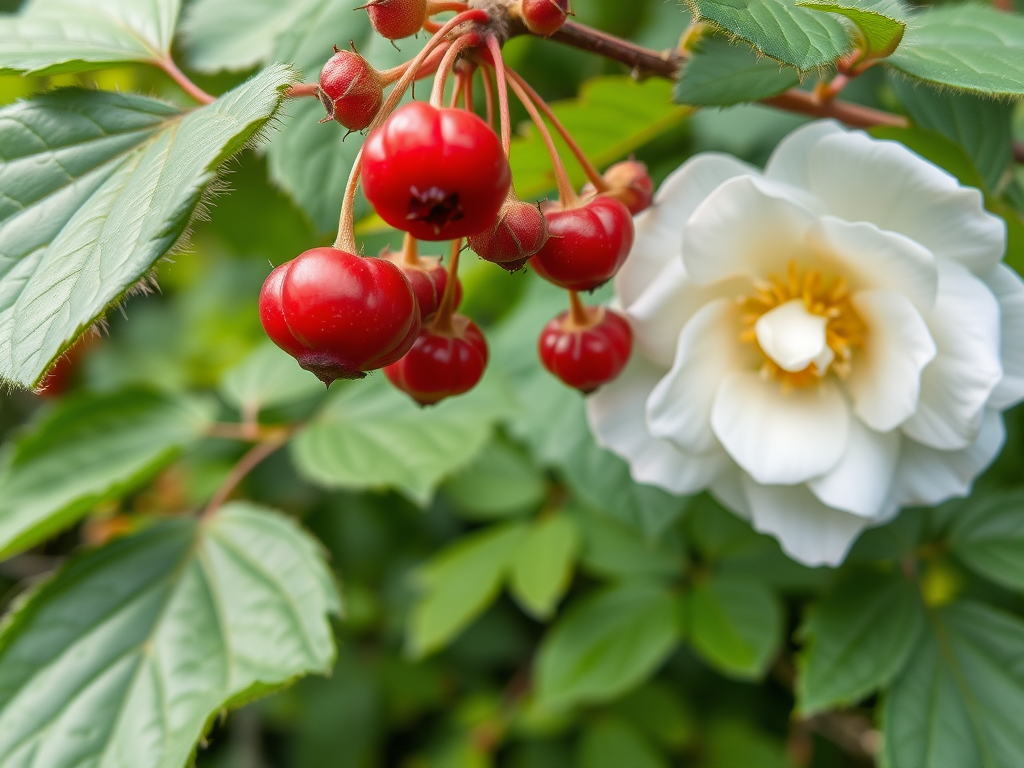
What is special about a Thimbleberry?
Thimbleberries are special because they’re incredibly delicate, intensely flavorful, and deeply rooted in Indigenous food traditions—yet almost never found in stores due to how quickly they spoil. Their thornless canes, huge velvety leaves, and rose‑like white flowers make them one of the most distinctive wild berries in North America.
🍓 What Makes Thimbleberries Unique?
🌿 1. Thornless, Soft, and Velvety
- Unlike raspberries or blackberries, thimbleberry stems have no thorns, making them easy to forage.
- Their large, fuzzy, maple‑like leaves can reach up to 10 inches across.
🍇 2. A Berry That Melts in Your Hand
- The fruit is extremely soft, fragile, and hollow, slipping off the stem like a tiny thimble—hence the name.
- They bruise instantly and spoil within a day, which is why you’ll almost never see them in grocery stores.
🍯 3. A Flavor People Obsess Over
- Often described as a blend of raspberry + strawberry + a floral, earthy note.
- Their softness gives them a jam-like texture right off the plant.
🫙 4. Legendary for Jam
- Because they’re so delicate, thimbleberries shine in jams, jellies, sauces, pies, and muffins.
- Many foragers consider thimbleberry jam the best wild berry preserve due to its intense flavor.
🌱 5. Edible Shoots & Medicinal Uses
- Young shoots can be peeled and eaten raw or cooked—sometimes compared to asparagus.
- Indigenous communities traditionally used:
- Leaves for teas to soothe digestion
- Leaves and roots for treating wounds, burns, diarrhea, and dysentery
🏞️ 6. A Plant of the Northern Forests
- Native from Alaska to Mexico and across the Rockies and Great Lakes.
- Thrives in cool, moist, shady forest edges, clearings, and disturbed areas like post‑fire landscapes.
🌼 7. Stunning Flowers
- Large, white, rose-like blooms (1.5–2 inches across) appear in late spring.
- Among the largest flowers of any Rubus species.
✨ Why People Love Thimbleberries
- Rare and seasonal—a true forager’s treasure.
- Deep cultural significance, especially among Indigenous communities.
- Unmatched flavor that doesn’t survive commercial handling.
- Beautiful ornamental shrub with golden fall color and showy flowers.
🍓 Thimbleberry: A Story of Softness, Survival, and the Forest’s Quiet Generosity
The thimbleberry is one of those plants that feels like it remembers us. It grows where the forest is healing—along old burns, on the edges of trails, in places where the land is stitching itself back together. It is a berry of thresholds, appearing where light meets shade, where disturbance meets renewal.
For many Indigenous communities across the northern forests of North America, the thimbleberry is more than a fruit. It is a seasonal signal, a medicine, and a teacher of gentleness.
🌿 A Berry That Refuses to Be Rushed
Thimbleberries ripen slowly, one by one, never in a hurry. Their skins are so delicate that they collapse at the slightest pressure. You cannot harvest them with force. You cannot store them for long.
To gather thimbleberries, you must move slowly, breathe with the land, and accept that some berries will fall apart in your hands. This softness is part of their teaching: not everything meant for nourishment is meant for possession.
🪶 Ancestral Uses & Forest Knowledge
Across the Great Lakes, Pacific Northwest, and Alaska, thimbleberries appear in stories, seasonal calendars, and everyday practices:
🍵 Leaves as Medicine
- Dried leaves brewed into teas for digestion, fever, and stomach ailments
- Poultices made from leaves to soothe burns, rashes, and wounds
- A plant used not only for nourishment but for restoration
🫙 Berries as Ceremony
Because the berries spoil within hours, they were often eaten fresh or transformed immediately:
- Cooked into jams and preserves for winter
- Mixed with other berries in communal meals
- Offered during gatherings as a sign of abundance and gratitude
The fleeting nature of the berry made it precious. Its softness demanded presence.
🌸 Flowers as Signals
The large white blossoms—among the biggest in the Rubus family—were read as markers of:
- salmon runs
- berry season progression
- the health of the forest edge
In many traditions, the blooming of thimbleberry meant the land was entering a period of generosity.
🌲 A Berry of the Forest’s Memory
Thimbleberries thrive in places touched by fire, windfall, or human clearing. They are among the first to return, spreading wide leaves that shade the soil and invite other species to follow.
In this way, the thimbleberry is a succession plant, a quiet healer of disturbed ground. It teaches that softness is not weakness— it is a strategy for survival.
✨ Symbolism & Ancestral Meaning
Across cultures, thimbleberries carry themes of:
- Ephemerality — sweetness that cannot be hoarded
- Reciprocity — a gift that asks for gentleness
- Regeneration — thriving in places recovering from loss
- Community — berries gathered together, shared immediately, eaten in the moment
🍓 Health & Wellness Notes on Thimbleberries
A gentle, culturally rooted, non‑medical overview
Thimbleberries have been used for generations across the northern forests—not as a miracle cure, but as a soft, supportive food and plant ally. Their benefits come from their natural nutrients, their fiber, and the traditional ways communities have used their leaves and berries.
Below is a balanced, reader‑friendly breakdown.
🌿 1. Naturally High in Antioxidants
Thimbleberries contain:
- anthocyanins
- vitamin C
- polyphenols
These compounds are commonly found in richly colored berries and are known to help the body manage oxidative stress. In traditional contexts, this was understood simply as “strengthening the body” or “keeping the blood clean.”
🍃 2. Gentle Digestive Support (Traditional Use)
Indigenous communities often used thimbleberry leaves as:
- a mild digestive tea
- a soothing preparation for stomach discomfort
- a gentle support during diarrhea or digestive imbalance
This aligns with the plant’s natural tannins, which can have a calming effect on the gut.
🍇 3. High Fiber for Natural Regularity
Like raspberries, thimbleberries are rich in dietary fiber, which supports:
- healthy digestion
- natural elimination
- a feeling of fullness
This makes them a nourishing seasonal food rather than a “superfood.”
🌸 4. Skin & Wound Support (Traditional External Use)
Crushed leaves were historically used as poultices for:
- minor burns
- rashes
- small wounds
This was less about “healing” in a modern medical sense and more about the leaf’s cooling, protective qualities.
🌱 5. A Plant of Recovery & Regeneration
This is a symbolic and ecological benefit, but it matters:
Thimbleberries thrive in disturbed soil—after fires, storms, or human clearing. They are often one of the first plants to return, shading the soil and preparing it for new growth.
For many communities, this made the plant a symbol of resilience, and foods with symbolic meaning often carried emotional or spiritual nourishment as well.
🍯 6. Natural Energy from Simple Carbohydrates
Because the berries are soft and sweet, they offer:
- quick, gentle energy
- easy-to-digest carbohydrates
- a light, refreshing boost during foraging or travel
This is why they were often eaten fresh on the trail.
🌼 7. Subtle Anti‑Inflammatory Compounds
Like many wild berries, thimbleberries contain natural plant compounds that have been studied for their potential anti‑inflammatory properties. These are not medical treatments, but they contribute to the berry’s traditional reputation as a “balancing” or “cooling” food.
✨ Little‑Known Notes
These are the kinds of details your readers love—quiet, surprising, rooted in tradition:
🍃 The young shoots are edible
Peeled and eaten raw or lightly cooked, they were considered a spring tonic—something fresh and green after a long winter.
🌿 The leaves were sometimes used as makeshift plates
Their size and softness made them perfect for wrapping food or serving berries.
🫙 Thimbleberry jam was a winter medicine
Not in a clinical sense, but as a comfort food that lifted spirits and brought the memory of summer into the cold months.
🍓 Top Thimbleberry Recipes
The classics, the beloved, and the quietly extraordinary
⭐ 1. Thimbleberry Jam (the iconic recipe)
The most famous use of thimbleberries. Their natural softness turns into a lush, velvety jam with almost no effort. Often described as “the best wild berry jam in the world.”
⭐ 2. Thimbleberry Syrup
A pourable, jewel‑toned syrup perfect for:
- pancakes
- yogurt
- ice cream
- cocktails
- drizzling over warm cornbread
⭐ 3. Thimbleberry Muffins
Soft, fragrant, and naturally moist because the berries melt into the batter. A quiet morning recipe.
⭐ 4. Thimbleberry Pie or Galette
Because the berries are delicate, they create a jammy, almost custard‑like filling. A rustic galette works beautifully.
⭐ 5. Thimbleberry Crumble
A simple, comforting dessert where the berries collapse into a warm, tart-sweet base under a buttery oat topping.
⭐ 6. Thimbleberry Vinaigrette
A lesser‑known recipe — the berry’s acidity and floral notes make a stunning dressing for:
- mixed greens
- roasted beets
- grilled salmon
⭐ 7. Thimbleberry Tea (from the leaves)
A traditional digestive tea made from dried leaves. Earthy, grounding, and culturally significant.
⭐ 8. Thimbleberry & Honey Butter
A soft, spreadable blend of mashed berries and whipped honey butter. Perfect for warm bread or scones.
⭐ 9. Thimbleberry Chia Jam (no‑cook)
A modern, minimal recipe that preserves the berry’s raw flavor and color.
⭐ 10. Thimbleberry Ice Cream or Frozen Yogurt
The berry’s natural tartness balances beautifully with cream or yogurt.
🍓 Is the thimbleberry better known for its health benefits or its vitamin content?
The thimbleberry is not widely known for either in a commercial or nutritional‑science sense. Instead, it is best known for something else entirely:
⭐ Thimbleberries are primarily known for their flavor, delicacy, and cultural significance — not for standout vitamins or measurable health benefits.
But here’s the nuance your readers will appreciate:
🌿 1. Vitamin Content: Present, but not exceptional
Thimbleberries contain:
- vitamin C
- vitamin A (in small amounts)
- manganese
- fiber
- antioxidants (anthocyanins, polyphenols)
These are similar to raspberries and other wild berries. They’re nourishing, but not unusually high in any specific vitamin compared to better‑studied berries like blueberries or blackberries.
So: They are nutritious, but not famous for their vitamin profile.
🌱 2. Health Benefits: Mostly traditional, not clinically documented
Thimbleberries have a long history of traditional uses, especially:
- digestive teas from the leaves
- poultices for minor skin issues
- fresh berries for gentle energy and fiber
These are meaningful in cultural and ancestral contexts, but they are not widely recognized in modern nutrition science.
So: They are appreciated for traditional wellness uses, not for proven health benefits.
✨ 3. What they are truly known for
This is where the thimbleberry stands apart:
🍇 Unmatched flavor
Often described as the most delicious wild berry in North America.
🌸 Extreme delicacy
They melt in your hand — impossible to ship or store.
🪶 Cultural and ecological significance
A berry of regeneration, forest edges, and ancestral foodways.
🫙 Legendary jam
Their jam is iconic, almost mythic in regions where they grow.
🌼 So which is it?
If we’re being precise and reader‑facing:
Thimbleberries are better known for their taste, fragility, and cultural heritage than for their vitamins or health benefits.
Their nutritional value is real but modest. Their traditional uses are meaningful but gentle. Their identity comes from their story, not their nutrient chart.
Where Thimbleberries Are Available in the U.S.
🌱 1. You can buy thimbleberry plants in the U.S.
Multiple U.S. nurseries currently offer thimbleberry shrubs for home growing:
Native Foods Nursery
- Ships within the U.S.
- Thimbleberry plants available for pre‑order
- Next availability: June 1, 2026
Garden for Wildlife
- Nationwide shipping
- Thimbleberry shrubs available for pre‑order
- Ships based on your region’s frost date
Home Depot (Online Orchards)
- Sells 1‑gallon thimbleberry shrubs
- Ships to many U.S. ZIP codes
🍓 2. Fresh thimbleberries are not sold commercially
Because the berries are extremely soft and collapse within hours, they cannot be shipped or stocked in stores. You’ll only find fresh berries:
- in the wild
- at local forager markets (rare)
- in regions where they grow naturally (Great Lakes, Pacific Northwest, Alaska)
🌲 3. Wild thimbleberries grow in the U.S.
They are native to:
- the Pacific Northwest
- Northern California
- the Rocky Mountains
- the Great Lakes region
- Alaska
They grow along forest edges, rivers, and post‑fire landscapes.
⭐ Bottom Line
- YES: You can buy thimbleberry plants in the U.S.
- NO: You cannot buy fresh thimbleberries in stores due to their fragility.
- YES: They grow wild across many northern U.S. regions.
🍓 Who Should Avoid Thimbleberries
A gentle, non‑medical wellness caution
Thimbleberries are generally considered safe as a seasonal food, but there are a few groups who may want to avoid them or use extra caution, especially because they are wild‑foraged and very delicate.
🚫 1. Individuals With Berry Allergies
Anyone who reacts to:
- raspberries
- blackberries
- other Rubus species
may also react to thimbleberries. These reactions are uncommon but possible.
🚫 2. People Sensitive to High‑Fiber Foods
Thimbleberries are naturally high in fiber. Those who experience:
- bloating
- cramping
- digestive sensitivity
with other high‑fiber fruits may want to limit or avoid them.
🚫 3. Individuals With Pollen‑Food Allergy Syndrome (Oral Allergy Syndrome)
Because thimbleberries are related to raspberries, people with OAS triggered by certain pollens may experience:
- mouth tingling
- mild itching
- throat discomfort
This is usually mild but worth noting.
🚫 4. Those Who Cannot Tolerate Wild‑Foraged Foods
Thimbleberries are often gathered from:
- forest edges
- roadsides
- post‑fire landscapes
People who need to avoid potential contaminants (dust, pollen, environmental residues) may choose to skip wild berries unless they can be washed thoroughly.
🚫 5. Pregnant or Breastfeeding Individuals (General Caution)
There is no specific evidence that thimbleberries are harmful, but because:
- they are wild
- they are not widely studied
- their leaves are sometimes used in traditional teas
it’s best to approach them like any wild plant: with moderation and professional guidance if needed.
🚫 6. People Taking Certain Medications (General Food‑Herb Caution)
Thimbleberry leaves, not the fruit, have traditional uses as teas or poultices. Anyone taking medications that interact with:
- tannins
- astringent herbs
- digestive‑calming botanicals
should avoid leaf teas unless advised by a qualified professional.
🌿 Important Note
This is general wellness information, not medical advice. If someone has a health condition, takes medication, or is unsure how their body may respond, it’s always best to check with a qualified healthcare professional.
Sources Used
- MyHealthopedia – “Thimbleberries: 20 Benefits, Nutrition, Side Effects & How Much to Eat” A comprehensive overview of thimbleberry nutrition, traditional uses, and general wellness information.
https://myhealthopedia.com/thimbleberries-benefits-nutrition-side-effects(myhealthopedia.com in Bing) - HowToRipeFruits – “19 Health Benefits of Thimbleberries: Nutrition, Side Effects” Covers nutritional content, antioxidant profile, and traditional digestive uses.
https://howtoripe.com/health-benefits-of-thimbleberries(howtoripe.com in Bing) - FoodAnswer – “Health Benefits of Thimbleberry” Provides details on vitamin content, phytochemicals, and Indigenous medicinal uses.
https://foodanswer.net/health-benefits-of-thimbleberry(foodanswer.net in Bing)
✨ Closing
The thimbleberry is one of those quiet forest gifts that asks us to slow down and meet it where it lives. It doesn’t travel well, it doesn’t wait, and it doesn’t pretend to be anything other than what it is — soft, fleeting, and deeply rooted in the land that raised it. Its value isn’t found in bold vitamin claims or modern wellness trends, but in the way it has nourished communities for generations: gently, seasonally, and with a kind of tenderness that feels almost ancestral.
Whether you meet it on a shaded trail, in a jar of jam, or growing in your own garden, the thimbleberry invites you into presence. Into noticing. Into remembering that some of the most meaningful foods are the ones that can’t be rushed, stored, or scaled — only appreciated in the moment they arrive.
A berry that dissolves on the tongue. A plant that returns after disturbance. A sweetness that refuses to be owned.
Sometimes, that’s the lesson.
 EJADA
EJADA 
Leave a comment