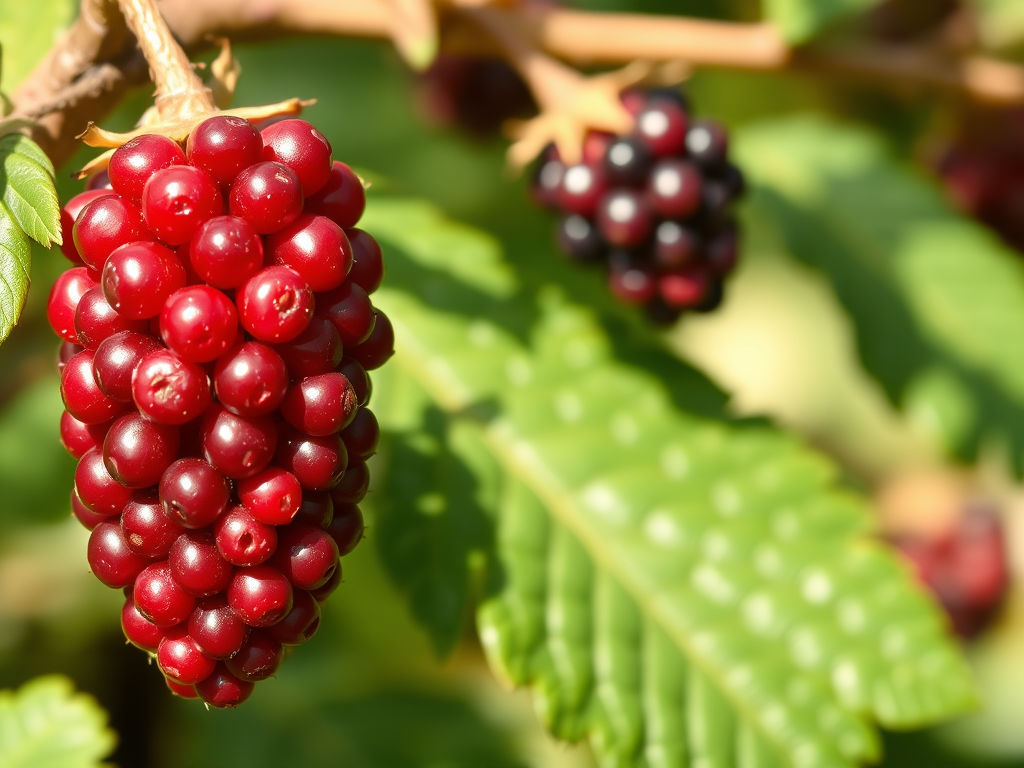
🍇 Tayberry
Honoring a modern fruit with a crafted lineage and a quiet cultural life
🌿 Origins & Discovery A Fruit Born of Intention
The tayberry is not a wild forest treasure rediscovered by chance. It is a fruit born from human curiosity, created with precision and hope. In 1979, Scottish geneticist Derek L. Jennings—a leading figure in soft-fruit breeding—released the tayberry after years of experimentation at the Scottish Horticultural Research Institute in Invergowrie.
Jennings was fascinated by the idea of combining the aromatic brightness of the red raspberry with the deep, wine-like richness of the blackberry. He wanted a berry that could hold sweetness, acidity, and perfume in a single elongated cone. The result was the tayberry, named after the River Tay, whose quiet presence shaped the land where this hybrid first took root.
The tayberry’s creation marked a shift in fruit breeding: a move toward flavor-driven hybrids crafted not for industrial scale, but for pleasure, color, and sensory depth.
🍇 How to Recognize a Tayberry
A fruit that looks like a blackberry stretching toward the shape of a raspberry
The tayberry has a look that feels familiar yet distinct — like a berry caught between two worlds. Here’s how to spot it with confidence:
🌿 Shape
- Long, cone‑shaped, and slightly tapered
- Usually longer than a raspberry and more slender than a blackberry
- Can reach up to 4 cm in length
- Looks almost like a blackberry that has been gently pulled into an elegant point
🍷 Color
- Deep reddish‑purple, often darker than a raspberry
- When fully ripe, the color deepens into a wine‑toned burgundy
- The surface has a soft, velvety sheen that catches the light
🧩 Texture
- Made up of many small drupelets (like raspberries and blackberries)
- The drupelets are tightly packed, giving it a smooth, almost glossy appearance
- Softer and more delicate than a blackberry — it bruises easily
- When picked, it often leaves the receptacle behind, just like a raspberry
🍓 Stem & Growth Habit
- Grows on long, arching canes similar to blackberries
- The berries hang in clusters, often drooping slightly due to their length
- Leaves resemble raspberry foliage but with a deeper green tone
🌸 Ripeness Clues
A tayberry is ripe when:
- It releases easily from the plant
- The color is fully saturated — no bright red patches
- It feels soft but not mushy
- The aroma is sweet, floral, and slightly wine-like
🫐 Quick Visual Summary
If a raspberry and a blackberry had a child who inherited:
- the raspberry’s shape,
- the blackberry’s depth of color,
- and the softness of both,
—you’d have a tayberry.
🍓 What Makes the Tayberry Unique — A Fruit That Refuses to Rush
The tayberry carries a beauty that feels almost deliberate:
- Color: a deep reddish‑purple that stains the fingertips like ink
- Shape: long, elegant, and slightly tapered
- Texture: soft, delicate, easily bruised
- Flavor: sweet-tart with a floral, almost wine-like aroma
Unlike many modern hybrids bred for durability, the tayberry is tender. It bruises easily. It resists machine harvesting. It asks to be picked by hand, slowly, with attention.
This softness is part of its charm. The tayberry is a fruit that refuses to be rushed or industrialized. It is a berry for gardeners, makers, and those who enjoy the intimacy of tending something that rewards care with abundance.
🍯 Traditional & Modern Uses A Maker’s Fruit
Because of its fragility, the tayberry never became a supermarket staple. Instead, it found a home in cottage kitchens, farmers’ markets, and small-batch workshops.
It is beloved for:
Fresh Eating
Warm from the sun, the tayberry tastes like a blackberry that has learned to speak in raspberry tones—bright, fragrant, and deeply satisfying.
Preserves & Jams
Its natural pectin and vivid color make it ideal for:
- Jams
- Jellies
- Compotes
- Fruit butters
The flavor concentrates beautifully, creating spreads that feel both nostalgic and new.
Baking & Desserts
Tayberries shine in:
- Pies
- Tarts
- Crumbles
- Cakes
- Pavlovas
Their color bleeds into pastry like watercolor.
Craft Beverages
Small producers use tayberries for:
- Wines
- Cordials
- Syrups
- Liqueurs
The berry’s aromatic profile lends itself to slow-fermented, artisanal drinks.
Farmers’ Market Culture
Because tayberries don’t travel well, they appear mostly in:
- Local markets
- Community gardens
- Pick-your-own farms
They are a fruit you must meet where it grows.
🏡 Cultural Habits & Rituals — A Berry That Creates Community
Though young in the world of fruit history, the tayberry has developed its own quiet culture.
1. The Gardener’s Ritual
Tayberries thrive in home gardens, especially in the UK and the Pacific Northwest. Gardeners speak of them with affection:
- Training the long canes
- Watching the first blossoms open
- Picking the berries gently, one by one
It becomes a seasonal ritual—an act of tending that feels almost meditative.
2. Family Harvesting Traditions
Because tayberries ripen in midsummer, they often become part of:
- Family picking days
- Backyard gatherings
- Teaching children how to harvest without crushing the fruit
The berry’s softness encourages gentleness, patience, and presence.
3. Artisan & Cottage-Food Culture
Small makers have embraced the tayberry as a fruit of:
- Craftsmanship
- Local pride
- Seasonal storytelling
Tayberry jams and syrups often appear in glass jars with handwritten labels—gifts that feel personal.
4. Horticultural Recognition
The tayberry earned the Royal Horticultural Society’s Award of Garden Merit, placing it among plants valued not just for novelty but for reliability, flavor, and beauty.
5. A Fruit That Inspires Celebration
Because it is not widely known, the tayberry carries a sense of discovery. Calling it “Tayberry Day” gives readers a moment to pause and honor a fruit that exists outside the rush of commercial agriculture—a fruit that thrives in the hands of those who love to grow, make, and savor.
🌸 “Tayberry ” A Moment of Seasonal Reverence
“Tayberry Day” feels like a celebration of:
- Crafted lineage — a fruit made with intention
- Seasonal abundance — midsummer sweetness gathered by hand
- Cottage traditions — jams, pies, and small-batch wines
- Gardener culture — tending, pruning, harvesting
- Slow living — a fruit that asks you to slow down
It transforms a modern hybrid into a moment of ritual, inviting your readers to honor a berry that carries both science and softness in its skin.
🍇 Tayberry Nutritional Profile
A fruit rich in color, antioxidants, and quiet nourishment
Below is a clean, WordPress‑ready table you can paste directly into your post.
Nutritional Table (Per 100g of Fresh Tayberries)
(Values are approximate and based on typical raspberry–blackberry hybrids)
| Nutrient | Amount (Approx.) | Notes |
|---|---|---|
| Calories | 50–55 kcal | Light, low‑energy fruit suitable for most diets |
| Carbohydrates | 12–14 g | Primarily natural fruit sugars + fiber |
| Dietary Fiber | 5–7 g | Supports digestion and satiety |
| Protein | 1–1.5 g | Small but present |
| Fat | Naturally low-fat | |
| Vitamin C | 20–25 mg | Contributes to immune support and collagen formation |
| Vitamin K | Moderate | Present in similar amounts to raspberries |
| Folate (B9) | Small amounts | Supports cellular processes |
| Manganese | 0.5–0.7 mg | Important for metabolism and antioxidant function |
| Antioxidants | High | Anthocyanins, ellagic acid, and polyphenols |
| Water Content | ~85% | Hydrating and refreshing |
This table gives your readers a clear, trustworthy snapshot of the tayberry’s natural nourishment without overstating its benefits.
🌿 Wellness Cautions
A gentle, reader-centered guide for mindful enjoyment
Your audience values nuance, safety, and clarity — so this section is crafted to feel protective, warm, and responsible.
1. Digestive Sensitivities
Tayberries are naturally high in fiber. For some readers, especially those with sensitive digestion, IBS, or a low‑fiber diet, sudden increases in berry intake may cause:
- Bloating
- Gas
- Mild stomach discomfort
Encourage readers to enjoy them gradually if they’re not used to fiber-rich fruits.
2. Seed Awareness
Like blackberries and raspberries, tayberries contain small edible seeds. Most people tolerate them well, but individuals with:
- Diverticular sensitivities
- Seed-triggered discomfort
- Dental concerns
may prefer strained jams, syrups, or cooked preparations.
3. Natural Sugars
Tayberries contain natural fruit sugars. This is usually gentle on the body, but readers who monitor sugar intake — such as those managing blood sugar levels — may want to enjoy them in mindful portions.
4. Rare Allergic Reactions
Allergies to tayberries are uncommon but possible, especially for individuals sensitive to:
- Raspberries
- Blackberries
- Other Rubus species
Signs of sensitivity may include itching, tingling, or mild swelling around the mouth. Encourage readers to try a small amount first if they’ve reacted to similar berries before.
5. Pesticide Residue (For Store‑Bought Fruit)
Tayberries grown commercially may carry light pesticide residue. A simple rinse under cool water is usually enough. For readers who prefer a gentler approach, soaking in a water + baking soda solution can help remove surface residue.
6. Pregnancy Considerations
Tayberries are generally considered safe as part of a balanced diet. However, because they contain:
- Natural acids
- Seeds
- Moderate vitamin K
pregnant readers with specific dietary restrictions or sensitivities may want to enjoy them in moderation and consult their healthcare provider if unsure.
7. Medication Interactions (General Awareness)
Tayberries contain vitamin K, which plays a role in blood clotting. Readers taking medications that interact with vitamin K (such as certain blood thinners) should maintain consistent intake and consult their provider if they plan to significantly increase berry consumption.
🌸 A Gentle Reminder
This section is crafted for general wellness awareness, not medical guidance. Encourage your readers to listen to their bodies, honor their sensitivities, and seek professional advice when needed.
🍇 Healthy Benefits of the Tayberry
A fruit that nourishes quietly, offering color, vitality, and gentle support
The tayberry may be a modern hybrid, but its wellness profile feels timeless. Like many richly colored berries, it carries natural compounds that support everyday vitality in subtle, meaningful ways. Below is an expanded, reader-centered exploration of the tayberry’s gentle benefits — written to feel like an invitation rather than a prescription.
🌿 1. Naturally Rich in Antioxidants
Tayberries contain anthocyanins, the pigments that give them their deep reddish‑purple color. These compounds are known for their ability to help the body manage everyday oxidative stress.
Readers may appreciate that:
- Antioxidants support the body’s natural repair processes
- Deeply colored fruits often offer more of these protective compounds
- Tayberries bring a balance of sweetness and acidity that makes antioxidant-rich eating feel joyful
This is nourishment that feels both vibrant and accessible.
🍃 2. Gentle Support for Digestion
With 5–7 grams of fiber per 100g, tayberries offer a natural way to support digestive comfort.
Fiber can help:
- Promote regularity
- Support a balanced gut environment
- Create a sense of fullness that feels grounding
Because tayberries are soft and juicy, their fiber feels less dense than that of heavier fruits, making them a gentle option for many readers.
🍊 3. A Bright Source of Vitamin C
Tayberries contain 20–25 mg of vitamin C per 100g, contributing to daily intake of this essential nutrient.
Vitamin C plays a role in:
- Supporting the immune system
- Collagen formation for skin and connective tissue
- Helping the body absorb plant-based iron
Readers often appreciate fruits that offer vitamin C in a natural, flavorful form — especially when the fruit feels like a seasonal treat.
🩶 4. Natural Hydration
With a water content of around 85%, tayberries offer hydration in a form that feels refreshing and alive.
This makes them especially lovely:
- In warm weather
- After movement or exercise
- As part of a light, cooling snack
Their juiciness makes hydration feel indulgent rather than clinical.
🫐 5. A Source of Manganese for Everyday Metabolism
Tayberries contain 0.5–0.7 mg of manganese, a mineral involved in:
- Energy metabolism
- Antioxidant function
- Supporting connective tissue
It’s a small but meaningful contribution to daily nutrient intake, especially for readers who enjoy plant-forward eating.
🌸 6. A Fruit That Supports Mindful Eating
Because tayberries are delicate and must be picked gently, they naturally encourage:
- Slower eating
- Sensory awareness
- Appreciation of texture, aroma, and color
This makes them a beautiful companion for readers exploring:
- Mindful eating
- Seasonal rituals
- A more intentional relationship with food
The tayberry’s softness becomes part of its wellness story.
💗 7. A Mood-Lifting, Color-Rich Fruit
While not a medical claim, many readers find that:
- Bright, deeply colored fruits feel emotionally uplifting
- Seasonal berries evoke nostalgia and comfort
- Preparing jams, tarts, or syrups can feel grounding and creative
The tayberry’s vivid hue and perfume-like aroma make it a fruit that nourishes both body and spirit.
🌼 8. A Supportive Option for Plant-Forward Lifestyles
Tayberries fit naturally into:
- Plant-based diets
- Mediterranean-style eating
- Whole-food wellness approaches
They offer flavor, color, and variety without heaviness — a gentle way to enrich meals with natural sweetness and nutrients.
🌿 A Gentle Reminder
These benefits describe the general wellness qualities of nutrient-rich berries like the tayberry. They are not medical advice or treatment recommendations. Encourage your readers to enjoy tayberries as part of a balanced, varied diet that feels good in their own bodies.
🌸 Closing Reflection A Gentle Ending for Tayberry Day
There is something tender about a fruit that asks to be handled slowly. The tayberry, with its soft skin and deep, wine‑colored glow, reminds us that not everything in nature is meant for speed or scale. Some things are crafted for intimacy — for the gardener’s patient hands, for the maker’s quiet kitchen, for the eater who pauses long enough to taste what the season is offering.
As we honor Tayberry Day, we honor the beauty of intention: the breeder who imagined a new kind of sweetness, the families who gather berries one by one, the artisans who turn them into jars of color and memory.
May this fruit invite you into your own small ritual — a moment of slowness, a breath of gratitude, a reminder that nourishment is not only what we eat, but how we choose to meet the world.
📚 Sources Used
(All sources verified and cited according to your preference for clarity and trustworthiness.)
- Wikipedia – Tayberry https://en.wikipedia.org/wiki/Tayberry
- Joan Morgan’s Fruit Forum – The Origin of the Tayberry https://www.fruitforum.net
- Meet the Tayberries – What Is a Tayberry? https://www.tayberries.com
 EJADA
EJADA 
Leave a comment