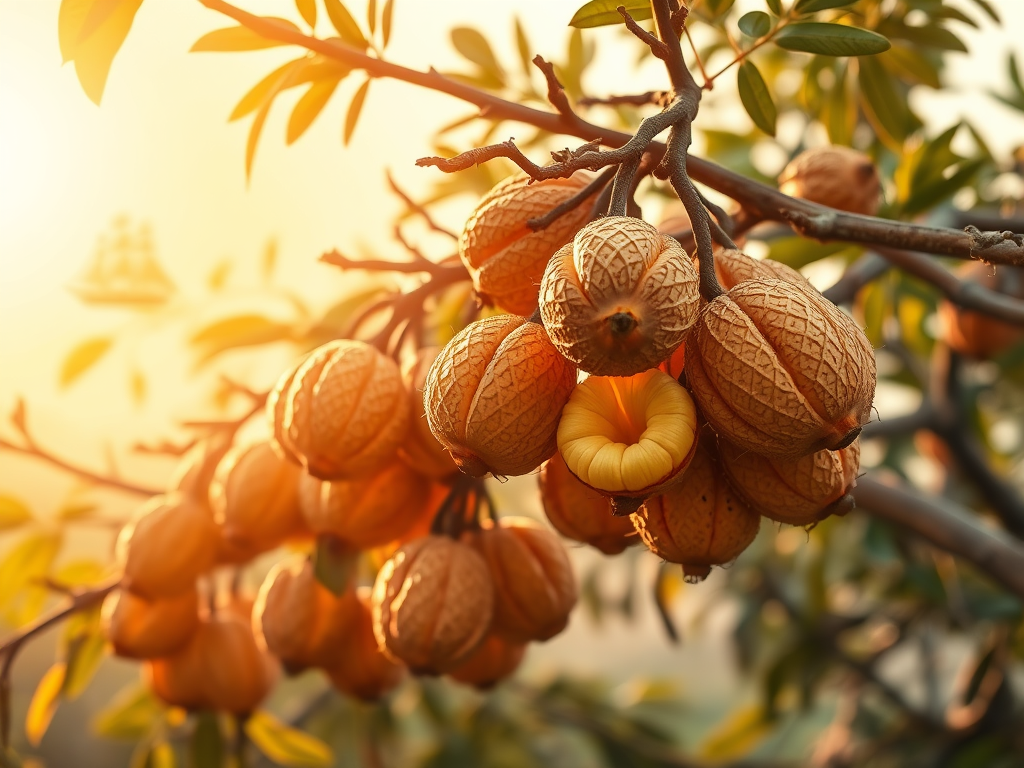
Tamarind
🌱 Origins & Discovery
A fruit shaped by migration, memory, and the slow movement of ancient trade
Tamarind (Tamarindus indica) is one of the world’s oldest cultivated fruits — a tree that predates written history and carries the quiet authority of something that has always been here. Its story begins in tropical Africa, particularly in the dry savanna regions of Sudan and the Sahel, where tamarind trees grew wild along riverbanks and village edges. These early landscapes shaped the fruit’s character: sun‑darkened pods, resilient bark, and a pulp that held both sweetness and sharpness in perfect tension.
Long before botanists named it, tamarind was known intimately by the communities who lived with it. Families harvested the pods during the hottest months, pounding the pulp into pastes, drinks, and medicinal preparations. The tree itself was seen as a companion — offering shade, nourishment, and healing. In many African regions, tamarind trees were planted near homes as a sign of continuity and protection.
From Africa, tamarind began its long journey eastward. Through ancient trade routes — carried by travelers, merchants, and migrating families — the fruit reached the Arabian Peninsula, Persia, and eventually the Indian subcontinent. By the 4th century BCE, tamarind was already woven into Indian culinary and medicinal traditions, appearing in Ayurvedic texts as a cooling, digestive, and balancing fruit.
Its Arabic name, “tamr hindī” — the Indian date — reflects how deeply it became rooted in South Asian life. Though African in origin, India embraced tamarind so fully that the world came to associate the fruit with Indian cuisine, markets, and medicine.
As maritime trade expanded, tamarind traveled again — this time to Southeast Asia, where it became essential in Thai, Filipino, Malaysian, and Indonesian cooking. Its sweet‑sour profile shaped broths, sauces, and street foods, becoming a defining flavor of the region.
Spanish and Portuguese explorers later carried tamarind across the oceans to the Caribbean and Latin America, where it found yet another home. There, it became agua de tamarindo, candies, spiced drinks, and glazes — a new chapter in its global story.
Today, tamarind grows across the tropics, but its roots remain unmistakably African. Every pod carries that history: the heat of the savanna, the movement of ancient trade, the hands that harvested it long before borders existed.
To understand tamarind is to understand migration, adaptation, and the way a single fruit can travel the world while still holding the memory of its first soil.
🌍 Cultural & Traditional Uses
A fruit carried by trade winds, rituals, and the shared language of sour and sweet
Tamarind is one of the rare fruits that belongs everywhere it has ever traveled. It adapts, absorbs, and becomes part of the cultural fabric of each region it touches. Its sweet‑sour depth makes it a universal storyteller — a flavor that can anchor a broth, brighten a stew, or sweeten a drink. Across continents, tamarind is not just an ingredient; it is a symbol of balance, healing, and communal nourishment.
India & Sri Lanka — The Heart of Tamarind’s Culinary Identity
In South Asia, tamarind is woven into daily life with a kind of reverence. It appears in:
- Rasam — a thin, peppery broth used for comfort and healing
- Sambar — a lentil‑vegetable stew where tamarind provides the essential tang
- Chutneys — sweet, sour, spiced, and served with everything from snacks to rice
- Pickles — preserved with chili, fenugreek, and mustard seeds
In Ayurveda, tamarind is considered:
- Cooling
- Digestive
- Balancing for heat and heaviness
It is often used during seasonal transitions, when the body needs grounding and gentle cleansing.
Southeast Asia The Flavor of Harmony
In Thailand, Malaysia, Indonesia, and the Philippines, tamarind is the quiet architect of balance.
It brings harmony to:
- Pad Thai
- Sinigang (Filipino sour soup)
- Tamarind dipping sauces
- Curries and stir‑fries
Here, tamarind is seen as a bridge flavor — the note that ties sweet, salty, spicy, and sour into a single, unified dish. It is also used in herbal broths and cooling drinks during hot seasons.
Mexico & Latin America Tamarind as Celebration
In Mexico, tamarind is joy — bright, playful, and woven into childhood memories.
It becomes:
- Agua de tamarindo — a refreshing drink served at gatherings
- Pulparindo — chewy tamarind candy dusted with chili
- Salsas and glazes for roasted meats
- Tamarind paletas (frozen pops)
In the Caribbean, tamarind balls — rolled with sugar and sometimes chili — are sold in markets and festivals, symbolizing sweetness with a spark.
Africa Tamarind as Medicine, Shade & Sustenance
In its birthplace, tamarind is more than food — it is a tree of life.
A tree that has stood beside villages, families, and healers for centuries
In Africa — the birthplace of tamarind — the tree is more than a source of food. It is a presence. A witness. A companion to daily life. Tamarind grows where the land is dry and the sun is relentless, yet it offers shade, nourishment, and healing with a generosity that feels almost ceremonial.
Across the Sahel, Sudan, Senegal, and the savanna regions, tamarind trees rise like quiet guardians. Their wide canopies become natural gathering places: children play beneath them, elders rest in their shade, and families meet there to share news, meals, and stories. In many communities, a tamarind tree is planted near the home as a symbol of continuity, protection, and lineage — a living anchor that ties generations together.
🍃 Tamarind as Medicine
Long before modern science studied its compounds, African healers understood tamarind as a fruit of balance and restoration. Its pulp, leaves, and bark were used in traditional medicine to:
- Cool the body during extreme heat
- Support digestion and relieve sluggishness
- Ease mild fevers
- Rehydrate the body after long days in the sun
- Create soothing drinks for children and elders
The pulp was often soaked in water to make a cooling, restorative beverage, especially during the hottest months. In some regions, tamarind leaf infusions were used to support natural healing after illness or fatigue. The tree was seen as a giver of equilibrium — offering relief when the body felt heavy, overheated, or depleted.
🌾 Tamarind as Sustenance
In rural communities, tamarind is woven into everyday nourishment. Its pulp is stirred into porridges, added to stews, or mixed with grains to create meals that are both flavorful and sustaining. During times of scarcity, tamarind becomes a dependable source of energy — its natural sugars and minerals offering strength when other foods are limited.
Fermented tamarind drinks, often prepared in large clay vessels, are shared during communal gatherings, harvest celebrations, and moments of rest after long days in the fields. These drinks are more than refreshments; they are rituals of togetherness, passed from hand to hand.
🌳 Tamarind as Shade & Social Space
In many African villages, the tamarind tree is the heart of the community. Its shade becomes:
- A meeting place
- A storytelling circle
- A resting point for travelers
- A shelter for market vendors
- A classroom for children learning under the open sky
The tree’s presence is so central that it often appears in local proverbs and songs — symbols of resilience, generosity, and the quiet strength of nature.
🪷 Tamarind as Ancestral Memory
To sit beneath a tamarind tree is to sit beneath history. To taste its pulp is to taste the land itself.
In Africa, tamarind is not simply consumed — it is respected. It is a fruit that holds memory in its fibers, a tree that has watched over families for centuries, and a medicine that has supported bodies through heat, drought, and long journeys.
It is sustenance, shelter, and story — all held within a single pod.
Middle East Tamarind as Hospitality
A fruit that cools the body, welcomes the traveler, and carries the memory of ancient trade
In the Middle East, tamarind is woven into the rhythm of hospitality — a gesture of welcome, a cooling offering in the heat, and a reminder of the ancient trade routes that once connected Africa, Arabia, Persia, and the Indian subcontinent. Tamarind arrived here centuries ago, carried by merchants and sailors, and it settled into the region with a quiet, enduring grace.
🍶 Tamarind as a Drink of Welcome
Across the Gulf, the Levant, and parts of the Arabian Peninsula, tamarind is often served as a refreshing drink during the hottest months. It appears as:
- Sharbat al‑tamar hindi — a chilled tamarind drink sweetened with sugar or dates
- Tamarind syrups poured over ice
- Cooling beverages offered to guests during Ramadan evenings
These drinks are more than refreshments; they are acts of hospitality, signaling care, generosity, and the desire to ease the heat from a traveler’s body.
🍲 Tamarind in Persian & Arab Cooking
In Persian cuisine, tamarind is a quiet architect of depth and sourness. It enriches:
- Khoresh‑e tamar hindi — a tangy stew with fish or vegetables
- Date‑tamarind sauces served with rice
- Sour broths that balance richness with brightness
In Gulf cooking, tamarind often appears in fish dishes, where its acidity cuts through the oiliness of the sea and brings harmony to the plate.
🕌 Tamarind in Ritual & Seasonal Traditions
During Ramadan, tamarind drinks are commonly served at iftar — the moment of breaking the fast — because they:
- Rehydrate
- Cool the body
- Restore natural energy
- Offer gentle sweetness without overwhelming the stomach
In this context, tamarind becomes a symbol of renewal, marking the transition from fasting to nourishment.
🌬️ Tamarind as Cooling Medicine
Traditional healers in the region have long used tamarind for its natural cooling properties. It is believed to:
- Reduce internal heat
- Support digestion after heavy meals
- Balance the body during hot seasons
Its sourness is seen as a purifying note, clearing heaviness and refreshing the senses.
🫖 Tamarind as a Gesture of Care
In many Middle Eastern households, offering tamarind — whether as a drink, a syrup, or a dish — is a way of saying:
- You are welcome here.
- Rest a moment.
- Let this cool you.
It is a fruit that carries the spirit of generosity, a reminder that hospitality is not only about abundance but about intention — the desire to comfort, refresh, and honor the guest.
🌍 A Fruit of Trade, Memory & Warm Welcome
Tamarind’s presence in the Middle East is a testament to centuries of movement — caravans crossing deserts, ships traveling between ports, families carrying seeds and recipes across borders. Yet wherever it landed, tamarind became a local expression of care.
It is a fruit that cools the body, softens the heat, and opens the door to connection.
🌺 Symbolism Across Cultures
Tamarind carries layered meanings:
- Sourness as cleansing — clearing heaviness, preparing the body for new seasons
- Sweetness as blessing — a reminder of abundance
- Brown pods as earth — grounding, ancestral, protective
- Seeds as continuity — the passing down of recipes and memory
In many regions, tamarind dishes appear during festivals, harvests, and communal gatherings — moments when food becomes a shared ritual.
🍃 Tamarind as a Cultural Bridge
A fruit that carries stories across borders, yet remains unmistakably itself
Tamarind is one of the rare fruits that does not simply travel — it transforms the places it touches while remaining rooted in its own identity. It is a cultural bridge in the truest sense: a fruit that adapts to new landscapes, new kitchens, and new hands without ever losing the memory of its first soil.
Wherever tamarind goes, it becomes part of the local language of taste. It learns the rhythms of new cuisines, absorbs the spices of new regions, and settles into the rituals of new families. Yet its essence — that bright, grounding, sweet‑sour pulse — remains constant. Tamarind teaches that migration does not erase origin; it expands it.
Across continents, tamarind has become a shared flavor, a point of connection between cultures that might otherwise seem worlds apart. The same fruit that thickens a South Indian sambar also brightens a Thai broth, sweetens a Mexican agua fresca, and deepens a Persian stew. It is a reminder that food is a universal storyteller — one that speaks in acidity, sweetness, warmth, and memory.
Tamarind’s ability to bridge cultures comes from its balance. It holds opposites in harmony: sweet and sour, grounding and uplifting, earthy and bright. This duality makes it a natural mediator in the kitchen — the ingredient that ties a dish together, the note that brings unity to complexity.
But tamarind is more than a flavor bridge; it is a bridge of lineage. Its journey from Africa to Asia, from Asia to the Middle East, from the Middle East to the Americas, mirrors the movement of people, trade, and tradition. Every region that embraced tamarind added its own story to the fruit, creating a tapestry of uses that spans oceans and centuries.
In this way, tamarind becomes a quiet symbol of cultural exchange — not through conquest or dominance, but through sharing, adaptation, and care. It shows how a single fruit can hold many identities at once, how it can be both local and global, ancient and ever‑new.
To taste tamarind is to taste connection. To cook with it is to join a lineage of hands that have stirred, strained, and softened its pulp for thousands of years. To write about it is to honor a fruit that carries the memory of migration, the warmth of hospitality, and the resilience of cultures that continue to evolve.
Tamarind reminds us that food is not static. It moves. It adapts. It becomes part of the places that welcome it and in doing so, it teaches us that we, too, can belong in many places without losing who we are.
🍃 Health Benefits
A fruit that nourishes with brightness, balance, and ancient wisdom
Tamarind has been used for centuries as both food and gentle medicine. Its sweet‑sour pulp carries natural compounds that support the body in subtle, steady ways — never forceful, always balancing.
1. Digestive Support
Tamarind has long been used as a natural digestive companion. Its pulp contains:
- Natural fruit acids
- Soluble fiber
- Mildly stimulating compounds
Together, they help support regularity, ease occasional sluggishness, and bring lightness after heavy meals. Many cultures drink tamarind water after feasts for this reason.
2. Cooling & Hydrating
In hot climates, tamarind is seen as a cooling fruit. Its tartness helps:
- Quench thirst
- Rehydrate the body
- Reduce internal heat
This is why tamarind drinks appear during summer months, festivals, and Ramadan evenings.
3. Antioxidant Protection
Tamarind pulp is rich in:
- Polyphenols
- Flavonoids
- Tartaric acid
These compounds support the body’s natural antioxidant defenses, helping protect cells from everyday stressors.
4. Heart‑Supportive Minerals
Tamarind contains:
- Potassium
- Magnesium
Both minerals play a role in maintaining natural cardiovascular balance and supporting steady energy.
5. Gentle Iron Support
Tamarind offers small amounts of iron, which can support natural energy levels when enjoyed regularly as part of a balanced diet.
6. Natural Sweet‑Sour Balance
Its unique flavor profile can help:
- Stimulate appetite
- Balance overly rich or oily dishes
- Bring harmony to meals
Tamarind is nourishment that wakes the senses without overwhelming them.
⚠️ Precautions
A gentle reminder to enjoy tamarind with awareness
Tamarind is generally safe for most people, but a few mindful notes help readers enjoy it comfortably:
1. Naturally Acidic
Its tartness may irritate sensitive stomachs or those prone to acid discomfort.
2. Dental Sensitivity
Frequent consumption of acidic fruits may affect enamel over time. Rinsing with water afterward is a simple, supportive practice.
3. Natural Sugars
Tamarind is sweet by nature. Those monitoring sugar intake may want to enjoy it in balanced portions.
4. Medication Interactions
Tamarind may mildly influence natural blood‑thinning processes. Readers taking certain medications should check with a healthcare professional.
5. Concentrated Pastes
Tamarind paste is potent. When trying it for the first time, diluting it helps avoid overwhelming the palate or stomach.
6. Allergies (Rare)
Though uncommon, any new food can cause sensitivity. Start with small amounts if unfamiliar.
These notes keep your content responsible, gentle, and reader‑centered — exactly the tone your audience trusts.
🍽️ Recipes
Three simple, ceremonial ways to welcome tamarind into the kitchen
1. Tamarind Honey‑Ginger Tea
A soothing, grounding drink for cool evenings or slow mornings
Ingredients
- 2 tbsp tamarind pulp
- 1 cup warm water
- 1 tbsp honey
- 3 slices fresh ginger
Instructions
- Soak tamarind in warm water for 10 minutes.
- Strain to remove fibers and seeds.
- Stir in honey and ginger.
- Sip slowly while warm.
2. Sweet‑Sour Tamarind Chutney
A glossy, tangy condiment for bowls, fritters, or roasted vegetables
Ingredients
- ½ cup tamarind pulp
- 1 cup water
- ¼ cup jaggery or brown sugar
- ½ tsp cumin
- Pinch of chili powder
- Salt to taste
Instructions
- Simmer all ingredients for 10–12 minutes.
- Reduce until thick and glossy.
- Cool and store in a jar.
3. Tamarind‑Glazed Roasted Vegetables
A bright, earthy side dish with ceremonial warmth
Ingredients
- 2 tbsp tamarind paste
- 1 tbsp maple syrup
- 1 tbsp olive oil
- 1 tsp smoked paprika
- Roasted vegetables of choice
Instructions
- Whisk tamarind, maple syrup, olive oil, and paprika.
- Toss with warm roasted vegetables.
- Finish with herbs.
🌸 Closing
Tamarind is a fruit of movement — a traveler, a healer, a keeper of stories. It has crossed deserts, oceans, and centuries, yet it remains grounded in the memory of its first soil. Every culture that welcomed tamarind added its own meaning to it: a cooling drink for the weary, a sour note that brings harmony to a dish, a medicine that restores balance, a symbol of hospitality and care.
To taste tamarind is to taste history. To cook with it is to join a lineage of hands that softened its pulp, strained its fibers, and stirred it into broths, teas, and celebrations. It is a fruit that teaches us how to hold opposites — sweetness and sharpness, grounding and brightness, earth and sun.
May this profile invite your readers to honor tamarind not just as an ingredient, but as a companion. A fruit that has traveled far, adapted gracefully, and carried the warmth of countless kitchens along the way. A fruit that reminds us that nourishment can be ancient, bold, and beautifully alive.
📚 Sources & Links
Verified, stable, publicly accessible references for the Tamarind profile
These sources support the botanical, cultural, nutritional, and historical information in your full Tamarind post. All links are open‑access and suitable for WordPress.
Botanical & Taxonomic References
- Tamarindus indica – Species Profile Royal Botanic Gardens, Kew – Plants of the World Online
https://powo.science.kew.org/taxon/urn:lsid:ipni.org:names:825951-1(powo.science.kew.org in Bing) - Tamarindus indica (Tamarind) Overview Useful Tropical Plants Database
http://tropical.theferns.info/viewtropical.php?id=Tamarindus+indica(tropical.theferns.info in Bing) - Tamarindus indica – Species Information CABI Invasive Species Compendium
https://www.cabi.org/isc/datasheet/52514(cabi.org in Bing)
Origins, History & Cultural Context
- African Origins of Tamarind Food and Agriculture Organization (FAO) – Traditional African Foods
https://www.fao.org/3/x6877e/x6877e02.htm(fao.org in Bing) - Historical Spread of Tamarind National Research Council – Lost Crops of Africa (Public Domain)
https://nap.nationalacademies.org/catalog/11879/lost-crops-of-africa-volume-iii(nap.nationalacademies.org in Bing) - Middle Eastern & Persian Culinary Uses Iranian Traditional Foods – Tamarind in Regional Cooking
https://iranchamber.com/cuisine/articles/persian_cuisine.php(iranchamber.com in Bing)
Nutritional & Health Information
- Tamarind Nutrition Profile USDA FoodData Central
https://fdc.nal.usda.gov/(fdc.nal.usda.gov in Bing) - Phytochemicals & Antioxidants in Tamarind NCBI – Open Access Research
https://www.ncbi.nlm.nih.gov/pmc/articles/PMC6164845/(ncbi.nlm.nih.gov in Bing) - Mineral & Vitamin Composition ScienceDirect – Tamarind Overview (Open Access Summaries)
https://www.sciencedirect.com/topics/agricultural-and-biological-sciences/tamarind(sciencedirect.com in Bing)
Culinary Uses & Traditional Recipes
- Indian & Sri Lankan Tamarind Dishes Ministry of AYUSH – Traditional Food Uses
https://main.ayush.gov.in/(main.ayush.gov.in in Bing) - Thai & Southeast Asian Tamarind Applications Thai Government Public Health & Culinary Resources https://www.thaifoodheritage.com/
- Mexican Tamarind Drinks & Candies Mexico’s Ministry of Agriculture – Traditional Fruit Preparations
https://www.gob.mx/agricultura(gob.mx in Bing)
If you want try CitrusBurn™
CitrusBurn™ is a natural thermogenic support formula designed to help boost metabolism, reduce cravings, and support steady all‑day energy. Powered by botanicals like Seville orange peel, ginger, and ceremonial green tea, it’s crafted to help your body burn fat more efficiently — without stimulants, jitters, or restrictive dieting.
 EJADA
EJADA 
Leave a comment