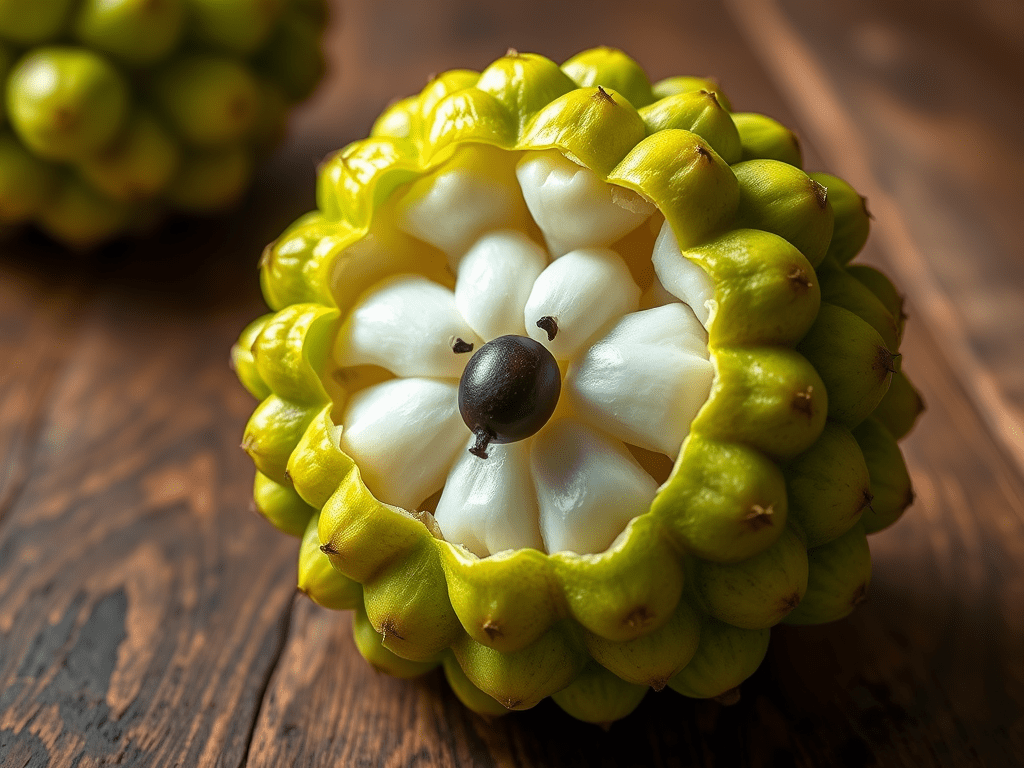
Sweetsop
Sweetsop — also known as sugar apple — is one of the most beloved fruits across the Caribbean, Africa, South Asia, and the tropical Americas. With its creamy flesh and naturally sweet aroma, this fruit carries centuries of tradition, healing, and nourishment inside its bumpy green shell.
This page explores its origins, discovery, health benefits, culinary uses, and the quiet magic that has made sweetsop a treasured fruit across generations.
🌱 Origins & Discovery
Sweetsop (Annona squamosa) is believed to have originated in the tropical Americas, where Indigenous communities cultivated and enjoyed it long before global trade routes existed. Its early presence is traced to regions that are now:
- Central America
- Northern South America
- The Caribbean basin
As explorers and traders moved across continents, sweetsop traveled with them — taking root in:
- West Africa
- India
- Southeast Asia
- The Philippines
In each region, the fruit adapted to local soil and climate, becoming woven into cultural identity, traditional medicine, and everyday meals.
Its name “sweetsop” reflects exactly what it offers: a sweet, custard‑like pulp that feels almost dessert‑ready straight from the fruit.
🍈 What Sweetsop Looks & Tastes Like
Appearance
- Round or heart‑shaped
- Green, knobby, scale‑like exterior
- Soft, creamy white flesh inside
- Glossy black seeds embedded throughout
Flavor Profile
Sweetsop is known for its intense natural sweetness — often compared to:
- vanilla custard
- banana
- pear
- and a hint of tropical floral notes
It’s one of the sweetest fruits in the Annona family.
💚 Health Benefits
Sweetsop is more than a delicious treat — it’s a nutrient‑rich fruit with gentle wellness benefits.
Rich in Vitamin C
Supports:
- immune function
- collagen production
- skin health
Good Source of Fiber
Helps:
- digestion
- gut balance
- satiety
Natural Energy
Its natural sugars provide a clean, steady source of energy without processed additives.
Contains Potassium & Magnesium
Supports:
- muscle function
- hydration
- heart health
Antioxidant Compounds
The fruit contains plant compounds that help the body manage oxidative stress.
⚠️ Wellness Cautions
Sweetsop is a nourishing tropical fruit, but like all foods, it comes with a few considerations. These notes help readers enjoy it mindfully and understand how their bodies may respond.
Digestive Sensitivities
Sweetsop’s creamy texture and natural sugars can feel heavy for some people, especially when eaten in large amounts. A few may notice:
- mild bloating
- gas
- digestive sluggishness
Enjoying smaller portions — or pairing it with lighter foods — can make it easier on the stomach.
Seeds Are Not Edible
The glossy black seeds inside sweetsop should not be eaten. They are hard, inedible, and meant to be discarded.
Natural Sugar Content
Sweetsop is one of the sweetest fruits in the Annona family. Those who are mindful of their sugar intake may want to:
- enjoy it in moderation
- pair it with fiber‑rich foods
- avoid consuming multiple fruits in one sitting
Its sweetness is natural, but still concentrated.
Latex Sensitivity
Some people who are sensitive to latex‑related fruits (like bananas or avocados) may notice mild reactions to sweetsop. This is uncommon, but worth noting for readers with known sensitivities.
Allergic Reactions (Rare)
Although uncommon, a few individuals may experience:
- itching around the mouth
- mild swelling
- sensitivity to the raw pulp
Cooking or blending the fruit may reduce these reactions.
Pregnancy & Breastfeeding Considerations
Sweetsop is generally enjoyed safely in many cultures during pregnancy and breastfeeding. Still, anyone with specific dietary concerns or sensitivities should check with a qualified healthcare professional for personalized guidance.
Not a Substitute for Medical Care
While sweetsop offers gentle nourishment, it is not a treatment for medical conditions. Readers with health concerns, allergies, or dietary restrictions should seek advice from a healthcare professional who understands their individual needs.
🍽️ Culinary Uses: Then & Now
Sweetsop is typically enjoyed fresh, but its creamy texture makes it a natural fit for desserts and drinks.
Common Ways to Enjoy Sweetsop
- Scoop and eat the flesh directly
- Blend into smoothies
- Add to fruit bowls
- Use in chilled desserts
- Fold into yogurt or cream‑based dishes
In Traditional Cuisines
Across the Caribbean, Africa, and Asia, sweetsop is often:
- eaten as a natural sweet treat
- used in festive meals
- incorporated into cooling drinks during hot seasons
Its flavor pairs beautifully with coconut, vanilla, cinnamon, and tropical fruits.
Sweetsop has always been more than a fruit — it has been a comfort food, a cultural marker, and a quiet luxury in the regions where it grows. Its creamy, custard‑like flesh has shaped traditions for centuries, and its uses continue to evolve in modern kitchens.
🌿 Then: Traditional & Ancestral Uses
In its earliest history across the tropical Americas, the Caribbean, West Africa, and South Asia, sweetsop was cherished as a natural dessert long before refined sugar existed.
How It Was Traditionally Enjoyed
- Eaten fresh by scooping out the soft, fragrant pulp
- Given to children and elders because of its gentle sweetness and easy digestion
- Used in cooling remedies during hot seasons
- Served during gatherings as a symbol of abundance and hospitality
- Paired with coconut or warm spices in early dessert traditions
In many cultures, sweetsop was considered a fruit of comfort — something you shared with family, neighbors, and guests as an act of care.
Cultural Significance
- In the Caribbean, sweetsop was a beloved backyard fruit, eaten straight from the tree.
- In West Africa, it became a seasonal treat sold in markets and enjoyed as a natural sweetener.
- In India and Southeast Asia, it was folded into milk‑based desserts and cooling drinks.
Its sweetness made it a treasured fruit in regions where sugar was once rare or expensive.
🍈 Now: Modern Culinary Uses
Today, sweetsop continues to shine in its simplest form — but modern cooks have found creative ways to highlight its creamy texture and tropical flavor.
Contemporary Ways to Use Sweetsop
- Smoothies & shakes Blended with coconut milk, banana, or vanilla for a naturally sweet drink.
- Chilled desserts Used in ice creams, custards, panna cottas, and tropical parfaits.
- Fruit bowls & breakfast dishes Mixed with yogurt, oats, or chia pudding for a nourishing start.
- Frozen treats Turned into popsicles or sorbets for a refreshing summer dessert.
- Pastry fillings Folded into tarts, turnovers, or crepes for a tropical twist.
Why It Works So Well in Modern Recipes
- Its custard‑like texture blends effortlessly into creamy dishes.
- Its natural sweetness reduces the need for added sugar.
- Its aroma pairs beautifully with coconut, cinnamon, nutmeg, vanilla, and citrus.
Sweetsop remains a fruit that feels like a dessert all on its own — and modern kitchens simply build on that natural luxury.
🌿 Nutritional Profile (per 100g)
| Nutrient | Amount |
|---|---|
| Calories | ~94 |
| Carbohydrates | 23 g |
| Fiber | 4 g |
| Protein | 2 g |
| Fat | 0.3 g |
| Vitamin C | 34% DV |
| Potassium | 8% DV |
| Magnesium | 6% DV |
| Water Content | ~72% |
🍈 Sweetsop & Coconut Cream Bowl
A simple, cooling, naturally sweet treat
Ingredients
- 1 ripe sweetsop (sugar apple)
- ½ cup coconut cream or coconut yogurt
- 1–2 tablespoons honey or agave (optional)
- 1 teaspoon vanilla extract
- A pinch of cinnamon
- Fresh fruit for topping (banana, mango, or berries)
- Toasted coconut flakes (optional)
Instructions
- Prepare the sweetsop: Break the fruit open and gently scoop out the creamy white flesh. Remove all seeds.
- Create the base: In a small bowl, whisk together coconut cream, vanilla, and cinnamon. Add honey or agave if you prefer extra sweetness.
- Combine: Fold the sweetsop pulp into the coconut mixture, keeping some pieces whole for texture.
- Assemble: Spoon into a chilled bowl and top with fresh fruit and toasted coconut flakes.
- Serve immediately: Enjoy as a cooling breakfast, a light dessert, or a mid‑day tropical treat.
Why This Recipe Works
- Highlights sweetsop’s natural custard‑like sweetness
- Coconut cream adds richness without overpowering the fruit
- No cooking required — perfect for warm days
- Nourishing, hydrating, and beautifully simple
🍹 Sweetsop Tropical Smoothie
A creamy, cooling blend with natural sweetness
Ingredients
- 1 ripe sweetsop (sugar apple), flesh scooped and seeds removed
- 1 frozen banana
- ½ cup coconut milk (or almond milk)
- ¼ cup Greek yogurt or coconut yogurt
- 1 tablespoon honey or agave (optional)
- 1 teaspoon vanilla extract
- A pinch of cinnamon
- 3–4 ice cubes (optional for extra chill)
Instructions
- Prepare the sweetsop: Break open the fruit, scoop out the creamy pulp, and remove all seeds.
- Build the smoothie base: Add sweetsop pulp, frozen banana, coconut milk, yogurt, vanilla, and cinnamon to a blender.
- Sweeten if desired: Add honey or agave for a richer sweetness.
- Blend until smooth: Adjust thickness with more milk or ice depending on your preference.
- Serve chilled: Pour into a tall glass and enjoy immediately for the best flavor and texture.
Why This Recipe Works
- Sweetsop’s custard‑like texture creates a naturally creamy smoothie
- Frozen banana adds body without overpowering the fruit
- Coconut milk enhances the tropical notes
- Perfect for breakfast, a mid‑day lift, or a gentle dessert
🌟 Little‑Known Fact
Sweetsop is one of the earliest fruits to be carried across continents by enslaved Africans and traders, becoming deeply rooted in West African food culture. In many regions, it is still considered a fruit of comfort, memory, and resilience.
Sweet sop vs. Soursop: Vitamin Comparison
Both fruits come from the Annona family, but their nutrient profiles — especially their vitamins — differ in meaningful ways. Here’s a simple, reader‑friendly breakdown.
🌿 Vitamin Comparison Table
| Vitamin | Sweetsop (Sugar Apple) | Soursop (Graviola) | What It Means for the Body |
|---|---|---|---|
| Vitamin C | Moderate (≈ 34% DV per 100g) | High (≈ 34–40% DV per 100g) | Immune support, collagen, skin health |
| Vitamin A | Present in small amounts | Higher than sweetsop | Vision, cellular repair |
| Vitamin B6 | Moderate | Moderate | Brain function, mood, metabolism |
| Folate (B9) | Moderate | Moderate | Cell growth, tissue repair |
| Niacin (B3) | Low | Moderate | Energy production, skin health |
| Riboflavin (B2) | Low | Low–moderate | Energy metabolism |
| Thiamine (B1) | Moderate | Low | Nervous system support |
| Vitamin E | Trace | Trace | Antioxidant protection |
🌱 Quick Takeaways
Sweetsop (Sugar Apple)
- Higher in thiamine (B1)
- Good source of vitamin C
- Gentle, creamy, energy‑rich fruit
Soursop (Graviola)
- Higher in vitamin A
- Slightly higher in vitamin C
- Contains more niacin (B3)
- Known for its tangy flavor and stronger antioxidant profile
Did You Know? Sweetsop is one of the few fruits whose popularity spread across continents not through trade alone, but through people carrying the seeds in their pockets as they migrated. Because the fruit bruises easily and doesn’t travel well, the seeds became the true travelers — planted in new soils, new climates, and new communities.
Across the Caribbean, West Africa, and South Asia, many families still have stories of a parent or grandparent planting the very first sweetsop tree in their yard, creating a living link to home, memory, and ancestry.
✨ Closing Reflection
Sweetsop reminds us that sweetness doesn’t have to be loud to be powerful. It arrives softly — in a green, knobby shell — offering comfort, nourishment, and a taste of home to anyone who opens it. From its Indigenous American roots to its presence in backyards and markets around the world, this fruit carries a quiet legacy of resilience, migration, and care.
May this fruit invite you to savor the small luxuries that nature gives freely, to honor the stories carried across oceans, and to celebrate the sweetness that grows in unexpected places.
Whether eaten fresh or blended into a creamy dessert, sweetsop invites us to slow down, savor, and honor the quiet abundance that grows from the earth.
 EJADA
EJADA 
Leave a comment