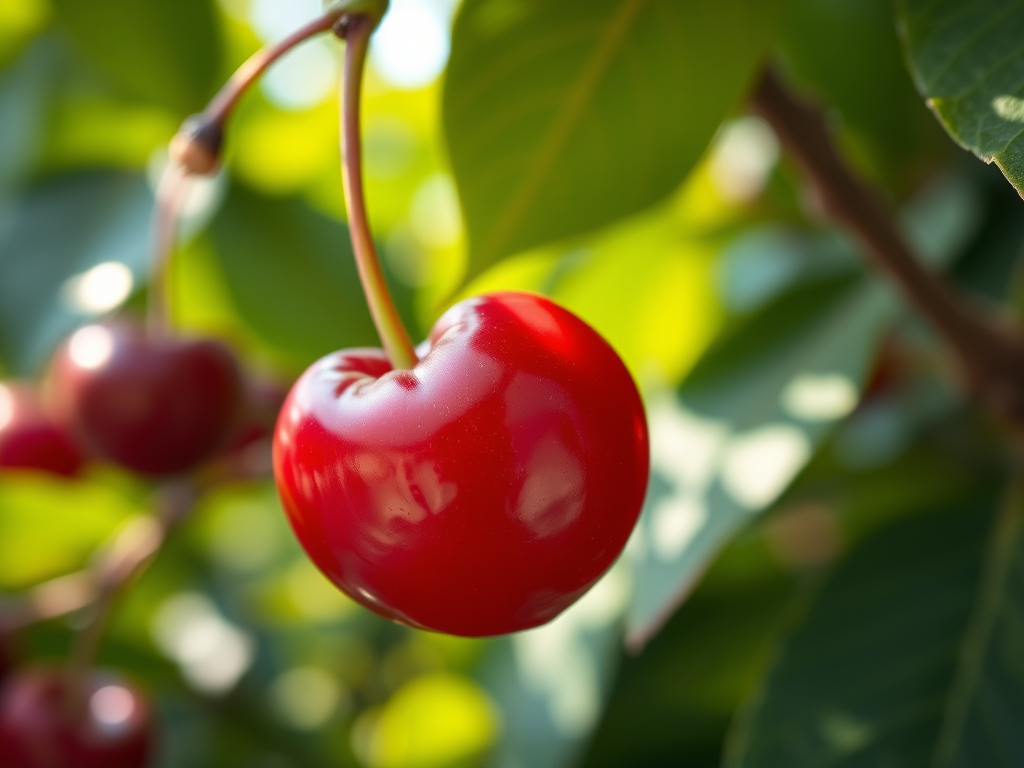
Surinam Cherry: The Scarlet Jewel of Tropical Gardens
A Fruit With Fire, History, and Heart
Tucked into hedges, home gardens, and wild tropical thickets, the Surinam Cherry (Eugenia uniflora) glows like a tiny lantern — ribbed, glossy, and impossibly red. Known across the Caribbean, South America, and parts of Africa, this fruit carries a story of migration, resilience, and flavor that surprises anyone tasting it for the first time.
The Surinam Cherry arrives in the world like a spark — small, bright, and impossible to ignore. Its ribbed skin catches the light the way a flame dances, shifting from glossy green to a fiery red or deep wine‑purple as it ripens. It’s the kind of fruit that announces itself before you even taste it, carrying a scent that feels both familiar and mysterious, like something passed down through generations.
This fruit has traveled. It has crossed oceans, adapted to new soils, and rooted itself in the memories of people from Brazil to Barbados, from Suriname to East Africa. Wherever it grows, it becomes part of the landscape — a hedge, a boundary, a childhood landmark, a seasonal ritual.
And yet, despite its global journey, the Surinam Cherry remains deeply personal. It’s the fruit children pluck on their way home from school, the one that stains fingertips red, the one that surprises newcomers with its bold, resinous bite. It’s a fruit that teaches you not to judge by appearance alone — because beneath its jewel‑like beauty is a flavor with attitude, a flavor that carries the heat of the tropics and the complexity of the cultures that embraced it.
There is heart in this fruit. Heart in the way it grows — resilient, evergreen, generous. Heart in the way it’s shared — passed from hand to hand, folded into syrups and jams, offered as a taste of home. Heart in the way it holds memory — of gardens tended by elders, of breezes heavy with summer, of stories told under the shade of its branches.
To taste a Surinam Cherry is to taste history, migration, and the quiet fire of a fruit that has never needed to be loud to be unforgettable. It is a small fruit with a big presence — a reminder that some of the world’s most powerful flavors come in humble, glowing packages.
It’s a fruit that looks sweet but arrives with attitude — tart, aromatic, and unforgettable.
What Exactly Is Surinam Cherry?
Despite its name, the Surinam Cherry isn’t a true cherry. It’s a tropical berry from the Myrtaceae family — the same botanical family as guava and allspice.
The Surinam Cherry is one of those fruits that defies its own name. It isn’t a cherry at all, but a tropical berry — a small, ribbed lantern from the Myrtaceae family, the same aromatic lineage that gives us guava, clove, and allspice. Everything about it feels intentional: the way its skin forms deep ridges like the folds of a tiny pumpkin, the way its color shifts from glossy green to a fiery red or deep maroon, and the way it softens at the slightest touch when it’s ready to be picked.
Botanically known as Eugenia uniflora, the Surinam Cherry grows on an evergreen shrub or small tree that thrives in warmth. It’s a plant that loves sun, humidity, and open air — a natural fit for tropical gardens, coastal landscapes, and homesteads where fruit trees are part of the rhythm of daily life. Its leaves release a subtle, spicy fragrance when crushed, a quiet reminder of the aromatic oils that run through its entire family line.
Key Characteristics
- Fruit type: True berry
- Family: Myrtaceae
- Shape: Deeply ribbed, almost sculptural
- Colors: Bright red, orange‑red, or deep purple depending on variety and ripeness
- Tree: Evergreen, often used as a hedge or ornamental plant
- Seeds: One to two large seeds inside a juicy, soft interior
When ripe, the fruit detaches easily from the stem — a gentle tug is all it takes. Its skin is thin, its flesh tender, and its aroma unmistakable: sweet, floral, and slightly resinous, like a fruit that carries both sunlight and spice in its core.
The Surinam Cherry is a plant that gives generously. It fruits in waves, often twice a year, offering handfuls of glowing berries that brighten gardens and feed families, birds, and curious children who learn early which shade of red means “perfectly ripe.”
It is, in every sense, a fruit that blends beauty with boldness — a botanical jewel with a personality all its own.
A Taste That Surprises
Surinam Cherry has a flavor profile that people either adore or approach with caution. It’s bold, unapologetic, and layered.
Flavor Notes
- Sweetness that hits first
- A tangy, citrus‑like brightness
- A resinous, almost spicy finish
- A juicy, soft texture when perfectly ripe
The Surinam Cherry is a lesson in not assuming you know a fruit just because it looks familiar. Its glossy red skin suggests sweetness, something gentle and predictable — but the moment you bite into it, the fruit reveals its true personality. It arrives in layers, each one unfolding like a small revelation.
At first, there’s the burst of juice, bright and refreshing, a sweetness that feels almost tropical in its simplicity. But then the flavor deepens, shifts, and sharpens. A tangy, citrus‑like brightness rises to the surface, followed by a resinous, spicy undertone that lingers on the tongue. It’s a flavor that carries the signature of the Myrtaceae family — that quiet, aromatic fire found in guava, clove, and allspice.
This is not a fruit that tries to please everyone. It’s bold. It’s expressive. It’s honest.
Some people fall in love with it instantly, drawn to its complexity and the way it refuses to be ordinary. Others need a moment — or a perfectly ripe, deep‑purple variety — to understand its charm. But once you taste a Surinam Cherry at its peak, soft and sun‑warmed, you begin to appreciate the fruit’s full story: the sweetness of its origins, the spice of its lineage, the brightness of its tropical home.
Flavor Notes
- Sweetness that greets you first
- A tangy spark that wakes the palate
- A resinous, almost peppery finish that gives the fruit its signature character
- A soft, juicy texture when perfectly ripe
The darker varieties — especially the deep maroon and almost black cultivars — are known to be sweeter and less resinous, offering a gentler introduction for those new to the fruit.
But even then, the Surinam Cherry never loses its edge. It always carries a hint of the unexpected, a reminder that some fruits are meant to be experienced, not just eaten.
This is a fruit with personality — one that doesn’t apologize for its boldness, one that invites you to taste not just sweetness, but story, lineage, and place.
Traditional Uses
The Surinam Cherry has lived many lives across the tropics — as food, medicine, memory, and ornament. Wherever it has traveled, it has woven itself into the rhythm of daily life, becoming one of those fruits that feels both humble and culturally significant.
Culinary Traditions
In Brazil, the Caribbean, and parts of Africa, the fruit is enjoyed in ways that honor its bold flavor:
- Eaten fresh from the tree, still warm from the sun
- Cooked into jams, jellies, and preserves that soften its resinous edge
- Pressed into juices and syrups for cooling summer drinks
- Fermented into wines and liqueurs, especially in Brazil
- Added to desserts for color, brightness, and a tropical twist
Families often plant the tree near their homes, not just for fruit, but for the ritual of harvesting — children racing to pick the ripest berries before they fall.
Folk Medicine & Herbal Practices
Traditional knowledge surrounding the Surinam Cherry extends beyond taste:
- Leaves are brewed into teas believed to support digestion and respiratory comfort
- Fruit is used as a gentle cleanser, especially when eaten fresh
- Aromatic oils in the leaves are valued for their soothing, grounding scent
These practices vary by region, but they all reflect a deep respect for the plant’s natural properties.
Cultural Presence
The Surinam Cherry is a fruit of memory:
- A hedge that marks the boundary of a family home
- A tree that shades a yard or walkway
- A seasonal signal — the first red fruit announcing the arrival of warm months
For many, the taste of Surinam Cherry is tied to childhood, community, and the simple joy of plucking a glowing berry from a familiar tree.
Health Benefits
The Surinam Cherry may be small, but it carries a surprising amount of nourishment. Its vibrant color hints at the antioxidants and plant compounds within, making it a meaningful addition to tropical diets.
Rich in Vitamin C
Supports:
- Immune function
- Skin vitality
- Antioxidant protection
The fruit’s brightness isn’t just visual — it’s nutritional.
High in Antioxidants
Its pigments and aromatic oils help:
- Reduce oxidative stress
- Support long‑term cellular health
- Protect the body from environmental stressors
This is part of what gives the fruit its “fire” — a quiet internal strength.
Supports Healthy Digestion
The natural fiber in the fruit helps:
- Promote regularity
- Support gut balance
- Create a sense of fullness
It’s a gentle, natural way to support the digestive system.
Contains Beneficial Plant Compounds
As a member of the Myrtaceae family, the Surinam Cherry carries aromatic compounds that may support:
- Respiratory comfort
- Anti‑inflammatory balance
- Overall wellness
These qualities are part of why the fruit and leaves appear in traditional herbal practices.
Availability
The Surinam Cherry is generous — fruiting in waves throughout the warm months and offering multiple harvests in many climates.
Tropical Regions
In places like Brazil, Suriname, and the Caribbean:
- The fruit may be available nearly year‑round
- Trees often produce two major harvests, with smaller flushes in between
Warmth and humidity keep the cycle going.
Subtropical Regions
In areas with mild winters:
- The main season is spring through early summer
- A second, smaller crop may appear in late summer or early fall
Gardeners often look forward to the first bright red fruits as a sign that warm weather has truly arrived.
Home Gardens & Local Markets
Surinam Cherry is rarely commercialized on a large scale, but it thrives in:
- Backyard gardens
- Community landscapes
- Local markets where seasonal fruits are sold fresh
Because the fruit bruises easily and drops quickly when ripe, it’s best enjoyed close to where it grows — making it a beloved “garden fruit” in many cultures.
Surinam Cherry Ritual: A Ceremonial Preparation
A Bowl of Fire and Sweetness
This is not just a recipe. It is a small ceremony — a way of honoring a fruit that carries sunlight in its skin and memory in its scent. Surinam Cherry asks you to slow down, to touch each berry with intention, to taste not just flavor but lineage.
This ritual is meant to be simple, grounding, and nourishing. A moment for you, your kitchen, and the quiet wisdom of the fruit.
1. Ceremonial Surinam Cherry Offering
Ingredients
- A handful of ripe Surinam cherries
- A drizzle of honey or agave
- A squeeze of fresh lime
- A few shavings of ginger (optional)
- Cool water or coconut water
Preparation as Ritual
1. Begin with the fruit. Hold each cherry in your palm. Notice its ridges, its color, the way it yields slightly when perfectly ripe. This is your first blessing — presence.
2. Remove the seeds gently. Split the fruit with your fingers, letting the juice stain your hands. This is your second blessing — release.
3. Place the pulp in a small bowl. Add a drizzle of honey, a breath of lime, and a whisper of ginger if you want warmth. This is your third blessing — intention.
4. Pour cool water or coconut water over the mixture. Stir slowly, clockwise, until the colors deepen and the flavors begin to open. This is your fourth blessing — transformation.
5. Taste. Sip slowly. Let the sweetness arrive first, then the brightness, then the quiet fire that lingers at the back of the tongue. This is your final blessing — remembrance.
Ceremonial Note
This preparation is meant to be taken in the morning or at sunset — moments when the world is shifting and your spirit is open. It is a drink of clarity, warmth, and grounding. A reminder that even small fruits carry stories, and even simple rituals can steady the heart.
2. Surinam Cherry Jam (Small‑Batch, No Pectin)
Perfect for toast, yogurt bowls, or glazing roasted vegetables.
Ingredients
- 3 cups Surinam cherries, seeds removed
- 1 cup sugar (or coconut sugar for a deeper flavor)
- 1 tablespoon lemon juice
- 1 small strip of orange peel (optional)
Instructions
- Add cherries and sugar to a pot and let them sit for 10 minutes to release juices.
- Bring to a gentle simmer.
- Add lemon juice and orange peel.
- Cook 20–25 minutes, stirring often, until thickened.
- Remove peel and spoon into a clean jar.
Ceremonial Note
This jam captures the fruit’s duality — sweet and bright, with a whisper of spice.
3. Surinam Cherry & Ginger Cooling Sorbet
A simple, elegant dessert that honors the fruit’s natural color and aroma.
Ingredients
- 3 cups Surinam cherry pulp (from about 4–5 cups whole fruit)
- ½ cup water
- ½ cup sugar or honey
- 1 teaspoon fresh grated ginger
- Juice of 1 lime
Instructions
- Heat water and sugar until dissolved; cool completely.
- Blend the cherry pulp, ginger, and lime juice.
- Add the cooled syrup and mix well.
- Freeze in an ice cream maker, or pour into a shallow dish and freeze, scraping every 30 minutes until fluffy.
Ceremonial Note
This sorbet feels like a tropical breeze — cooling, fragrant, and softly spiced.
Surinam Cherry Ember Chutney
A savory, spiced offering for roasted vegetables, grains, and warm evening meals
A Chutney With Heat, Depth, and Ancestral Memory
Surinam Cherry carries a quiet flame — a resinous brightness that transforms beautifully when paired with ginger, onion, and warm spices. This chutney honors the fruit’s fire, softening its edges while letting its boldness shine. It’s the kind of recipe that feels both ancient and new, like something passed down through hands that understood how to coax flavor from the land.
This is a savory ritual — a way to turn a handful of glowing berries into a condiment that tastes like sunset heat and tropical earth.
Ingredients
- 3 cups ripe Surinam cherries, seeds removed
- ½ small red onion, finely diced
- 1 tablespoon fresh grated ginger
- 1–2 cloves garlic, minced
- 1 small hot pepper (Scotch bonnet, bird’s eye, or jalapeño), finely chopped
- 2 tablespoons apple cider vinegar or lime juice
- 2 tablespoons coconut sugar or brown sugar
- ½ teaspoon mustard seeds
- ½ teaspoon turmeric
- ¼ teaspoon smoked paprika (optional, for depth)
- 1 tablespoon coconut oil or olive oil
- Salt to taste
Preparation
1. Begin with the flame.
Warm the oil in a small pot. Add mustard seeds and let them crackle — this is the opening note, the awakening of the spices.
2. Build the foundation.
Add the onion, garlic, and ginger. Sauté until fragrant, until the kitchen smells like warmth and memory.
3. Invite the heat.
Stir in the chopped hot pepper. Let it bloom in the oil for a moment.
4. Add the fruit.
Fold in the Surinam cherries. Watch them soften, collapse, and release their ruby juices. This is the transformation — the fruit surrendering its fire.
5. Season the story.
Add turmeric, smoked paprika, vinegar or lime juice, and coconut sugar. Simmer 15–20 minutes, stirring gently, until the mixture thickens into a glossy, fragrant chutney.
6. Taste and balance.
Add salt to bring everything forward. Adjust sweetness or acidity as your spirit guides you.
Ceremonial Note
This chutney is meant to be shared. Spoon it over roasted sweet potatoes, grilled vegetables, rice bowls, or warm flatbread. It carries the fruit’s fire, the earth’s grounding, and the kitchen’s quiet alchemy.
It tastes like a story — bright, bold, and rooted.
A Note on Healthy Living Click Here
Who Should Not Consume Surinam Cherry
Surinam Cherry is generally enjoyed safely in many tropical regions, but like any fruit with a bold personality, there are a few groups who may want to approach it with awareness and moderation.
People Sensitive to Aromatic or Resinous Fruits
Surinam Cherry has a naturally resinous, spicy undertone. Anyone who reacts strongly to aromatic fruits (like guava, allspice, or clove‑family plants) may find it irritating or overwhelming.
Individuals With Digestive Sensitivities
The fruit can be:
- acidic
- bright
- slightly astringent
For some people, especially those with sensitive stomachs, this may cause discomfort when eaten in large amounts.
Anyone Eating Unripe Fruit
Unripe Surinam Cherries are:
- very tart
- firm
- more resinous
They can be harsh on the stomach and unpleasant in flavor. Fully ripe fruit — soft, deep red or purple — is best.
People Trying It for the First Time
Because the flavor is bold and unexpected, it’s wise to start with a small amount to see how your body responds.
Pregnant or Breastfeeding Individuals
There isn’t extensive modern research on the fruit’s effects during pregnancy or breastfeeding. For that reason, some people choose to enjoy it in moderation or check with a healthcare professional if they have concerns.
Click Here for more information on healthy living
References
Botanical Realm. Surinam Cherry (Eugenia uniflora): Characteristics, origin, and cultivation. https://www.botanicalrealm.com/surinam-cherry-eugenia-uniflora (botanicalrealm.com in Bing)
University of Florida IFAS Extension. Eugenia uniflora: Surinam Cherry — horticultural profile and landscape notes. https://edis.ifas.ufl.edu/publication/FPS202 (edis.ifas.ufl.edu in Bing)
Wikipedia. Eugenia uniflora — taxonomy, distribution, and general uses. https://en.wikipedia.org/wiki/Eugenia_uniflora (en.wikipedia.org in Bing)
Disclaimer
This post is for informational and educational purposes only. It reflects traditional uses, cultural practices, and general knowledge about Surinam Cherry (Eugenia uniflora), but it is not medical advice, diagnosis, or treatment. Individual reactions to foods can vary, especially with aromatic or resinous fruits, and some people may need to avoid or limit them based on personal sensitivities.
If you have health concerns, dietary restrictions, allergies, or questions about whether this fruit is appropriate for you, please speak with a qualified healthcare professional. Always listen to your body and introduce new foods mindfully.
Want to know more on how to get healthy and stay healthy: Click Here and get two Bonuses
 EJADA
EJADA 
Leave a comment