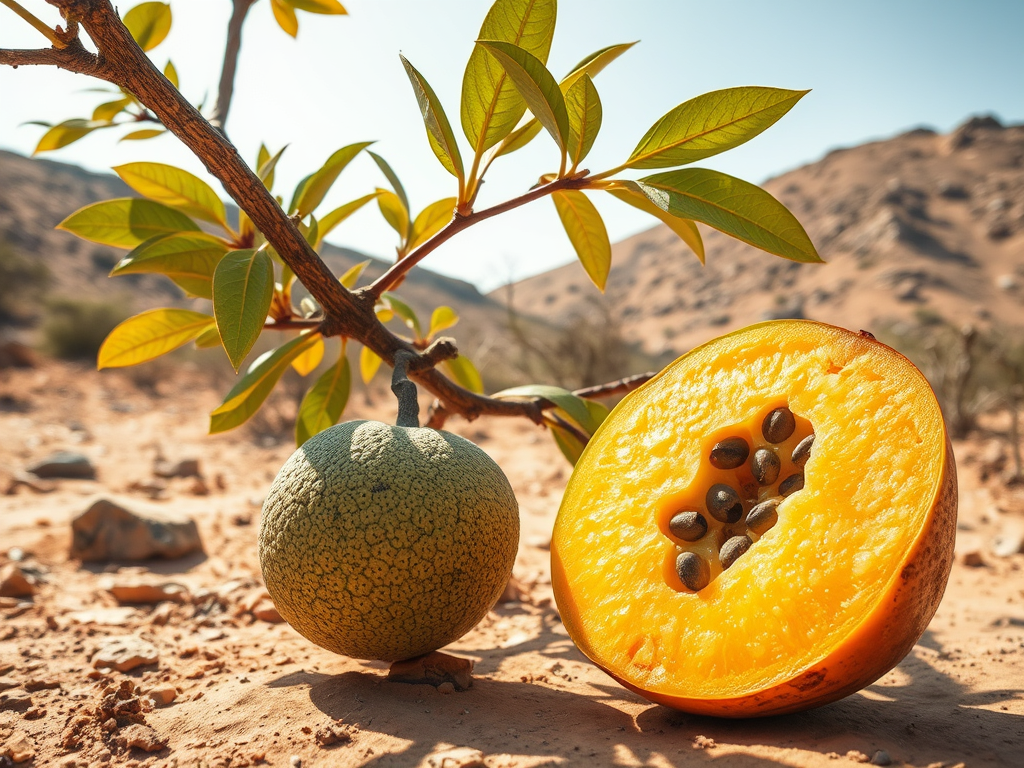
🌳 Strychnos cocculoides (Corky‑Bark Monkey Orange)
A wild African fruit tree with both edible and toxic parts
Strychnos cocculoides is one of southern Africa’s most intriguing wild fruits — a hard‑shelled, sweet‑pulped treasure carried through generations of Indigenous knowledge. Known for its thick, corky rind and fragrant interior, this fruit holds both nourishment and caution, beauty and complexity. It is a fruit shaped by dry woodlands, ancestral foodways, and the resilience of the African landscape.
🌿 Who First Discovered Strychnos cocculoides?
About “discovery,” there are two parallel truths
1. Indigenous Discovery (the true first discovery)
Long before Western science documented the species, Strychnos cocculoides was already known, harvested, and used by Indigenous communities across southern Africa — particularly in what is now:
- Namibia
- Botswana
- Zimbabwe
- Zambia
- Mozambique
- Angola
These communities were the first discoverers, the first cultivators, and the first to understand the fruit’s edible pulp and the dangers of its seeds. Their knowledge predates written records by centuries.
So in the truest sense: The fruit was discovered by the Indigenous peoples of southern Africa, long before colonial science existed.
2. Western Scientific Discovery (the documented discovery)
The species entered Western science when it was collected and identified by European botanists working in southern Africa during the late 1800s.
Formal scientific discovery:
John Gilbert Baker (an English botanist) Year: 1895 Event: He published the first formal scientific description in the Bulletin of Miscellaneous Information (Kew).
This is the moment Western science recognizes as “discovery,” even though the fruit had been known and used for generations.
🌿 Why this matters
Indigenous communities of southern Africa first discovered and used Strychnos cocculoides long before Western science formally documented it in 1895 through botanist John Gilbert Baker.
In botany, “discovery” usually refers to the first formal scientific description, not the first human encounter. Indigenous communities across southern Africa had known and used the fruit for generations before Western science documented it.
So the timeline looks like this:
- Long before 1895: Indigenous peoples across southern Africa used the fruit traditionally.
- 1895: John Gilbert Baker formally described and named Strychnos cocculoides in a scientific publication.
🌍 Origins: A Fruit Rooted in Southern Africa
Strychnos cocculoides grows naturally across Namibia, Botswana, Zimbabwe, Zambia, Mozambique, Angola, Tanzania, and South Africa. It thrives in savannahs, woodlands, and rocky hillsides, often appearing in places where the soil is sandy, dry, or difficult for other fruit trees to survive.
Long before Western science documented it, the fruit was known, harvested, and used by Indigenous communities. It served as:
- A seasonal food source
- A trade item in local markets
- A fruit shared during gatherings
- A symbol of abundance in rural households
Its true discovery belongs to the people who lived with it, tended it, and understood its gifts.
🌿 What the Tree Looks Like
- A small deciduous tree (2–8 m tall) with a rounded crown
- Deeply ridged, corky bark — its most recognizable feature
- Branches often armed with curved spines
- Green, woody fruits that ripen to orange
- Thick, hard shells with whitish pulp and bony seeds
🍊 The Fruit
The fruit — commonly called monkey orange — is considered one of the most important wild fruits in Tanzania and Namibia. It is:
- Pleasantly flavored
- Eaten raw when fully ripe
- Sold in local markets
- Used in rural food traditions and sometimes preserved
The pulp is edible, but the seeds are considered poisonous.
Earthy, and Distinct
The pulp of the ripe fruit is:
- Sweet with a mild tang
- Earthy and fragrant
- Soft and creamy when fully ripe
Its flavor is often compared to a blend of tropical fruit and subtle caramel notes a quiet sweetness wrapped in a rugged shell.
🌱 Cultural Presence
Strychnos cocculoides holds a quiet but enduring place in the cultural life of southern Africa. It is not a commercial fruit in the global sense — it is a community fruit, a seasonal treasure, and a symbol of rural abundance. Its presence is woven into daily rhythms, childhood memories, and the ancestral relationship between people and the land.
🌍 A Fruit of the People
Across Namibia, Botswana, Zimbabwe, Zambia, and Mozambique, the monkey orange is gathered from the wild rather than cultivated in orchards. Families collect the fruit during the dry season, often walking together to known trees that have been visited for generations. The act of gathering becomes a moment of connection — to place, to lineage, and to one another.
🍊 Market Life & Seasonal Economy
In many rural markets, the fruit appears in small piles or baskets, sold by women and elders who rely on seasonal harvests for income. Its hard shell allows it to store well, making it valuable in regions where fresh fruit is scarce during certain months. For many households, selling monkey oranges is part of the seasonal economy that supports school fees, household needs, and community trade.
🧡 A Childhood Memory
For many who grew up in southern Africa, the monkey orange is a fruit of childhood:
- Cracking open the hard shell on a rock
- Sharing the soft pulp with siblings
- Carrying the fruit home in pockets or small bags
- Waiting for the exact moment of ripeness
It is a fruit that evokes nostalgia — a sweetness tied to place and time.
🔥 Communal Processing Traditions
In some regions, families gather to prepare the fruit together. The pulp may be:
- Eaten fresh
- Mixed into traditional drinks
- Dried for later use
- Added to porridges or festive dishes
These shared preparations become communal rituals — preserving not just food, but memory.
🌿 Symbol of Resilience
Because the tree thrives in dry, challenging landscapes, it is often seen as a symbol of endurance. Its corky bark and tough shell reflect the resilience of the communities who have relied on it — people who understand how to live with the land rather than against it.
🌼 A Fruit With Ancestral Echoes
Though not tied to formal ceremonies, the fruit carries a spiritual presence. In some households, the first ripe fruits of the season are shared with elders or placed on small home altars as a gesture of gratitude. This quiet offering honors the land, the ancestors, and the cycles of abundance.
🌿 Health & Nutritional
Strychnos cocculoides offers a quiet kind of nourishment — the kind found in wild fruits that grow far from commercial farms, shaped instead by sun, soil, and ancestral landscapes. While the pulp is modest in size, it carries hydration, natural sugars, and plant compounds that have supported rural communities for generations.
🍊 Natural Energy From Wild Fruit Sugars
The ripe pulp contains gentle, naturally occurring sugars that provide quick energy without heaviness. This makes the fruit a welcome source of nourishment during:
- Long walks
- Harvest days
- Dry‑season fatigue
It is a fruit that restores softly, offering sweetness wrapped in earthiness.
💧 Hydration in Dry Climates
Because the fruit ripens during the dry season, its moisture content is especially valued. The pulp helps support:
- Hydration
- Electrolyte balance
- A sense of refreshment in hot weather
Its thick shell protects the pulp from drying out, allowing it to stay fresh longer than many wild fruits.
🌱 Fiber for Gentle Digestion
The edible pulp contains natural fiber that supports:
- Regular digestion
- A comfortable, satisfied feeling
- Slow, steady energy release
The fiber is soft and easy on the stomach — though the seeds must never be eaten, as they are toxic.
🧡 Plant Compounds With Traditional Value
While scientific research is still emerging, many Strychnos species contain beneficial plant compounds in their pulp, including:
- Antioxidants
- Polyphenols
- Natural phytochemicals
These compounds help the body manage everyday oxidative stress and support long‑term wellness in subtle ways.
🌾 A Wild Fruit With Nutritional Modesty
Unlike commercial fruits bred for high vitamin content, Strychnos cocculoides offers a more modest nutritional profile — but what it provides is meaningful in context:
- Hydration
- Natural sugars
- Fiber
- Trace minerals
- Plant compounds
Its value lies not in being a “superfood,” but in being a resilient, accessible, and culturally rooted source of nourishment.
🌼 Traditional Uses for Wellness
In some communities, the pulp is used:
- As a gentle snack for children
- As a source of energy during fieldwork
- Mixed into porridges for added sweetness
- In seasonal drinks that cool and refresh
These uses reflect a deep understanding of the fruit’s strengths — hydration, energy, and comfort.
🍊 Uses of the Fruit
1. Eaten Fresh When Fully Ripe
The soft, fragrant pulp is enjoyed as a seasonal treat. Its sweetness offers quick energy and hydration during the dry season.
2. Traditional Drinks & Beverages
In many regions, the pulp is mixed with water to create:
- Refreshing juices
- Light fermented drinks
- Seasonal beverages shared during gatherings
These drinks carry the fruit’s earthy sweetness and are often enjoyed chilled.
3. Porridges & Local Dishes
The pulp is sometimes stirred into:
- Morning porridges
- Festive dishes
- Sweetened grain meals
It adds flavor, moisture, and a gentle sweetness.
4. Dried Pulp for Later Use
In some communities, the pulp is dried and stored. This allows families to enjoy the fruit long after the harvest season ends.
5. Market Trade & Seasonal Income
Monkey oranges are sold in rural markets, providing:
- Income for women and elders
- A seasonal economic boost
- A culturally rooted trade item
The fruit’s long shelf life makes it ideal for selling.
6. Childhood Food & Cultural Memory
For many, the fruit is tied to childhood:
- Cracking the shell on a rock
- Sharing pulp with siblings
- Carrying fruit home from the bush
It is a fruit of memory, belonging, and place.
The fruit nourishes, refreshes, and connects communities to seasonal rhythms.
This Wellness Fruit needs no cautions, and get a FREE BONUS
⚠️ Who Should Avoid This Fruit
While the ripe pulp of Strychnos cocculoides is traditionally enjoyed across southern Africa, the fruit also carries important cautions. Its seeds and unripe parts contain toxic alkaloids, so awareness is essential. This section helps readers make informed, mindful choices.
🌿 1. Individuals Unfamiliar With the Fruit
Because the seeds are toxic and the shell is extremely hard, anyone who has never handled the fruit before should avoid eating it without guidance. Safe enjoyment requires:
- Identifying fully ripe fruit
- Knowing how to open the shell
- Discarding all seeds
If these steps feel uncertain, it’s best to avoid the fruit.
🍃 2. People Sensitive to Bitter Alkaloids
Some individuals react strongly to bitter plant compounds found in certain wild fruits. If someone has sensitivities to:
- Bitter tropical fruits
- Alkaloid‑rich plants
- Wild foraged foods
they may want to avoid Strychnos cocculoides or try only a very small amount of ripe pulp.
👶 3. Young Children
The fruit poses two risks for children:
- Choking hazard from the hard shell and seeds
- Toxicity if seeds are accidentally swallowed
For safety, young children should not handle or eat the fruit unless an adult prepares it carefully.
🍂 4. Individuals With Digestive Sensitivities
The pulp is fibrous and earthy. Those with sensitive digestion may experience discomfort if they consume large amounts. It’s best to start with a small portion and observe how the body responds.
🌱 5. Anyone Without Access to Local Knowledge
Because this is a wild fruit with both edible and toxic parts, it is safest when prepared by someone familiar with:
- The correct stage of ripeness
- How to open the shell
- How to remove seeds fully
If that knowledge isn’t available, avoiding the fruit is the safest choice.
🧼 6. People Concerned About Wild‑Harvested Foods
The fruit is often gathered from the wild, which means:
- Dust
- Insects
- Environmental residues
may be present on the shell. Those who prefer cultivated or washed fruits may choose to avoid it.
🔥 7. Anyone Unsure About Ripeness
Unripe Strychnos cocculoides can contain higher concentrations of toxic compounds. If the fruit is:
- Green
- Hard
- Not aromatic
it should not be eaten.
✨ In Essence
The ripe pulp is traditionally enjoyed and valued. The seeds and unripe fruit should never be consumed. And for those unfamiliar with the fruit, caution is a form of respect for the plant, for the land, and for the body.
🛒 Availability
Strychnos cocculoides is not a commercial supermarket fruit. Its presence is deeply local, seasonal, and tied to the landscapes where it naturally grows. Because of this, availability depends on region, climate, and traditional harvesting rhythms.
🌍 Where It’s Commonly Found
The fruit is primarily available in southern African countries, especially:
- Namibia
- Botswana
- Zimbabwe
- Zambia
- Mozambique
- Angola
- Tanzania
- Northern South Africa
In these regions, it is gathered from the wild rather than cultivated in orchards.
🧺 Where People Usually Buy It
You’ll most often find the fruit in:
- Rural markets
- Roadside stands
- Village trading posts
- Seasonal community gatherings
It is rarely exported and almost never appears in international grocery stores.
🍂 Seasonal Availability
The fruit typically ripens during the dry season, when fresh produce is limited. Depending on the region, this is usually:
- Late winter to early summer in southern Africa
- With peak availability during local dry months
Its thick, hard shell allows it to store for months, making it valuable long after harvest.
🌱 Availability Outside Africa
Outside its native regions, the fruit is:
- Extremely rare
- Mostly found through specialty African markets
- Occasionally available via diaspora communities
- Sometimes sold dried or as pulp, but not commonly
Fresh fruit is almost never exported due to its weight, shell hardness, and limited commercial cultivation.
🌳 Why It’s Not Widely Available
Several factors limit global distribution:
- It grows wild, not in large-scale farms
- The tree takes years to mature
- The fruit is heavy and costly to ship
- The seeds are toxic, requiring careful handling
- Demand is primarily local and cultural, not global
Its availability reflects its identity: a fruit of place, tradition, and ancestral landscapes.
🌼 Closing
Strychnos cocculoides is a fruit of resilience — a sweetness hidden inside a hard shell, shaped by sun, soil, and the quiet strength of southern African landscapes. To learn about it is to learn about the people who have gathered it for generations, the markets where it appears in small baskets, and the ancestral knowledge that teaches which parts nourish and which parts must be respected.
May this fruit remind you that not all nourishment is obvious at first glance. Some gifts arrive wrapped in toughness, waiting for patient hands and a listening heart. And when they open, they offer a taste of place, memory, and the enduring relationship between people and the land.
⚠️ Disclaimer
This profile is for general informational and cultural purposes only. It reflects traditional uses, regional knowledge, and publicly available botanical information. It is not medical advice, and it should not be used to diagnose, treat, or manage any health condition.
Because Strychnos cocculoides contains both edible and toxic parts, please use care:
- Only the ripe pulp is traditionally eaten.
- The seeds are toxic and must never be consumed.
- Unripe fruit should be avoided.
- If you are unfamiliar with identifying or preparing this fruit, seek guidance from someone with local knowledge.
- Individuals with allergies, digestive sensitivities, or health concerns should consult a qualified healthcare professional before trying new wild fruits.
Your safety matters. Honor the fruit, honor the land, and honor your body’s needs.
 EJADA
EJADA 
Leave a comment