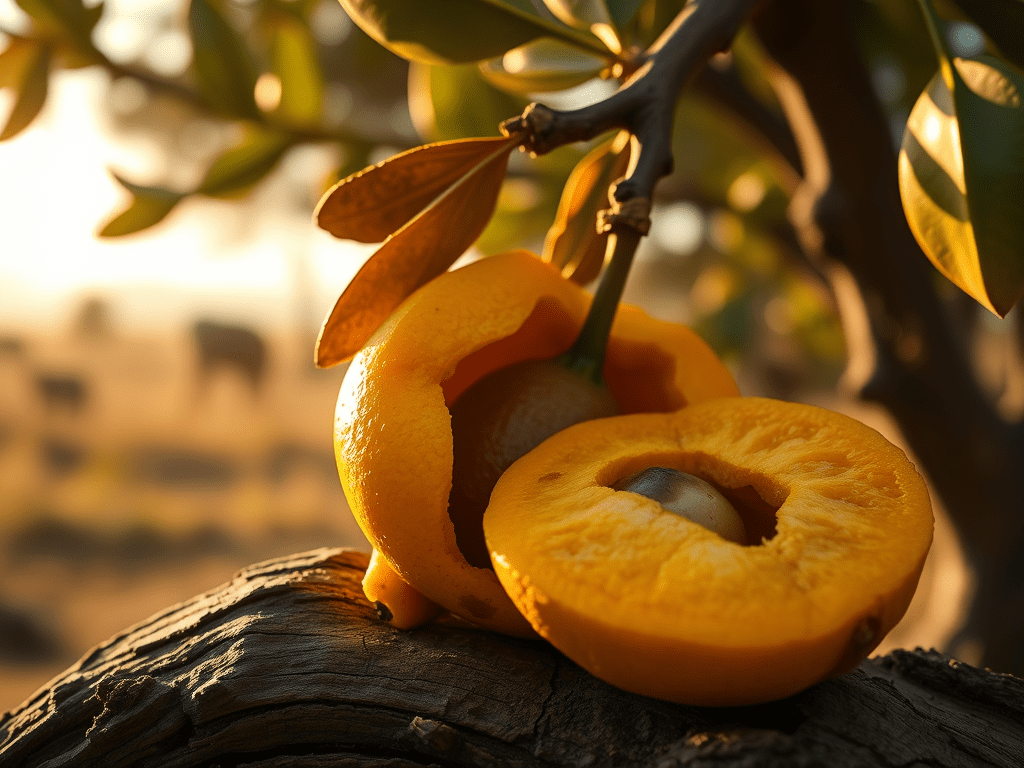
The Monkey Orange: Africa’s Tough‑Shelled Hidden Gem
A Wild Fruit With a Story
Across the savannas and woodlands of sub‑Saharan Africa grows a fruit that looks like it belongs in a fantasy novel: the monkey orange, scientifically known as Strychnos spinosa. With its hard, golden shell and sweet‑tart pulp, this fruit has nourished people and wildlife for generations — yet many outside Africa have never heard of it.
What Exactly Is a Monkey Orange?
Botanically, the monkey orange is a true berry, though it hardly resembles the soft berries most people imagine. Instead, it forms a large, spherical fruit with a thick, woody rind that protects the soft, edible interior.
Key Characteristics
- Fruit type: Berry
- Appearance: Green when young, turning bright yellow when ripe
- Shell: Hard and durable — it can be used as a container once emptied
- Pulp: Sweet‑sour, aromatic, and brownish
- Seeds: Numerous and very hard
The fruit grows on a small, thorny tree that thrives in dry climates, making it an important food source in regions where cultivated fruits may be scarce.
A Taste of the Wild
The flavor of monkey orange pulp is often described as:
- Sweet with a citrus‑like tang
- Slightly caramel‑like when very ripe
- Rich and fragrant
It’s eaten fresh, dried, or made into juices, jams, and even fermented beverages.
Cultural and Ecological Importance
Long before botanists formally described the species, Indigenous communities valued the monkey orange for its:
- Nutrition — rich in vitamin C, fiber, and minerals
- Versatility — the shell becomes bowls, ornaments, or storage containers
- Reliability — the tree produces even in harsh seasons
Wildlife also depends on it. Monkeys, baboons, elephants, and antelope all enjoy the fruit, helping disperse its seeds across the landscape.
A Relative With a Dangerous Reputation
The Strychnos genus is famous — or infamous — for containing Strychnos nux‑vomica, the source of the poison strychnine. But Strychnos spinosa is different:
- The pulp is safe and edible
- The seeds, however, should not be eaten
This duality adds to the fruit’s mystique.
Why the World Should Pay Attention
As interest grows in climate‑resilient crops and underutilized fruits, the monkey orange stands out. It’s:
- Drought‑tolerant
- Nutrient‑dense
- Naturally pest‑resistant
- Flavorful and unique
With proper cultivation and processing, it could become a valuable fruit for both local communities and global markets.
Health Benefits of the Monkey Orange
The monkey orange isn’t just a wild delicacy — it’s a nutritional powerhouse hiding beneath a tough yellow shell. Communities across Africa have long valued it for the energy and nourishment it provides, and modern nutritional studies are beginning to highlight why.
Rich in Vitamin C
Monkey orange pulp contains impressive levels of vitamin C, supporting:
- Immune function
- Skin health
- Antioxidant protection
It’s a natural boost in regions where citrus fruits may not grow easily.
High in Dietary Fiber
The fruit’s dense, sticky pulp is packed with fiber, which helps:
- Support healthy digestion
- Promote fullness and steady energy
- Maintain gut health
It’s one of the reasons the fruit is so satisfying.
Natural Source of Minerals
Monkey orange provides essential minerals such as:
- Potassium — supports heart and muscle function
- Magnesium — important for nerves, muscles, and energy production
- Calcium — contributes to bone health
These nutrients make it a valuable food in areas with limited access to diverse diets.
Energy‑Dense and Sustaining
The pulp contains natural sugars and carbohydrates that offer:
- Quick energy
- Sustained fuel for long periods
- A reliable food source during dry seasons
It’s no surprise that both people and wildlife rely on it.
Antioxidant Properties
Like many wild fruits, monkey orange contains plant compounds that help:
- Reduce oxidative stress
- Support long‑term cellular health
- Protect the body from environmental stressors
These benefits are especially important in hot, arid climates.
A Climate‑Smart Superfruit
Because the tree thrives in drought‑prone areas, the monkey orange offers:
- Nutrient‑dense food where other crops fail
- A sustainable, low‑input fruit source
- Potential for future cultivation and food security
It’s a reminder that some of the world’s most resilient foods are still underappreciated.
Traditional Uses of the Monkey Orange
For generations, communities across sub‑Saharan Africa have relied on the monkey orange not just as a food source, but as a versatile resource woven into daily life. Its tough shell, fragrant pulp, and resilient tree have all found meaningful roles in traditional culture.
A Nutritious Wild Food
The most widespread use of the monkey orange is, of course, as a wild fruit snack. Families gather the ripe yellow fruits during the dry season when other foods are scarce. The pulp is eaten:
- Fresh from the shell
- Dried into chewy pieces
- Mixed into porridges
- Fermented into refreshing drinks
In many regions, it’s considered a seasonal treat that signals the height of summer.
Natural Containers and Craftwork
Once the pulp is removed, the hard, woody shell becomes a valuable material. Traditionally, it’s used to make:
- Small bowls
- Storage containers
- Decorative carvings
- Musical rattles
- Children’s toys
The shell’s durability and smooth finish make it ideal for crafting.
Traditional Medicine
While the seeds are not eaten, other parts of the plant have been used in folk remedies. In some communities:
- The root or bark is boiled for herbal infusions
- The pulp is used as a gentle digestive aid
- The shell is sometimes burned and used in ceremonial contexts
These practices vary widely by region and are part of long-standing local knowledge.
Wildlife and Ecological Importance
Traditional ecological knowledge recognizes the monkey orange tree as a key species in the landscape. It provides:
- Food for monkeys, baboons, elephants, and antelope
- Shade and shelter for smaller animals
- A reliable fruiting cycle even in drought
Communities often protect mature trees because they support both people and wildlife.
A Social Fruit
In many rural areas, collecting monkey oranges is a communal activity. Children climb trees to shake down ripe fruits, families gather them in baskets, and neighbors share the harvest. The fruit often appears at local markets, where it’s sold fresh or processed into snacks.
Who Should Avoid Monkey Orange
While the pulp of Strychnos spinosa is widely enjoyed and generally considered safe when ripe, there are a few groups who may need to be cautious.
People Sensitive to New or Wild Foods
Anyone with a history of food sensitivities or allergies may want to introduce the fruit slowly. Wild fruits can contain unfamiliar compounds that some individuals react to.
Individuals Who Accidentally Consume the Seeds
The seeds should not be eaten. Like many members of the Strychnos genus, the seeds may contain toxic alkaloids. The pulp is the edible part — the seeds are discarded.
Pregnant or Breastfeeding Individuals
Because the fruit hasn’t been widely studied in modern nutrition science, people who are pregnant or breastfeeding may prefer to avoid it or consume it in moderation until more research is available.
People With Digestive Sensitivities
The pulp is very high in fiber, which can be difficult for some individuals to digest, especially in large amounts.
Anyone Eating Unripe Fruit
Unripe monkey oranges can be:
- Sour
- Hard
- Potentially irritating to the stomach
The fruit should be fully yellow and aromatic before eating.
Sources Used
1. Kew Science – Plants of the World Online (POWO)
Taxonomic details, botanical description, author citation (“Lam.”). https://powo.science.kew.org/taxon/urn:lsid:ipni.org:names:602003-1 (powo.science.kew.org in Bing)
2. SANBI (South African National Biodiversity Institute)
Species profile, habitat, distribution, and traditional uses. https://pza.sanbi.org/strychnos-spinosa (pza.sanbi.org in Bing)
3. Useful Tropical Plants Database
Ethnobotanical uses, edible parts, and general plant information. http://tropical.theferns.info/viewtropical.php?id=Strychnos+spinosa (tropical.theferns.info in Bing)
4. PROTA (Plant Resources of Tropical Africa)
Comprehensive information on African plants, including food uses and cultural significance. Archived version (PROTA is no longer updated): https://uses.plantnet-project.org/en/Strychnos_spinosa_(PROTA) (uses.plantnet-project.org in Bing)
5. FAO – Wild Edible Plants Reports
Nutritional and ecological context for African wild fruits. https://www.fao.org/3/i8739en/I8739EN.pdf (fao.org in Bing) (Contains sections on indigenous fruits including Strychnos species.)
6. Peer‑Reviewed Research Articles
Examples you can cite:
- Nutritional composition of monkey orange (Strychnos spinosa)
https://doi.org/10.1016/j.sjbs.2014.11.018(doi.org in Bing) - Ethnobotanical uses of Strychnos species in Southern Africa
https://doi.org/10.4102/abc.v43i1.210(doi.org in Bing)
Seasonal Availability
🌦 Rain‑Dependent Fruiting
- The tree produces flowers September–February (spring–summer in Southern Africa).
- Fruits appear only after good rains, meaning availability varies year to year.
- In many regions, ripe fruit is most common late summer to early autumn.
🌍 Regional Notes
- Southern Africa: Ripe fruit typically found January–April, depending on rainfall.
- East Africa: Availability may extend slightly longer due to bimodal rainfall patterns.
- Dry years: Fruit may be scarce or absent.
Market Availability
- Monkey oranges are not widely commercialized and are mostly sold in local rural markets near harvesting areas.
- Availability in markets is seasonal, aligning with the ripening period after rains.
 EJADA
EJADA 
Leave a comment