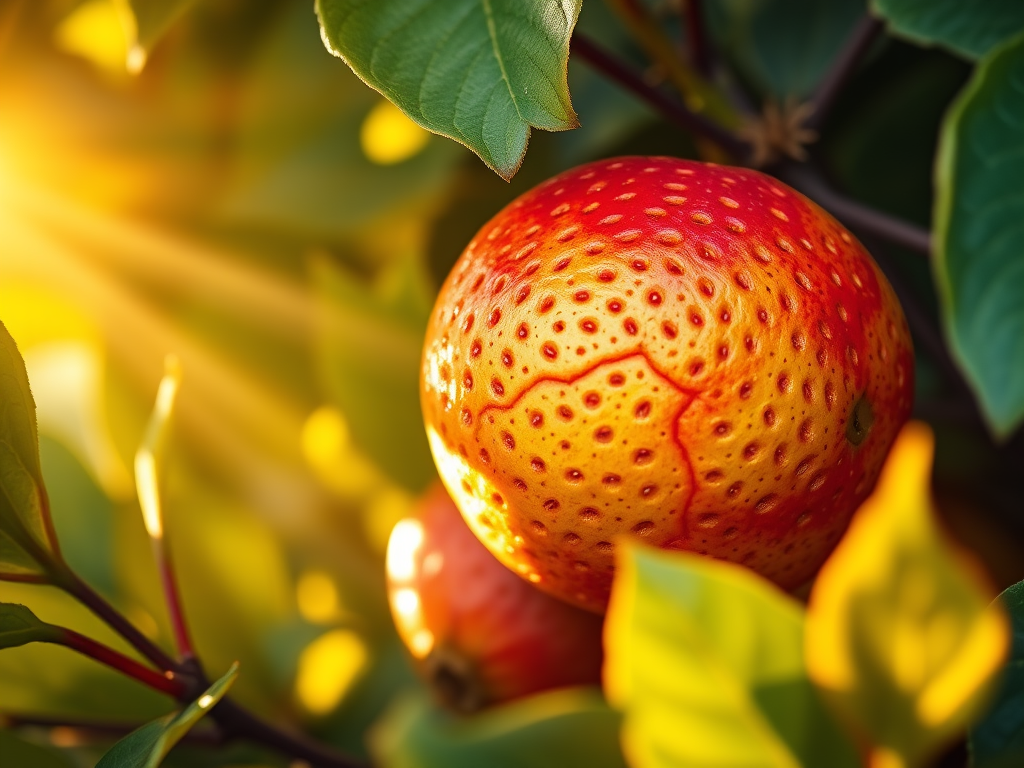
🌱 Origins: A Fruit Rooted in Tropical Landscapes
Strawberry guava (Psidium cattleianum) is a fruit born from warm forests — a child of humidity, red soil, and the quiet abundance of tropical ecosystems. Its story begins in Brazil, where it grew wild long before it had a name in English, long before it traveled across oceans, and long before it became a beloved backyard fruit in homes around the world.
In its native landscape, strawberry guava thrived in the understory of coastal forests, nourished by filtered sunlight and the steady rhythm of tropical rain. Indigenous communities recognized its value early on: a fruit that required little tending, offered reliable sweetness, and could be eaten fresh, juiced, or folded into simple remedies. It was a fruit of the people — accessible, generous, and deeply woven into daily life.
As Portuguese explorers moved through South America, they carried seeds of this small, fragrant fruit to new territories. Strawberry guava adapted effortlessly, taking root in places where the climate echoed its homeland. It found new life in:
- Hawaii, where it naturalized so successfully it became part of the island’s everyday landscape
- The Caribbean, where its sweetness blended into local drinks and preserves
- Southeast Asia, where it joined the tapestry of tropical fruits in home gardens
- Central America, where it thrived in warm valleys and coastal regions
Wherever it traveled, strawberry guava kept its essence: resilient, aromatic, and quietly abundant.
Its adaptability is part of its magic. Unlike fruits that demand careful cultivation, strawberry guava grows with ease — a reminder that some of the earth’s sweetest offerings come from plants that ask for very little. It is a fruit shaped by migration, climate, and the hands of communities who recognized its gifts long before it entered global markets.
To understand strawberry guava’s origins is to see the fruit not just as food, but as a traveler — a bearer of tropical memory, a bridge between continents, and a testament to the way plants carry culture across oceans.
🍓🌺 Flavor Identity: Sweet, Floral, and Quietly Luminous
Strawberry guava has a flavor that feels like a small revelation — familiar enough to comfort, yet layered enough to surprise. It carries the sweetness of a berry, the perfume of a tropical flower, and the gentle acidity of a sun‑warmed fruit picked straight from the tree.
✨ Core Flavor Notes
- Strawberry‑like sweetness that arrives immediately
- Soft guava florals that bloom as you chew
- A bright, tangy lift that keeps the fruit refreshing
- A subtle wildness reminiscent of forest berries
Each bite feels like a blend of summer warmth and tropical breeze — sweet, fragrant, and quietly complex.
🌿 Texture & Mouthfeel
- Thin, edible skin that gives a delicate snap
- Soft, juicy interior that melts on the tongue
- Tiny seeds that add a gentle crunch
- A smooth, aromatic finish that lingers lightly
It’s a fruit that doesn’t overwhelm the palate — it refreshes, brightens, and leaves a whisper of sweetness behind.
🔥 How It Behaves in Cooking
Strawberry guava adapts beautifully to both raw and cooked preparations:
- Raw: bright, floral, and intensely aromatic
- Juiced: sweet with a tropical perfume
- Cooked: deepens into a jammy, almost candy‑like richness
- Frozen: retains its fragrance, perfect for sorbets and smoothies
Heat softens its tang and amplifies its floral notes, making it ideal for compotes, syrups, and simple desserts.
🌸 Emotional & Cultural Identity
Strawberry guava tastes like:
- A warm afternoon in a tropical garden
- Fruit picked straight from a backyard tree
- Childhood sweetness wrapped in floral air
- A moment of brightness in the middle of a busy day
It carries the memory of tropical forests and the ease of foods that grow close to home — fruits that nourish without effort, sweetness that arrives without asking.
💛 In One Line
Strawberry guava tastes like a sweet strawberry wrapped in guava perfume — floral, bright, and quietly enchanting.
🍓🌺 Strawberry Guava: A Small Fruit With a Big Story
Strawberry guava may be tiny, but it carries a world of flavor, history, and quiet nourishment inside its thin, ruby‑red skin. Known for its sweet‑tart perfume and soft floral notes, this fruit has traveled across continents, adapted to new climates, and become a beloved part of tropical foodways. It’s a fruit that feels both familiar and surprising — a bridge between the sweetness of strawberries and the aromatic depth of guava.
🍓 A Fruit With Deep Roots
Strawberry guava carries the memory of tropical forests — the warmth of sun‑drenched afternoons, the scent of wild fruit trees, and the ease of foods that grow without demand. It is a fruit shaped by migration, adaptation, and the quiet wisdom of communities who understood its value long before it reached global markets.
Long before it appeared in markets or recipe books, strawberry guava lived in the rhythm of everyday life. Families gathered it from backyard trees, children ate it straight from the branch, and elders folded it into cooling drinks or simple remedies. It was a fruit that asked for little and offered much — sweetness, hydration, and a sense of abundance that felt both humble and generous.
As it traveled across oceans, strawberry guava carried its lineage with it. In Hawaii, it became part of the landscape, growing wild along trails and hillsides. In the Caribbean, it blended into local preserves and juices. In Southeast Asia, it joined the chorus of tropical fruits that define home gardens and community harvests. Everywhere it went, it adapted — quietly, effortlessly, almost gratefully.
To honor strawberry guava is to honor:
- Indigenous stewardship — the early hands that recognized its gifts
- Botanical resilience — its ability to thrive in new soils and climates
- The beauty of small, potent fruits — sweetness concentrated in a single bite
- The way flavor can hold history — carrying memory across continents
Strawberry guava reminds us that nourishment doesn’t need to be grand to be meaningful. Sometimes the most powerful foods are the ones that grow quietly, generously, and close to the people — fruits that feel like a whisper from the land itself.
🌿 Health & Vitamins
Strawberry guava may be small enough to fit in the palm of your hand, but its nutritional profile is surprisingly powerful. This tiny fruit carries the kind of quiet strength found in many tropical plants — concentrated vitamins, gentle antioxidants, and natural compounds that support everyday wellness without heaviness. It’s a fruit that nourishes the body the way a warm breeze nourishes the spirit: softly, steadily, and with a sweetness that feels effortless.
🍊 Vitamin C for Immune Support & Radiant Skin
Strawberry guava is exceptionally rich in vitamin C, offering more per gram than many larger fruits. This essential nutrient supports:
- Immune resilience
- Collagen production for skin elasticity
- Antioxidant protection
- Wound healing and tissue repair
Its bright, tangy flavor is a natural sign of this vitamin’s presence.
🌱 Antioxidants for Cellular Protection
The fruit contains a spectrum of plant compounds — including carotenoids, flavonoids, and polyphenols — that help the body manage oxidative stress. These antioxidants support:
- Long‑term cellular health
- Reduced inflammation
- Heart wellness
- Healthy aging
The deeper the color, the richer the antioxidant content.
💧 Hydration & Lightness
With its high water content, strawberry guava offers natural hydration wrapped in sweetness. This supports:
- Fluid balance
- Skin moisture
- A sense of lightness after eating
It’s a beautiful choice for warm days or energizing snacks.
🫀 Heart‑Friendly Nutrients
Strawberry guava contains potassium, a mineral that helps maintain healthy blood pressure and supports overall cardiovascular wellness. Combined with its natural fiber, this fruit becomes a gentle ally for heart health.
🌾 Digestive Support Through Natural Fiber
The fruit’s soft, soluble fiber helps:
- Support regular digestion
- Promote gut comfort
- Create a balanced, satisfied feeling
Its fiber is gentle, making it suitable for most digestive systems.
🔥 Low‑Calorie, High‑Nutrient Balance
Strawberry guava offers sweetness without weight. Per serving, it is:
- Low in calories
- Low in fat
- Rich in vitamins
- Naturally hydrating
This makes it a nourishing option for readers seeking foods that feel both indulgent and light.
🌸 A Fruit That Supports Everyday Wellness
Strawberry guava is not a “superfood” in the trendy sense — it is a naturally potent fruit that has supported communities for generations. Its benefits come from its simplicity: whole fruit, grown close to the earth, offering nutrients in their most natural form.
Fruit Your Way To Wellnes: Get a FREE BOOK
🌺 Ceremonials & Cultural Traditions Around Strawberry Guava
Strawberry guava may not appear in formal ritual texts, but across the tropics it is woven into quiet, meaningful practices that function like ceremonies. These traditions honor the land, the harvest, and the sweetness of fruits that grow close to home. They are intimate, ancestral, and rooted in everyday life.
🌿 Backyard Harvest Rituals
In Brazil, Hawaii, and parts of the Caribbean, strawberry guava is often gathered directly from backyard trees or wild hillsides. Harvesting is usually done in the early morning, when the fruit is cool and fragrant. Families pick together, offering a moment of connection to the land and to one another.
🌸 First‑Fruit Offerings
In some communities, the first ripe fruits of the season are set aside as offerings — placed on a small home altar, shared with elders, or given to ancestors in gratitude. This simple act honors abundance and acknowledges the fruit’s lineage.
🌺 Cooling & Healing Traditions
Strawberry guava is often used in cooling remedies during warm seasons. Preparing it — simmering it into tea, blending it into a refreshing drink, or offering it to someone recovering from heat — becomes a quiet ritual of care and restoration.
🌙 Evening Sweetness Ritual
In many Hawaiian households, strawberry guava is enjoyed in the evening as a soft, grounding sweetness. It’s a way to close the day gently, often paired with conversation, gratitude, and a moment of rest before night.
🔥 Communal Preserving Traditions
During peak season, families and neighbors gather to turn strawberry guava into jams, syrups, juices, and fermented drinks. The cutting, simmering, tasting, and sharing become a communal ritual — preserving not just fruit, but memory.
🌼 Blessings for the Tree
In rural areas of Brazil, it’s common to bless fruit trees at the start of the season. People touch the trunk, offer water, or speak a simple wish for abundance. These gestures are small but deeply ceremonial in spirit.
🍓🌺 Strawberry Guava Recipes
These recipes honor the fruit’s bright sweetness, floral perfume, and tropical ease — dishes your readers can make quickly, with ingredients that feel familiar and nourishing.
🍓🌺 1. Strawberry Guava Sunrise Bowl
Serves: 1 Time: 5 minutes Style: Fresh, bright, hydrating
Ingredients
- 1 cup strawberry guava, halved
- ½ cup strawberries, sliced
- 1 tsp honey or agave
- 1 tbsp lime juice
- 3–4 mint leaves, sliced
- Optional: coconut yogurt or chia pudding
Instructions
- Add strawberry guava and strawberries to a bowl.
- Drizzle with honey and lime.
- Add mint for brightness.
- Serve as is, or spoon over yogurt for a fuller breakfast.
🍓🌺 2. Strawberry Guava Cooler (Non‑Alcoholic)
Serves: 2 Time: 10 minutes Style: Cooling, fragrant, summer‑ready
Ingredients
- 1 cup strawberry guava, halved
- ½ cup strawberries
- 2 cups cold water or coconut water
- 1 tbsp lemon or lime juice
- 1 tsp honey (optional)
- Ice
- Fresh mint
Instructions
- Blend strawberry guava, strawberries, and water until smooth.
- Strain if you prefer a lighter texture.
- Add lemon juice and honey.
- Pour over ice and garnish with mint.
🍓🌺 3. Warm Strawberry Guava Compote
Serves: 2 Time: 10 minutes Style: Jammy, cozy, naturally sweet
Ingredients
- 1 cup strawberry guava, halved
- ½ cup strawberries, chopped
- 2 tbsp water
- 1 tsp honey or maple syrup
- A pinch of cinnamon
Instructions
- Add all ingredients to a small saucepan.
- Cook on low heat for 7–10 minutes until soft and jammy.
- Serve warm over oatmeal, pancakes, yogurt, or toast.
🍓🌺 4. Strawberry Guava & Lime Chia Fresca
Serves: 1 Time: 5 minutes Style: Light, energizing, fiber‑rich
Ingredients
- ½ cup strawberry guava
- ½ cup strawberries
- Juice of 1 lime
- 1 cup cold water
- 1 tsp chia seeds
- Honey to taste
Instructions
- Blend strawberry guava, strawberries, and water.
- Stir in lime juice and chia seeds.
- Let sit for 5 minutes.
- Sweeten lightly if desired and serve chilled.
🍓🌺 5. Simple Strawberry Guava Fruit Salad
Serves: 1–2 Time: 5 minutes Style: Fresh, bright, nourishing
Ingredients
- 1 cup strawberry guava, halved
- ½ cup strawberries, sliced
- ½ cup papaya or mango (optional)
- 1 tsp honey
- 1 tsp lemon juice
- A pinch of black pepper (optional but beautiful)
Instructions
- Combine all fruits in a bowl.
- Whisk honey and lemon juice.
- Drizzle over the fruit.
- Add black pepper for a subtle lift.
If you want, I can also create:
- Recipe card versions for WordPress
- Pinterest‑optimized recipe blocks
- A ceremonial recipe intro
- A dessert‑focused strawberry guava set
- SEO tags for this recipe section
Just tell me what direction you want to shape next.
Juice Your Way To Wellness FreeBook
⚠️ Who Should Avoid Strawberry Guava
Strawberry guava is generally gentle and well‑tolerated, but a few readers may want to enjoy it with awareness or avoid it altogether. These notes help your audience make choices that feel aligned with their bodies and their wellness needs.
🌿 1. Individuals With Digestive Sensitivities
Strawberry guava contains small, firm seeds that may be difficult for some people to digest. Those with sensitive digestion, diverticular concerns, or discomfort with seeded fruits may prefer to strain the pulp or choose seedless preparations.
🍃 2. People Sensitive to Tropical Fruits
Some individuals experience mild reactions to tropical fruits such as guava, mango, or papaya. If someone knows they react to similar fruits, it’s wise to introduce strawberry guava slowly and mindfully.
🍋 3. Those With Acid‑Sensitive Digestion
Strawberry guava has a natural tang that may be noticeable for people with:
- Acid reflux
- Heartburn
- Sensitive stomachs
Pairing it with yogurt, oats, or coconut milk can soften the acidity.
🌱 4. Individuals Monitoring Fiber Intake
Because the fruit contains natural fiber and seeds, very large portions may cause discomfort for those who need to limit fiber temporarily.
👶 5. Young Children
Whole strawberry guavas can be a choking hazard due to their size and seeds. Slicing or mashing them makes the fruit safer for little ones.
🧼 6. Anyone Concerned About Surface Residues
Like all thin‑skinned fruits, strawberry guava should be washed thoroughly to remove dust or environmental particles — especially when gathered from wild or backyard trees.
📚 Sources Used & Links
WebMD – Strawberry Guava: Health Benefits, Nutrients, Preparation A medically reviewed overview of strawberry guava’s nutrition, antioxidants, and wellness properties.
diet/health-benefits-strawberry-guava (webmd.com in Bing)
Gardeners’ Magazine – Strawberry Guava: Description, Flavor, Benefits, and Uses Botanical background, flavor notes, culinary uses, and nutritional value.
strawberry-guava (gardenersmag.com in Bing)
Specialty Produce – Strawberry Guavas: Information & Facts Detailed description of appearance, taste, seasonality, and global distribution.
produce/Strawberry_Guavas (specialtyproduce.com in Bing)_
🌼 Closing
May strawberry guava remind you that nourishment can be small, fragrant, and quietly powerful. A fruit shaped by warm forests, carried across oceans, and offered to us with a sweetness that asks for nothing in return.
As you taste its floral brightness, may you feel connected to the places it comes from — the rain‑fed hillsides, the backyard trees, the hands that have gathered it for generations. Let each bite be a moment of presence, a soft pause in your day, a reminder that the earth still gives generously.
May this fruit bring lightness to your body, clarity to your mind, and a gentle sweetness to your table.
⚠️ Disclaimer
This post is for general informational and cultural purposes only. It is not medical advice, and it should not be used to diagnose, treat, or manage any health condition. If you have dietary restrictions, allergies, or specific health concerns, please speak with a qualified healthcare professional before making changes to your diet.
 EJADA
EJADA 
Leave a comment