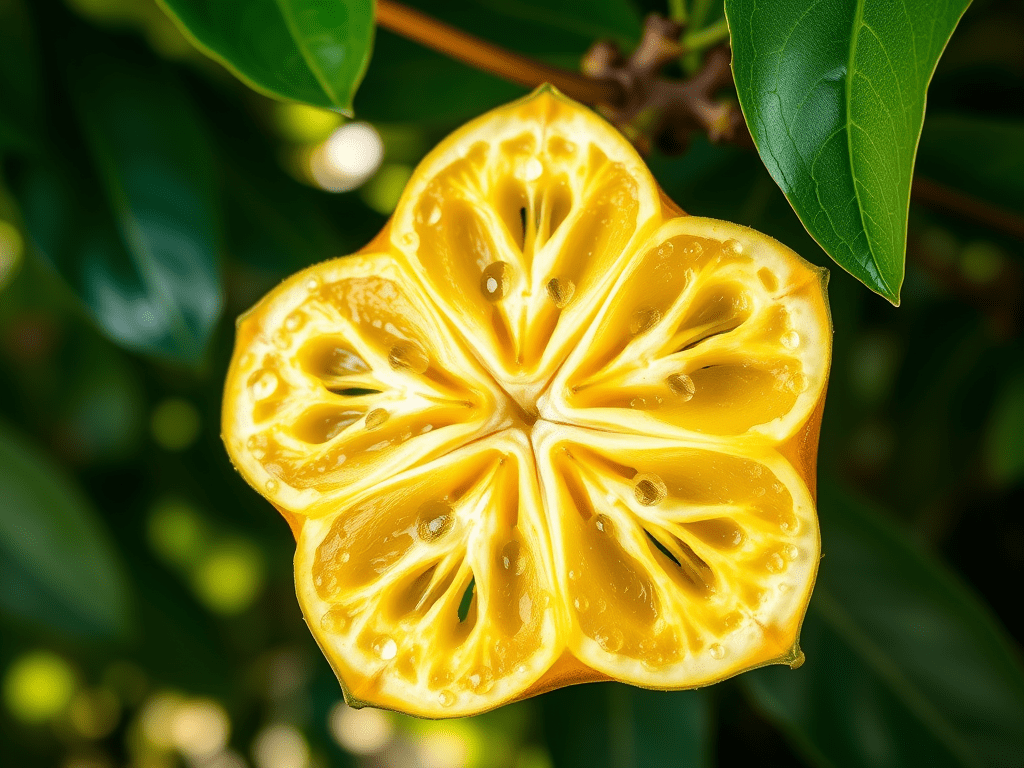
⭐ Starfruit: The Crisp, Luminous Fruit Bringing Brightness to Everyday Wellness
Some fruits feel like sunlight — bright, refreshing, and quietly uplifting. Starfruit, also known as carambola, is one of those gifts. Slice it once and it reveals its natural star shape, a small moment of wonder that never gets old. But beyond its beauty, starfruit carries a long lineage across tropical regions, where it has nourished families for generations with its hydrating sweetness and cooling, citrus‑leaning tang.
🌱 Origins: A Fruit Born of Tropical Soil
Starfruit, or carambola, is a fruit with roots that reach deep into the humid, sun‑drenched landscapes of Southeast Asia. Long before it appeared in markets or cookbooks, it grew wild in the forests and home gardens of Malaysia, Indonesia, the Philippines, and southern China, where communities tended it as naturally as they tended their own rhythms of daily life.
This is a fruit that didn’t need to be “discovered.” It was simply known — gathered by hand, sliced into cooling snacks, folded into herbal drinks, and shared across generations. Its star‑shaped cross‑section made it a small wonder for children, while its crisp, hydrating flesh made it a trusted companion in tropical heat.
As Austronesian seafarers traveled across the Pacific and Indian Oceans, starfruit traveled with them — carried in boats, traded in ports, planted in new soils. Over centuries, it took root in Sri Lanka, India, the Caribbean, Central America, and parts of South America, adapting to each climate with quiet ease.
Wherever it landed, it became part of the local story:
- In Southeast Asia, it was a garden fruit — eaten fresh, juiced, or simmered into chutneys.
- In India and Sri Lanka, it found its way into pickles and cooling drinks.
- In the Caribbean, it became a refreshing snack during warm afternoons.
Starfruit’s journey is not one of conquest or commercial cultivation — it’s a story of migration, climate, and community, carried by people who recognized its value long before it had a name in English.
To speak of starfruit’s origins is to honor the tropical homelands that shaped it: places where fruit trees grow close to the home, where nourishment is shared, and where something as simple as a crisp, star‑shaped slice can feel like a small blessing in the heat.
In a world where wellness often feels complicated this book makes it simple unlock the answes Free
🌿 A Fruit With Deep Roots
Starfruit may look whimsical with its bright, five‑pointed shape, but its story is anything but ornamental. This is a fruit with deep, ancestral roots — shaped by tropical rain, monsoon winds, and the quiet knowledge of the communities who tended it long before it had a name in English.
In the humid landscapes of Malaysia, Indonesia, the Philippines, and southern China, starfruit grew close to the home. Families planted it near their kitchens, where its branches offered shade and its fruit offered refreshment during long, warm seasons. Children learned to recognize the perfect ripeness by touch alone; elders sliced it into cooling snacks or simmered it into herbal drinks meant to soothe the body.
Starfruit’s journey across the world wasn’t driven by commerce — it was carried by Austronesian seafarers, who traveled vast ocean routes with seeds, stories, and plants that held meaning. Wherever they settled, starfruit took root: in Sri Lankan gardens, Indian courtyards, Caribbean backyards, and Central American orchards. It adapted easily, as if each new coastline felt familiar.
What makes starfruit special is not just its flavor or its shape, but its continuity. It is a fruit that has remained close to the people — grown in home gardens, shared between neighbors, folded into everyday meals. It carries the memory of tropical homelands, the rhythm of warm climates, and the quiet wisdom of those who understood its cooling, hydrating nature long before nutrition science gave it language.
To call starfruit a fruit with deep roots is to honor the way it has lived alongside people for centuries — not as a novelty, but as a companion. A fruit shaped by place, carried by migration, and cherished for the simple nourishment it offers.
⭐ Flavor Identity: Crisp, Cooling, and Quietly Floral
Starfruit has a flavor that feels like a breath of tropical air — light, refreshing, and instantly hydrating. Its identity lives in the space between sweet and tart, offering a brightness that wakes up the palate without overwhelming it.
✨ Core Flavor Notes
- Crisp, juicy freshness reminiscent of green grapes
- A gentle sweetness similar to pear or young apple
- A mild citrus tang that brightens each bite
- Soft floral undertones that linger lightly on the tongue
Ripe starfruit leans sweet and fragrant, while unripe fruit carries a sharper, more refreshing acidity — perfect for salads, relishes, and cooling drinks.
🌿 Texture & Mouthfeel
- Firm, smooth skin that’s entirely edible
- A juicy, almost water‑rich interior
- A delicate crunch that feels clean and cooling
- A refreshing finish that doesn’t coat the palate
It’s the kind of fruit that feels like a sip of cold water on a warm day.
🔥 How It Behaves in Cooking
Starfruit adapts beautifully to both sweet and savory dishes:
- Raw: crisp, bright, and hydrating
- Juiced: lightly sweet with a citrus‑leaning lift
- Cooked: softens into a mellow, tangy base for chutneys and relishes
- Garnished: its natural star shape adds visual delight without overpowering flavor
Heat softens its acidity, bringing forward its gentle sweetness and floral notes.
🌼 Emotional & Cultural Identity
Starfruit tastes like:
- Tropical afternoons
- Garden snacks shared between neighbors
- Cooling drinks during monsoon heat
- Childhood curiosity — that first slice revealing a perfect star
It carries the memory of warm climates, home gardens, and the ease of foods that refresh the body without heaviness.
💛 In One Line
Starfruit tastes like a crisp, lightly sweet citrus‑pear with a cooling, floral finish — refreshing, bright, and effortlessly hydratin
🍽️ How Starfruit Is Used in Traditional Cooking
Across tropical regions, starfruit shows up in dishes that feel cooling, refreshing, and deeply tied to place:
- Fresh snacks sprinkled with salt or chili
- Fruit salads that balance sweetness and acidity
- Juices and cooling drinks served during hot afternoons
- Chutneys and relishes that pair beautifully with rice and grilled foods
- Light stews and curries where its acidity brightens the broth
Its natural star shape also makes it a favorite garnish — a small, edible moment of beauty.
Starfruit is naturally hydrating and rich in nutrients that support gentle, everyday wellness:
🌿 Nutritional & Wellness Benefits
Starfruit is one of those fruits that nourishes in a way that feels effortless — crisp, hydrating, and naturally supportive of everyday balance. Its nutritional profile leans light and refreshing, making it a beautiful addition to plant‑forward meals, cooling drinks, and gentle wellness routines.
🍋 Rich in Vitamin C for Everyday Vitality
Starfruit is naturally high in vitamin C, offering support for:
- Immune function
- Skin health and collagen formation
- Natural antioxidant protection
It’s a simple way to bring brightness and nourishment into the day.
💧 Deep Hydration from the Inside Out
With its high water content, starfruit acts almost like a fruit‑based hydration boost. It supports:
- Fluid balance
- Gentle cooling during warm weather
- A refreshed, energized feeling after meals
This is why it’s so beloved in tropical climates — it meets the body where it is.
🌱 Light, Digestive‑Friendly Fiber
Starfruit contains natural dietary fiber that helps:
- Support smooth digestion
- Promote regularity
- Create a sense of lightness after eating
Its crisp texture makes it easy to enjoy without heaviness.
✨ Natural Antioxidants for Cellular Support
Starfruit contains plant compounds that help the body manage everyday oxidative stress. These antioxidants contribute to:
- Cellular protection
- Overall vitality
- A sense of internal balance
It’s gentle, steady nourishment — not overwhelming, just supportive.
🔥 Low‑Calorie, High‑Nutrient Balance
Starfruit offers sweetness without weight. Per 100g, it’s naturally:
- Low in calories
- Low in sugar
- High in water
- Rich in micronutrients
This makes it a beautiful choice for readers seeking foods that feel refreshing and energizing rather than heavy.
🌼 A Fruit That Supports Ease
Starfruit fits seamlessly into a wellness lifestyle because it’s:
- Easy to prepare
- Naturally hydrating
- Versatile in both sweet and savory dishes
- Gentle enough for light meals and snacks
It’s the kind of fruit that supports the body without demanding much in return.
It’s the kind of fruit that feels good to eat — crisp, cooling, and easy on the body.
⚠️ Caution & Sensitivities
Starfruit contains compounds that can be harmful for individuals with kidney disease. Anyone with kidney concerns should avoid starfruit unless advised otherwise by a healthcare professional.
Starfruit is refreshing, hydrating, and widely enjoyed across tropical regions — but like many naturally potent fruits, it comes with a few important considerations. .
🌿 1. Kidney Health Considerations
Starfruit contains natural compounds that can be difficult for the kidneys to filter. For individuals with kidney disease or reduced kidney function, these compounds may build up in the body and cause adverse effects. Anyone with kidney concerns should avoid starfruit unless advised otherwise by a qualified healthcare professional.
🍋 2. Natural Acidity
Starfruit’s crisp, citrus‑leaning tang may be too sharp for those sensitive to acidic foods. Readers who experience discomfort with citrus, pineapple, or sour tropical fruits may want to start with small amounts or choose fully ripe fruits, which tend to be gentler.
🌱 3. Digestive Sensitivities
Because starfruit contains natural fiber and organic acids, it may cause mild digestive reactions in people with very sensitive stomachs. Cooking the fruit — in chutneys, stews, or relishes — often softens its acidity and makes it easier to tolerate.
✨ 4. Allergic Reactions (Rare but Possible)
Although uncommon, some individuals may experience:
- Tingling in the mouth
- Mild itching
- Sensitivity around the lips or tongue
These reactions are typically mild but worth noting for readers who are prone to fruit‑related sensitivities.
🍃 5. Interaction With Certain Medications
Starfruit contains natural compounds that may interact with how the body processes certain medications. Readers taking prescription medications — especially those metabolized through the liver — should check with a healthcare professional if unsure.
👶 6. Children & Older Adults
For young children or older adults, softer, ripe starfruit is generally easier to chew and digest than firm, tart slices. Serving it in small portions or blended into drinks can make it more accessible.
🌼 7. Traditional Uses vs. Medical Advice
Starfruit has a long history in traditional wellness practices, but these uses are cultural and not a substitute for medical guidance. Readers with underlying health conditions or dietary restrictions should consult a healthcare professional before making significant changes.
For most people, starfruit is enjoyed safely, but as with any fruit, moderation and awareness are key.
🍽️ Simple Starfruit & Lime Cooler (Recipe)
A refreshing drink for warm days — hydrating, bright, and naturally sweet.
Ingredients
- 2 ripe starfruits, sliced
- Juice of 1 lime
- 1–2 tsp honey or agave (optional)
- 1 cup cold water
- Ice
- Mint leaves (optional)
Instructions
- Blend the starfruit slices with water until smooth.
- Strain if you prefer a clearer drink.
- Stir in lime juice and honey.
- Pour over ice and garnish with mint or a starfruit slice.
Light, cooling, and perfect for afternoons when the body needs a gentle reset.
📊 Nutritional Values (Approx. per 100g of Starfruit)
| Nutrient | Amount |
|---|---|
| Calories | 30–35 kcal |
| Carbohydrates | 6–7 g |
| Dietary Fiber | 2–3 g |
| Vitamin C | High |
| Potassium | Moderate |
| Water Content | Very high |
| Fat | |
| Protein |
Values vary by ripeness and region.
🌼 Closing
Starfruit reminds us that wellness doesn’t always need to be heavy or complex. Sometimes it’s as simple as a crisp, hydrating fruit that brightens the day — a slice of sunlight on the plate.
It’s a fruit of ease, of tropical memory, of cooling nourishment. And in sharing it with your readers, you’re offering them a moment of brightness they can return to again and again.
May this bright, star‑shaped fruit remind you of the small wonders that nourish us — the ones that arrive quietly, offering refreshment without demand. Starfruit carries the warmth of tropical homelands, the ease of garden afternoons, and the simple joy of slicing into something that reveals its own light.
As you bring it into your kitchen, may it offer clarity, hydration, and a moment of brightness in the middle of your day. A reminder that wellness can be gentle. A reminder that nourishment can be beautiful. A reminder that even the simplest foods can feel like a blessing.
May each slice be a small star on your table — a symbol of ease, renewal, and the quiet abundance that grows from the earth.
📚 Sources Used
Carambola (Starfruit) — Botanical Profile, Origins, Distribution, Caution Notes
- Wikipedia. Carambola (Averrhoa carambola) — native range, cultivation history, Austronesian spread, oxalic acid and caramboxin cautions. https://en.wikipedia.org/wiki/Carambola
Starfruit Nutritional Values & Historical Cultivation
- PGCPS Food & Nutrition Education. Star Fruit (Averrhoa carambola) — Geography, History, Description, Taste, and USDA Nutrient Table. https://www.pgcps.org
Carambola — Culinary Uses, Flavor Notes, Traditional Medicinal Uses
- Encyclopaedia Britannica. Carambola | Description, Tree, Fruit, Uses, & Facts. https://www.britannica.com/plant/carambola
Disclaimer
The information in this post is intended for general wellness and educational purposes only. Starfruit is enjoyed safely by many people, but it may not be suitable for everyone. Individuals with kidney conditions or sensitivities to acidic fruits should avoid starfruit unless advised otherwise by a qualified healthcare professional. This content is not medical advice, diagnosis, or treatment, and should not replace guidance from a licensed healthcare provider. Always listen to your body and consult a professional if you have questions about your personal health needs.
Full Body Wellness Learn More
 EJADA
EJADA 
Leave a comment