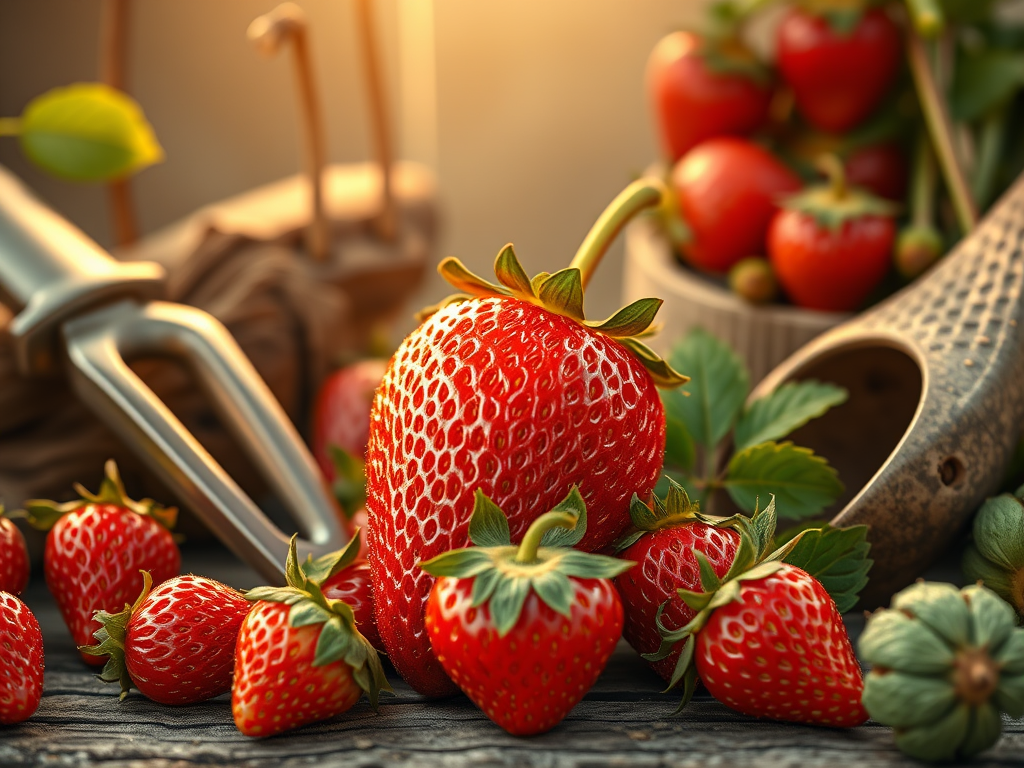
🍓 Who First Cultivated the Strawberry?
Strawberries were first cultivated by the French in the 1300s, when they began transplanting the wild European wood strawberry (Fragaria vesca) from forests into gardens. This marks the earliest documented intentional cultivation of strawberries.
Later, in the 1500s, the French also cultivated the musky strawberry (Fragaria moschata). By the 1600s, the Virginia strawberry (Fragaria virginiana) from North America arrived in Europe — eventually leading to the hybrid ancestors of the modern strawberry.
🍓 The Strawberry: A Bright, Heart‑Shaped Fruit Rooted in History and Everyday Joy
Few fruits carry the emotional warmth of the strawberry — bright, fragrant, heart‑shaped, and woven into memories of summer, celebration, and sweetness. But beyond its charm, the strawberry is a fruit with a deep agricultural lineage, centuries of cultivation, and a nutritional profile that supports gentle, everyday wellness.
This post brings together its origins, flavor identity, cultural presence, and nourishing qualities in a way that feels grounded, intentional, and aligned with your Healthy Living voice.
🌱 Origins: A Fruit Cultivated Through Centuries
Strawberries have been gathered since ancient times, but true cultivation began in 14th‑century France, when gardeners transplanted wild wood strawberries into managed plots.
Over the next few centuries:
- 1500s: The musky strawberry (Fragaria moschata) entered European gardens.
- 1600s: The Virginia strawberry from North America arrived in Europe, valued for its hardiness.
- 1700s: A chance hybridization between the Virginia strawberry and the Chilean strawberry in France produced the ancestors of the modern large, juicy strawberry.
From these crossings came the strawberries we know today — larger, sweeter, and more aromatic than their wild ancestors.
Strawberries are now grown worldwide, but their story begins with careful hands in medieval French gardens and the slow, centuries‑long blending of species across continents.
🍓 A Fruit With Deep Roots
They are a fruit shaped by both nature and human care — a lineage carried through time, climate, and culture.
Strawberries may feel like a modern delight — folded into desserts, blended into smoothies, or sliced over morning bowls — but their story reaches far deeper than their bright sweetness suggests. This is a fruit shaped by forests, migration, and centuries of human care. A fruit that began small, wild, and fragrant, long before it became the plump, heart‑shaped berry we know today.
For thousands of years, wild strawberries grew along woodland edges across Europe, Asia, and the Americas. They were tiny, intensely aromatic, and cherished by the communities who gathered them season after season. These early berries were not cultivated; they were encountered — found in meadows, forest clearings, and riverbanks, eaten fresh or used in simple remedies and seasonal dishes.
The strawberry’s deeper transformation began in 14th‑century France, when gardeners started transplanting wild European strawberries into cultivated plots. This was the first time the fruit was intentionally grown rather than gathered. Over the next few centuries, the strawberry became a quiet agricultural project — shaped by patience, curiosity, and the desire to coax more sweetness, more size, more fragrance from the land.
Then came the turning point.
In the 1600s and 1700s, two New World species — the Virginia strawberry from North America and the Chilean strawberry from South America — arrived in Europe. When these two species were planted near each other in French gardens, they naturally cross‑pollinated. The result was extraordinary: a larger, juicier, more robust berry than any that had existed before. This hybrid became the ancestor of the modern strawberry.
From that moment, the strawberry’s story expanded across continents. It moved from forest floors to royal gardens, from cottage farms to global agriculture. Yet even with its evolution, it has never lost its connection to the land. It remains a fruit that carries the memory of wildness — the scent of summer fields, the softness of mossy paths, the sweetness of something once gathered by hand.
To call the strawberry a fruit with deep roots is to honor the way it has lived alongside people for centuries. It is a fruit shaped by nature, refined by human hands, and cherished across cultures as a symbol of sweetness, tenderness, and the quiet abundance of the earth.
🌸 Flavor Identity: Sweet, Fragrant, and Bright
Strawberries offer a sensory experience that feels instantly familiar:
Core Flavor Notes
- Bright, juicy sweetness
- Gentle acidity that lifts the flavor
- Floral undertones
- A soft, fragrant aroma that signals ripeness
Texture & Mouthfeel
- Tender flesh with a juicy burst
- Tiny seeds that add subtle texture
- A clean finish that doesn’t overwhelm the palate
How They Behave in Cooking
- Fresh: sweet, aromatic, hydrating
- Cooked: deepens into a jammy richness
- Frozen: retains sweetness, perfect for smoothies
- Baked: softens into warm, fragrant pockets of flavor
Strawberries adapt beautifully — from salads to desserts to drinks — always bringing brightness.
🌿 Health & Vitamins: Gentle Nourishment in a Bright, Red Fruit
Strawberries may be small, but they carry a powerful spectrum of nutrients that support everyday vitality. Their sweetness is light, their calories are low, and their wellness benefits reach far beyond their size. This fruit nourishes without heaviness — a perfect companion for readers seeking foods that feel refreshing, energizing, and naturally supportive.
🍊 Rich in Vitamin C for Immune Support & Radiant Skin
Strawberries are one of the best natural sources of vitamin C. This essential nutrient supports:
- Immune function
- Collagen production for skin health
- Antioxidant protection against everyday stress
- Wound healing and tissue repair
Just one cup of strawberries provides more vitamin C than an orange.
❤️ Antioxidants for Cellular Protection
Strawberries contain a variety of plant compounds — including anthocyanins, ellagic acid, and quercetin — that help the body manage oxidative stress. These antioxidants support:
- Cellular health
- Heart wellness
- Reduced inflammation
- Long‑term vitality
Their deep red color is a visual sign of these protective compounds.
🌱 Folate for Cellular Growth & Energy
Folate (vitamin B9) is essential for:
- Healthy cell formation
- Energy metabolism
- Support during pregnancy
- Cognitive function
Strawberries offer a gentle, natural source of this important nutrient.
💧 Hydration & Lightness
With their high water content, strawberries help the body stay hydrated while offering a refreshing, cooling sensation. This supports:
- Fluid balance
- Skin moisture
- A sense of lightness after eating
They’re a beautiful choice for warm days or energizing snacks.
🫀 Heart‑Friendly Nutrients
Strawberries contain potassium and fiber — two nutrients known to support heart health. Together, they help:
- Maintain healthy blood pressure
- Support smooth digestion
- Promote overall cardiovascular wellness
Their natural sweetness makes them a heart‑friendly alternative to heavier desserts.
🌾 Digestive Support Through Natural Fiber
Strawberries provide gentle dietary fiber that helps:
- Support regularity
- Promote gut health
- Create a balanced, satisfied feeling after meals
Their fiber is soft and easy on the digestive system.
🔥 Low‑Calorie, High‑Nutrient Balance
Strawberries offer sweetness without weight. Per 100g, they are:
- Low in calories
- Low in sugar
- High in water
- Rich in vitamins and antioxidants
This makes them a nourishing choice for readers seeking foods that feel both indulgent and light.
⚠️ Caution & Sensitivities
For most people, strawberries are a gentle, nourishing addition to the diet.
Strawberries are widely loved for their sweetness and lightness, but like all naturally potent fruits, they come with a few considerations. This section helps readers enjoy them mindfully while honoring the body’s unique needs.
🍃 1. Oral Allergy Syndrome (OAS)
Some individuals — especially those sensitive to birch pollen — may experience mild reactions when eating strawberries. These can include:
- Tingling around the lips or mouth
- Mild itching
- Slight swelling
These reactions are usually gentle but worth noting for readers with known seasonal allergies.
🍓 2. Natural Acidity
Strawberries carry a bright, natural acidity that may be uncomfortable for those with:
- Acid reflux
- Sensitive digestion
- Mouth sores or dental sensitivity
Pairing strawberries with yogurt, cream, or oats can soften their acidity.
🌱 3. Histamine Sensitivity
Strawberries can release histamine in the body, which may cause mild reactions in individuals with histamine intolerance. Symptoms may include:
- Flushing
- Itching
- Mild digestive discomfort
This is uncommon but important for sensitive readers.
🧼 4. Surface Residues
Because strawberries are grown close to the ground and have a porous surface, they can hold onto:
- Soil
- Dust
- Agricultural residues
A thorough rinse under cool water helps remove surface particles before eating.
👶 5. Children & Older Adults
For young children or older adults, whole strawberries can be a choking hazard. Slicing them into smaller pieces or mashing them into soft foods makes them easier to enjoy safely.
💊 6. Medication Considerations
While strawberries are generally safe, readers taking medications that interact with acidic foods may want to check with a healthcare professional if unsure.
🌼 7. Moderation for Sensitive Stomachs
Because strawberries contain natural fruit acids and fiber, very large portions may cause mild digestive discomfort in sensitive individuals. Enjoying them in balanced servings helps maintain ease.
🍽️ Simple Strawberry & Mint Bowl (Recipe)
A refreshing, bright dish perfect for mornings or light snacks.
Ingredients
- 1 cup fresh strawberries, sliced
- 1 tsp honey or maple syrup
- 3–4 mint leaves, finely sliced
- A squeeze of lemon (optional)
Instructions
- Combine sliced strawberries in a bowl.
- Drizzle with honey and toss gently.
- Add mint and a touch of lemon.
- Serve immediately for peak freshness.
🍓Cooling Strawberry & Basil Infused Water
Serves: 1–2 Time: 10 minutes Style: Hydrating, gentle, summer‑bright
Ingredients
- 5–6 strawberries, sliced
- 3 basil leaves
- 2 cups cold water
- Ice
Instructions
- Add strawberries and basil to a glass or jar.
- Fill with cold water and ice.
- Let steep for 10–15 minutes.
- Sip slowly and enjoy the quiet sweetness.
Notes
- Add a squeeze of lemon for extra brightness.
- Best enjoyed within 24 hours.
🍓 Warm Strawberry Compote No Refined Sugar
Serves: 2 Time: 10 minutes Style: Cozy, jammy, naturally sweet
Ingredients
- 1 cup strawberries, halved
- 1–2 tbsp water
- 1 tsp honey or maple syrup (optional)
- A pinch of cinnamon (optional)
Instructions
- Add strawberries and water to a small saucepan.
- Cook on low heat for 5–7 minutes until soft and jammy.
- Stir in honey and cinnamon if desired.
- Serve warm or store chilled for up to 3 days.
Notes
- Perfect for oatmeal, pancakes, yogurt, or toast.
- Add a splash of vanilla for a deeper flavor.
🍓Strawberry & Lime Chia Fresca
Serves: 1 Time: 5 minutes Style: Bright, energizing, fiber‑rich
Ingredients
- 1 cup strawberries
- Juice of 1 lime
- 1 tsp chia seeds
- 1 cup cold water
- Honey to taste
Instructions
- Blend strawberries with water and lime juice.
- Stir in chia seeds and let sit for 5 minutes.
- Sweeten lightly if desired.
- Serve chilled.
Notes
- Add mint for extra freshness.
- Let it sit longer for a thicker texture.
🍓Strawberry Salad with Honey‑Lemon Dressing
Serves: 1–2 Time: 5 minutes Style: Fresh, bright, nourishing
Ingredients
- 1 cup sliced strawberries
- 1 handful baby spinach or mixed greens
- 1 tbsp chopped walnuts or almonds
- 1 tsp honey
- 1 tsp lemon juice
- 1 tsp olive oil
Instructions
- Arrange greens and strawberries in a bowl.
- Whisk honey, lemon, and olive oil.
- Drizzle over the salad.
- Top with nuts and serve immediately.
Notes
- Add feta or goat cheese for a creamy contrast.
- Swap nuts for pumpkin seeds for a lighter crunch.
Smoothie Your Way To Health
📊 Nutritional Snapshot (per 100g)
| Nutrient | Amount |
|---|---|
| Calories | ~32 kcal |
| Vitamin C | High |
| Fiber | 2 g |
| Folate | Moderate |
| Water Content | Very high |
| Fat | |
| Protein |
Smoothie Your Way To Better Health in 20 Days
🌼 Ceremonial Closing
May the strawberry remind you that sweetness can be simple, honest, and close to the earth. A fruit shaped by forests, tended by centuries of hands, and carried into our present moment with its bright, familiar tenderness.
As you slice into each berry, may you feel the quiet lineage it carries — the wildness of old meadows, the patience of gardeners, the warmth of summer fields. May its fragrance soften your breath. May its color brighten your table. May its sweetness offer a pause in your day, a moment of nourishment that asks for nothing in return.
Let this small, heart‑shaped fruit be a reminder that care can be gentle, that wellness can be joyful, and that the earth still offers gifts that feel like comfort.
May every bowl, every handful, every bite be a small blessing — a soft invitation back to yourself.
 EJADA
EJADA 
Leave a comment