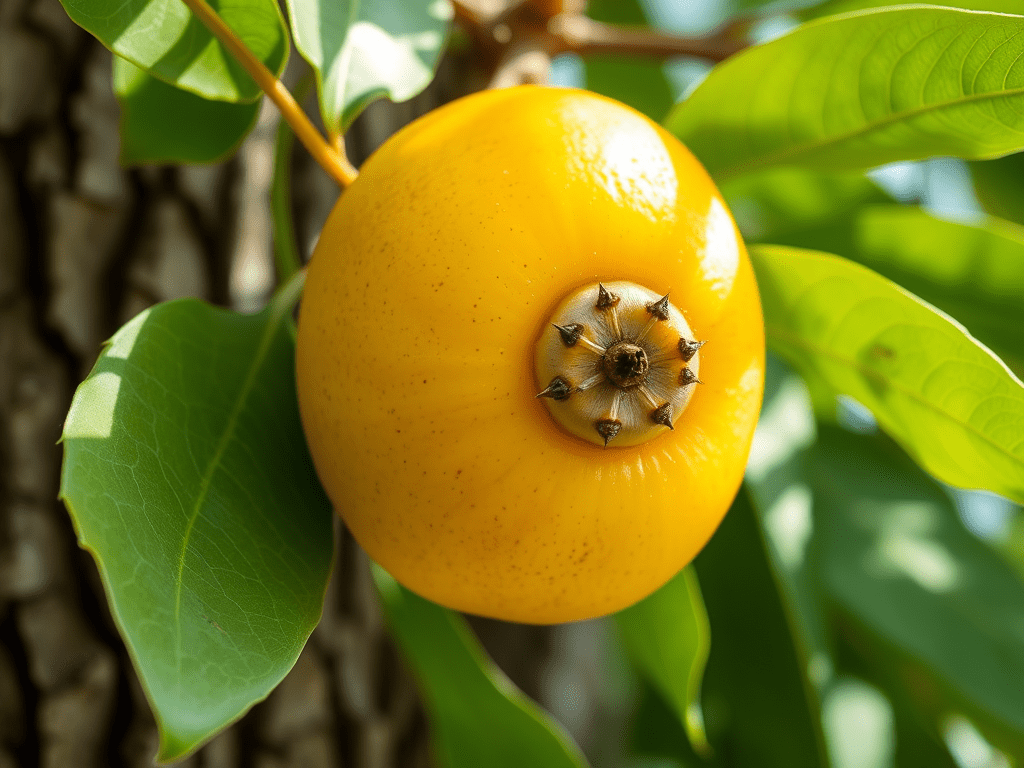
🌼 Spondias mombin (Yellow Mombin / Hog Plum / Cajá)
A fruit of ancestry, migration, and bright, tangy resilience.
Spondias mombin is a tropical fruit with deep Indigenous American roots, carried across continents through trade, colonization, and cultural exchange. Known by many names — yellow mombin, hog plum, cajá, amra, omora, ambazham, and cajazeira — it remains a beloved fruit across the Caribbean, Central and South America, West Africa, and South Asia.
🌿 Botanical Profile
- Scientific name: Spondias mombin
- Family: Anacardiaceae (mango, cashew, pistachio)
- Type: Deciduous tropical fruit tree
- Height: Up to 20 meters
- Native range: Tropical Americas
- Introduced regions: West Africa, India, Nepal, Bangladesh, Sri Lanka, Thailand
The tree is known for its deeply fissured bark, sweet‑scented flowers, and bright yellow fruits that ripen in clusters.
🌍 Origins & Cultural History
Spondias mombin is native to the tropical Americas, where Indigenous communities used the fruit, bark, leaves, and resin for food, ceremony, and traditional healing. During the 1600s, Portuguese traders carried the tree to West Africa and South Asia, where it naturalized and became part of local cuisines and folk practices.
Today, it is woven into the cultural fabric of:
- Brazil (cajá)
- Jamaica & Trinidad (hog plum)
- Ghana & Nigeria (iyeye)
- Nepal (lapsi)
- Thailand (makok)
- India & Bangladesh (amra)
Each region has its own way of honoring the fruit.
🍋 Appearance & Sensory Profile
- Color: Bright yellow when ripe
- Shape: Small, oval, plum‑like
- Texture: Thin layer of juicy pulp around a spiny seed
- Flavor: Sharp, sweet‑tart, aromatic, more intense than Spondias dulcis
- Aroma: Fruity, slightly resinous, tropical
The fruit’s thin pulp makes it prized for juices, preserves, and condiments.
🍽️ Culinary Uses
Spondias mombin is a versatile fruit that adapts beautifully to both sweet and savory preparations.
Fresh
- Eaten with salt, chili, or sugar
- Added to fruit bowls or roadside snacks
Drinks
- Juices
- Concentrates
- Sherbets and frozen treats
- Fermented beverages in some regions
Preserves
- Jams and jellies
- Syrups
- Dried fruit (Nepal’s lapsi ko maada)
Savory Dishes
- Pickles and chutneys (South Asia)
- Sour element in salads like Thai som tam
- Paired with fish, rice dishes, and curries
Its acidity makes it a natural brightener in any dish.
🌱 Nutritional Profile
(General information only)
Spondias mombin contains:
- Vitamin C
- Vitamin A
- Dietary fiber
- Potassium & magnesium
- Antioxidants & polyphenols
These nutrients support overall wellness and make the fruit a refreshing, hydrating choice in hot climates.
🌿 Traditional & Folk Uses
(General information only — not medical advice)
Across the Americas, Africa, and South Asia, different parts of the tree have been used traditionally for:
- Digestive comfort
- Fever and seasonal ailments
- Postpartum support
- Skin and wound care
- General vitality tonics
These practices reflect cultural heritage, not clinical recommendations.
🌿 Health & Nutritional Benefits of Spondias mombin
Grounded in current research and ethnobotanical literature.
🍋 Nutritional Benefits
Research shows that Spondias mombin (yellow mombin / hog plum) contains a wide range of essential nutrients that support overall wellness.
Key Nutrients
- Vitamin C — strong antioxidant; supports immune function
- Vitamin A + carotenoids — supports vision, skin health, and cellular repair (β‑carotene, α‑carotene, lutein, zeinoxanthin, β‑cryptoxanthin)
- Minerals:
- Potassium
- Magnesium
- Calcium
- Iron
- Phosphorus
- Copper These minerals support bone health, muscle function, and metabolic balance.
- Dietary fiber — supports digestion and healthy bowel movements
- Low in fat, sodium, and cholesterol — supportive for heart‑conscious diets
🌱 Health‑Supporting Properties
(General information only — not medical advice)
1. Antioxidant Activity
Extracts from the fruit and leaves show strong antioxidant effects, helping neutralize free radicals and reduce oxidative stress.
2. Anti‑inflammatory Effects
Traditionally used to ease inflammation; studies show plant extracts may help manage inflammatory conditions.
3. Digestive Support
Used across the Americas and Africa to support digestion, ease constipation, and soothe diarrhea or dysentery. High fiber content supports gut health.
4. Immune Support
High vitamin C and antioxidant compounds help support immune resilience.
5. Bone & Connective Tissue Support
Vitamin K, copper, and minerals in the fruit may support bone strength and connective tissue health.
6. Antimicrobial Properties
Extracts show activity against certain bacteria and fungi, supporting traditional uses for wound care and infections.
7. Cardiovascular Support
Traditional use includes supporting heart health and healthy blood pressure.
8. Reproductive & Women’s Wellness (Traditional Use)
Used in some regions for menstrual discomfort and postpartum support. These uses are cultural and not clinically validated.
🌼 Ethnomedicinal Context
A 2023 comprehensive review documents over 100 bioactive compounds across the fruit, leaves, bark, and seeds, supporting its long history in traditional medicine for:
- Fever
- Digestive pain
- Postpartum care
- Wounds
- Respiratory discomfort
- General vitality tonics
These reflect cultural practices, not medical recommendations.
⚠️ General Caution
- The fruit is acidic and may cause tooth sensitivity when eaten in excess.
- As part of the Anacardiaceae family, the sap may irritate sensitive skin.
- Traditional uses should not replace professional medical care.
📚 Sources Used Health & Nutritional Benefits
1. Comprehensive Review of Nutritional & Bioactive Compounds
Journal of Pharmacy and Pharmacology (2023) – “Phytochemical and Pharmacological Review of Spondias mombin”** A peer‑reviewed scientific review detailing antioxidants, vitamins, minerals, anti‑inflammatory properties, and over 100 identified bioactive compounds. https://doi.org/10.1093/jpp/rgac086 (doi.org in Bing)
2. Nutrient Composition & Food Uses
Biodiversity for Food and Nutrition (Brazilian Ministry of the Environment) Provides nutrient data including vitamin A, vitamin C, minerals, and culinary applications. https://www.b4fn.org/resources/species-database/spondias-mombin/ (b4fn.org in Bing)
3. Botanical, Nutritional & Traditional Uses Overview
Wikipedia – Spondias mombin Summarizes distribution, traditional uses, nutritional notes, and ethnobotanical context. https://en.wikipedia.org/wiki/Spondias_mombin (en.wikipedia.org in Bing)
4. Ethnobotanical & Traditional Medicine Context
Plants for a Future Database – Spondias mombin Includes traditional uses, plant parts used, and general nutritional insights. https://pfaf.org/user/Plant.aspx?LatinName=Spondias+mombin (pfaf.org in Bing)
5. Antioxidant & Anti‑inflammatory Properties
African Journal of Biomedical Research – Studies on Spondias mombinextracts Documents antioxidant, antimicrobial, and anti‑inflammatory activity of fruit and leaf extracts. https://www.ajol.info/index.php/ajbr
🌳 Growing & Seasonality
- Thrives in tropical and subtropical climates
- Fruits ripen July–September in many regions
- Strong root system helps prevent soil erosion
- Often found in home gardens, village landscapes, and wild groves
The tree is hardy, drought‑tolerant, and generous.
⚠️ Who May Want to Avoid It
(General information only)
- Individuals sensitive to acidic fruits
- Anyone with allergies to Anacardiaceae family plants
- Those avoiding acidic foods for dietary reasons
- People with oral sensitivity or mouth ulcers
The sap may cause irritation in sensitive individuals.
🛒 Availability
You may find Spondias mombin in:
- Caribbean and Latin American markets
- West African grocery stores
- South Asian markets (as amra or lapsi)
- Specialty produce shops in major U.S. cities
- Frozen pulp, concentrates, or preserves online
Fresh availability varies by region and season.
✨Introduction to the Recipes
Before you begin, pause for a breath. Spondias mombin is not just a fruit — it is a traveler, a keeper of stories, a small golden vessel that has crossed oceans and generations to arrive in your hands.
In the Americas, it grew in the shade of ancient forests. In West Africa, it rooted itself into new soil and new memory. In South Asia, it became part of kitchens, rituals, and the quiet rhythm of everyday nourishment.
When you prepare these recipes, you join that lineage.
Let the fruit’s bright scent rise. Let its tartness wake your senses. Let its history move through your palms as you peel, slice, simmer, and stir.
These dishes are not only food — they are offerings, they are remembrance, they are a way of honoring the places this fruit has touched and the people who carried it forward.
Begin with intention. Cook with presence. Taste with gratitude. RECIPES FOR SPONDIAS MOMBIN
🥤 Yellow Mombin Juice: A Drink for Clearing the Heat
Peel the fruit as though you’re uncovering a small sun. Let the pulp fall into your hands — bright, fragrant, alive.
Blend it with cool water until it becomes a golden cloud. Strain away the fibers, keeping only what refreshes.
Sweeten gently. Add lime if your spirit needs brightness.
Drink slowly. Let it cool the places inside you that have been working too hard.
🌶️ Hog Plum Chutney: A Jar of Fire and Memory
Mash the fruit until it softens into a fragrant paste. Add onion, garlic, and pepper — the rhythm of island kitchens.
Let everything simmer together: sweetness melting, vinegar rising, spices opening like small flowers.
When it thickens, taste it. It should feel like a story — bold, bright, unforgettable.
Keep it close. Use it to wake up any meal that feels quiet.
🥒 Amra Pickle: A Practice of Patience
Slice the fruit into crescents — moons of yellow and gold. Pack them into a jar with seeds that crackle with promise.
Pour the hot brine over the fruit. Listen to the soft hiss — the sound of transformation beginning.
Seal the jar. Let time do what only time can do.
Return tomorrow to a sharper, brighter version of what you started.
🍧 Cajá Sorbet: A Bowl of Tropical Light
Blend the pulp with sweetness and lime. Let the mixture rest in the cold, stirring now and then as it slowly becomes itself.
Scoop it into a bowl. Taste the sun, the rain, the soil — all the places this fruit has traveled to reach you.
If this journey with Spondias mombin stirred something in you — a memory, a curiosity, a hunger for more ancestral fruits — stay close. There are so many stories still waiting in the branches.
Share this post with someone who loves tropical flavors. Save it for your next kitchen ritual. Leave a comment with how you prepare this bright, tangy fruit in your home.
And if you’re exploring the world of heritage produce, traditional recipes, or the quiet ceremonies of everyday nourishment, wander through the rest of the blog. There’s always another fruit, another story, another moment of presence waiting for you.
Let this be the beginning of your next delicious discovery.
✨ Closing
As you finish with Spondias mombin, pause for a moment of quiet gratitude. This small golden fruit has traveled far — through forests, across oceans, into the hands of cooks, healers, and families who understood its brightness long before it reached your kitchen.
Let this be your reminder: food carries memory, flavor carries lineage, and every recipe is a way of honoring the places and people who tended these trees before us.
May the tartness awaken you. May the sweetness soften you. May the fruit’s long journey bless your own.
Close your kitchen gently. Carry the scent with you. Let the nourishment linger.
📚 Sources Used
1. Botanical Origin, Distribution & Cultural Spread
Wikipedia – Spondias mombin Covers native range (tropical Americas), introduction to South Asia by the Portuguese in the 17th century, naturalization across Africa and Asia, botanical description, and culinary uses. https://en.wikipedia.org/wiki/Spondias_mombin (en.wikipedia.org in Bing)
2. Nutritional Composition & Traditional Uses
Journal of Pharmacy and Pharmacology (2023) – Comprehensive Review of Spondias mombin Provides detailed information on nutritional values, ethnomedicinal uses, phytochemical constituents, and traditional applications across tropical regions. https://doi.org/10.1093/jpp/rgac086
3. Nutrient Data & Culinary Uses (Brazilian Biodiversity Database)
Biodiversity for Food and Nutrition – Spondias mombin Includes vitamin A content, vitamin C levels, mineral profile, and common culinary uses such as juices, jellies, and sherbets. https://www.b4fn.org/resources/species-database/spondias-mombin/ (b4fn.org in Bing)
⚠️ Disclaimer
The information shared in this post is offered for general educational and cultural purposes only. Spondias mombin has a long history of traditional use across many regions, but these practices reflect heritage and food culture — not medical guidance.
Nothing in this article is intended to diagnose, treat, cure, or prevent any condition. Nutritional notes, folk uses, and culinary suggestions are provided to help readers understand the fruit’s role in everyday life and ancestral foodways.
Anyone with specific health concerns, allergies, dietary restrictions, or medical questions should consult a qualified healthcare professional for personalized advice.
Get a FREE COPY
January 2026
👉New Scientific Breakthrough
Harvard & Barcelona Scientists Reveal Hidden Cause of Slow Metabolism
Keep out toxins and support thermogenesis with this 15-day Mediterranean cleanse using simple, powerful ingredients from your kitchen. Designed to jumpstart your results and reduce inflammation fast.
 EJADA
EJADA 
Leave a comment