🌿 The Soursop
What Kind of Fruit Is It?
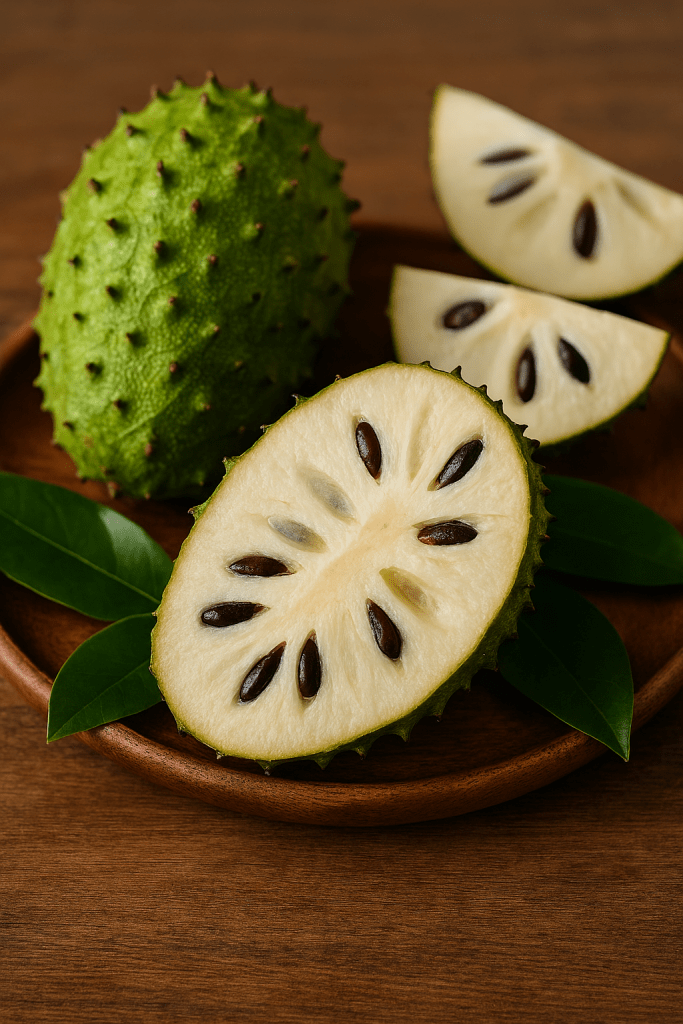
A tropical fruit that carries the warmth of sun‑heavy forests and the hush of ancient breezes
There are fruits that simply feed the body… and there are fruits that feel like they were shaped by the earth’s own breath.
Soursop belongs to the latter.
Born from the Annona muricata tree — a broadleaf evergreen that thrives where the air is warm and the rains arrive like blessings — this fruit carries the spirit of the tropics in every soft, fragrant fold.
Its skin is green and spined, like a guardian protecting something tender. Its flesh is white, creamy, and yielding, as if the sun itself melted into fruit.
🍈 A Flavor That Remembers Sunlight
When you open a soursop, you release a scent that feels like a memory, bright, sweet, and quietly wild.
Its flavor is a weaving of worlds:
- the brightness of pineapple
- the softness of banana
- the sweetness of strawberry
- the whisper of citrus on the tongue
It tastes like a place where time moves slowly, where afternoons stretch long, and where nourishment is both flavor and feeling.
Bright, tender, and shaped by the warmth of the tropics
To taste soursop is to taste sunlight made soft.
Its flavor carries the warmth of long afternoons, the hush of humid forests, and the sweetness that only comes from fruit ripened slowly under a generous sky.
When you open a soursop, its fragrance rises like a memory — bright, sweet, and quietly wild. It is the scent of places where the air is warm even at dawn, where fruit trees grow heavy, and where the earth gives without hurry.
The first bite is a weaving of familiar notes, yet the combination feels entirely its own:
- the brightness of pineapple,
- the tenderness of banana,
- the sweetness of strawberry,
- the whisper of citrus that lingers on the tongue.
Each flavor is distinct, yet they fold into one another like sunlight filtering through leaves — layered, gentle, and alive.
Its texture is part of the experience: creamy, yielding, almost custard‑like, as if the fruit has been softened by the very heat that grew it. It melts rather than breaks, inviting you to slow down, to savor, to let the flavor unfold at its own pace.
There is something nostalgic about soursop, even for those tasting it for the first time. It feels like a fruit you once knew, a sweetness you somehow remember, a comfort that arrives without explanation.
It is a flavor that carries sunlight — not the harsh, blazing kind, but the warm, golden light that rests on the skin and lingers in the heart.
A flavor that reminds you that nourishment can be gentle, that sweetness can be soft, and that some fruits taste like the places they come from — lush, warm, and full of life.
🌱 A Fruit With Lineage
Soursop is part of the custard apple family, a lineage of fruits known for their softness, their perfume, their gentle sweetness.
It is a cousin to cherimoya and sugar apple — fruits that have fed generations and carried stories across oceans.
The tree that bears it is evergreen, steady, rooted, offering its fruit like a quiet act of generosity.
Rooted in ancestry, carried through continents, held in the memory of many kitchens
Soursop does not stand alone. It comes from a line of fruits that have nourished humanity for centuries, a family known for its softness, its perfume, and its quiet ability to comfort the body.
It belongs to the Annonaceae family — a lineage of fruits that feel almost ceremonial in their tenderness. This family includes cherimoya, sugar apple, custard apple, and other fruits whose flesh melts like cream and whose scent carries the warmth of tropical air.
These are fruits that were never meant to be rushed. Fruits that soften in the hand. Fruits that invite you to pause, breathe, and taste with intention.
Soursop is one of the elders of this lineage — a fruit that has traveled across oceans, adapted to new soils, and woven itself into the traditions of many cultures.
From the Caribbean to West Africa, from Central America to Southeast Asia, it has been welcomed, planted, harvested, and cherished. Each region has given it a new name, a new story, a new way of being prepared — yet its essence remains the same.
A fruit of softness. A fruit of fragrance. A fruit that carries the memory of the tropics wherever it grows.
Its lineage is not only botanical — it is cultural, ancestral, and deeply human. It is a reminder that food is not just sustenance, but inheritance. A thread connecting people across time, climate, and geography.
To taste soursop is to taste a fruit with history. A fruit with family. A fruit with lineage.
🌍 A Fruit of Many Homelands
Soursop first grew in the tropical Americas — in the Caribbean, in Central America, in the northern edges of South America where the air is warm and the soil remembers rain.
Carried by wind, water, and human hands — rooted in the warmth of countless landscapes
Soursop was born in the tropical Americas, in places where the air hangs heavy with humidity and the soil remembers the footsteps of ancient peoples.
It first grew in the Caribbean, where its fragrance drifted through open‑air markets and its soft flesh became part of island kitchens long before borders or maps existed.
It grew in Central America, where families harvested it from backyard trees and blended it into cooling drinks to soothe the heat of long afternoons.
It grew in the northern edges of South America, where it was folded into traditional remedies and shared as a gesture of hospitality and care.
But Soursop did not stay in one place. It traveled — carried by explorers, traders, farmers, and migrating families who recognized its sweetness and brought it with them as a piece of home.
Across oceans, it found new soil.
In West and Central Africa, it rooted itself in red earth and tropical rain, becoming part of local markets and morning rituals.
In Southeast Asia, it settled into lush landscapes, thriving beside coconut palms and banana trees, woven into juices, desserts, and street‑side offerings.
In India and Sri Lanka, it took on new names, new uses, new stories — a guest that became family.
Wherever Soursop arrived, it adapted. It listened to the land. It learned the rhythms of new climates and the hands of new caretakers.
It became a fruit of many homelands — not claimed by one culture, but embraced by many.
A fruit that carries the memory of migration. A fruit that reminds us that belonging can be plural. A fruit that teaches that sweetness can take root anywhere the earth is warm and the people are welcoming.
🍽️ A Fruit That Invites Creativity
Soursop is eaten in many ways, each one a small ceremony:
Its texture is soft, its flavor generous, its presence unmistakable.
Soft enough to shape, bold enough to inspire, generous enough to transform any dish it touches
Soursop is a fruit that doesn’t simply sit in the kitchen — it participates. It invites you to touch, taste, blend, stir, and imagine.
Its creamy white flesh yields easily beneath the spoon, opening itself to whatever direction you choose to take it. It is a fruit that says: “Let’s create something together.”
Because of its softness, its perfume, its bright‑yet‑gentle sweetness, soursop becomes a canvas for culinary play.
🍹 In drinks, it becomes silk.
Blended with water or coconut milk, it turns into a cooling tonic — a drink that feels like shade on a hot day, like a breeze moving through palm leaves.
Add lime for brightness, ginger for warmth, or mint for clarity. Soursop welcomes every companion.
🍨 In desserts, it becomes comfort.
Fold it into ice creams, sorbets, or chilled puddings and it transforms into something soft and nostalgic — a dessert that tastes like childhood, like summer afternoons, like sweetness without effort.
Its custard‑like texture makes it feel luxurious even in the simplest preparations.
🥣 In breakfasts, it becomes nourishment.
Stir it into yogurt, oats, or chia bowls and it brings a tropical softness that turns an ordinary morning into a small ceremony of care.
🍰 In baked goods, it becomes surprise.
Add it to cakes, breads, or pastries and it lends moisture, fragrance, and a quiet sweetness that feels both familiar and new.
🍵 In warm preparations, it becomes comfort.
In many cultures, soursop is gently warmed into soothing beverages and tonics — a reminder that fruit can be both food and comfort, both flavor and ritual.
Soursop is a fruit that adapts, that listens to the ingredients around it, that blends seamlessly into whatever you ask of it.
It is generous. It is versatile. It is endlessly creative.
A fruit that invites you to experiment, to trust your senses, to let your hands guide you, and to rediscover the joy of making something that nourishes both body and spirit.
A fruit that turns the kitchen into a place of imagination.
⚠️ A Gentle Note of Care
Like all fruits with lineage and character, soursop asks for mindfulness:
Because even the most generous fruits ask to be approached with mindfulness
Soursop is a fruit of softness and sunlight, but like many gifts from the earth, it carries its own rhythms, boundaries, and needs. Honoring these is part of the ritual of enjoying it well.
🌱 Honor the Fruit’s Natural Design
Inside the creamy flesh lie dark, glossy seeds — beautiful to look at, but not meant to be eaten. They hold compounds that the body cannot process, so they should always be removed with care before blending, cooking, or tasting.
🍈 Wait for True Ripeness
Soursop reveals its sweetness only when fully ripe. A ripe fruit feels soft beneath the fingers, its skin yielding gently, its fragrance warm and inviting. Eating it before this moment can be harsh on the stomach and far less enjoyable. Let the fruit come to you in its own time.
🌿 Listen to Your Body’s Sensitivities
As a tropical fruit rich in natural compounds, soursop may feel intense for those with delicate digestion or sensitivities to tropical produce. Approach slowly, with small tastes, allowing your body to guide the experience.
🧡 A Note for Those Exploring New Foods
If you live with specific dietary needs, health conditions, or are navigating a wellness journey, it’s wise to check in with a trusted professional before making soursop a regular part of your routine. This is not restriction — it is self‑respect.
👶 Not a Fruit for Little Ones
Because of its seeds, texture, and strong natural compounds, soursop is best reserved for older children and adults. Infants and toddlers should enjoy gentler fruits that align with their developing systems.
🌬️ Enjoy With Presence
Soursop is a fruit that asks you to slow down — to remove the seeds with intention, to taste with awareness, to honor the body that receives it. This mindfulness is part of the nourishment.
🌼 A Closing Blessing for Soursop
For the fruit that carries sunlight, softness, and the quiet generosity of the tropics
May this fruit remind you that sweetness does not always arrive loudly — sometimes it comes wrapped in green armor, waiting for the right moment to soften.
May the soursop teach you that tenderness is a strength, that ripening is a process, and that becoming ready is its own kind of wisdom.
As you taste its bright, creamy flesh, may you feel the warmth of the places it comes from — the humid forests, the sun‑heavy afternoons, the lands where fruit grows in abundance and nourishment is a daily blessing.
May its fragrance awaken something gentle in you, a memory of ease, a moment of rest, a reminder that your body deserves comfort and your spirit deserves sweetness.
May its lineage — rooted in the Caribbean, carried through the Americas, welcomed in Africa and Asia — remind you that belonging can be many things, and that home can be carried within you like a seed.
May its softness invite you to slow down, to savor, to honor the small rituals that nourish your life.
And as you close this page, may you carry with you the blessing of this tropical fruit: a reminder that the earth still offers gifts that soothe, heal, and bring you back to yourself.
A fruit of sunlight. A fruit of softness. A fruit of quiet abundance.
May its sweetness stay with you.
Smarter Blood Sugar Managerment Tip
 EJADA
EJADA 
Leave a comment