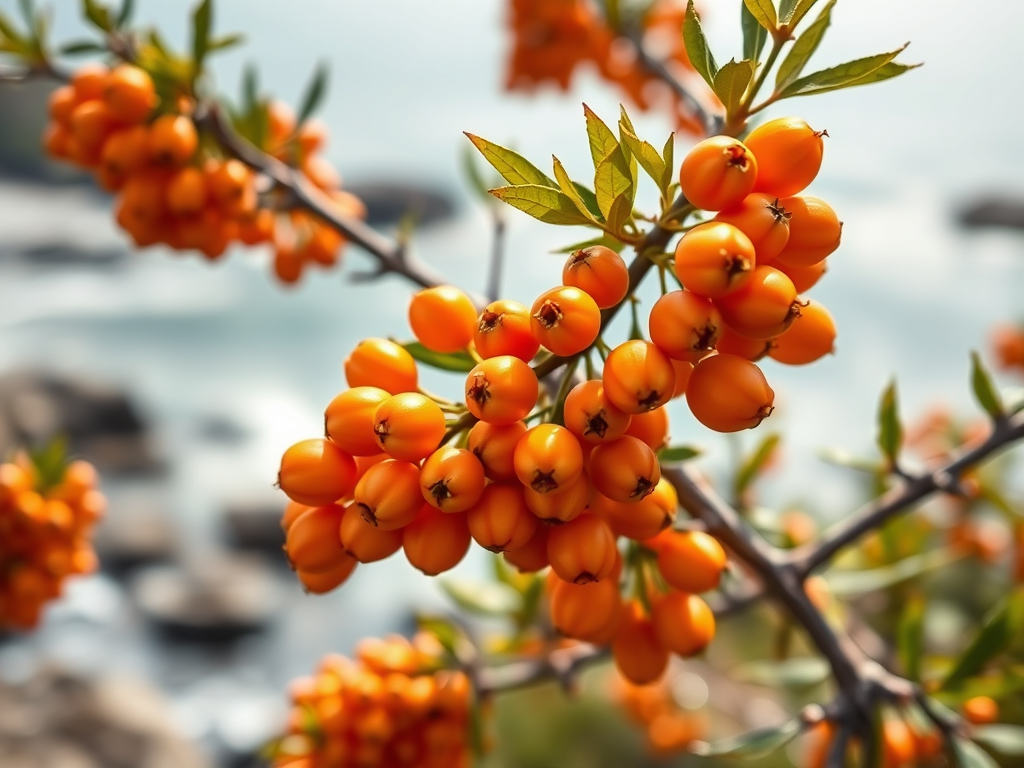
🌿 What Is Sea Buckthorn?
Sea Buckthorn (Hippophae rhamnoides) is a small, vibrant orange berry that grows on thorny shrubs along coastlines, riverbanks, and high‑altitude regions. Despite its name, it has no relation to buckthorn — the name comes from its tendency to grow near the sea and its thorny branches.
Its flavor is bold and bright: tart, citrusy, and deeply aromatic — like a wild cousin of the orange.
❓ Frequently Asked Questions About Sea Buckthorn
1. What exactly is Sea Buckthorn?
Sea Buckthorn is a bright orange berry that grows on thorny shrubs in coastal, mountainous, and cold regions. Despite its name, it is not related to buckthorn. It’s known for its intense nutrient density, especially Vitamin C and omega fatty acids.
2. What does Sea Buckthorn taste like?
It has a bold, tart, citrus‑forward flavor — like a wild blend of orange, mango, and passionfruit. Its brightness makes it perfect for teas, syrups, smoothies, and desserts.
3. What are the main health benefits?
Sea Buckthorn is valued for:
- immune support
- skin hydration and elasticity
- anti‑inflammatory properties
- heart and metabolic support
- digestive and respiratory comfort
Its rare omega‑7 content makes it especially prized for skin and mucous membrane health.
4. Who should avoid Sea Buckthorn?
People who should use caution or avoid it include:
- those with berry or plant allergies
- individuals with low blood pressure
- people taking blood thinners
- those with sensitive digestion
- pregnant or breastfeeding individuals (due to limited research)
5. Is Sea Buckthorn safe for children?
In small culinary amounts (like teas or jams), it is generally safe. However, concentrated oils, extracts, or supplements should be discussed with a pediatric healthcare provider.
6. Can I use Sea Buckthorn on my skin?
Yes — Sea Buckthorn oil is widely used for:
- dry skin
- redness
- wound healing
- supporting a natural glow
It’s potent, so many people dilute it with a carrier oil.
7. Where can I buy Sea Buckthorn?
You can find it in:
- health food stores
- herbal shops
- online wellness retailers
- Eastern European and Asian markets
- farmers’ markets in northern climates
It’s available fresh (seasonally), frozen, dried, juiced, powdered, or as oil.
8. Can I grow Sea Buckthorn at home?
Yes — it’s hardy, drought‑resistant, and thrives in cold climates. It prefers sandy or rocky soil and full sun. Most shrubs begin producing berries after 3–5 years.
9. How do I use Sea Buckthorn in recipes?
Popular uses include:
- teas and infusions
- syrups and tonics
- smoothies
- jams and preserves
- sauces for fish or poultry
- desserts and sorbets
- fermented drinks
- skincare oils
Its color and flavor make it a standout ingredient.
10. Does Sea Buckthorn help with weight loss?
There is no magic weight‑loss fruit, but Sea Buckthorn’s nutrients — especially omega‑7 and antioxidants — may support metabolic balance, energy, and inflammation reduction. It works best as part of a balanced lifestyle.
📜 Origins & Cultural History
Sea Buckthorn has been revered for thousands of years across Asia, Europe, and the Himalayan region.
🌏 Ancient Tibetan & Mongolian Traditions
- Used as a sacred healing plant
- Given to warriors and horses for strength and endurance
- Featured in Tibetan medical texts dating back to the 8th century
🇨🇳 Traditional Chinese Medicine
- Considered a fruit of qi nourishment
- Used to support digestion, circulation, and respiratory health
🇷🇺 Siberian & Russian Herbalism
- Known as the “Siberian Holy Fruit”
- Used to support immunity during long winters
- Popular among cosmonauts for its nutrient density
🇮🇳 Himalayan Communities
- Harvested as a winter survival food
- Used in teas, oils, and ceremonial offerings
Sea Buckthorn is a fruit that cultures didn’t just eat — they honored it.
💛 Nutritional Profile: A True Superfruit
Sea Buckthorn is one of the most nutrient‑dense fruits on the planet.
Vitamins
- Extremely high Vitamin C (up to 10x oranges)
- Vitamin A (beta‑carotene)
- Vitamin E
- B‑complex vitamins
Minerals
- Potassium
- Calcium
- Magnesium
- Iron
Rare Fatty Acids
Sea Buckthorn is one of the only plants containing all four omega fatty acids:
- Omega‑3
- Omega‑6
- Omega‑7 (very rare in nature)
- Omega‑9
Omega‑7 is especially prized for skin, mucous membranes, and metabolic health.
🌟 Medicinal & Health Benefits
Sea Buckthorn has been used as a healing plant for centuries — and modern research is now confirming many of its traditional uses.
🛡️ Immune Support
Its extremely high Vitamin C and antioxidant content help strengthen the body’s natural defenses.
✨ Skin & Beauty
Omega‑7 supports:
- skin hydration
- elasticity
- wound healing
- a natural glow
It’s often called the “beauty berry.”
🔥 Anti‑Inflammatory Support
Rich in flavonoids and carotenoids that help reduce inflammation.
💓 Heart & Metabolic Health
May support:
- healthy cholesterol
- balanced blood sugar
- improved circulation
🌬️ Respiratory & Digestive Support
Traditionally used to soothe:
- cough
- dryness
- digestive discomfort
Sea Buckthorn is a plant that nourishes from the inside out.
🍽️ Culinary Uses
Sea Buckthorn’s bright, tart flavor makes it perfect for:
- teas and infusions
- syrups and tonics
- jams and preserves
- smoothies
- sauces for fish or poultry
- desserts and sorbets
- fermented drinks
- oils and elixirs
Its color alone — a deep, glowing gold — feels like sunlight in a bowl.
🧡 A Fruit of Resilience
Sea Buckthorn thrives where other plants cannot: windswept coasts, rocky mountainsides, frozen plains.
It teaches us something about endurance, nourishment, and the quiet strength of nature. To taste it is to taste a lineage of healing that spans continents and centuries.
🍽️ Sea Buckthorn Recipes
Sea Buckthorn’s bright, citrus‑tart flavor makes it one of the most versatile berries in the world. Below are three recipes that honor its heritage while offering modern, nourishing ways to enjoy it.
🍵 1. Sea Buckthorn Glow Tea (Traditional Himalayan‑Inspired)
A warming, restorative tea used for centuries to support immunity and inner vitality.
Ingredients
- 1 cup fresh or frozen sea buckthorn berries
- 2 cups water
- 1–2 tbsp honey or maple syrup
- 1 small slice of fresh ginger (optional)
- A squeeze of lemon
Instructions
- Simmer berries and water in a small pot for 10 minutes.
- Mash berries gently to release their juices.
- Strain into a mug.
- Stir in honey, ginger, and lemon.
- Sip slowly while warm.
This tea tastes like sunlight — bright, soothing, and deeply nourishing.
🍯 2. Sea Buckthorn Golden Syrup (Perfect for Drinks, Desserts & Wellness Shots)
A vibrant, tangy syrup that captures the berry’s color and potency.
Ingredients
- 2 cups sea buckthorn berries
- 1 cup water
- ¾ cup sugar or honey
- 1 tsp vanilla (optional)
Instructions
- Combine berries and water in a saucepan.
- Simmer for 10–12 minutes until berries soften.
- Mash and strain through a fine sieve.
- Return liquid to the pot and add sugar or honey.
- Simmer until slightly thickened.
- Add vanilla if desired.
Use it in sparkling water, cocktails, yogurt bowls, pancakes, or as a wellness shot.
🥣 3. Sea Buckthorn & Orange Morning Smoothie (Vitamin‑Rich & Energizing)
A bright, immune‑boosting blend perfect for mornings.
Ingredients
- ½ cup sea buckthorn berries
- 1 banana
- 1 orange, peeled
- ½ cup yogurt or plant milk
- 1 tbsp honey
- 1 tbsp chia or flax seeds
Instructions
- Add all ingredients to a blender.
- Blend until smooth and creamy.
- Taste and adjust sweetness.
- Serve chilled.
This smoothie delivers a burst of Vitamin C, omega fatty acids, and natural energy.
🍨 4. Sea Buckthorn Sorbet (Simple, Elegant, and Naturally Vibrant)
Ingredients
- 2 cups sea buckthorn berries
- 1 cup water
- ¾ cup sugar
- 1 tbsp lemon juice
Instructions
- Simmer berries and water for 10 minutes.
- Blend and strain to remove seeds.
- Stir in sugar and lemon juice.
- Chill completely.
- Freeze in an ice cream maker — or pour into a shallow dish and scrape every 30 minutes until frozen.
A refreshing, jewel‑colored dessert that tastes like wild citrus.
🧡 5. Sea Buckthorn Healing Oil (Traditional Skin Remedy)
For external use only.
Ingredients
- ½ cup dried sea buckthorn berries
- 1 cup carrier oil (jojoba, almond, or olive)
Instructions
- Warm oil gently in a double boiler.
- Add berries and infuse on low heat for 30–45 minutes.
- Strain and store in a glass bottle.
- Use on dry skin, lips, or as a nighttime facial oil.
A traditional remedy used for centuries to support skin hydration and repair.
🚫 Who Should Not Consume Sea Buckthorn
Sea Buckthorn is generally safe for most people, but there are a few groups who may need to use caution or avoid it entirely. This keeps your content responsible, trustworthy, and aligned with your editorial style.
⚠️ 1. Individuals With Berry or Plant Allergies
People who are allergic to berries or plants in the Elaeagnaceae family may experience reactions. Symptoms can include itching, swelling, or digestive discomfort.
⚠️ 2. Those With Low Blood Pressure
Sea Buckthorn may naturally lower blood pressure. Anyone already dealing with hypotension or taking blood‑pressure‑lowering medications should consult a professional before consuming it regularly.
⚠️ 3. Individuals on Blood‑Thinning Medications
Because Sea Buckthorn contains natural fatty acids and antioxidants that may influence blood clotting, it may interact with medications such as:
- warfarin
- aspirin
- other anticoagulants
⚠️ 4. People With Digestive Sensitivities
Its high Vitamin C and acidity can cause:
- stomach upset
- reflux
- loose stools in sensitive individuals.
⚠️ 5. Pregnant or Breastfeeding Individuals
There is limited research on Sea Buckthorn consumption during pregnancy or breastfeeding. It’s best to consult a healthcare provider before using it in medicinal amounts.
🛒 Availability
Sea Buckthorn is becoming more popular worldwide, but its availability depends on where you live. Here’s where readers can typically find it:
🧺 Fresh Berries
- Found in farmers’ markets in northern climates
- Common in Scandinavian, Baltic, Russian, and Himalayan regions
- Grown in parts of Canada and the northern United States
Fresh berries are seasonal and often sold in late summer to early fall.
❄️ Frozen Berries
- Available in specialty grocery stores
- Found in Eastern European and Asian markets
- Often sold online through natural food suppliers
Frozen berries retain most of their nutrients and are perfect for smoothies, teas, and sauces.
🍯 Sea Buckthorn Products
These are widely available year‑round:
- juices
- syrups
- jams
- teas
- powders
- capsules
- oils (for internal or external use)
You’ll find them in:
- health food stores
- herbal shops
- online wellness retailers
- skincare boutiques (for the oil)
🌱 Home Growing
Sea Buckthorn shrubs can be grown in:
- cold climates
- coastal areas
- rocky or sandy soil
They are hardy, drought‑resistant, and produce fruit after 3–5 years.
📚 Sources Used
These sources provide nutritional data, historical context, and research‑supported insights about Sea Buckthorn:
- National Center for Biotechnology Information (NCBI) – Research on Sea Buckthorn’s antioxidant, anti‑inflammatory, and omega‑fatty‑acid profile
https://www.ncbi.nlm.nih.gov/pmc/articles/PMC4271690/(ncbi.nlm.nih.gov in Bing) - Journal of Ethnopharmacology – Traditional medicinal uses across Tibetan, Mongolian, and Chinese systems
https://www.sciencedirect.com/science/article/abs/pii/S0378874113006161(sciencedirect.com in Bing) - Food Chemistry Journal – Vitamin C, carotenoid, and nutrient density analysis
https://www.sciencedirect.com/science/article/abs/pii/S0308814610010468(sciencedirect.com in Bing) - FAO (Food and Agriculture Organization) – Global cultivation, availability, and cultural significance
https://www.fao.org/3/y2808e/y2808e08.htm(fao.org in Bing) - Healthline – General overview of benefits, safety, and usage
https://www.healthline.com/nutrition/sea-buckthorn(healthline.com in Bing)
If you want, I can also format these in APA, MLA, or Chicago style for your blog’s reference section.
⚖️ Disclaimer
This content is for informational and educational purposes only. Sea Buckthorn is generally safe for most people, but individual health needs vary. This post does not provide medical advice, diagnosis, or treatment. Anyone who is pregnant, breastfeeding, taking medications, managing chronic conditions, or unsure about consuming Sea Buckthorn should consult a qualified healthcare professional before making dietary changes.
🌅 Wrapping It Up
Sea Buckthorn is more than a berry — it’s a story of resilience, nourishment, and ancient wisdom carried through time. From Himalayan healers to Siberian herbalists to modern wellness seekers, this golden fruit has been trusted for its ability to strengthen, restore, and illuminate the body from within.
Whether you sip it as tea, blend it into a morning smoothie, or use its oil to nourish your skin, Sea Buckthorn invites you into a deeper relationship with nature’s intelligence. It reminds us that some of the most powerful forms of healing grow quietly in the wild, waiting to be rediscovered.
A fruit of endurance. A fruit of radiance. A fruit with a lineage worth honoring.
 EJADA
EJADA 
Leave a comment