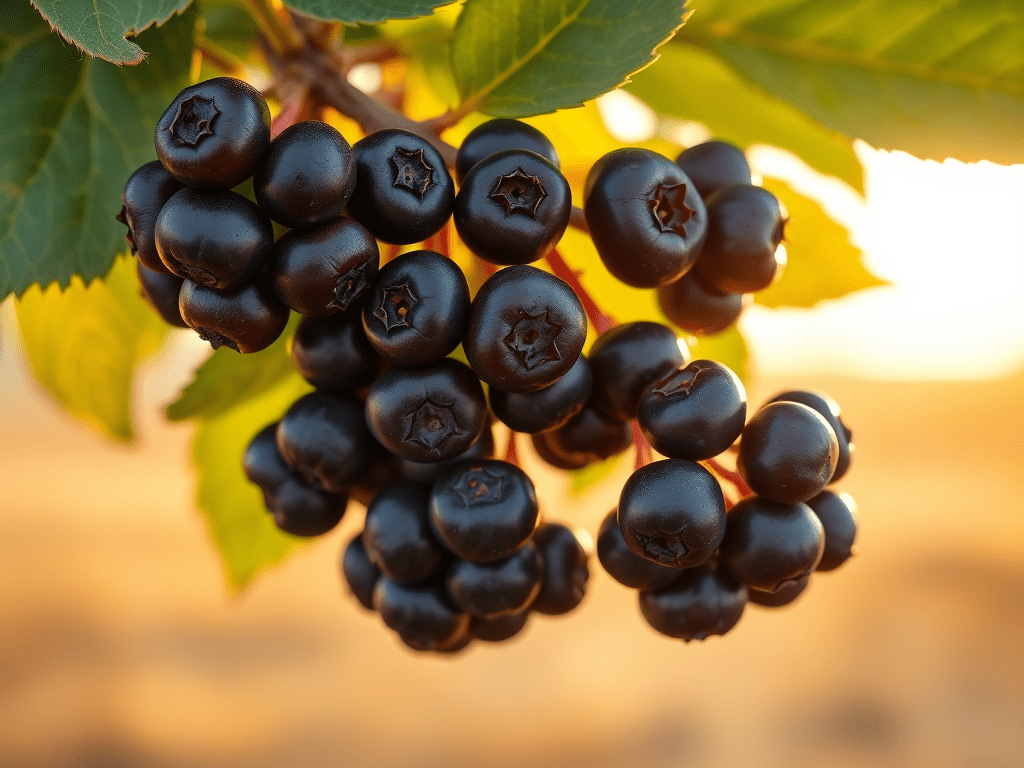
✨ The Saskatoon Berry: A Heritage Fruit Rooted in Culture, Healing, and History
The Saskatoon Berry is more than a fruit — it is a story carried through generations, a small purple‑blue jewel woven into the land, the people, and the traditions of North America’s prairies.
🌿 What Kind of Fruit Is the Saskatoon Berry?
The Saskatoon Berry (Amelanchier alnifolia) is a small pome fruit, not a true berry. It belongs to the Rosaceae family, the same family as apples and pears.
It resembles a blueberry in appearance, but its flavor is deeper — sweet, earthy, and lightly almond‑like due to its natural benzaldehyde content.
📜 Origins & Early Discovery
The Saskatoon Berry was not “discovered” by a single person. It was known, named, and used for centuries by Indigenous peoples across Western North America.
The story of the Saskatoon Berry begins long before written history — long before maps, borders, or settlers. Its roots stretch into the memory of the land itself, carried through generations by the Indigenous peoples of the Northern Plains and Prairie regions.
For thousands of years, the berry was known, named, and cherished by Cree, Blackfoot, Saulteaux, Métis, and other First Nations communities. The word Saskatoon comes from the Cree term “misâskwatômina,” meaning “the fruit of the many-branched shrub.” This name reflects not only the plant’s physical form but also its abundance — a gift that returned each summer, reliable as the sunrise.
Long before European botanists attempted to classify it, the Saskatoon Berry was already woven into daily life:
- A food source that sustained families through harsh winters
- A medicine used to support wellness and healing
- A trade item valued across regions
- A ceremonial ingredient included in gatherings, teachings, and seasonal rituals
When European explorers and settlers arrived in the 1700s and 1800s, they encountered the berry through Indigenous guidance. It was Indigenous women — the knowledge keepers of food, land, and medicine — who taught newcomers how to harvest, dry, preserve, and prepare the fruit.
Botanists later recorded the plant as Amelanchier alnifolia, placing it within the rose family, but its scientific name captures only a fraction of its identity. The true discovery of the Saskatoon Berry belongs to the Indigenous peoples who cultivated a relationship with it for millennia.
To them, the berry was not simply food — it was:
- A seasonal marker, signaling warmth, movement, and community
- A teaching tool, passed from elders to children
- A symbol of resilience, thriving in the challenging climates of the prairies
- A thread of continuity, connecting past, present, and future
Even today, the Saskatoon Berry remains a living piece of cultural heritage — a fruit that carries stories, survival, and spirit in every deep purple skin.
🌱 Traditional Cultural Uses & Rituals
Across Cree, Métis, Blackfoot, and other Indigenous nations, the Saskatoon Berry holds cultural, culinary, and spiritual significance:
🍖 Pemmican
A sacred survival food made of dried meat, fat, and Saskatoon berries — essential for winter endurance and long journeys.
🧿 Symbolism & Storytelling
The berry appears in stories, songs, and teachings, often symbolizing:
- resilience
- nourishment
- relationship with the land
🌾 Seasonal Harvesting
Late‑summer berry gathering was a communal event — a time of:
- family gathering
- teaching younger generations
- preparing winter stores
🎉 Regional Celebrations Today
Modern festivals in Saskatchewan and Alberta celebrate the berry through:
- pies
- jams
- wines
- cultural demonstrations
These events honor both Indigenous heritage and prairie agricultural identity.
💜 Nutritional Profile & Vitamin Content
Saskatoon berries are considered a nutrient‑dense superfruit, often richer than blueberries in key compounds.
Vitamins
- Vitamin C — immune support, antioxidant protection
- Vitamin A (beta‑carotene) — eye and skin health
- B Vitamins (including riboflavin B2 and niacin B3) — energy metabolism
Minerals
- Manganese
- Magnesium
- Iron
- Calcium
- Potassium
Other Nutrients
- High dietary fiber
- Essential amino acids
- Polyphenols, flavonoids, anthocyanins (deep purple pigments)
🌟 Medicinal & Health Benefits Beliefs Then and Now
The Saskatoon Berry has carried a reputation for healing long before modern nutrition science existed. For Indigenous peoples of the Northern Plains, this fruit was more than nourishment — it was medicine, protection, and a trusted ally through harsh seasons. Today, researchers are beginning to validate what traditional knowledge has known for centuries.
🪶 THEN: Traditional Indigenous Beliefs & Uses
For thousands of years, the Saskatoon Berry was used as a functional food — a source of strength, endurance, and healing. Indigenous communities understood the berry not only through taste, but through relationship, observation, and generational wisdom.
Traditional Medicinal Uses
- Digestive Support The berries were eaten fresh or dried to soothe the stomach and support digestion.
- Healing & Recovery Infusions made from the berries or leaves were used to support recovery after illness or physical strain.
- Anti‑Inflammatory Support The berry’s natural compounds were believed to help reduce swelling and inflammation.
- Winter Strength & Endurance When dried and added to pemmican, the berry provided long‑lasting energy and nutrients during long journeys and cold seasons.
- General Wellness & Longevity Elders often described the berry as a “strengthener,” supporting vitality and resilience.
Spiritual & Ceremonial Context
The berry was also part of:
- seasonal gatherings
- teachings about the land
- communal harvesting rituals
- offerings of gratitude
Healing was never separate from culture — it was woven into the way the berry was gathered, shared, and honored.
🔬 NOW: Modern Scientific Understanding
Today, researchers recognize the Saskatoon Berry as a nutrient‑dense superfruit, rich in compounds that support whole‑body wellness. Modern science has confirmed many of the traditional beliefs.
Key Health Benefits Supported Today
1. Anti‑Inflammatory & Antioxidant Power
Saskatoon berries contain:
- anthocyanins
- flavonoids
- polyphenols
These compounds help reduce oxidative stress — a major contributor to aging, inflammation, and chronic disease.
2. Heart Health Support
The berry’s fiber and antioxidants may help:
- lower LDL cholesterol
- support healthy blood vessels
- reduce inflammation in cardiovascular tissues
3. Blood Sugar Balance
Their low glycemic index + high fiber content supports:
- steadier blood sugar
- reduced glucose spikes
- improved insulin response
This aligns with traditional beliefs about the berry’s ability to sustain energy.
4. Digestive Wellness
High natural fiber supports:
- gut motility
- microbiome balance
- digestive comfort
A modern confirmation of its long‑held digestive uses.
5. Immune Support
Rich in:
- Vitamin C
- Vitamin A
- manganese
- phenolic compounds
These nutrients strengthen the body’s natural defense systems.
6. Natural Energy & Vitality
The berry’s combination of:
- slow‑release carbohydrates
- essential minerals
- antioxidants
supports steady, grounded energy — echoing its historical use in pemmican for endurance.
🌙 A Bridge Between Past and Present
What Indigenous communities understood intuitively — that this berry nourishes, strengthens, and restores — is now being echoed in scientific journals and nutritional studies.
Then, it was a sacred food of survival, ceremony, and community. Now, it is recognized as a superfruit with powerful health‑supporting properties.
The Saskatoon Berry continues to be a reminder that the wisdom of the land often arrives long before the science to explain it.
🍽️ Culinary Uses
Traditionally and today, Saskatoon berries are used in:
- pies, tarts, and crisps
- jams and preserves
- syrups and wines
- dried snacks and fruit leather
- savory sauces and marinades
Their flavor is uniquely versatile — sweet, nutty, and deeply rooted in the land.
The Saskatoon Berry has traveled through kitchens, campfires, and cultures for centuries. Its flavor — sweet, earthy, and lightly almond‑kissed — makes it one of the most versatile fruits of the northern prairies. From traditional Indigenous preparations to modern artisan baking, this berry adapts effortlessly to both rustic and refined dishes.
Historically, it was dried in the summer sun, folded into pemmican, simmered into preserves, and baked into hearty breads. Today, it appears in pies, syrups, wines, smoothies, sauces, and even savory dishes where its subtle nuttiness adds depth and warmth.
🚫 Who Should Not Consume Saskatoon Berries
Saskatoon berries are generally considered safe and nutritious for most people, but there are a few groups who may need to use caution or avoid them altogether.
⚠️ 1. Individuals With Berry or Rosaceae Allergies
Saskatoon berries belong to the Rosaceae family, the same family as apples and pears. People with known allergies to these fruits may experience reactions.
⚠️ 2. Individuals With Blood Sugar Sensitivities
While Saskatoon berries have a low glycemic impact, they still contain natural sugars. Anyone managing blood sugar conditions should monitor portion sizes and consult a professional if unsure.
⚠️ 3. People With Digestive Sensitivities
Because Saskatoon berries are high in fiber (5–6 grams per 100g), large amounts may cause bloating or discomfort in those with sensitive digestion.
⚠️ 4. Infants Under 1 Year Old
Whole berries can pose a choking risk, and infants’ digestive systems may not tolerate high‑fiber fruits well.
⚠️ 5. Individuals Taking Certain Medications
Due to their antioxidant and anti‑inflammatory compounds, Saskatoon berries may theoretically interact with medications that affect blood clotting or inflammation. Anyone on prescription medications should check with a healthcare provider.
📚 Sources Used
- Saskatoon berry nutritional profile and antioxidant content — Saskatoon Nutritional Information https://saskatoonsreddeer.com/SaskatoonNutritionInfo
- Vitamin, mineral, and fiber content — Biology Insights (Serviceberry Nutrition) https://biologyinsights.com/serviceberry-nutrition-a-breakdown-of-the-health-benefits/
- Antioxidant, anti‑inflammatory, and metabolic benefits — Nutri.it (Saskatoon Berry Superfood Analysis) https://nutri.it.com/are-saskatoon-berries-a-superfood-a-deep-dive-into-their-health-benefits
⚖️ Disclaimer
This information is for general educational purposes only and is not medical advice. Saskatoon berries are safe for most people, but individual health conditions vary. Anyone with allergies, chronic conditions, or concerns about interactions should consult a qualified healthcare professional before making dietary changes.
Below are a few ways to bring this heritage fruit into your own kitchen.
🥧 1. Saskatoon Berry Pie (Traditional Prairie Style)
A classic recipe that honors the berry’s long history in prairie homes.
Ingredients
- 4 cups fresh or frozen Saskatoon berries
- ¾ cup sugar (adjust to taste)
- 2 tbsp lemon juice
- 3 tbsp cornstarch
- 1 tsp almond extract (optional but enhances the natural flavor)
- 1 double pie crust
- 1 tbsp butter
Instructions
- Preheat your oven to 400°F (200°C).
- In a saucepan, combine berries, sugar, lemon juice, and cornstarch.
- Warm gently until the mixture thickens slightly.
- Stir in almond extract.
- Pour filling into the bottom crust and dot with butter.
- Cover with the top crust, seal edges, and cut small vents.
- Bake for 35–40 minutes until golden and bubbling.
- Cool before slicing to allow the filling to set.
A slice of this pie tastes like summer preserved in pastry.
🍯 2. Saskatoon Berry Jam (No‑Pectin, Old‑World Style)
This jam captures the berry’s deep, earthy sweetness and stores beautifully.
Ingredients
- 4 cups Saskatoon berries
- 1 cup water
- 2 cups sugar
- 1 tbsp lemon juice
Instructions
- Combine berries and water in a pot and simmer until soft.
- Mash gently to release juices.
- Add sugar and lemon juice.
- Simmer on low for 20–25 minutes, stirring often.
- When thickened, spoon into sterilized jars.
- Seal and cool.
Spread on warm bread, swirl into yogurt, or spoon over pancakes.
🍖 3. Modern Pemmican‑Inspired Energy Bites (No Meat)
A respectful, modern nod to the traditional Indigenous survival food — using plant‑based ingredients for everyday snacking.
Ingredients
- 1 cup dried Saskatoon berries
- 1 cup rolled oats
- ½ cup nut butter (almond or sunflower)
- ¼ cup honey or maple syrup
- 1 tsp vanilla
- Pinch of salt
Instructions
- Pulse oats in a food processor until coarse.
- Add dried berries and pulse lightly.
- Add nut butter, honey, vanilla, and salt.
- Blend until mixture sticks together.
- Roll into small balls and chill for 30 minutes.
These bites carry the spirit of the original pemmican — nourishment, energy, and simplicity — in a modern, accessible form.
🍷 Other Delicious Ways to Use Saskatoon Berries
- Stir into oatmeal or overnight oats
- Blend into smoothies
- Bake into muffins, scones, or breads
- Simmer into a warm berry compote
- Create syrups for pancakes or cocktails
- Add to salads for a sweet‑nutty pop
- Ferment into wine or craft cider
- Fold into ice cream or frozen yogurt
The berry’s versatility is part of its magic — it adapts to whatever you ask of it.
🌙 A Fruit With a Story
The Saskatoon Berry is not just a food — it is a thread connecting:
- Indigenous knowledge
- prairie landscapes
- cultural memory
- modern nutrition science
The Saskatoon Berry is not just something you eat — it is something you inherit. A quiet heirloom of the prairies, carried through time by hands that understood the land long before borders or maps existed. Every deep‑purple berry holds a lineage: of survival, ceremony, nourishment, and relationship.
For Indigenous communities across the Northern Plains, this fruit was never merely a seasonal harvest. It was a companion. A teacher. A symbol of the earth’s generosity. Families gathered beneath the summer sun to pick the berries together — elders sharing stories, children learning where to step, how to honor the plant, how to take only what was needed. Harvesting was not a task; it was a ritual of connection.
The berry traveled through history in many forms:
- As pemmican, sustaining nations through winter and long journeys
- As medicine, supporting strength, digestion, and healing
- As ceremony, woven into gatherings and teachings
- As trade, valued for its nourishment and longevity
When settlers arrived, they learned from Indigenous knowledge keepers how to prepare, preserve, and respect the fruit. The Saskatoon Berry became part of prairie homesteads, pies cooling on wooden tables, jars of preserves lining shelves for the cold months ahead. Yet even as it entered new kitchens, its roots remained firmly Indigenous.
Today, the berry continues to bridge worlds — ancient and modern, cultural and culinary, practical and poetic. It appears in festivals, family gardens, artisan bakeries, and traditional teachings. It is a reminder that food is more than flavor; it is memory, identity, and relationship.
To taste a Saskatoon Berry is to taste a story — one shaped by land, lineage, and the quiet resilience of a fruit that has nourished generations.
EXTRA EXTRA READ ALL ABOUT IT
⚠️ Discover How Everyday Foods Quietly Disrupt Your Fat Cells
Most people think weight gain is about calories, willpower, or eating “too much.” But new research reveals something far more surprising — and far more important.
Some of the everyday foods you trust… the ones you’ve been told are “healthy”… may actually be making your fat cells sick, slowing your metabolism, and triggering stubborn weight that refuses to budge.
This isn’t about dieting harder. It’s about understanding what’s happening inside your body — and why certain foods create chaos at the cellular level.
👉 Learn More
🍽️ The Hidden Problem No One Talks About
When fat cells become “sick,” they don’t burn energy the way they should. Instead, they:
- store more fat
- release less energy
- trigger cravings
- slow your metabolism
- make weight loss feel impossible
And the shocking part? Many of the foods causing this damage are marketed as healthy choices.
This short video reveals the exact foods that quietly sabotage your metabolism — and the simple shifts that help your fat cells function the way they were designed to.
🌿 Why This Matters for Your Health
When your fat cells are healthy, your body naturally:
- burns more energy
- manages cravings better
- supports a balanced metabolism
- feels lighter and more energized
This isn’t about restriction. It’s about giving your body the information it needs to work with you, not against you.
 EJADA
EJADA 
Leave a comment