🌿 Safou Fruit: Origins, Flavor, Cultural Meaning, Uses & More
🍈 Introduction
Safou, also known as African pear or butterfruit, is a deeply cherished fruit native to Central and West Africa. Unlike many fruits that dazzle with sweetness, Safou offers something richer — a creamy, savory depth that nourishes both body and tradition. Often enjoyed warm and simply prepared, Safou is a fruit rooted in community, ceremony, and everyday sustenance.
🌍 Botanical Identity
Safou is botanically known as Dacryodes edulis, a species belonging to the Burseraceae family — a plant family best known for resin‑producing trees such as frankincense and myrrh. This lineage places Safou among plants historically valued not only for nourishment, but also for their aromatic, protective, and culturally significant qualities.
🌳 The Safou Tree
- Growth form: Evergreen tree
- Height: Typically 10–18 meters, though some mature trees grow taller
- Canopy: Dense, spreading crown that provides shade
- Longevity: Trees can produce fruit for decades, often becoming generational food sources
Safou trees are commonly planted near homes, farms, and village paths, reinforcing their role as a household staple rather than a commercial orchard crop.
🍈 Fruit Characteristics
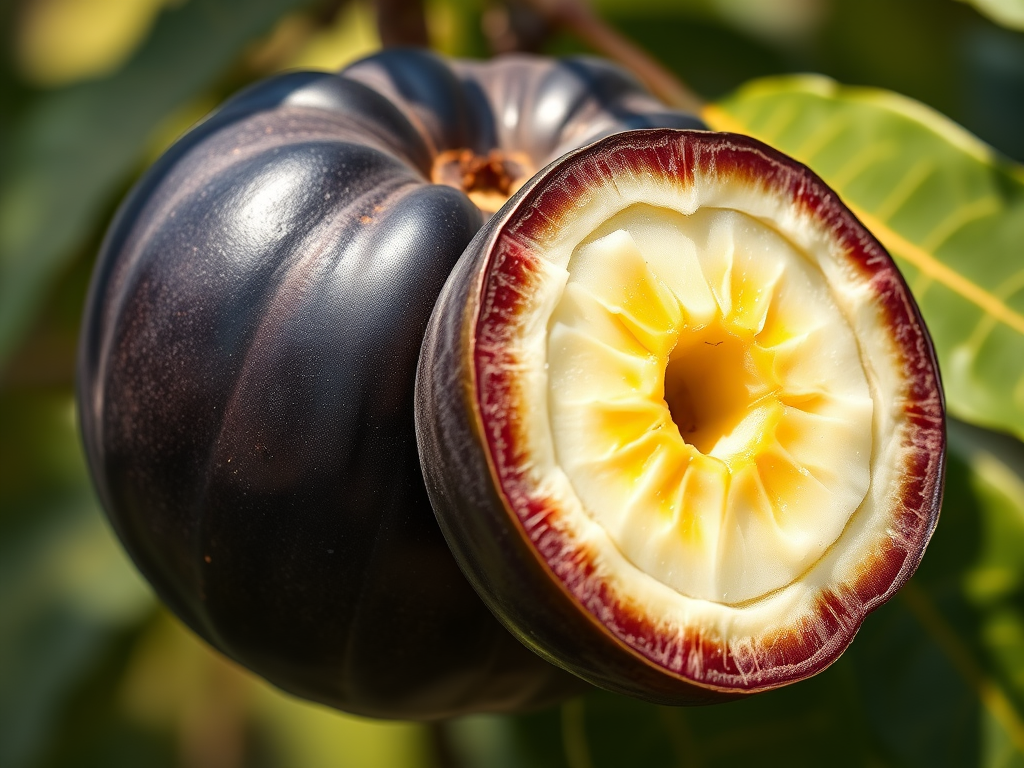
- Shape: Oval to pear‑shaped
- Skin: Smooth, thick, and waxy
- Color: Deep blue‑purple to nearly black when ripe
- Flesh: Pale green to yellow, softening dramatically when heated
- Seed: Single large pit at the center
Unlike many fruits, Safou’s flesh is oil‑rich, giving it a creamy, buttery texture that intensifies when warmed.
🌱 Unique Botanical Traits
Safou stands apart from most fruits due to its:
- High lipid content, similar to avocado
- Low sugar profile, making it savory rather than sweet
- Heat‑activated texture, where cooking transforms firmness into spreadable richness
These traits explain why Safou is traditionally roasted or boiled rather than eaten raw.
🌿 Pollination & Fruiting
- Safou trees are typically dioecious, meaning male and female flowers grow on separate trees
- Pollination occurs naturally through insects
- Fruiting is seasonal, often aligned with rainy periods
This natural rhythm ties Safou closely to seasonal cycles and agricultural timing.
🌺 Botanical Significance
Within its native regions, Safou is considered:
- A subsistence fruit
- A nutritional anchor
- A living symbol of food security
Its botanical identity reflects resilience, adaptability, and deep integration into human life.
🌱 Where Safou Is Found
Safou is native to:
- Cameroon
- Nigeria
- Gabon
- Congo
- Equatorial Guinea
It thrives in tropical climates and is commonly grown in home gardens, village orchards, and small farms. Safou trees are often passed down through families, making them living heirlooms of nourishment.
🍽️ Flavor & Texture
Safou’s flavor is:
- Mild
- Nutty
- Slightly earthy
- Rich and savory
When warmed, the flesh becomes luxuriously soft and spreadable, earning it the nickname “butterfruit.”
🌿 Safou vs. Avocado Botanical Comparison
Safou and avocado are often compared because of their buttery texture and high fat content, yet botanically and culturally, they come from very different lineages. Understanding these differences deepens appreciation for each fruit’s unique role in traditional food systems.
🌳 Botanical Classification
| Feature | Safou | Avocado |
|---|---|---|
| Scientific name | Dacryodes edulis | Persea americana |
| Plant family | Burseraceae | Lauraceae |
| Native region | Central & West Africa | Central & South America |
| Tree type | Evergreen tropical tree | Evergreen subtropical tree |
Safou belongs to the Burseraceae family, which includes resin‑producing trees like frankincense and myrrh. Avocado belongs to the Lauraceae family, which includes bay laurel and cinnamon.
🍈 Fruit Structure & Appearance
| Feature | Safou | Avocado |
|---|---|---|
| Shape | Oval to pear‑shaped | Pear‑shaped to round |
| Skin | Smooth, thick, waxy | Smooth to pebbled |
| Skin color | Deep blue‑purple to black | Green to dark purple |
| Flesh color | Pale green to yellow | Light green to yellow |
| Seed | Single large pit | Single large pit |
Both fruits share a similar internal structure, but Safou’s dark skin and waxy surface distinguish it visually.
🌱 Growth & Fruiting Habits
| Feature | Safou | Avocado |
|---|---|---|
| Pollination | Dioecious (male & female trees) | Monoecious (flowers on same tree) |
| Fruiting cycle | Seasonal, rain‑dependent | Seasonal, climate‑dependent |
| Cultivation | Mostly small‑scale & traditional | Widely commercialized |
Safou trees are often planted near homes and villages, while avocado trees are cultivated globally on a commercial scale.
🍽️ Flavor & Culinary Role
| Feature | Safou | Avocado |
|---|---|---|
| Flavor | Mild, nutty, savory | Mild, creamy, neutral |
| Sugar content | Very low | Low |
| Traditional preparation | Roasted or boiled | Eaten raw or cooked |
| Culinary role | Staple food | Versatile ingredient |
Safou is rarely eaten raw; heat transforms its flesh into a rich, spreadable texture. Avocado is commonly eaten raw but adapts well to cooking.
🧬 Nutritional Emphasis
| Feature | Safou | Avocado |
|---|---|---|
| Fat content | High | High |
| Dominant fats | Saturated & monounsaturated | Mostly monounsaturated |
| Vitamins | A, C, E | K, E, C, B‑complex |
| Cultural role | Sustenance & energy | Nutrition & versatility |
Both fruits are nutritionally dense, but Safou is traditionally valued as a primary energy source, while avocado is often used as a complementary food.
🌺 Cultural & Symbolic Meaning
Safou is deeply tied to ancestral food security, community sharing, and seasonal nourishment. Avocado, while culturally significant in its native regions, has become a global fruit associated with modern cuisine and wellness trends.
🌿 In Essence
Safou and avocado may share a buttery texture, but they tell different botanical stories. Safou is a fruit of heritage and sustenance, rooted in African food traditions, while avocado is a fruit of adaptability and global reach. Together, they remind us that similar textures can arise from vastly different landscapes, cultures, and botanical lineages.
🍳 Traditional Culinary Uses
Safou is not treated as a casual snack or dessert fruit. In its native regions, it is respected as a savory staple, prepared with intention and shared as part of daily meals, seasonal gatherings, and moments of communal nourishment. Its preparation methods are simple, yet deeply rooted in tradition.
🌿 Roasted Over Open Flame
One of the most beloved ways to prepare Safou is roasting it directly over hot coals or an open flame. The heat softens the flesh, releases its natural oils, and transforms the fruit into a rich, buttery spread.
- Often eaten with bread, cassava, or roasted corn
- Lightly salted after roasting
- Shared warm, straight from the peel
This method highlights Safou’s natural richness without overpowering it.
🍲 Boiled & Salted
Safou is also commonly boiled in lightly salted water until tender.
- Served as a side dish
- Paired with plantains, yams, or maize
- Used to balance spicy or smoked foods
Boiling creates a softer texture and a milder flavor, making it accessible for all ages.
🌽 Paired With Staples
Safou is traditionally eaten alongside:
- roasted corn
- cassava
- plantains
- peanuts
- smoked fish
These combinations create meals that are filling, balanced, and deeply satisfying.
🧺 Market & Street Food
In many regions, Safou is sold warm at roadside stalls and local markets, especially during harvest season. It is eaten by hand, often shared among friends and family, reinforcing its role as a communal food.
🍳 Traditional & Inspired Safou Recipes
🍈 Classic Roasted Safou
Before the fire touches the fruit, Safou waits patiently — firm, quiet, and full of promise. Roasting awakens its hidden richness, releasing oils that soften the flesh and deepen its flavor. This preparation is one of the oldest and most beloved ways to enjoy Safou, often shared outdoors, passed hand to hand, and eaten warm in the company of others. It is a reminder that some foods are meant to be transformed by flame and shared in simplicity.
Ingredients
- Ripe Safou fruits
- Sea salt (optional)
Instructions
- Place whole Safou fruits over hot coals or on a grill.
- Roast, turning occasionally, until the skin darkens and the flesh softens.
- Remove from heat, split open, and sprinkle lightly with salt.
- Serve warm with bread or roasted corn.
🍲 Boiled Safou With Plantains
This dish speaks to nourishment without excess — a pairing rooted in everyday life and seasonal rhythm. Boiling Safou gently coaxes its richness forward, while plantains offer grounding sweetness and balance. Together, they create a meal that sustains without haste, honoring the quiet wisdom of foods prepared slowly and eaten with gratitude.
Ingredients
- 4 ripe Safou fruits
- 2 ripe plantains
- Salt to taste
Instructions
- Bring a pot of water to a gentle boil.
- Add whole Safou fruits and peeled plantains.
- Cook until both are tender.
- Drain, season lightly with salt, and serve warm.
🌿 Safou Butter Spread
When Safou is warmed and mashed, it becomes something almost sacred — a spread that carries the essence of the fruit in its purest form. This preparation invites touch, patience, and presence, transforming Safou into a soft offering meant to be shared. Spread across bread or vegetables, it becomes a bridge between ancestral practice and modern tables.
A modern adaptation inspired by traditional roasting.
Ingredients
- 3 roasted Safou fruits
- Pinch of salt
- Optional: garlic or chili (very small amount)
Instructions
- Scoop the warm flesh from roasted Safou.
- Mash until smooth and creamy.
- Season lightly.
- Spread on bread, flatbreads, or roasted vegetables.
🍚 Safou & Corn Bowl
This pairing reflects the harmony of land and harvest — corn for strength, Safou for richness. Together, they form a meal that nourishes deeply while remaining humble in its ingredients. This bowl honors the tradition of combining what is available, seasonal, and sustaining, creating comfort through balance rather than complexity.
Ingredients
- Roasted Safou
- Fresh or roasted corn kernels
- Salt to taste
Instructions
- Combine warm Safou flesh with corn kernels.
- Gently mash together.
- Season lightly and serve warm.
🌺 In Essence
Each Safou preparation carries more than flavor — it carries memory, rhythm, and care. These recipes are not meant to impress, but to sustain; not rushed, but honored. As you prepare them, may they invite you into a slower pace, a warmer kitchen, and a deeper connection to the foods that have nourished generations before us. Safou’s culinary role is grounded in simplicity, warmth, and nourishment. Whether roasted, boiled, or gently mashed, it offers sustenance that is rich without excess and comforting without complication. These preparations honor Safou not as a novelty, but as a food meant to sustain bodies, strengthen communities, and carry tradition forward.
In many households, Safou is a staple food rather than a dessert fruit.
🌿 Medicinal & Nutritional Values of Safou
Safou (Dacryodes edulis), often called African pear or butterfruit, is far more than a flavorful staple — it is a fruit deeply respected for its restorative nourishment and traditional healing value. Across Central and West Africa, Safou has long been relied upon as both food and functional medicine, especially during seasons of labor, scarcity, or recovery.
🌿 Traditional Medicinal Values
Safou is traditionally regarded as a strength‑building and sustaining fruit, valued for its ability to nourish the body deeply rather than stimulate it quickly.
Energy & Endurance Support Safou’s rich fat content makes it an important food for:
- farmers and laborers
- nursing mothers
- individuals recovering from illness
- periods of food scarcity
It provides long‑lasting energy rather than quick sugar spikes.
Digestive Comfort When roasted or boiled, Safou is believed to:
- soothe the stomach
- support digestion
- reduce hunger pangs
- promote satiety
Its gentle nature makes it suitable for people needing grounding foods.
Skin & Tissue Nourishment Safou’s oils are traditionally associated with:
- skin softness
- tissue repair
- overall vitality
In some regions, the oil extracted from Safou is used externally for skin conditioning.
General Strength & Balance Safou is often described as a fruit that “builds the body,” supporting:
- physical resilience
- warmth
- internal balance
It is not used as a quick remedy, but as a foundational food.
🍊 Nutritional Values
Safou is nutritionally unique among fruits due to its high lipid content, making it closer to avocado than to sweet fruits.
Healthy Fats Safou is rich in:
- monounsaturated fats
- saturated fats
These fats support:
- sustained energy
- absorption of fat‑soluble vitamins
- cellular health
Vitamins Safou contains:
- Vitamin A – supports vision, skin, and immune health
- Vitamin C – supports immunity and tissue repair
- Vitamin E – supports antioxidant protection and skin health
Minerals Safou provides:
- Potassium – supports heart and muscle function
- Calcium – supports bones and teeth
- Magnesium – supports nerve and muscle function
Low Sugar Profile Unlike many fruits, Safou is:
- low in natural sugars
- not sweet
- suitable as a savory food
This makes it filling without causing rapid blood sugar spikes.
🌺 In Essence
Safou is a fruit of deep nourishment rather than indulgence. Its medicinal and nutritional value lies in its ability to sustain, strengthen, and restore — offering rich fats, essential vitamins, and grounding energy rooted in ancestral food wisdom. Safou reminds us that some of the most powerful foods are quiet, steady, and meant to be shared.
⚠️ Who Should Use Caution
As with any new food, moderation and awareness are key.
Safou is a nourishing, traditional fruit with deep cultural value, but its richness means it may not be suitable for everyone in large amounts. Understanding who should use caution helps honor the fruit responsibly and respectfully.
Individuals on Fat‑Restricted Diets
Safou is naturally high in fats, which is part of its strength as a sustaining food. However, those advised to limit fat intake — such as individuals managing certain cardiovascular conditions or gallbladder concerns — may need to enjoy Safou in moderation.
People With Digestive Sensitivities
Because Safou is dense and oil‑rich, it can feel heavy for some digestive systems. Individuals prone to:
- bloating
- slow digestion
- discomfort after fatty foods
may want to start with small portions, especially when Safou is roasted or paired with other rich foods.
Those Managing Weight‑Related Goals
Safou is calorie‑dense compared to most fruits. While it provides long‑lasting energy, those monitoring caloric intake should be mindful of portion size, particularly when Safou is eaten frequently.
Individuals With Nut or Seed Sensitivities
Although Safou is not a nut, its texture and fat profile resemble nut‑based foods. People with sensitivities to oily seeds or tree‑based fats should introduce Safou slowly and observe how their body responds.
Young Children
Safou’s richness may be difficult for very young children to digest in large amounts. When offered, it is traditionally given in small portions and well‑cooked to soften the flesh.
Anyone New to Safou
For those unfamiliar with Safou, moderation is key. Traditional wisdom emphasizes introducing new foods gently, allowing the body time to adapt.
Gentle Reminder
Safou has sustained communities for generations, but like all nourishing foods, it is best enjoyed with awareness and balance. This information is shared for educational purposes and is not intended as medical advice. Individuals with specific health concerns should consult a qualified healthcare professional before making dietary changes.
🌺 Cultural & Symbolic Meaning
Safou symbolizes:
- Abundance
- Sustenance
- Community sharing
- Ancestral continuity
It is often shared during gatherings, reinforcing bonds between family and neighbors.
🛒 Availability of Safou
Safou (Dacryodes edulis), also known as African pear or butterfruit, remains a seasonal and regionally limited fruit, especially outside of Africa. Its availability reflects both its cultural roots and its delicate nature.
🌍 Primary Availability Regions
Safou is most readily available in:
- Central and West Africa, particularly Cameroon, Nigeria, Gabon, and Congo
- Local village markets and roadside stalls during the rainy season
- Harvest periods typically align with late summer through early autumn, depending on region
In these regions, Safou is sold fresh, often warm from roasting, and consumed shortly after harvest.
Availability in the United States
Safou is rare in the U.S. fresh produce market due to:
- Short shelf life
- Sensitivity to temperature changes
- Limited commercial export infrastructure
However, it may occasionally be found through:
- Specialty African or international markets in major cities
- Online specialty growers or nurseries selling Safou trees rather than fresh fruit
- Cultural food festivals or community markets serving African diaspora communities
Fresh Safou fruit is not commonly stocked by mainstream grocery stores.
🌱 Growing Safou Outside Africa
Safou trees can be grown in:
- Tropical and subtropical climates
- Greenhouse or protected environments in cooler regions
In the U.S., Safou trees are sometimes sold to collectors or specialty growers, though fruiting requires:
- Warm temperatures
- High humidity
- Protection from frost
🧺 Seasonal & Cultural Context
Safou is best understood as a seasonal, community‑based fruit, not a mass‑market commodity. Its limited availability outside Africa adds to its cultural significance, reinforcing its role as a fruit tied to place, season, and tradition rather than convenience.
🌺 In Essence
Safou’s rarity beyond its native regions is part of its story. It is a fruit meant to be enjoyed fresh, warm, and shared — honoring the rhythms of harvest and the communities that have sustained it for generations.
Sources & References
- People and Plants International — Safou (Dacryodes edulis) Comprehensive overview of safou’s botanical identity, agroforestry role, nutritional importance, and cultural value in Central Africa. https://www.peopleandplants.org/safou
- FruitsInfo — Safou Tropical Fruit Profile Detailed information on safou’s origin, common names, nutritional content, culinary uses, and traditional medicinal notes. https://www.fruitsinfo.com/safou-tropical-fruit.php
- Global Scientific Journal — Nutritional Composition and Active Ingredients of N’safou (Dacryodes edulis) Peer‑reviewed research examining the nutritional composition, antioxidant properties, and mineral content of safou fruit in Central Africa.
🌺 Ceremonial Closing
Safou does not rush to impress. It waits patiently, ripening in its own time, offering nourishment that is quiet, grounding, and deeply sustaining. In its buttery flesh lives the wisdom of generations who understood that true abundance is not always sweet — sometimes it is rich, steady, and meant to be shared. As you encounter Safou, may it remind you of the power of simple foods, ancestral knowledge, and the enduring connection between land, culture, and nourishment.
 EJADA
EJADA 
Leave a comment