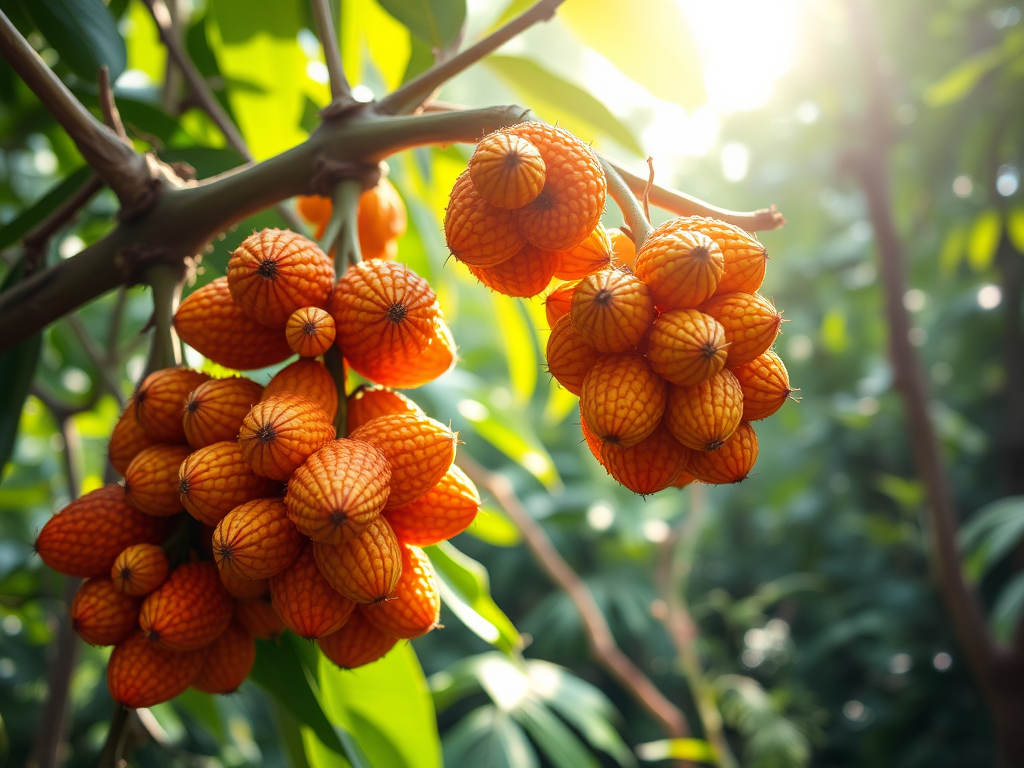
🍂 Rattan Fruit: What It Is & Why It Matters
Rattan fruit comes from the rattan palm, a climbing palm found throughout Southeast Asia, especially in Indonesia, Malaysia, Thailand, and the Philippines. While rattan is best known for its wood‑like stems used in furniture and weaving, the plant also produces small, scaly fruits that are edible and traditionally used in local cuisines and remedies.
Rattan fruit is often compared to snake fruit (salak) because of its scaly, reptile‑like skin, but the flavor and uses are distinct.
🍊 Appearance & Flavor Profile
Appearance
- Small, round or oval
- Covered in tough, overlapping scales
- Colors range from yellowish‑brown to deep reddish‑brown
- Grows in clusters along the rattan vine
Flavor
- Tart, sour, and slightly astringent
- Sometimes lightly sweet when fully ripe
- Often used in soups, curries, and souring agents rather than eaten fresh
Texture
- Firm flesh
- Contains seeds
- Juicy but sharply acidic
🌍 Where It’s Found
Rattan fruit is native to and commonly found in:
- Indonesia
- Malaysia
- Thailand
- The Philippines
- Borneo
- Papua New Guinea
Rattan fruit grows across the tropical rainforests of Southeast Asia and the Pacific, thriving in humid, shaded environments where the forest canopy creates the perfect balance of moisture and filtered light. Because rattan is a climbing palm, its fruits are often found high above the forest floor, clinging to long, spiny vines that wrap themselves around taller trees for support.
🌿 Primary Regions
Rattan fruit is most commonly found in:
- Indonesia — especially in Sumatra, Java, Kalimantan, and Sulawesi
- Malaysia — Peninsular Malaysia and Sabah/Sarawak in Borneo
- Thailand — southern and central forest regions
- The Philippines — Luzon, Mindanao, and Visayan islands
- Borneo — one of the richest rattan‑producing ecosystems in the world
- Papua New Guinea — where wild rattan species grow abundantly in lowland forests
These regions share the warm, wet climate that rattan palms require to flourish.
🌧️ The Forest Ecosystem
Rattan fruit is not a plantation crop. It grows:
- deep in primary and secondary forests
- along riverbanks
- in dense understory vegetation
- climbing up towering rainforest trees
Because of this, harvesting rattan fruit is often done by local forest communities, not large agricultural operations.
🌱 Wild‑Harvested, Not Cultivated
Unlike many tropical fruits, rattan fruit is:
- rarely cultivated commercially
- mostly foraged from the wild
- harvested using traditional knowledge passed down through generations
This makes it a fruit deeply tied to indigenous foodways, forest stewardship, and local economies.
🧺 Local Market Presence
You’ll find rattan fruit in:
- village markets
- roadside stalls
- seasonal forest‑harvest markets
- traditional wet markets in Indonesia, Malaysia, and the Philippines
It is not typically exported due to its short shelf life and highly regional culinary uses.
🌏 Cultural Geography
Different regions have their own names and uses for rattan fruit:
- Indonesia: “buah rotan” or “buah lelang”
- Malaysia: “buah rotan”
- Philippines: varies by region, often used in sour broths
- Thailand: used in forest‑based curries and herbal preparations
This diversity reflects how deeply the fruit is woven into local traditions.
🌺 Why Its Location Matters
Where rattan fruit grows tells a story:
- It signals healthy forest ecosystems
- It supports local livelihoods
- It reflects ancestral harvesting practices
- It connects cuisine to place, season, and ecology
Rattan fruit is not just a food — it’s a marker of living forest culture.
It grows wild in forests and is often harvested by local communities.
🌿 Medicinal & Nutritional Notes
Rattan fruit has long occupied a quiet but meaningful place in traditional food systems across Southeast Asia and the Pacific. While it is not consumed casually like sweeter tropical fruits, its sharp acidity and forest‑grown nature have earned it a role in both culinary medicine and seasonal nourishment.
🌿 Traditional Medicinal Notes
In folk traditions, rattan fruit is valued less for sweetness and more for its stimulating and cleansing qualities.
Digestive Activation Rattan fruit is traditionally used to:
- stimulate appetite
- awaken sluggish digestion
- cut through heavy or oily foods
- support digestive flow
Its sourness is believed to “wake the stomach,” making it a common addition to fish soups and rich stews.
Cooling & Heat Reduction Despite its sharp taste, rattan fruit is considered cooling in traditional systems. It is used to:
- reduce internal heat
- refresh the body in hot climates
- restore balance after physical exertion
This aligns with its use during warm seasons and in forest‑based diets.
Cleansing & Detoxifying Role Rattan fruit is sometimes included in:
- cleansing broths
- sour herbal preparations
- seasonal reset meals
Its acidity is believed to help clear stagnation and support gentle detoxification.
Appetite & Energy Support In small amounts, rattan fruit is thought to:
- stimulate hunger
- refresh the senses
- support recovery after illness or fatigue
It is often given sparingly rather than consumed in large quantities.
🍂 Nutritional Notes
While rattan fruit is not widely studied in modern nutritional databases, its composition reflects patterns common to wild tropical sour fruits.
Vitamin C Content Rattan fruit contains vitamin C, which supports:
- immune health
- collagen production
- antioxidant protection
This contributes to its traditional use as a refreshing and restorative food.
Natural Acids & Plant Compounds The fruit’s strong sourness comes from naturally occurring organic acids and plant compounds that:
- stimulate digestion
- enhance flavor perception
- contribute to antioxidant activity
These compounds are part of what gives rattan fruit its sharp, cleansing character.
Hydration & Electrolytes Rattan fruit contains water and trace minerals that support:
- hydration
- electrolyte balance
- recovery in hot environments
This makes it especially valuable in tropical forest regions.
Low Sugar Profile Unlike many tropical fruits, rattan fruit is:
- low in natural sugars
- not energy‑dense
- better suited as a flavoring or souring agent
This is why it is rarely eaten raw and instead used in small culinary amounts.
Dietary Fiber The fruit provides modest fiber, supporting:
- digestive movement
- gut stimulation
- satiety when used in meals
🌺 In Essence
Rattan fruit is not a fruit of indulgence — it is a fruit of function, balance, and tradition. Its medicinal and nutritional value lies in its ability to stimulate, cleanse, and refresh, offering nourishment that is sharp, purposeful, and deeply rooted in forest‑based food wisdom.
🍽️ Culinary Uses
Rattan fruit is rarely eaten raw because of its strong acidity. Instead, it’s used as a natural souring ingredient, similar to tamarind or bilimbi.
Common uses include:
- Adding tang to soups and stews
- Flavoring fish dishes
- Making traditional sour curries
- Fermenting into local beverages
- Creating pickles
Its acidity cuts through rich, fatty dishes beautifully.
🌿 Traditional Medicinal Notes
In folk medicine, rattan fruit is used for:
- Digestive stimulation
- Reducing internal heat
- Supporting appetite
- Refreshing the body in hot climates
Its sourness is believed to “wake up” the system and support cleansing.
Rattan fruit may be small and sharply sour, but it carries a meaningful nutritional profile rooted in wild, forest‑grown food traditions. Based on available botanical and nutritional sources, rattan fruit contains several key vitamins that support everyday wellness.
🌿 Primary Vitamins
- Vitamin C Supports immune health, collagen production, and antioxidant protection. Rattan fruit’s acidity reflects its vitamin C content, which contributes to its traditional use as a refreshing and restorative food.
- Vitamin A (as beta‑carotene) Present in rattan fruit, particularly in wild varieties. Beta‑carotene supports vision, skin health, and immune function, and is common in yellow‑to‑orange tropical fruits.
- Thiamine (Vitamin B1) Supports energy metabolism, nerve function, and cognitive performance. Thiamine is noted among the essential nutrients found in rattan fruit.
🌱 Supporting Nutrients (Not Vitamins, but Often Mentioned Together)
- Iron – supports oxygen transport and energy levels
- Calcium – supports bone and muscle health
- Potassium – supports fluid balance and heart function
- Dietary fiber & pectin – support digestion and blood sugar balance
🌺 In Essence
Rattan fruit offers vitamin C, vitamin A (beta‑carotene), and thiamine, alongside minerals and plant compounds that reflect its role as a functional, forest‑based food. Its nutritional value lies not in sweetness or abundance, but in sharp vitality, balance, and traditional nourishment.
⚠️ Who Should Avoid or Use Caution
Because of its strong acidity, rattan fruit may not be suitable for:
- People with acid reflux or GERD
- Those with sensitive stomachs
- Individuals with mouth ulcers
- Anyone sensitive to high‑acid tropical fruits
🌺 In Closing
Rattan fruit does not arrive with sweetness or softness; it comes sharp, wild, and unmistakably of the forest. It carries the voice of tangled vines, shaded canopies, and ancestral hands that know when to harvest and how to honor what the land provides. In its sour brightness lives a reminder that nourishment is not always gentle sometimes it awakens, cleanses, and calls us back into balance. As you encounter rattan fruit in story or in practice, may it invite you to remember the wisdom of the wild places, the strength of traditional knowledge, and the quiet power held within even the most overlooked fruits. May its edge sharpen awareness, its presence ground you, and its legacy continue to echo through kitchens, forests, and generations yet to come.
 EJADA
EJADA 
Leave a comment