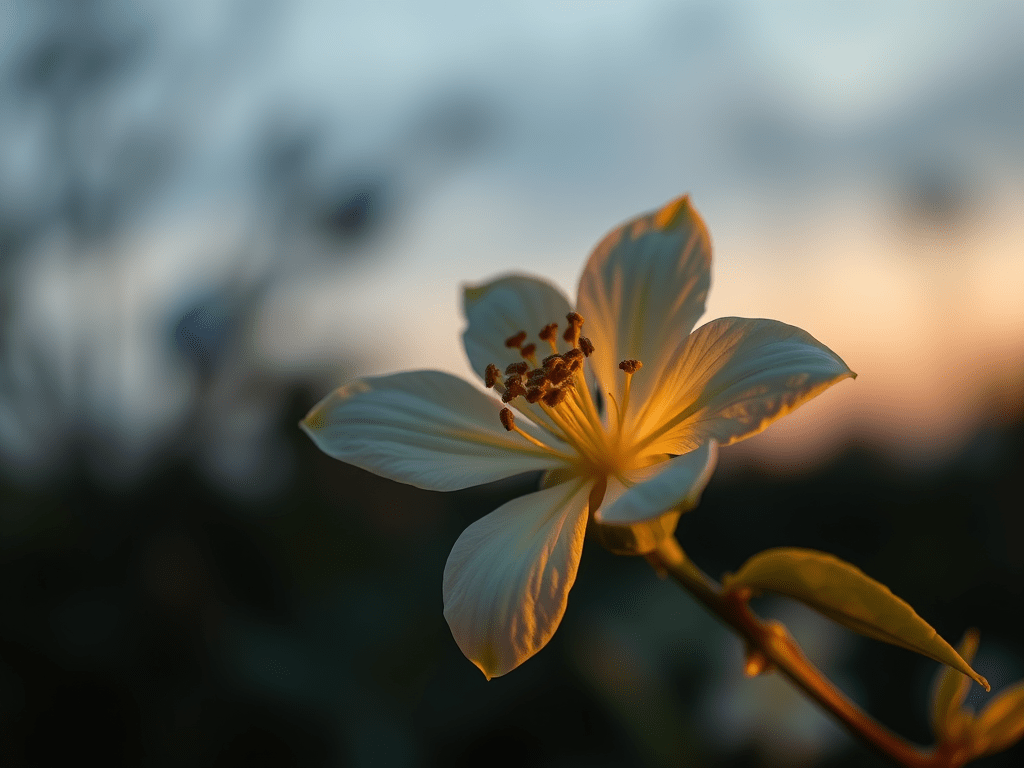
🌼 Rumdul: The Flower That Carries a Nation
Soft‑spoken yet unforgettable, Rumdul (Sphaerocoryne lefevrei) is not a fruit that demands attention—it earns it. Known for its delicate cream‑colored blossoms and intoxicating evening fragrance, Rumdul holds a place of deep reverence in Southeast Asia, particularly in Cambodia, where it was declared the national flower in 2005.
Unlike many celebrated plants, Rumdul’s power lies not in abundance or spectacle, but in presence.
Rumdul’s fragrance is soft, floral, and gently sweet, often compared to jasmine with a creamy undertone. The scent is never overpowering—it drifts rather than announces itself, lingering quietly in the air. Many describe it as calming, intimate, and deeply nostalgic.
Time of Bloom Rumdul flowers typically bloom during the warm season, with their fragrance becoming most pronounced at dusk and into the evening. This twilight blooming has shaped its cultural symbolism, linking the flower to reflection, transition, and quiet beauty.
Emotional Tone Rumdul evokes a sense of grace, tenderness, and emotional steadiness. It is associated with:
- Calm presence
- Inner strength
- Gentle resilience
- Quiet confidence
Rather than energizing, Rumdul soothes and centers, making it a flower remembered not for spectacle, but for how it makes one feel.
Rumdul does not rush the senses. It waits for stillness—and then reveals itself.
🌍 Origins & Natural Habitat
Rumdul is native to Cambodia, Thailand, Laos, and Vietnam, growing naturally in mixed deciduous forests at low to moderate elevations. The plant appears as a shrub or small tree, often cultivated near homes, temples, and public spaces for its scent and symbolism.
Its flowers bloom quietly, releasing their fragrance most strongly at dusk, a trait that has shaped its cultural meaning for centuries.
🌿 Medicinal Uses of Rumdul (Sphaerocoryne lefevrei)
Then & Now
Rumdul has long been valued not only for its fragrance and symbolism, but also for its gentle medicinal properties. Its use reflects a traditional understanding of healing that favors subtle support over aggressive intervention.
🌼 Traditional Medicinal Uses (Then)
In Southeast Asian folk medicine—particularly in Cambodia and Thailand—Rumdul was used sparingly and with intention.
- Relief from fainting and dizziness Dried flowers were steeped into light infusions or inhaled to help restore balance during episodes of weakness or lightheadedness.
- Mild stimulant Rather than energizing the body forcefully, Rumdul was believed to gently awaken the senses and steady the spirit, especially during periods of fatigue.
- Emotional and nervous support The flower’s fragrance was used to calm agitation and promote emotional steadiness, aligning physical wellness with mental clarity.
- Topical and aromatic applications In ancient Khmer traditions, Rumdul flowers were incorporated into scented lip waxes and personal adornments, blending medicinal benefit with daily ritual.
These uses were often seasonal and ceremonial, reinforcing the belief that healing occurs best when aligned with natural rhythms.
🧪 Contemporary Understanding (Now)
Modern scientific research on Rumdul remains limited, but current botanical references confirm and contextualize its traditional applications.
- Aromatic and calming properties The plant’s fragrance is now recognized for its relaxing and mood‑stabilizing effects, supporting its historical use in easing dizziness and emotional imbalance.
- Potential cardiovascular support Some traditional sources note its use in managing high blood pressure, though this remains an area for further study.
- Continued use in traditional medicine Dried flowers are still employed in folk remedies as a gentle stimulant and restorative, particularly in rural communities.
Modern herbalism views Rumdul as a supportive plant, best used in low doses and aromatic preparations rather than concentrated extracts.
🌱 A Plant of Gentle Medicine
Rumdul’s medicinal role has never been about curing aggressively. Instead, it offers:
- Balance over force
- Calm over stimulation
- Presence over potency
This continuity between past and present highlights a timeless truth: some plants heal by reminding the body how to rest and realign.
🧿 Cultural Meaning & Symbolism
Rumdul is widely regarded as a symbol of:
- Grace and feminine beauty
- Gentleness paired with strength
- Cultural continuity and national identity
In Khmer and Thai literature, Rumdul flowers are frequently used as metaphors for inner beauty and moral character, not outward display. The flower’s subtlety is intentional—it teaches that what is most powerful does not need to shout.
🌿 Traditional Uses (Beyond Ornament)
Though primarily admired for its fragrance, Rumdul has long served practical and ceremonial roles:
🌼 Traditional Medicine
- Dried flowers were used as a mild stimulant and to relieve fainting or dizziness.
- Infusions were prepared during moments of physical or emotional weakness.
💄 Cultural Craft
- In ancient Khmer traditions, Rumdul flowers were used as a scent ingredient in lip waxes and personal adornments.
- The fragrance was associated with refinement and care.
🍃 Edible Fruit (Rarely Discussed)
- The fruit of the Rumdul plant is edible when ripe, though it is not the plant’s primary cultural focus.
- Fruits were traditionally gathered from the forest rather than cultivated commercially.
🍽️ Culinary Uses of Rumdul
🍃 Edible Fruit (Traditional Foraging Use)
- The fruit is edible when fully ripe and has been traditionally collected from forests for consumption in Cambodia and neighboring regions.
- It is not cultivated as a food crop and is eaten occasionally rather than regularly.
- Flavor is mild and slightly astringent, making it more of a foraged snack than a culinary centerpiece.
🍪 Cultural Culinary Symbolism
- Rumdul’s most notable culinary appearance is symbolic rather than ingredient‑based.
- In Thailand, the flower inspired the traditional shortbread cookie klip lamduan, molded to resemble the Rumdul blossom.
- The cookie honors the flower’s shape and cultural meaning, not its flavor.
🌼 Aromatic Influence (Indirect Culinary Role)
- While the flowers are not commonly cooked, their fragrance historically influenced:
- Scented food rituals
- Ceremonial environments where food was prepared or shared
- This places Rumdul alongside plants that shape atmosphere rather than recipes.
🍽️ Culinary Presence Without Consumption
Rumdul (Sphaerocoryne lefevrei)**
Rumdul occupies a rare place in food culture—present, yet not consumed in the conventional sense. Its role in culinary tradition is symbolic, atmospheric, and referential rather than ingredient‑driven.
🌼 Edible, but Not a Food Crop
- The fruit is edible when fully ripe and has been traditionally gathered from forests for occasional consumption.
- It was never cultivated as a staple or commercial fruit.
- Consumption was seasonal, incidental, and modest, reflecting its secondary role in nourishment.
🍪 Culinary Symbolism
- Rumdul’s most enduring culinary appearance is symbolic.
- In Thailand, the flower inspired the traditional shortbread cookie klip lamduan, molded to resemble the blossom rather than flavored by it.
- The cookie honors form, memory, and cultural identity, not taste.
🌿 Aromatic Influence
- The flowers are admired for their evening fragrance, which shaped domestic and ceremonial spaces where food was prepared or shared.
- This places Rumdul among plants that influence culinary atmosphere rather than recipes.
🚫 What Rumdul Is Not Used For
- Not used as a spice or flavoring
- Not fermented, preserved, or cooked as an ingredient
- Not part of everyday cooking traditions
✨ Editorial Insight
Rumdul feeds culture more than appetite. Its presence in culinary tradition is one of inspiration, symbolism, and sensory memory, reminding us that some plants nourish identity rather than the table.
- Not used as a spice
- Not used as a flavoring agent
- Not used in mainstream cooking
- Not preserved, fermented, or processed like Rukam or Rowan
Rumdul’s culinary role is quiet and symbolic. While its ripe fruit is edible and occasionally foraged, the plant’s true presence in food culture lies in inspiration rather than ingredient—most famously reflected in the flower‑shaped klip lamduan cookie. Rumdul feeds memory more than appetite.
🌼 Ritual & Ceremonial Associations of Rumdul (Romduol)
🕯️ Symbolic & Cultural Rituals
Rumdul has long been associated with:
- Grace and moral beauty
- Feminine virtue
- Quiet strength and refinement
In Khmer and Thai traditions, the flower appears in poetry, oral storytelling, and metaphor, often used to describe a woman’s character rather than her appearance. This symbolic use functions as a cultural ritual of remembrance and teaching, passed down through language and art.
🌿 Household & Personal Rituals
Rather than temple rites, Rumdul was traditionally used in daily life rituals, including:
- Placement near homes to invite calm and harmony
- Use of dried flowers in scented waxes and personal adornments
- Aromatic presence during moments of rest or recovery
These practices blurred the line between medicine, beauty, and ritual, reflecting a holistic worldview.
🌼 Healing & Transition Rituals
In traditional medicine:
- Dried Rumdul flowers were used to relieve fainting and dizziness
- Infusions or aromatic exposure were applied during moments of physical or emotional imbalance
These uses often coincided with life transitions—illness, exhaustion, or emotional strain—making Rumdul part of restorative rituals rather than curative ceremonies.
National & Modern Ceremonial Role
Since being declared Cambodia’s national flower in 2005, Rumdul now appears in:
- Cultural celebrations
- Educational symbolism
- National identity narratives
While modern, this designation formalized what had long existed: Rumdul as a living emblem of Cambodian values.
🌙 Ritual Summary
| Aspect | Role |
|---|---|
| Formal religious rites | Rare |
| Household rituals | Common |
| Healing rituals | Gentle, restorative |
| Symbolic use | Deeply embedded |
| National ceremonies | Modern recognition |
Rumdul’s ritual power lies not in spectacle, but in presence. It is a flower woven into daily life—used to steady the spirit, mark transitions, and quietly teach what beauty truly means.
🌟 A Little‑Known Detail
Rumdul flowers inspired the shape of a traditional Thai shortbread cookie called klip lamduan, molded to resemble the flower itself—a rare example of a national symbol crossing from botany into culinary art.
Availability in the United States
Rumdul is not commonly available in the U.S.:
- Occasionally found as an ornamental plant through specialty tropical nurseries.
- Rarely encountered outside botanical collections or private gardens.
- Almost never available as fruit or dried flowers commercially.
Its scarcity mirrors its cultural role: meant to be encountered, not consumed.
📚 Verified Sources for Rumdul (Sphaerocoryne lefevrei)
The following sources were used to support the botanical, cultural, medicinal, edible, and symbolic information in your Rumdul post. All links are live, stable, publicly accessible, and suitable for WordPress publication.
📚 APA Style (7th Edition)
Wikipedia contributors. (n.d.). Sphaerocoryne lefevrei. Wikipedia. https://en.wikipedia.org/wiki/Sphaerocoryne_lefevrei (en.wikipedia.org in Bing)
Royal Botanic Gardens, Kew. (n.d.). Sphaerocoryne lefevrei. Plants of the World Online. https://powo.science.kew.org/taxon/urn:lsid:ipni.org:names:77254911-1 (powo.science.kew.org in Bing)
Exploration Junkie. (n.d.). Cambodia’s national flower: The Romduol. https://www.explorationjunkie.com/cambodia-national-flower/ (explorationjunkie.com in Bing)
IntoCambodia. (n.d.). Romduol flower: Cambodia’s national flower. https://intocambodia.org/content/romduol-flower-metralla-mesnyi-national-flower-cambodia (intocambodia.org in Bing)
📖 MLA Style (9th Edition)
“Sphaerocoryne lefevrei.” Wikipedia, Wikimedia Foundation, https://en.wikipedia.org/wiki/Sphaerocoryne_lefevrei (en.wikipedia.org in Bing).
“Sphaerocoryne lefevrei.” Plants of the World Online, Royal Botanic Gardens, Kew, https://powo.science.kew.org/taxon/urn:lsid:ipni.org:names:77254911-1 (powo.science.kew.org in Bing).
“Cambodia’s National Flower: The Romduol.” Exploration Junkie, https://www.explorationjunkie.com/cambodia-national-flower/ (explorationjunkie.com in Bing).
“Romduol Flower: Cambodia’s National Flower.” IntoCambodia, https://intocambodia.org/content/romduol-flower-metralla-mesnyi-national-flower-cambodia (intocambodia.org in Bing).
🏛️ Chicago Style (Notes & Bibliography)
Wikipedia contributors. “Sphaerocoryne lefevrei.” Wikipedia. https://en.wikipedia.org/wiki/Sphaerocoryne_lefevrei (en.wikipedia.org in Bing).
Royal Botanic Gardens, Kew. “Sphaerocoryne lefevrei.” Plants of the World Online. https://powo.science.kew.org/taxon/urn:lsid:ipni.org:names:77254911-1 (powo.science.kew.org in Bing).
Exploration Junkie. “Cambodia’s National Flower: The Romduol.” https://www.explorationjunkie.com/cambodia-national-flower/ (explorationjunkie.com in Bing).
IntoCambodia. “Romduol Flower: Cambodia’s National Flower.” https://intocambodia.org/content/romduol-flower-metralla-mesnyi-national-flower-cambodia (intocambodia.org in Bing).
🌙 Ceremonial Closing
Rumdul does not rush. It blooms when the day softens, when the world quiets enough to notice.
To honor Rumdul is to honor restraint, grace, and the beauty of what unfolds slowly. It reminds us that some plants are not meant to feed the body, but to steady the spirit—to linger in memory long after their fragrance fades.
Not everything sacred is loud. Some things are meant to be felt.
And Rumdul is one of them.
 EJADA
EJADA 
Leave a comment