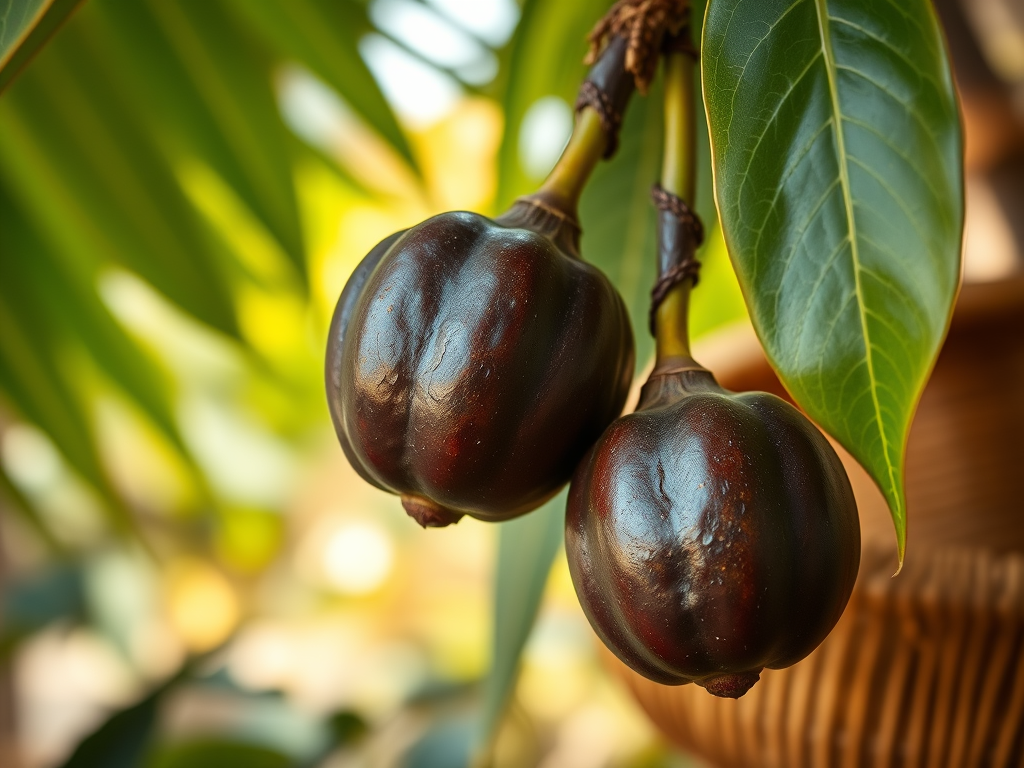
🌿 The Rukam: An Ancient Fruit Rooted in Tradition
Often overlooked outside its native regions, the Rukam fruit (Flacourtia rukam) carries a quiet but enduring legacy. Native to Southeast Asia and parts of the Indian subcontinent, this small, dark‑skinned fruit has long been valued not only for nourishment, but for its medicinal, cultural, and ritual significance.
Like many ancestral fruits, Rukam’s story is one of local knowledge passed through generations, preserved through daily use rather than written record.
🌍 Discovery & Early Use
Rukam has been cultivated and foraged for centuries in regions including:
- Indonesia
- Malaysia
- Thailand
- India
- Sri Lanka
Early communities relied on the fruit as a seasonal food source, harvesting it fresh or preserving it through drying and fermentation. Its tart, slightly astringent flavor made it ideal for pickles, chutneys, and medicinal preparations.
The tree itself was valued for its resilience, thriving in tropical climates and poor soils—earning it a reputation as a protector of sustenance.
🍒 Rukam Flavor Profile (Flacourtia rukam)
Rukam has a distinct, evolving flavor that changes noticeably as the fruit matures. Its taste is often described as complex rather than immediately sweet, which explains why it is traditionally processed rather than eaten casually.
🌿 Primary Flavor Components
- Sour / Acidic – The dominant flavor, especially in unripe fruit.
- Astringent – Causes a mouth‑drying sensation when raw or underripe.
- Mildly Sweet (when ripe) – Sweetness develops as the fruit softens.
- Plum‑like undertones – Often compared to sour plums or unripe cherries.
- Crisp to soft texture – Crunchy when immature, tender and juicy when ripe.
As the fruit ripens, the sharp astringency fades and the flavor becomes balanced, tangy‑sweet, making it suitable for jams, sauces, and preserves.
🍽️ Culinary Pairing Notes
Rukam pairs especially well with:
- Salt and chili (to balance acidity)
- Palm sugar or honey
- Ginger, turmeric, cumin, and cardamom
- Citrus and coconut
This flavor profile explains its widespread use in pickles, chutneys, jams, and cooked dishes, rather than raw consumption.
🌟 Flavor Summary (Quick Reference)
| Stage | Flavor |
|---|---|
| Unripe | Very sour, astringent, crunchy |
| Semi‑ripe | Tart, lightly sweet, crisp |
| Fully ripe | Tangy‑sweet, plum‑like, soft |
Sources:
Specialty Produce – Rukam Information & Taste National Parks BoardNParks Singapore – Flacourtia rukam Ethnobotany & Fruit Description
This flavor complexity is exactly why Rukam has endured as a purposeful fruit—one meant to be transformed, balanced, and respected rather than eaten thoughtlessly.
🧿 Cultural & Traditional Significance
In traditional village life, Rukam was more than food:
- The fruit was often included in seasonal harvest offerings.
- Trees were planted near homes as symbols of abundance and continuity.
- In some regions, Rukam was associated with cleansing and renewal, used during transitional periods such as monsoon season or post‑harvest rituals.
Its deep color and sharp taste symbolized strength, endurance, and purification.
🍒 Traditional & Modern Rukam Recipes
(Flacourtia rukam)
Rukam’s naturally tart, slightly astringent flavor makes it ideal for preservation, pickling, and slow cooking. Across Southeast Asia and India, the fruit has long been transformed rather than eaten casually—much like rowan berries—into foods that balance acidity with spice, sweetness, or fermentation.
🍯 Rukam Jam or Jelly (Traditional Preservation)
A classic preparation used to extend the fruit’s short harvest season.
Flavor profile: Sweet‑tart, plum‑like Uses: Toast, flatbreads, pastries, ceremonial spreads
Preparation notes:
- Fully ripe fruits are preferred to reduce astringency.
- Sugar balances acidity and enhances shelf life.
- Often prepared communally during harvest season.
🌶️ Rukam Pickle (Southeast Asian & Indian Traditions)
One of the most common traditional uses of rukam.
Flavor profile: Sour, spicy, deeply aromatic Uses: Condiment, digestive aid, accompaniment to rice dishes
Preparation notes:
- Immature or semi‑ripe fruits are used.
- Pickled with salt, chili, turmeric, garlic, and sometimes vinegar.
- Traditionally believed to stimulate digestion.
Sources:
🍲 Rukam Chutney or Sauce
A cooked preparation that softens the fruit’s sharpness.
Flavor profile: Tangy, savory‑sweet Uses: Curries, grilled vegetables, rice dishes
Preparation notes:
- Fruits are simmered with spices such as cumin, ginger, and chili.
- Sugar or palm sugar is added to balance acidity.
- Common in rural home cooking rather than commercial kitchens.
Sources:
🍬 Salted or Spiced Fresh Rukam (Street‑Style Snack)
A simple, traditional way to enjoy the fruit.
Flavor profile: Sharp, refreshing Uses: Snack, appetite stimulant
Preparation notes:
- Firm fruits are sprinkled with salt, sugar, or chili powder.
- The pit is removed before eating.
- Often consumed seasonally when fruit is abundant.
Sources:
🍶 Dried or Preserved Rukam
Used for long‑term storage and medicinal purposes.
Flavor profile: Concentrated, sour‑sweet Uses: Teas, rehydrated dishes, folk remedies
Preparation notes:
- Fruits are sun‑dried or lightly cooked before drying.
- Stored for use during off‑season months.
- Reflects traditional zero‑waste food practices.
Sources:
✨ Editorial Tip
These recipes work beautifully under headings such as:
- “From Tree to Table: Cooking with Rukam”
- “Preserving the Harvest: Traditional Rukam Preparations”
- “Ancient Flavors, Modern Kitchens”
Pair each recipe with a short cultural or seasonal note to deepen reader engagement.
Sources
- Specialty Produce – Rukam Information & Culinary Uses
- GBREducation – Rukam Fruit: Uses and Benefits
- Wikipedia – Flacourtia rukam
🌱 Traditional Medical Uses (Then)
Rukam has long been used in folk medicine systems, particularly in Ayurvedic‑influenced traditions.
Common Traditional Applications
- Digestive aid – Used to stimulate appetite and relieve indigestion.
- Anti‑inflammatory remedies – Applied for swelling and joint discomfort.
- Fever and infection support – Decoctions prepared during illness.
- Skin health – Pulp and bark used in topical preparations.
Preparation was often ritualized, with remedies made during specific seasons or accompanied by spoken intention.
🧪 Modern Understanding (Now)
Contemporary research has begun validating traditional knowledge surrounding Rukam.
Scientifically Observed Properties
- Rich in antioxidants and phenolic compounds
- Demonstrates antimicrobial activity
- Shows potential anti‑inflammatory and hepatoprotective effects
- Studied for use in functional foods and herbal formulations
While still under‑researched compared to commercial fruits, Rukam is increasingly recognized as a nutraceutical candidate.
⚠️ Who Should Avoid Rukam
While Rukam has a long history of traditional use, it is not universally suitable for everyone. Like many tart, medicinal fruits, it requires discernment in preparation and consumption.
🚫 Individuals Who Should Avoid or Use Caution
Those Consuming Raw Rukam in Excess
- Raw Rukam is highly acidic and astringent.
- Excess consumption may cause:
- Stomach irritation
- Nausea
- Abdominal discomfort
- Traditional cultures typically processed or cooked the fruit to reduce these effects.
People with Sensitive Digestive Systems
- Individuals prone to:
- Acid reflux
- Gastritis
- Ulcers
- Irritable bowel symptoms may experience discomfort even from prepared forms.
- Mild cooking, dilution, or pairing with fats and starches is traditionally recommended.
Pregnant or Breastfeeding Individuals
- There is limited clinical research on medicinal‑dose safety during pregnancy or lactation.
- Traditional systems often advised avoidance of strong sour or astringent fruits during these stages.
- Culinary amounts may be tolerated, but medicinal use should be avoided unless guided by a professional.
Children
- Children are more sensitive to acidity and astringency.
- Only small, well‑prepared portions should be offered.
- Raw fruit and concentrated preparations are not recommended.
Individuals with Kidney or Urinary Sensitivities
- Due to its acidity and bioactive compounds, excessive intake may aggravate existing kidney or urinary conditions.
- Traditional use emphasized moderation, not daily or concentrated consumption.
Those on Certain Medications
- Rukam’s bioactive compounds may interact with:
- Digestive medications
- Anti‑inflammatory drugs
- Anyone on long‑term medication should avoid medicinal doses without professional guidance.
🌿 Traditional Wisdom on Moderation
In ancestral food systems, Rukam was never treated as a casual snack. It was:
- Seasonal
- Purposeful
- Prepared with intention
This cultural restraint reflects a deep understanding: powerful foods require respect.
🌟 A Little‑Known Fact
Rukam trees are often used in traditional agroforestry systems, planted alongside medicinal herbs and staple crops. This reflects an ancient understanding of ecological balance, where food, medicine, and land stewardship were inseparable.
Availability of Rukam in the U.S.
🌱 Fresh Fruit
- Rarely available fresh in the U.S.
- Not commercially cultivated at scale.
- Occasionally appears through specialty produce distributors serving chefs or research buyers.
- Specialty Produce lists it as seasonal with extremely limited inventory, often showing zero availability.
🌳 Live Plants / Trees (Most Common Access)
- Rukam is more commonly available as a live plant rather than fruit.
- Sold under names such as:
- Governor’s Plum
- Indian Plum
- Batoko Plum
- Available through specialty tropical nurseries that ship nationwide.
⚠️ Fruit production requires:
- Warm climates (USDA Zones 10–11)
- Greenhouse or indoor cultivation in colder states
🧺 Processed Forms
- Occasionally found as:
- Preserves
- Pickles
- Dried fruit
- Typically imported through Asian or Southeast Asian specialty markets
- Availability varies by region and season.
🗺️ Where It’s Most Likely Found
- California (Southern)
- Florida
- Hawaii
- Specialty online tropical plant retailers
- Ethnic grocery stores (limited, seasonal)
🌿 Why It’s Rare
- Short shelf life
- Not suited for mass transport
- Traditionally grown in home gardens, not plantations
- Considered a heritage or medicinal fruit, not a commercial crop.
✨ Summary
While Rukam remains uncommon in the United States, it can be found through specialty growers and tropical nurseries. Its rarity reflects its traditional role as a locally grown, purpose‑driven fruit—valued more for cultural continuity than commercial appeal.
🔗 Verified Sources
- Plants of the World Online – Flacourtia rukam
https://powo.science.kew.org/(powo.science.kew.org in Bing) - Indian Medicinal Plants – Flacourtia Species Overview https://www.ijpsr.com/
- ResearchGate – Studies on Flacourtia rukam Bioactivity https://www.researchgate.net/
- Ayurvedic Pharmacopoeia References https://www.nhp.gov.in/
🌙 Ceremonial Closing
The Rukam does not announce itself loudly. It ripens quietly, nourishes steadily, and heals without spectacle. Its value lies not in popularity, but in continuity—a reminder that some fruits are meant to be known deeply, not widely.
To remember the Rukam is to honor the wisdom of those who cultivated balance between land, body, and spirit. May its story continue to be gathered, preserved, and shared—just as it always has been.
Some fruits feed the body. Some fruits carry memory. The Rukam does both.
 EJADA
EJADA 
Leave a comment