📜 When Was the Red Mulberry Discovered — and By Who?
The Red Mulberry (Morus rubra)** was formally described and named by the world‑famous Swedish botanist Carl Linnaeus in 1753.
This date comes from the publication of Species Plantarum, the foundational work of modern botanical classification. In this book, Linnaeus assigned the species its scientific name and placed it within the genus Morus.
🌿 Important Clarification
The Red Mulberry is native to North America, and Indigenous peoples had been using, cultivating, and understanding this tree for thousands of years before European science documented it. Indigenous nations such as the Huron‑Wendat and others used the fruit, bark, leaves, and wood for food, medicine, dyes, and tools long before Linnaeus’s classification.
So:
- Indigenous peoples: First knowledge‑holders and users (long before written records).
- Carl Linnaeus (1753): First scientific description and naming in Western taxonomy.
🍇✨ The Red Mulberry: North America’s Wild, Sweet Treasure
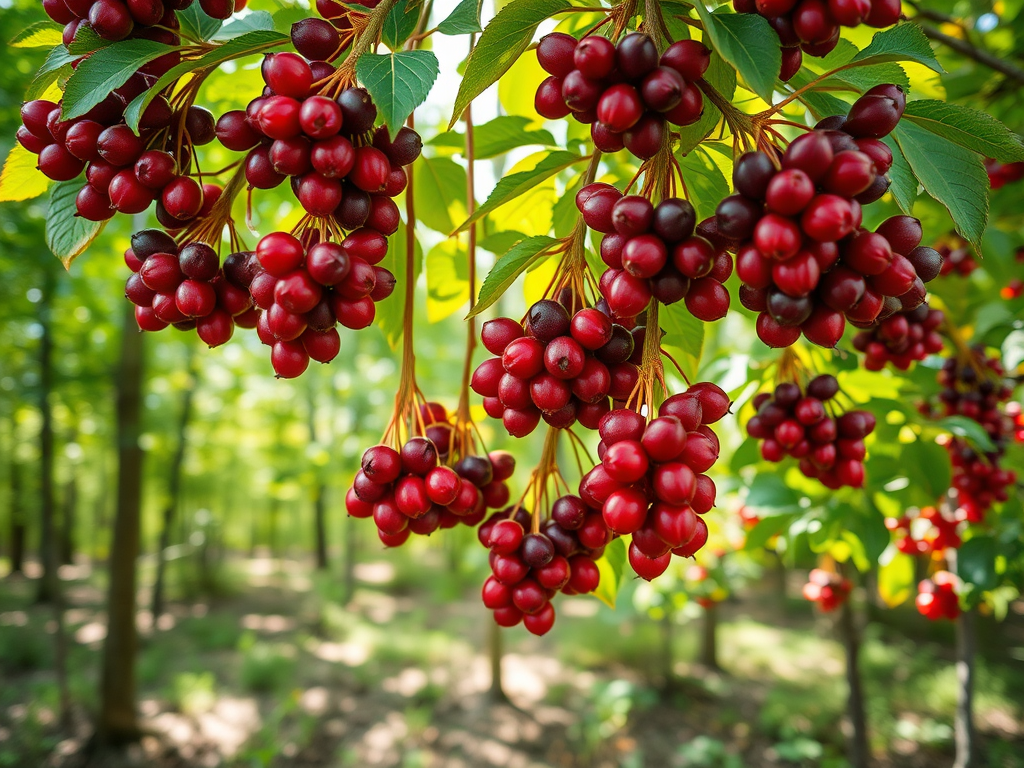
If you’ve ever wandered through a quiet woodland in late spring or early summer and spotted clusters of deep red or purple berries hanging like tiny jewels, you may have met one of North America’s most beloved native fruits: the Red Mulberry (Morus rubra). Often overshadowed by its more common relative, the white mulberry, the red mulberry is a species rich in history, flavor, and ecological importance.
This fruit isn’t just a snack — it’s a story woven into forests, wildlife, and generations of foragers who know the joy of finding a tree heavy with ripening berries.
🌍 Availability of the Red Mulberry
The Red Mulberry (Morus rubra)** is a true North American native, found primarily in the eastern and central United States. Its natural range stretches from Ontario, Minnesota, and Vermont all the way down to Florida, and westward to Texas, Nebraska, and South Dakota. This makes it one of the most widespread native fruit trees in the region — though pure, non‑hybrid trees are becoming less common due to crossbreeding with the introduced white mulberry.
🍃 Where It Grows Naturally
Red Mulberry thrives in:
- moist woodlands
- shaded valleys
- bottomland forests
- mesic slopes
- suburban woodlands
It prefers rich, well‑drained soil and partial shade, often appearing along forest edges and floodplains.
🛒 Where You Can Find It Today
Fresh Red Mulberries are rare in commercial grocery stores because the fruit is extremely delicate and does not ship well. However, you can often find them:
- at local farmers markets in states within its native range
- in foraging communities and wildcrafting groups
- growing on old homesteads, parks, and woodland trails
- in backyards, since many homeowners plant mulberry trees for wildlife
🌱 Growing Your Own
Because the tree is hardy and adaptable, many gardeners choose to plant Red Mulberry saplings. They tolerate:
- drought
- pollution
- poor soil
- cold winters
This makes them an excellent choice for home growers who want a native fruit tree that supports local wildlife.
⚠️ A Note on Conservation
While common in the U.S., the Red Mulberry is endangered in Canada due to habitat loss and hybridization with the invasive white mulberry. Conservation groups encourage planting true Morus rubra to help preserve the species.
🌿 A Native Tree With Deep Roots
The Red Mulberry is native to eastern and central North America, stretching from Ontario and Vermont down to Florida and west to Texas and Nebraska. It thrives in moist valleys, floodplains, and shaded woodlands, often growing 35–50 feet tall with a broad, spreading crown.
Its leaves are large, heart‑shaped, and rough to the touch — a key way to distinguish it from the smoother, shinier leaves of the invasive white mulberry. In spring, the tree produces small, greenish flowers that quietly transform into clusters of berries resembling elongated blackberries.
🍇 A Fruit Worth Waiting For
Red mulberries begin pale green, then blush red, and finally deepen into a rich purple‑black when fully ripe. The flavor is sweet, juicy, and slightly tart — a perfect balance that makes them irresistible to both humans and wildlife.
In fact, more than 31 species of birds have been recorded flocking to fruiting mulberry trees in Arkansas alone. Squirrels, raccoons, opossums, and even foxes enjoy them too.
For humans, the berries can be enjoyed:
- fresh off the tree
- baked into pies and cobblers
- simmered into jams and syrups
- blended into smoothies
- dried for snacks or tea blends
Their deep color hints at their nutritional richness — mulberries are known for antioxidants, vitamins, and natural sweetness.
🌱 Growing the Red Mulberry
Red mulberries are hardy, adaptable trees that tolerate:
- cold winters
- drought
- pollution
- poor soil conditions
They grow best in moist, well‑drained soils and partial to full sun. Their extensive root systems help stabilize soil and draw nutrients from the upper layers of the earth.
Because they self‑seed easily and attract wildlife, they’re often found along field edges, old homesteads, and forest borders.
⚠️ A Note on Look‑Alikes
Identifying the Red Mulberry (Morus rubra) can be surprisingly tricky, even for experienced foragers and nature lovers. This is because the tree has a close relative — the White Mulberry (Morus alba) — that was introduced from Asia and has since spread widely across North America. Over time, the two species have hybridized, creating trees that blur the lines between native and non‑native traits.
Understanding these look‑alikes isn’t just a botanical curiosity — it’s an important part of recognizing and protecting one of North America’s few native fruit‑bearing trees.
🌿 Red Mulberry vs. White Mulberry: Why the Confusion?
The biggest challenge is that the two species can look very similar, especially when hybridization occurs. Many trees growing in the wild today are not purely one species or the other, but a mix of both. This makes identification more nuanced than simply checking the fruit color.
Here are the key differences:
1. Leaf Texture
- Red Mulberry: Leaves are rough, sandpaper‑like, and matte.
- White Mulberry: Leaves are smooth, glossy, and often thinner.
This is one of the most reliable traits — if the leaf feels like fine grit sandpaper, you’re likely looking at a Red Mulberry.
2. Leaf Shape
Both species can have lobed or unlobed leaves, which adds to the confusion. However:
- Red Mulberry: Leaves tend to be larger, broader, and more irregular.
- White Mulberry: Leaves are usually smaller, more uniform, and often deeply lobed.
3. Fruit Color
This is where many people get misled.
- Both species produce fruit that ripens from green → red → deep purple‑black.
- Color alone cannot identify the species.
This is why leaf texture and growth habit matter more than fruit appearance.
4. Growth Habit
- Red Mulberry: Prefers shaded woodlands, moist valleys, and natural forest edges.
- White Mulberry: Thrives in disturbed areas, roadsides, open fields, and urban environments.
If you find a mulberry deep in a woodland, it’s more likely to be Red Mulberry — though hybrids can appear anywhere.
🌱 The Hybrid Challenge
One of the biggest threats to the Red Mulberry is genetic swamping — the process where the invasive white mulberry cross‑pollinates with the native species. Over generations, this dilutes the pure Red Mulberry population, making it harder to find genetically authentic trees.
Hybrids often show a mix of traits:
- semi‑rough leaves
- medium‑sized fruit
- inconsistent leaf shapes
- growth patterns that don’t match either species perfectly
This doesn’t make hybrids “bad,” but it does highlight the importance of recognizing and preserving the true native species where possible.
🌳 Why This Matters
The Red Mulberry is more than a fruit tree — it’s a part of North America’s ecological heritage. It supports native wildlife, stabilizes soil, and carries cultural significance for Indigenous communities who used the fruit, bark, and wood long before European classification.
Understanding its look‑alikes helps:
- protect native biodiversity
- support conservation efforts
- encourage planting of true Red Mulberry trees
- prevent accidental spread of invasive species
It’s a small act of stewardship that begins with simply knowing what you’re looking at.
🍽️ Simple Ways to Enjoy Red Mulberries
Here are a few easy ideas to celebrate this native fruit:
Mulberry Breakfast Bowl
- Fresh mulberries
- Greek yogurt
- Honey
- Granola
- A sprinkle of cinnamon
Mulberry Syrup
Simmer mulberries with sugar and a splash of lemon until thickened. Perfect for pancakes, ice cream, or cocktails.
Mulberry Freezer Jam
Blend mulberries with sugar and pectin for a no‑cook jam that keeps summer flavor alive all year.
🌳 Why the Red Mulberry Matters
Beyond its delicious fruit, the Red Mulberry plays an important ecological role:
- It feeds birds and mammals during early summer.
- It stabilizes soil with its strong root system.
- It supports native biodiversity in forests and floodplains.
As development and hybridization threaten its range, appreciating and protecting this native species becomes even more meaningful.
🍇🌿 Culinary and Cultural Uses of the Red Mulberry
The Red Mulberry (Morus rubra)** has been cherished for centuries — not only for its sweet, juicy fruit, but also for its deep cultural significance across Indigenous communities and early North American history. This is a fruit that nourished, healed, flavored, and connected people long before it was ever written about in Western botany.
Below is a beautifully expanded look at how this native fruit has been used in kitchens, ceremonies, and daily life.
🍽️ Culinary Uses
The Red Mulberry is one of the most versatile wild fruits in North America. Its flavor — sweet, slightly tart, and deeply berry‑rich — makes it a natural fit for both traditional and modern recipes.
1. Fresh Eating
Ripe mulberries were (and still are) eaten straight from the tree. Their soft texture and natural sweetness made them a seasonal treat for children and adults alike.
2. Jams, Jellies & Preserves
Indigenous communities and early settlers simmered mulberries into thick, sweet preserves.
- The Cherokee used the berries to make sweet dumplings and jams.
- The Iroquois mashed and dried mulberries for winter storage, later rehydrating them into warm sauces.
3. Baked Goods
Mulberries are excellent in:
- pies
- cobblers
- muffins
- breads
- dumplings
Their deep color and juicy texture make them behave much like blackberries in baking.
4. Drinks & Beverages
Mulberries have long been used to create:
- refreshing juices
- fermented beverages
- sweetened syrups
- teas made from dried berries
The Cherokee made mulberry juice beverages as part of seasonal food traditions.
5. Dried Snacks
Dried mulberries were a vital winter food source. Indigenous groups dried the berries in the sun and stored them for:
- trail food
- winter sauces
- mixing into cornbread or porridge
6. Savory Uses
Mulberries were sometimes added to:
- stews
- grain dishes
- cornbread mixtures
- sauces for meats
Their natural sweetness balanced earthy or smoky flavors.
🍇✨ Red Mulberry Recipes
The Red Mulberry’s sweet‑tart flavor and deep purple color make it a dream ingredient in both traditional and modern dishes. Here are several recipes that celebrate this native North American fruit in all its juicy glory.
🍹 1. Red Mulberry Woodland Cooler
A refreshing drink that captures the essence of early summer.
Ingredients
- 2 cups fresh red mulberries
- 3 cups cold water
- 2–3 tbsp honey or sugar
- Juice of 1 lemon
- Ice
- Optional: mint leaves
Instructions
- Blend mulberries and water until smooth.
- Strain to remove seeds (optional).
- Stir in honey and lemon juice.
- Chill and serve over ice with mint.
🍇🥣 2. Mulberry Breakfast Compote
Perfect for yogurt bowls, pancakes, oatmeal, or toast.
Ingredients
- 2 cups mulberries
- ¼ cup sugar or maple syrup
- 1 tbsp lemon juice
- 2 tbsp water
- Optional: pinch of cinnamon
Instructions
- Combine all ingredients in a small pot.
- Simmer 10–12 minutes until thick and glossy.
- Cool and store in the refrigerator.
🥧 3. Red Mulberry Rustic Pie
A simple, old‑fashioned pie that lets the fruit shine.
Ingredients
- 4 cups mulberries
- ¾ cup sugar
- 3 tbsp cornstarch
- 1 tbsp lemon juice
- 1 pie crust (top + bottom)
- 1 egg for brushing
Instructions
- Preheat oven to 375°F.
- Toss mulberries with sugar, cornstarch, and lemon juice.
- Fill pie crust, add top crust, and seal edges.
- Brush with egg wash.
- Bake 45–55 minutes until bubbling and golden.
🍨 4. No‑Churn Mulberry Ice Cream
Creamy, fruity, and unbelievably easy.
Ingredients
- 2 cups mulberries
- 1 can sweetened condensed milk
- 2 cups heavy cream
- 1 tsp vanilla
Instructions
- Puree mulberries and strain if desired.
- Whip heavy cream to soft peaks.
- Fold in condensed milk, vanilla, and mulberry puree.
- Freeze 6 hours or overnight.
🍯 5. Mulberry Honey Jam (No Pectin)
A small‑batch jam with a soft, spreadable texture.
Ingredients
- 3 cups mulberries
- ½ cup honey
- ¼ cup sugar
- 1 tbsp lemon juice
Instructions
- Mash mulberries in a pot.
- Add honey, sugar, and lemon.
- Simmer 20–25 minutes until thickened.
- Cool and refrigerate.
🥗 6. Mulberry & Greens Summer Salad
A bright, earthy salad with a sweet‑tart pop.
Ingredients
- 2 cups mixed greens
- ½ cup fresh mulberries
- ¼ cup goat cheese or feta
- ¼ cup toasted pecans
- Dressing: olive oil, lemon, honey, salt
Instructions
- Toss greens with dressing.
- Add mulberries, cheese, and pecans.
- Serve immediately.
🍞 7. Mulberry Cornbread (Inspired by Indigenous Traditions)
A nod to historical uses of dried mulberries in cornbread.
Ingredients
- 1 cup cornmeal
- 1 cup flour
- ⅓ cup sugar
- 1 cup milk
- 1 egg
- ¼ cup melted butter
- 1 cup fresh or dried mulberries
Instructions
- Preheat oven to 375°F.
- Mix dry ingredients.
- Add milk, egg, and butter.
- Fold in mulberries.
- Bake 20–25 minutes.
🍷 8. Mulberry Syrup for Drinks & Desserts
Perfect for cocktails, mocktails, pancakes, or ice cream.
Ingredients
- 2 cups mulberries
- 1 cup sugar
- 1 cup water
- 1 tsp lemon juice
Instructions
- Simmer all ingredients 15 minutes.
- Strain and cool.
- Store in a jar in the fridge.
🌎 Cultural & Historical Uses
The Red Mulberry holds a meaningful place in Indigenous foodways, medicine, and craftsmanship.
1. Indigenous Food Traditions
Many Indigenous nations used the entire mulberry tree — not just the fruit.
- Huron‑Wendat: used mulberries for food, drinks, and medicine.
- Cherokee: made dumplings, jams, and beverages from the fruit; used bark medicinally.
- Muscogee (Creek): used the roots as a stimulant or for urinary issues.
- Meskwaki: used root bark for sickness.
- Rappahannock: applied tree sap to treat ringworm.
These uses reflect a deep relationship with the tree as a whole — fruit, bark, roots, and sap.
2. Winter Survival Food
Mulberries were dried and stored as a winter staple, especially among the Iroquois, who rehydrated them into warm sauces and mixed them into cornbread during colder months.
3. Craft & Material Uses
The mulberry tree provided more than food:
- Wood was used for tools, fence posts, and small furniture due to its workable texture.
- Bark fibers were sometimes used in weaving or cordage.
- Sap had medicinal and topical uses.
4. Early Colonial Observations
The De Soto expedition in the 1500s recorded Indigenous peoples eating dried mulberries — one of the earliest written accounts of mulberry use in North America.
5. Ecological & Communal Significance
Mulberry season was a time of gathering — families and communities came together to harvest fruit, dry it, cook it, and celebrate the abundance of early summer.
The tree also plays a vital role in feeding wildlife, supporting more than 31 species of birds in some regions.
📚 Sources
Below is a consolidated list of authoritative sources referenced for botanical details, cultural history, ecological information, and species identification of the Red Mulberry (Morus rubra)**.
1. USDA Plants Database – Morus rubra (Red Mulberry)
A comprehensive botanical profile including distribution, habitat, taxonomy, and documentation sources. 🔗 https://plants.usda.gov/plant-profile/MORU2/sources Sources:
2. Wikipedia – Morus rubra
General species overview including native range, morphology, ecological notes, and conservation status.
🔗 https://en.wikipedia.org/wiki/Morus_rubra
3. North Carolina Botanical Garden – Flora of the Southeastern U.S. (FSUS): Morus rubra
Detailed taxonomic notes, habitat information, phenology, and distribution across the southeastern United States. 🔗 https://fsus.ncbg.unc.edu/main.php?pg=show-taxon.php&plantname=morus+rubra
🌞 Final Thoughts
The Red Mulberry is more than a berry — it’s a living piece of North American heritage. From its generous fruit to its role in the ecosystem, this tree invites us to slow down, look up, and savor the gifts growing quietly around us.
If you ever find a mulberry tree in full fruit, take a moment to enjoy its sweetness. It’s nature’s way of reminding us that some of the best things are still wild, simple, and free.
⚠️ Disclaimer
This post is for general educational purposes only. It is not intended to diagnose, treat, or prevent any medical condition. If you have allergies, dietary restrictions, or health concerns, please consult a qualified healthcare professional before consuming wild or unfamiliar fruits.
💛 Thank You
Thank you for sharing this fruit journey with me. Exploring the Red Mulberry together is a reminder of how deeply food connects us to place, memory, and the natural world.
 EJADA
EJADA 
Leave a comment