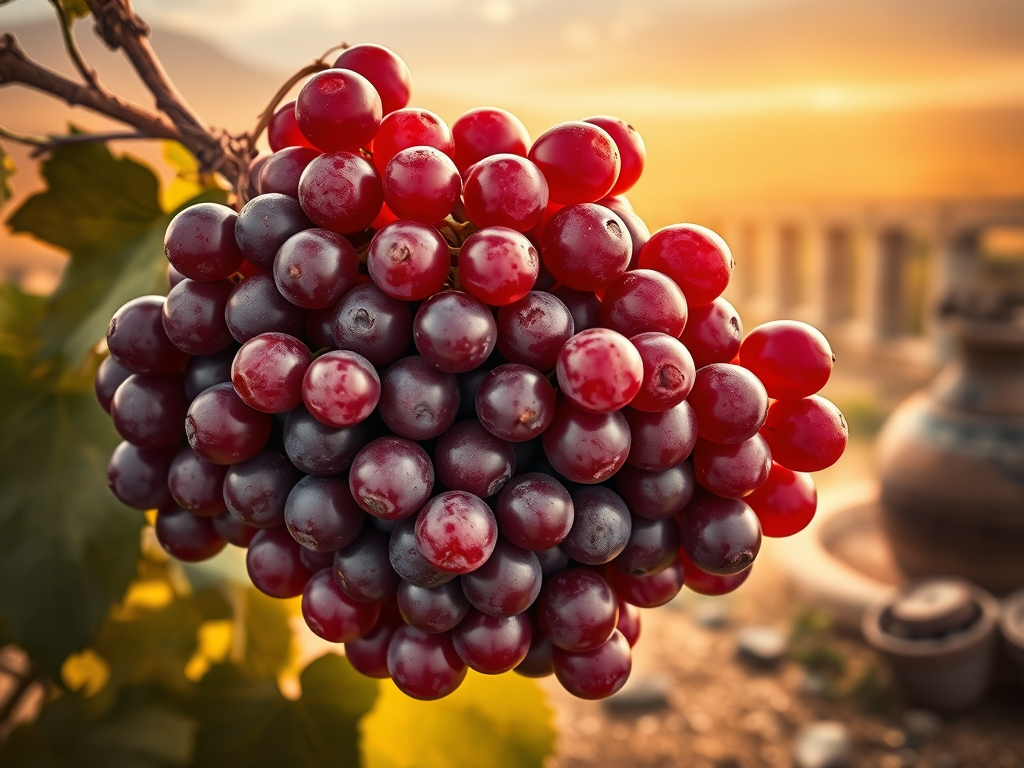
🍇 The Red Grape
🌍 The Red Grape Was First Cultivated
Grapes — including red varieties — were first cultivated 6,000–8,000 years ago in the Middle East. This region is widely considered the birthplace of grape domestication.
Earliest archaeological evidence:
- 8,000 years ago in Georgia — earliest evidence of wine‑making
- Areni‑1 Winery in Armenia (c. 4000 BC) — oldest known winery
- Ancient Egypt, Greece, Phoenicia, Cyprus, and Rome all cultivated purple/red grapes for eating and wine
👤 Who First Cultivated Grapes?
There is no single discoverer, but early cultivation is attributed to:
Ancient Middle Eastern civilizations
- Early farmers in the Caucasus, Mesopotamia, and Persia
- Ancient Egyptians (grape cultivation appears in hieroglyphics)
- Ancient Greeks and Romans, who expanded viticulture across Europe
The story of grape cultivation is one of the oldest agricultural narratives in human history — stretching back 6,000–8,000 years and involving multiple ancient civilizations across the Middle East and the Caucasus. No single person “invented” grape cultivation; instead, it emerged gradually as early societies learned to domesticate wild vines.
🌍The First Region to Cultivate Grape
1. The Middle East & Transcaucasia
According to your search results, the Middle East is widely recognized as the homeland of grape cultivation, beginning 6,000–8,000 years ago.
More specifically, archaeological and genetic evidence points to the Transcaucasian region — modern‑day Georgia, Armenia, and Azerbaijan — as the earliest center of domestication.
Key evidence:
- Georgia (c. 6000–7000 BC): Earliest chemical traces of winemaking (tartaric acid in clay jars)
- Armenia (c. 4000 BC): The world’s oldest known winery, Areni‑1
- Wild Vitis vinifera sylvestris still grows in this region, supporting its role as the domestication center
🧬 2. Who Actually Domesticated Grapes?
Domestication wasn’t the work of a single individual — it was a gradual cultural process carried out by early farming communities.
Early cultivators included:
- Neolithic farmers in the Caucasus
- Ancient Mesopotamians
- Early Egyptians (grape cultivation appears in hieroglyphics)
- Phoenicians, Greeks, and Romans, who later expanded viticulture across the Mediterranean
These groups selected vines with:
- Larger berries
- Higher sugar content
- Hermaphroditic flowers (allowing self‑pollination)
- Better flavor and yield
This selective process transformed wild grapes into Vitis vinifera, the cultivated grape we know today.
🚢 3. How Grapes Spread Across the Ancient World
Your search results show a clear diffusion pattern:
Phoenicians
- Spread grapevines and wine culture across the Mediterranean, including to Spain and North Africa
Greeks
- Carried grape cultivation westward
- Established vineyards in Italy, Sicily, and southern France
Romans
- Industrialized viticulture
- Spread grapes throughout Europe, including Germany, France, and Britain
Cyprus
- Home to the world’s oldest continuously produced wine, Commandaria (c. 2000 BC)
🪶 4. Indigenous Grapes in North America
While European grapes (Vitis vinifera) were introduced later, native grape species grew across North America and were used by Indigenous peoples for food long before European contact.
In the 19th century:
- Ephraim Bull cultivated wild Vitis labrusca to create the Concord grape, a major U.S. crop today.
Why grapes spread so widely:
- Yeast naturally grows on grape skins, making wine fermentation inevitable and culturally transformative
🍇 Culinary Uses of the Red Grape
Red grapes are one of the most versatile fruits in global cuisine. Their natural sweetness, acidity, and juicy texture make them ideal for fresh dishes, cooked preparations, baked goods, drinks, and savory pairings. Your search results highlight just how wide their culinary range truly is.
🥗 1. Fresh Uses: Salads, Bowls & Appetizers
Fresh red grapes add brightness, crunch, and sweetness to both savory and sweet dishes.
Examples from your search results:
- Grilled Grape Tabbouleh — smoky grapes tossed with herbs and tahini
- Grape, Walnut & Labneh Crostini — roasted red grapes over creamy labneh with spicy honey
- Kale Salad with Oven‑Dried Grapes & Blue Cheese — sweet‑savory balance with toasted walnuts
Fresh grapes pair beautifully with:
- Soft cheeses (brie, goat cheese, labneh)
- Nuts (walnuts, almonds, pistachios)
- Leafy greens (spinach, kale, arugula)
🍳 2. Cooked & Roasted Dishes
Cooking red grapes concentrates their flavor, turning them jammy, caramelized, and deeply aromatic.
Examples from your search results:
- Pollo al Lambrusco — chicken glazed with red wine and roasted grapes
- Grape Mostarda Panini — stewed red grapes paired with cheddar, blue cheese, and prosciutto
Roasted grapes work well with:
- Chicken
- Pork
- Lamb
- Charcuterie boards
- Grain bowls
🍞 3. Baking & Desserts
Red grapes bring moisture, color, and natural sweetness to baked goods.
Examples from your search results:
- Frozen Grape Mochi — sweet red grapes wrapped in matcha‑tinted mochi
- Moscato Pound Cake with Grape Glaze — glaze made with freeze‑dried red grapes
- Grape Sorbet — a refreshing, concentrated grape dessert
Other dessert uses:
- Tarts
- Galettes
- Upside‑down cakes
- Fruit compotes
🍇 4. Preserves & Pantry Staples
Red grapes can be transformed into long‑lasting, flavor‑packed ingredients.
Examples from your search results:
- Concord Grape Jam — aromatic, sweet‑tart jam with no pectin needed
- Oven‑Dried Grapes (Homemade Raisins) — caramelized, intensely flavored dried grapes
Other pantry uses:
- Grape jelly
- Grape butter
- Grape chutney
- Grape syrup
🍹 5. Drinks & Cocktails
Red grapes shine in beverages thanks to their natural sugars and vibrant color.
Examples from your search results:
- DIY Grape Soda — homemade, naturally flavored soda
- Grape Gin Fizz — muddled grapes in a cocktail
Other drink uses:
- Fresh grape juice
- Smoothies
- Sangria
- Wine spritzers
🧀 6. Charcuterie & Entertaining
Red grapes are a staple on grazing boards because they balance salty, creamy, and savory flavors.
They pair especially well with:
- Brie
- Blue cheese
- Aged cheddar
- Prosciutto
- Salami
Your search results highlight how grapes elevate appetizers like crostini and panini.
Red grapes are culinary shapeshifters — fresh and crisp in salads, jammy and caramelized when roasted, elegant in appetizers, vibrant in drinks, and deeply comforting in baked goods. From savory chicken glazed with grapes to bright sorbets and homemade jams, this fruit moves effortlessly across cuisines and seasons, offering sweetness, acidity, and color wherever it goes.
🌿 Medicinal & Traditional Uses of Red Grapes
While not a medical treatment, red grapes have long been used in traditional wellness practices.
1. Antioxidant Support
Red grapes contain resveratrol, flavonoids, and anthocyanins, which help protect cells from oxidative stress.
2. Heart & Circulation Support
Traditional uses and modern nutrition science link red grapes to:
- Supporting healthy blood flow
- Helping maintain cardiovascular wellness
- Providing natural anti‑inflammatory compounds
3. Digestive Support
Historically, grapes were used to:
- Ease digestion
- Provide hydration
- Support regularity due to natural fiber
4. Skin & Vitality
Antioxidants in red grapes have been associated with:
- Supporting skin health
- Promoting a healthy complexion
- General vitality in traditional herbalism
(These are general wellness associations — not medical advice.)
🧪 Nutritional Profile of Red Grapes
Red grapes are nutrient‑dense and hydrating.
Key Nutrients
- Vitamin C
- Vitamin A
- Vitamin K
- Potassium
- Calcium & Phosphorus (noted in Britannica)
- Natural sugars (glucose & fructose)
- Antioxidants (resveratrol, flavonoids)
Macronutrients (per 100g)
- Calories: ~69
- Carbs: ~18g
- Fiber: ~1g
- Protein: ~0.7g
- Fat: ~0.2g
🏺 Cultural Significance of Red Grapes
1. Wine & Ritual
Red grapes are central to:
- Ancient Greek and Roman religious ceremonies
- Jewish Kiddush wine traditions
- Christian Eucharist symbolism
- Persian and Middle Eastern poetry and mysticism
Wine became one of the earliest cultural technologies — shaping trade, religion, and agriculture.
2. Symbolism
Red grapes symbolize:
- Abundance
- Fertility
- Celebration
- Transformation (due to fermentation)
- Divine blessing in many traditions
3. Economic & Agricultural Importance
- Grapes are one of the oldest domesticated crops
- Red grapes remain central to global agriculture and cuisine
- Over 5,000 varieties of Vitis vinifera exist today
4. Culinary Influence
Red grapes appear in:
- Fresh eating
- Raisins
- Juices
- Vinegars
- Oils
- Jams and preserves
- Global wine traditions
🚫 Who Should Avoid or Limit Red Grapes?
Red grapes are safe for most people, but several groups may need to avoid or limit them due to allergies, medical conditions, or safety concerns. Here’s a clean, authoritative breakdown.
⚠️ 1. Individuals With Grape Allergies
Although rare, grape allergies do exist. Symptoms may include:
- Skin reactions (hives, itching)
- Respiratory issues (congestion, asthma‑like symptoms)
- Digestive discomfort (nausea, vomiting)
People with these reactions should avoid grapes entirely.
⚠️ 2. People With Diabetes or Blood Sugar Concerns
Red grapes have a higher glycemic index than many fruits and can cause a quick rise in blood sugar. Those with diabetes should:
- Limit portion sizes
- Pair grapes with protein to slow absorption
⚠️ 3. Individuals With Kidney Disease
Grapes contain potassium, which can be dangerous for people with impaired kidney function. Those with kidney disease may need to limit or avoid grapes to prevent hyperkalemia (high potassium levels).
⚠️ 4. People With Fructose Intolerance or IBS
Grapes are high in fructose, which can trigger:
- Bloating
- Gas
- Diarrhea
- Abdominal pain
This is especially relevant for those with fructose malabsorption or IBS.
⚠️ 5. Young Children (Choking Hazard)
Whole grapes are a major choking risk for children under 5. They should always be:
- Cut lengthwise
- Quartered for toddlers
⚠️ 6. Individuals on Certain Medications
Compounds in grapes — especially resveratrol — may interact with:
- Blood thinners (e.g., warfarin)
- Medications processed by the liver
Grape seed extract may also affect drug metabolism.
⚠️ 7. People With Water Retention or Sodium‑Sensitive Conditions
Grapes contain tannins that may contribute to fluid retention in sensitive individuals (noted in broader grape‑safety literature).
⚠️ 8. Pets (Especially Dogs)
Grapes and raisins are highly toxic to dogs and can cause kidney failure. Even small amounts require immediate veterinary care.
Red grapes are nutritious and widely enjoyed, but individuals with allergies, diabetes, kidney disease, fructose intolerance, or certain medication interactions should consume them with caution. Whole grapes are unsafe for young children due to choking risk, and they are extremely toxic to dogs.
📚 Sources Used for Red Grapes
- Sauce & Bites — Unlocking the Potential of Red Grapes https://sauceandbites.com/what-to-do-with-lots-of-red-grapes/
- ExcitedFood — Red Grape: A Versatile Ingredient for Sweet and Savory Dishes https://excitedfood.com/ingredients/red-grape
- Wisdom Library — Red Grapes (Nutrition and Recipes) https://www.wisdomlib.org/ingredients/286-red-grapes
Wrapping Up the Red Grape
May the red grape remind you of the quiet miracles that unfold in their own time — the slow ripening, the gathering of sweetness, the transformation that happens when patience meets intention. As ancient hands once tended the vine, may you tend your own creative harvest with the same devotion. May your table be full, your work be joyful, and your days touched with the abundance that this humble fruit has carried across centuries.
Here’s to nourishment, to ritual, and to the small, beautiful things that make life feel whole.
🍇 Featured Recipe: Roasted Red Grapes with Honey & Thyme
A simple, elegant recipe that turns everyday grapes into a luxurious topping for toast, yogurt, cheese boards, or roasted meats.
Ingredients
- 2 cups red grapes (seedless)
- 1 tbsp olive oil
- 1 tbsp honey
- 4–5 sprigs fresh thyme
- Pinch of sea salt
- Optional: cracked black pepper or a splash of balsamic
Instructions
- Preheat oven to 400°F (205°C).
- Spread grapes on a baking sheet lined with parchment.
- Drizzle with olive oil and honey.
- Add thyme sprigs and a pinch of salt.
- Roast 15–20 minutes, until grapes collapse and release their juices.
- Remove thyme stems and serve warm or cooled.
Serving Ideas
- Spoon over whipped ricotta or goat cheese
- Add to roasted chicken or pork
- Layer on toast with mascarpone
- Swirl into oatmeal or yogurt
- Serve alongside a charcuterie board
Notes
- For deeper caramelization, roast an extra 5 minutes.
- For a savory twist, skip the honey and add balsamic + pepper.
💛 Thank You for Reading
Thank you for spending this time with me and exploring the story of the red grape. I’m grateful you chose to pause here, to learn, to savor, and to wander through the history, flavor, and symbolism of this beautiful fruit. Your presence in this space matters — every reader brings their own curiosity, their own memories, their own connection to food and tradition. I hope this journey added a little richness to your day and inspired you to taste something familiar in a new way.
 EJADA
EJADA 
Leave a comment